Li Feng in Conversation with Zheren Hu: On "High" Valuations — We Were Quite Resolute at the Time

As an early-stage investor, we have the privilege of meeting these original dreams at their inception and watching them grow into something great.
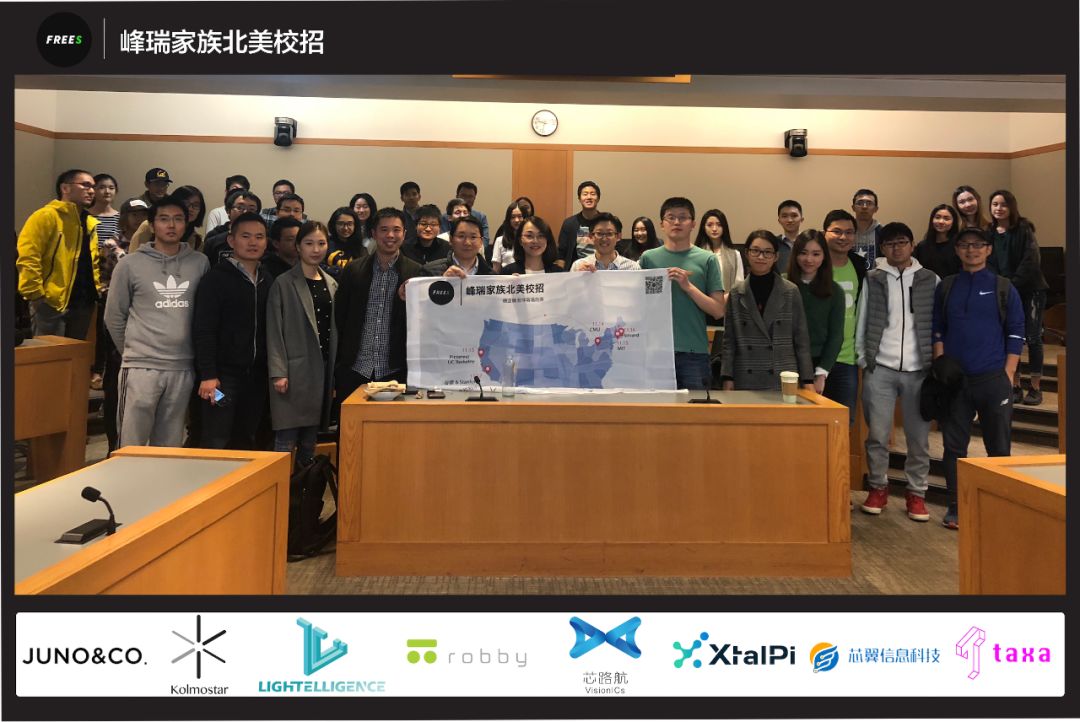
Not long ago, we took eight FreeS Fund portfolio companies to Harvard, MIT, Stanford, Berkeley, and CMU to meet face-to-face with energetic, entrepreneurial college students. The star companies showcased not just concrete job openings, but also the shining original aspirations to change the world behind them.
As an early-stage investment firm, we are fortunate to encounter these initial dreams and witness their journey to greatness. The day after FreeS Fund's North American campus recruiting wrapped up successfully, at the 2018 MIT-CHIEF Annual Summit, FreeS Fund founding partner Li Feng and NYSE: LAIX co-founder, CTO & Head of Adult English Ben Hu sat down for a fireside chat about difficult choices and major transformations, about the courage and tears behind the dreams:
- How should startups view valuation? How should they view early employees leaving?
- How did you transform from a technology-centric company into a user-facing education company?
- User numbers kept growing, but retention and active user counts were disappointing — what did you do?
- You had users, but monetization was difficult. How did you find the breakthrough for commercialization?
Below is a transcript of the conversation. We hope it brings you some insights.

Speakers
Li Feng, FreeS Fund founding partner
Ben Hu, NYSE: LAIX co-founder
CTO & Head of Adult English
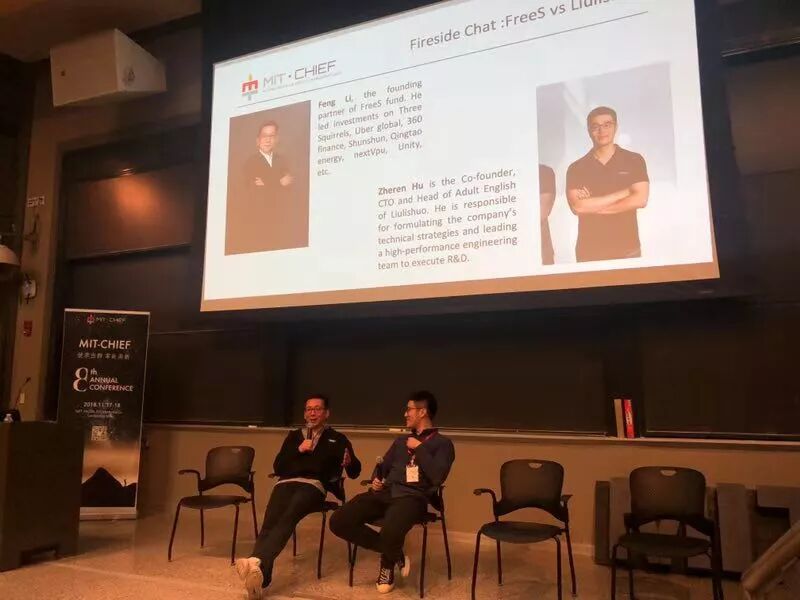
Fireside Chat: From Four or Five People to a Public Company — NYSE: LAIX's Transformation and Growth
Source / MIT-CHIEF 8th Annual Conference
Translation / Yiling Shi

"That's the valuation we wanted to fight for"
▍Li Feng: First, congratulations on NYSE: LAIX's IPO on the New York Stock Exchange. My connection with NYSE: LAIX goes way back. Ten years ago, before I entered the investment industry, I spent seven years in the education sector at New Oriental — two years as a teacher and five years on the senior management team. At IDG, I focused on early-stage investments, particularly in consumer sectors, and that's when I came across NYSE: LAIX, about six years ago. I'd like to start by asking you to briefly share: six years ago, when you, Wang Yi, and four or five team members were discussing your project with us in a small room, what were you thinking? What difficulties were you facing?
▍Ben Hu: Thank you, "Feng Shuai." Looking back, 2012 was a completely different time from now. In the past two years, especially this year, education has become extremely hot in China, with significant capital flowing into the sector in various forms. In 2012, most funding went to gaming and utility apps; very few people were paying attention to education, especially education plus technology.
In 2012, when Wang Yi, Lin Hui, and I started our company, we focused on people's needs. When we began discussing the startup, Wang Yi and I had already been back in China for a while. We realized that many people around us had a strong desire to learn English and improve their proficiency, but the services provided by existing education institutions were unsatisfying. We immediately agreed: the gap between user demand and what the education market then supplied was exactly where technology could make a difference.
We made two decisions. First, we would only build mobile products, based on phones rather than PC. Second, we had a preliminary idea: when users used our product to learn English, we would provide them with real-time assessment results. Everyone knows Chinese people tend to be shy. If people could speak English to their phones and receive immediate feedback about their proficiency level, with help to improve, this would give Chinese learners tremendous security and help more people speak English confidently. This idea, once realized, would be very meaningful. It was based on these ideas that we started our company. We saw users' real pain points, and we happened to have a way to solve them.
▍Li Feng: I have a question, purely out of personal curiosity. When we first discussed angel round investment, a major point of contention was valuation. At the time, Wang Yi insisted on what was then a very high valuation — 10 million pre-money — but we insisted post-money valuation not exceed 8.5 to 9 million. We argued fiercely about this for many days. In the end, you convinced me, and gave me the difficult task of persuading my colleagues to accept this very high valuation. Looking back now, this valuation was certainly reasonable, but at the time, it was genuinely very high. So I'm curious — six years ago, do you know what Wang Yi was thinking? Was he really that insistent on his own view, or did you also consider compromising? Even though you ultimately won... I've never asked this before, but I'm genuinely curious. Did he discuss it with you? Did you think about compromising?
▍Ben Hu: Honestly, we were quite resolute at the time. As we said then, we had already launched our product. We released it in February, and by June when we were discussing the investment, we had already reached number one in the education category on the iOS platform.
▍Li Feng: I'm just curious — during those two weeks, was there ever a moment when you wanted to compromise on valuation, or when Wang Yi tried to persuade you to compromise?
▍Ben Hu: At the time, Wang Yi said: that's the valuation we want to fight for. Do you think it's too high? Should we compromise? He wasn't trying to persuade me — he was just asking. And I said: "Probably not..." Looking back now, it actually wasn't that important.
▍Li Feng: Of course! I completely agree, and that's exactly the beauty of early-stage investing.
Monetization Doesn't Happen Automatically
▍Li Feng: From what I recall, you went through a very difficult period, especially around 2014 to 2015. Your user numbers were climbing, but retention and active user counts were disappointing. What were you thinking at the time, and how did you solve the problem?
▍Ben Hu: Looking back, mid-2015 was when we developed our own curriculum system. It's interesting to think about now — we always raised funding in June. We first met Feng Shuai in June 2013, our second round was June 2014, and our third was June 2015. That third round was genuinely difficult.
From late 2014 to early 2015, our registered users were growing, our courses were popular, and more and more people knew about NYSE: LAIX as a language learning tool. But the problem we faced was how to monetize this — how to turn it into revenue. As I just mentioned, when we started the company, we knew users had strong demand for learning English and willingness to pay, so monetization should have been straightforward. But it was very difficult. So we began thinking that we must be doing something inadequately.
In early 2015, we made a decision that changed our fate. As I mentioned earlier, all three founders came from product or engineering backgrounds. When we first started, we hoped to design a technology-driven education product with scale effects. We wished our "small but beautiful" team could change the world. Around early 2015, we realized that a key to commercial monetization was that we had to provide users with systematic courses, rather than what I can only describe as — not random, but non-systematic content. At the time we had three course modules that looked great but didn't form a coherent system.
We were somewhat reluctant to produce our own content, partly because none of us founders had backgrounds or experience in education or curriculum design. So we chose to approach many world-class publishers for partnerships, including Harvard, Cambridge, and so on. After talking with them, at some point we suddenly realized this content couldn't seamlessly connect with technology because the scenarios didn't match. To build a monetization model that worked for us, we had to do the curriculum design ourselves. That was an important decision we made at the time.
Immediately after, we began recruiting curriculum designers and building a curriculum design team. In 2016, we launched our product. From finding people, designing courses, to releasing a paid product, it took about 18 months. There were many difficult aspects to this process. We had to think about how to better integrate product, technology, and curriculum design, and spent considerable energy coordinating collaboration between the curriculum design and technology teams, since their mindsets were completely different. We ultimately succeeded, but the process was arduous.
▍Li Feng: At the time I was still on the board. From an observer's perspective, this was a major breakthrough. NYSE: LAIX transformed from a cool technology product into an education product, and education products mean structured content. Another question: as we all know, any early-stage company, before IPO or before becoming a mature enterprise, will go through some difficult periods. Around late 2014 to early 2015, during that relatively tough and exhausting phase, were there any senior departures? Did the founding team ever feel frustrated or have conflicts? If so, how did you resolve them?
▍Ben Hu: Some people left, including early employees. I still remember to this day — an early employee said he was leaving. In a conference room at our old office, I tried hard to persuade him not to leave, to stay. But he was very emotional at the time...
▍Li Feng: At the time, did any of you cry?
▍Ben Hu: That guy cried — he was very emotional. As Feng Shuai mentioned, we were trying many ways to change the product, but some modules weren't improving. For example, some minor data structure changes — for iOS or Android client developers, they just needed to change a format in the backend. But client developers had to do extensive work changing user interfaces, testing different effects, optimizing modules... At the time, that colleague was very emotional. Crying, he said the only reason he was leaving the company was that he loved it too much.
▍Li Feng: Is it only because you're sitting here today that you say he cried? If he were sitting here, would he say you cried? Is the real truth that you both cried?
▍Ben Hu: He really was the only one who cried. I didn't cry, but I was very moved. Speaking of the founding team, we've been very fortunate because we've always been able to raise sufficient funding, and we don't spend much. So even during difficult periods, we didn't have to worry too much about money, because we knew there was enough in the bank account.
Over the years, our founding team hasn't had too many conflicts. Certainly some people have cried, and we've had arguments. Around late 2014 to early 2015, we also made another very tough decision. At the time, besides English, we offered learning for other languages including Spanish. We decided to shut down these other language programs, which essentially meant laying off everyone on those teams. This decision was made simultaneously with the decision to design our own curriculum system I just mentioned. Throughout this process, there were many difficult choices, but our founding team handled them fairly well.
"Education Is a Very Tricky Industry"
▍Li Feng: We just discussed your first major transformation — from a technology product to an education product. Your second major transformation happened after I left IDG and also left the NYSE: LAIX board in 2015. I noticed that around early 2017, you added human services. From the results, this rapidly boosted your revenue, and at least so far you've done very well. So during that period, what prompted NYSE: LAIX to transform from a technology-based education product with zero human involvement into a user-facing, user-centric plus technology education product?
▍Ben Hu: Compared to the first major transformation, this decision happened relatively naturally.
▍Li Feng: So this time no one cried?
▍Ben Hu: Right, no one cried this time. Education is a very tricky industry. Not everyone likes learning, or can learn autonomously. Playing games, eating good food — everyone likes doing these. But learning isn't. I always compare learning to exercise, because everyone knows exercise is good for you, keeps you in shape, keeps you healthy, but not everyone can stick with exercise. What I mean is, we had a good product, user data showed our product was very effective, but it only works when our paying users keep using it, keep learning. Buying courses without studying — you can't automatically learn English. This situation did exist.
Later, we started using WeChat groups, gathering our paying users into group chats. Our initial thinking was that when users were in a group, they would feel pressure and also motivate each other, because some high-performing users would share their progress in the group.
Additionally, our courses were very unique and controversial at the time. In China, the traditional way of learning English is that you first need to memorize vocabulary, study grammar. That's how we've learned English since elementary school. But our curriculum design philosophy was that you don't need to rote memorize words and phrases, and you don't need to study grammar rules. We believe language is simply a process of input and output. Backend data showed our teaching method was effective.
However, compared to traditional English teaching, our curriculum system was a major breakthrough, which meant we needed to educate users, to get them to accept this new learning approach. Also, the WeChat groups served a customer service function — they could answer user questions, including explaining why our courses were designed this way, why our courses could help you achieve good results without requiring vocabulary memorization or grammar comprehension.
This is also why we built a user services team. Since this team was established, in the past 18 months, team efficiency has tripled. Now we can say we're an education company driven by both AI and human services.
▍Li Feng: Okay, thank you. We've discussed two issues, both revolving around how to transform from a technology-centric company into a user-facing education company. Broadly speaking, NYSE: LAIX made two major transformations. First, applying technology to products. Second, focusing on user experience. Indeed, most of the time, users don't care whether your product composition is 90% technology plus 10% service, or 70% technology plus 30% service. What they care about, what they genuinely experience, is the product usage experience.
FreeS Fund star company campus recruiting is ongoing — 8 trailblazing companies, 50+ positions, awaiting you. We look forward to your joining.

You can also send your resume to hr@freesvc.com, noting the company and position you're applying for.
Feel free to share to your Moments. For republication on other official accounts, websites, or mobile apps, please reply "reprint" to learn republication rules, and contact "Feng Xiaorui" (id: freesfund) for authorization. Copyright belongs to FreeS Fund.