Li Feng x Lixing Wang: After 900 Million Consumers Became "Shopaholics," How Can Chinese Brands Conquer the Global Market? | FreeS Talk

A motivational pep talk for consumer upgrade entrepreneurs — good for the next 20 years, guaranteed.

On August 18, China Renaissance Alpha hosted the "2017 Impact Investment Summit" — "Beyond the Hype, Seeing the Truth" — in Beijing. This year's summit centered on the "Tech-Enabled Era" and "The Rise of New Consumption," cutting through the noise to examine business fundamentals before revisiting the "hot topics."
During the consumer investment upgrade session, Li Feng, founding partner of FreeS Fund, and Lixing Wang, managing director of China Renaissance Group and head of advisory business, engaged in an in-depth conversation.
In this deep dive, you'll learn:
-
How China became a productivity and GDP powerhouse over the past 20 years. Barring major economic disruptions, the country is poised to birth world-class brands far beyond what we can currently imagine. The distribution of China's future 800–900 million urban residents will directly shape where these brands emerge.
-
The way users remember brands has shifted from "what you sell" to whether you're "fun," "cute," or "minimalist."
-
For new brands, your content is your product, your channel is your product, your channel and product are your content, and your content is ultimately your sales.
-
Xiaomi's "front-store, back-factory" model shortens distribution chains. On the channel side, the trend toward greater efficiency and lower costs is irreversible.
↓ Full breakdown below ↓

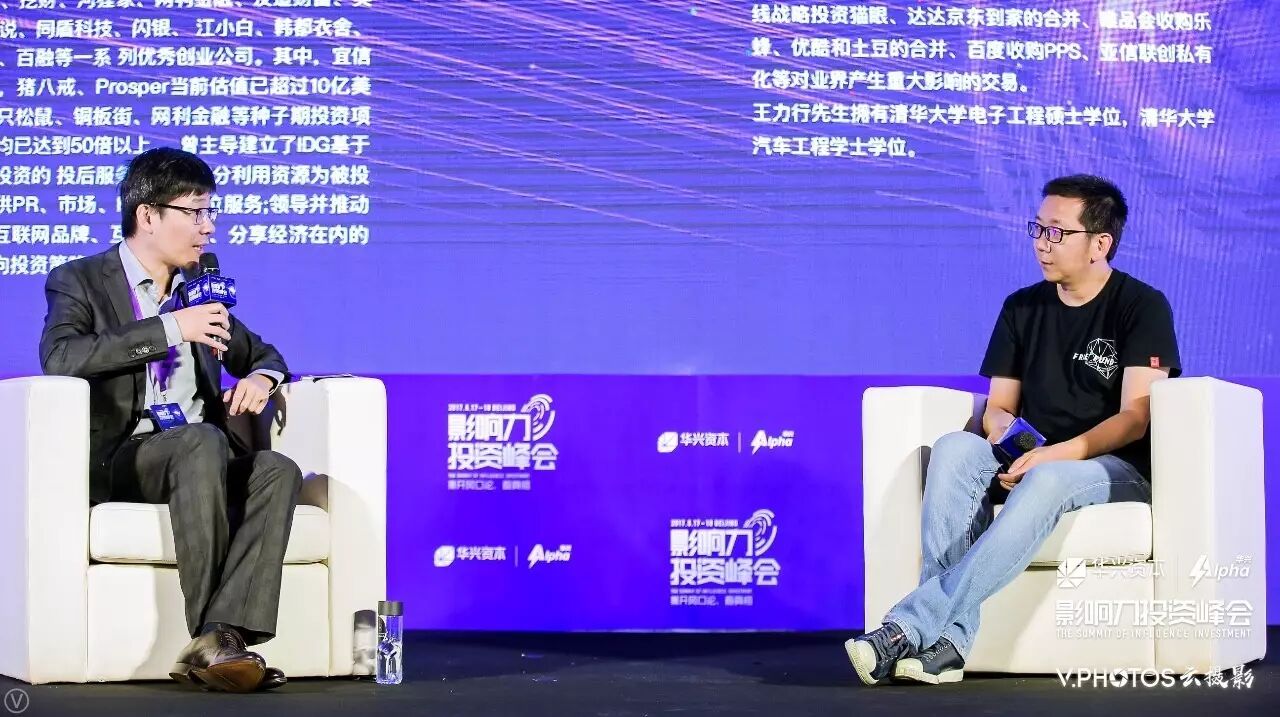
This article is adapted from a dialogue between Li Feng and Lixing Wang at China Renaissance Alpha's "2017 Impact Summit"
▍Lixing Wang: Good morning, everyone! Thank you, Li Feng, for joining us at this Alpha event. Today we're discussing consumption upgrade. This topic has been extremely hot in investment circles over the past year or so, with many people looking at opportunities in this space. At the same time, it covers such a broad range that it's not exactly what you'd call a "trend."
The question we want to explore is: Why has consumption upgrade become a consensus focus at this particular moment? Not earlier, not later? Li Feng, could you share your thoughts from macro and micro perspectives?
▍Li Feng: That's a good question. We've invested in some consumer brands, but honestly, we don't have a definitive answer either. Over the past couple of years, the consumer space has constantly produced new things. For early-stage investing, these are all worthwhile experiments.
We've done some internal analysis. Looking back over the past century-plus, some interesting patterns have emerged that might partially answer this question.
The first inflection point was before World War I. Many famous British brands we know today were born then and quickly exported worldwide. Think Lipton tea, whiskey and its associated drinking culture.
The second was after World War II. Brands born in the U.S. between 1950 and 1975 became today's global giants — Disney, Walmart, and so on. KFC and McDonald's originated in the 1930s–40s, but their rapid expansion through franchising happened during this period.
The third was from the mid-1970s to the late 1990s. This is when Japan gave us famous retailers like MUJI and Daiso, along with corporate group structures like kabushiki gaisha.
There's a logic here: Before WWII, America became the world's top steel producer. After WWII, it became the largest economy by GDP and total manufacturing output. Then world-class brands representing the American lifestyle emerged. Pre-war America had roughly 150 million people — a relatively populous nation that gathered enough productive forces to become a productivity powerhouse, then a consumption powerhouse, and finally began exporting brands embodying the American way of life.
Whether it was Britain over a century ago or Japan before the Asian financial crisis, both went through similar phases of rapid productivity growth.
Looking at China in reverse: over the past two decades, it has gradually become the largest steel producer, a productivity giant, and a GDP powerhouse. If historical patterns hold and China's economic trajectory doesn't hit major snags, then as it enters its consumption upgrade cycle, it will birth world-class brands far beyond our imagination. By "far beyond," I mean that looking at brand growth cycles and the reach of brand value, some of these new brands will become famous global names in 10 or 20 years at scales and in ways we currently can't envision.
We're already seeing signs and events. Take smartphones, a typical consumption upgrade product — whether Huawei, Vivo, Oppo, or Xiaomi, they're all leveraging the advantages of being a productivity and population powerhouse, seizing on core products people want, and gradually becoming world-class brands. It's like how 50 years ago, Americans loved family outings for burgers, fried chicken, Coke, and Disney — these things met that era's American consumption needs and then influenced the world. We can see that Chinese consumers are also generating new demands. If these demands happen to match China's productive capacity, and happen to represent enough people in this populous nation, then whatever meets these demands will become international brands.
Looking at it through such a long cycle is somewhat "abstract" — call it a bowl of chicken soup for consumption entrepreneurs, one that'll last you 20 years. If China doesn't experience unexpected, dramatic upheaval, this cycle offers at least 20 years of growth space for consumer goods, and not just within China.
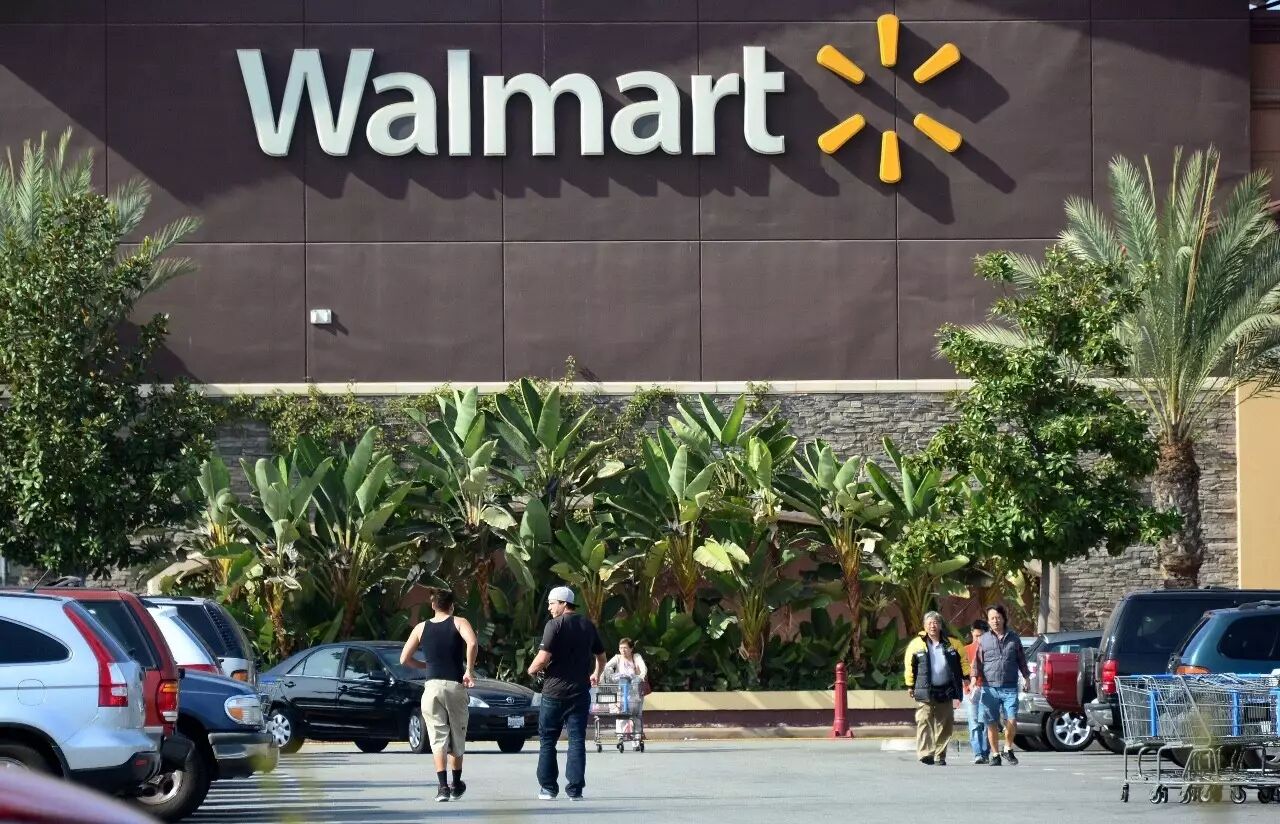
▲ Walmart was founded in 1962. It has ranked #1 on Fortune's Global 500 list for four consecutive years.
▍Lixing Wang: Previously we focused more on relatively micro factors — generational upgrades, infrastructure improvements, mindset shifts. Thanks, Li Feng, for interpreting this from a longer-term perspective.
I noticed something: we talked more about analogies just now. As we know, China's internet investment circle was accustomed to "copy to China" in earlier years. But this has clearly decreased in recent years, while we've seen more "copy from China" in Southeast Asian countries.
So on consumption upgrade, if we don't talk about "the world" at such a broad scale and just focus on China and the U.S., what are the similarities and differences between China and the U.S.?
▍Li Feng: Online issues have relatively complex influencing factors, so let's look at offline first.
Countries' consumption evolution processes fall into two categories. One includes developed nations like the U.S. and some European countries; the other includes Japan and South Korea. These two types differ in urban composition and population distribution. The latter have typical highly polarized megacities that concentrate enormous populations and spending power. The consumption aspirations of such cities have spawned distinctive brands and business models. The well-known brands in the first category weren't born in megacities.
Assuming China will have 800–900 million urban residents in the next 5–7 years, how this population distributes will affect brand emergence patterns. Earlier this year, the government released a plan: the four first-tier cities (Beijing, Shanghai, Guangzhou, Shenzhen) currently have roughly 100 million permanent residents and are原则上 no longer expanding. Another ten "megacities" are planned, each eventually reaching over 10 million people, totaling about 150 million. Remove these two tiers, and you're left with third-, fourth-, fifth-tier cities and below, housing 500–600 million people.
The distribution of consumer brands and the distribution of population are almost perfectly correlated. The "copy to China" and "copy from China" you mentioned are actually phenomena caused by different user habits and technological gaps at different stages.
That's our thinking — not necessarily correct, for reference only.
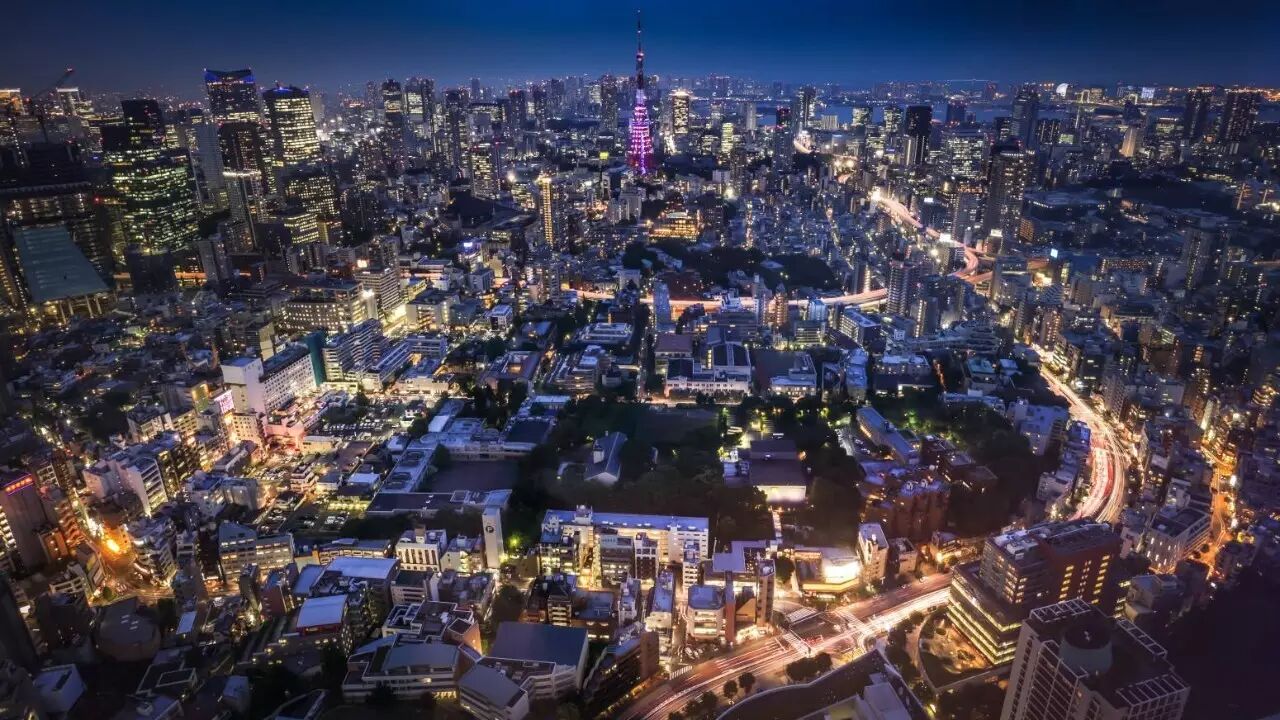
▲ According to 2014 statistics, Tokyo's population density was 6,106 people per square kilometer, higher than Beijing's 1,311.
▍Lixing Wang: So from a structural analysis perspective, are you relatively inclined to believe that China's consumption upgrade path will differ significantly from Japan and South Korea's? Japan polarized; China's polarization isn't as severe, so it might actually be closer to the U.S.?
▍Li Feng: Frankly, we don't know. China isn't quite like either category, because our total population is simply too large. On China's economic questions, economists rarely hold relatively consistent views, largely because no country in history has navigated this period with such a population scale. Looking at Japan, 7-Eleven radiated outward from Tokyo, district by district, with very high density. But we still can't confidently predict where China's new consumer brands will emerge — whether more like the U.S. or more like Japan. Maybe half and half. Many brands may come from non-first-tier cities, like MINISO.
▍Lixing Wang: That's an interesting prediction. Some time ago I spoke with a very senior retail chain entrepreneur. His views were somewhat similar to yours. He felt that if you were to make a somewhat blunt generalization about consumption upgrade, "first- and second-tier cities represent one concept, while third-, fourth-, fifth-tier cities and rural areas represent another." There's a huge difference between them. Extending this further, China is vast and populous, so all kinds of possibilities exist.
We've just discussed geographic differences; now let's talk about the human factor. From your observations, what interesting phenomena emerge when you combine the mindset shifts of Gen Z and the post-00s generation with consumption upgrade?
▍Li Feng: At the broadest level, whether someone experienced material scarcity, whether they lack security — these differences stemming from different development stages certainly influence consumption behavior. The current changes in consumption upgrade happen to coincide with this generation becoming college students or young white-collar workers fresh out of school, meaning they'll absorb these new influences in their spending habits.
There's an interesting phenomenon: many brands doing very well now, I'd say, "don't look like they sell what they sell." Why do I put it this way? Let me give some examples.
MUJI has been very trendy lately, but it's hard to pin down whether it sells home goods or apparel — it's also opened restaurants and hotels. NetEase Yanxuan is doing similar things. Xiaomi doesn't just make phones; it launched MIJIA to carry more brands. Eslite Bookstore, which investors and entrepreneurs have studied extensively, strictly speaking isn't just about selling books either. Freshippo isn't merely a seafood supermarket; it also sells many novel and exotic products.
We used to be very precise in positioning things, saying "XX sells XX." But now, increasingly, you can no longer define them this way.
Part of the reason is that the internet has profoundly affected user cognition. Previously successful consumer goods companies, whether Uni-President, Procter & Gamble, or Coca-Cola, all used central media (influential traditional media) to bombard consumers with awareness ads telling you "who I am." This "who" might be a certain emotion, a certain positioning, a certain function — constantly reinforcing your cognition. Then they'd distribute products to every channel you could see or reach. Theoretically, the more shelf presence, the better the results, the more purchases they'd drive.
That was the offline approach. Online, these rules work less well. Because of internet influence, users receive massive amounts of information and increasingly can't remember "XX sells XX." Instead, what sticks are things that occupy users' emotional cognition.
In other words, new brands don't use rational information to help users remember brand meaning; they use experiences to activate users' emotions and influence how they're remembered. Not making you remember what I sell, but making you remember whether I'm fun, cute, adorable, or minimalist.
This memory pattern produces two interesting phenomena. One is what we just discussed — "doesn't look like they sell what they sell." The other is that increasingly, well-performing brands must go cross-category. We're already seeing many new retail brands with strong cross-category capabilities.
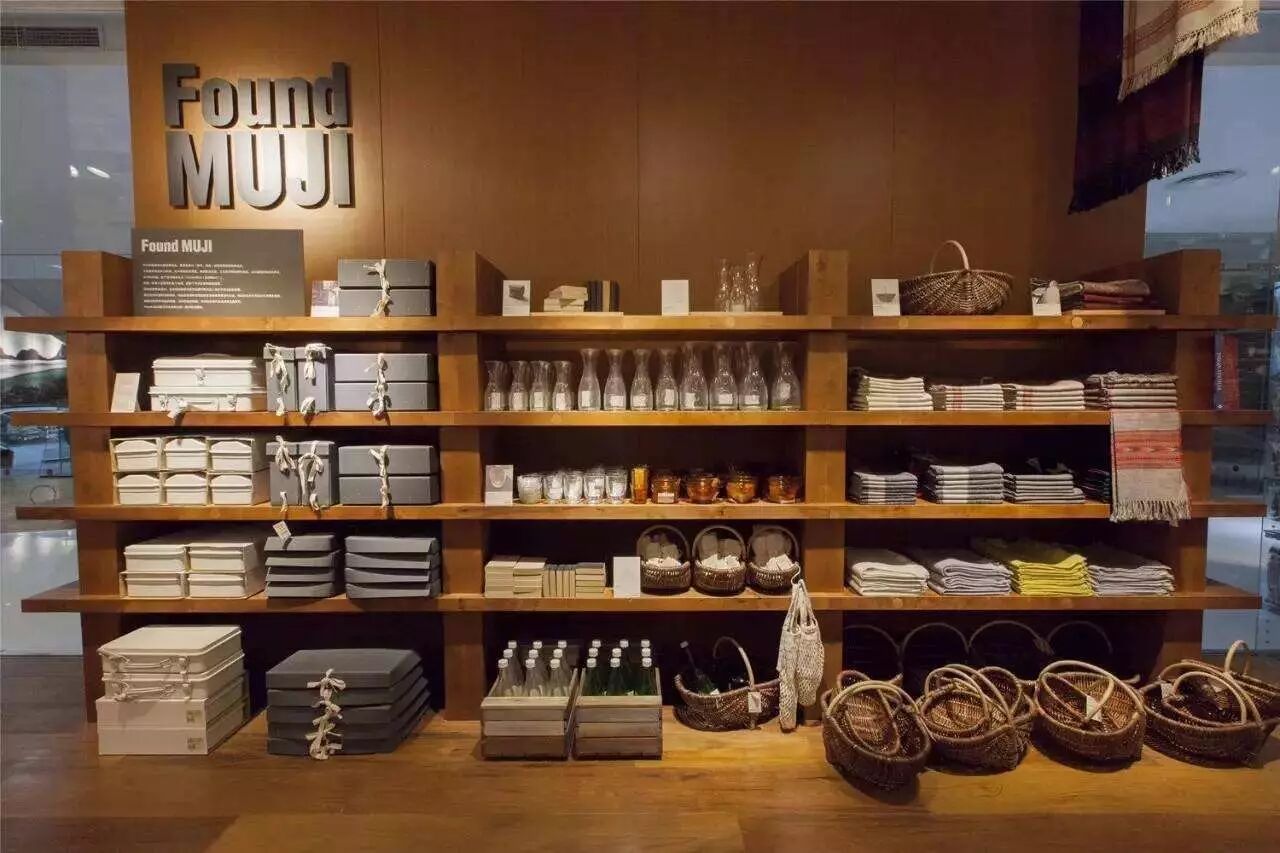
▲ MUJI is a typical cross-category brand. From home goods and stationery to apparel, restaurants, and hotels, its categories are numerous.
▍Lixing Wang: That's a very unique angle. It's equivalent to saying information overload from the explosion of information has changed brand communication methods, deepened brand dimensionality, and derived a valuable hypothesis: in the new retail space, cross-category extension is relatively easier for new brands and services than for established ones.
Given the trajectory of China's internet development in recent years, from FreeS Fund's perspective, what entrepreneurial or investment opportunities exist in the consumption upgrade track?
▍Li Feng: This is usually the hardest question to answer. If we look at what Chinese consumer brands could become international brands over a 20-year or longer cycle, as I mentioned at the start, products combining population and productivity factors — if they happen to be the consumption upgrade products users need in this cycle — will have a certain probability.
Beyond the phone example, there are some easier predictions. For instance, we can be 100% certain that electric vehicles represent a major trend. Over a ten-year horizon, China will definitely birth world-class brands.
Ten years ago, China became the world's largest auto parts producer. Four years ago, it became the world's largest new car market. We're both the biggest producer and the biggest consumer. But what's pained us is that automobiles haven't been successfully "transformed" [domestically]. Starting in the early 1990s, China formed joint ventures with world-famous automakers requiring 51% Chinese ownership and 49% foreign ownership. Under these conditions, China tried for over two decades without successfully achieving localization of mid-to-high-end fuel engines or vehicle assembly technology. We localized consumer electronics, high-speed rail, and so on, but not cars.
Now, electric vehicles are essentially a lane change. On the EV technology trajectory, we're roughly two years behind foreign competitors. That's a much smaller gap than with fuel engine technology — we've been chasing American fuel engine technology since the 1990s that the U.S. has had since the early 19th century. The gap is small; we can catch up quickly. This space will definitely see Chinese brands become the biggest international brands, or at least among them.
There are also some smaller categories. I asked William Ding how he started NetEase Yanxuan and how he picked such a good category. He said it originally started because he had a Taiwanese friend who'd done many things in Taiwan, including rice and soy sauce. They decided to collaborate, selling carefully selected rice and soy sauce at 20–30 yuan per jin [500g]. After a month or so, sales stalled.
Then he noticed everyone at NetEase was buying towels. He called in the person in charge, who said they'd worked in textiles; after the rice and soy sauce weren't selling, they'd made a towel themselves and put it on Yanxuan — even internal staff were scrambling for it. He thought this was promising, decided to sell this kind of thing, and thus began Yanxuan's current model.
For William Ding, Yanxuan demonstrated excellent business intuition. He's a very good product manager — he personally did the color matching for luggage, spending over a month selecting colors, very knowledgeable about Pantone cards and such fine details. How knowledgeable? When we were chatting, there was also a friend from Huawei present. William Ding said among Huawei's recent products, one used a green from the Pantone card, and he thought it was the best-executed color, going into great detail. The Huawei friend was quite surprised — their design team in France had indeed used that Pantone green.

▲ From the EV technology trajectory perspective, China's gap with Europe and the U.S. is only about 2 years, presenting an opportunity to overtake on the curve.
▍Lixing Wang: You spoke more from the category perspective just now. I deeply relate to the auto part — I originally studied automotive engineering and know the industry's frustration about the gap in transmissions and fuel engines. Electric vehicles have indeed given China's auto industry a chance to overtake on the curve.
We typically divide the entire consumer industry into two blocks: those providing products and services, and those doing channels. From these two dimensions, what significance do you see for entrepreneurship and investment?
▍Li Feng: This is also the internet's influence. I think the internet's biggest impact has been transforming many previously separate elements in traditional channels into unified elements. Originally, content, marketing, product, and channel management were four separate things; now they're increasingly and obviously becoming one thing.
Simply put, your content is your product, your channel is your product, your channel and product are your content, and your content is ultimately your sales. Looking at business model iterations over the past seven to eight years, this has become quite clear.
The earliest Taobao leveraged consumer habits to help small merchants do business online.
Then came Tmall and JD.com, which more directly transformed the product selection and quality control issues of small merchants into having one party do curation and quality control, performing so-called "curated selection" for users.
Looking further ahead, we get to Xiaomi. There's an old saying in traditional commerce: "front store, back factory" — the store in front sells what the factory in back produces. Xiaomi, to some extent, brought back "front store, back factory," shortening the chain by half a step compared to platform models like Tmall and JD.com.
The channel or distribution methods you mentioned — because of internet influence, the chain has already been shortened considerably. Looking offline, it's the same. Compared to traditional supermarkets, Freshippo also slightly shortens one link in the curation process.
▍Lixing Wang: You could say it's more integrated?
▍Li Feng: I don't have a definitive concept to define it. It's just that overall distribution efficiency has improved greatly, and channel circulation costs have dropped significantly.
▍Lixing Wang: One final question. When FreeS Fund evaluates consumer sector or consumption upgrade-related projects, what are the must-see factors?
▍Li Feng: We don't have anything particularly definitive. Early on we proposed a standard called brand, category, and product. All three of these must be facing upgrade. If we're looking purely at brand-side consumer investments, at least two of these three factors need to overlap on one thing; otherwise the driving force, the tailwind, isn't strong enough.
The channel side is harder to answer. We can only say that one measure of channel change is whether something can significantly improve channel efficiency and reduce channel costs. Whether you have shorter circulation chains, better delivery methods, or more comprehensive data management — ultimately, on the channel side, the trend toward improving efficiency and reducing costs is irreversible. The examples we started with, including McDonald's, KFC, Walmart, and Daiso, were all fundamentally about selling things cheaper.
▍Lixing Wang: Thank you, Li Feng. This conversation offered many fresh perspectives. I hope everyone can gain something from it.
(Feel free to share to Moments. For republication on other public accounts, websites, or mobile apps, please reply "republication" to learn the rules and contact FreeS Fund for authorization. Copyright belongs to FreeS Fund.)

▲ With a Celebrity Endorsement, Does Your Brand Automatically Upgrade? | FreeS Fund Free Talk