Li Xiang x Li Feng: Behind the "May Day" Travel Data — The Long-Term Trends Easy to Overlook | Li Feng Column

Try looking at it from a different angle.
This column is drawn from Li Xiang and Feng Shu's "Macro Chats" segment on the High Energy podcast. Li Xiang is the author of the Detailed Conversations book series and the curator of The Torrential Times.
Earlier this week, the China Tourism Academy's Data Center released its 2024 May Day holiday cultural tourism report. While multiple metrics hit year-on-year highs, many also noticed that per-capita daily spending had declined compared to the five major holidays since the 2023 Dragon Boat Festival and to the same period in 2019.
How should we interpret this shift? Is analyzing it purely through the lens of consumption downgrading or changing consumer psychology sufficient and rigorous? Behind the data fluctuations, is there also a structural transformation and emerging trend? To explore these questions, Feng Shu and Li Xiang recently had an in-depth conversation.
We've edited portions of their discussion into this article, hoping to offer fresh perspectives. We welcome you to continue observing and discussing with us. You can also find the full episode by searching for and subscribing to High Energy on Xiaoyuzhou, Apple Podcasts, or Ximalaya.

Reader Giveaway What special reflections or insights did you gain from your travels this May Day? What micro-trends did you observe? Share with us in the comments.
By 5:00 PM on May 17, we'll gift On China to the three readers with the most thoughtful responses.

/ 01 / The May Day Data Sparked Divergent Interpretations
Li Xiang: The May Day holiday numbers are out — over the five-day break, domestic tourist trips totaled 295 million, up 7.6% year-on-year and 28.2% above 2019 levels on a comparable basis; total domestic tourist spending reached 166.89 billion yuan, up 12.7% year-on-year and 13.5% above 2019. By these headline figures, things look quite rosy.
But then someone threw out the per-capita daily spending data — this year's May Day holiday saw 566 yuan per person in total, or 113.15 yuan per person per day; slightly above 2023's same period, yet below 2019's 151 yuan, and also below the five major holidays since the 2023 Dragon Boat Festival. These figures seem to point toward a different conclusion.
Li Feng: Right. Compared to May Day 2019, per-capita spending dropped a bit, and per-capita daily spending fell by roughly a quarter. I've noticed many interpreting this through the lens of increasingly conservative consumer psychology or consumption downgrading. That's all fine, but setting aside emotional factors, I think there are some different angles worth considering.
Actually, what people are focused on are two comparisons — 2024 versus 2023, and 2024 versus 2019. Let's walk through each.
/ 02 / May Day 2024 vs. 2023: The Base Effect That Might Be Overlooked
Li Feng: The timing of May Day 2023 was unique. That January, domestic COVID restrictions had just been lifted, and the Spring Festival period saw another infection wave. Whether for psychological or physical reasons, the long-suppressed travel demand of that Spring Festival holiday couldn't be said to have fully released. So May Day 2023 was essentially the first major holiday after the genuine reopening.
This produced several results:
First, long-accumulated travel demand exploded at once, with trip volumes even higher than a typical long holiday. May Day 2023 saw 274 million domestic tourist trips, up 70.83% year-on-year and recovering to 119.09% of 2019 levels on a comparable basis.
Second, hotel prices were higher than normal. This was because before the late-2022 policy pivot, many restaurants and hotels — especially smaller independent operators lacking large-chain risk resilience, or those in cities and regions repeatedly hit by COVID waves — had already closed due to operational pressures. Data shows China's total hotel supply fell 26% cumulatively over the three pandemic years. After reopening, while demand recovery was foreseeable, industry restart required time — from从业者 mindset, capital and resource preparation, through pre-construction, design, renovation to formal operations. It's easy to understand: even with consensus that conditions were improving, you couldn't instantly open tens of thousands of new rooms.
So for May Day 2023, hotel supply couldn't match surging demand; shortage inevitably drove prices up. Restaurants faced similar dynamics.
Also, many will recall complaints about expensive air tickets during May Day 2023. In 2022, the four major airlines lost over 121.8 billion yuan combined; airlines didn't see closures on the scale of restaurants and hotels. But as mentioned, May Day 2023 was effectively the first true post-reopening holiday, and airlines likely anticipated revenge travel — people would travel even at higher prices. However, flight schedules are typically planned based on passenger volume forecasts, and after three years of COVID, airlines' advance expectations for holiday travel enthusiasm may have been insufficient, creating some supply-demand imbalance that also pushed ticket prices up.
With flights, hotels, and dining all more expensive — typically the biggest travel cost components — May Day 2023 produced exceptionally strong cultural tourism data, while also establishing a high base for 2024.
Now looking at 2024.
First, compared to 2023, more people traveled and spent in 2024, with growth in both total trips and total spending. These gains were achieved against 2023's unusually high base — which at minimum indicates that today, whether you call it consumption downgrading or rationalization, what's certain is that more and more people are embracing the joy of experiential consumption through travel.
Second, unlike 2023, 2024 saw hotels overall exhibit a volume-up, price-down pattern this May Day. This relates somewhat to the increase in non-standard accommodations like homestays.
In 2023, Trip.com Group saw newly onboarded homestay merchants grow 122% year-on-year for the full year. On April 25 this year, Tujia Homestay's 2024 May Day Homestay Travel Forecast showed that as of April 24, bookings across popular cities averaged 20% above last year, making this the hottest May Day for homestays, while average prices fell roughly 10% year-on-year.
Additionally, this May Day saw a phenomenon called "reverse tourism." Reverse tourism and the decentralization of destinations greatly reduced the concentration or "tidal effect" on flights and hotels — like traffic patterns across different city types — so 2024 airfares and hotel rates declined. In 2023, with pent-up demand releasing at once, many people first flocked to the most iconic destinations like Sanya, Dali, Chengdu, and Changsha — the tidal effect was very pronounced, and supply shortages easily drove up prices.
Frankly, greater travel dispersion should be a good thing for a populous country like China, though this May Day everyone still felt everywhere was packed.
/ 03 / May Day 2024 vs. 2019: How Holiday Length Affects Per-Capita Daily Spending
Li Xiang: Then what explains the per-capita daily spending drop compared to May Day 2019?
Li Feng: Right. Some might say, fine, 2023 was special — but why did 2024's per-capita daily spending fall noticeably compared to 2019? Setting aside the much-discussed factors of rationalizing consumption and downgrading, one easily overlooked point is that May Day 2024 and 2023 were five-day holidays, while 2019 was four days. The comparable days aren't consistent.
What difference does inconsistent day count make?
Say you take a trip to Japan — you'll incur some one-time costs like airfare, accommodation, etc. May Day 2019 was 4 days; May Day 2024 is 5 days.
Li Xiang: So the fixed costs spread across fewer days are higher.
Li Feng: Exactly. Assume round-trip airfare is 5,000 yuan either way — that fixed expense becomes 1,000 yuan per day over 5 days, versus 1,250 yuan per day over 4 days.
/ 04 / Behind the Data Fluctuations: Trending Shifts in the Cultural Tourism Market
Li Feng: Some interesting changes are also happening in domestic tourism.
Li Xiang: Speaking of which, I recently saw a research report from Guolian Securities. They examined Japan's tourism market changes during the so-called "Lost Three Decades" from 1992 to 2022. In that period, possibly related to spending capacity, young Japanese society's curiosity about the external world declined, while interest in domestic and nearby countries rose. Their popular overseas destinations shifted to neighboring Asian countries like China and South Korea, while European and American travel lost popularity. Also, when traveling, they preferred homestays for accommodation.
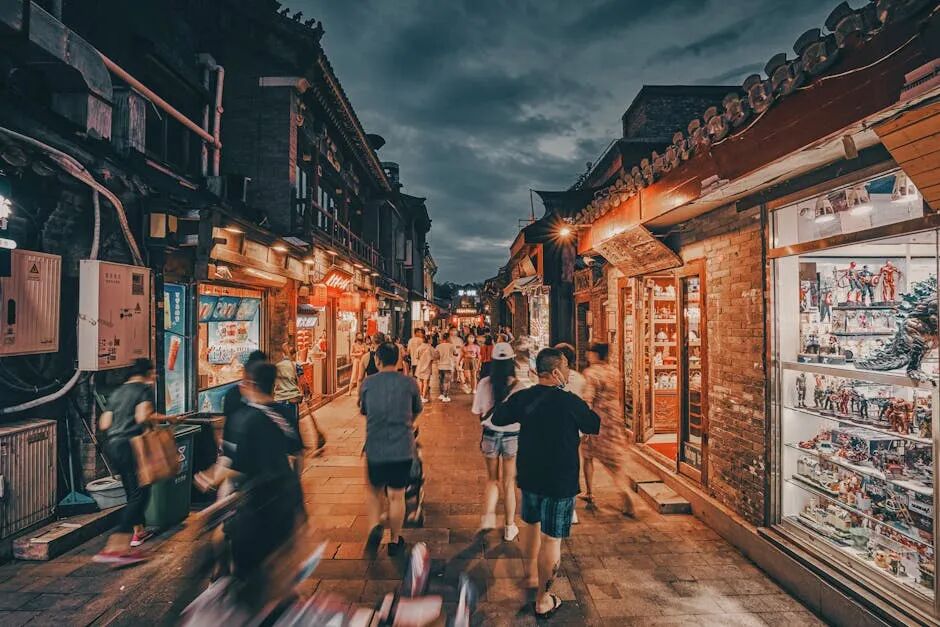
Li Feng: China and Japan still differ, mainly in China's vastly diverse geography. Pre-pandemic, beyond super-cities like Beijing, Shanghai, Guangzhou, and Shenzhen, domestic travel hotspots concentrated in traditional tourist cities. This year is different — iconic destinations like Sanya, Dali, and Lijiang weren't as hot as in previous years; the so-called "torrential traffic" went to places that weren't previously popular or even noticeable. News outlets summarized this as "reverse tourism."
This parallels the logic of non-standard "homestays" gaining popularity. People no longer content themselves with visiting familiar tourist destinations, following the crowd on standardized itineraries, staying in standardized business or resort hotels. Instead, they're more willing to pursue customized, personalized travel experiences. We've discussed on previous shows how people are becoming more self-pleasing in consumption, more focused on their own experience. For example, traveling with parents or children, you might prefer a homestay with a courtyard where you can cook your own meals and drink freely in the yard — something most standardized hotels can't provide.
Li Xiang: One reason might be that some large chain business hotels haven't yet been able to expand to smaller places.
Li Feng: Then my question is: beyond the subjective desire for better personal experience just mentioned, what other factors have contributed to these new patterns in domestic travel?
Li Xiang: Possibly two reasons. During the pandemic, with long-distance travel impossible, many rediscovered nearby destinations, creating more travel options. For instance, Aranya's rise to popularity happened during these pandemic years. Additionally, platforms like Xiaohongshu have developed strong capabilities to manufacture trending destinations, spreading such discoveries to broader audiences and assembly-line producing viral cities.
Li Feng: But the prerequisite for all this is being able to capture and sustain that so-called "torrential traffic." If a place has nothing worth seeing or doing, or if tourism services and infrastructure are lacking, people won't want to go.
Speaking of which, one important backdrop: it's been nearly a decade since "lucid waters and lush mountains are invaluable assets" was written into the Opinion on Accelerating the Construction of Ecological Civilization in 2015. This has genuinely produced results.
Not long ago, I went to Yanqi Lake in Huairou, a Beijing suburb, to give a talk — my last visit was several years ago. I was somewhat surprised; Yanqi Lake is completely different from what I remembered.
Li Xiang: During the pandemic, I went to Datong, Shanxi and found it terrific. Beyond the famous grottoes, there are many temples, and the city walls are well preserved. Once when chatting with someone about my impression of Datong, they were quite surprised because their visit many years ago was completely different. In recent years, many cities have changed considerably in terms of landscape and infrastructure.
Li Feng: Looking at the "lucid waters and lush mountains" and environmental restoration on a five-year cycle, the travel experience and impression at some places is definitely much better than five years ago — especially for first-time visitors.
There's also cultural education and influence. In recent years, many popular tourist cities have broken through on the strength of traditional cultural heritage — Henan, Shaanxi, Jiangsu-Zhejiang have all done this distinctively. Traditional culture has become an important bonus for city tourism. During this May Day, I saw on TV many foreigners visiting China trying on traditional or ethnic costumes. As you mentioned, social media platforms like Xiaohongshu also amplify these distinctive features.
Li Xiang: Yes, like the Galloping Horse Treading on a Flying Swallow at the Gansu Provincial Museum, which went viral through social media. In the past, you'd hardly imagine someone specifically planning a trip to see it, then waiting in long lines and squeezing through crowds just to view a bronze artifact.
Li Feng: Right, now during any peak travel season, museums in cities with deep historical and cultural accumulation are often fully booked. I suspect beyond curiosity and novelty-seeking, people genuinely want to see some cultural history — even if going to relatively niche places.
Another interesting thing. This year, Harbin, Zibo, and Tianshui — which received "torrential fortune" — happen to represent three different city tiers. Five years ago, beyond a few tourist cities, many places weren't particularly motivated to develop tourism, didn't much care about visitor experience, and some cities were frequently in the news for ripping off tourists.
The situation is different now; local governments everywhere want that "torrential traffic." As early as National Day 2020, to facilitate tourist photo opportunities, Chongqing closed a cross-river bridge to vehicles for sightseeing, cultivating an "influencer-friendly city" image. This past May Day, Chongqing again closed bridges to welcome visitors.
Local government awareness has changed considerably. This likely relates to our economic structural adjustment. As individuals, we can somewhat sense that real estate, once an important economic pillar, is in a special adjustment period. So as localities seek new growth drivers, tourism has become an important piece of the economic puzzle.
Li Xiang: Yes, there's competitive pressure among cities too.
Li Feng: What we just discussed are all long, gradual processes. So looking through the May Day holiday data, setting aside the already much-discussed issues of consumer psychology and downgrading, we can actually see a series of trending changes:
- Market level: Travel is becoming more mass-market, with more participants, and also more下沉 and personalized. This personalization manifests in valuing individual feeling and experience, and also includes renewed attention to culture and history.
- Environment level: Behind the cultural tourism "involution" lies both the results of recent long-term ecological governance, and local governments' significantly improved awareness in cultural tourism promotion and service — hoping to use cultural tourism consumption as an important lever for expanding domestic demand.
- Infrastructure level: Here infrastructure refers to high-speed rail, private cars, and highways. For example, the expansion and efficiency of high-speed rail networks, plus increased highway mileage and private car ownership, are structurally transforming how people travel.
How to View the Recovery of International Travel?
Li Feng: On international travel, there are also some dynamics worth watching. Current data shows international passenger flight volumes have recovered to somewhat above 70% of 2019 levels.
Li Xiang: Supply is recovering.
Li Feng: Right. But outbound travel recovery is uneven. Short-haul destinations like Southeast Asia, Japan, and Korea are popular for outbound travel; long-haul is less so — related to holiday length. Japan travel is extremely hot, possibly due to exchange rate factors. Mutual visa-free policies have greatly boosted Thailand and Singapore tourism.
People are still quite willing to travel abroad. Related to this are two news items. First, starting May 6, passport renewal and replacement can be done "fully online." Previously renewing a passport could be troublesome; now convenience is improving. Second, China recently announced extending visa-free entry for short-term visits by citizens of France and 11 other countries through end of 2025. While we still maintain one-way visa-free status for many European countries, we can at least expect that obtaining European visas should become more convenient going forward.
The upcoming National Day holiday is a long break. With international flight supply recovering and passport renewal becoming more convenient, we can look forward to what level long-haul international travel (say, to Europe) may recover to during the National Day holiday.
Reader Giveaway What special reflections or insights did you gain from your travels this May Day? What micro-trends did you observe? Share with us in the comments.
By 5:00 PM on May 17, we'll gift On China to the three readers with the most thoughtful responses.

▲ Li Xiang x Li Feng: Important Timelines and Events Worth Watching in 2024 | Li Feng Column
▲ World Book Day | The Books That Give Us "High Energy"
▲ The Truth About Weight Loss and Innovation Opportunities
▲ Li Feng in Conversation with Lian Wenzhao: LLM Imagination and Bubble, Robotics' "Impossible Triangle" and Future
▲ Li Feng in Conversation with LimX Dynamics Founder Zhang Wei: Humanoid? Robot? | FreeS Fund VC Dialogue
▲ Toward 2024: How We Think About AI Startup Investment | FreeS Fund Year-End Special
Star the FreeS Fund WeChat Official Account for timely business insights