LimX Dynamics Founder: How Do Intelligent Robots Go From "Usable" to "Productive" to "Profitable"?

The Commercial Challenges and Opportunities of Embodied Intelligence
During the Spring Festival, different types of robots captured public attention. On the CCTV Gala stage, robots in floral cotton jackets danced gracefully; on the steep peaks of Mount Tai, exoskeleton robots helped tourists reach the summit; in Hainan, U-shaped robots teamed up with surf instructors to rescue tourists who had fallen into the water.
In 2024, the embodied intelligence industry underwent profound transformation. On the hardware side, robot forms trended toward standardization, with an increasing number of companies able to quickly build humanoid robots. On the software side, technical paths became clearer, with the industry moving toward a foundational large model framework for robots. Meanwhile, the field's entrants diversified — beyond traditional robotics companies, entrepreneurs from autonomous driving and major tech firms threw their hats into this frontier arena.
Embodied intelligence's development has been striking, yet several questions remain that demand deeper exploration: How can we break through the commercialization bottleneck? In what areas does embodied intelligence still need to improve its physical form? How can we enhance robots' operational generalization capabilities to adapt to more diverse application scenarios? What profound impact have large models had on embodied intelligence's development?
At FreeS Fund's 2024 Annual Investor Summit, LimX Dynamics founder Dr. Wei Zhang delivered a speech titled "Embodied Intelligence: Opportunities and Challenges," sharing his thinking on frontier technologies and commercialization paths in the embodied intelligence field.
We also invited FreeS Fund Vice President Qianhang Yan to share additional investment perspectives on the embodied intelligence sector — see the end of this article for details, in hopes of offering fresh angles.
Interactive Giveaway What changes do you think robots will bring to our lives and work? Share your thoughts in the comments! By 17:00 on February 17, the 5 most thoughtful commenters will each receive a FreeS Fund industry research handbook.

LimX Dynamics Founder's First Public Speech: What Robots Lack Isn't a "Brain," But Learning Capability
Source: RoboX
Author: Xiao Cao
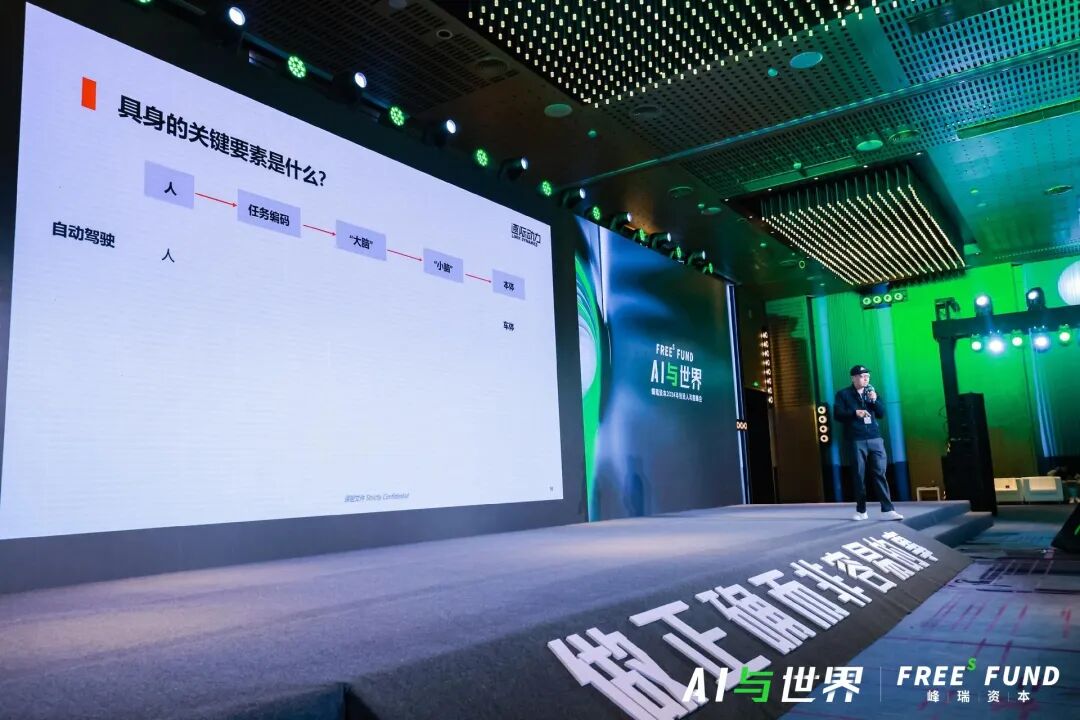
**/ 01 / ** "Replacing People and Assisting People Are Two Different Things"
Zhang believes embodied intelligence is currently the hottest track, and though it still faces many problems and doubts, there is underlying consensus — embodied intelligence represents the most important technological revolution for humanity in the coming decade.
If a robot's positioning is "replacing people to complete tasks that change the physical world," there are two key terms here — "replacing people" and "tasks." They seem simple, but are often massive traps — without thoroughly understanding these two terms, embodied intelligence deployment becomes extraordinarily complex.
He stated that LimX Dynamics' (hereinafter "LimX") perspective and positioning is not about robots replacing people, but empowering people — "Robots won't replace people; the logic behind this is quite complex."
First, Zhang used two embodied intelligence categories to analyze the commercialization challenges behind them.
- Robotics + AI: He noted that the previous-generation robotics + AI model has persisted for quite some time, representing the most difficult commercialization direction — possibly a "mirage."
Such robots can complete highly complex sorting tasks in factories, or parcel sorting. But they still face many challenges in achieving true commercial closure: "The moment you sell one might be the moment you start losing money."
- Autonomous driving: In Zhang's view, from 2016 to 2024, autonomous driving has developed for a long time, yet its maturity remains difficult to assess — "When you feel you've found the 'technical switch,' there's still that 'final 10%' of difficulty that's impossible to estimate, and it's precisely this 10% that critically impacts overall development."
Meanwhile, its commercial value is also hard to judge. Because replacing people and assisting people are fundamentally different — they involve different business models, produce different products, and these two product types face completely different tests.
Making robots "usable" is actually quite simple, but forming a commercial闭环 is very difficult. The autonomous vehicles or delivery vehicles currently on the road — the physical units themselves — are not the protagonists; they may account for less than 10% of the entire value chain.
Similarly, the robot product itself only accounts for less than 10% of the commercial chain. The remaining deployment, maintenance, scene modification, and collaborative relationships constitute the bulk of costs. So robots need not just good physical forms, but also data tools, training tools, deployment tools, and maintenance tools — this entire efficiency system is the competitive advantage, not the physical form itself.
By the same token, if you want robots to replace people, it's not a matter of changing the physical form, but changing the entire collaborative relationship.
**/ 02 / ** Large Language Models' Capabilities Remain Quite Limited
Now when people mention embodied intelligence, they associate it with integration with large language models. For example, to communicate human intent to machines requires task encoding or embedding — the "brain" must first process and decide on the task, then the "cerebellum" executes the movement.
By comparison, autonomous vehicles represent a very simple embodied intelligence task, because the task definition is clear: the sole goal is reaching the destination, moving on structured roads. Moreover, the autonomous vehicle's "cerebellum" — the chassis and domain controller — is already quite mature.
Even so, Zhang doesn't consider current autonomous driving as "fully replacing people": "It's essentially still AI + people. Autonomous driving only uses technology to change the way people drive."
For embodied intelligence, completely replacing humans is even more difficult. Zhang used a very simple task as an example: tidy up the table. Yet such a task is hard for robots to decompose and execute — which items on the table should be tidied, and to what degree counts as clean? "Without large language models, people wouldn't even dare imagine robots could execute such tasks. But now we only dare to imagine; how to actually do it remains unclear."
**/ 03 / ** What Kind of Physical Form Does the Embodied Intelligence Industry Still Need to Develop?
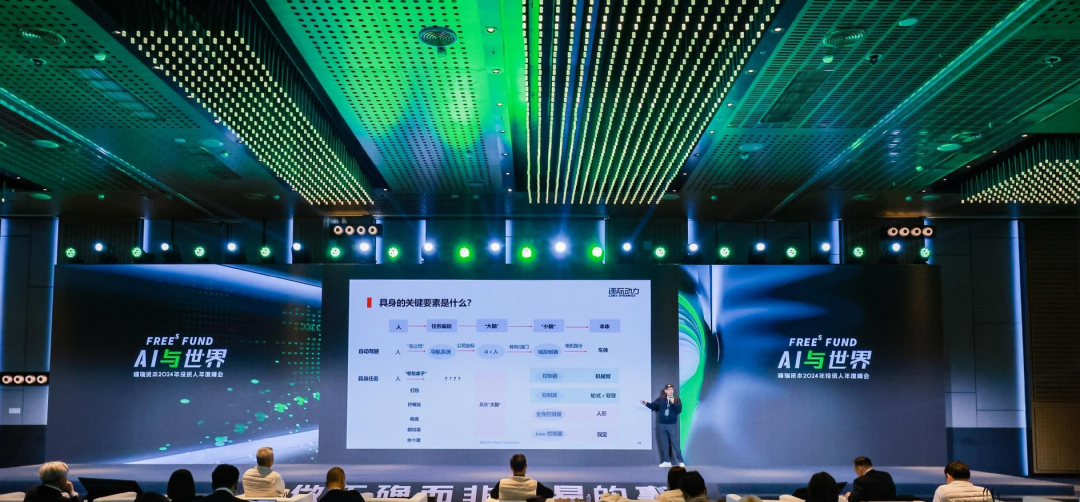
The idealized notion is to data-engineer an "embodied brain," coupled with a general cerebellum + general physical form, to complete various tasks.
But Zhang believes adopting a uniform general physical form is unnecessary. He summarized four existing physical form types:
- Robotic arms, whose controller cerebellum is extremely mature.
- Wheeled chassis + dual arms, whose controllers are relatively mature.
- Humanoid + humanoid-specific cerebellum.
- Humanoid lower body, with only dual legs or quadruped legs, mainly completing locomotion tasks.
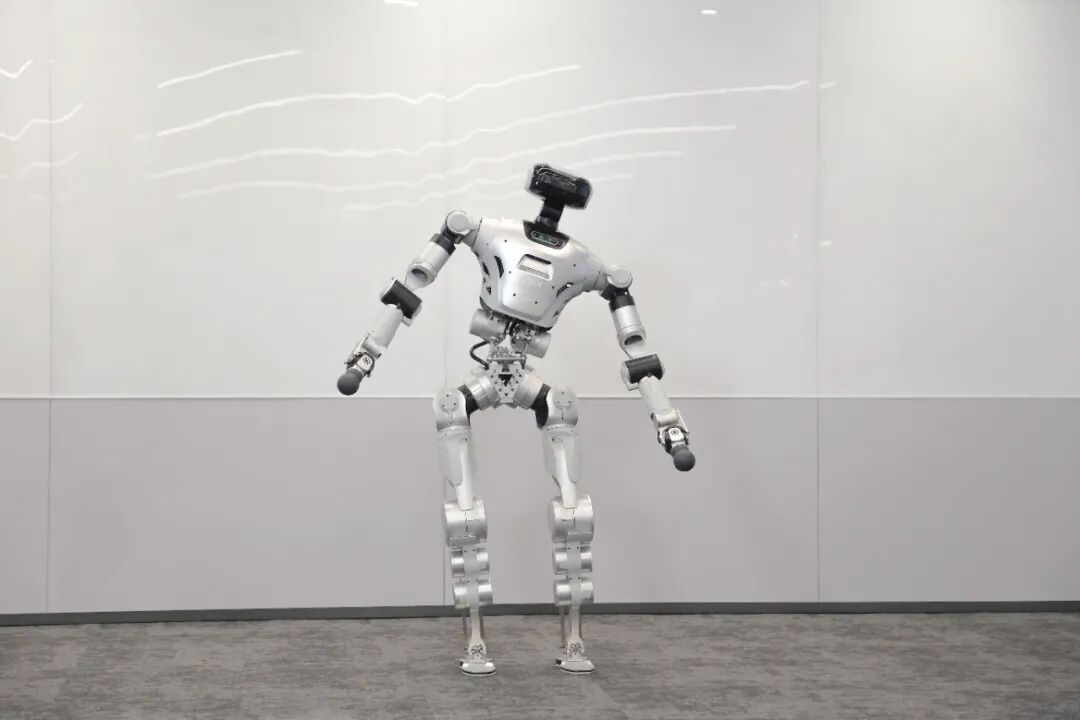
▲ LimX Dynamics humanoid robot CL. Image source: LimX Dynamics
Essentially, robots do two things: replace human hands for manipulation, and replace human legs for movement. He believes that during industry development, these two physical form types should create the greatest value, which is why LimX chose to focus on both. "Betting on which one, which physical form to build? I don't think that's a good question. The good question is 'what kind of physical form does this industry still need to develop.'"
In his view, to build high-value physical forms requires three conditions: 1) currently doesn't exist in the physical world; 2) fundamentally supportable to be built; 3) certain to be one form among future robots.
**/ 04 / ** Models Are Like Newton's Laws — Compression of Historical Data
"Some believe that one large model could become the entire brain of embodied intelligence. Actually this is an unrealistic idea — embodied intelligence needs many brains. And right now we don't lack brains in specific domains; what we lack is learning capability, meaning efficient data processing capability," Zhang said.
Zhang believes embodied algorithms define hardware, but data defines algorithms. All data must be utilized, especially real-machine data (collected and generated on actual hardware devices), which is important.
Simulation is undeniably one way to use models, and both simulation and models greatly help with data generation and production. But from a data integration perspective, models are compression of historical data — like Newton's laws, which can be seen as compression of all data on moving objects, and rather well-compressed at that.
"All well-compressed data can be used to generate new data, helping advance generalization." Generalization means robots can transfer experience gained from specific environments or tasks to new environments or tasks. For example, a robot might learn to avoid obstacles in a particular room, but with strong generalization, it should be able to effectively avoid obstacles in different environments.
He noted that operational generalization has many types — modular, end-to-end — which are essentially different ways of utilizing and hypothesizing about data.
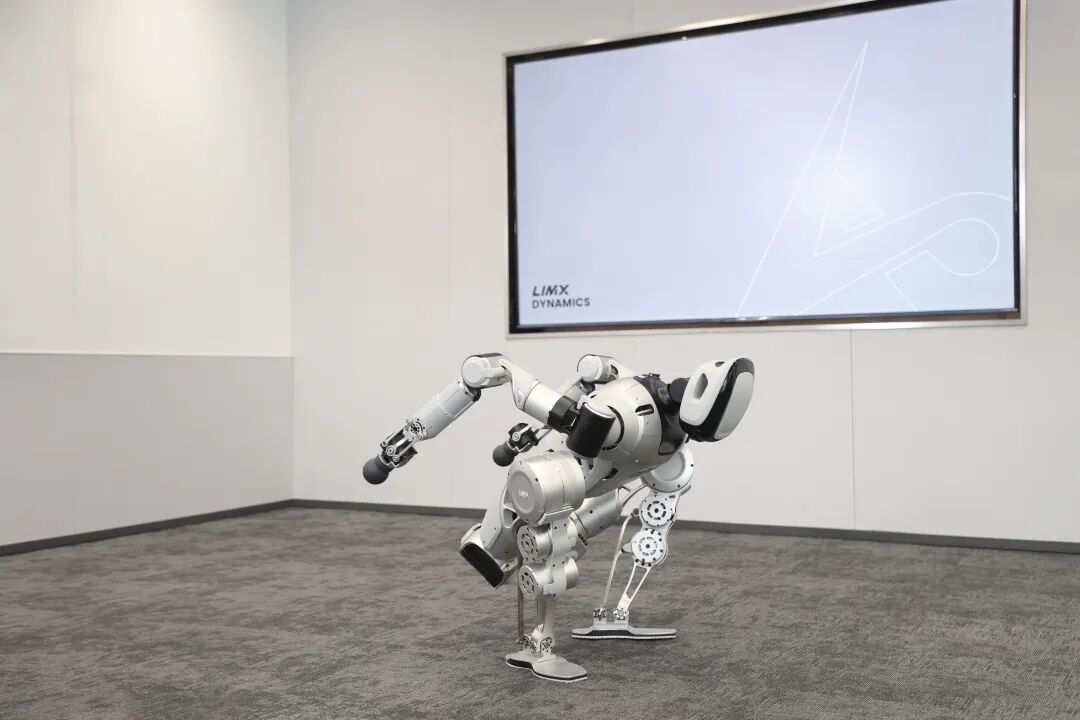
▲ LimX Dynamics humanoid robot CL performing an "Asian squat." Image source: LimX Dynamics "But currently, all our data processing methods fall short of ideal functional requirements. So we can't blindly pursue stacking data and improving performance on one method; we need to find 'Curve D,' which I call the 'performance-to-data ratio' or 'data-to-performance conversion rate' curve."
So how to improve data utilization efficiency? Zhang explained that actually, from easily obtainable rule-based data, there's much information that can help guide operational generalization.
He showcased a LimX Dynamics case — without large-scale collection of real-machine and simulation data, but through text prompts letting large models generate videos of human operations, they could guide collaborative robotic arms to complete manipulation tasks. "Our data utilization efficiency reaches 100x that of current algorithms," Zhang said.
He stated that LimX's reason for building humanoid physical forms plus full-control cerebellum is to do well the category of things that "will certainly be useful in the future, but aren't done well yet."
Meanwhile, LimX is also developing low-cost embodied intelligence "industrial mother machines," exploring a new learning and training approach, so that embodied intelligence can complete generalizable tasks with higher efficiency in any domain.
Zhang emphasized that LimX Dynamics' core positioning has always been to empower innovators: "We don't directly enter factories; our positioning is to become the NVIDIA of embodied intelligence, improving the efficiency of embodied intelligence innovation and deployment by 100x or 1000x."
According to his disclosure, LimX's humanoid robot (heavy-load whole-body搬运) has completed proof-of-concept at minimum cost, and without compromising the verification targets. Meanwhile, LimX will also release its first full-size humanoid robot, capable of standing up from a prone position and walking with straight knees.
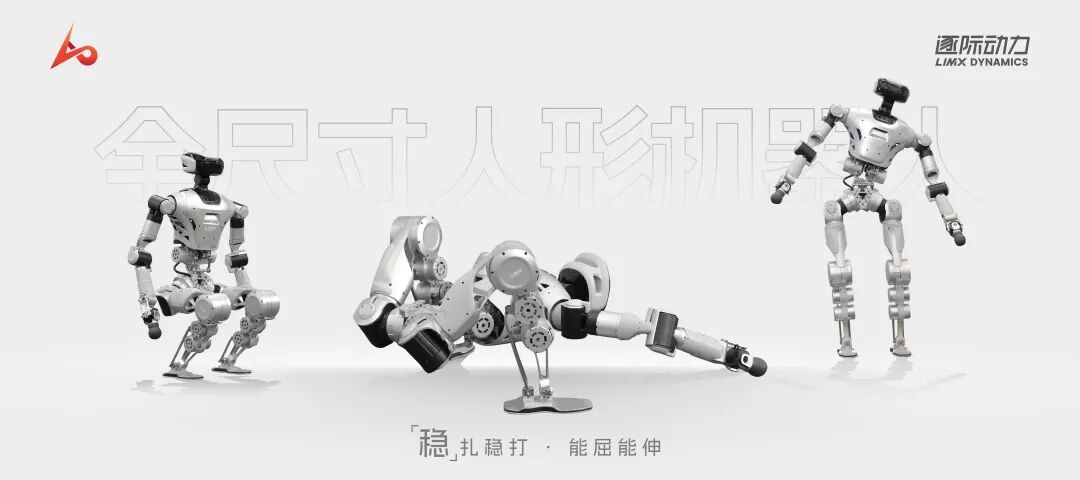
▲ LimX Dynamics full-size humanoid robot. Image source: LimX Dynamics
**/ 05 / ** From the Investor: How We View the Embodied Intelligence Industry

Thank you to Dr. Zhang for his profound insights. FreeS Fund continues to pay attention to innovation opportunities in the embodied intelligence field. We warmly welcome entrepreneurs and investors in related fields to connect with us at qianhang@freesvc.com.
In the embodied intelligence field, we observe the following changes and opportunities:
I. Major Changes in the Embodied Intelligence Industry in 2024
In 2024, the embodied intelligence market underwent significant changes, mainly in hardware and software.
On the hardware side, robot forms trended toward unification. The industry gradually reached consensus, with overall robot structure and core component selection converging. This means the barrier to hardware construction has dropped substantially, with more companies able to quickly assemble humanoid robots.
On the software side, technical paths became clearer. In the past, robots mainly relied on single-point strategies like Model Predictive Control (MPC), imitation learning, and reinforcement learning to achieve certain tasks. Now, the industry is moving toward a foundational large model framework for robots. Specifically, robots undergo video pre-training, fine-tuning (SFT) with high-quality data, and reinforcement learning with real-world scenario feedback to optimize task performance.
Additionally, the entrants have changed. Beyond traditional robotics industry practitioners, autonomous driving companies and entrepreneurs with major tech firm backgrounds have begun entering embodied intelligence. This trend became particularly pronounced in the second half of 2024, with the humanoid robot market attracting more cross-industry attention and resources.
II. Global Embodied Intelligence Development Stage and China's Unique Advantages
Currently, the global embodied intelligence industry is in a stage of gradual technical convergence, with methodologies across players becoming similar, embracing AI. Specifically, both manipulation and motion control are beginning to emphasize foundational large models and whole-body motion control.
However, challenges remain to be solved, such as:
- How to better achieve whole-body control and improve robots' locomotion capabilities.
- How to integrate physical world sensory data to enable real-time feedback in robots' intelligent motion decision-making modules.
- How to achieve generalization capability for foundational robot large models (prediction ability when facing new samples).
China's unique advantages lie in fast-responding hardware supply chains, large downstream demand from industrial and service sectors for robots, and rich data accumulation. These advantages provide domestic players with a solid development foundation. However, challenges also exist — particularly in key technology R&D and productization, where domestic players need to break through existing technical bottlenecks to secure favorable positions in the competitive landscape.
III. LimX Dynamics Brings New Possibilities to the Embodied Intelligence Industry
In 2024, LimX Dynamics achieved significant progress in both technology and products in the humanoid robot field, bringing new possibilities to the embodied intelligence industry.
On the technology side, LimX has consistently been at the industry forefront, continuously advancing R&D in core technologies including humanoid robot whole-body motion, perception and decision-making, and task execution. On the product side, LimX launched its innovative "three-in-one" modular product Tron1, mainly targeting the research market. This product provides downstream customers with a platform with complete software and hardware, helping them achieve R&D and deployment needs. The latest generation humanoid robot product will be released in 2025, which we very much look forward to.
IV. Opportunities in the Embodied Intelligence Track in 2025
In 2025, opportunities and challenges coexist in the embodied intelligence track. From the financing and entrepreneurship perspective, as entrepreneurs continue to emerge, mainstream funds have already completed their布局 in embodied intelligence, and fundraising opportunities for new companies will have higher barriers compared to the previous two years.
However, from a technical perspective, embodied intelligence remains in a research phase, not yet achieving large-scale commercialization. Therefore, for companies with底层 innovations on key technical challenges (such as whole-body control, generalization capabilities), there remains a window for entrepreneurship.
V. Commercial Application Prospects for Embodied Intelligence
Recently, robot-related videos have gone viral — robots twirling handkerchiefs at the Spring Festival Gala, hiking mountains, etc. — reflecting public's beautiful expectations for robots. But these videos mainly demonstrate robots' locomotion capabilities and intelligence levels; twirling handkerchiefs or mountain hiking are very concrete demonstration methods, making the public full of expectations for humanoid robots' commercial future.
Overall, embodied intelligence's commercial application prospects are broad, but it remains in an early technical R&D stage, with a considerable path still to productization and large-scale commercialization.
The key to humanoid robot commercialization lies in controlling productization costs and robots' ability to efficiently complete generalizable tasks. In the short term, humanoid robot commercial applications remain mainly in research and demonstration. In the future, true commercial applications may first appear in industrial and service sectors.
Current market consensus is that humanoid robots will become intelligent assistants that assist humans (robot-form AI Agents), rather than simply replacing human labor. For example, in repetitive physical labor and scenarios unfriendly to human health, robots can become "capable assistants," improving human work efficiency.
The above are some of my thoughts on the embodied intelligence field. I very much look forward to exchanging ideas with practitioners in the embodied intelligence field.
Interactive Giveaway What changes do you think robots will bring to our lives and work? Share your thoughts in the comments! By 17:00 on February 17, the 5 most thoughtful commenters will each receive a FreeS Fund industry research handbook.

▲ 13 research reports + 1 podcast for you — wishing you a prosperous start to work
▲ FreeS Fund 2024 Year-in-Review: Walking Further Together, Doing What's Right Rather Than Easy
▲ The Road to Embodied Intelligence | FreeS Report 37
▲ Embodied Intelligence vs. Sports Tech: Making Machines Like Humans, or Turning Humans Into Machines? | FreeS Report
▲ How Far Is Embodied Intelligence From Reality: Hype, Bubbles, Technical Frontiers, Commercialization | FreeS Research Institute
Star the FreeS Fund WeChat Official Account for timely business insights