[Long Read] Two Decades of Rise and Fall in Chinese Animation | FreeS Fund Business School

How Much Further Is China's Path to Becoming Disney?


How Far Is China from Its Disney Moment?
In 1997, Zhuda Computer Animation attempted to produce Havoc in Heaven using 3D technology. Though the project ended in failure, it marked the beginning of Chinese animation studios' transition from 2D to 3D.
Today, Chinese 3D animation has been around for 20 years. What's interesting is that capital only began flooding into domestic comics in recent years. In 2016, FreeS Fund made a sole investment in 2:10 Animation's Series A. By then, 2:10 had already been grinding through the industry for nine years, surviving many dark moments.
This long read chronicles two decades of ups and downs in the animation industry. In the testimonies of animation professionals, words like "failure," "losing money," and "destitution" abound — alongside confessions of "idealism," "betting everything," and "burning passion."
The road is long. As VCs, when we evaluate an animation company, we look at whether it has production capabilities, content planning and creativity — especially the ability to create hit IPs — and commercial monetization potential. So from the entrepreneur's perspective, how far is China from its Disney moment? We've also invited animation industry veteran and 2:10 founder Shiyong Wang to share his thoughts on the essence of the animation industry and its future prospects. See the end of this piece for his commentary — we hope it offers some insight.

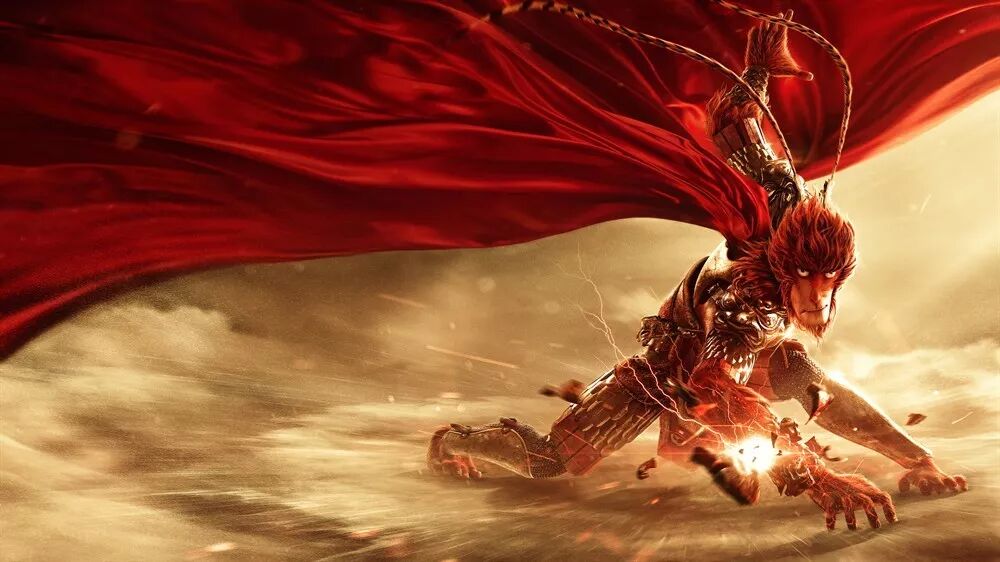
"Before the Monkey King Returned" — Twenty Years of Life and Death in Chinese Animation
Author / Sanshui
Editor / Zhou Hualei
Until the day before Monkey King: Hero Is Back premiered, industry peers were still talking about director Xiaopeng Tian: in a few days, would people find his body in a sewer?
Eight years in production, he had borrowed every penny he could, wishing he could even mortgage his own head. "This is betting your life," one insider described it.
Obsessive dedication, betting everything — this has been the universal portrait of trailblazers over the twenty years since Chinese 3D animation was born. In a sense, these practitioners were also like the Monkey King himself: resilient, persistent, pure, clearing land from nothing, enduring all manner of grinding hardships without regret, desperately crafting a magnificent dream about animation for themselves and their audiences.
In 1997, the first animation company to use 3D technology for Havoc in Heaven failed after just six months of production. In 2006, Thru the Moebius Strip, five years in the making, nearly wiped out its 130 million yuan investment. In 2009, the China-US-Japan co-production Astro Boy also flopped spectacularly. Enlight Media, which invested in the film, nearly went crazy with losses — "President Wang had tears in his eyes every day."
With pioneers and martyrs everywhere, Monkey King: Hero Is Back finally staged its comeback.
Today everyone talks about ACG culture, and we've all grown accustomed to Bilibili's bullet-comment spectacle. But twenty years ago, those dream-chasing youths were sifted through大浪淘沙, becoming the backbone of a booming animation industry. The humiliation, hunger, and even deaths behind it all remain little known.
Their stories happened long before capital poured in.

Twenty Years Ago, Animation Wasn't Even a Real Major
In September 2000, after a 30-hour train ride, Lei Guo dragged an enormous suitcase through the crowds in Guangzhou Railway Station's underground passage.
Guo (founder of Yitang Pictures) had been free-spirited since childhood. Even when he later served as executive director of Monkey King: Hero Is Back under emergency circumstances, he maintained his habit of working half a month and gathering inspiration the other half. But at this moment, preparing to transfer to Shenzhen Global Digital for enrollment, he reverently put on the only suit he would ever wear in his life — in sweltering heat.
Halfway up the ramp, the handle snapped with a crack. It was a brand new suitcase, 1.5 meters tall, packed densely with drawings. Nearly 100 pounds — impossible to carry. He could only grip the remaining half of the rod and drag the suitcase across. Enclosed in his suit, he sweated even more profusely.
Global Digital would later become the "Whampoa Military Academy" for Chinese 3D animation talent, but when Guo first heard of it, it hadn't yet enrolled a single student or produced a single work. He hadn't believed this institution that reached out to him — going by the popular Ma Ji comedy routine at the time, anything with "Global" in the name sounded like a scam. He hadn't planned to bring it up with his family either. But his brother understood his mind, showed their father the enrollment information from Computer Weekly. His father glanced at him and said, if you want to go, go.
Though his father responded calmly, this decision was not made lightly: Guo's family was middle-class by Jinan standards, but in an era when average monthly salaries were a few hundred yuan, tuition over 10,000 was astronomical. Not to mention Guo was among the very first to take this plunge; to go to Shenzhen, he even abandoned his original studies.
Since the 1995 explosion of 3D animated film Toy Story, Chinese animation companies had been eager to leap from 2D animation into the blank slate of the 3D era. Zhuda Computer Animation was the first to step up, investing 100 million yuan to attempt a large-scale computer effects film, Havoc in Heaven. But after six months of production, inefficient technical exploration and excessive costs dragged down what was then China's largest private animation company. In 1997, the project was declared aborted.
Guo didn't mind such harsh reality. After all, he had wanted to study animation for quite some time.

▲ The cartoon Ikkyū-san, which accompanied the childhood of several generations.
In 1983, the animated series Ikkyū-san was introduced to China, sweeping across the country alongside subsequent hits like Saint Seiya, Dragon Ball, and Doraemon, becoming a shared childhood complex for generations. Guo was no exception.
For college, Guo deliberately chose environmental art — a major said to use computers for drawing. At that time, animation wasn't even a real major; he was satisfied to get close. He quickly discovered with frustration that he had come to the wrong place — environmental art and animation drawing were completely different things.
He still had to teach himself.
His initial "weapon" was his brother's hand-me-down 386 computer. The machine was bulky and slow, requiring a floppy disk to boot, and going online depended on sluggish dial-up response. But in 1998, this was the entirety of Guo's animation career equipment. Teaching materials on the internet were extremely scarce then. Guo's English was poor; his only clumsy method was to try every key on the software to see what it did. "Unexpectedly, I really figured it out."
Global Digital changed his life trajectory. During his first year studying in Shenzhen, he barely knew what the city's streets looked like.
"The Animation Industry Is a Brutal Assembly Line."
Back then Google was still niche, Baidu hadn't been founded, and you couldn't find anything decent online. In this wilderness era, hungry Chinese had three ways to access animation technology: scattered website exchanges, word-of-mouth experience, and stumbling self-teaching.
It wasn't just Guo. Animation enthusiasts flailing about like headless flies were everywhere across the country.
Han Qiang, deputy general manager of 2:10 Animation, was originally an art teacher at a middle school in Henan. With his full beard, he looked like a heavenly god straight out of an animation. He loved comics since childhood, filling the margins of homework and textbooks with doodles. When he heard that Hunan Normal University had a teacher running a 3D animation training course, Han saw his chance. He asked his family for 20,000 yuan and set off to make his way away from home.
Just one month in Changsha, Han was informed: due to insufficient enrollment, the training course was disbanded. He pulled his classmate Zhongjun Bu, who had also been left in the lurch, and tried heading north for opportunities. Their first stop was Wuhan — and they never left.
They found a training course bearing Wuhan University's name, but the path of study remained bumpy. Teacher Hongbing Xiong himself had only a crude grasp of 3D basics — the so-called enrollment was actually to fulfill an outsourcing contract. When problems arose, the group had no choice but to pore through books together; sometimes a single small step would stall them for weeks. Their only reference was Maya: The Complete Reference, an 18-volume set that stacked half a person's height.
Among the 3D animation companies that emerged in those years, most were teams "making steel by indigenous methods." The one with the most proper military bearing was actually Global Digital, where Guo studied.
The Leung brothers, who founded Global Digital, were respectively a veteran Hong Kong lawyer and a CG imaging expert. The brothers were similarly moved by America's Toy Story series, determined to build "China's Pixar." They partnered with Shenzhen University to establish a training center, teaching while producing China's first 3D animated feature — Thru the Moebius Strip.
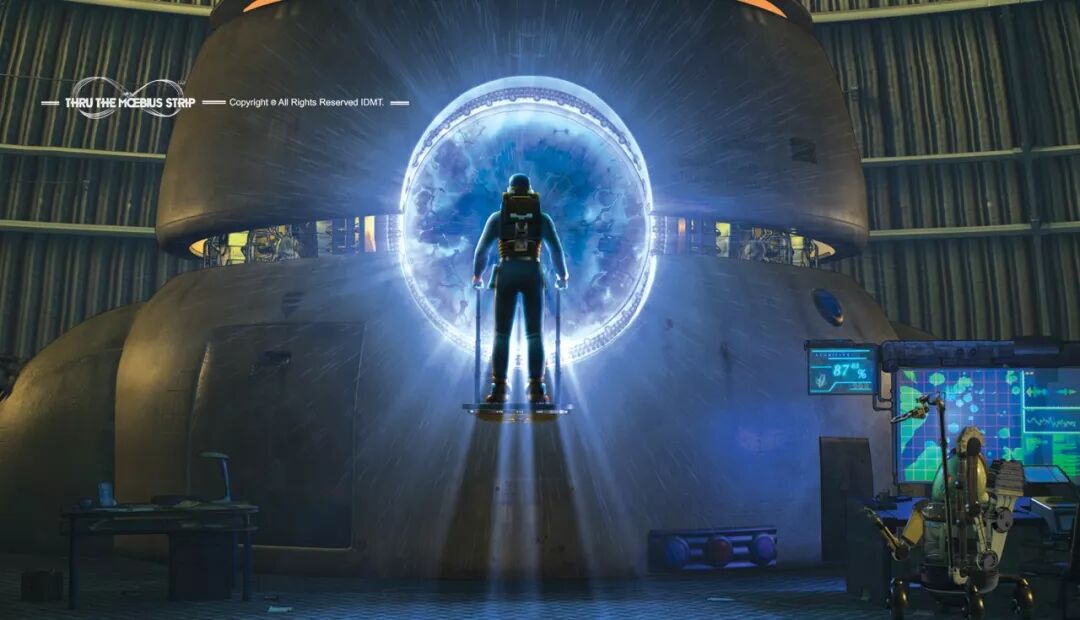
▲ China's first 3D animated feature — Thru the Moebius Strip.
Global Digital put up a total of 130 million yuan. At its peak, the production crew had over 400 animators, and even the R&D and pipeline management software was developed in-house.
When Guo Lei arrived in Shenzhen after a long journey, Global Digital was equally barren in both talent and technology. But soon, funding put these green yet exhilarated animators on track. High-salaried overseas executives from Sony brought in the experience and technical standards of a major industrial operation.
Hu Ganhu, production director at 2:10 Animation, was among the third cohort of trainees. The year he enrolled, Global's technical capabilities already far surpassed any other domestic institution.
Six months into his studies, Hu — still a student — was pulled into the production department for Thru the Moebius Strip. The team was relentlessly meticulous: to achieve translucent skin effects, they would layer over a dozen complex materials; to figure out how objects acquire the texture of age, they collected various "junk" and studied the grain of worn things. Sometimes a single shot would be refined over two weeks.
This 3D animation production pipeline, as talent from Thru the Moebius Strip dispersed and seeded new ventures, became China's foundational template — the blueprint for going from zero to one. In a sense, Global Digital was the "Whampoa Military Academy" of Chinese 3D animation.
Yet Thru the Moebius Strip, polished over five years, met disastrous failure upon its 2006 release, grossing merely 3.4 million yuan at the box office.
"Animation industry is a brutal assembly line," one veteran producer noted. "When Moebius was being scripted, epic films were all the rage worldwide — they were aiming for something in the vein of The Lord of the Rings, The Prince of Egypt. But they took too long. By the time it came out, it was WALL·E's world."
Over those five years, the Liang brothers burned through tens of millions. Rumor had it that at their most desperate, the elder brother had to ask his wife to cover payroll.
Before the animated film even took final shape, Global Digital had already changed hands in 2004, gradually pivoting to international production outsourcing.
Guo Lei, who had spent three years with the Moebius crew, also packed his bags that year and returned to his hometown Qingdao, founding his own company Lingjing Digital.
"They're spending their whole lives obsessing over animation."
While Thru the Moebius Strip inched forward, Han Qiang and Bu Zhongjun's makeshift operation also achieved阶段性胜利 through a process of learning by doing, consulting books as they worked.
In 2003, several trainees together with their instructor Xiong Hongbing founded "Wuhan Renma," and produced China's first 3D animated short X-Plan. This roughly ten-minute animation quickly caused a sensation in the industry — people discovered that "China could produce Hollywood-level animation too."

▲ China's first 3D animated short X-Plan, which won numerous awards.
Wang Shiyong, a sophomore in graphic design at South-Central Minzu University, also read about X-Plan in a magazine. He was instantly electrified.
Animation offered Wang, with his solid art foundation, another possible path. Believing animation to be team-based work, he convinced five classmates in one go to rent a place off-campus and self-study animation. To learn the craft, the greenhorn directly called Renma's founder asking for an internship.
At this point, Chinese teams with animation expertise were exceedingly rare. Beyond the headline-making X-Plan, Renma had been invited to produce promotional videos for the online game Divine Miracle, making them red-hot in the circle. Internet giants NetEase and Shanda had both expressed acquisition interest in Wuhan Renma. Wang Shiyong, with zero experience, was naturally rejected.
His roommates lost interest, burying themselves in games all day; only Wang remained as fired up as ever. He too embarked on self-study. With weak English fundamentals, he navigated software menus by memorizing positions — even years later when teaching others, he'd refer to "that E one, the longest."
After eating plain boiled noodles for some twenty days, Wang finally completed a human head model. Posted on Chinadv, China's largest 3D animation forum, the work drew considerable admiration, with many calling him a "genius."
Before long, Xiong Hongbing proactively invited him to intern. A few months later, Wang became a full-time Renma employee.
Every time he learned a new tool, Wang would create a piece and post it to the forum, quickly building a modest following. This influence extended beyond the internet. At his university, nearly two-thirds of the male students in his major flocked to Renma. Because their tuition had all gone to Wuhan Renma, by the final semester of senior year, only a handful of male students in the class received their diplomas.
Due to the lack of original creative opportunities, Wang soon left Renma for Guo Lei's Lingjing Digital.
By now Guo Lei was already an industry leader. CGTalk gathered 3D talents worldwide, and having work featured on the homepage or rated highly represented universal industry recognition. In that era when Chinese animation was still crude and mysterious, such honor was especially rare. As early as 2001, Guo Lei's work had received a 5-star rating on CGTalk, the forum that assembled global 3D experts. His short Angel Noah and promotional video for the Asian Cup had also caused a stir in the industry.
Wang Shiyong's assessment of Guo Lei: "As long as he's alive for one more day, he'll definitely create something incredible in this lifetime. Because they're spending their whole lives obsessing over animation."
After switching between several companies, Wang felt he could no longer break through technically, and the entrepreneurial spark ignited. Returning to Wuhan, he registered a company named "2:10 Animation" — a name often mocked, but also an authentic reflection of his late-night work schedule.
The startup capital was 30,000 yuan borrowed from his mother. During that period, Wang paid himself 300 yuan monthly, once again living on plain boiled noodles every day.
The company registered in late June; by July the boss was already handing out flyers on the street, the team tanned pitch-black. Wang had calculated carefully, planning to simultaneously pursue training, outsourcing, and original content — but nobody signed up. Occasionally someone showed interest, took one look at the shabby office, and walked away.
Back then Wang had read nearly 300 management books, often sharing with his partner the next day: here's how we'll become a Fortune 500 company.
The partner's response was characteristically grounded: "You're overthinking it. What can three people do?"
Drawing on his reading and heard cases, Wang quickly adjusted his thinking. He decided to "pierce the sky with a single needle."
After two months of heads-down work, Wang produced a 3D model titled Classical Girl. The girl's lifelike face and contemplative expression reached heights even he hadn't anticipated. As Wang expected, Classical Girl won dozens of awards abroad, was featured on CGTalk, and caused a sensation domestically.
Meanwhile, Wang posted production tutorials online, leaving his QQ number. The QQ account exploded, maxing out at 3,000 contacts almost instantly.
Messages poured in: "Can girls learn animation? Is it too late if I'm a junior? I'm a computer science major — can I learn animation? What's the salary for animation work?"
Wang simply created a group for centralized responses. Recruitment was soon no longer a problem.
In the Man-Made Golden Age, Winter Came
From 2005 to 2009, the animation industry experienced a wave of fervor. Universities began adding animation majors in 2005, driving training demand ever higher; more critically, the state began vigorously supporting animation, with funding flowing into the industry unchecked.
An artificial golden age commenced.
Under layered government subsidies at every level, some productions could accumulate subsidies of 8,000 yuan per minute. Chasing subsidies became a new profit model — "a bunch of speculators from other industries, coal miners, real estate developers, all got into animation."
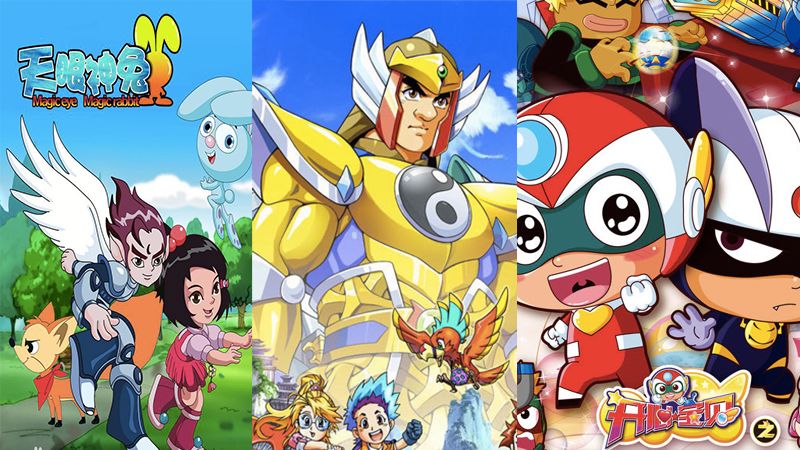
▲ Animation chaos: In 2011, national TV animation production reached 270,000 minutes.
Due to qualification restrictions, technically strong small and medium teams were instead exhausted by scrambling for outsourcing work to survive, with costs compressed to two or three thousand yuan. To land jobs, Wang Shiyong's team pulled all-nighters almost daily, but the results were significant. That year the company profited several hundred thousand yuan — "had never seen so much money."
Because a partner departed, 2:10 Animation's cash on hand once dropped to just tens of thousands. At that time Wang took on a major project requiring more people and computers. He硬着头皮 went to the computer mall and borrowed 50 computers under the pretense of a trial period. These production tools stayed at the company for half a year; in the end they only purchased one — even that money was borrowed.
Days before payroll, Wang even considered loan sharks. He couldn't produce collateral and was directly thrown out. He then maxed out credit cards, barely scraping by day after day.
Watching the company reach the end of its rope. Finally, Wang took a train for several hours to the client's company to press for payment. Before going upstairs, he saw a flower blooming in the roadside grass, picked it, and pinned it on the vice president who accompanied him. Heart hardened: "If they don't pay, we'll fight to the end!"
Just as he was about to go up, his phone dinged — the 1.8 million yuan project payment had arrived.
Everything seemed to be going smoothly.
The following year, 2:10 Animation's revenue reached 10 million yuan. Wang was also regarded by the government as a model college entrepreneur, receiving honors large and small. On December 26, 2009, when China's first high-speed railway — the Wuhan-Guangzhou line — opened, dominating newspaper front pages, Wang still remembers that the same day's local paper also featured, on its front page, the news of him being awarded "Wuhan Entrepreneurial Figure of the Year."
Even as a "figure of the year," Wang remained financially constrained. Employees wanted to apply for funds to create original content, while the company's hard-won outsourcing profits were merely around a million — allocate 500,000, and what remained would only cover a few months of payroll.
Wang recalled that he had left Renma precisely because of the lack of original creative space. "Still bit the bullet — approved it."
In the big-fish-eats-little game, outsourcing companies and technical personnel remained at the very bottom. Everyone harbored dreams of original creation, but even squeezing their survival space to the limit, this luxury aspiration only had the narrowest crack of opportunity. On ChinaDV, the forum most active with technical personnel, the hottest posts were never about technical discussion, but about practitioners' predicaments.
Ding Rui, online handle "Ting," was an opinion leader on ChinaDV, known for sharp views and incisive language. Having founded a company and also worked at Shanghai Film Studio, Ding later switched to hospice care after leaving the industry, and is now a screenwriter for his own film projects. His reason for switching was exceptionally typical — "such a miserable industry, who would keep doing it?"
In his view, "The times never gave technical people true dignity. Why could ChinaDV gather so many people back then? Because everyone was drifting, utterly individual. Like a huge cold playground with one stove, we surrounded that stove, constantly warming our hands, taking what little heat we could."
But winter came fast for the industry. In 2012, government agencies recognized the distortions created by local subsidy policies and abruptly canceled all support measures. Animation studios across China were devastated — layoffs, bankruptcies, and pivots followed en masse.
In 2012, when 2:10 Animation moved into its office in Guanggu, all eight floors were filled with animation companies. By 2013, only 2:10 and one or two others were still soldiering on.
Talent was hemorrhaging too. Despite similar job functions, the gaming industry paid several times what 3D animation did. As early as 2004 to 2006, many of Hu Ganhua's colleagues had jumped from Global Digital to neighboring Tencent. By 2012, when the industry contracted sharply, gaming had become the primary escape route for technical staff.
Hu Ganhua couldn't understand it at first: "We were all going to make films. We were the hope of Chinese animation." But that pride soon became self-deprecating humor: in 2009, Hu joined Digital Tiger Imaging — though still using 3D technology, the company's clients were now museums, entertainment galas, and tourism projects.
ChinaDV, the forum that had let so many practitioners "warm themselves by the stove," also suffered a freak disaster in 2011.
For years, ChinaDV and Mars Era had been China's two largest 3D animation forums, yet their temperaments couldn't have been more different. ChinaDV emphasized industry exchange and offline events, attracted top talent, and built strong cohesion, while Mars Era pivoted early to training, not only developing a viable business model but earning its founder Wang Qi the title "Godfather of Chinese CG." Among senior technical staff, a pecking chain existed — ChinaDV was considered more professional, Mars Era more elementary. But in its later stages, the lack of a business model became an unavoidable problem for ChinaDV founder Hou Songlin.
In 2004, Hou tried launching training programs himself. Momentum was building when he was forced to shut down due to entanglement with an investment institution. Ultimately, ChinaDV had to close in 2011; even the domain name was sold off by one of his technical staff for a few thousand yuan.
An even more tragic case was Fisherman Animation in Changzhou. Obsessed with original content yet poor at business operations, founder Yu Luoyi, who owed employees over one million yuan in back wages, hanged himself in October 2013.
As one producer put it, in the animation industry, "having dreams isn't necessarily a good thing. Many people who stick with the industry either die poor or are driven to death."
In Wang Shiyong's eyes, these were idealists never valued by their era. "When there were no textbooks, if one person produced a work, everyone would worshipfully, tirelessly ask: how did you make this? Later, they were thrown off balance by people from real estate or other random industries, and never got good outcomes."
Monkey King: Hero Is Back and Its 956 Million RMB Box Office Became a Turning Point for Chinese Animation
Despite the market depression, people kept pouring in one after another.
"China's animation industry once reached a state of over ten thousand enterprises and dozens of animation bases, becoming a spectacle in global animation development. In scale, China has become an animation giant, but overall it remains in the early stages of animation industry development, requiring a certain quantity of quality animation products to elevate development quality."
Blocked financing channels, shortage of high-end talent, and incomplete industry chains became universal problems affecting animation enterprises' survival and growth. Zhang Min, Vice Chairman of the China Southern Animation and Game Industry Association Joint Conference and President of the Wuhan Animation Association, summarized the industry's ups and downs this way.
2012 was called by one veteran animator "the darkest hour before dawn." That year, the imported animated film Madagascar 3 grossed over 200 million RMB in mainland China. The combined box office of four domestically produced animated films released around the same time — Legend of the Moles: The Treasure of Scylla, GG Bond: Crisis and others — didn't even reach half of Madagascar 3's total.
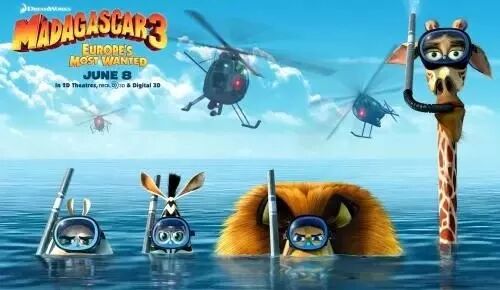
▲ Still from Madagascar 3.
In 2014, Dragon Nest: Warriors' Dawn, an all-ages animated film made with genuine care, ultimately grossed no more than 60 million RMB — barely covering costs.
Due to persistently weak box office performance, original animated films mostly kept budgets between 3 to 5 million RMB. Low costs led to low quality, triggering a new vicious cycle. Of the thirty to forty animated films released annually, few stuck in audiences' memories, let alone the companies behind them.
Zhang Min believed that most animation companies, especially small and micro enterprises, focused heavily on operations but easily neglected developing and implementing scientifically sound business philosophies and strategic layouts — "they can't just keep throwing themselves blindly into repeating past stories."
The first animated work to truly gain market recognition was Monkey King: Hero Is Back, which burst onto the scene in 2015.
By then, Tian Xiaopeng had already toiled on the film for eight years. Animation demands real, grinding effort — and Tian had nearly exhausted all his borrowed and spent money, with production stalled in its final stretch.
When he was on the verge of giving up, the film's investors found Guo Lei.
During his stage production period, 3D animation projects had constantly approached Guo Lei. But Monkey King: Hero Is Back sparked his interest — "I took one look and knew it was right." Guo Lei spent eight months producing the remaining 45 minutes of footage. "I'm very grateful to Director Tian for giving me such tremendous trust and creative freedom."
Chinese animation had reached its turning point —
In 2015, Monkey King: Hero Is Back accumulated 956 million RMB in box office, becoming the highest-grossing domestic animated film to date. Its full-bodied characters and plot, production quality approaching live-action realism, and experimental presentation of "Eastern aesthetics" won widespread acclaim. Even on NICONICO, "Japan's Bilibili," the film earned tremendous respect from viewers.
More importantly for the industry, capital began swarming in.
In veteran animator Shi Lei's memory, after Monkey King: Hero Is Back, "for the first time, all investors, industry big shots, and production staff realized that domestic animated films could sell for such high prices."
In 2017, Coco and Despicable Me 3 both broke 1 billion RMB in China; domestic animations Boonie Bears: Entangled Worlds, The Bad Guys, and One Hundred Thousand Bad Jokes 2 also surpassed 100 million.
Expanding alongside the market were multiple top-tier animation producers. That year, Tencent invested in at least 12 animation companies; Alibaba and Baidu entered the field as well; iQIYI established a fund focused on early-stage 2D and 3D content.
In the view of Liao Huainan, General Manager of Youku's Animation Center, while preschool-oriented works remained the primary focus, teen-oriented works were becoming the leading category for leapfrog growth. This brought stronger willingness to pay, more segmented content types, and clearer profit models.
"The animation industry must not only perfect its internal small cycle and continuously improve the industry chain, but also actively participate in the larger cycle of integrated development with manufacturing, digital content, tourism, sports, specialty agriculture, and cultural industries, thereby promoting the animation industry's own transformation and upgrading," Zhang Min believed. Quality animation IP had become an important source for China's entire content industry. The state had incorporated the digital creative industry into its 13th Five-Year strategic emerging industries development plan; the animation industry, as its most creative, resonant, and promising sector, would inevitably encounter unprecedented development opportunities.
The "hundred-million era" of financing had quietly arrived. In 2017, multiple animation companies — Kuaikan Manhua, Xuanji, Ruosen, Haoliners — announced hundred-million-level funding plans.
Capital also created a kind of memory gap. Companies made famous by Tencent and Bilibili, who entered animation because of their manga popularity, knew little of the industry's prehistory. Meanwhile, those who had carried pure passion and trudged through the hardest times, due to policy fluctuations, capital movements, and various coincidences, didn't necessarily get to share in the industry's fruits.
After witnessing countless peers' deaths, 2:10 Animation accepted investment from FreeS Fund in 2016. The company, built on training and outsourcing, now owned original manga IP The Silver Guardian with over 13 billion views, and the commercial anime I'm Joybo — with a 9.6 rating on Bilibili, co-directed by Bu Zhongjun — among other original works.

▲ The Silver Guardian surpassed 13 billion views and was adapted into animation broadcast in both China and Japan.
Having hitched a ride on this wave of capital, nearly everyone had to keep running nonstop. Yet Wang Shiyong showed no fatigue. In his semi-new office, wearing a black hoodie and jeans, baseball cap set aside, he spoke of learning animation over a decade ago — at moments of excitement, he was exactly the self-taught animation student he once was.
This young man who had repeatedly skipped class was now grateful for the space and tolerance he had received. He was preparing to place a motion capture system at South-Central University for Nationalities as a key project for school-enterprise collaboration.
But what he wanted to give back to more was this volatile, perpetually underdeveloped industry. In 2016, 2:10 Animation established a fund, successively investing in dozens of companies with plans to connect upstream and downstream in the entertainment industry and become a service provider for the sector.
Zhang Min wanted to remind creators and operators seeking their way in animation to keep a tight string in their minds — risk control should be prioritized at every stage from project evaluation, creative planning, production, and distribution promotion. "Don't wait until the work is finished to realize you've failed."
Guo Lei's thinking was much simpler. Nearly 40, he still maintained absolute, pure idealism, caring only about whether he could produce satisfying work. A longtime literary youth, his home had accumulated tens of thousands of discs over a decade ago; watching several films daily was routine. Thus he held extremely rigorous standards for expression, often finding Chinese films and animation too fake. He believed good stories had lives of their own. "Any story, any character, shouldn't be something you fabricate. 'She' is already there — you simply understood 'her,' and happened to tell 'her' story."
Twenty years on, people are still seeking their way on the journey to obtain the scriptures. The road is long; before becoming the Monkey King, he was just a demon on Flower-Fruit Mountain, a nameless monkey, sharpening his weapons and marching toward the future.
Dawn is breaking.
Seven Takeaways on the Nature of the Animation Industry and Its Future

Shiyong Wang
Founder and CEO of 2:10 Animation
Shiyong Wang founded 2:10 Animation in 2007. His work Classical Girl won multiple international technical awards and was featured in a globally authoritative animation yearbook.
Animation is more than just ACG.
Animation is a medium for expression, conveying information and emotion much like books or film. It's also an integrative industry capable of deep fusion with other sectors. Animation can drive consumption upgrades, boost urban tourism economies, and more — it has strong integrative power.
The concept of "ACG" (二次元, nijigen) originates from Japan. According to Moegirlpedia, "'ACG' literally means 'two-dimensional,' and by extension refers to characters in animation, games, and other works displayed on paper, screens, and other flat surfaces — the two-dimensional visual style of Japanese animation. 'ACG' has been hyped up domestically, and its meaning has shifted."
My understanding is that animation encompasses far more than "ACG." ACG is only one segment of animation, which also includes children's animation and family-friendly animation. Children's and family-friendly animation products have better commercial scalability going forward. Reducing animation to ACG narrows the audience.
Animation IPs have remarkable longevity, enabling continuous integration with new industry chains and consumption models.
The core characteristic of the animation industry is that IPs have strong vitality — animated characters "live long enough" to continuously feed into new industry chains and consumption models. Mickey Mouse is now 90 years old; Detective Conan has aired over 900 episodes. Whenever a new form of consumption emerges in the world, animation embraces the change, updating its forms of expression and extending its industry chain.
Imitation won't work. We need to create animation that reflects China's economic and cultural transformation.
Chinese animation only began developing in earnest around 2015, when people started recognizing the value of domestic works. Chinese animation needs time to accumulate experience, consolidate funding, integrate industry chains, and find its own path.
Many domestically are exploring how to develop animation, imitating Japanese and Korean models, but imitation may lead nowhere. After World War II, Japan produced a large number of works imitating American characters like Rocketman and Plastic Man, yet none of them endured. Osamu Tezuka seized the wave of television's spread in Japan, single-handedly creating the TV animation business model that became standard there, finding Japan's own path for animation development.
Our economic and cultural environment differs from Japan and America's. Before becoming developed nations, they passed through long developmental stages — agricultural society, industrial society, information society. Our country essentially leaped directly from agricultural society into industrial and information society. Therefore, we need to create animation that aligns with China's economic and cultural transformation.
Animation is deeply tied to culture. We will inevitably create a new animation style suited to Chinese aesthetics. Why don't many people appreciate the ACG style? Because a truly Chinese-flavored animation style has yet to emerge. A style will appear that resonates with people across the entire country. According to Sina Finance, in 2005, the gaming and animation industry accounted for as much as 16% of Japan's GDP, surpassing the automotive industry. I look forward to the day when our country's animation industry reaches similar heights.
Currently, China's animation衍生品 (derivative products) industry chain is not mature enough; it needs to innovate by integrating Japanese and American models.
Japan's animation industry has meticulous division of labor, with each specialized module producing relatively small output that aggregates into a massive industry chain. But this enormous offline industry chain has actually weakened or constrained animation's online development. American animation is largely produced as films, with some series, then developed into theme parks, online pay-per-view, and other formats.
Currently, China's animation derivative products industry chain is not mature enough. If we can innovatively integrate these two models and their content, we may be able to forge our own integrated animation industry chain.
Animation products can be made more interactive.
China is currently an internet society, which means the animation industry chain is tied to the web. The viewing and consumption contexts for film and online content are completely different from television, placing greater emphasis on interactivity — yet domestically, no animation product has done interactivity particularly well.
The most valuable investment targets in animation are vision and integrative capability.
Many investment companies value animation companies' original creative abilities. I believe original creativity is foundational to an animation company's development, but if an animation company wants long-term growth, its team needs sufficient vision and integrative capability. "Small but beautiful" animation studios are less likely to gain capital recognition. Invest in companies with enough commercial acumen, industry integration ability, and trend judgment capability.
Focused, systematic online animation education platforms have development prospects.
Educational institutions and software/hardware technology companies are like "arms dealers," supplying ammunition to all industries. Currently, China's animation industry suffers from severe undercapacity. There are massive amounts of original literary IP that could be adapted into animation, but the industry's production capacity can't keep up — higher-quality animation education institutions are needed to supply "ammunition" to the industry.
Previous animation education institutions weren't focused enough, trying to solve software operation, animation production capacity, and artistic creation all at once. Going forward, there will be more animation education institutions that solve single problems.
China doesn't currently lack animation teachers; it lacks channel platforms to aggregate them. These channel platforms should ideally be online, saving on venue costs while delivering systematic, well-organized animation courses.
(Feel free to share to Moments.)

Wrong People, Wrong Things! Learning Talent Review from Alibaba | FreeS Business School
▲ Li Jian of New Spicy Way: 22 Years, 3 Startups, Crossing Mountains and Seas — 6 Key Lessons | FreeS Business School
▲ Shopping as Self-Expression: Can New Retail Win Over the "Rebellious" New Generation? | FreeS Business School