Metaverse Development Hypothesis: Rising from Social, Ending in Digital Immortality | FreeS Research

What Is the Metaverse? Where Did It Come From? Where Is It Going?

"When Hiro goes into the Metaverse and looks down the Street and sees the buildings and electric signs stretching off into the darkness, fading out over the curve of the globe, he is actually staring at the graphic representations — the user interfaces — of a myriad different pieces of software that have been engineered by major corporations... In the Metaverse, Hiro's avatar can look any way he wants it to, up to the limitations of his equipment. If he's ugly in real life, he can make his avatar beautiful. If he's just come out of bed, his avatar can still be wearing beautiful clothes and professionally applied makeup. In the Metaverse, you can be anything you want to be — a gorilla, a dragon..."
This is Neal Stephenson's vision of the Metaverse in his 1992 sci-fi novel Snow Crash. Nearly 30 years later, the Metaverse no longer seems like a far-future concept. Roblox, a Metaverse concept stock that listed on the NYSE in March 2021, reached 42.1 million daily active users in Q1 of this year.
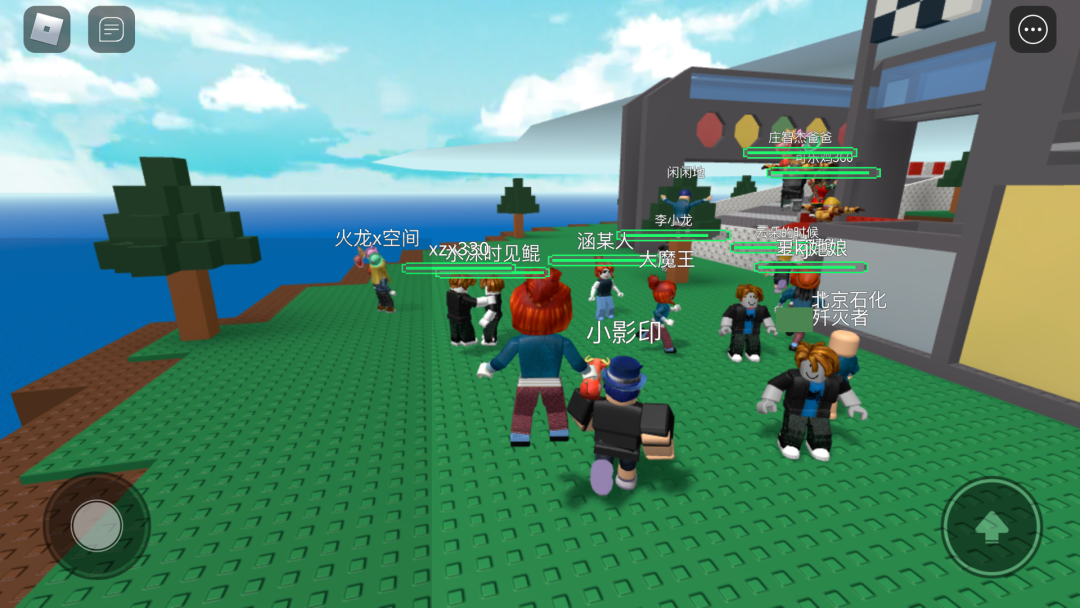
▲ Roblox China edition, LuoBuLeSi, game page
While there is still no unified definition of the Metaverse, the space is booming. Projects similar to Roblox — including Manticore Games, Epic Games, and Unit2 Games — have raised substantial funding. Social platform giants like Facebook, Tencent, and ByteDance have been among the first to establish positions in the Metaverse. Facebook acquired Oculus VR and Unit 2 Games, and built a virtual reality social team; its actions suggest it believes the Metaverse may emerge on immersive platforms like VR. Beyond partnering with Roblox to publish the China edition, Tencent has also invested in or participated in key Metaverse-related areas including gaming, VR, and music. ByteDance invested in Code Qiankun, known as "China's Roblox."
Behind the market frenzy, we try to return to three fundamental questions: What exactly is the Metaverse, where did it come from, and where is it headed? In this article, we explore:
- Why Roblox may not necessarily be the so-called Metaverse
- What are the core characteristics of the Metaverse?
- How to seize opportunities in Metaverse development today?
- What is the strategic framework for Metaverse development?
- Why does the Metaverse begin with social and end with digital immortality?
Before diving in, here are a few key takeaways:
- The Metaverse is designed to simulate the real world. It is a macro-level concept on the same tier as the internet itself — a more immersive form of internet. The ultimate endgame of the Metaverse may be users uploading their consciousness and fully integrating into the virtual internet, "always online."
- Core characteristics of the Metaverse include persistent evolution, always-on availability, a closed-loop economic system, and interoperability. Roblox possesses basic Metaverse attributes, but it is not entirely the Metaverse. Today's Roblox is closer to a Creator Economy platform.
- There may be two evolutionary paths for the Metaverse: first, new devices like VR bringing more immersive online experiences and generating incremental time spent; second, converting time traditionally spent offline into online time.
- Entering 2021, with Roblox's IPO, the Metaverse became a hot trend. But it's worth noting: Roblox wasn't built in a day.
We hope this brings some inspiration. Feel free to share your thoughts at the end. In the Metaverse space, through tracking and research, we have invested in several companies. Entrepreneurs and industry experts are welcome to continue the conversation with the author, Peter (chenzhe@freesvc.com).



A Brief Analysis of Roblox and the Metaverse
By Peter (chenzhe@freesvc.com)
01
Is Roblox the so-called Metaverse? Not necessarily.
Roblox's IPO ignites the Metaverse concept
In 2021, the fantastical and still-ill-defined Metaverse became a buzzword in venture capital.
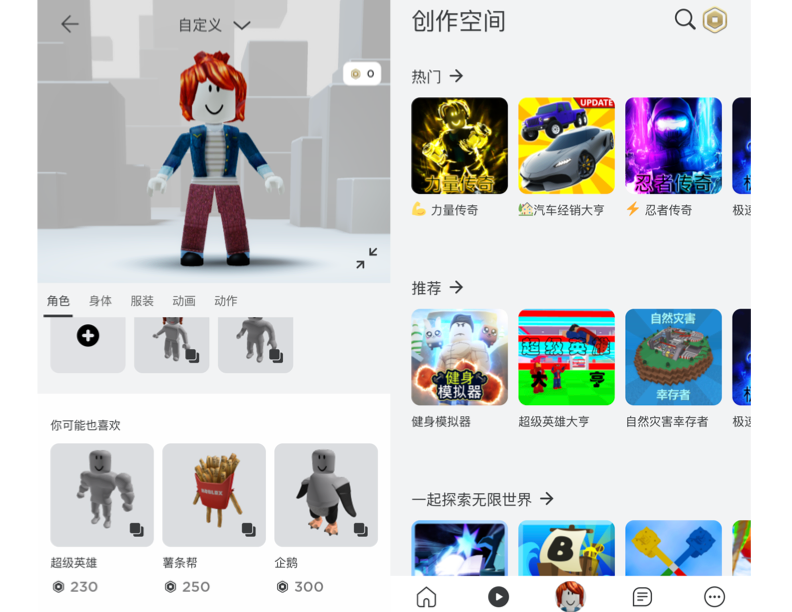
▲ Roblox China edition, LuoBuLeSi, mobile app page
Currently, Roblox is widely considered the platform closest to the Metaverse concept. Before its 2021 listing, it went through 18 years of iteration and evolution. Today's Roblox is both an online game creation community and a social gaming platform where users can chat and interact in-game. Roblox provides creation tools to game developers, allowing users to build games on the platform. Its revenue primarily comes from paid games and in-game virtual goods. Roblox's prospectus shows users under 16 account for nearly 70% of its total user base. Among children under 13, time spent on Roblox even exceeds that on YouTube.
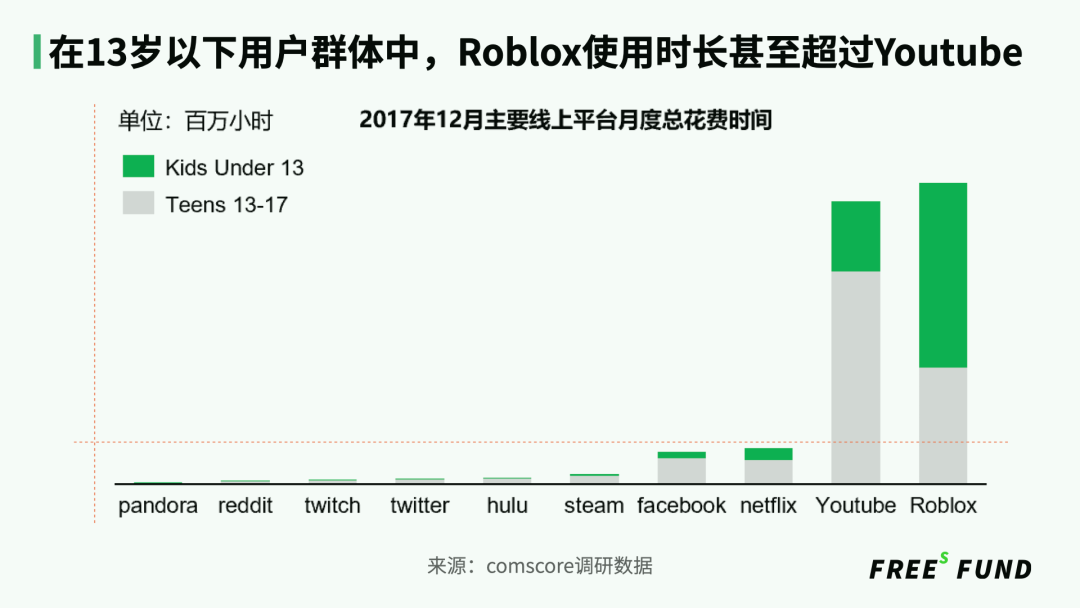
▲ Among users under 13, time spent on Roblox even exceeds that on YouTube
Roblox CEO Dave Baszucki stated: "The Metaverse is a 3D virtual world where everyone is connected, where people have their own digital identities, can interact freely, and create anything they want."
Since Roblox's March 2021 IPO, numerous Metaverse-related projects have received funding or been acquired.
Targeting the adult market, Manticore Games — similar to Roblox — raised $100 million in Series C funding in April from SoftBank, Benchmark, and others. Epic Games also announced in April that it had completed a $1 billion mega-round to build the Metaverse. In June, Unit2 Games — similar in product form to Roblox and built on the Unreal engine — was acquired by Facebook.
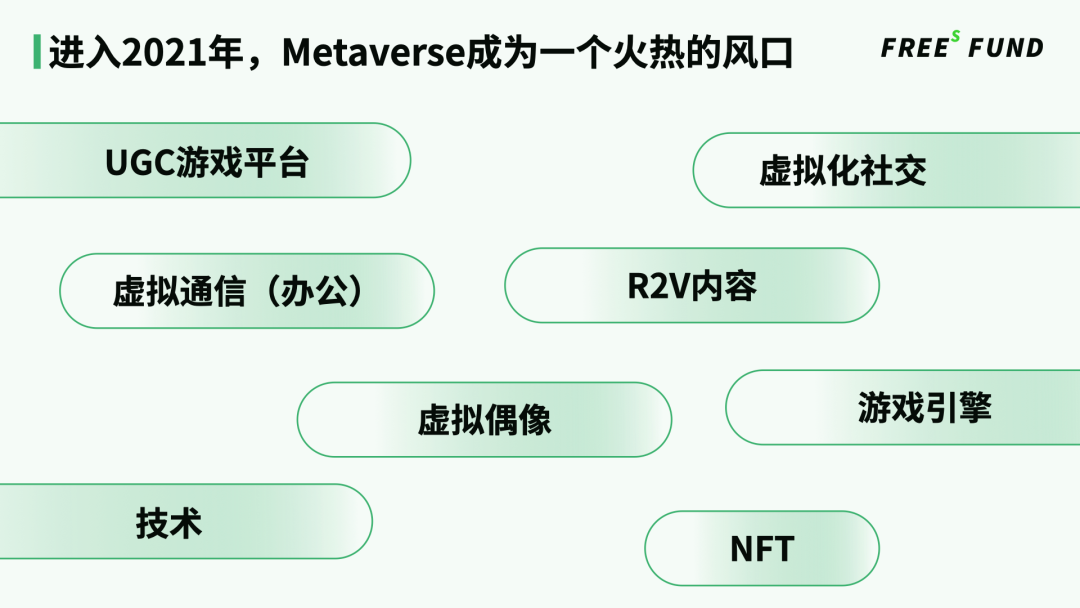
In China, numerous companies with product forms close to Roblox have emerged. Whether UGC game platforms, game engines, virtual idols, virtual communications, virtualized social experiences, or R2V (Reality to Virtual) content and technology — all have received unprecedented attention and pursuit in the past half-year.
Behind the Metaverse explosion lie unanswered questions: Where did the Metaverse originate, and what does it actually mean? What is the relationship between Roblox and the Metaverse?
While there is no unified industry definition of the Metaverse yet, there is consensus on its origins. The Metaverse first emerged from a 1990s sci-fi novel — Neal Stephenson's Snow Crash. This novel was the first to use "Metaverse" to describe a digital space beyond the physical world. In this digital space, everyone could have their own virtual avatar and do anything — socialize, manage their income.
Since then, many sci-fi novels and films have imagined how humans could shed their physical bodies and enter virtual worlds. What's particularly interesting is that The Matrix and Ready Player One point to two different routes into virtual worlds. The Matrix is essentially a vision of brain-computer interfaces; Ready Player One is more about entering virtual worlds through VR as a medium.
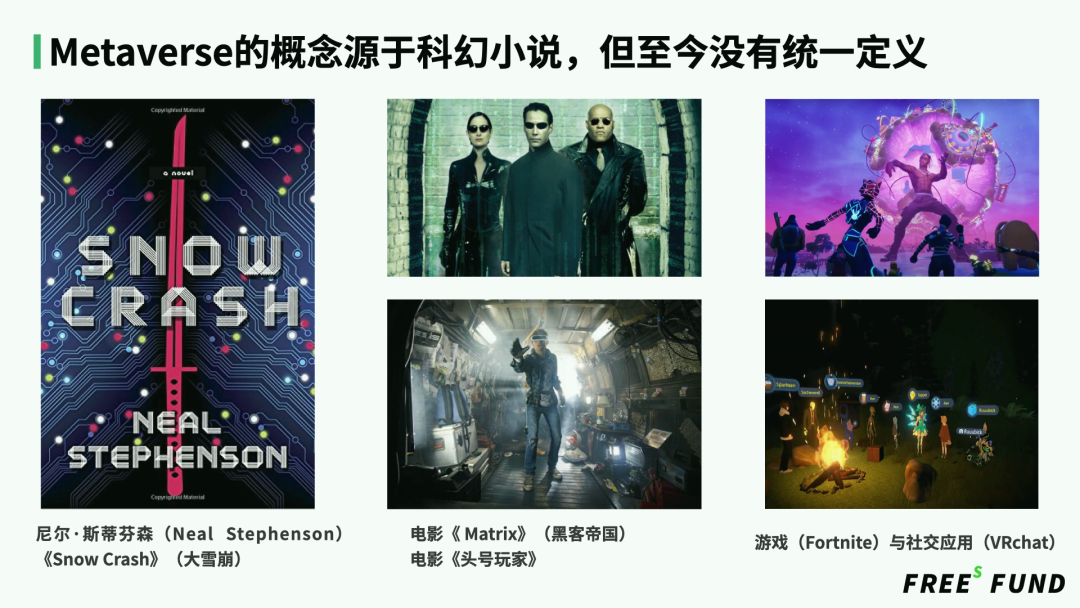
From current practice, existing Metaverse implementations are primarily in the form of games (Fortnite) or social applications (VRChat).
Where did Roblox come from?
After extensive research and tracking, we believe this: Roblox has Metaverse-related attributes, but it isn't a Metaverse in the full sense. Roblox, which has closed the content production-to-consumption loop, actually sits closer to the Creator Economy.
Let's look at how Roblox rose to prominence.
At its core, Roblox is a UGC (user-generated content) gaming platform. The concept of UGC gaming platforms traces back to the classic title Warcraft III. To solve the problem of content production lagging behind content consumption, Warcraft III opened up its map editor in 2002. With this editor, players could design maps and level mechanics at will, and modify character abilities.
▲ The Warcraft map editor
(Source: YouTube)
The game DOTA literally "grew out of" the Warcraft III editor. Today's MOBAs (multiplayer online battle arena games) like Honor of Kings and League of Legends originated from Warcraft III and DOTA.
The limitation of this editor was that core art assets and game logic had to come from Warcraft itself. Users wanted greater freedom—to put different themes and styles into games and create more diverse gameplay.
In 2009, a new genre emerged: sandbox games, represented by Minecraft. Built from pixelated blocks, the game let users construct entire worlds by placing blocks or combining simple programming.
▲ Building your own world in Minecraft
(Source: YouTube)
But sandbox games still constrained user freedom. Players couldn't alter the underlying game framework.
Compared to sandbox games, Roblox—officially launched in 2006—gave players far more freedom. Roblox separated out the game production process into a standalone tool for developers. It's somewhat like a game engine, but with lower barriers and simpler programming. Using Roblox's tools, developers could create different games and distribute them on the Roblox platform.
▲ Roblox's evolution from 2003 to 2019
(Source: YouTube)
What Metaverse attributes does Roblox have?
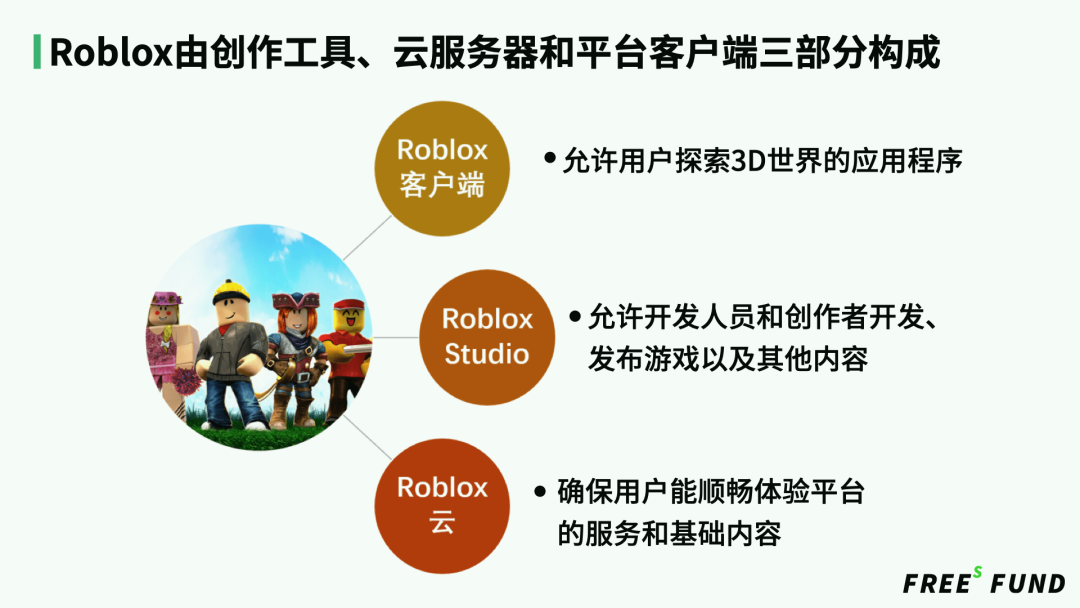
Roblox consists of three parts: creators, cloud servers, and the platform client. The Roblox client lets users explore 3D digital worlds; Roblox Studio allows developers and creators to develop and publish games and other content; and Roblox Cloud ensures users can smoothly experience the platform's services and foundational content.
Why does Roblox have Metaverse attributes?
Because it possesses several fundamental elements central to the Metaverse: people, production tools, and a virtual economic system.
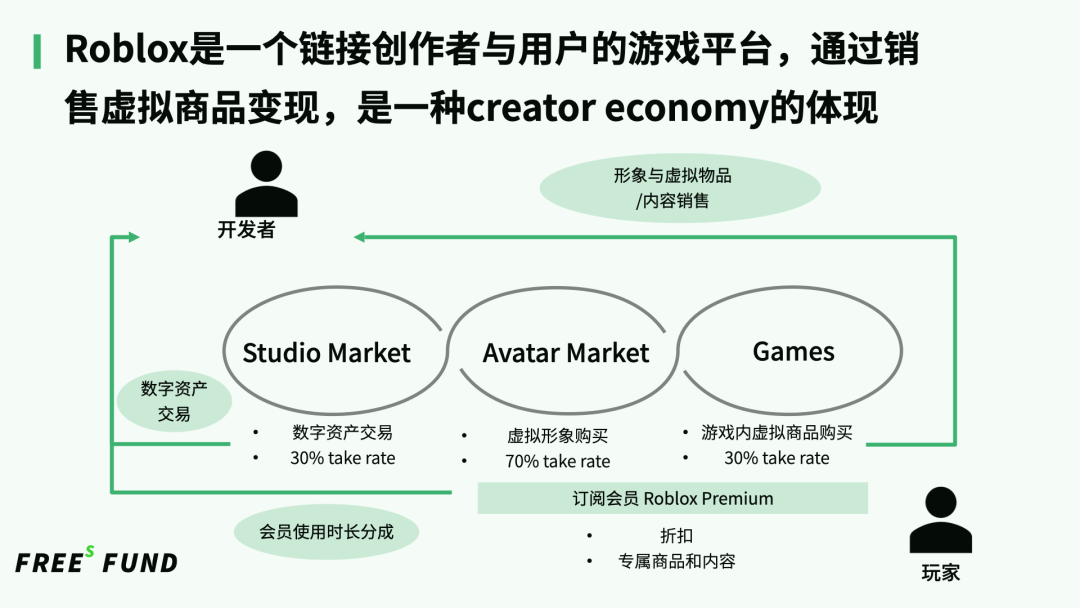
First, people. Roblox's people include both players and game creators—roles that can be swapped. Every player has their own social identity. Players can freely enter over 20 million creator-developed games, and can import real-world social relationships into the game, entering a game simultaneously with friends to "squad up."
Next, production tools. Roblox provides creators with the game-making platform Roblox Studio, allowing them to develop and publish games and other content. Roblox also provides cloud infrastructure to ensure users can smoothly experience the platform's services and foundational content.
Beyond people and production tools, Roblox has built a virtual economic system. On the player side, Roblox sells a virtual currency called Robux, which players use to buy virtual items designed by game creators. On the creator side, Roblox provides the Studio Marketplace platform for creators to sell digital assets like item models.
Why isn't Roblox a Metaverse in the full sense?
Although Roblox has Metaverse attributes, why do we say it still falls short of a true Metaverse?
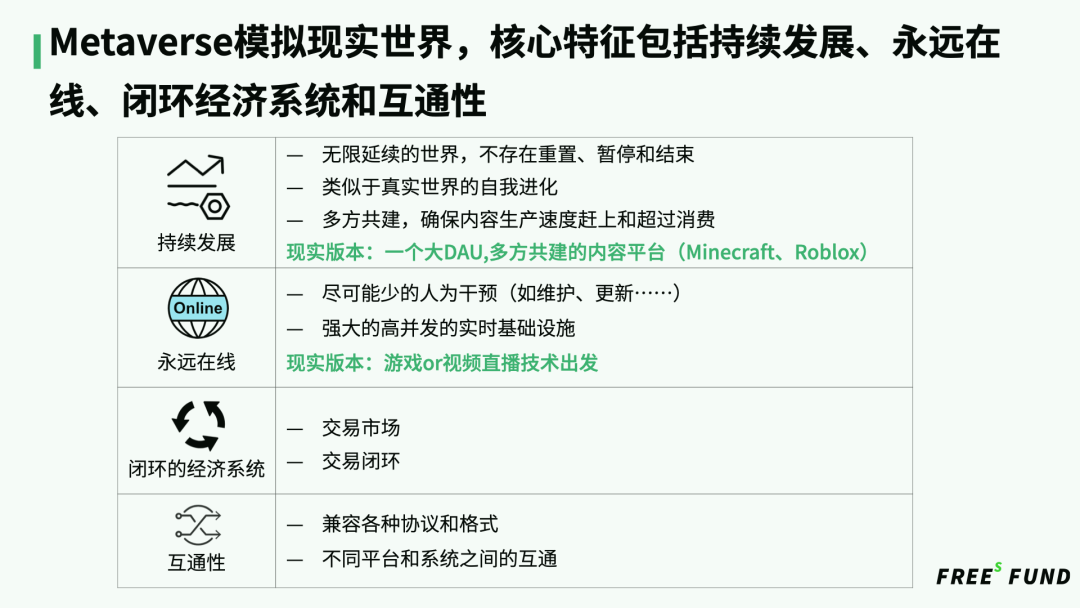
This brings us back to three core characteristics of the Metaverse: persistent evolution, always-on availability, and a fully closed-loop economic system with interoperability. These three traits are interlinked and progressive. Dig deeper, and we find that present-day Roblox doesn't fully satisfy all three.
A Metaverse is a world of infinite duration—you're perpetually inside the virtual world; there's no such thing as pause or end. Persistent evolution means the Metaverse world can continuously evolve, self-developing and self-progressing like the real world, generating content needed by people at every stage. Moreover, on this collaboratively built platform, content production speed must keep pace with content consumption speed.
Currently, Roblox's users are constrained—primarily younger users. Its prospectus shows users over 25 comprise only 14% of total users. Clearly, Roblox hasn't broken out of its niche. Evolving toward a true Metaverse, Roblox needs to expand its age demographics, engaging both adults and children, and work to extend user lifecycles.
Once a persistently developing world is established, you must ensure users can always be online. "Always-on" means the Metaverse provides numerous scenarios simulating the real world, letting you incorporate more of life into it—including work, entertainment, socializing, and more. Currently Roblox only partially satisfies entertainment and social needs; it's still far from encompassing all "people, events, and things" from the real world.
Furthermore, always-on requires more advanced technical support. A Metaverse needs extremely robust infrastructure to ensure enough people can simultaneously interact in the same world. And to ensure always-on availability, bug fixes and updates must be minimized, as these interrupt users' online presence.
The ideal Metaverse resembles a unified world capable of hosting millions or even tens of millions simultaneously. This demands powerful, high-concurrency real-time infrastructure. Gaming companies lead in this technical domain. Yet even PlayerUnknown's Battlegrounds, representing today's pinnacle, only supports 100 people in the same room. A single Roblox game room typically holds just over a dozen users.
Once you've drawn users in with various work and entertainment scenarios, you need a systematic, closed-loop economic system where people connect with each other and can make a living in the Metaverse—completing transaction loops in a marketplace.
Currently, Roblox has only closed the content production-to-consumption economic loop, achieving creator economy. But creator economy is just a small slice of the overall economic system. A Metaverse should accommodate far more diverse economic forms. In the future, e-commerce, psychological counseling, fitness, and other scenarios and relationships may be incorporated into the Metaverse ecosystem.
Interoperability means that within the Metaverse, various protocols and formats are compatible, and different platforms and systems can interconnect. But Roblox is currently just a single platform and system, without accommodating more external systems.
On interoperability, Epic Games founder Tim Sweeney told a Medium columnist: "The Metaverse will become a kind of massively participatory medium we haven't truly seen before. The Metaverse isn't built by any single industry giant; it will be the creative work of millions of people."
Overall, the Metaverse is the long-term vision for platforms like Roblox. The Metaverse will likely be collectively built by multiple parties, compatible with various platforms and systems, protocols and formats, while adapting to PCs, phones, and other hardware.
This still sounds rather abstract, so let's try finding real-world reference points. The Metaverse isn't a game—games have limited audiences, and their content production efficiency typically can't match content consumption. It won't be virtual/digital economy either, because mobile internet already does an excellent job moving traditional economic forms online. It's clearly not an online Disneyland, since Disneyland is dominated by one company controlling all content production and services, contrary to the Metaverse's collaborative construction. Nor is it likely to be a new app store. Setting aside whether we even need a new way to open apps, an app store's underlying structure differs from the Metaverse. App stores are essentially one group producing content for another group to consume; in the Metaverse world, everyone participates in creation and everyone participates in consumption.
FreeS Fund Perspective: What exactly is the Metaverse?
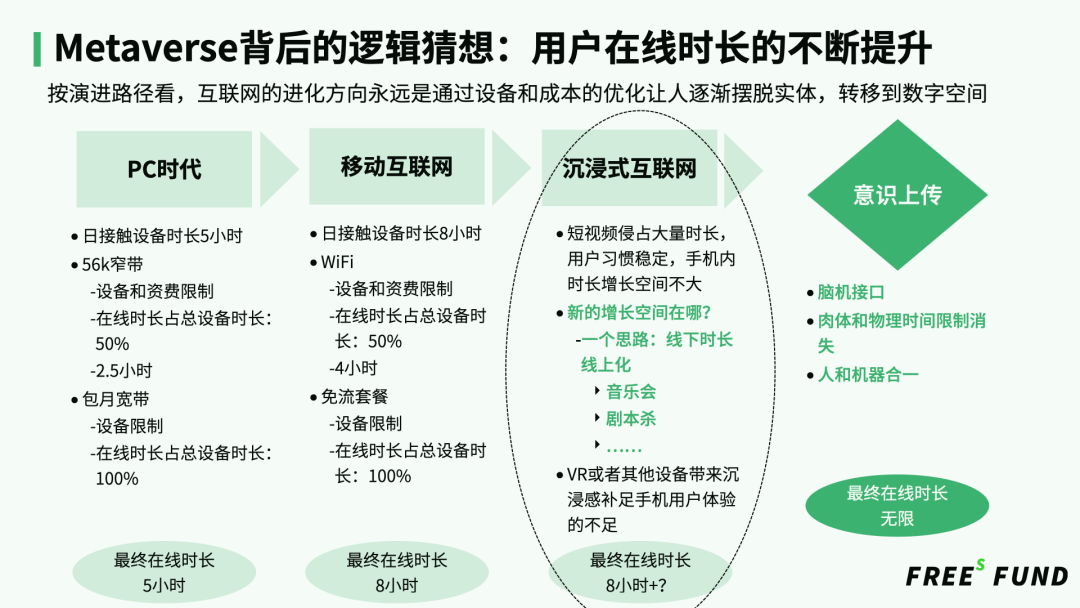
We believe the Metaverse is a simulation of the real world. It sits at the same hierarchical level as the internet—a macro concept, a more immersive form of internet. The Metaverse's endgame may be users uploading their consciousness, fully merging into the virtual internet, "always online."
This endgame may sound distant and fantastical. But looking back at internet development, we find that the entire internet's evolution has been driven by increasing user online time. As connected devices upgraded and connectivity costs dropped, people gradually shed physical constraints and migrated to digital space. The Metaverse's development path may parallel the internet's.
In the PC era, limited by immobile devices and expensive internet fees, people's online time was restricted, and PC applications weren't abundant. Later, when PC connectivity shifted from narrowband to monthly broadband packages, cost constraints diminished, leaving only device limitations.
With the advent and widespread adoption of smartphones, our devices shifted from immobile PCs to portable phones, and the time we spent with our devices each day undoubtedly increased. Layer on top of that the buildout of 4G and 5G infrastructure and the steady decline in mobile data costs, and people's online time climbed even higher.
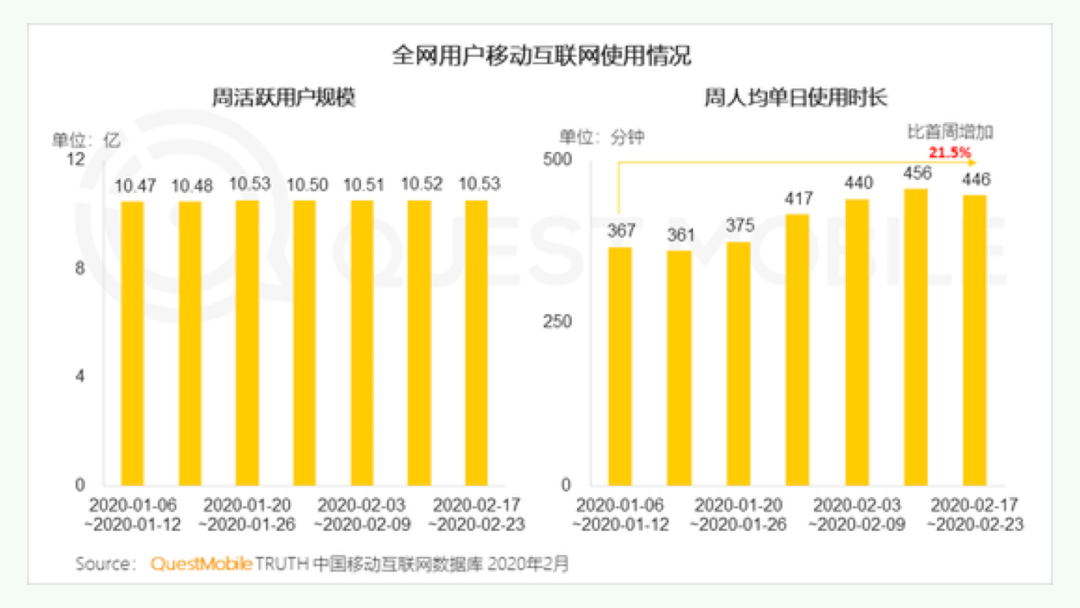
According to data from QuestMobile, during the week of February 10–16, 2020, the average daily mobile internet usage per person across all Chinese internet users reached 456 minutes (7.6 hours).
Nearly eight hours of daily online time is already fairly saturated for users — there's not much room for growth. To some extent, people's daily phone time allocation has started to become relatively fixed. We have a fairly clear sense of how much time we'll spend on WeChat, how much scrolling Douyin, how much browsing Taobao. We're also increasingly reluctant to download new apps.
So if the Metaverse wants to reach "always on," the biggest question it faces is this: how can it keep stretching users' online time and find incremental hours?
Where Are the Opportunities for Metaverse Development Today?
As for growing user online time, we've identified two approaches so far. First, new devices like VR could create more immersive online experiences, thereby generating new incremental time. Second, we could convert time that people traditionally spend offline into online time.
Giving users new devices means that when they're not on their phones, they can invest time in new scenarios created by new hardware. For example, assuming phone usage stays constant, if a user spends one additional minute per week on a game console or in a VR headset, that's one minute of incremental online time. Moreover, new devices like VR themselves contribute new dimensions for perceiving the world, improving users' online experiences and boosting their time spent online.
Another evolutionary path is to identify clear opportunities for bringing offline scenarios online. Many young people today attend live shows, play murder mystery games, sing karaoke, and visit exhibitions offline — activities that routinely consume four or five hours at a stretch. If we can shift these offline behaviors online, that too will increase users' online time.
There's a hugely popular game in the US called Fortnite, which holds roughly the same status there as Honor of Kings does in China. During the 2020 pandemic, the famous American hip-hop artist Travis Scott held a concert inside Fortnite. The concert drew 12.3 million viewers, setting a new record for the most players simultaneously online for a musical live event in the game's history.
Once the concert began, Travis Scott's giant virtual avatar arrived in a spaceship. As he performed, the game environment transformed with the rhythm of the songs. From land to sea, one fantastical vista after another unfolded before the players. Travis Scott's virtual avatar even grabbed two stars and smashed them together, creating a sky full of shooting meteors.
▲ Travis Scott's concert in Fortnite (Source: YouTube)
As an expression of the Metaverse, this concert became an iconic event, making waves across Europe and America, and even in China.
Beyond in-game concerts, numerous overseas companies have already begun evolving along this path of shifting offline scenarios online. One example is Wave, a virtual concert supplier backed by many Hollywood stars, musicians, and record labels.
Ultimately, people will enter the stage of the immersive internet. At that point, users' online time may consist of roughly eight hours on their phones, plus time on new devices, plus time shifted from offline behaviors.
What Does the Strategic Framework for Metaverse Development Look Like? What Are the Stages?
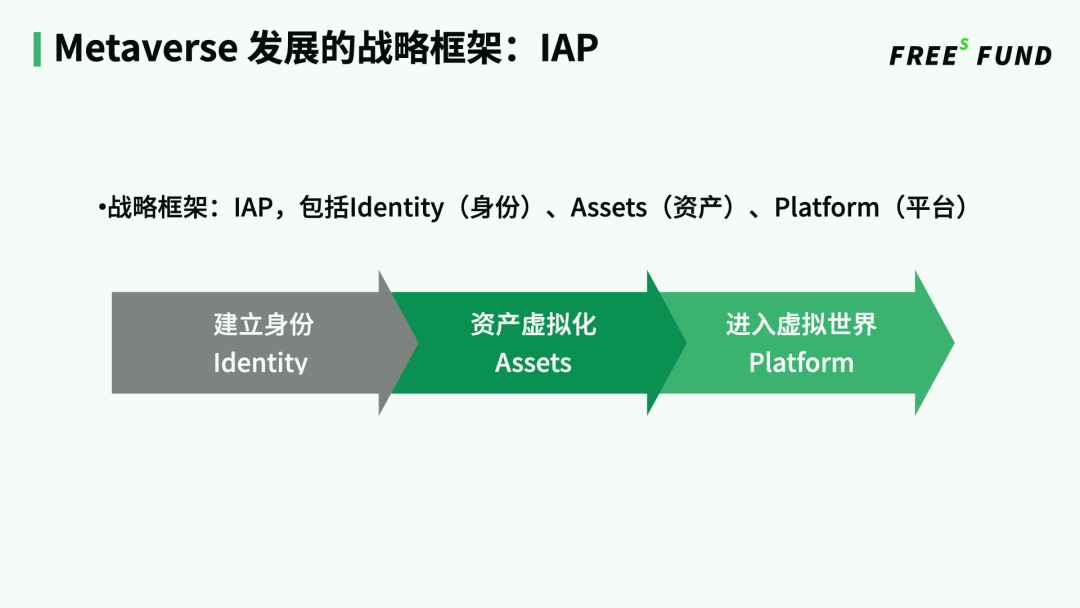
Having analyzed the concept of the Metaverse and explored its development opportunities, we've mapped out a strategic framework for it: IAP, encompassing Identity, Assets, and Platform.
The IAP framework also implies three developmental stages for the Metaverse.
First is establishing personal identity, which requires leveraging virtual idol technology and the content it produces. In the world of the Metaverse, whether virtual idols or ordinary users' avatars, all users can possess a virtual identity. (Click the blue link to read our thoughts on virtual idols: "Why We're Bullish on Virtual Idols | FreeS Research")
Once we have virtual identities, we must also create assets in the virtual world, and through virtual assets generate transactional activity to form an economic loop. For example, Roblox's virtual currency Robux can connect creators and players within Roblox, forming its own economic loop around in-game transactions.
Once you have identity and have formed an economic loop, becoming a platform follows naturally. With a platform in place, we can then move offline scenarios online — such as the concerts, art exhibitions, international travel, and murder mystery games mentioned earlier.
FreeS Fund has researched numerous Metaverse-related projects and has invested in several companies in the identity and platform directions. On the identity side, we focus on how technology and content can empower organizations and individuals to create virtual identities. On the platform side, we focus on online products that can cover real-world scenarios. Entrepreneurs and industry experts in relevant fields are welcome to continue the conversation with us (chenzhe@freesvc.com).
05
Metaverse Endgame Speculation: Starting with Social, Ending with Digital Immortality?
Based on the IAP strategic framework, how will the Metaverse actually land? How will it meet users' specific needs?
We tend to believe that the Metaverse may start with social and end with digital immortality.
Social is one of users' core needs. During the 2020 pandemic, when everyone was stuck at home and real-world socializing diminished, people's social needs were reflected more authentically and fully. According to Tencent's Q1 2020 results: "WeChat and QQ enabled users to stay connected with friends and family during home quarantine, with both seeing double-digit year-over-year growth in total daily messages and usage time."
One possible breakthrough path: provide users with various scenarios and, incorporating Metaverse characteristics, launch an entirely new social product. In the process of refining the product, gradually bring it closer to the core essence of the Metaverse.
Some products have already emerged that build virtual scenarios and avatars to meet users' social needs. For instance, in the game VRChat, players can create "rooms" and communicate with each other through fictional characters, playing mini-games like capture the flag and bank heists. Players can also use software development kits to create their own custom character models. Some players have even used external VR equipment to perform spacewalks and pole dances inside VRChat.

▲ VRChat game interface (Source: Sina VR)
With social as the starting point, after full development the Metaverse's ultimate goal may be to free people from their physical bodies, merge with machines, and finally achieve an always-on state. Of course, this endgame remains distant. Reaching it may require brain-computer interfaces, AR, VR, AI, and other technologies to reach high maturity and be able to interact and collaborate. For now, the industry's starting point remains finding spaces where the Metaverse can grow and develop.
Discussion In this piece, we've put forward our hypotheses about Metaverse development. We also welcome you to share your observations and thoughts: How do you understand the Metaverse, and what opportunities do you see in it?

▲ Why We're Bullish on Virtual Idols | FreeS Research ▲ Understanding China-US Development Model Differences and Finding China-Based Startup Opportunities | Feng Li Column ▲ "You Always Need to Balance Desire, Capability, and Resources" | 2021 FreeS China-US VC Forum Transcript ▲ Do Returnee Entrepreneurs No Longer Have an Edge? | 2021 FreeS China-US VC Forum Transcript ▲ What's It Like Doing Venture Capital in China? | 2021 FreeS China-US VC Forum Transcript ▲ FreeS Family Funding News · June: Saturnbird, Shize Biotech, Qingke Travel Raise Capital ▲ Breaking Out of Consumer Industry Involution: Is the Secret "Going Premium"? | Feng Li Column ▲ Early-Stage Medical Aesthetics Investment Shifts Toward Underlying Technology | FreeS Research
Join Us
We're looking for investors in biotech, deep tech, and consumer/TMT across our Beijing, Shanghai, and Shenzhen offices. If you have an industry background and are interested in investing, we'd love to hear from you — and we welcome referrals too. (For full job descriptions, click the "Read More" link at the end of this article.) Please send your resume to hr@freesvc.com. Please include in the subject line: Application for "[Biotech / Tech / Consumer] Investor" — "[Preferred Location]"
We're also seeking interns for investment research, legal, finance, HR (portfolio direction), and video content operations. Interested students are welcome to apply. (For full job descriptions, click the "Read More" link at the end of this article.)
Internship duration: 3–5 months, 3–5 days per week on-site. Beijing-based candidates preferred.
Please send your resume to hr@freesvc.com
*Please include in the subject line: Position Applied For — Name — School — Major — Minimum Commitment of X Months — X Days/Week On-Site — Earliest Available Start Date