New Retail Entrepreneurship: Move Fast, Fight Hard, and Cultivate with Care | FreeS Talk

Fresh observations on office unmanned shelves, home furnishings, matcha, and personal care.

The biggest challenge in retail is the need to constantly change. Consumer society is full of variables, and brands need to keep reinventing themselves. "Selling the right product, at the right price, in the right place" used to be a winning business maxim; now, it's the bare minimum for survival.
In the first installment of FreeS Fund's new retail and consumption upgrade series, Li Feng's column explored the industrial chain foundations of consumption upgrade and what new retail brands need to do to stick in consumers' minds.
In this piece, we continue our conversations with four entrepreneurs about fresh stories from the worlds of unmanned office shelves, home goods, personal care, and matcha — and their unique perspectives on what changes and what stays constant in retail after years of deep industry work.
After reading this, you'll learn:
- MUJI's pattern of ups and downs: companies only grow when they go deep on product.
- Over 40% of online shoppers have their office as their default shipping address; unmanned shelves can distribute new retail goods the way ByteDance distributes content.
- UGC's "seed planting" efficiency is remarkably high.
- Quality, cost, and time form an "impossible triangle" in supply chain; early-stage brands must choose what to prioritize.
↓ Details below ↓

/01/

Zhang Zhongyi
CEO of Haowu, with over 20 years of experience supplying export home goods to European and American retailers. Haowu has an in-house design team and integrates over a thousand quality home goods suppliers globally, offering high-quality home products at strong value to young Chinese consumers.
Q: How is consumption upgrading in your sector?
I spent about two decades doing OEM work for European and American home brands. In the past couple of years, I've felt the home goods sector heating up dramatically, with companies from all kinds of fields jumping in — including fresh grocery, dining, and home renovation companies that were already in the "home" business, internet companies like NetEase and Xiaomi, and new media influencers like Tongdao Dashu, Mimeng, and Niangao Mama.
This wave of enthusiasm isn't entirely surprising. Young people's spending power is rising, and their pursuit of beauty has expanded from the personal level to their homes and living environments. They'll replace home goods because of aesthetic changes, seasonal changes, even mood changes — quite different from my generation's "buy only when it breaks" mentality.
On the supply side, home goods supply chains have improved dramatically in efficiency, quality, and variety in recent years, giving them the capacity to reliably support demand. Technologically, mobile internet, big data, electronic payments, and VR have all elevated the consumer experience.
Overall, the low-frequency nature of home goods is gradually becoming higher-frequency among younger generations.
Q: How can new retail brands find upgrade space in the industrial chain?
In this home goods wave, the most closely watched companies are probably "Yanxuan" and "Xinxuan." Both operate a curation model, selecting good products from domestic OEM factories to sell through their own channels. Those factories more or less have OEM (Origin Entrusted Manufacture) or ODM (Original Design Manufacture) backgrounds with internationally known brands.
But I have some concerns about this model. Once everyone has carefully sifted through the factory landscape, they'll gradually realize there are only so many excellent factories, and each only has so many standout products. Pure curation makes it difficult to build differentiated moats, leading to homogenized competition and even price wars down the line.
This means startups have little chance of winning unless, like "Yanxuan," they can tap into massive traffic and pursue a traffic monetization path. Realizing this, "Haowu" shifted from its earlier curation model to building an original design home brand.
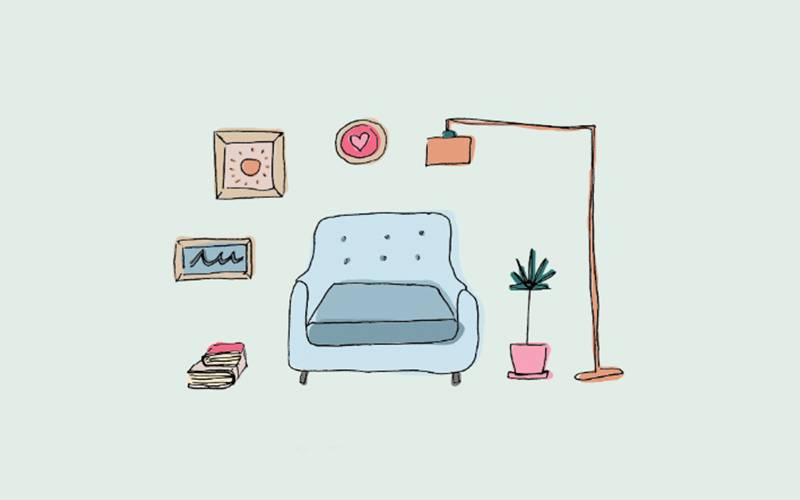
▲ As consumer demand for home goods continues to grow, home brands are rising, competing on supply chain experience and product design capability.
In the long run, whether traditional or new retail, the defining characteristics of good brands remain "good products, low prices," with the most important supporting factor being design development and supply chain.
When I was doing export OEM, I closely observed the U.S. market and found a common trait among American companies that survived the financial crisis: they persisted in doing the hard, gritty work of product development and supply chain.
In August this year, I was in Japan exchanging ideas with Yonekawa Yonei, author of MUJI's Reform. He too said that MUJI's several ups and downs reflect a pattern: companies only grow when they go deep and meticulous in product design and development.
"Haowu" currently employs five designers, all young local designers who better understand how to meet the core needs of the new generation of domestic consumers. At the same time, we're integrating other design resources in society, including partnerships with design agencies and with universities where I established school-enterprise collaborations during my OEM days. We want to have creative breakthroughs in design, materials, craftsmanship, performance, and appearance to make "good products."
Achieving "low prices" requires efficient operation across supply chain links including production, warehousing, and logistics. To tackle this challenge, we've assembled an excellent supply chain management team combining talent from multiple major specialty areas — an organic blend of "sea turtles and local turtles, pretty boys and girls plus old hands, internet plus traditional industry."
Currently, we're addressing supply chain issues roughly as follows:
- Leveraging 20 years of accumulated supplier resources from home export business to solve the small-order problem when e-commerce is just starting out;
- Developing new supplier resources according to product development needs; upgrading supplier resources to support hit product strategy;
- Following ISO9000 standards, establishing and implementing standardized supply chain management and quality control processes from factory selection, factory inspection, sampling, bulk ordering, raw material and semi-finished product control, production process tracking, to finished product testing and inspection;
- Building cooperative relationships with excellent overseas suppliers with distinctive products to supplement domestic supply chain gaps.
These approaches may take longer to show results, but as long as we keep moving step by step, they'll prove worthwhile over the long term.
/02/

Yan Limin
Founder and CEO of Guoxiaomei, former general manager of Alibaba's Juhuasuan. Guoxiaomei positions itself as a "self-service convenience store in the office," with flexible product selection; its backend can analyze consumption patterns at each location based on sales data, and adjust products and restock through its own logistics.
Q: How can new retail brands find upgrade space in the industrial chain?
Retail supply chains are constantly being reconstructed. From traditional department stores to regional shopping malls aggregating multiple formats, to convenience stores at office building and neighborhood entrances, goods have been getting closer and closer to people. It used to be "people finding goods"; now it's "goods finding people."
"Guoxiaomei" makes unmanned shelves placed directly in offices, with no intermediate nodes, coming right to the closest point to customers.
Many people ask why we don't stock goods in convenience stores, or even open our own convenience stores. The reason is precisely that our current model can eliminate rent costs — compared to traditional retail, we have advantages in both supply chain and cost structure, creating opportunities to overtake from the inside lane.
Going forward, if our shelves can enter hundreds of thousands or even millions of offices, they can become a new type of last-mile rapid distribution platform, distributing consumer goods the way ByteDance distributes content.
When I was doing user shipping address analysis at "Juhuasuan," I made an interesting discovery: over 40% of users set their default shipping address to their office. This means users have the habit of taking things home from the office, and unmanned shelves are fully capable of covering both office and home scenarios.
I believe in "exchange theory." For example, Pinduoduo's model exchanges price advantage for traffic — users can get high-value products through group buying, and spontaneously spread the word to everyone around them. Our way of exchanging for traffic is meeting white-collar consumption needs in the workspace.
Office demographics have relatively strong spending power, and they're also in a high-density network of acquaintances where influence spreads easily. Every order they place gives us high-quality customer consumption data, all of which is monetizable traffic.
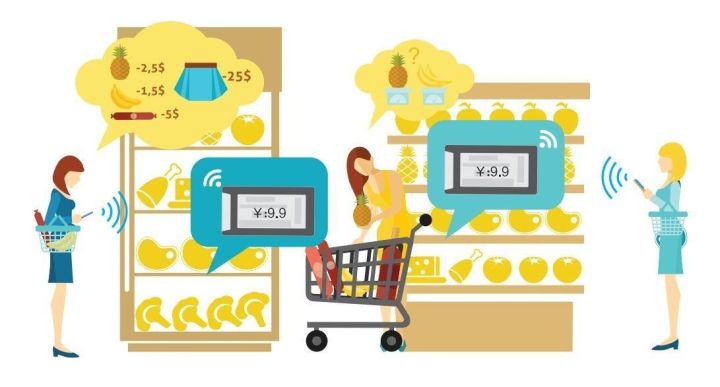
▲ Every consumer order contains rich data waiting to be mined.
For products and brands on our shelves, "Guoxiaomei" has built a logistics network shuttling through CBD office buildings — one that's distinct from the "Four Tong and One Da" [major courier companies].
Compared to convenience stores with thousands of SKUs, or vertical e-commerce with tens of thousands or even over a hundred thousand SKUs, a single shelf only needs a few dozen SKUs. The shelf network has higher warehousing and distribution efficiency, with lower fulfillment costs.
Q: What can new retail brands do to be better remembered by consumers?
Actually, our shelf curation pursues "winning with less, extreme single products" — this buyer model is somewhat similar to "Juhuasuan" from my earlier years. However, "Juhuasuan" was purely "air force," with non-contact user interaction, always separated by a screen, observing users only through data radar. Now, we've become face-to-face with users, able to respond more nimbly to consumer needs.
For example, we're recently doing a test exploring category boundaries: without a refrigerator, we're directly sticking QR codes on pomegranates and selling them as snacks on the shelf. So far, sales velocity looks decent. Customers give feedback too — some say the packaging feels cheap and could be upgraded, some say pomegranates come in different sizes so prices shouldn't be the same, and so on.
Another thing is we've secured exclusive agency rights for Three Squirrels in the office shelf channel. Their previous packaging tended toward larger sizes, but what's most popular in offices is small packaging and sharing packs — we've made feedback adjustments together on this.
/03/

Xiao Guan
Founder of Guancha. Guancha is exploring "ten thousand possibilities of matcha," selecting pure matcha and quality ingredients, independently developing matcha creative snacks rich in tea polyphenols. It currently has over 40 SKUs, and opened an offline experience store in June this year.
Q: What can new retail brands do to be better remembered by consumers?
Product matters most. High product quality itself, detailed packaging experience, and good content — these three are indispensable for new consumption brands. We also use these three as our standards to discover and create healthy, differentiated, high-value products that can scale to meet consumers' personalized needs for leisure snacks.
Compared to the "big commodities" sold in traditional retail, new consumer products have more vertical distribution channels. We first tried online self-operated channels without middlemen that allow direct communication with fans, such as Youzan, Taobao, and Tmall. These platforms have lower costs, allowing direct fan accumulation and reactivation for repeat purchases.
UGC's "seed planting" efficiency is remarkably high. So we're also trying some third-party platforms that can add attributes to products — curated retail e-commerce platforms like Xiaohongshu, Enjoy, and Xiachufang, as well as some self-media platforms with sales capabilities. Through their channels, we do drop-shipping, integrating online brand, channel, operations, and sales into one.
In June this year, we opened a physical store, trying a new way to communicate with customers. This has similarities with building an online brand: both malls and Tmall are large traffic entrances, and we're carving out a small slice to accumulate our own customers; we concentrate products in one space for display, and can also make and sell fresh beverages and ice cream on-site, bringing experiences that packaged foods can't satisfy. At the same time, staff can chat with customers anytime.
This is the most effective way for an early-stage brand to build emotional connections with customers and thereby form a brand. If we went directly into channels to sell, we'd scale faster early on, but putting finished products on cold shelves would inevitably make customers feel uncared for.
Matcha itself is an IP that lets users build emotional connections with the product, able to enhance snack value across three dimensions: visual, taste, and health. Moreover, matcha's extensibility is extremely strong, crossing many categories. We combine matcha with other high-quality ingredients and improve it, making it healthier and higher quality — together this makes it relatively easy for customers to form brand recognition.
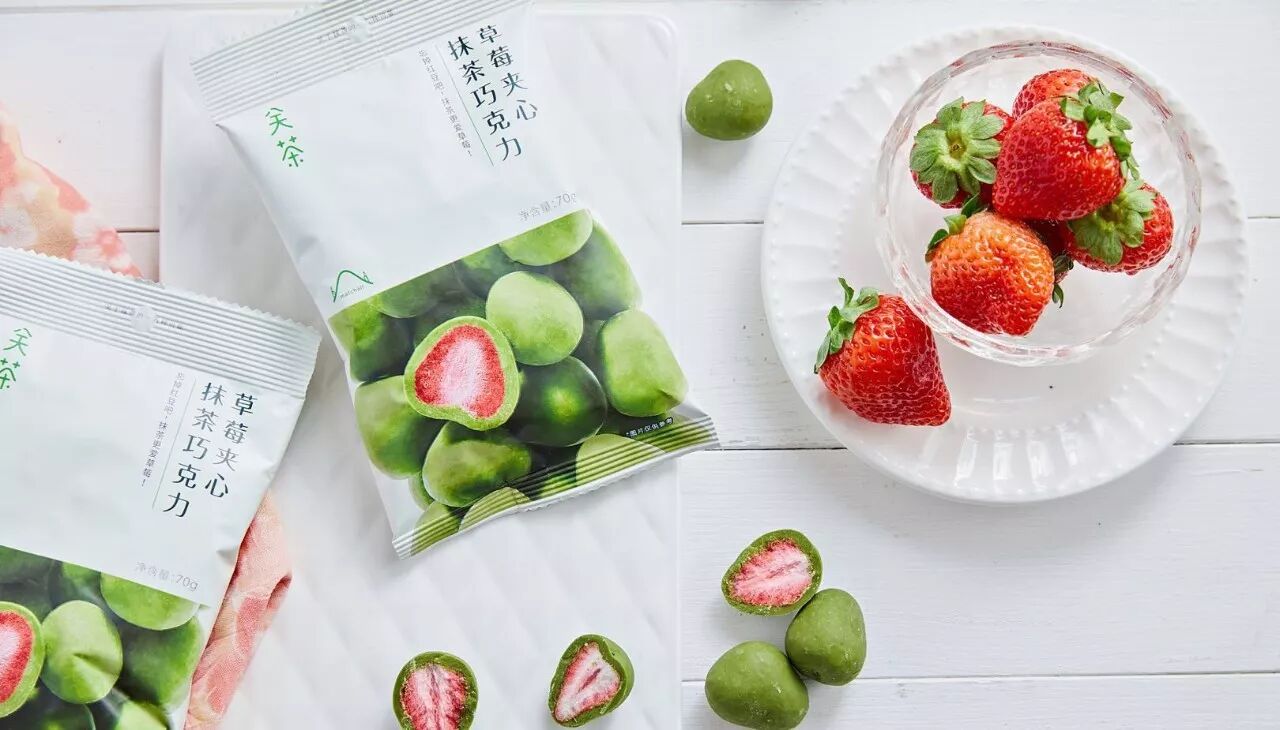
▲ Matcha's green, natural, healthy image aligns with young consumers' expectations in the consumption upgrade trend.
Q: How can new retail brands find upgrade space in the industrial chain?
Guancha places great importance on its R&D team, all young, highly educated, overseas-experienced super foodies who can discern young consumers' preferences. On product update speed, whether iterating old products or developing new ones, we basically aim for once a month.
Currently, we have nearly 20 products, none of which we produce ourselves; instead we work with over 15 factories for contract manufacturing. These factories all have Japanese, Taiwanese, or European/American capital backgrounds, with very high specifications and standards, meeting our requirements in craftsmanship, quality control, and production capacity.
In the past, traditional retail's layer-by-layer margin stripping and cost-oriented thinking made it hard for conventional food manufacturers to choose truly quality ingredients. For these contract manufacturers, undifferentiated market competition also suppressed their profits. Now with consumption upgrade, their desire to inject new products is also strong. And because we can sell at relatively high margins through genuine quality and brand effect, everyone can make money, allowing us to build good cooperative relationships with factories and further guarantee product quality.

Tang Liang
Founder of Zhiguan, previously worked at Johnson & Johnson and Procter & Gamble, responsible for marketing brands including Johnson's Baby, Clairol, Pantene, and Rejoice. In 2015, he founded plant amino acid hair care brand "Zhiguan."
Q: How is consumption upgrading in your sector?
On October 10, Procter & Gamble announced that shareholders had voted against activist investor Nelson Peltz gaining a seat on P&G's board. But the impact of this event is far from over.
What struck me deeply was that in a "white paper," Peltz analyzed several reasons for P&G's declining market share in recent years, including:
- Today's consumers increasingly prefer small and local brands;
- Past consumers trusted big brands, but this trust has diminished among many millennials, who instead pursue more distinctive, purpose-led brands;
- In the past, occupying shelf space at major retailers was a wide "moat" for FMCG; now this "moat" is being filled in by ecosystems built on internet and e-commerce;
- The rapid growth of natural, healthy, organic products.
These aren't just P&G's problems — they're challenges commonly faced by traditional FMCG companies.
These changes had been showing signs for a while. Two incidents left deep impressions on me.
The first happened in 2012, when I was still at P&G responsible for shampoo distributor channels. During a visit to a department store in a town in Hebei, the local sales rep told me their best-selling shampoo was Sassoon, which belonged to the premium range, rather than the cheaper Rejoice.
If consumers in townships were demanding premium products, then consumers in first- and second-tier cities must have even stronger demand — and P&G's product portfolio at the time probably couldn't satisfy it. At that time, cross-border e-commerce wasn't as convenient as now, so some consumers would buy Hong Kong-imported products from Hong Kong goods stores in Guangdong. Did this mean more premium personal care products had an opportunity to develop?
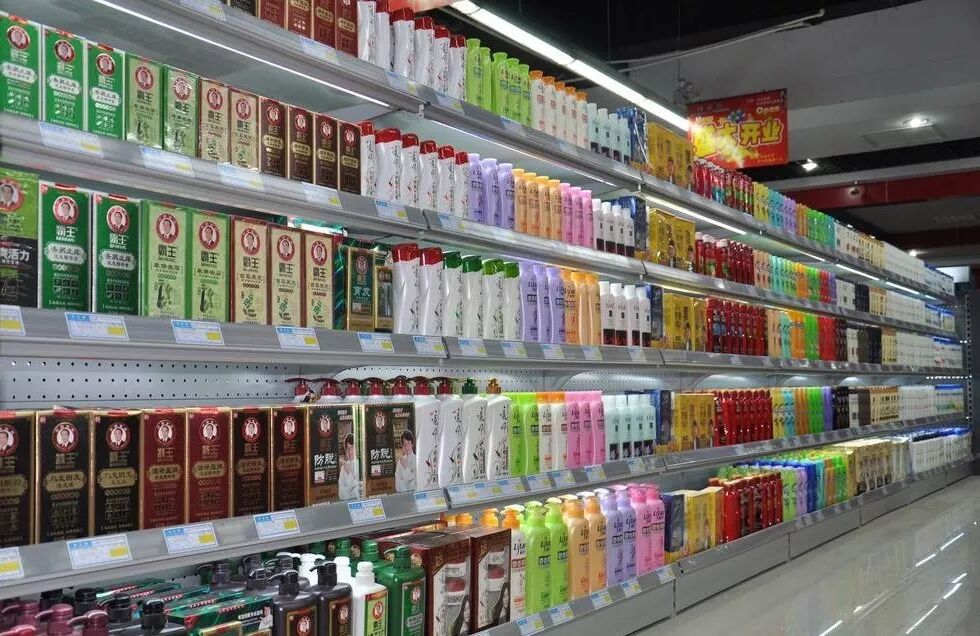
▲ Personal care products once relied mainly on supermarkets for promotion and sales. In the e-commerce environment, this approach is gradually becoming ineffective.
The second incident happened in 2008, my second year at P&G. At the time, I was responsible for Herbal Essences, the smallest of P&G's five shampoo brands, with roughly 600 million RMB in annual sales.
That year we did a complete brand upgrade, replacing the previous transparent bottles. But many old users didn't accept it, writing to ask, "Where can I buy the old Herbal Essences? I want to buy 100 cases to last me forever!" This showed that the transparent bottle, with its herbal, natural feel, though more niche, had a group of die-hard users.
Both incidents inspired me in creating "Zhiguan."
Q: How can new retail brands find upgrade space in the industrial chain?
Personal care is an industry that's "easy to enter but hard to master." The barrier to entry isn't high — there are over 2,000 factories in the Pearl River Delta alone that can produce. But precisely because of this, the industry has become a red ocean with intense competition. To stand out, both product and supply chain must be excellent.
New retail talks about "customization," "low cost," "high quality," but quality, cost, and time in the supply chain happen to form an "impossible triangle" that can't be achieved simultaneously. Startups usually need to make a choice, and we made our trade-off: we chose quality and time, with cost being relatively less important.
When we first started, our order volumes were small and our requirements high, so factories weren't very willing to take us on. It was with the help of Zhiguan's other partner, Xiongjian, who had worked in P&G's supply chain department for many years, that we found a quality Japanese supplier. That supplier has over a hundred years of history and serves Fortune 500 personal care companies including P&G, Unilever, and Estée Lauder, with excellent production quality control systems.
While this leads to somewhat higher product costs, we feel this choice is reasonable at this stage because we need good word-of-mouth to attract users.
As business scale expands, we can gradually reduce costs while maintaining quality by increasing volume and planning ahead (placing orders earlier reduces suppliers' rush time), making the three ends of the "impossible triangle" more balanced.
"Zhiguan" was initially positioned as a brand incubated on new media platforms, co-created with seed users. We adjusted our formula three or four times before product launch, inviting seed users to participate each time, starting from a few dozen and eventually accumulating over two thousand. This is also an advantage brought by internet and new media, allowing us to have zero-distance, more intimate contact with users.
But the core business logic of FMCG hasn't changed. FMCG has these characteristics: high penetration — most people use it; fast purchase frequency, high usage frequency; users are willing to try and sample, easily accepting new brands. Our goal remains to build brands and products that as many users as possible can perceive, consider, purchase, and repurchase. It's just that on this foundation, we'll use internet and new media to improve efficiency.

▲ Surrounded by 281 Billion Sensors, How Do We Redefine Life? | FreeS Fund Free Talk
▲ Li Feng x Lixing Wang: After 900 Million Consumers Become "Shopaholics," How Can Chinese Brands Capture the Global Market? | FreeS Fund Free Talk
▲ Can Paid Content Buy Real Knowledge, and Can Online Education Solve This? | FreeS Fund Free Talk