Returning to China to Start a Business? Answers to Questions You Did — and Didn't — Think to Ask | Recap of FreeS Fund's First Open Day
Have ideals, but don't be idealistic.
 Swipe left and right for a surprise 👉
 Swipe left and right for a surprise 👉
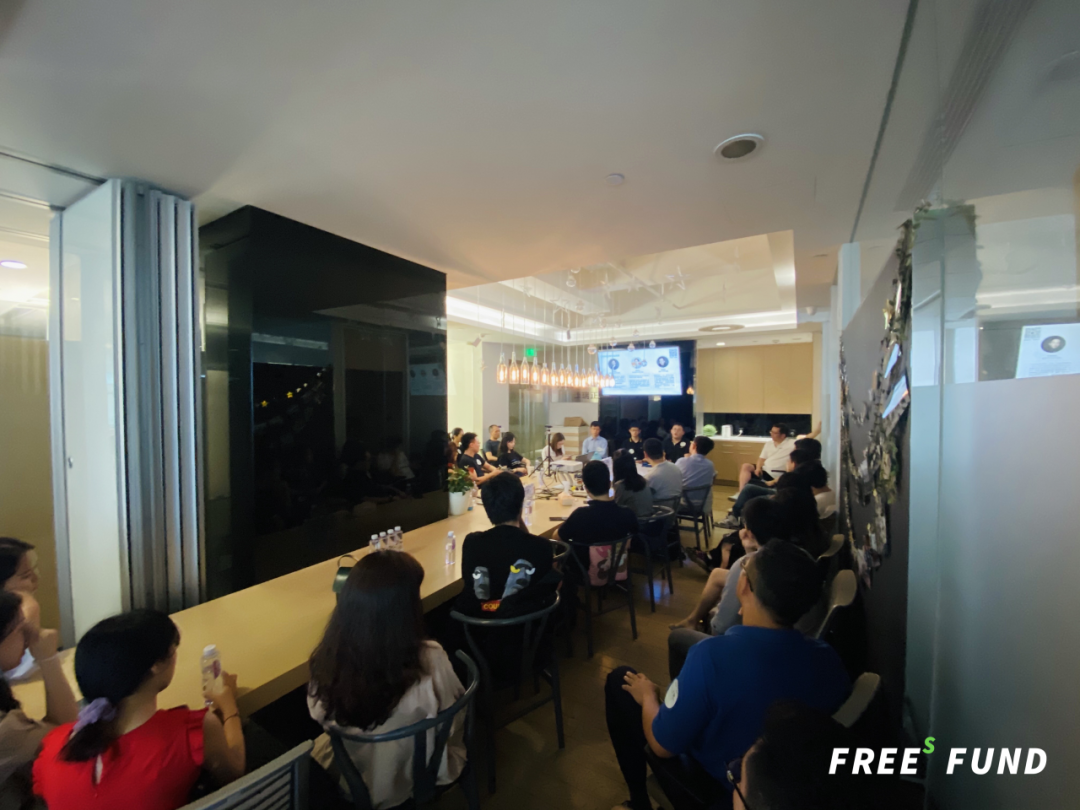
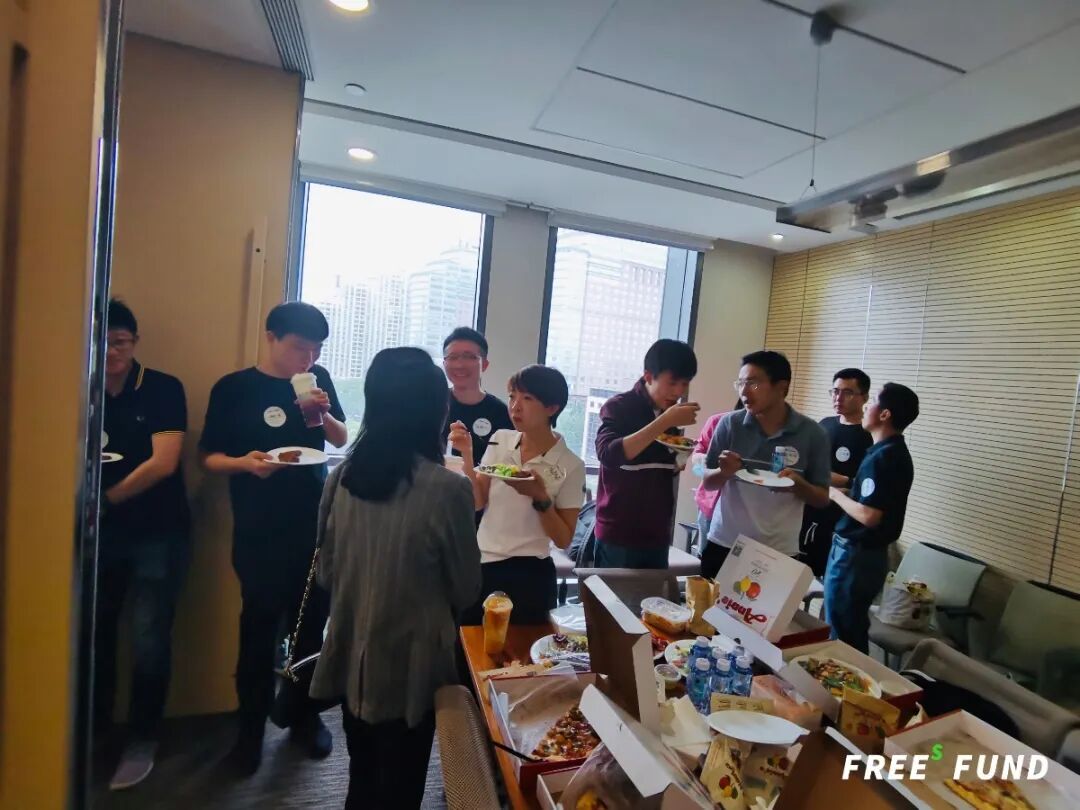
Over the past six months, we've weathered many "black swan" events together. For the foreseeable future, uncertainty will remain one of the dominant themes. In work and life, as individuals and as groups, within our immediate circles and beyond them, everyone is searching for balance — and for pillars and anchors to steady themselves amid the unknown.
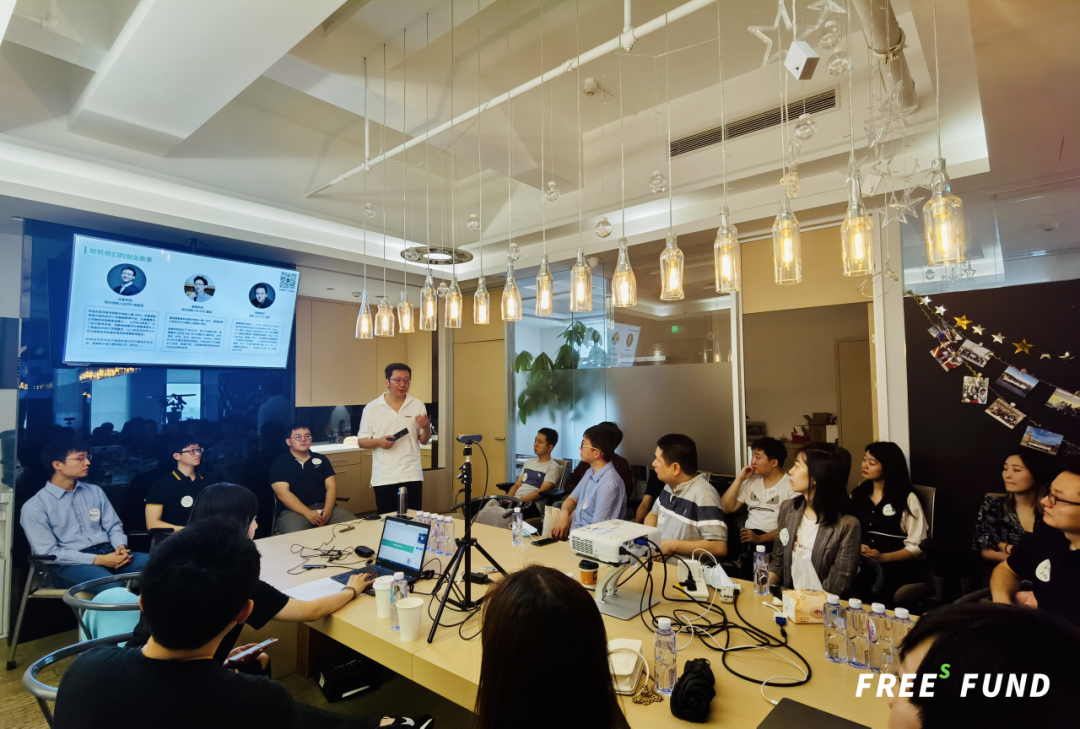
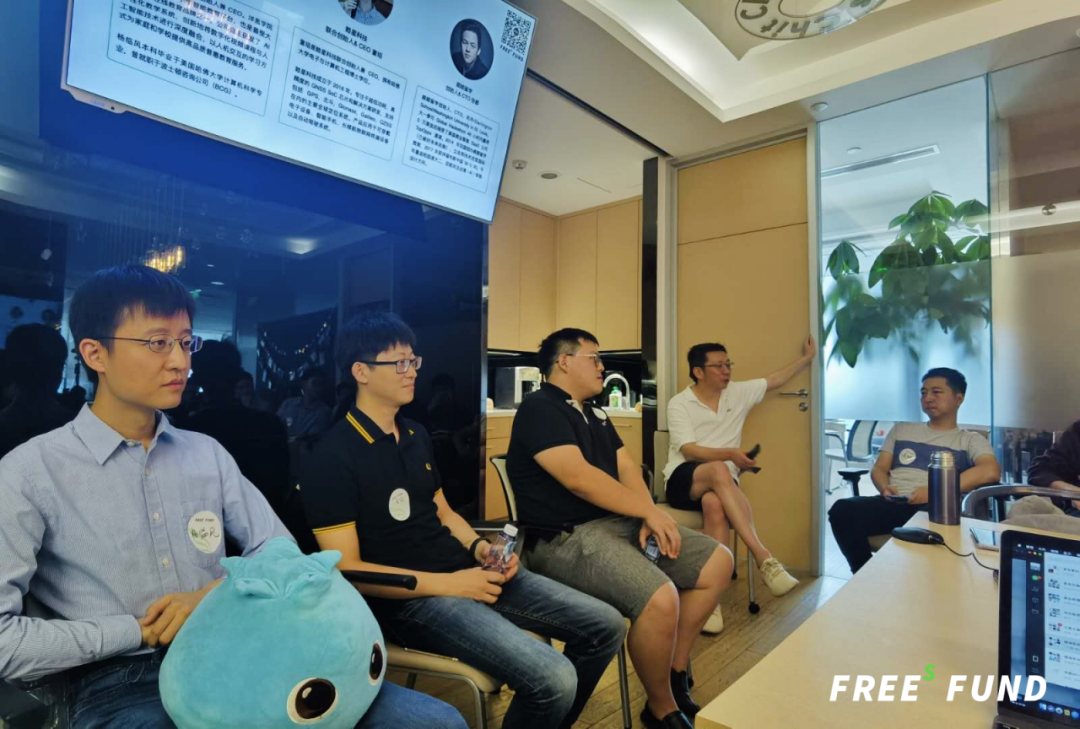
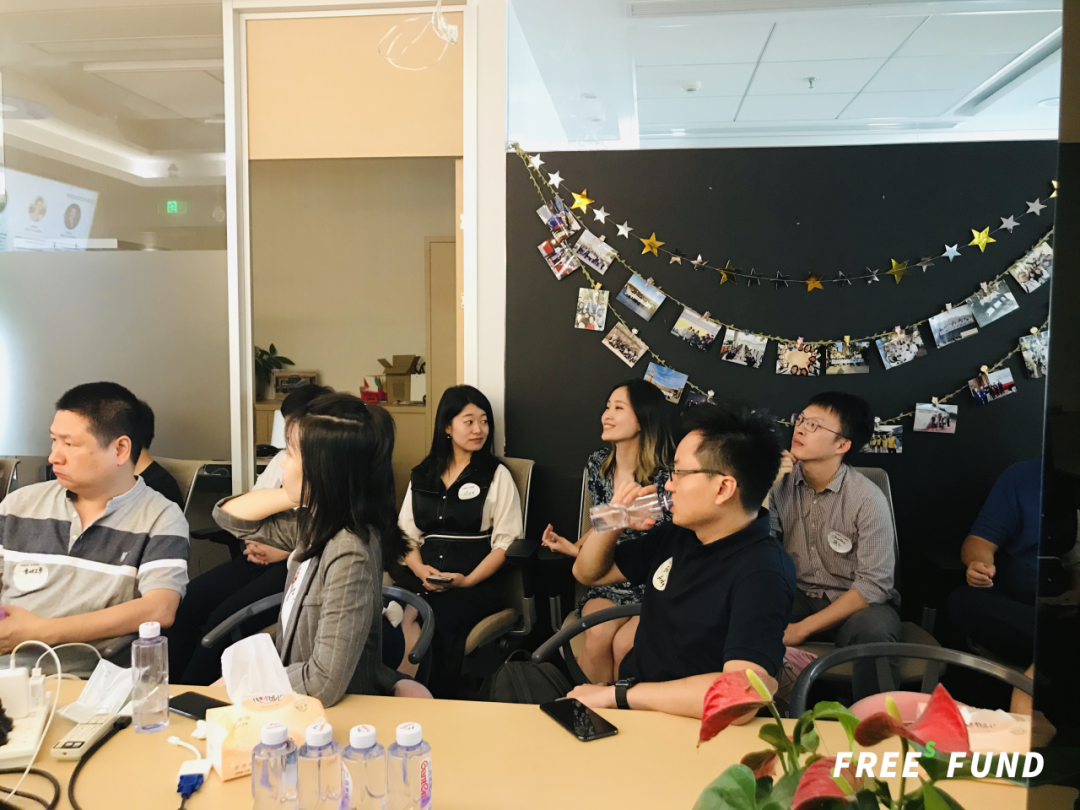
Against this year's complex backdrop, returning home to start a business or join a domestic startup has become an increasingly popular choice for international students. On the first day of August, FreeS Fund hosted an Open Day event called "Feng Xiang Hui" in Beijing. Feng Shu (Li Feng) invited three founders from the FreeS Fund family, all with overseas study and work experience:
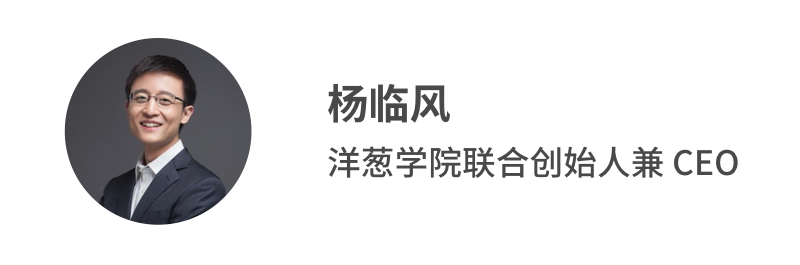
- Lin Feng Yang, co-founder and CEO of Onion Academy (Yangcong Xueyuan)
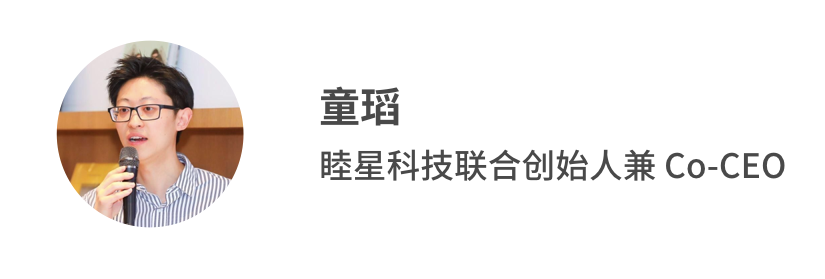
- Tao Tong, co-founder and Co-CEO of MizarVision (Muxing Technology)
- Du Zhang, founder and CTO of Shunshun Liuxue
They sat down for a conversation about their journeys returning to China to start businesses, sharing lessons learned and hard-won experience, then took questions from attendees both in-person and online. Topics included:
- How do you find the right team to start a company with? What happens when co-founders can't keep working together?
- Why is it said that entrepreneurship requires idealism, but not being idealistic? Where's the line between the two?
- How do returnee founders stop being out of touch with the ground reality? What does "grounded" actually mean?
- What's the hardest part of entrepreneurship?
- How do investors choose founders? What qualities do they value most?
- When building in foundational service sectors like education, finance, and healthcare, how do you balance commercial and social value?
We've excerpted portions of the discussion to share with you, in hopes they might offer some useful perspective.
Contact Us We look forward to ongoing exchanges with entrepreneurs and industry experts. Feel free to add FreeS Fund's WeChat account (ID: freesfund) to connect with us.

/ 01 /
▍Two Takeaways
Li Feng: Before our guest speakers begin, I'd like to share two conclusions with everyone.
The first concerns two recent hotspots in investment and financing.
One is consumer brand entrepreneurship. I'll give two examples. The first is an online colored contact lens brand we invested in. This category sits at the intersection of medical devices and consumer goods — a space we've consistently liked. Within a month of our investment, another firm came in at several times our valuation for the next round. The second example is an ice cream brand we backed earlier. This brand grew especially fast between April and June this year, and recently another institution is competing for allocation at a price several times higher than the previous round.
The second hotspot is domestic technology substitution for imports. Take a chip project we angel-invested in two years ago. A month ago, Huawei completed a round. Within a month after Huawei's round closed, the project went on to complete three additional rounds, with its price tripling.
These are the two hottest directions we're observing in the current investment and financing landscape.
The second conclusion is drawn from our investment practice over recent years.
Over the past four years, FreeS Fund has invested in several technology projects in Boston each year on average. Compared with projects whose founders chose to stay in the US, those who returned to China for various reasons — actively or passively — mostly received better funding support and market recognition after coming back. This includes the chip project I just mentioned, which completed three rounds in one month after returning.
Those are the two conclusions I wanted to share. Now, let's welcome our three guests to discuss their experiences and reflections on returning to China to start businesses.
Food for Thought Q: How do you deal with China's intensely competitive environment? Give us a "like" at the end of this article, and reply "创业" (entrepreneurship) in our official account backend to get Feng Shu and Du Zhang's preliminary answer.
Giveaway Share your thoughts on starting a business in China in the comments section. By 21:00 on August 14, we'll select the 6 most thoughtful commenters to each receive a custom FreeS Fund notebook.
/ 02 /
▍Finding the Right Team Is the First Hurdle
Du Zhang: Hello everyone, I'm Du Zhang, co-founder of Shunshun Liuxue. I returned to China in 2014, quite serendipitously — a friend introduced me to Feng Shu. That August, the two of us sat in a beef noodle shop at Shanghai Hongqiao Railway Station, talking as we ate. After that conversation, Feng Shu decided to back us.
Today I want to share two topics: why I didn't continue school and came back to start a business instead, and how the company has fared since returning.
The first question really comes down to what kind of life a person chooses to live. In my personal life, I like certainty. But when it comes to work, it's the opposite. In 2009, I went to the US for high school because I wanted to experience a different way of living. But after finishing my first year of college, I could see the trajectory of the next three years all too clearly. To keep chasing uncertainty, I came back.
I studied computer science in the US. I'd loved writing code since high school — I relished the feeling of creating something that people actually use. Starting a business back in China happened to satisfy that passion.
Li Feng: Tell everyone about the hardest things you've faced in your four years of entrepreneurship.
Du Zhang: The first hurdle is definitely finding people to start a company with you — it's incredibly draining. For me, the most painful part has been the changes among my co-founders. From 2014 to 2019 at Shunshun, I went through three waves of partners. The first wave was several undergraduate classmates, but we quickly couldn't continue working together. The company hit some difficulties, and they weren't willing to keep going. But I'd taken Feng Shu's investment — I had to be responsible for his money. I had to grit my teeth and push forward.
Li Feng: Du Zhang has touched on something important, so let me interject here. After more than a decade of early-stage investing, I'm often asked: how do investors choose founders? My answer is usually — one answer, two clues.
The "one answer" is that the person who ultimately succeeds isn't necessarily the smartest or most capable, but the one who is smart, capable, and most determined to make it happen. Because the entrepreneurial path has too many hurdles to clear. At many critical junctures where rational decision-making fails you, what gets you through is often that sheer drive to make things work.
The "two clues" refer to two questions investors commonly focus on:
-
Why do you have to do this particular thing?
-
What in your past experience can help you follow through on the extended timeline that entrepreneurship demands?
Du Zhang: I completely agree with what Feng Shu said. There are many moments in entrepreneurship where founders simply can't solve problems through reason alone. You need something beyond rationality to sustain you, or it's very hard to keep going.
▍Compared to Pushing Forward with Certain Business, Pivoting Poses Greater Uncertainty for Teams
The second major challenge is the thing you're actually trying to do.
From a business perspective, as long as it's an existing business that others are doing, you can do it too — given sufficient resources and time, there's definitely a solution. The difficulty lies in pivoting. For managers, pivoting doesn't just mean taking on significant risk; it also involves high uncertainty.
Shunshun has gone through three pivots in its history. The first was right after we returned, when we decided to shift from software to an online Q&A platform, aiming to become "the Zhihu of the study abroad industry." The second was pivoting from a Q&A community to a transaction platform, and later from a transaction platform to a hybrid B2C and C2C model.
Each business pivot is a major test for the partner team. First, do you pivot or not? If you do, how? And what do you pivot into? These are all crucial questions.
So for me, the hardest parts of entrepreneurship are: one, the team; two, pivoting. Throughout this process, Feng Shu gave Shunshun enormous help. My most important later partner, Yang Zhang, was introduced by Feng Shu. Also, during pivots, it's easy to second-guess yourself — unsure whether this new direction is the right choice. During that phase, Feng Shu gave us a lot of advice and encouraged us to experiment.
Li Feng: Thank you, Du Zhang. Let me summarize — he mainly talked about two things. First, as a founder, you'll very likely experience the breakup and reconstitution of your founding team. But when you get through it, you'll find the sky hasn't fallen. These adjustments are hurdles you must cross. Having the founding team stick together from start to finish is the ideal scenario, but it's rare.
The second issue he raised is also something our investment practice has validated — over the years, almost all of FreeS Fund's better-performing portfolio companies haven't changed their broad direction, but have adjusted their specific models many times over.
This is a "sad" truth. It means that no matter how far, how deep, or how certain your thinking is today, to reach that critical milestone, you'll inevitably experience all kinds of zigzags. But the precondition is that your broad direction can't change — you can't veer off course.
/ 03 /
▍Smart and Honest
Tong Tao: I met Uncle Feng in 2014, when he was hosting an info session at Harvard. I'd actually already founded a company in 2013, and by 2015 when I graduated, I had two choices: stay in the U.S. and rejoin that startup, or do something else. I chose to give up all my equity and return to China. Mainly, I wanted to step back and see how different business models and companies operated. But I didn't want to join a big corporation directly — that would make it harder to maintain the detached perspective needed to examine various business forms.
That year, Uncle Feng offered me an opportunity to join the fund as an EIR (Entrepreneur in Residence), where I could look at different projects — tech, consumer, any industry I was interested in. This was exactly what I needed, because it was incredibly helpful for broadening my cognitive dimensions.
Li Feng: Let me ask you something. I remember when eight or nine PhD investors at FreeS Fund were discussing the M-Star project together in our big conference room. Since the team couldn't disclose their core technology, everyone had concerns. But after you finished your analysis report, you decided to join their team. What drove that decision?
Tong Tao: It probably has to do with my first entrepreneurial experience. I founded my first company in 2013, and the entire founding team had just received their PhDs. In the semiconductor industry, this was an extremely young team.
We faced a lot of skepticism about our chip from both inside and outside the industry, but later we became a supplier to several of the world's most famous phone makers in a fiercely competitive market. So I can deeply relate to a project being questioned — it's completely normal.
If you're challenging an established model in any industry, you'll inevitably face skepticism. In fact, if you have truly groundbreaking technology and can explain it clearly to experts in half an hour, getting everyone's approval, then the technology itself probably doesn't have that high a barrier to entry. That's one point.
Second, I felt the M-Star team was very honest. Even now when we meet with investors, we clearly explain what we can and cannot do. If this stage interests you, join us and let's build together. The same goes for recruiting talented people domestically and internationally — we clearly explain the opportunities and the challenges, without exaggerating. The benefit is that everyone makes their decision with clear eyes.
Li Feng: What Tong Tao just said touches on another topic that young entrepreneurs often ask us about — what qualities do investors value most in founders?
On this question, I think the vast majority of investors agree: smart and honest.
Actually, these two qualities are connected. The way excellent people interact is usually sincere. As Tong Tao said, know what you know, don't know what you don't know. The opposite type is someone who thinks they're clever, always trying to change others, trying to steer every question back to their own logic; or someone who tries to please others, saying what investors want to hear. This is actually a more troublesome way of dealing with people.
From my personal experience working with CEOs, the best ones are first smart enough and honest enough; second, they listen to investors' advice but don't necessarily follow it.
Tong Tao: Yes, I think this is just how people approach their work.
▍The Global Division of Labor in Semiconductors Is Hard to Reverse Quickly
Li Feng: I have another question. M-Star has been globally oriented almost since its founding, with cross-border team collaboration. Was this a resource allocation consideration? How do you think about maintaining this operating model?
Tong Tao: Overall, the global division of labor in semiconductors is very difficult to completely reverse in a short time. As a chip company, we've always needed to prepare for global competition.
Having employees distributed across different countries and regions raises the bar for everyone's capabilities and work quality. The simplest example: time zone differences increase communication costs. People often say that moving a company from one floor to two floors, from one building to two buildings, are huge steps. What they mean is that when people aren't in the same office, communication costs rise, and if work quality doesn't keep up, overall efficiency suffers greatly. Our company has worked this way from day one, so we require all colleagues to hold themselves to higher standards.
Li Feng: Let me add something here. Four or five years ago, we once analyzed the differences between China and Japan. In China's process of rapid iteration in applied technology, both the market and supply chain remained domestic and weren't relocated. Taking chips as an example, beyond policy and economic drivers, China currently has both enormous market-driven demand and supply chain-driven advantages that other countries at the same economic cycle don't possess. These factors will jointly drive rapid iteration in industry and technology.
This is also why FreeS began betting on chips four or five years ago, before they became hot. These macro factors will cause various driving elements to radiate into broader fields and connect into longer bridges. Once the most core technical link in the middle is broken through, it will drive rapid iteration of demand and production on both ends, ultimately forming an unbreakable chain.
/ 04 /
▍From Nonprofit to Startup: Balancing Social Value and Commercial Value
Yang Lin Feng: Hello everyone, I'm Yang Lin Feng, co-founder and CEO of Onion Academy.
Before starting my company, I worked in education philanthropy. We launched a nonprofit organization called "Sunshine Bookhouse Rural IT Education Initiative," hoping to use the internet and information technology to provide low-cost, high-quality educational resources to rural students.
That was 2010. I was a junior at Harvard studying computer science, and my co-founder Zhu Ruochen was at Duke studying biology and education. From starting to prepare the nonprofit project in 2010 to going full-time into philanthropy by mid-2012, we discovered that compared to hardware devices, students needed appropriate learning resources and software more. Therefore, we decided to transition from a nonprofit to a commercial company to raise more resources for developing courses and software. In this process, we also gained a new understanding of the essence of business.
Let me briefly introduce our business. Onion Academy is a 100% human-computer interactive learning product that provides adaptive online courses for students. Most online education companies currently use live teachers — whether one-on-one, one-to-many, large classes or small classes. In our view, this model only uses one characteristic of the internet, which is eliminating geographical barriers, but doesn't do well on automation. Automation in education products can help us save significant teacher costs, thereby dramatically lowering the price of quality education and making education more accessible.
But achieving automation is obviously difficult, because education is an extremely non-standardized thing. What Onion Academy has been researching is how to make non-standardized educational content standardized — whether through curriculum, exercises, tests, human-computer interaction, and other design elements to break down the learning process finely enough to make education a high-quality standardized product, and relying on AI and big data technology to ensure a certain degree of adaptability, helping each student achieve personalized self-directed learning.
We hope that whether it's the best school in Beijing or a remote mountainous rural area, as long as there's a phone and network coverage, any child who wants to learn can learn, and learn well. Does this sound idealistic? This was indeed the doubt many investors initially had.
Li Feng: Let me interject here. In our investment work, there are several industries that are particularly challenging — healthcare, education, finance. These industries are often called foundational service industries, involving social, supply, and value distribution issues. The most difficult aspect of these three industries is how to balance social value and commercial value — whether to move from social value toward commercial value, or from commercial value toward social value. We investors also face choices: do you choose someone heavily commercialized, hoping they'll give back to foundational social services after achieving commercial value? Or do you choose someone with noble original intentions, hoping they can simultaneously achieve commercial value?
Take fintech as an example. I was among the earlier wave of investors in China to focus on the finance industry, and invested in many fintech companies. From 2015 to now, the finance industry has gone through a strong regulatory cycle, and many people got "regulated," but our portfolio companies have remained stable. Beyond luck, this also relates to our people selection principles. When we looked at fintech projects, we didn't choose founders with explosive data growth or extremely aggressive commercialization — that's the first point.
The second point is that we invested in people from the finance industry who wanted to do internet models, not people from the internet industry who switched to finance. What's the difference? People from finance have deeper understanding of the finance industry and are better at knowing the boundaries, even if they may not prioritize growth the way internet-background people do. So all the founders we invested in at that time almost had solid finance backgrounds and were relatively non-aggressive.
As investors, when an industry is in a rapid growth红利 period, the companies we choose may move relatively slowly — this is a challenge for us. But the question is: do you want to invest in something that lives long, or something that rises fast? There are other risks involved; it's not an easy choice.
Throughout Onion Academy's journey, although every funding round raised the money they wanted, even exceeded it, the challenge faced in every round was the same — idealism versus being idealistic.
▍Ideals Support the Company's Vision, but the Process Can't Be Idealistic
Yang Lin Feng: Yes, this has indeed been a significant challenge for us. When we started the company at the end of 2013, most investment institutions we met raised two questions:
-
Self-directed learning differs greatly from traditional education. In a time when online education was still uncommon, you're jumping directly from offline to online — is this reliable?
-
How will this achieve commercialization going forward?
Looking back at 2013–2014, many internet companies' business models weren't clear then. Everyone was still exploring how to monetize mobile internet, mainly staying at the advertising and traffic level.
So at that time, encountering investors who recognized the project was extremely rare. After talking with Uncle Feng, he showed tremendous interest in this, which gave us great encouragement. Later, during the second round of investment, Uncle Feng — who was still at IDG then — strongly supported us and came in as an investor.
One challenge with building human-computer interactive learning products is the heavy upfront investment in fixed R&D costs. It's not like a teacher doing a livestream — once you have the teacher, you can go live the next day. Our team was small at the start, and it took us three years just to develop middle school math courses. K-12 education demands systemic completeness; you more or less have to cover every topic and knowledge point in the middle school curriculum before you can launch. So those first two years put enormous pressure on our team. Because our content wasn't complete, we couldn't promote at scale, and our user base was tiny. During those two years, Uncle Feng gave us tremendous encouragement.
Of course, this was also shaped by the broader context of mobile internet business models still being in an exploratory phase. Compared to grinding away with unclear monetization, thinking longer-term from the outset would have been more beneficial for both product and market.
Li Feng: This is the transition from being idealistic to having ideals.
Yang Linfeng: Fundamentally, education skews toward consumption, but our founding team's DNA leaned toward product R&D and curriculum development. We focused more on how to spark students' interest in learning and help them achieve real learning outcomes. We'd never sold anything before, so we took an enormous number of detours in our early years — and we're still finding our way back from some of them.
Uncle Feng once shared a point at one of our internal meetings: ideals and idealism are two different things. Having ideals is precious — ideals anchor a company's vision and keep you from losing your way. But the process itself can't be idealistic; you actually need to be realistic along the way. With ideals steering the ship, you can boldly try more commercial, down-to-earth approaches.
Li Feng: Right, and this touches on another issue in entrepreneurship. We prefer to invest in things with the right original intention. The right original intention is the starting point. Then there are two legs: one goes from social value toward commercial value, and the other goes from idealism toward ideals. Conversely, if someone starts out 100% focused on growth and commercial value, there are precedents for eventually circling back to social value — but it's much harder.
/ 05 / Q&A
▍Building a good product and achieving commercialization should be considered simultaneously
Question: Hello everyone. I'm currently running an education-focused MCN. We've recently done 30 consecutive livestreams about college entrance exam (gaokao) application strategy, averaging over 100,000 concurrent viewers per session. We're trying to do something around education equity — the underlying logic is information flow and human connection. I'd like to ask Yang Linfeng: our current model is very light, and our courses aren't systematic. Do you have any advice? Beyond doing traffic and information sharing, what more systematic, sustainable approaches could we explore?
Yang Linfeng: My first reaction is: if you're doing gaokao-related content, that traffic comes in one wave. Once that demand passes, the traffic likely disappears — how do you form a stable commercial闭环 (closed loop)? Building a good product and achieving commercialization should be thought through together. So I think you first need to figure out what you actually want to build: an information-sharing community, a traffic operation that continuously funnels users to others, or your own courses. These three different directions and choices entail completely different team requirements and advice.
Zhang Du: I don't think commercialization is the problem. There's still quite a lot of opportunity in building traffic matrices for education. Overall, education product formats are trending toward lighter, more fragmented offerings like mini-courses. Education traffic carries significant value, and there are many monetization models downstream.
▍The demand your product addresses must be real and mass-market
Question: Hello everyone. We're building a teaching resources platform for ordinary teachers. In many places, lesson plan digitization is still very low. On one hand, we want to help teachers at different schools exchange resources; on the other, we want to improve teachers' workflows through software design. Our team is still small, and we're mostly focused on product — trying to figure out how to better help teachers improve efficiency — and we haven't thought about monetization yet. But when we talk to investors now, they all care about how to make money, not the product. There are very few institutions with real mission-driven conviction. This is also about the tension between ideals and commercialization.
Xian Jintong: I'm the investor at FreeS who covers education. First, we shouldn't pit investors against entrepreneurs. When evaluating projects, investors definitely care about what your product is trying to achieve — helping teachers is a fine original intention. At the same time, investors will focus on two questions: One, is this a real demand? Two, is this a demand shared by most teachers, or can it only serve a minority? Having ideals about helping teachers at the early stage is fine — if you genuinely solve teachers' problems, they'll have willingness to pay, and investors will accept that you're not making money now but have future monetization potential. But you need to confirm this is a real demand, and that it can scale to a mass market.
▍How can returnee entrepreneurs become "down-to-earth"?
Question: Hello everyone. I just finished my junior year at Harvard and want to build a high-quality content community, somewhat similar to early Zhihu. I've talked with some mentors, and they tell me the product needs to be "down-to-earth" (接地气) — "domestic affairs are complicated, you need deep understanding to grasp them." But when I specifically ask what "down-to-earth" means, I rarely get concrete answers. So what are some specific situations where returnee entrepreneurs might fail to be "down-to-earth"?
Zhang Du: What "down-to-earth" means varies by industry. In education, for instance, you could understand it through several quantifiable standards. Is the team down-to-earth? Look at how many non-first-tier-university fresh graduates are on the team. Is the business down-to-earth? Look at the product's monetization capability — are users willing to pay? These metrics essentially measure whether your product is tightly integrated with China's national conditions. China is a massive country with diverse, complex users whose needs and habits are often completely different from yours. You can roughly think of "down-to-earth" as the product's generalizability and its commercial value.
Yang Linfeng: I'd add one point. You mentioned some people are evasive when discussing the entrepreneurial environment. My own experience is that it's fine — not that different, especially since the business environment has improved tremendously in recent years. There are issues, but as a market, you still need to think through how to commercialize.
Speaking of content communities: based on my observation, in China, a high-quality content community needs massive traffic to achieve commercialization. Advertising revenue alone can't sustain it. To go further, it needs to grow completely different business models on top — something you're unlikely to have clarity on at the project's outset.
You might have initially gotten interested because you're an enthusiast in some field, and you want to build a community where like-minded people share and exchange insights — that's a beautiful state. But as it develops, you'll likely need to expand the business model, probably into something very down-to-earth, possibly requiring offline integration. Then you'll face three questions:
First, are you personally prepared to do the dirty, grinding work?
Second, can you convince investors that you have an open enough mindset to accept this?
Third, have your co-founders and team reserved positions for this future?
Food for thought Q: How to respond to China's intense competitive environment? Welcome to hit "Like" at the end of this article, and reply "创业" (entrepreneurship) in our official account backend to get preliminary answers from Uncle Feng and Zhang Du, founder and CTO of Shunshun Liuxue.
Giveaway Welcome to share your thoughts on entrepreneurship in China in the comments section. By 21:00 on August 14, the 6 readers with the most thoughtful comments will each receive a custom FreeS Fund notebook.
Contact us We look forward to ongoing exchanges with entrepreneurs and industry experts. Welcome to add FreeS Xiaorui on WeChat (ID: freesfund) to connect with us.

After the Pandemic: Education's Survival Elimination Round | FreeS Research
On Chinese Manufacturing: What Did Minister Miao Wei Actually Say? | FreeS Research
Li Feng Column 14: Why Thank Chinese Manufacturing?