Network Effects — Possibly One of the Best SaaS Business Models | Frees Fund: Learning from Investing
Tough businesses that address long-standing contradictions always represent outsized opportunities.

"Learning from Investment" is a column we launched in 2020. It aims to reconstruct the thinking, debates, and learning process behind some of FreeS Fund's most representative investments — from the very beginning to where they stand today. It's also our way of paying tribute to founders: by witnessing them lead their companies forward and overcome obstacles, we've gained deeper understanding of industry and business patterns. Now, we're sharing what we've learned from them, hoping to offer some inspiration, and saluting the countless entrepreneurs working just as hard.
In the third installment of this series, we want to share what we've learned from the development of Nuoxin Chuanglian (诺信创联) — which completed two funding rounds within six months — about the existing structure of pharmaceutical distribution, the key variables at play, and where the next wave of opportunity lies.
Before hitting the funding fast lane, Nuoxin Chuanglian had a grueling three years. Fundraising was difficult, and its model was questioned. But broadly speaking, this is the story of a startup that spent five years repeatedly "colliding" with pharmaceutical policy, and eventually achieved network effects in SaaS software. Its journey also answers three questions relevant to all of us:
-
Can the medicine we buy keep getting cheaper?
-
How is non-corrupt pharmaceutical marketing possible?
-
How can the internet transform grassroots healthcare?
Before diving in, here are the three most valuable conclusions we drew from our investment in Nuoxin Chuanglian:
- As a foundational social service, healthcare's development trajectory is tightly linked to macro policy. Only by resonating with policy direction can space for growth emerge.
- In China's pharmaceutical distribution sector, pushing toward lower drug prices aligns with policy direction. Though the process is extraordinarily difficult, the results prove that doing what's correct in the long term will eventually be validated — as long as you persist.
- SaaS services can generate network effects too. But it must be acknowledged that this happens far more slowly than in consumer internet. The good news is, as long as the business model itself aligns with long-term value, it will inevitably get better as it scales, and scale as it gets better.
We hope this offers fresh perspective. We welcome ongoing exchange and discussion.

/ 01 / Back to the Beginning, Five Years Ago
Our assessment of the pharmaceutical industry,
and how we made our value judgment
when we met Nuoxin Chuanglian
▍Back to 2015: Our thesis that pharmaceutical distribution markups had to be eliminated
One method we use to identify early-stage investment directions is to find things that look unreasonable now but are destined to happen within three years or more. This inevitability stems from industry development patterns, shifts in supply and demand, or macro environment and policy factors.
Specifically in healthcare.
In 2015, we saw a long-term contradiction: within China's healthcare expenditure and reimbursement system, the gap between social insurance fund solvency and individual household health-related spending would gradually widen. In 2014, China's total social insurance funds and individual household health expenditures were roughly equivalent — both around 4 trillion RMB, roughly 5% of GDP — yet social insurance fund growth lagged far behind the rapid increase in individual healthcare consumption.
Against the backdrop of expensive medical care and high drug prices, we believed the state would do everything possible to reduce drug costs. One way to lower drug prices: eliminate the "markups" in pharmaceutical distribution. In other words, skim off all unnecessary fat from the distribution chain.
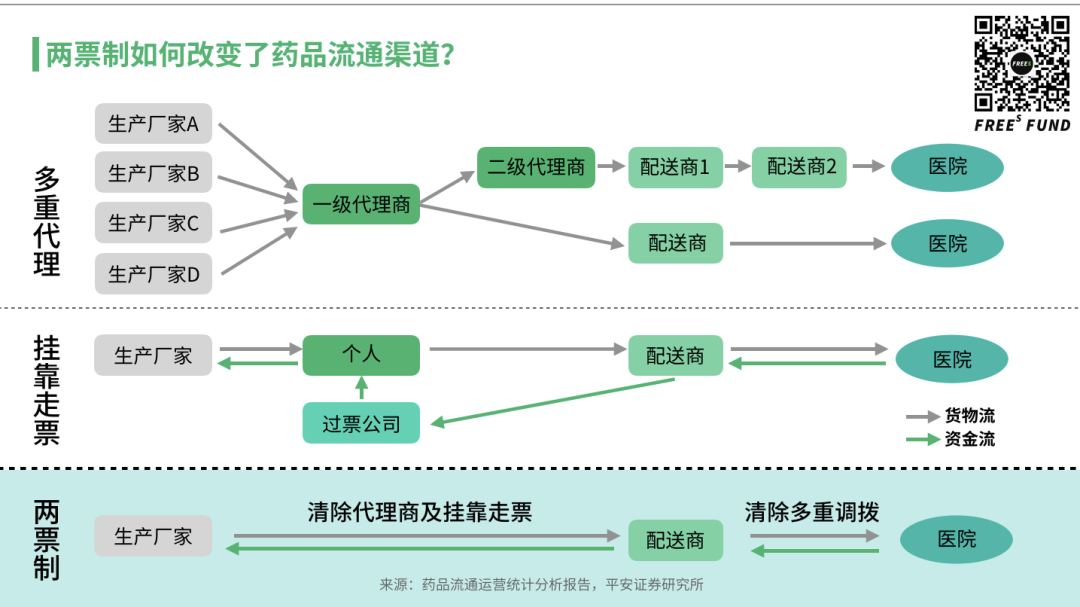
Pharmaceutical distribution refers to the series of circulation links between a drug leaving the factory and reaching medical institutions or retail pharmacies. Before the "two-invoice system" policy was implemented, drugs had to pass through layers of distributors to get from manufacturer to medical institution. Each additional layer meant another transaction, with prices marked up at every step. Thus, the gap between ex-factory prices and retail prices was often substantial.
Moreover, pharmaceutical companies' traditional marketing model relied on medical representatives making high-frequency, face-to-face "cash-accompanied visits," a process rife with gray benefits whose costs were ultimately passed on to patients.
In fact, eliminating distribution markups, moving pharmaceutical distribution toward compliance (anti-corruption), and lowering drug prices has been a major theme of national healthcare reform since the late 1990s.
In 1997, the "separation of medicine and medical care" policy decoupled hospital medical revenue from drug revenue — pharmacy income was no longer directly tied to doctors' earnings — with the goal of "solving the problem of using drug sales to subsidize medical care."
In 2014, GlaxoSmithKline (GSK) received a 3 billion RMB penalty in China after executives were implicated in bribery and commercial crimes. According to public reports, GSK sales representatives influenced doctors through kickbacks, speaker fees, and other means to drive drug sales. Shortly after, French pharmaceutical giant Sanofi was also investigated for allegedly bribing 503 doctors across 79 hospitals in Beijing, Shanghai, Guangzhou, and other cities under the guise of "research funding."
We leaned toward the view that healthcare reform would continue intensifying, further choking off the space for pharmaceutical companies to sell drugs through medical representatives using various gray methods, making it cheaper and more professional for consumers to get the right medication. In the process of breaking the existing interest chains, we believed new, compliant business models connecting doctors and pharmaceutical companies would have opportunity.
▍A new entrepreneurial attempt: Non-corrupt virtual marketing
In early-stage investing, people matter most — the founder is the most critical factor.
In November 2015, we met Ruan Wei, founder and CEO of Nuoxin Chuanglian. He was previously a major account director at British Telecom, responsible for sales team management and solution design, with a focus on pharmaceutical enterprise informatization. In his prior work, he had collaborated with multiple well-known pharmaceutical companies. His entrepreneurial motivation was to partner with pharmaceutical companies, integrate with their CRM systems, and help them reach and educate doctors.
Our initial impression: he had deep understanding of healthcare industry needs, particularly pharmaceutical companies', and combined knowledge of both informatization and sales — well-suited for this direction.
Physician education is one of pharmaceutical companies' core needs, thus accounting for the bulk of their marketing expenses.
This is a massive two-sided market.
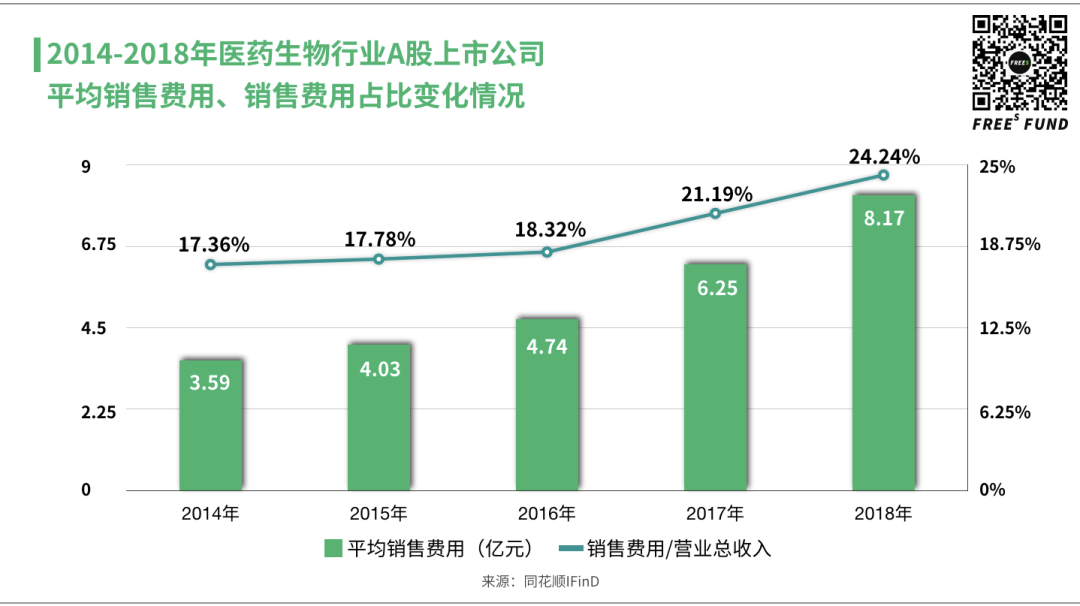
On one side, the enormous pharmaceutical marketing and sales market. Prescription drugs are not permitted to advertise publicly. Foreign pharmaceutical companies spend over 100 billion on marketing; Chinese pharmaceutical companies similarly have high sales expenses. Wind data shows that 323 A-share listed pharmaceutical companies had total sales expenses of 287.347 billion RMB in 2019, an increase of 30.2 billion RMB from 2018. The sales expense ratio also rose. According to Tonghuashun data, from 2014 to 2018, the sales expense-to-total-revenue ratio for A-share listed pharmaceutical and biotech companies climbed from 17.36% to nearly one-quarter.
On the other side, millions of medical institutions and doctors. According to the National Health and Family Planning Commission's 2015 Statistical Bulletin on Health and Family Planning Development, in 2015 China had 10.694 million health personnel nationwide, including 3.039 million practicing (assistant) physicians.
In our view, if Nuoxin Chuanglian could build a network connecting pharmaceutical companies and doctors, enabling more efficient pharmaceutical sales and coverage, it could serve a virtual marketing/sales function. A common scenario: a pharmaceutical company wants to host an online conference explaining a new drug's features and usage; Nuoxin Chuanglian organizes the doctors.
Logically, this direction had promise. It moved the process of educating doctors — previously done offline through medical representatives — online, making it more efficient, lower-cost, and more transparent, thus enabling non-corrupt operations (aligning with national policy).
Additionally, Nuoxin Chuanglian had already recognized the need to increase doctor stickiness to the platform through differentiated methods. Its approach — something offline medical representatives couldn't solve — was satisfying doctors' academic needs and improving their professional capabilities. Through Nuoxin Academy (a mini program), it provided doctors with services including literature lookup, pharmacopeia access, and disease-related information such as cases, diagnostic methods, treatment approaches, and drug usage; doctors could also exchange and discuss in a community.
Our preliminary judgment: this was the right direction, with a founder who knew the industry. We tentatively confirmed our investment intent the same day we met Ruan Wei, and completed our angel round investment in Nuoxin Chuanglian in early 2016. In subsequent funding rounds, FreeS Fund continued to follow on.
Yet even in the right direction, nothing went entirely smoothly. Nuoxin Chuanglian's first three years involved many difficulties and periods of being undervalued. One important reason: the gray interest chains in pharmaceutical distribution had existed for decades, and breaking them was extremely difficult. Believing this would happen was already hard enough; actually being the one to break those chains was harder still.
/ 02 / Over These Five Years,
What policy transformations has pharmaceutical distribution undergone?
Facing existing and incremental markets,
what has Nuoxin Chuanglian done right?
Nuoxin Chuanglian's business growth over the past year — and its two consecutive funding rounds — stem not only from its founders' capabilities and determination, but also from a series of policy tailwinds. Whether it's the ongoing push for yiyao fenkai (separating medical services from pharmaceutical sales), tiered diagnosis and treatment, the two-invoice system, or volume-based procurement, all continue to target squeezing premiums out of drug distribution and suppressing drug prices.
What followed was a transformation in pharmaceutical marketing — a gradual farewell to the era of feet-on-the-street ground teams. Through wave after wave of policy changes, Nuoxin Chuanglian became a low-cost, high-efficiency solution for the drug distribution industry.
How did this happen?
▍Why do policy levers always target pharmaceutical marketing?
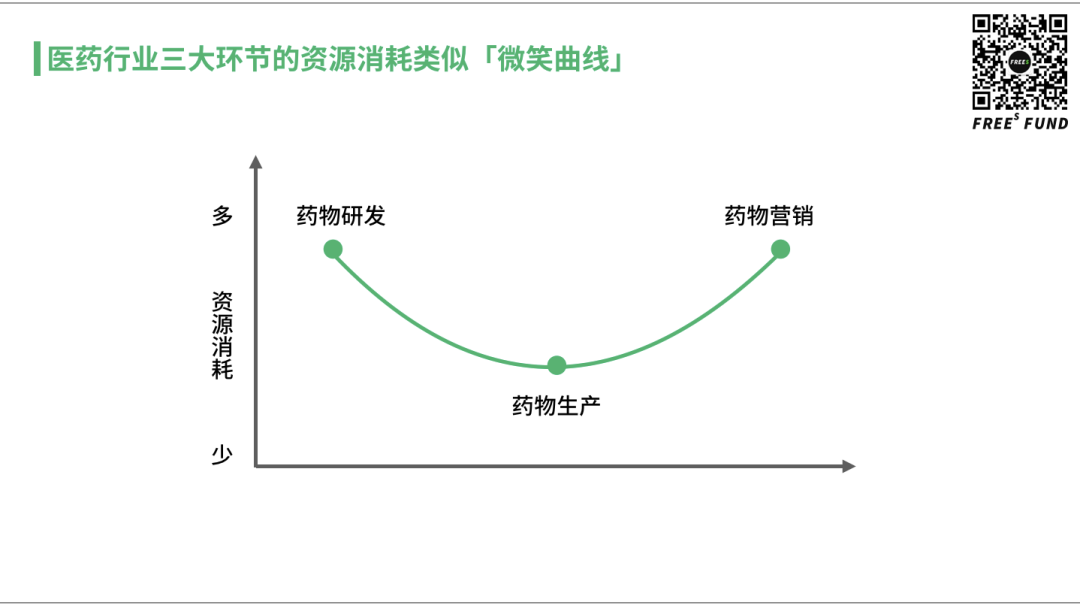
The reason pharmaceutical reform policies so often aim at the marketing环节 lies in the industry's cost structure.
Resource consumption in the pharmaceutical industry follows a smile curve — its two ends, drug R&D and drug marketing, consume the most resources, while the middle production环节 consumes relatively little. Compared to marketing, R&D costs are difficult to squeeze. Thus, zeroing in on the marketing环节 to reduce its premiums became the obvious choice.
Specifically, marketing addresses two main problems: first, drug accessibility — making sure patients can actually buy the drug; second, prescription volume.
If we draw a simple analogy, buying medicine isn't so different from buying Coke. Coke does two things: one, whether through distributors or other means, getting 7-Eleven or supermarkets to stock and display its products; two, once the Coke is on shelves, sales depend on the company's marketing. The difference is that for drugs, the point of sale is doctors and the medical institutions behind them, plus retail channels like pharmacies.
So how did macro policies reshape pharmaceutical marketing over the past five years? And how did these policies resonate with a pharmaceutical distribution startup and propel it forward?
▍First, let's look at how premiums in the drug distribution环节 were squeezed out
Pharmaceutical reform policies evolved over time, and the first target was the distribution环节.
Specifically, the "two-invoice system" and yiyao fenkai aimed to squeeze premiums out of the drug accessibility portion.
Take the two-invoice system. Piloted in 2016, rolled out nationwide in 2017, and implemented across all Chinese public medical institutions by end-2018, it shortened the intermediary steps between drug manufacturers and hospitals. With distributors' layer upon layer of markups eliminated, opportunities for层层加价 diminished.
The drug distribution landscape changed, but drug price declines were limited. Returning to the Coke analogy, it was roughly equivalent to removing premiums from the logistics and delivery环节.
For pharmaceutical companies, the more severe and impactful policy was the sustained anti-corruption campaign, which made the gray areas of distribution increasingly difficult to operate in.
After the 2014 GSK incident, the advanced approach to "constraining" gray interest chains in distribution was for authorities to conduct穿透式 (penetrating) inspections of pharmaceutical companies — mainly tracking where money flowed and whether those flows were reasonable. We can view this as a continuation of the GSK incident.
Even with strict policies, "exposés" of gray chains at pharmaceutical companies have continued to surface in recent years. In April 2020, the Ma'anshan Tax Bureau published the names of 51 companies with "major tax violations," the vast majority being Contract Sales Organizations (CSOs). Among them, 24 medical device and pharmaceutical companies were suspected of issuing 120 million yuan in fictitious invoices. More recently, a notice from the Putian Tax Bureau revealed that a batch of medical industry companies had been investigated and penalized — eight CSOs were fined, with multiple well-known medical device and pharmaceutical companies implicated. Their main offense was also issuing VAT invoices for fictitious business. Undoubtedly, when CSOs issue fictitious invoices, pharmaceutical companies bear unavoidable responsibility, as CSOs often issue invoices according to the pharmaceutical companies' requirements.
The implementation of the two-invoice system and yiyao fenkai,叠加 (layered on top of) sustained anti-corruption efforts,重构 (reconstructed) the pharmaceutical distribution环节. Various backroom operations that inflated drug prices were strictly controlled. Pharmaceutical companies needed new, more efficient channels to influence doctors. This was Nuoxin Chuanglian's opportunity. By reducing distribution costs through internet channels, it enabled pharmaceutical companies to reach doctors directly.
Volume-Based Procurement — The Heavy Artillery for Lowering Drug Prices
At the end of 2018, the National Healthcare Security Administration led the "4+7" city drug centralized procurement pilot. In 11 pilot cities, 60-70% of all hospitals' annual total drug volume was directly allocated to winning bidders.
In founder Ruan Wei's impression, "volume-based procurement" was regarded by industry veterans of 20 years as the most impactful policy in recent memory. Because through volume-for-price exchanges and bidding, the National Healthcare Security Administration essentially "fixed" drug prices.
The policy was fierce, and drug prices fell off a cliff.
According to Chen Jinfu, then Vice Director of the National Healthcare Security Administration, in early 2019, the first batch of 25 drugs selected through volume-based procurement saw substantial price reductions. Compared to the lowest procurement prices for the same drugs in pilot cities in 2017, selected prices dropped an average of 52%, with the maximum reduction reaching 96%.
The direct impact on pharmaceutical companies was continuously compressed profit margins. According to Sanofi's 2019 financial report, its global revenue grew 2.8%, but its China Q4 performance dropped 21% due to volume-based procurement policy impacts. Taking its product Plavix, which entered the April 2019 4+7 procurement catalog, as an example, Q4 2019 China performance for Plavix shrank 69.1%.
With pharmaceutical companies' revenue and profits plummeting, marketing expenditures had to be reduced. Some companies began laying off medical representatives; traditional relationship-based, commission-driven CSOs saw their survival space shrink even further — beyond being investigated, pharmaceutical companies simply didn't have as much money to funnel through them to doctors.
Thus, pharmaceutical companies urgently needed a more efficient marketing approach, or new media to connect with doctor groups to achieve sales goals. Nuoxin Chuanglian's business took off, with 2019 revenue increasing more than 10x compared to 2018, and projected 2020 growth of 5x.
In Nuoxin Chuanglian founder Ruan Wei's view, the company was able to seize this opportunity mainly due to its differentiated business model. Rather than simply advertising for pharmaceutical companies and collecting advertising and service fees, Nuoxin Chuanglian has consistently emphasized "taking responsibility for results." The difference can be understood as: one is placing an ad on CCTV; the other is having Viya "sell goods" — the latter's returns are tied to sales volume.
"At first many clients [pharmaceutical companies] thought our approach was pretty wild. After volume-based procurement, they were all under tremendous pressure, and then they felt our approach was particularly good," Ruan Wei said.
With profits slashed, pharmaceutical companies needed to achieve greater volume to generate higher revenue. Thus, from the second half of 2018, the tough-to-crack下沉 market (lower-tier markets) became the focus of widespread attention among pharmaceutical companies. It was also at that time that Nuoxin Chuanglian began accelerating its下沉 market布局 (layout/deployment). Meanwhile, an exploration dating back to 1980 — the tiered diagnosis and treatment system — began taking effect, effectively reshaping the grassroots market and bringing new opportunities to Nuoxin Chuanglian.
The Ongoing Tiered Diagnosis and Treatment System Ignited下沉 Market Opportunities
The goal of tiered diagnosis and treatment is for 90% of patients to remain within county-level jurisdictions for diagnosis and treatment, with serious illnesses not requiring departure from the county. China's county-level hospitals serve a population exceeding 900 million, accounting for over 90% of total residents, indicating massive development potential in the grassroots market.
This large and growing grassroots medical treatment demand will drive drug sales. According to IQVIA's 2019 China Hospital Pharmaceutical Market Review, in China's hospital drug market, the three-year (2017-2019) compound growth rate for third-tier cities and other cities was 7%, higher than the 3% compound growth rate for first-tier cities.
Thus, the grassroots market and the下沉 markets where it's located, as an incremental market, have become increasingly important for pharmaceutical companies.
However, this market is not so easy to crack.
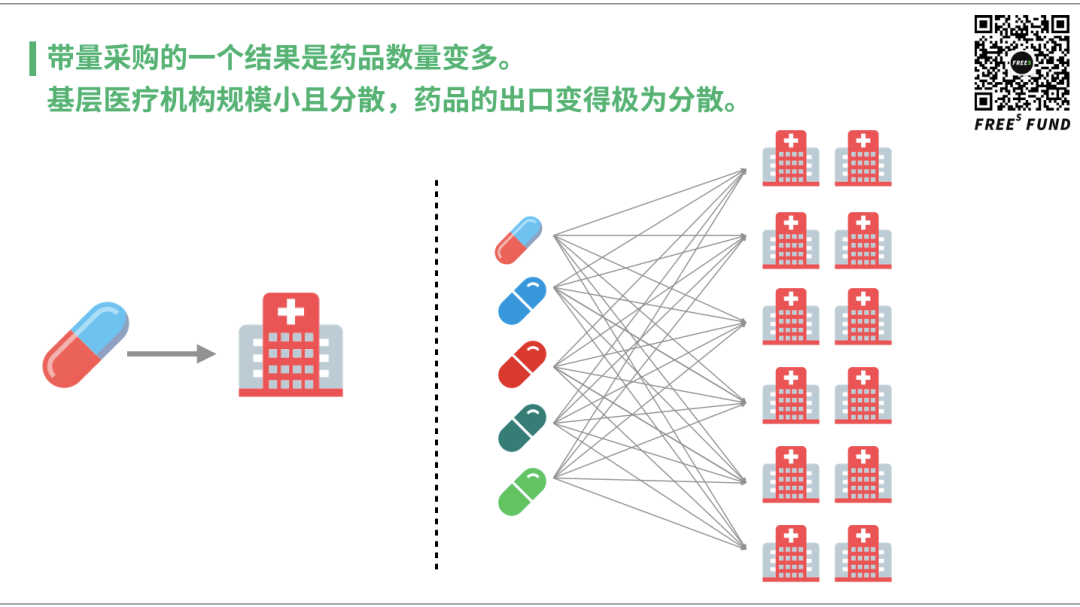
There are three main reasons:
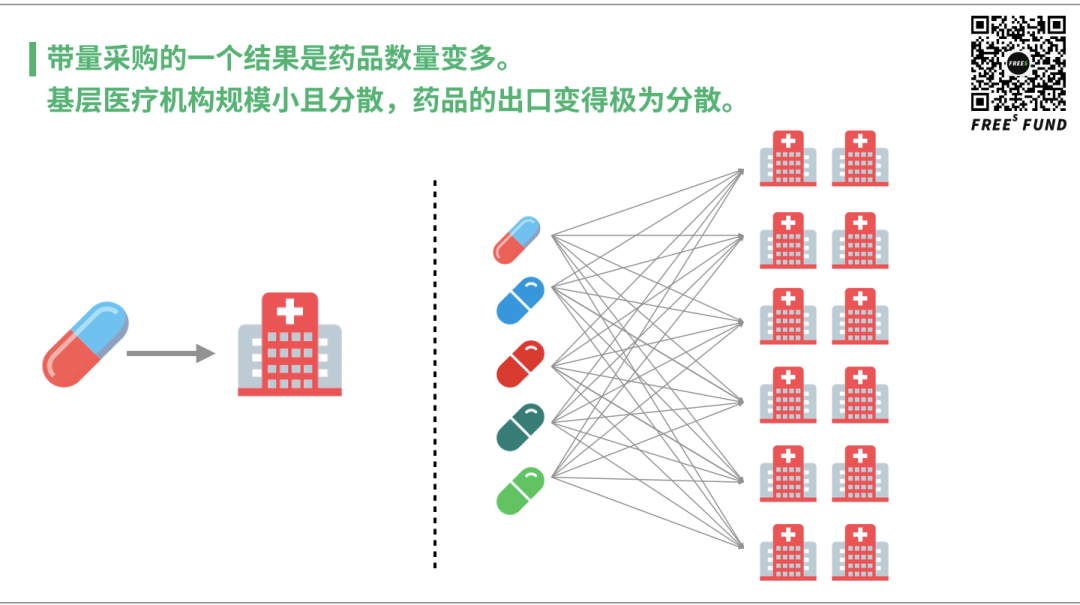
- Grassroots medical institutions are small and scattered, meaning drug distribution outlets become extremely fragmented. Even in the era when ground teams ruled, few companies could truly achieve complete coverage;
- Now, even though pharmaceutical companies see the opportunity, they cannot easily increase headcount (compounded by the increasingly strict enforcement of anti-corruption and drug price suppression policies mentioned above) — for anyone, it's becoming increasingly difficult to promote drugs through large-scale ground teams;
- New drug R&D companies that have emerged in recent years, constrained by their own scale and costs, are even more at a loss when facing下沉 markets.
In other words, all pharmaceutical companies need to find a relatively efficient method to reach grassroots market doctors and influence them. Nuoxin Chuanglian's accumulated doctor network (including grassroots doctors) built up over the past years began playing a role, becoming a powerful tool for helping pharmaceutical companies penetrate下沉 markets.
Overall, affected by policies, the存量 market (existing market) of pharmaceutical distribution underwent value chain重塑 (reshaping) over the past five years, with traditional pharmaceutical marketing methods experiencing growing pains; meanwhile, with the implementation of new policies such as tiered diagnosis and treatment, the grassroots medical market gradually expanded, and this new market urgently needed to be developed. New business models like Nuoxin Chuanglian's — building bridges between pharmaceutical companies and doctors — began gaining more market recognition and share.
What We Learn from Nuoxin Chuanglian
Do what's right on long-term trends, and value will eventually be proven
The act of taking medicine can definitely become both cheaper and more professional — this is the long-term mega-trend in pharmaceutical distribution. So acting in the policy direction of making drugs as affordable as possible is going with the flow.
Around lowering drug prices, there can be many approaches, but the core point is the efficiency of value matching. This is especially true in two-sided markets.
The traditional approach of pharmaceutical representatives influencing doctors' prescriptions through "cash-accompanied visits" is clearly counter to this trend — it adds distribution环节 and monetary投入, and ultimately these投入 are reflected in drug prices, borne by end consumers, namely patients.
Conversely, channels like Nuoxin Chuanglian that directly connect pharmaceutical companies with doctors online can improve value matching efficiency. Even when doing things the right way, progress was arduous, because the existing interest chains were too entrenched. The main reason Nuoxin Chuanglian was able to persist until reaching market recognition was the boost from healthcare reform policies over these five years. These policies were actually unforeseeable when we initially made our investment judgment.
On one hand, policies targeting pharmaceutical companies — yiyao fenkai, the two-invoice system, volume-based procurement — continuously squeezed gross margins in pharmaceutical distribution, while effectively lowering drug prices and substantially cutting pharmaceutical companies' revenue and profits. Therefore, in the存量 market, pharmaceutical companies needed higher-efficiency, lower-cost marketing methods and channels for physician education. Nuoxin Chuanglian, with its years of deep industry engagement, naturally became one of the choices.
On the other hand, as tiered diagnosis and treatment policies targeting patients and doctors began showing results,下沉 markets became new battlegrounds for pharmaceutical companies. Faced with the庞大 (massive) and分散 (scattered) nature of this incremental market, no single pharmaceutical company could easily achieve complete coverage, creating opportunities for business models like Nuoxin Chuanglian's that can build bridges between doctors and pharmaceutical companies.
Additionally, driven by policies promoting domestic substitution in pharmaceutical innovation, new drug R&D companies have risen, urgently needing to educate markets to win development space — this is also a new opportunity for Nuoxin Chuanglian to expand its boundaries.
So, we should not underestimate the long-term guiding significance of policy.
SaaS software can also have network effects, and SaaS with network effects is a good business model
In the mobile internet boom era, the success of consumer-facing companies often came from network effects.
Network effects mean that as each additional user joins, the value of a product or service increases. Simply put: bigger is better, and better gets bigger. The test of whether network effects have taken hold is whether someone else, starting from scratch with a similar or different approach, couldn't reach the same scale; or even if they could copy it, they might get priced out due to inferior cost efficiency.
Network effects are relatively rare among SaaS companies in China, because so much local deployment and custom development is involved — it often feels more like "software services, but online" rather than truly networked. Compared to consumer businesses, SaaS companies need much longer to develop network effects. But the upside is that once formed, they become a moat.
Take Nuoxin Chuanglian. Its first three years were spent on unglamorous groundwork — connecting pharmaceutical companies with doctors. By providing marketing services to drugmakers, it wove a small-scale online network focused on grassroots doctors across China. Today, Nuoxin Chuanglian covers over 20,000 medical institutions and 120,000 grassroots doctors in nearly every province and city except Tibet.
This ever-expanding doctor network began to matter when pharmaceutical companies started looking for more efficient, compliant ways to reach physicians. Beginning in 2019, beyond marketing, Nuoxin Chuanglian started taking on some sales functions. This was the natural outcome of its network effects forming. It's also a key reason the company has become more valuable to investors over the past year.
This network is highly reusable. Unlike a drug for a specific disease, the SKU potential is vast, enabling abundant cross-selling. Its partners are broad-ranging — from multinational drugmakers to domestic innovative pharmaceutical companies. Nuoxin Chuanglian has already established partnerships with more than 20 top-tier pharmaceutical companies including Pfizer, Bayer, Takeda, Xi'an-Janssen, and Novo Nordisk.
Going forward, if Nuoxin can build a network that meaningfully reaches China's one million county-level doctors, its commercial value would be enormous. Based on this network, Nuoxin could better "take responsibility for results" in lower-tier markets, and many business models would naturally follow.
The logic is straightforward: with enough doctors, the marketing and sales outcomes delivered to pharmaceutical companies improve, making drugmakers more eager to partner. From the other direction, with enough pharmaceutical companies on the platform, collaborating with them allows the platform to deliver more professional value to doctors, who in turn become more likely to stay.
Precisely because this network wasn't built overnight, it isn't something others can easily replicate.
It's worth noting that realizing network effects depends on strong integration capabilities with both upstream and downstream players — meaning the network's relationships with both sides must be tight connections.
In pharmaceutical marketing, where Nuoxin Chuanglian operates, merely "corralling" doctors is far from enough. To be accountable for marketing results requires using technology to embed oneself deeply into pharmaceutical companies' marketing operations; understanding the business deeply enough to provide more efficient marketing tools and services; accumulating data; and ultimately closing the transaction loop.
The same applies to other industries. Only by building a tightly connected two-sided network can you gain the ability to allocate assets across upstream and downstream players. For healthcare, the core assets are drugs and doctors. For food and beverage, they're restaurants and end consumers. That's why we saw Meituan invest heavily in helping small and medium restaurants digitize.
The Next Opportunity: Improving Hierarchical Diagnosis and Treatment Efficiency, Better Serving Doctors in Lower-Tier Markets
According to the September 2015 "Guiding Opinions on Promoting the Construction of a Hierarchical Diagnosis and Treatment System" issued by the General Office of the State Council, by 2020 China would gradually form a hierarchical diagnosis and treatment model of "primary care first, two-way referral, separation of acute and chronic conditions, and coordination between higher and lower levels," with "a hierarchical diagnosis and treatment system basically established that fits national conditions."
As hierarchical diagnosis and treatment gradually advances, grassroots medical institutions will play an increasingly large role in diagnosis and treatment, keeping the majority of patients at the primary level.
In this scenario, the workload of grassroots hospital doctors will increase, and as they take on redirected patients with high individual variation, the complexity of their work will also rise compared to before (though one doctor treating multiple conditions is already the norm). This places higher demands on both their diagnostic capabilities and efficiency.
Therefore, they need more professional and richer channels for accessing information and resources. They also need more support than ever in obtaining professional information and improving their diagnostic capabilities — including but not limited to more fully understanding drugs, learning about new therapies, so they can handle more patients and more diverse cases, and better serve their patients.
In our view, the doctor network Nuoxin Chuanglian has built can play an even greater role in the grassroots market.
Obviously, a grassroots doctor in a county town has access to vastly different resources than a doctor at a top-tier tertiary hospital in a major city. Beyond their department head, the former has minimal resources to tap, while the latter can easily connect with foreign experts, society committee members, and pharmaceutical companies.
The internet can amplify a county doctor's connectivity, giving them the opportunity to access the same professional knowledge and resources as core physicians more efficiently.
Summary
-
Businesses that look difficult to build can offer massive opportunity if they resolve long-term structural contradictions. For Nuoxin Chuanglian specifically, this means removing premium extraction from pharmaceutical distribution and improving industry connectivity efficiency.
-
Driven by policy, the pharmaceutical distribution industry's existing market has undergone value chain restructuring over the past five years, with traditional drugmaker marketing experiencing growing pains. Meanwhile, with the implementation of new policies like hierarchical diagnosis and treatment, the grassroots healthcare market has gradually expanded — this new market urgently awaits development. This has given rise to new business models that build bridges between pharmaceutical companies and doctors.
-
The unglamorous groundwork Nuoxin Chuanglian did in its first three years — connecting pharmaceutical companies with doctors and weaving an online doctor network — became, when favorable policies arrived, what people call a traffic entry point or customer acquisition channel. It evolved from helping drugmakers with marketing to taking on some sales functions.
-
SaaS companies can have network effects too.
Discussion Questions
Q: What are some solutions to the supply shortage problem in healthcare? What entrepreneurial opportunities exist here?
If you enjoyed this article, please tap "Like" at the end and reply "supply" in the WeChat official account backend to see our preliminary answers.
▍Event Preview
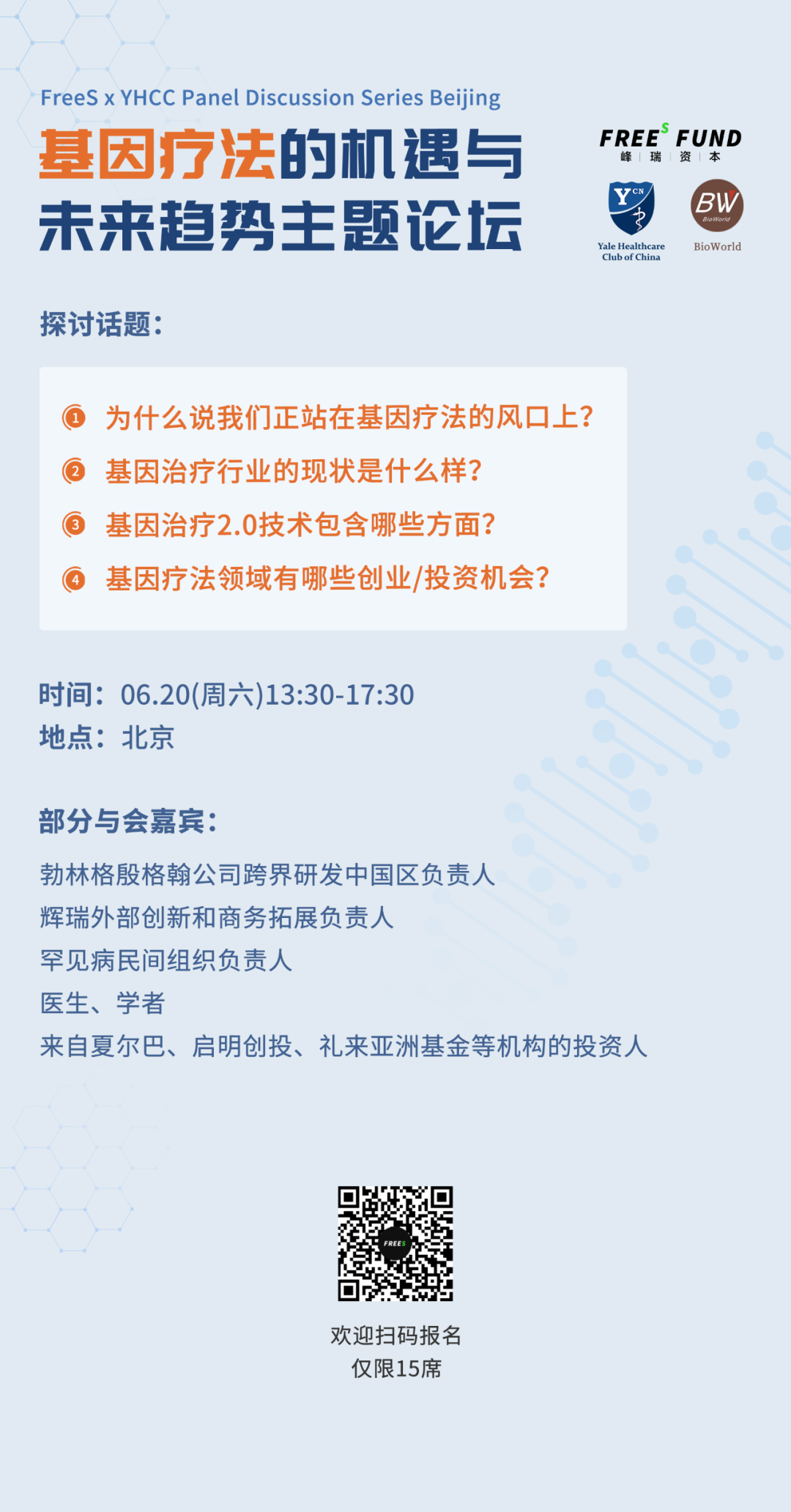
FreeS Fund, together with YHCC (Yale University China Healthcare Club) and BioWorld, will host a forum on the opportunities and future trends of gene therapy on Saturday, June 20, from 1:30 PM to 5:30 PM in Beijing. We will have in-depth discussions on the current state and latest progress of gene therapy, development opportunities, and entrepreneurship/investment opportunities.
Please scan the QR code below or click "Read More" to register. Registration requires review and is limited to 15 seats. The specific address will be notified after registration approval.
(You're welcome to read, share, and tap "Like." For reprint permission, please reply "reprint" to learn the rules and contact Feng Xiaorui [ID: freesfund] for authorization. Copyright belongs to FreeS Fund.)

▲ Riding the Gene Therapy Wave | Frees Fund
▲ Hammer and Dance: The Next Wave of Healthcare Investment Opportunities Amid the Pandemic | Frees Fund ▲ Frees Fund Report 16: The Truth About Early-Stage Healthcare Investment and China Speed | Frees Fund
▲ Frees Fund Report 15: Life's Gamble — The Risky Journey of Drug Development | Frees Fund
▲ 2020: Consumer Brand Entrepreneurship Enters an Era of Multiple Simultaneous Growth Drivers | Frees Fund ▲Why New Infrastructure Is China's Most Impactful Stimulus Policy for the Next Decade | Li Feng Column ▲ One Chart to Understand China's Industrial Chain Shifts and Opportunities | Li Feng Column