Short Videos: The Shortcut for Chinese Animation to Surpass Disney? | A FreeS Fund Conversation

How Will Anime Change the Way You Build Brands in 2023?
Animation has the power to turn dreams into reality. During the World Cup, Japan stunned Germany in the group stage. Forty years earlier, the Japanese manga Captain Tsubasa had dreamed up exactly that scenario — Japan defeating Germany on football's biggest stage.
Animation can also be cleverly woven into commercial communication. Haier Brothers made two cartoon mascots for appliance brand Haier into childhood memories for those born in the 1980s and 1990s. Three soft, adorable squirrels with distinct personalities became the signature visual identity for snack brand Three Squirrels. The youth anime I'm Jiang Xiaobai made people remember Jiang Xiaobai, a literary, sincere baijiu brand based in Chongqing.
At a time when short video is surging and the metaverse is just emerging, we're curious what changes the animation industry has undergone and what new issues it faces:
- What developmental stages has China's animation industry passed through from 2005 to now?
- How has short video influenced animation? Has animation been integrated into short video, and how has it changed short video in turn?
- In the short video era, what obvious shifts occur in how consumers receive information? For traditional enterprises or startups, at inflection points of media change, how can they make their brands more memorable?
- How does animation demonstrate its advantages? How can it help brands spread in the short video era?
- What changes might the metaverse bring to a company?
Based on these topics, Wang Shiyong, founder of 2:10 Animation, and Li Feng, founding partner of FreeS Fund, discussed innovative opportunities for animation in brand communication and the enormous potential of China's animation industry in the short video era.
Before diving in, here are some highlights:
- Media determines animation's consumption scenarios and therefore its profit models. Americans defined the earliest "animation" through movie theaters. When the Japanese made animation, they completely bypassed theaters and went straight for television. Today's short video era may be an opportunity for Chinese animation to surpass Disney.
- Companies need a condensed image of their mission, vision, and values to meet demands for interaction and emotional connection.
- In the short video era, viewers prefer content with greater interactivity. Interactivity dramatically shortens the distance between consumers and brands.
- Animation matches the content and traffic logic of the short video era. Animation can spark public emotion and attitude through stories suited to short video narrative logic and pacing.
- Today's brands don't just want consumers to remember how they look — they want consumers to remember how they feel about the brand. That emotion comes from the brand proactively producing content and building an emotional foundation with consumers.
Interactive Giveaway
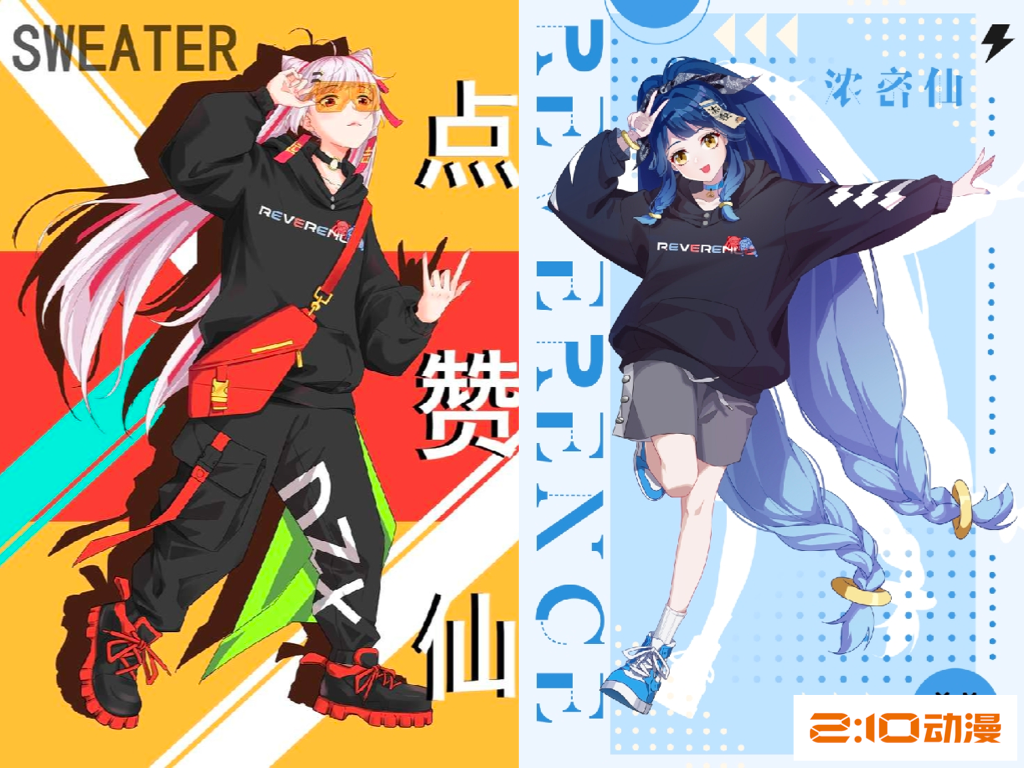
In your observation, which companies have animated characters as their image? How do you think animation will transform consumer brand communication? Share your thoughts at the end of this article. The 5 most thoughtful commenters will receive a virtual idol Dianzan Xian & Nongmi Xian hoodie from 2:10 Animation.
01 China's Animation Industry Can Also Produce Companies That Double Every Year
Is short video the curve where Chinese animation surpasses Disney? How does animation demonstrate its advantages? How can it help brands spread in the short video era? Welcome to watch the video and share it to your Moments~
Li Feng: Hello everyone, I'm Li Feng, founding partner of FreeS Fund. Today we've invited a fashionable middle-aged man — Wang Shiyong, CEO of 2:10 Animation. Please introduce 2:10 Animation to everyone.
Wang Shiyong: In 2007, not long after graduating from university, I founded 2:10 Animation.
At the very beginning, the company was extremely difficult. We struggled for many years. Everyone was purely using a paintbrush to draw the dreams in their hearts.
Later, we gradually had some hit works, such as Silver Gravekeeper, I'm Jiang Xiaobai, The Great Wall of the Giant Soldiers, and so on. These works accumulated six to seven billion views. The team gradually expanded, the company became profitable, and in 2016 FreeS Fund invested in us. 2:10 Animation gradually became a relatively influential animation company in China.
During this process, I realized that running a company requires greater vision.
Traditional animation companies make money by broadcasting original works, with revenue mainly coming from video platform purchases and merchandise sales. However, China's animation industry is not complete enough, and this method cannot form a stable, sustainable profit model.
Now, our profit model is more diversified.
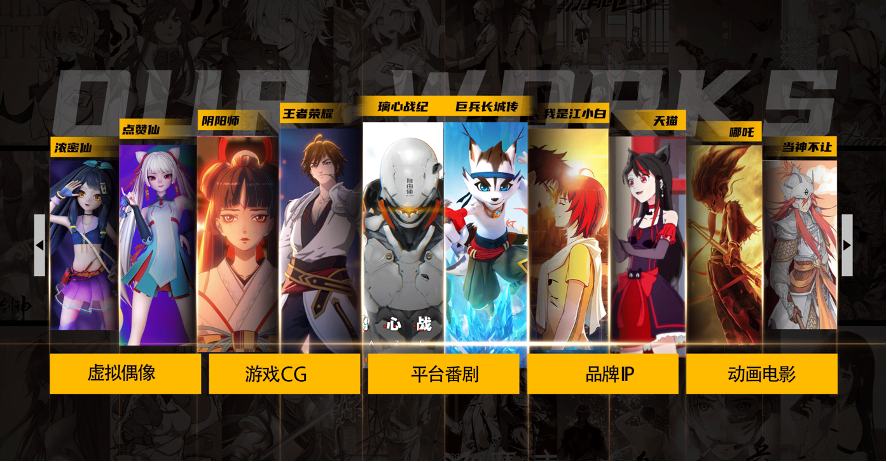
▲ Image source: 2:10 Animation
The first business line is the same as traditional animation companies — cooperating with major video platforms to produce animated series (abbreviated as "anime").
The second business line is cooperating with game companies to help them create emotional connections with users.
The third business line is cooperating with consumer goods companies to help them solve brand and communication problems, shortening the distance with consumers.
These three business lines keep our revenue growing steadily, with overall revenue ranking among the top in the industry.
Li Feng: Looking at the big picture. From 2005 to 2006, household broadband access rates in China improved significantly. What this reflected on the front end was rapidly rising home internet usage, with internet applications exploding — online games became hot, for example.
From a timing perspective, 2:10 Animation's starting point happened to coincide with China's first wave of internet penetration in households through home broadband. From then until now, what stages has the animation industry experienced?
Wang Shiyong: It can be roughly divided into three stages. 2005 to 2009 was the first stage.
At this time, the animation industry received support from national policies.
For example, proposals to ban overseas animation during prime time, the establishment of animation majors in higher education institutions starting in 2005, tax reductions and subsidies for recognized animation enterprises, and so on. During this period, the animation industry attracted talent who loved animation as well as those who focused more on business opportunities, allowing the industry to develop preliminarily.
In 2011, policies gradually expired, and the second stage began — the animation industry entered a low period.
However, internet development brought new opportunities. Online video platforms and comic platforms became industry infrastructure, giving practitioners more channels to showcase their works.
Capital also flooded into the animation industry, helping establish some small companies and studios. But the industry as a whole still hadn't really achieved stable profitability.
The third stage began from 2015. During this period, several highly symbolic animated films emerged, such as One Hundred Thousand Bad Jokes, the first domestic animated film to break 100 million yuan at the box office, and Monkey King: Hero Is Back, which reached 890 million yuan.
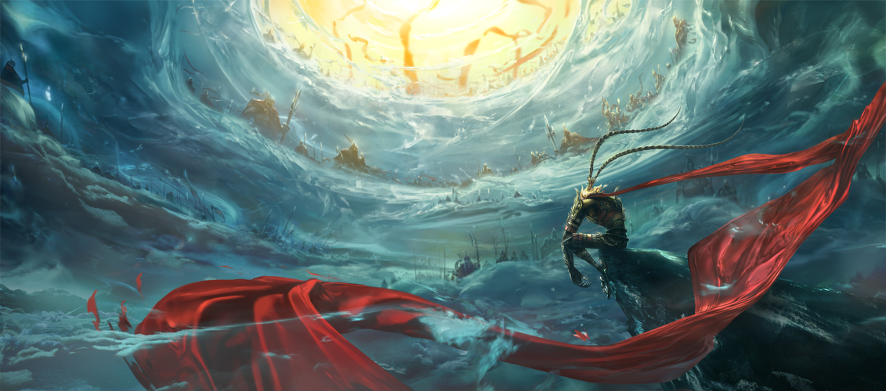
▲ Image source: Douban entry for Monkey King: Hero Is Back
Practitioners across the entire industry were shocked, everyone was in tears, all believing that the animation industry was about to enter high-speed development. People saw some possibilities for animation profit models, and more capital entered the industry.
Li Feng: So, after the 2012 low point, a typical characteristic of the animation industry was: the back end developed. That is, besides video platforms, the animation industry could, through the film format, create autonomously and prove consumption value.
Wang Shiyong: Right. It's not hard to see that from 2005 to 2015, the first wave of children raised on animation grew up and went to theaters to watch Monkey King: Hero Is Back. They grew up watching domestic animation and were more willing to support it.
Li Feng: Looking back, the first policy-driven peak was actually useful because it cultivated young people who, ten years later, would pay for domestic animated films.
Wang Shiyong: Right. But in 2018, the animation industry quieted down again. After all, there was still so much uncertainty in animation industry profitability. In the content industry, without deterministic content creation, without summarized good patterns, without standardized models, it's very difficult to sustain operations.
So, this period was equivalent to the process from small animation studios to "industrialization." Whoever could standardize content creation more, whoever could continuously create better content, whoever could run a company with entrepreneurial thinking rather than creator thinking, would have the opportunity to survive and go further.
Li Feng: Let me summarize. In 2015 and 2016, the commercial value of the animation industry initially emerged — it could make money on its own rather than relying on policies and subsidies. Therefore, more creators entered the animation industry, and there was a small wave of creative peaks.
Next, when the animation industry truly had commercial value, it had to become an industry with commercial and industrial characteristics. In this process, the animation industry also underwent a round of elimination, testing whether artists could become artists + entrepreneurs.
After a wave of survival of the fittest, by 2019, artists with entrepreneurial qualities began to transform animation into a small industry and stood out.
Wang Shiyong: Right, after becoming an industry, compared to the original studios, it reduced much more uncertainty.
Li Feng: Speaking of this year's overall situation, things have been relatively difficult for everyone, and most have gone through challenging periods they had to face themselves. From the animation industry's perspective, how has this year been? Has the overall environment affected you?
Wang Shiyong: In the four years before this year, our performance doubled every year, and profits also doubled every year.
Last year, we recognized colleagues who made outstanding contributions to the company, giving out 13 Range Rovers at once. At that time, I felt that as long as you worked hard enough, you could have sufficient rewards.

▲ Recognized 2:10 Animation members. Image source: 2:10 Animation
This year is completely different; the economic environment has indeed had an impact. Some companies we cooperated with made large-scale adjustments to projects and personnel, causing corresponding revenue reductions in our related business.
Other parts of our revenue have increased, however, such as our gaming business. Game companies want to make more powerful products, and our core competitiveness in animation content has also been unleashed.
This year, many industries are facing challenges, but conversely, the help this challenge has brought us is also very significant.
We've gone through a process of "burning off fat and building muscle." We've seriously done what we've figured out and what we want to do, solidified our corporate culture further, improved management, further refined originally relatively rough processes, and done some corresponding software development and acquisitions. I believe the future will be better.
Li Feng: Just like reaching middle age, right?
First, become more disciplined. Don't do whatever you want; don't expand arbitrarily.
Second, become healthier. Make your own business and efficiency better, with a healthier structure.
Third, become more focused. As people get older, they say "less is more than more" — only care about the most core things.
Your company is still young, but it's maturing, and will experience more growth and transformation.
02 Is Short Video the Curve Where Chinese Animation Surpasses Disney?
Li Feng: Let's ask some questions related to animation. How do you define animation? Do you think animation is a media format, or what?
Wang Shiyong: I spent a long time thinking about "what is animation." I believe animation is "moving pictures," and it has actually driven the development of all humanity.
Murals were likely the earliest form of art. Later, murals were simplified into writing. There's a theory that consensus was a key reason Homo sapiens defeated other early human species. And pictures helped people articulate that consensus.
During the Renaissance, the three great masters painted gods in human form. Artworks brought intellectual liberation and better imagination, which in turn propelled the Industrial Revolution.

▲ Raphael's fresco The Disputation of the Holy Sacrament. Image source: Zhihu user @Jun's Ramblings
Today, as media has evolved into the short video era, animation continues to carry people's imagination and liberate their thinking.
Li Feng: From your definition, my understanding is that animation is a method of expression, one that carries enough spiritual substance.
Starting around 2015–2016, internet media began transitioning from text and images to video, especially short video. User time spent suddenly grew very rapidly. Today, cumulative short video user time has surpassed instant messaging — previously considered the most indispensable form of communication, like WeChat.
From the animation perspective, what significance or impact does the popularity of short video have for animation?
Wang Shiyong: What we now call "animation" has undergone a massive species-level transformation.
Americans defined the earliest "animation" through movie theaters. A film runs 90–120 minutes, requires sitting in a theater, and suits weekend viewing — so the immersion from film is very strong.
Disney grew from this root system. Its business, whether theme parks or other things, also places great emphasis on giving users immersive experiences. And because it relies on box office revenue, theme parks, and derivative merchandise sales, this model has high per-unit consumption, low frequency, and relatively long profit cycles.
When the Japanese made animation, they discovered they couldn't beat the Americans through movie theaters, so they completely bypassed cinemas and went straight to television.
Television corresponds to nighttime hours and the home setting — people returning from work or school could watch immediately. Although anime episodes were only 22 minutes, television occupied more time than film.
Based on the characteristics of animated series, Japanese anime profitability unfolded around family life and community. For example, Japanese convenience stores would collaborate with animated series and also sell manga magazines, weekly publications, and so on. Anime product consumption prices dropped, consumption frequency increased, and profit cycles were greatly shortened.
So, media determines animation's consumption scenarios and also determines its profit models.
In today's short video era, I believe this will be an opportunity for Chinese animation to surpass Disney.
Li Feng: Let me add a perspective. In the post-WWII economic recovery, Japan quickly established manufacturing dominance in home appliances, making them good, cheap, and easy to popularize.
In the 1970s, only a tiny number of Chinese families had black-and-white televisions. But in Japan, black-and-white and color TVs were already quite widespread. So Japan needed more content suited to the television medium. From this point onward, the Japanese began their creative work targeting animated television.
Wang Shiyong: Right, television has many channels, and same-time-slot content competition is fiercer than film. Creators wanted the highest ratings, attracting viewers from Monday through Friday. So animated series broadcast time shifted from film's 90 minutes to 22 minutes, and animated series narrative structure was dramatically adjusted.
After this format adjustment, the input-output ratio had to be calculated clearly. Television screens were small, so picture quality requirements weren't as high — people could take some of that money and spend it on content creativity and music.
Facing the short video wave, Disney and Japanese anime's past experiences can't be quickly converted into present advantages. And short video is the first media format to emerge from China and influence globally. This "lead" can help Chinese animation overtake on the curve.
In the short video era, Chinese animation has a tremendous opportunity to derive new forms of animation.
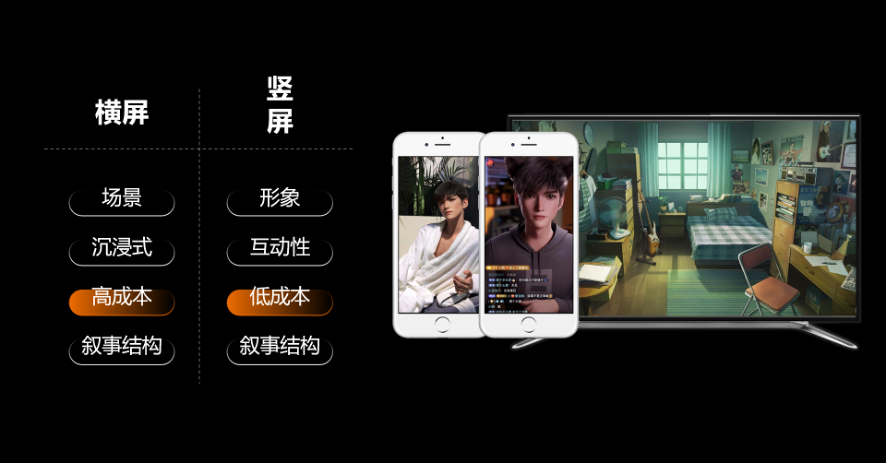
▲ Content characteristic changes from horizontal to vertical screen. Image source: 2:10 Animation
From film to television was from large screen to small screen. From television to short video is from horizontal to vertical screen.
Horizontal aspect ratio is wider, scenes are larger, more immersive — viewers more easily get drawn into the story. Vertical screen makes figures more prominent, viewers more easily empathize with characters. Moreover, video duration shortens further, narrative pace becomes faster, even calculated in seconds. Viewer immersion drops very low, while interactivity reaches unprecedented heights.
Short video's corresponding scenario also shifts from single space to mobile device. In the short video era, animation profitability is based on mobile shopping carts and mobile payments. Consumption prices drop further, but consumption frequency achieves massive increase — consumers can purchase anytime. Animation profit cycles are also greatly shortened, and animation industry profitability becomes more stable.
In the Short Video Era, All Super Symbols Will Become Animated
Li Feng: Today, China created the short video format and made it popular worldwide. In media history, how to utilize new media and how new media changes how the masses access information are very important transformations.
Let me give a few examples. The Chinese invented movable type printing. Once text could be printed, low-cost mass reproduction was achieved, and books became widespread — such as the Bible. Later, because people had different interpretations of the Bible, this drove Europe's medieval Reformation.
Moving forward, let's jump to the consumer goods stage.
One of America's most famous consumer goods companies, Procter & Gamble, has long been considered a company extremely attentive to and excellent at using media. Its claim to fame was the soap opera. It's called a soap opera because those listening to radio dramas or watching television were mostly housewives, so Procter & Gamble massively advertised washing products on these media, making housewives remember the P&G brand.
Now in the short video era, what obvious changes will occur in how consumers receive information? For traditional enterprises or startups, at this inflection point of new media change, how can they make people better remember their brand?
Wang Shiyong: First, viewers prefer to watch content with more interactivity.
In the short video era, viewers can directly interact with videos in real time through comments, likes, and other means. They also turn video content into entertainment material, creating secondary works based on original content — and each secondary creation drives further distribution of the original video content and characters.
This interactivity greatly shortens the distance between consumers and brands.
Second, shortened video duration makes viewers more willing to watch brief, fast-paced content. So only content with strong emotion or attitude can form impressions in viewers' minds. Therefore, emotion and attitude become important elements of short video content creation.
Li Feng: How can animation better utilize this change to generate more impressions, interest, and viewing time from consumers?
Wang Shiyong: Enterprises need a condensed image of corporate mission, vision, and values to meet interactivity and emotional requirements. How to create a good image?
I believe we need to use animation thinking to create images. In the short video era, all super symbols will become animated.
Animation can express more intense emotions than real people — animated characters' expressions, body language, and so on can use more exaggerated techniques.
Animated characters can be divided into three types. One is cartoon characters, like Mickey Mouse, Pikachu, etc., with very strong recognition symbols. The second type is cross-dimensional; these figures resemble real people very closely, more easily breaking into mainstream circles, but recognition is weaker than cartoon characters, and they're more used for practical functions. The third is two-dimensional anime style, between cartoon and cross-dimensional.
Cartoon characters possess stronger symbolic quality. Therefore they more easily carry different emotions, giving users range for interpretation. Essentially, this gives brands opportunities to dialogue with the public, creating more opportunities for promotion and brand operation.
Two-dimensional anime style already has considerable practical application. For example, Onmyoji has collaborated multiple times with MINISO, China Merchants Bank, Nongfu Spring and other enterprises on joint projects. KFC has also done joint activities with many domestic games. Redmi's Genshin Impact Klee earphones sold out immediately upon release...


▲ Animated short film from 2:10 Animation's collaboration with Tmall. Image source: 2:10 Animation
Cross-dimensional figures are similar to digital humans. Current technology supports creating very realistic human figures; combined with AI, content materials can be produced. Runmi Consulting founder Liu Run introduced his experience using digital human technology in his 2022 annual speech. He only provided a few videos for AI to learn from, and could generate his own digital human, then through audio could drive the digital human to generate videos.
Li Feng: There's an interesting conclusion — the asset consumer goods companies ultimately value most is brand.
So how is brand communicated to users? Generally through media.
New media formats bring new opportunities, and enterprises' methods of building brands also need to change.
From 2000 to 2012, domestic homeownership rates increased, and television penetration grew accordingly. Because content supply was centralized, viewers could only watch a small number of channels. So everyone competing to advertise had to fight for prime time — generally 15 seconds. Consumer goods companies used these 15 seconds, through repeated association between product and some celebrity, to make the product memorable in limited time.
But today, short video platforms have infinite content suppliers; content is no longer centrally supplied. At this point, consumer goods companies aren't competing for limited prime time in one channel, but rather figuring out what content can capture user time amid infinite content. This is a change consumer brands will certainly encounter when communicating themselves.
Today there are infinite content suppliers; brands can't rely on just a face plus a few words or seconds of image to be remembered by consumers. Consumer brands need to use more content to compete for consumer time, and also leverage the changes brought by the short video medium. In this process, how does animation demonstrate its advantages?
Wang Shiyong: First, animated characters themselves are a risk-free asset.
Traffic stars won't be corporate assets, can't serve only one enterprise, and even have the probability of scandalous collapse. But animated characters completely belong to the enterprise and have relatively controllable risk.
Second, all content created for animated characters serves the brand.
Everything related to the image — mission, values, stories — serves the brand, from every angle, every glance. Its symbolic power is stronger than any other form.
Mickey Mouse is just three circles. In any setting, at a glance, whether horizontal, upside-down, enlarged, or shrunk — you recognize it.
Many content formats can be "addictive," but they can't achieve this kind of "magic," because animation's foundation is basic shapes and basic colors, and so is a brand's foundation. The two are essentially twins.
Third, brands have a mission to tell stories, and animated characters happen to be the best "totems" for representing products and communicating with users.
Truly powerful consumer goods companies must create spiritual totems. Totems must be able to move, to communicate directly with users. They may be virtual images, generating longer or shorter content based on that image. This is the direction of brand evolution.
Fourth, animation is an expressive form unconstrained by reality, so its content possesses tremendous imagination.
Through animation, creative work can break through real-world constraints, opening up more possibilities and bringing fresh differentiation to short videos. For example, rapid scene switching, creating different special effects, transforming an image between different styles...
There's a video blogger called "I'm Not a Glutton" who uses her account's animated character to introduce different foods, which better reinforces the warmth and healing qualities of food.
Finally, animation can better help companies solve profitability problems.
When new channels emerge, companies need to seize traffic opportunities to expose consumer goods or boost sales, and many choose livestream commerce. But as traffic costs soar, livestream commerce doesn't necessarily solve profitability.
Brands truly solve profitability problems. In the past, companies used brand stories, slogans, even spokespeople to interpret their brands — like emphasizing diamonds' "forever" quality, binding diamonds to intimate relationships to sell them at premium prices. Now, animation is a better way to interpret brands: using condensed corporate elements in image-based storytelling to form long-term proprietary image assets and content, turning consumers into brand fans.
Li Feng: To abstract this, it basically breaks down into three levels.
First, assuming animation has advantages and helps here, it creates an image asset that only consumer goods companies have the right to own, and exclusively own for a long time.
Second, we're now in the content era, so I can create all content — long or short, continuous or thematically varied — entirely around this image, making content creation an inseparable part of operating assets.
Third, today's brands don't just want consumers to remember how the brand looks; they want consumers to remember their feelings toward the brand. This emotion comes from the brand proactively producing content, so there's an emotional foundation before consumption even happens. In other words, brands need to shift from users remembering a name to users remembering emotions attached to a visual object.
Wang Shiyong: Yes, for consumer brands, the progression from visualization to personification to ultimate IP-ification is an inevitable trend. If you have a good brand image, you can endlessly create new content — that's brand IP-ification.
From Disney to today's domestic internet companies, it's no coincidence they all use animals in their designs. Tmall's cat, Freshippo's hippo, Tencent's penguin, Meituan's kangaroo, JD.com's dog...
Animals are powerful tools for quickly closing distance with consumers and rapidly building emotional connections. But telling stories with animal characters through live-action is extremely difficult, so animation becomes necessary to express and articulate the corporate brand behind the image.
Li Feng: Returning to the question of reusable brand assets. Assuming no scandals, each generation of companies can use different celebrity spokespeople — after all, each generation's youth idols look completely different. If I use animation, even though I'm continuously cultivating this asset, what if the next generation of consumers no longer likes this animated image?
Wang Shiyong: That's almost impossible — animated images can have sufficiently long lifecycles. Leonardo DiCaprio at 23 could star in Titanic, but Leonardo at 43 is completely different. But animated images transcend time: Doraemon from 50 years ago and Doraemon today look the same, and many people still love it.
Li Feng: Assuming I'm a decent brand that can last three to five decades like Procter & Gamble. My consumers go from teenagers to young adults to middle age — does my animated image need to change with them?
Wang Shiyong: No need. Always make an image that young people love.
How Will Animation Change Livestreaming?
Li Feng: Today, livestreaming is the most common and first-to-rise transaction format or monetization model in video e-commerce. From animation's perspective, if companies try using animation to build their brands, combined with livestreaming in the short video era, what changes do you think will happen? Or what phenomena are already occurring?
Wang Shiyong: Currently, young people can accept virtual images they can't physically touch. They believe having an emotional interactive relationship with a virtual image is enough.
We created a virtual idol matrix based on a celestial realm, with two idols being Dianzan Xian (Like Fairy) and Nongmi Xian (Thick Hair Fairy). In 2021, they went on a show, and Dianzan Xian won the championship. They're merely the tip of the iceberg of this matrix.
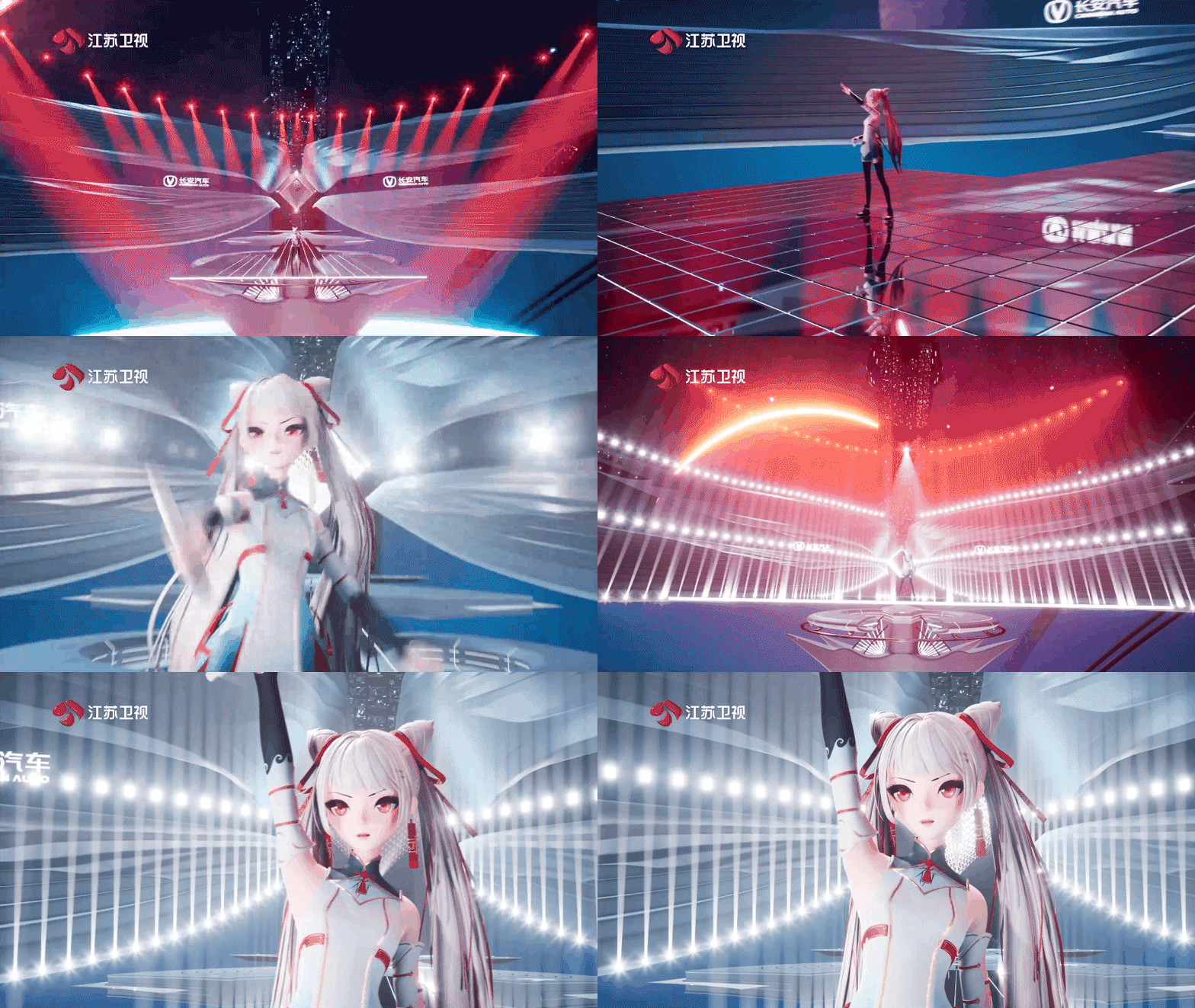 ▲ The popular virtual idol Dianzan Xian, produced by 2:10 Animation. Image source: Jiangsu TV
We also invested in a virtual idol company, incubating the wildly popular Douyin virtual idol "Xu Anyi." His livestreams consistently draw high online numbers, with peak concurrent viewers approaching 20,000 — comparable to many real-person streamers. Xu Anyi also receives substantial fan gifts, with the highest amounts exceeding one million RMB.
So young people recognize virtual images' interactive and communication methods. Beyond Xu Anyi, many apps have successively launched features letting users create their own avatars — for example, many Tmall shops support letting users dress up their custom avatars.
 ▲ iFlytek Music AI virtual singer Luya, created by 2:10 Animation. Image source: 2:10 Animation
Li Feng: If I'm a brand considering animation, but also considering livestreaming and daily content. What would you advise me to do?
Wang Shiyong: First, I'd advise companies to create an image. Image costs are a one-time investment — currently, top-tier ultra-high-precision custom photorealistic images run about 500,000 to 1 million RMB, with cartoon and anime-style images costing less.
Second, we need to weigh which occasions the corporate image appears based on different stages of business needs.
If a company seeks short-term exposure and rapid adaptation to consumer and market changes, we can place the image on short video platforms, establish a persona for it, make it "come alive," and quickly generate传播数量.
If a company already has public recognition and wants to continuously deepen user engagement and stickiness, we can use the image as the core to produce content in formats like animated series. Sustained content output creates emotional stickiness with users, and animated series influence users by "generations" — affecting multiple generations.
If a company owns several brands simultaneously, we'd strongly recommend creating an image for each brand, ultimately forming family-style content that creates connections between different brands, with bonds between characters, like Marvel's Avengers.
All solutions build on our familiarity with the brand. I need to know the brand's DNA, future strategy, competitive landscape, and I must think from the consumer's perspective about what users truly need — only then can a practical solution take shape.
Currently, we've created brand-distinctive animated content for different brands across different industries — Tmall, DingTalk, Yili Group, Guming, Hankou Er Chang, Goodfarmer Fruits — each based on different corporate images.
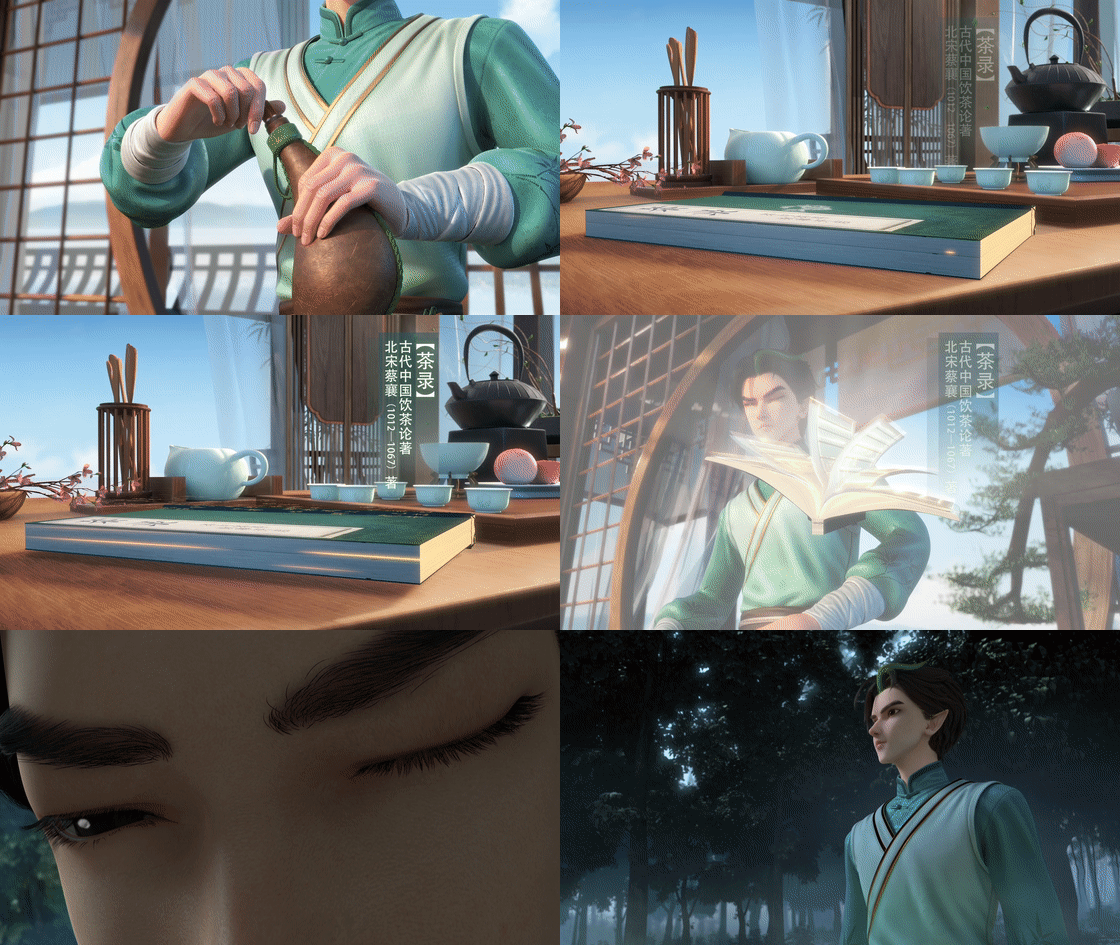 ▲ Animated series co-produced by 2:10 Animation and Yili Group. Image source: 2:10 Animation
 ▲ Animated series co-produced by 2:10 Animation and DingTalk. Image source: 2:10 Animation
Li Feng: Compared to other brand communication models in the short video era, what advantages does using animation for branding offer?
Wang Shiyong: The first advantage of using animation for branding: it can continuously accumulate corporate brand assets.
Using animation to spread brand messaging requires only creating the asset once; every subsequent content production investment goes into building on that asset, and every promotion and exposure becomes savings in brand assets.
The second advantage: animation matches the content and traffic logic of the short video era.
In image creation, animation can find content from existing public recognition that resonates with corporate culture, creating a totem-like image, and use stories suited to short video narrative logic and rhythm to spark public emotion and attitude.
This year, Mixue Ice Cream & Tea's "Snow King" gained enormous influence on short videos — the image combined the familiar snowman figure with the company-distinctive ice cream cone.
Li Feng: If today I want to use a virtual image for livestreaming, what would the production and maintenance costs look like compared to using a real person?
Wang Shiyong: On short video platforms, vertical-screen content revolves around interaction with users. Compared to horizontal screen, which requires more scenes and peripheral character details, vertical screen significantly reduces production costs.
Right now, creating a virtual image for livestreaming costs roughly 1/10th of producing an animated series — very low. It requires a set of equipment and some styling, then at specific times like Singles' Day or other occasions, changing to different outfits. It's just some technical adjustments, with someone performing behind the scenes — one-time investment, slight iteration, and sustainable production.
How Will the Metaverse Affect Brands Across Different Industries?
Li Feng: From a media format perspective, we're beginning to transition from 2D to 3D. If everything can be digitized, eventually the virtual world and real world become easily confused.
Wang Shiyong: The ultimate form should be the metaverse.
Li Feng: What impact will the metaverse have on consumers and brands across different industries? This is another significant shift in media.
Wang Shiyong: The metaverse is our future. I believe this concept isn't baseless — after all, Mark Zuckerberg and Elon Musk are both working on it. So all companies should prepare for how to enter the metaverse.
If we're entering the metaverse, every person and every enterprise will need an image, which will bring new possibilities for business models.
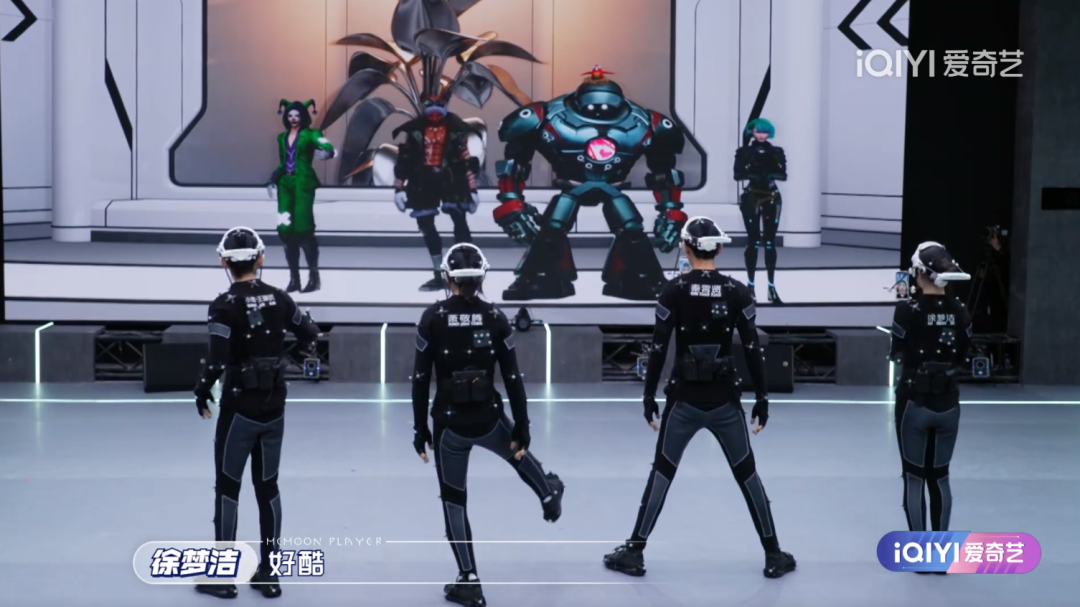 ▲ A screenshot from iQIYI's Dimension Nova, a show where ELF participated in some model production. Image source: iQIYI
Li Feng: My understanding of your definition of the metaverse is digitizing everything. Facebook is doing pure digitization focused on content and social. Elon Musk is doing digitization of people, starting from brain-computer interfaces.
Wang Shiyong: Our company is also working on digitization right now.
Just imagine what changes the metaverse could bring to a company. Logistics costs drop to zero. Replication costs for goods drop to zero. Many costs that exist in reality would disappear entirely. The commercial architecture would become completely different.
In the metaverse era, a company's core will ultimately come down to brand power. Products are changing demands; only brand is constant. And the core of brand is brand equity. So regardless of how far away the metaverse is, companies should be accumulating brand equity now — which means using animation to build brand.
What Kind of Brand Can Survive Cycles?
Are short videos the shortcut for Chinese animation to surpass Disney? How can animation demonstrate its advantages? How can it help brands spread in the short video era? Welcome to watch the video and share it on your Moments~
Wang Shiyong: When we think about future changes, we might need to think about our past. I'd like to ask Uncle Feng about this.
There have been many economic crises in the world, but quite a few companies have survived — like Disney and Coca-Cola. I'd like to know, why did they survive?
Li Feng: Good question. What you're asking is: across different economic environments or external conditions, what things or what kinds of competitiveness are relatively more long-term and less affected by external factors?
This is quite first-principles. The answer might be simple, but mapping it back could be difficult.
Take Coca-Cola. First, people definitely need to drink water. Coca-Cola is a fairly typical representative of "water."
Second, beyond providing the function of hydration, Coca-Cola also provides a bit of stimulation.
Third, Coca-Cola also has somewhat addictive components that attract consumers to repurchase.
Within these three frameworks, no one has operated better than Coca-Cola, so no one can replace Coca-Cola.
Disney might be the same. People always need spiritual entertainment, need to relax and enjoy. Then within this deterministic demand of "spiritual entertainment," what Disney provides is more irreplaceable compared to what others offer.
I can only speak from logic: first, you need to stand in the quadrant of the most essential needs. Second, within that most essential quadrant, you still need other competitive advantages.
Wang Shiyong: In your view, what demands will future changes in China's economy place on how companies approach branding?
Li Feng: The biggest challenge today is that media is changing too fast. When media evolves into new forms, it spawns new content supply.
Although they're all video, short videos are completely different from the video content that television provided. TV channels were extremely limited, while short video platforms tend toward infinite channels — every creator is a channel.
Because of this increase in media content supply, it's become extremely difficult for companies to capture consumer attention, and the requirements keep getting higher.
Wang Shiyong: When you invest in a company, what kind of brand do you want it to have?
Li Feng: From an investment perspective, first, the company needs to be in a fast-growing industry. Whether it's an emerging industry or one that's just starting to grow, the company should ideally stand in a direction that will grow rapidly over a five-year cycle. If the industry's variables aren't that significant, a startup might find it difficult to survive from small to large entirely on its own strength.
Second, beyond choosing the right industry, the company itself needs some distinctiveness. Let's say five years ago, the coffee industry was particularly good — but if a company wanted to stand out, it still needed to find a relatively differentiated position and identify its own competitiveness.
In investing, we can divide into two categories: those with brand spirit attributes, and those with relatively fewer brand attributes. When choosing, we definitely still lean more toward the first category.
Interactive Giveaway
In your observation, which companies have animated characters as their image? How do you think animation will change consumer brand communication? Welcome to share your insights in the comments. The 5 users with the most thoughtful comments will receive a virtual idol Dianzan Xian & Nongmi Xian hoodie from ELF.
Get in Touch
If you'd like to learn more about ELF's cross-industry case studies, welcome to contact ELF's official WeChat, Huashengmei~

(Welcome to scan the QR code to contact ELF)

▲ How to Turn Black Tech into Reliable Products? | FreeS Fund Dialogue
▲ [Long Read] The Rise and Fall of Chinese Animation Over 20 Years | FreeS Business School
▲ ESG's Past and Future: From Dividing the Pie to Growing It | FreeS Research Institute
▲ Slow is Fast: Why Insurtech Is a Business Worth Betting On | FreeS Interview
▲ Li Xiang × Li Feng: The Dollar's "Monopolistic Success" and "Gradual Dilemma" | Li Feng Column