Since China will give birth to far more world-class brands than we can imagine over the next 20 years, what can we do right now?
Study the essence of industries, capture signals of the future.


While "consumption downgrade" has become a buzzword, we want to talk about consumption upgrade with a cool head.
Over the past hundred-plus years, some interesting patterns have emerged worldwide.
The first inflection point came before World War I. Many British brands we know today — like Lipton, the world's largest tea brand, founded in 1890 — were born during this period and quickly went global.
The second came after World War II. Between 1950 and 1975, numerous brands launched in the United States became today's world-class names, such as Disneyland and Walmart.
The third stretched from the mid-1970s to the late 1990s. Iconic retail brands like MUJI and Daiso were born in Japan during this era.
Whether it was Britain over a century ago, postwar America, or pre-Asian-financial-crisis Japan, all had experienced rapid productivity growth. China has become a productivity and GDP powerhouse over the past two decades. Feng Li of FreeS Fund believes that if the economy avoids major disruptions, China's entry into a consumption upgrade cycle will give rise to world brands far beyond our imagination.
To deepen our understanding of consumption upgrade and capture the best companies riding this trend, we've studied why America's hit snacks can weather economic cycles, the matcha industry landscape in Japan, and how emerging American sports brands have risen. Our portfolio includes many companies aligned with the consumption upgrade trend, including Three Squirrels, foodservice supply chain brand Xinliangji, personal care brand Plant, premium sportswear brand Particle Fever, tea polyphenol snack brand Guancha, Sexy Salad, tea chain brand Teasoon, and more.
Recently, we've partnered with Waterdrop Product Evolution Camp (founded by former partners of Hundun University) to develop and launch the "Consumption Upgrade Evolution Camp" program. Join us to explore the meaning of consumption, study industry fundamentals, and capture signals of the future.


Program Highlights
7 Modules, Multi-Dimensional Understanding
Comprehensive thinking and foundational exploration on consumption upgrade.
Winning the next 20 years depends on the depth of your understanding today.
Dual Mentor Leadership
Each module features two lead mentors — grounded in the present while staying alert to the future.
Practical Product Skills, Essential Spiritual Core
The essence of consumption upgrade lies in meeting consumers' evolving spiritual needs. So how do you create material goods in an era when "material things bring happiness"? And how do you find spiritual substance when "material things no longer bring happiness"?
Peer Case Studies, Mutual Learning
Mastering consumption upgrade requires both the seasoned entrepreneur's deep grasp of industry fundamentals and the sharp founder's keen nose for emerging trends. We'll curate outstanding entrepreneurs from both camps for in-depth peer case analysis.
Expert Product Diagnosis
We'll invite alumni from two previous Product Evolution Camp cohorts to conduct professional, multi-dimensional diagnoses of incoming participants' products, helping drive product iteration.
Curriculum
Module 1: Trends, Models & Users
Dates: November 18-19
Objective: The direction of industry transformation, potential new models, and deep user research.
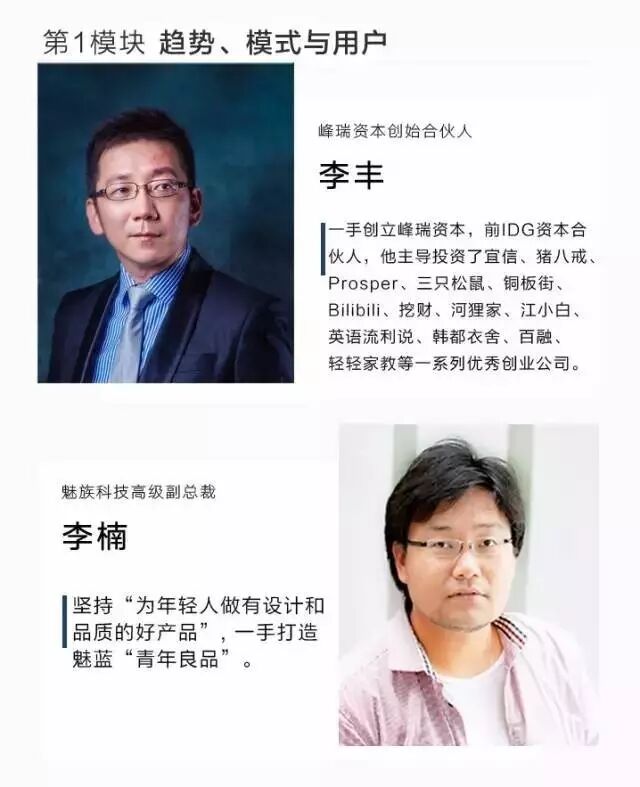
- Trends & Model Innovation — Feng Li, Founding Partner, FreeS Fund
- US/Japan Benchmarks — Yang Jidong, Design Partner, Runmi Technology
- Millennial Users — Li Nan, Senior VP, MEIZU
- Trillion-Dollar Middle-Class Opportunity — Qian Kun, Managing Director, Matrix Partners China
- Peer Case Analysis — Moderated by Feng Li
Module 2: Core Capabilities
Dates: December 9-10
Objective: The core of service is people; the core of category is user mindshare; the core of supply chain is efficiency. How to build these three core capabilities.
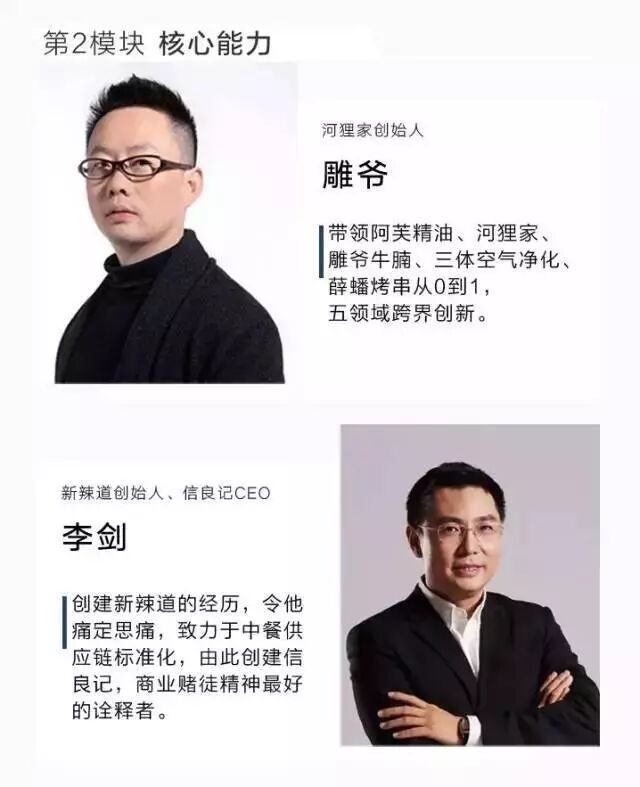
- Service Upgrade — Diao Ye, Founder, Helijia
- Category Upgrade — Lou Nanshi, Founder, Scent Library
- Supply Chain Upgrade — Li Jian, Founder of Xinla Dao & CEO, Xinliangji
- Peer Case Analysis — Moderated by Diao Ye
Module 3: Innovation Pathways
Dates: January 13-14
Objective: From positioning, scenarios, technology, and emotional design — finding new models and products that meet user needs across different dimensions.
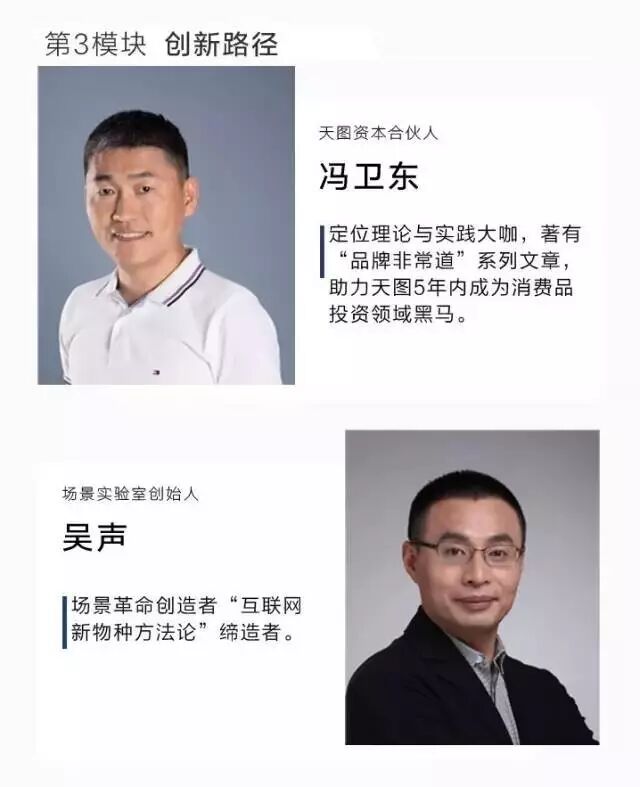
- Positioning Innovation — Feng Weidong, Partner, Tiantu Capital
- Scenario Innovation — Wu Sheng, Founder, Scene Lab
- Technology Innovation — Liu Zihong, Founder, Royole
- Emotional Design Innovation — Chen Bing, Managing Partner, LKK Design Group
- Peer Case Analysis — Moderated by Feng Weidong
Module 4: Six Vertical Industries
Dates: February 3-4
Objective: Digging into what makes companies successful across six industries, exploring transformation and breakthrough strategies.
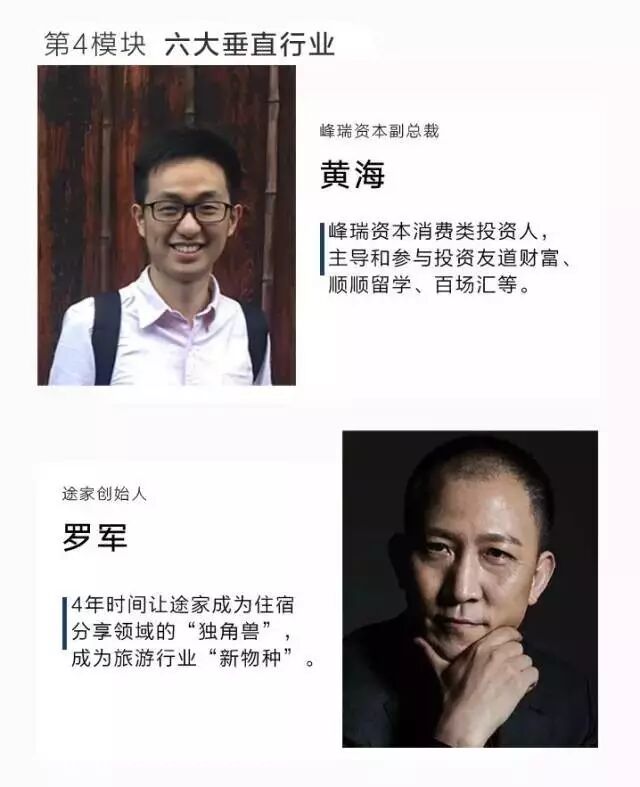
- Food & Beverage — Huang Hai, VP, FreeS Fund
- Investment Case Debrief — Xiao Guan, Founder, Guancha
- Consumer Goods — TBD
- Travel — Luo Jun, Founder, Tujia
- New Sports — TBD
- Lifestyle Aesthetics — Li Ningning, Design Director, Xiaomi
- Peer Case Analysis — Moderated by Huang Hai & Luo Jun
Module 5: Foundational Shifts
Dates: March 17-18
Objective: From material to spiritual, from efficiency to living, from owning to experiencing — the spiritual aspirations behind consumption upgrade and how they manifest.
- Desire Fulfillment: From Function to Desire — Huang Xiaowu, Chief Content Officer, Mi Meng
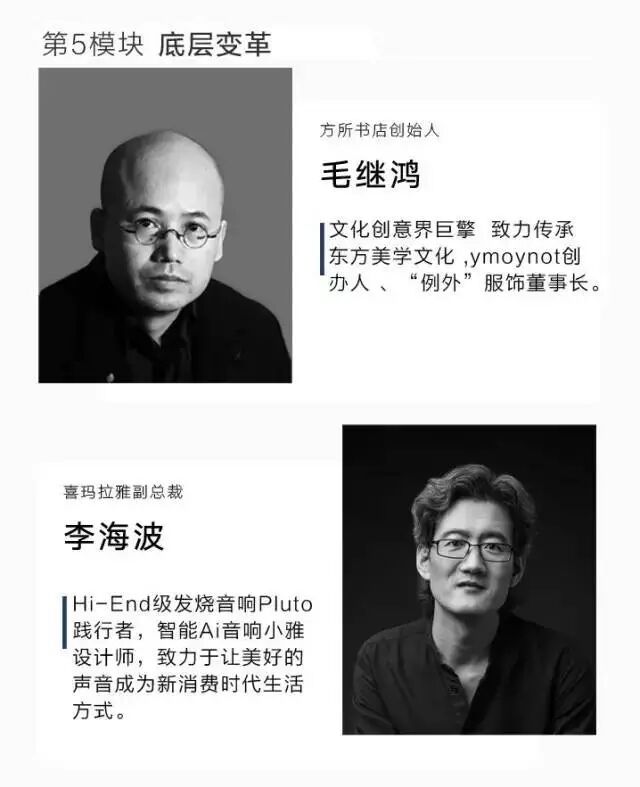
- Time Fulfillment: High Efficiency & Slow Living — Li Haibo, VP, Ximalaya
- Space Fulfillment: Activating and Hybridizing Physical Spaces — Zhong Shu, Founder, Kr Space
- Experience Fulfillment: From Transaction to Experience — Mao Jihong, Founder, Fang Suo Commune
- Peer Case Analysis — Moderated by Mao Jihong & Li Haibo
Module 6: Product Methodology
Dates: April 14-15
Objective: Internet product methodology — how to adapt and apply it to refining consumption upgrade products.
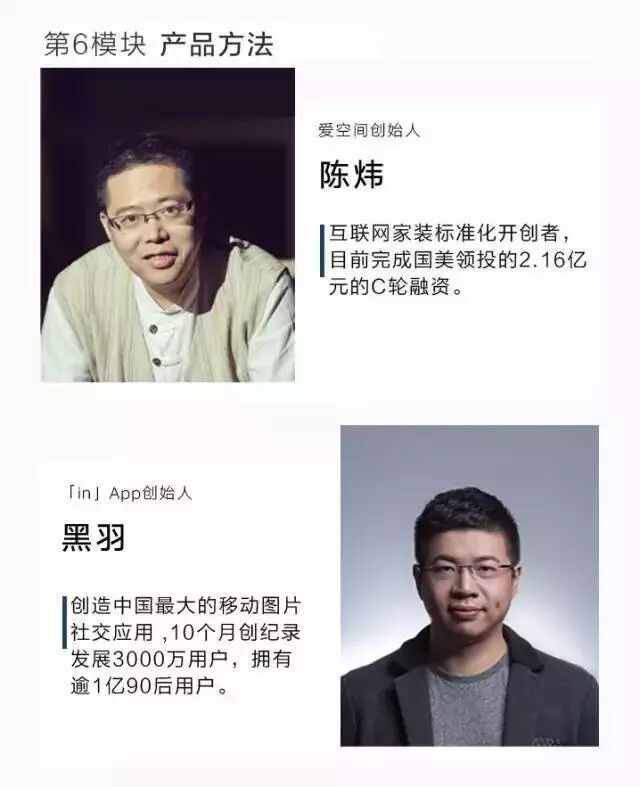
- Demand Mining & Product Design — Chen Wei, Founder, Aispace
- Product & Human Nature — Hei Yu, Founder, "in" App
- Product Operations & Growth — Yu Peng, Former Founder of Airbnb China, Founder of Wehome.io
- Product & Ecosystem — Ding Qian, CEO of Qianhai Mengchuang, Co-founder of Zhihuishu
- Peer Case Analysis — Moderated by Chen Wei & Hei Yu
Module 7: Graduation Defense | From Consumption to Meaning
Dates: May 12-13
7 minutes per participant. A feast of shared thinking.
Theme: From Consumption to Meaning. Consumption upgrade creates not just material goods, but meaning. This module will feature senior investment executives as observers and commentators, creating opportunities for future fundraising and partnerships.
They Will Evolve With You
How to Apply
Step 1: Apply
Scan the QR code below or click "Read More" at the end of this article to access the Consumption Upgrade Evolution Camp application form.

Step 2: Interview
We welcome:
- Founders and executives who have stayed deep in the consumption upgrade space and grasp industry fundamentals;
- Entrepreneurs with sharp instincts for innovation and a nose for future consumption trends;
- Investors who have studied consumption upgrade thoroughly, calculated precisely, and arrived from the future.
For candidates who pass initial screening, we'll schedule interviews within one month. Top performers will receive scholarships covering 30%, 50%, or 70% of tuition, and join these individuals as classmates:
- Huang Hai, VP, FreeS Fund
- Li Haibo, VP, Ximalaya FM
- Chen Bing, Managing Partner, LKK Design Group
- Xu Liang, Co-founder, Qishu Youyu
- Hu Xiang, Managing Partner, Heima Fund
- Bi Xiang, Chairman, Qiankun Haoche
We look forward to having you.

▲ When Traffic Advantages Fade, How Do You Execute Consumption Upgrade? | Investor Voices