"Standing High, Seeing Far": The Origins and Future of the Satellite Communications Space Race | FreeS Fund Report 34

How should we think about satellite communications?

Huawei's new Mate 60 Pro has put satellite communications firmly in the spotlight. Current satellite capabilities allow people to make calls and send texts over the Tiantong satellite network even when there's zero cellular coverage. In September, for instance, Elon Musk famously conducted a remote video interview for a summit mid-flight via Starlink.

▲ Image source: Youtube@All-In Podcast
If satellite communications fully mature, daily life could change dramatically: no more airplane mode on flights, with direct satellite connectivity potentially faster than ground-based networks; road trips through vast deserts could come with uninterrupted internet; offshore fishing trips wouldn't mean losing touch with friends back on land.
Behind this promising vision lies decades of tortuous development. From Inmarsat establishing connectivity possibilities in sparsely populated regions, to Motorola pioneering commercial satellite communications with the Iridium system, to SpaceX industrializing mass satellite production — the path has involved countless technical iterations and costly experiments.
China's satellite communications sector has been steadily advancing. The 2008 Wenchuan earthquake exposed the critical need for satellite communications, directly catalyzing the creation of China's Tiantong-1 satellite system. In recent years, China has been intensively researching and deploying low-earth orbit satellite internet systems — the "Hongyan" constellation developed by China Aerospace Science and Technology Corporation, and the "Hongyun" constellation from China Aerospace Science and Industry Corporation. Now, with the establishment of China Satellite Network Group, dedicated to satellite internet communications, China's LEO satellite system has entered an accelerated development phase.
Yet amid intensifying global competition for satellite positioning, China needs to move faster.
In this report, we'll explore:
- What exactly is satellite communications?
- How did satellite communications evolve from Inmarsat to Starlink, what were the technical hurdles, and how were they overcome?
- Why do we need to develop satellite communications?
- What entrepreneurial and investment opportunities exist in this sector?
- What does industrialized mass production of satellites mean?
- Why is competition for satellite launch slots so fierce globally?
We hope this offers fresh perspectives. If you're an entrepreneur or practitioner in satellite communications, you're welcome to reach out to the author, Yongcheng Yang, partner at FreeS Fund (yangyongcheng@freesvc.com).

Engagement Giveaway
How do you think satellite communications will transform our lives in the future, and where do you see potential opportunities?
Share your thoughts in the comments. By 17:00 on November 2nd, the 5 most thoughtful commenters will each receive a copy of Elon Musk, the biography by Walter Isaacson.


/ 01 / A Brief History of Human Mobile Communications
Why do we need satellites for communications in the first place?
Communication is essential to daily life. From early postal correspondence to telephones, telegraphs, and walkie-talkies, through to cellular mobile networks — the mobile communications we all know today. As society informatizes, communications have evolved toward broader coverage, more users, higher speeds, and greater bandwidth.
Cellular mobile networks represent a milestone in human communications history. Through widely distributed base stations and sophisticated, efficient access and backbone networks, mobile users can communicate efficiently with anyone within base station coverage.
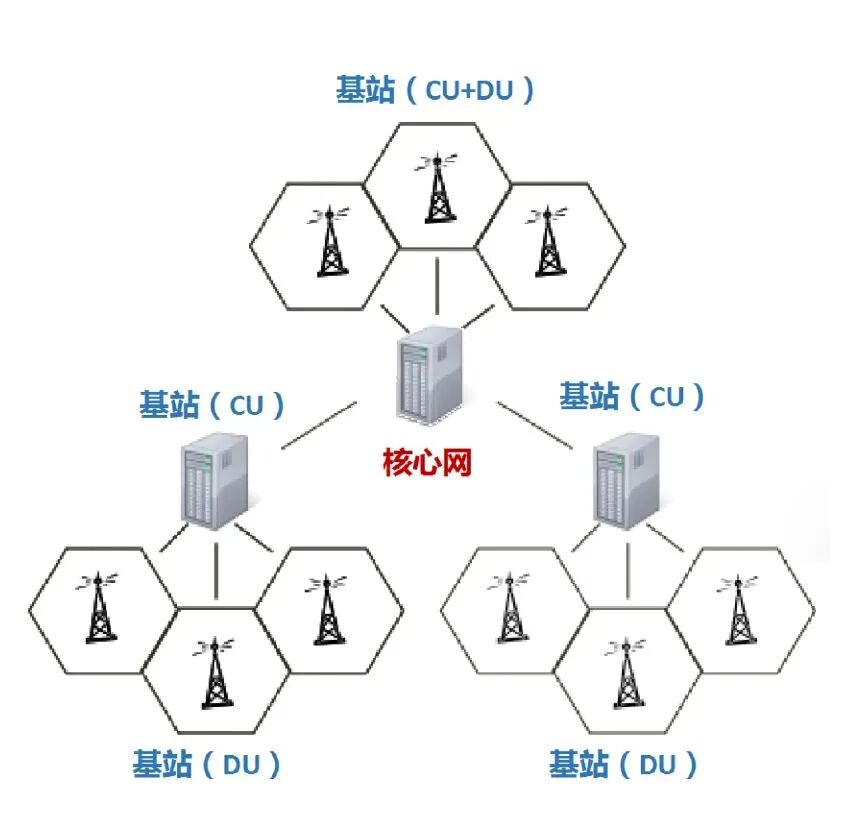
▲ 5G network architecture. Image source: Science and Technology Daily
Simply put, in a cellular network, every phone connects to its nearest base station, which links via wired networks to other base stations and central offices. If A wants to call B, A's base station queries the core network to locate B's base station, then routes the communication there. B's base station then delivers it to B, establishing a smooth connection for information exchange. Thus, "ubiquitous" base stations and "everything-connected" networks are the keys to cellular communications' broad user coverage.
However, cellular networks have blind spots — they can't cover all geographies and scenarios. Vast oceans and mountain ranges present challenges where even power supply is difficult, let alone base station installation and maintenance. In these dead zones, communications infrastructure simply isn't economically viable.
So people devised a solution: move the base stations into the sky, onto satellites, allowing ground devices to connect directly with orbiting satellites that form an interconnected network. Satellite ground stations can also bridge this network with existing terrestrial communications. This solves the connectivity problem for oceans, forests, and other areas beyond the reach of ground base stations — the original vision behind satellite internet.
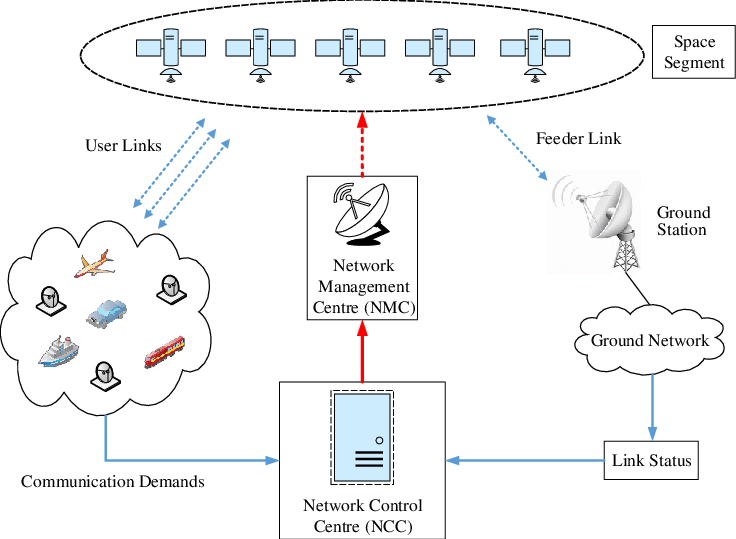
▲ According to the Civil Aviation Administration of China's "Implementation Plan for Satellite Communications in Airline Operations Control," satellite communication systems generally comprise space satellite systems, ground control service master stations, mobile switching systems, and user terminals. Image source: Researchgate
/ 02 / Satellites and Satellite Communications
Currently, satellites orbit at altitudes ranging from 300 kilometers to 100,000 kilometers above Earth's surface. Their height gives them a commanding view — fewer satellites can cover the globe, an advantage ground-based base stations cannot match.
Satellites are typically categorized as Low Earth Orbit (LEO), Medium Earth Orbit (MEO), and Geostationary Orbit (GEO) satellites. In the high orbital plane, there are also Inclined Geosynchronous Orbit (IGSO) satellites. A satellite's altitude determines its coverage area; the higher the orbit, the larger the footprint.

▲ Satellite orbit altitude classification. Image source: Researchgate
Higher orbits also mean slower angular velocity, so satellites linger longer over the same ground region. Geosynchronous satellites at 35,000 kilometers are effectively "stationary" relative to the ground. Ideally, just three such satellites can cover the entire Earth. But higher altitude means longer communication delays and greater required transmission power.
China's Tiantong-1 communications satellites, developed after the Wenchuan earthquake, are geosynchronous satellites providing global coverage through three satellites. The satellite communication feature in Huawei's Mate 60 Pro leverages Tiantong-1's technology.
The U.S. GPS (Global Positioning System) primarily uses MEO satellites. China's BeiDou navigation satellite network covers LEO, MEO, and GEO orbits.
Because medium and high orbit satellites offer broad ground coverage, early communications satellites were concentrated in these ranges for cost and management reasons. China's early TV satellite relay systems — the ones that delivered Hunan TV, Zhejiang TV, and others — used geostationary satellites. It wasn't until the Iridium system that LEO satellites entered communications at scale.

▲ China Media Group's satellite broadcast truck during the Beijing Winter Olympics. Image source: Beijing Daily
/ 03 / From Inmarsat and Iridium to Starlink: How Did Satellite Communications Evolve?
▎Inmarsat: Safeguarding Maritime and Aviation Safety
The communications industry's driving mission has been building comprehensive global coverage, connecting every corner of the world. Yet vast oceans and mountain ranges make relay station and base station construction impractical. On the open seas especially, ensuring ship communications has long been a challenge.
Addressing this need, the International Maritime Satellite Organization (Inmarsat) was established in 1979 at the behest of the UN's International Maritime Organization, providing satellite communications networks for the shipping industry.
Maritime satellite networks primarily serve oceans, forests, and other regions where building communications infrastructure is difficult. According to Inmarsat's official website, "Our maritime safety services protect the lives of 1.6 million seafarers every day, and our aviation safety services ensure millions of people can fly safely."
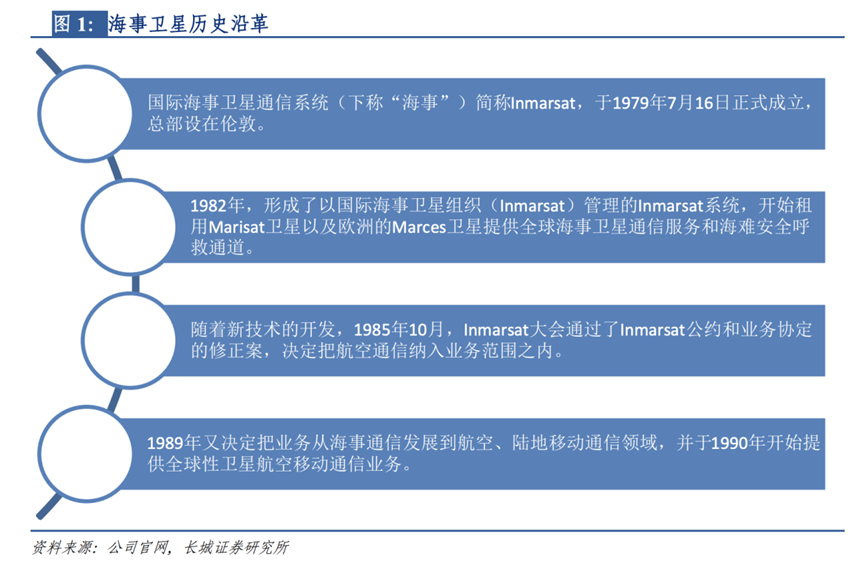
▲ Source: Inmarsat official website, Great Wall Securities Research Institute
Early maritime satellite terminals were bulky, and the amount of information they could transmit was minimal — capable only of sending brief distress signals. Today, maritime satellite terminals have become much more compact. Inmarsat has now evolved to its sixth generation and is building a new satellite communications network called Inmarsat ORCHESTRA, integrating geostationary satellite networks, low-Earth orbit satellite networks, and ground-based 5G networks into one system.
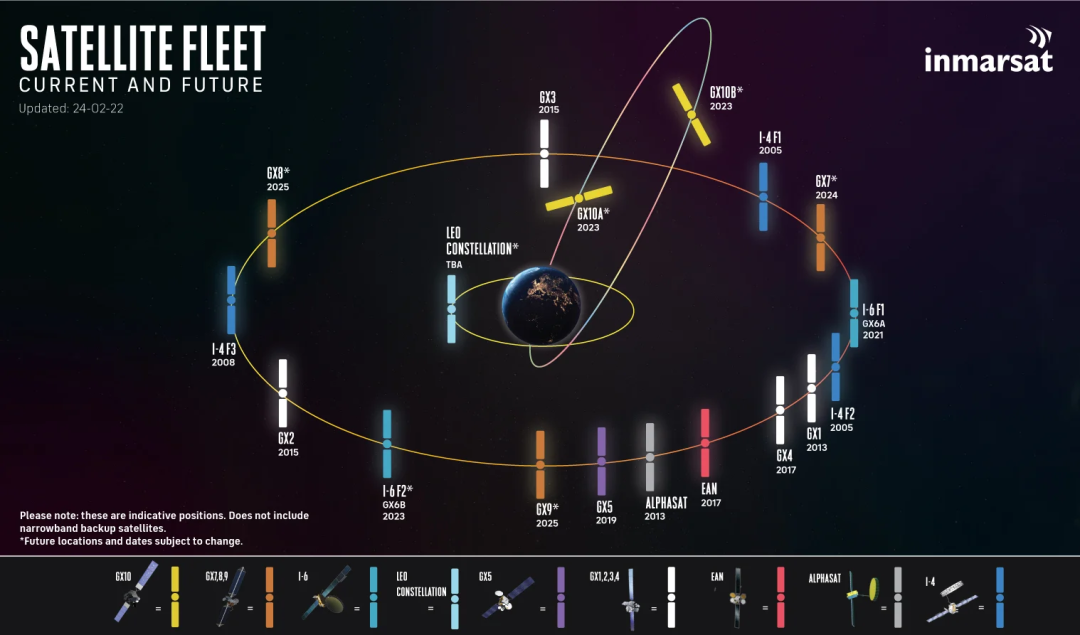
▲ Inmarsat currently operates 15 geostationary orbit satellites. Image source: Inmarsat official website
▎ Satellite Internet: From Motorola's Iridium to SpaceX's Starlink
In advanced technology, Motorola was once consistently at the forefront. According to BusinessWeek, Motorola invented the car radio, the color TV picture tube, the all-transistor color television, the semiconductor microprocessor, the walkie-talkie, the pager, and the "big brother" phone (cellular phone) — successively pioneering industries including automotive electronics, transistor color TVs, trunked communication, semiconductors, mobile communications, and mobile phones. In the 1990s, Motorola led the development of a satellite communications system called "Iridium," with an orbital altitude of roughly 780 kilometers and a planned constellation of 77 satellites. Because the element iridium has 77 electrons, the project was named Iridium. In the end, however, Iridium launched only 66 satellites.
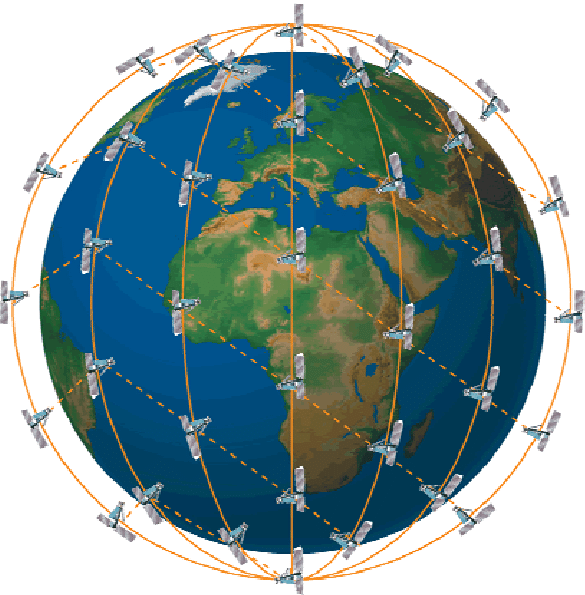
▲ Schematic of Iridium satellite constellation; image source: Researchgate
Motorola took a major step forward in the underlying technology of satellite communications, achieving true inter-satellite communication and inter-satellite networking. Because the Iridium system operates in low-Earth orbit and moves very quickly, dynamic networking was technically challenging. When satellites passed over the vast oceans, even without access to ground relay stations, inter-satellite networking technology still enabled indirect communication between satellites and terminals. These technological advances laid the groundwork for later low-Earth orbit satellite communication systems.
Despite its technical leadership, the Iridium system was not commercially successful. Rocket launches and satellite manufacturing were prohibitively expensive at the time, while Iridium's user base fell far short of projections. After all, only a small number of people needed communication services in extreme geographic environments. Moreover, compared to mobile phones, satellite terminals remained bulky, power-hungry, and expensive. According to BusinessWeek, Motorola had expected 50,000 users by the end of 1998, but only 10,000 were willing to pay, and even at bankruptcy, the system had only 55,000 subscribers.
Subsequently, Iridium was sold off by Motorola. The Iridium system remains operational today. Between 2017 and 2019, Iridium also partnered with Space Exploration Technologies Corp. (SpaceX) to launch 75 satellites.
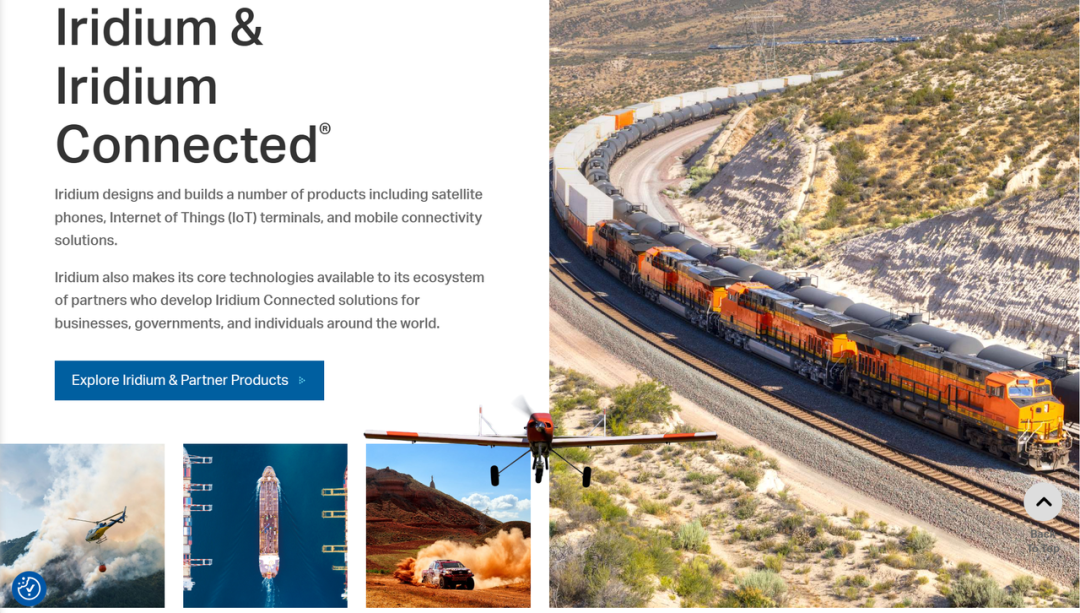
▲ Currently, Iridium's products include satellite phones, IoT terminals, and mobile connectivity solutions. Image source: Iridium official website
As a pioneer of satellite internet technology, Motorola was, in many ways, a great company. But Iridium was arguably using old supply chains to solve new technology problems.
Constrained by the industrial environment of its era, Motorola — a communications company at its core — had to rely on existing rocket and satellite ecosystems when launching satellites. It could hardly drive fundamental transformation in rocket launch or satellite design and manufacturing systems. High launch costs, high satellite production costs, and a small user base — beset by multiple problems, the Iridium system struggled to develop.
Starlink: The Next Iteration
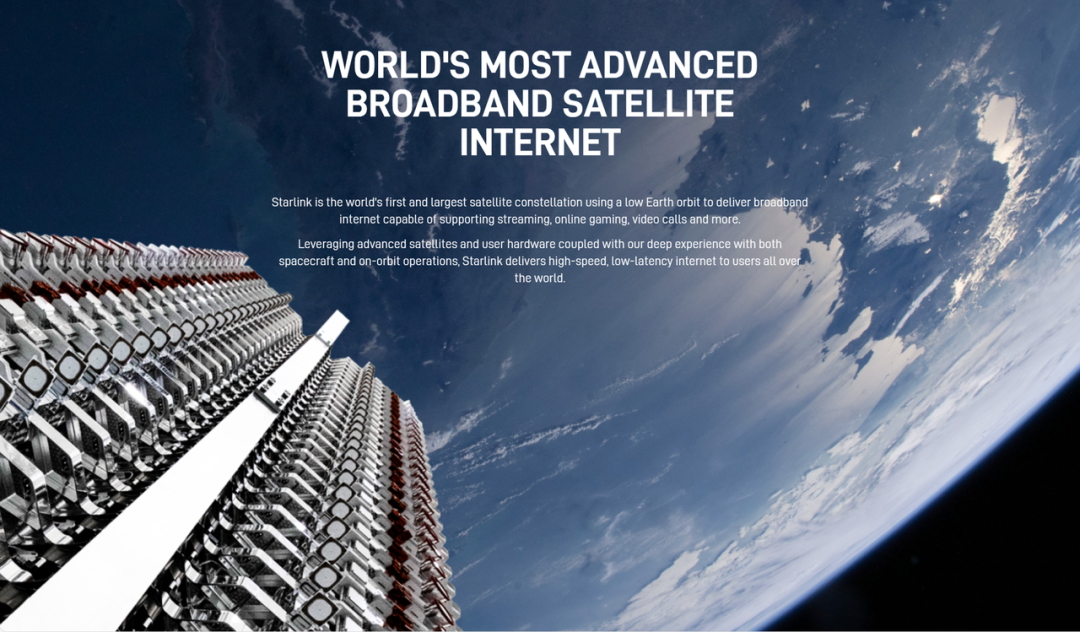
In 2002, Elon Musk founded SpaceX. In 2019, SpaceX began building its massive low-Earth orbit satellite constellation "Starlink."
▲ Image source: Starlink official website
Compared to the Iridium system, Starlink's satellites orbit much lower, at roughly 300 to 500 kilometers. The advantage of low-Earth orbit is faster communication speeds and lower latency. The transmit power required for communication equipment drops significantly, and the size and manufacturing cost of both satellites and ground terminals decrease accordingly.
Of course, the trade-off for lower orbital altitude is obvious. As mentioned earlier, low-Earth orbit satellites move faster relative to the ground, making inter-satellite networking more technically challenging. At the same time, each satellite's service window for ground terminals is shorter, requiring more satellites to ensure coverage area and continuous service.
Starlink plans to launch approximately 42,000 satellites in total. According to Star Walk, a stargazing and astronomy app, as of October 22, 2023, SpaceX had launched 5,331 Starlink satellites. Before Starlink, the total number of satellites ever in orbit throughout all of history was fewer than 5,000.
Why can Starlink launch so many satellites, and absorb the costs?
Fundamentally, compared to Motorola, SpaceX is a reformer in the aerospace field — a pioneer in the engineering, industrialization, and mass production of rockets and satellites. SpaceX built its own rocket and satellite industry, drawing on standardized, assembly-line, cost-reduction, and efficiency-focused design and production concepts from modern large-scale industrial manufacturing.
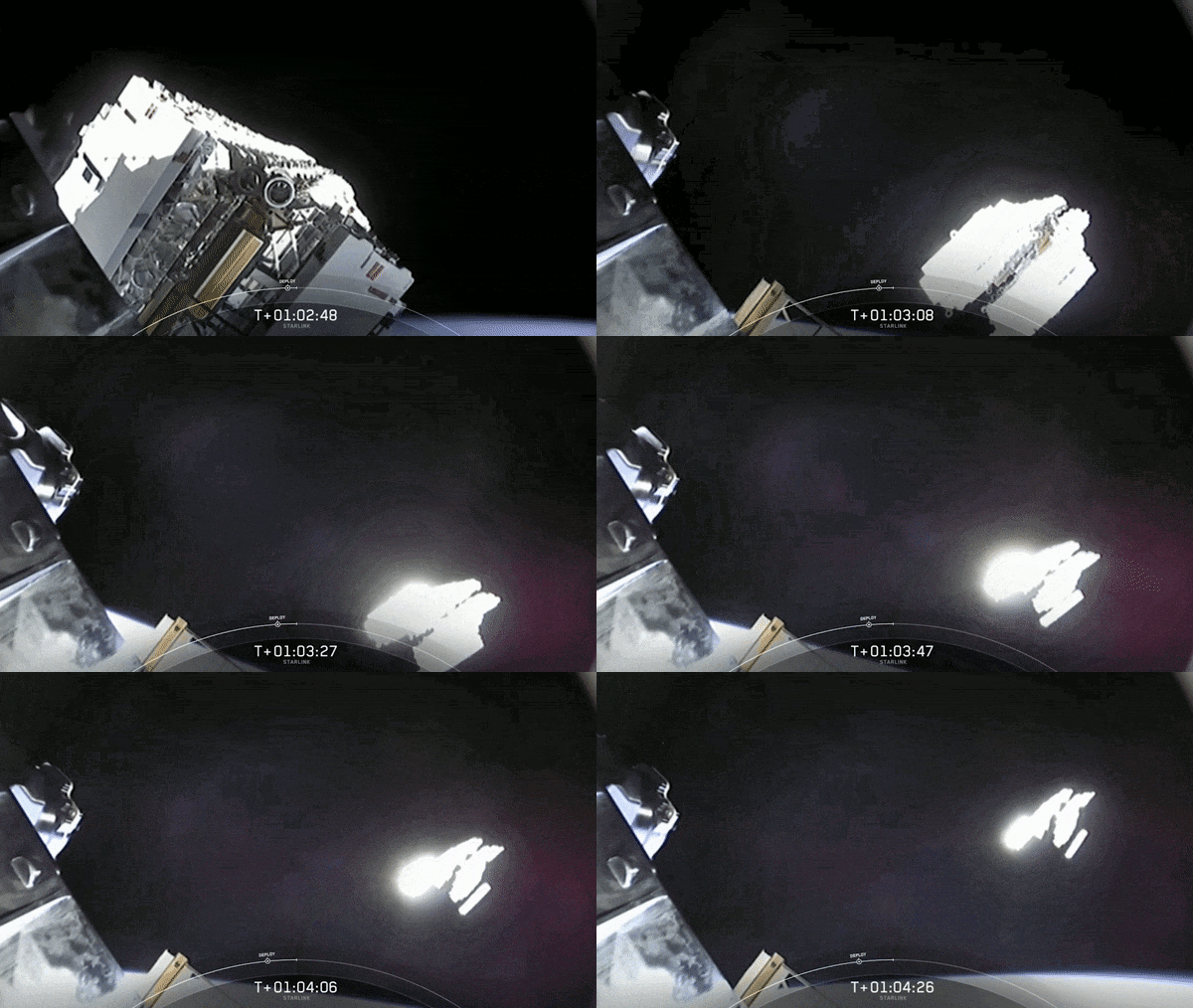
▲ Starlink's first "one rocket, 60 satellites" launch on May 23, 2019. Image source: SpaceX
According to research by the Georgetown Security Studies Review, SpaceX's Falcon 9 launch costs have dropped from $10,000 per kilogram in 2009 to $1,520 today. The Starship super-heavy rocket, currently in testing, is projected to further reduce this to $970.
Specifically: First, Starlink reduced satellite size and weight, enabling multiple-satellite launches — even achieving "one rocket, 60 satellites."
Second, Starlink's rockets are partially recoverable and reusable, reducing launch costs. Carbon fiber is strong and lightweight, widely used in aerospace equipment. But when exposed to sustained high-temperature flames, carbon fiber can experience oxygen-rich combustion. Stainless steel, by contrast, has greater strength, adapts to extreme temperature environments, and has lower processing and maintenance costs with faster manufacturing speeds. Therefore, SpaceX uses stainless steel for its rockets, enabling rapid reuse after launch and landing.
Moreover, to reduce the difficulty and cost of rocket transportation, different components of SpaceX's Falcon 9 are manufactured by factories across the country, tested at their respective test sites, and finally transported to Kennedy Space Center for pre-launch assembly and integration.
SpaceX has also established Starbase in Boca Chica, Texas — a manufacturing and launch facility for Starship that began operations in 2020. Starbase has the world's tallest rocket launch tower. Completed boosters and spacecraft undergo final integration assembly on the launch tower. This dramatically reduces transportation costs for the super-heavy rocket.
Third, compared to the Iridium system, Starlink's inter-satellite communication capabilities have improved further, incorporating space laser communication technology for substantially higher data rates.
Fourth, in its development process, unlike traditional aerospace industry's emphasis on high success rates, SpaceX advocates rapid iteration through frequent failure.
As Walter Isaacson writes in Elon Musk, "Musk adopted an iterative design method: rapidly build rocket and engine prototypes, test them, blow them up, modify, and try again until something workable emerges. Move fast, blow things up, and repeat."
We often hear reports of Starlink launch failures — rocket explosions, satellite losses, and so on. Through each successful or failed launch, SpaceX has experimented with various new technologies, equipment, and materials, accumulating vast experience, lessons learned, and massive amounts of experimental data. These efforts have ultimately driven rapid technological advancement in the Starlink system and swift improvement in engineering and operational capabilities.
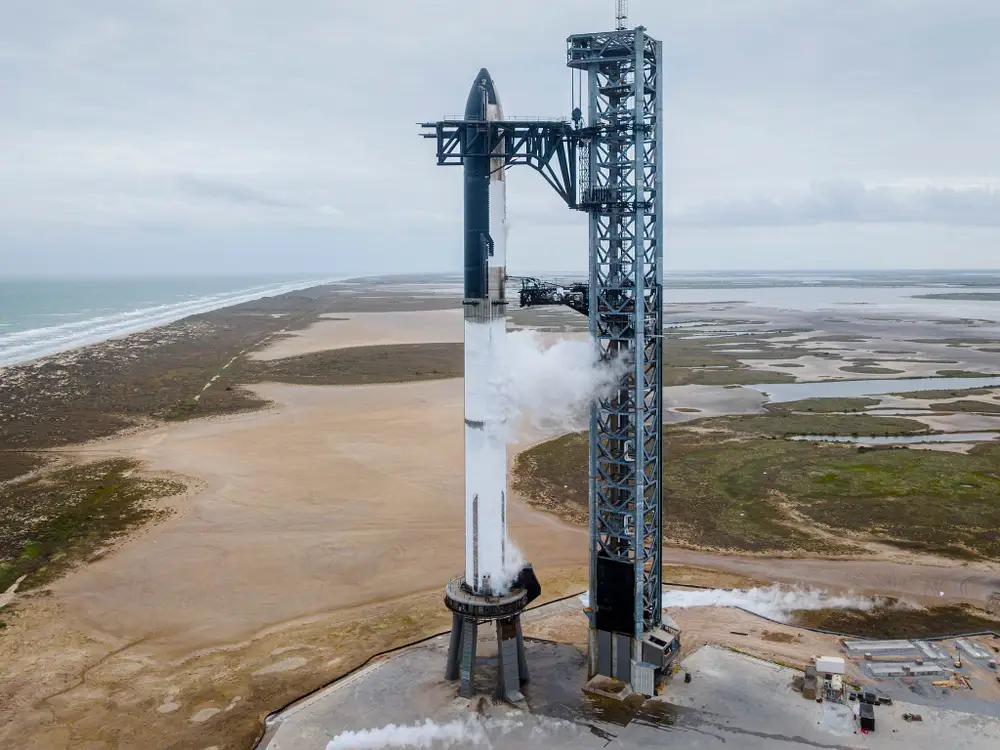
▲ SpaceX Starship completing first-stage and second-stage assembly on the launch pad. Image source: SpaceX, Business Insider
The Key to Satellite Communications Strategy: Industrial-Scale Mass Production
From a historical industry perspective, communications satellites have been a customization-driven industry from the very beginning — unlike industrially mass-producible products such as smartphones, televisions, or automobiles. Before the emergence of LEO constellations like Starlink, humanity launched thousands of satellites. These weren't launched all at once, nor did they share identical designs. Each satellite likely had different missions and characteristics. For a long time, satellite development was defined by customization: redefining, redesigning, and rebuilding from scratch each time — the antithesis of industrialization.
But with the advent of LEO communications networks, including China's Satellite Network (China Satellite Network Group) and America's SpaceX, the goal of achieving global signal coverage requires launching tens of thousands of satellites. Starlink needs roughly 40,000–50,000 satellites for its constellation; China needs over 10,000 to build out its network.
At this stage of development, whoever can pioneer industrialization and improve cost-effectiveness will gain a significant competitive advantage. In this industrialization process, SpaceX has taken the first step and accumulated some experience. China's LEO constellation efforts must not only solve key technical challenges — such as inter-satellite laser communications and satellite lightweighting — but also make a determined push to catch up and ultimately surpass others in industrialization.
Global Competition: Limited Launch Quotas vs. Numerous Satellite Communications Plans
In a 2017 report titled Space: Investment's Final Frontier, Morgan Stanley stated that the race to build satellite constellations capable of delivering low-cost, high-speed internet was driving astronomical growth in the global space economy. By 2040, the global space economy is projected to reach $1 trillion, with satellite internet accounting for 50% of that growth — and up to 70% in the most optimistic scenario.
Currently, multiple countries worldwide are paying attention to LEO satellite communications, but Starlink may be the only operational constellation for now.
According to International Telecommunication Union (ITU) regulations, satellite frequency and orbital usage rights are obtained through a "first-come, first-served" competitive process. Additionally, when launched satellites reach end-of-life, they can be replaced with new launches, creating a "once occupied, forever held" situation. Orbital slots and frequencies are non-renewable strategic resources and represent a bottleneck in satellite internet constellation construction.
Today, competition for LEO satellite orbital applications and launches is fierce, and the pressure to complete launches within designated timeframes cannot be ignored. According to CAICT research, total LEO capacity is only around 100,000 satellites. Starlink has applied for 42,000; China has filed for 16,000 under the code name "GW." According to Financial Investment News calculations, China has currently launched only several dozen LEO satellites — meaning it must launch all 16,000 within the next 3–4 years, averaging roughly 5,000 per year.
Why Is China Developing LEO Satellite Communications?
Why is China developing LEO satellite communications? Based on my current observations, the reasons likely include the following:
First, China covers vast territory with large mountainous and maritime regions — areas that satellite communications can reach.
Second, China is currently the world's largest goods trading nation. A highly comprehensive satellite network can help ensure smooth maritime and overland transport.
Finally, the limited application quotas for LEO satellites and the pressure of launch deadlines are practical realities China must confront.
Whether compared against international satellite communications peers, or viewed from the perspective of meeting the real needs of China's rapidly developing national economy and international trade, China's satellite communications industry still has a long road ahead. The gaps are significant, and accelerated effort is urgently needed.
According to China Aerospace News, after the May 12 Wenchuan earthquake, the Tiantong-1 satellite became a project supported by the Premier's Special Fund, with its primary mission being emergency communications during severe natural disasters in China.
Tiantong-1 covers the globe with three satellites, enhancing our communications coverage capabilities. However, because Tiantong-1 satellites are geostationary high-orbit satellites, they cannot yet provide low-latency, low-power, high-bandwidth satellite internet services.
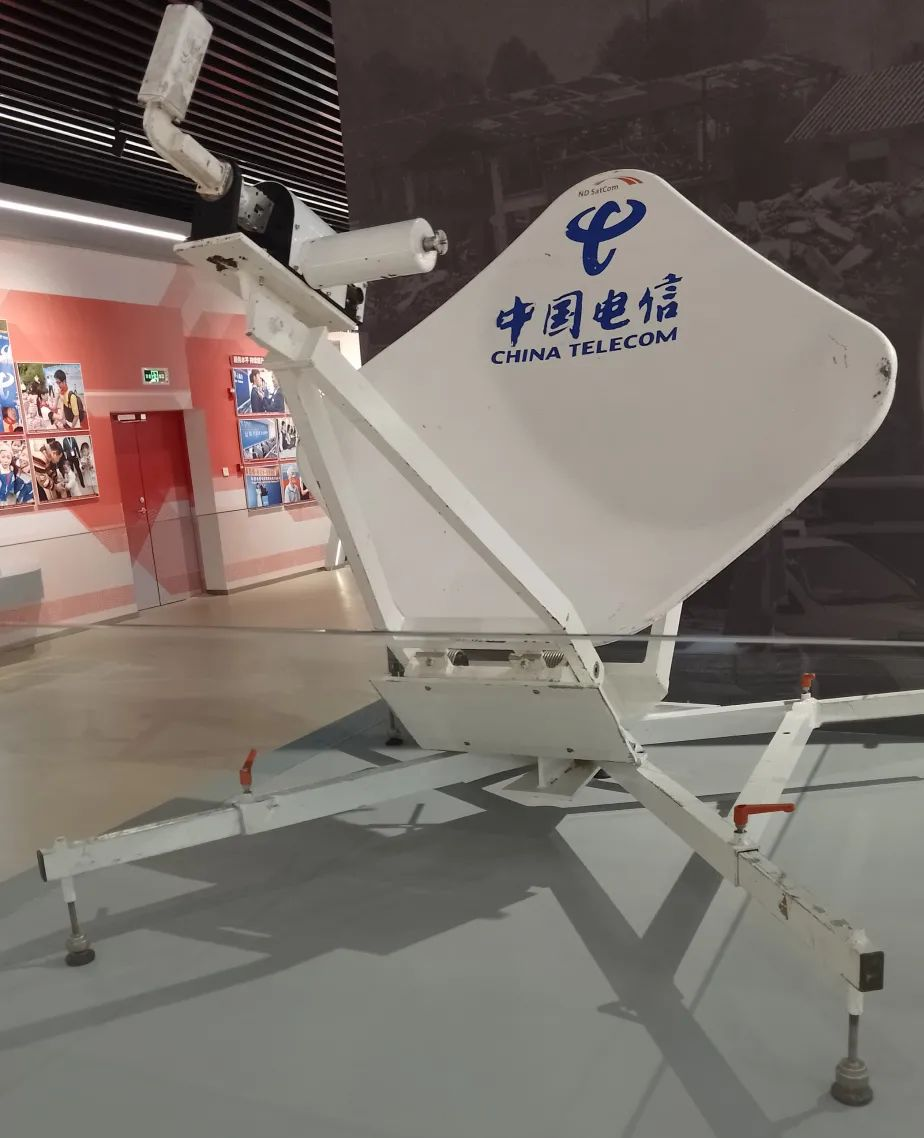
▲ During the May 12 Wenchuan earthquake, a China Telecom satellite mobile ground station providing communications support for the Tangjiashan barrier lake emergency discharge operation. Image source: "China Telecom Museum" WeChat account
In recent years, China has been intensively researching and deploying LEO satellite internet systems — such as the "Hongyan" constellation developed by China Aerospace Science and Technology Corporation and the "Hongyun" constellation developed by China Aerospace Science and Industry Corporation. Now, China Satellite Network Group, dedicated to satellite internet communications, has been established, marking China's entry into an accelerated development phase for LEO satellite systems.
**/ 07 / ** Venture and Investment Opportunities **
While the rocket and satellite industry is already a mature, traditional industry, the emergence of large-scale networked LEO satellite systems has created both new demand and investment opportunities, while also imposing new requirements on the sector. Currently, we observe opportunities in the rocket and satellite industry across several dimensions:
First, China has demand for launching and operating tens of thousands of LEO satellites. This means the satellite industry must develop toward batch production, industrialization, high integration, and low power and cost. For example, low-cost reusable rockets, and modular, compact, low-power satellites all represent potential venture and investment opportunities.
Second, interoperability within satellite systems. Satellite communications must account for interconnections between satellite ground stations, between ground stations and 4G/5G networks, between satellites and ground stations, and between satellites themselves. These interconnections involve chips, communications modules, phased array antenna systems, power systems, and more. Particularly in the unique environment of space, satellite chips and modules must withstand radiation, vibration, and wide temperature ranges — challenges that also present new opportunities.
Third, new technical solutions — laser communications — bringing new venture and investment opportunities. On Earth, base stations interconnect via fiber optics, but fiber cannot be used in space. The industry is now gravitating toward space laser communications between satellites. However, because LEO satellites are in constant high-speed motion, aiming, tracking, and maintaining laser beams between satellites is extraordinarily difficult. Precisely because laser communications is both technically challenging and essential for satellite interconnection, it holds tremendous investment value.
We are very optimistic about the development of China's satellite internet and look forward to Chinese enterprises catching up with and even surpassing international giants to a certain extent in the near future.
In the aerospace sector, FreeS Fund has invested in Jiuzhou Yunjian, a commercial aerospace company focused on developing and servicing reusable liquid oxygen-methane rocket propulsion technology. The founder and team are industry veterans with over a decade of hands-on experience in rocket design, R&D, and mass production. Particularly in the realm of reusable methane-liquid oxygen rocket engines, team members have years of multi-model development experience. We have also made substantial investment deployments in optical communications and millimeter-wave communications, including companies such as Lice Technology, Alpha Optoelectronics, and Borui Microelectronics, among others.
Going forward, we hope to see more innovation in satellite communications and aerospace. We stand ready to work alongside entrepreneurs to do what is right rather than what is easy, in pursuit of the stars and the sea.
Engagement Giveaway
How do you think satellite communications will transform our lives in the future, and what opportunities do you see?
Share your thoughts in the comments. By 17:00 on November 2, the 5 most thoughtful commenters will receive a copy of Elon Musk, the biography by Walter Isaacson.

GPT Frenzy: Anxiety and Breakthroughs in China's Chip Market | FreeS Research Institute
Everything Has Two Sides: How to Use "Nuclear Radiation" to Make Anti-Cancer Drugs? | FreeS Report
How Should We Age in the Future? | FreeS Report 29
Where Does AIGC Go After ChatGPT's Explosion? | FreeS Report 28
What Will Humans Eat in the Future? | FreeS Report 27
Star the FreeS Fund WeChat Official Account for timely business insights delivered to your feed.