Taking Over From Smartphones, Smart Wearables Are Becoming the New Engine of Consumer Electronics | FreeS Research

The lifestyle revolution driven by technology has only just begun.

In Q1 2025, Huawei overtook Apple for the first time to claim the top spot in the global wrist-worn device market. This shift isn't just a change in market share — it's a signal of growing influence for Chinese tech brands in the global smart wearables industry. Worth noting too: as smartphones — the workhorse of consumer electronics — lose momentum, smart wearables, a market worth roughly $100 billion, look poised to become the next hot category. What gives smart wearables such massive potential? For starters, advances in miniaturization and high-precision sensor technology allow these devices to capture biometric data in real time without disrupting daily life. From monitoring heart rate and blood oxygen to recognizing emotions and predicting fatigue, from tracking workout routes to delivering augmented reality experiences, these devices let us "see" what's happening inside our bodies, "hear" subtle signals in our environment, and "sense" information previously beyond our perception. Second, significant improvements in battery life have dramatically enhanced the user experience. Whether it's extended outdoor exercise, continuous health monitoring, or all-day mood tracking, better battery performance gives wearables the staying power to deliver consistent service. Additionally, heightened health consciousness in recent years — especially in the post-pandemic era — has driven wider adoption of health-monitoring features in wearables. Overall, smart wearables represent a quintessential fusion of technology and consumer demand. The category integrates cutting-edge advances in sensor technology, AI, flexible materials, and low-power chips, while embedding deeply into consumer scenarios spanning fitness tracking, health management, and fashion accessories. This article focuses on several core questions: Why are smart wearables booming? What unique advantages does the Chinese market offer? What exciting trends lie ahead? By examining these questions, we can better understand the innovation opportunities and growth potential of the smart wearables industry.

We look forward to connecting with more innovators in the smart wearables space. Feel free to reach out to the author, Ying Shen, at shenying@freesvc.com.

Giveaway Have you used smart wearable products? What innovative wearables do you think we'll see in the future? Share your thoughts in the comments. By 17:00 on July 30, 2025, the three most thoughtful commenters will each receive a copy of The Age of Co-Intelligence: How to Live and Thrive with AI.

Smart Wearables: A Major Track Where Tech Meets Consumer Demand
Today, smart wearables have found their way into health management, fitness, entertainment and travel, fashion, payments and finance, and more. They come in many forms: wrist-worn devices (smartwatches, fitness bands, activity trackers), eyewear (smart glasses), head-worn devices (smart earbuds, AR/VR headsets), and emerging apparel categories (smart clothing, smart footwear). The "smart" in smart wearables refers to their built-in sensors, algorithms, and advanced technologies that enable perception, computation, and feedback. But what truly sets smart wearables apart is their unique "wearability." These aren't tools sitting on a desk or held in your hand — they're digital companions that attach directly to your body and go everywhere with you. Smart wearables are among the fastest-growing categories in consumer electronics. According to data from Qianzhan Industry Research Institute, Zhongyan Network, and other sources, the global smart wearables market has already reached roughly $100 billion, while the domestic Chinese market has surpassed 100 billion RMB. Research firm Precedence Research projects that by 2034, the global smart wearables market will exceed $430 billion, with a compound annual growth rate of roughly 20%. Several key technological and demand drivers underpin this rapid development: First, sensor technology advances. With increasingly sophisticated sensors, smart wearables can collect multidimensional health data — heart rate, blood oxygen, sleep quality — in smaller form factors and with greater precision. Second, improved battery life. This enables wearables to achieve longer usage times despite slim designs, significantly optimizing user experience. Third, upgraded health consciousness among users. Post-pandemic, people are more proactive about monitoring their physical condition, pushing wearables into more health-related scenarios. These underlying technological breakthroughs and growing market demand together form the solid foundation for smart wearables' rapid rise. At its core, the high-speed growth of this sector reflects consumers' dual pursuit of "hardware intelligence" and "lifestyle convenience." People no longer want to passively use devices — they want devices that actively understand them, adapt to them, and become indispensable parts of their lives.
A Brief History of the Smart Wearables Industry
Looking back at the industry's development, one of the core driving forces has been human curiosity itself. It's the "lightbulb moments" people have when facing real-world problems — how to more accurately track exercise data, how to ensure safety in extreme environments, how to change human-computer interaction with a pair of glasses — that have spawned many creative wearable applications.
I. The Germination Period: From Labs to Daily Life
The concept of smart wearables first emerged in the 1960s, when American professors and inventors began preliminary experiments. In 1961, MIT mathematics professor Edward Thorp collaborated with Claude Shannon, father of information theory, to develop the world's first wearable computer — a small device hidden in a shoe for predicting roulette outcomes. This marked the starting point of smart wearables and planted seeds for future technological evolution. Entering the 1970s, smart wearables gradually moved out of laboratories and began integrating into daily life. In 1975, Hamilton Watch Company launched the Pulsar watch, which included a basic calculator accessible through buttons for simple arithmetic. This mass-market wearable watch represented an important step toward consumerization. By the 1980s and 1990s, as electronic technology advanced, more varied products began appearing — head-mounted camera concepts emerged, precursors to today's Insta360 and GoPro action cameras; early Bluetooth earbud prototypes were explored; smart glasses concepts surfaced. Notably, in 1999, Steve Mann, "father of wearable computing," developed miniaturized smart glasses — thirteen years before Google Glass.
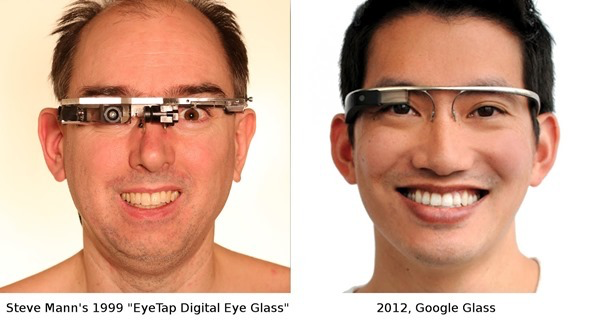
Steve Mann's miniaturized smart glasses and Google Glass. Image source: ifanr Though smart wearables at this stage remained scattered explorations, they already showed promising innovative potential.
II. Breakthroughs and Accumulation: A New Starting Point After 2000
What truly enabled the smart wearables industry to leap forward were a series of key breakthroughs after 2000. These advances not only diversified product forms but also laid solid foundations for subsequent technological progress and market expansion.
1. Design Philosophy Innovation
In 2001, Apple launched the iPod. While not strictly a wearable device, this compact portable music player provided crucial inspiration for later smart wearables. Weighing about 184 grams, holding up to 1,000 songs, with roughly 10 hours of battery life, the iPod transformed how people listened to music. Its portability and user-friendliness became core design elements for subsequent smart wearables.
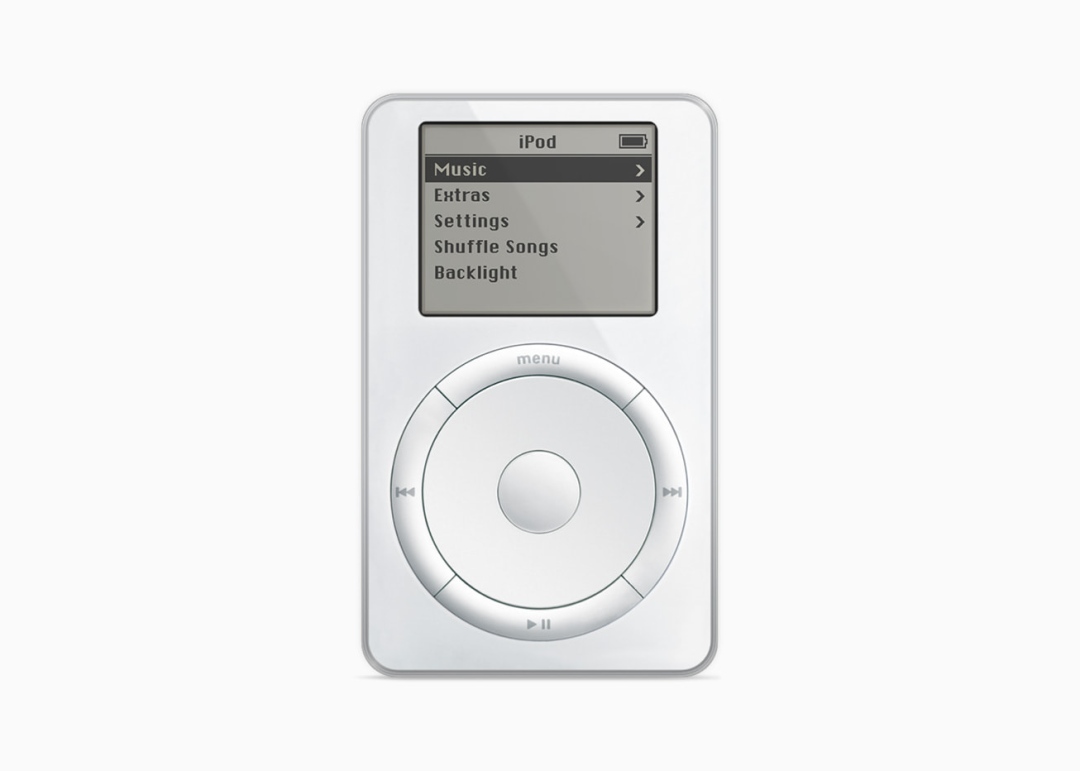
Apple's iPod. Image source: Apple official website
2. Expansion into Professional Sports Scenarios
In 2003, Garmin — originally focused on military GPS systems — pioneered bringing navigation into personal wearable scenarios, launching a wrist-worn GPS device for everyday outdoor runners. The impetus came when a Garmin engineer, an avid runner, had a spontaneous idea during testing: strapping a GPS device to his wrist. He unexpectedly found it worked well for displaying distance and speed. This "lightbulb moment" paved the way for GPS positioning and motion tracking in subsequent smartwatches.
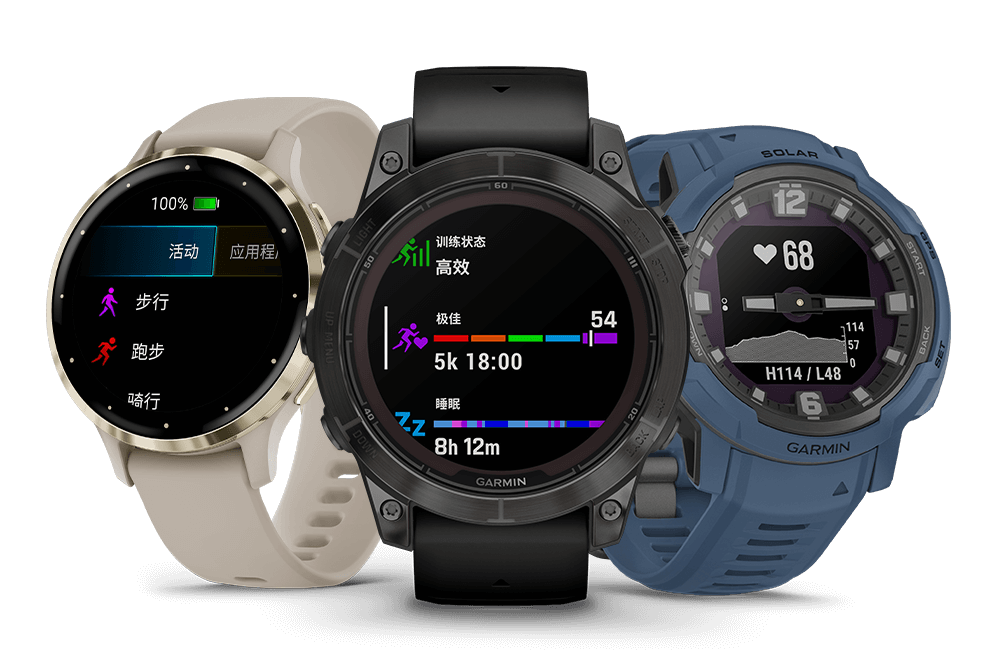
Garmin smartwatch. Image source: Garmin In 2004, GoPro further evolved the head-mounted camera concept, launching a wrist-worn camera device for various extreme sports, becoming a pioneer in wearable video recording. This innovation filled a gap in extreme sports video documentation.
3. The Dawn of the Mobile Internet Era
In 2007, Apple launched the first iPhone with multi-touch and iOS, ushering in the mobile internet era. Generation after generation of iPhones not only redefined smartphones but also dramatically expanded wearable devices' functionality and application scenarios through seamless connectivity. Via Bluetooth and Wi-Fi, wearables could leverage phones' powerful capabilities for more complex applications. Smartwatches could sync notifications, manage health data, even control smart home devices. About two years after the first iPhone's release, in 2009, Fitbit launched its fitness tracker — the Fitbit Tracker. Users could connect it to smartphones via Bluetooth to access detailed data including distance traveled, step count, calories burned, and active time.
III. Toward the Mass Market: The Explosive 2010s
Entering the second decade of the 21st century, smart wearables truly exploded, moving from experimental products toward mainstream consumer markets. According to data from IMS Research, Research and Markets, Gartner, and other research institutions, from 2011 to 2020, the global wearables market grew several dozen times over, with a compound annual growth rate of roughly 43%. Specifically, global wearable technology market revenue was about $2 billion in 2011; the market maintained strong growth thereafter, reaching $52 billion by 2020. 2012 was a year of constant new product launches in smart wearables. That year, Pebble raised over $10 million on Kickstarter to release a smartwatch. Using a black-and-white e-ink display, it offered call reminders, email notifications, and social media alerts — a disruptive product for its time.
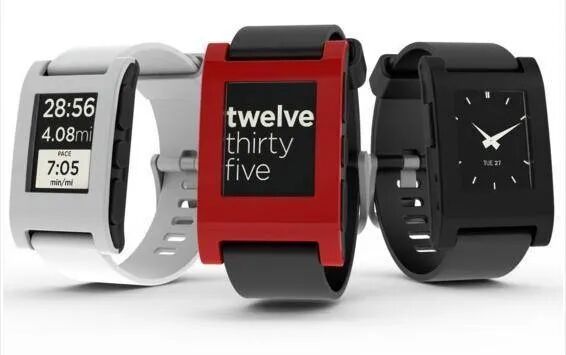
Pebble watch. Image source: PingWest Also that year, Google released Google Glass. Though discontinued just three years later, Google Glass's integrated camera and GPS expanded smart glasses into outdoor scenarios. Its temple touch controls for routine operations remain a mainstream interaction method in the industry today. Also in 2012, Meta predecessor Facebook acquired Oculus and released its first VR headset. Though bulky and limited in experience, this marked the formal beginning of virtual reality's convergence with wearable devices. What truly pushed smart wearables into mainstream consciousness, however, was the 2014 launch of Apple Watch. This product represented a peak of industrial design and technology integration at the time, and gradually moved smart wearables from a niche geek experiment toward mass consumer markets. From then on, the entire smart wearables industry entered a phase of rapid development, with endless new products and ever-expanding application scenarios.
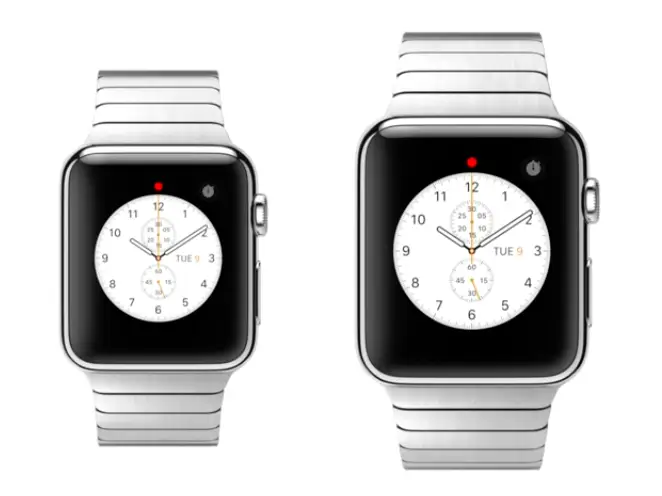
First-generation Apple Watch. Image source: Business Insider
Wrist-Worn Devices: The "Main Force" of Smart Wearables
After decades of technological accumulation and market cultivation, wrist-worn devices — smartwatches and fitness bands — have become the "main force" of the entire smart wearables sector. According to data from research firm IDC and data company Statista, in 2024, global wrist-worn device shipments reached 190 million units, accounting for over 30% of total smart wearable market shipments. As technology advances and market demands evolve, the wrist-worn market landscape is shifting significantly, with "veteran" giant Apple facing "multi-pronged assault" from Chinese companies including Huawei and Xiaomi.
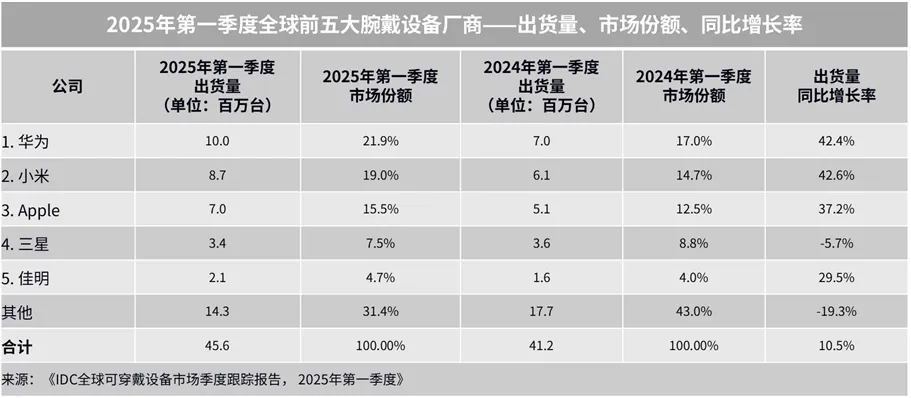
Image source: IDC According to IDC's "Worldwide Quarterly Wearable Device Tracker," in Q1 2025, Huawei surpassed Apple to claim first place in the global wrist-worn device market with 10 million units shipped, capturing over 20% market share. Xiaomi followed closely in second place, driven by strong growth in the Chinese market. While Apple maintains solid momentum in other global markets, it faces competitive pressure in China — particularly in the value-for-money segment outside the premium tier. Overall trends suggest China's wrist-worn device market will likely maintain rapid growth in 2025. IDC data shows that in Q1 2025, China's smartwatch shipments grew roughly 25% year-over-year, while fitness bands achieved growth approaching 70%.
I. What's Behind China's High-Speed Growth
Three key drivers explain the rapid growth of China's wrist-worn device market:
First, policy support has played a notable catalytic role. Since January 2025, national subsidy policies ("guobu") officially included phones, tablets, smartwatches, and fitness bands in their scope. This measure significantly stimulated consumer purchase intentions, directly boosting sales in relevant categories.
Second, lower-tier markets have become an undeniable force. According to 2025 research from the China Industry Research Institute, in the smartwatch market, first-tier and new first-tier cities dominate thanks to high spending power, while third- and fourth-tier cities and lower-tier markets have become new growth spaces driven by consumption upgrades and spreading health awareness. Brands represented by Huawei and Xiaomi have actively expanded into lower-tier markets, launching multiple high value-for-money products that further stimulated demand.
Third, the diversified category structure of smart wrist-worn devices provides structural support for sustained market growth. According to smartwatch industry research from China Prudential Research Center, in 2024, adult smartwatches, children's smartwatches, and fitness bands accounted for 34.4%, 31.5%, and 34.1% of traditional e-commerce sales respectively.
II. Case Studies in Wrist-Worn Devices
Coros: From OEM to Own Brand
In the wrist-worn device space, Coros is a Chinese brand that started relatively late but has grown rapidly. The company initially engaged in OEM manufacturing, once achieving annual revenue of several hundred million RMB, but recognizing the importance of branding, decisively pivoted to building its own brand in 2014.
Today, Coros has transformed into an outdoor smart wearables brand, establishing strong reputation among specific user groups such as professional athletes seeking high-performance outdoor equipment. (Read more: "Giving Up a 600 Million RMB ODM Business to Build a Smart Wearables Brand — What Did They Do Right? | A Conversation with Coros Founder Haotian Niu")
Garmin: From Military to Consumer Electronics
Wrist-worn device company Garmin is also actively doubling down on the Chinese market. As of January 2025, Garmin opened its 100th store in China; its Chinese store count is second only to the US, ranking among the top two globally for single-country markets.
Reviewing Garmin's transformation journey, we can see how a company originally focused on B2B markets successfully expanded into consumer electronics and grew into an industry giant.
Garmin co-founder Gary Burrell previously provided GPS technology support for the US military. In the 1980s, he decided to commercialize military technology and founded Garmin. Initially, Garmin mainly served the automotive navigation market, but as smartphones and mapping apps rose, its traditional business suffered serious impact.
Facing this challenge, Garmin actively sought transformation, ultimately finding its niche in outdoor sports and personal health monitoring. It developed a series of professional wearables targeting specific sports scenarios including running, cycling, and diving, forming differentiated competitive advantages.
Whether Garmin or Coros, their respective experiences reveal the intensity of market competition and the importance of differentiated competitive strategies.
As consumer demand for health management and outdoor sports grows, the smart wearables market will maintain strong growth momentum. Brands that can continuously invest in R&D, precisely grasp user needs, and iterate quickly will occupy more favorable positions in future competition.
Smart Rings: Currently Niche but Highly Promising
As smart wearables continuously expand their boundaries, smart rings — a lighter, more intimate, more decorative new form factor — are quietly rising.
Unlike traditional wrist-worn devices, smart rings distinguish themselves through lighter weight, greater subtlety, and closer proximity to the user's body, particularly appealing to fashion-conscious consumers who prioritize wearing comfort. They're not merely tech products; they're more like "digital jewelry" that fuses health monitoring with lifestyle.
As mentioned earlier, smaller, higher-precision sensors are one of the key factors driving smart wearables development. For smart rings, this is especially critical. With advances in micro-sensor technology, biometric modules that previously required substantial space can now be integrated into a tiny ring, enabling accurate monitoring of heart rate, blood oxygen, sleep, and other health data.
Already, numerous startups and consumer electronics brands have positioned themselves in the smart ring space. For example, Finnish company Oura Health Oy launched the Oura Ring, renowned for its health monitoring features and design sensibility, currently holding roughly 50% global market share. Today, Oura Health Oy is valued at over $5 billion. Consumer electronics brand Samsung is also actively developing its smart ring product line.
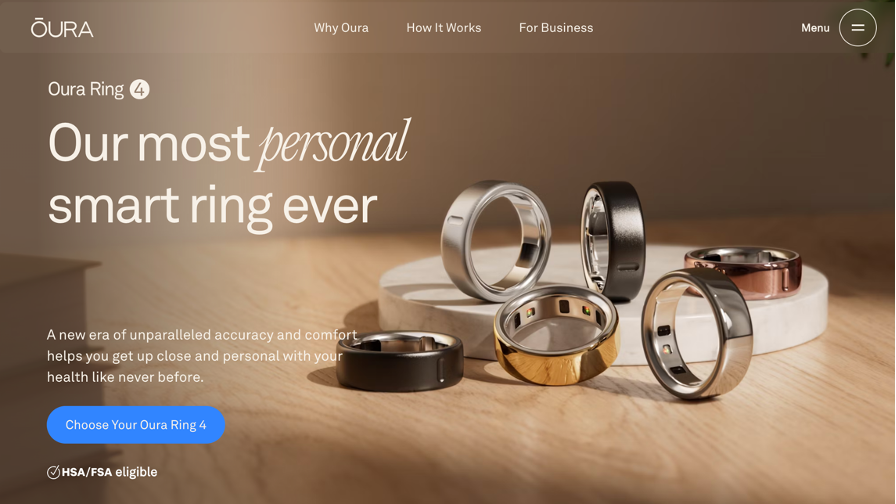
Oura Ring smart ring product. Image source: Oura Health Oy
Development Trends and Innovation Opportunities in Smart Wearables
Driven by the combined push of underlying technology and user demand, smart wearables are evolving from early niche technology toward mass-market, intelligent direction. Moreover, smart wearable hardware forms are becoming increasingly diverse, gradually expanding into more usage scenarios. Specifically, we're tracking several trends in the smart wearables industry:
I. Smaller, Lighter, More Comprehensive Performance
One core development trend in current smart wearables is devices getting smaller and more comfortable to wear while simultaneously growing more powerful. Behind this shift lies continuous progress in sensor technology, materials science, and low-power chips. For example, in 2024, FreeS Fund portfolio company DuoSense Technology developed an optical tracking sensor chip, the MOT6601, roughly the size of a sesame seed, for human-computer interaction in smart wearables. It's already been applied in smartwatches, smart glasses, and other wearable devices.
Today's smartwatches, fitness bands, and even smart rings can already provide diverse health data tracking including heart rate, blood oxygen, ECG, and body temperature monitoring. Going forward, more specialized and precise functional modules like blood glucose monitoring and emotion recognition will gradually become widespread, further broadening smart wearables' application boundaries.
II. Deep Integration with Vertical Outdoor Scenarios
As outdoor activities flourish, smart wearable manufacturers face new growth opportunities. However, amid intensifying market competition, companies also need to find more segmented positioning to build differentiated advantages and capture user mindshare.
Taking smartwatches as an example, manufacturers are no longer satisfied with general-purpose products. Instead, they're launching specialized models for different sports scenarios — running, swimming, triathlon, golf, diving, and more — meeting personalized needs of different user groups.
III. Embedding in Medical Scenarios, Becoming Health Management Assistants
Smart wearables are gradually moving from "passive recording" toward "active intervention," with their value increasingly prominent especially in healthcare.
For example, Oura Ring partnered with an American women's health clinic to provide users personalized advice on fertility cycles and menopause transitions through long-term physiological data tracking. Huawei collaborated with multiple hospitals to develop a hypertension screening and prevention system based on wearable devices.
Numerous startups are also exploring integrating smart wearables with chronic disease management, post-surgical recovery, and mental health support. For instance, FreeS Fund portfolio company XinYong Technology targets 24-hour non-invasive dynamic blood pressure monitoring, assisting treatment plan adjustments through home blood pressure dynamic monitoring data.
IV. Deep AI Integration: From Helping People Perceive to Helping Them Decide
AI technology is reshaping the underlying logic and interaction patterns of wearable products, pushing smart wearables from a "data perception" stage toward "assisted decision-making." Previously, smartwatches and fitness bands mainly played the role of data collectors — recording steps, monitoring heart rate. Now, powered by artificial intelligence, these devices can not only recognize user behavior and health status but also provide recommendations based on data analysis, even actively intervening to help users make life decisions.
For example, Huawei, Apple, and other manufacturers use self-developed large models to score users' sleep quality and exercise performance more precisely, linking with phones and smart home devices to deliver personalized suggestions. Additionally, some startups are exploring "emotional companion AI," identifying users' emotional states by analyzing physiological indicators like heart rate and cortisol levels, then providing psychological counseling or behavioral advice.
V. More Cross-Boundary Players Entering, Creating a More Diverse Ecosystem
Currently, smart wearables market participants remain dominated by phone manufacturers like Apple, Samsung, and Huawei. But a clear trend is that increasingly more companies from different industries are entering this track.
For instance: medical device companies bring more professional health monitoring solutions; insurance companies use wearable data to optimize actuarial models and health insurance products; luxury and fashion brands enhance devices' aesthetics and wearing experience; sports brands combine professional sports scenarios to create differentiated products.
This diversified participation landscape will make the smart wearables industry more open, dynamic, and generate more innovation opportunities.
From the initial electronic watch face to today's multifunctional terminals integrating health monitoring, emotion recognition, medical assistance, and AI interaction, smart wearables are evolving rapidly. They're no longer phone accessories but an independent, diverse, imagination-rich new species.
Future smart wearable products will be smaller, lighter, smarter, and more intimately woven into daily life. They won't just change how we access information — they'll reshape how we understand our bodies, manage our health, and connect with the world.
In this industry full of transformation, whether technological innovators, traditional giants, or new cross-boundary forces, all have opportunities to find their place. And this lifestyle revolution driven by technology has only just begun. We look forward to walking alongside more innovators in the smart wearables space.
Giveaway Have you used smart wearable products? What innovative wearables do you think we'll see in the future? Share your thoughts in the comments. By 17:00 on July 30, 2025, the three most thoughtful commenters will each receive a copy of The Age of Co-Intelligence: How to Live and Thrive with AI.

What Changed and What Opportunities Emerged in AI Agent in H1 2025? | FreeS Research Giving Up a 600 Million RMB ODM Business to Build a Smart Wearables Brand — What Did They Do Right? | A Conversation with Coros Founder Haotian Niu How Far Are We from "Ready Player One"? Technical Challenges of XR from Apple Vision Pro | FreeS Report 33 How Hard Is a "Man-Made Sun"? Unpacking Core Technologies and Startup Opportunities in Controllable Nuclear Fusion | FreeS Report The Next Stop for Chinese Brands: From Hard Power to Global Narrative
Star the FreeS Fund WeChat Official Account for timely business insights