The Education Survival Tournament After the Pandemic | Frees Fund

Spring for online education, not for online education companies. Behind every spring lies a reshuffling.

Behind every spring lies a reshuffling.
During the longest Spring Festival holiday on record in 2020, the pandemic forced all offline education to suspend classes. What we observed was a new phenomenon: on the demand side, users—now thoroughly exposed to what's available—had become discerning, mature product evaluators of online education, deciding which products lived or died through "five-star reviews" and uninstalls; on the supply side, vast numbers of teachers temporarily "bidding farewell" to their lecterns developed new online capabilities, and nearly every offline education institution that survived learned to go "online."
The pandemic sent shockwaves through both online and offline education. As institutions scrambled to save themselves and find new paths forward, we'd like to share a quote from British philosopher Alfred North Whitehead: "Education is the acquisition of the art of the utilization of knowledge. This is an art very difficult to impart. It is an incubation process, requiring patience, minute care, and daily repetition."
We've tried to take a longer view, analyzing how the pandemic has affected education and what traits will give education brands and products sustained competitive advantage.
In this article, we'll explore:
- After the pandemic, in the battle between online and offline education, who are the long-term beneficiaries?
- How will offline education institutions change? How can they break into online education?
- How will online education products evolve? What traits will matter?
- Will the next "Dedao" emerge in the video-based general education space?
After extensive conversations with industry experts and founders, here are a few preliminary views:
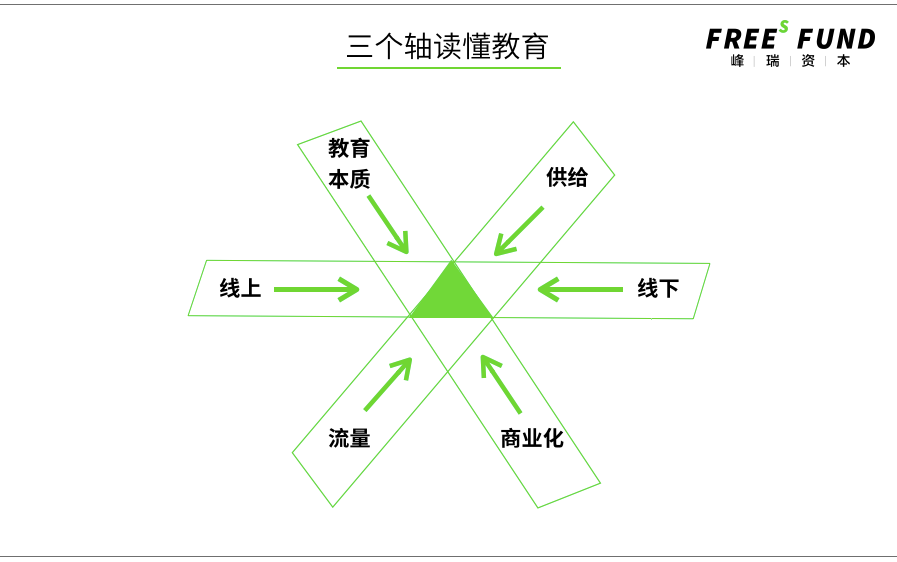
- After the pandemic, this will certainly be springtime for online education—but perhaps not for online education companies. More new players have flooded into the online education market, and users have become more sophisticated, making competition fiercer than before. Offline education brands, having armed themselves with the tools to operate online and optimized efficiency across the entire chain, may actually hold advantages over online-only brands.
- Previously, offline institutions lacked sufficient resolve and motivation to push online; the pandemic will accelerate their digital transition. Offline education institutions may compete with online education companies by offering both online and offline products and services simultaneously.
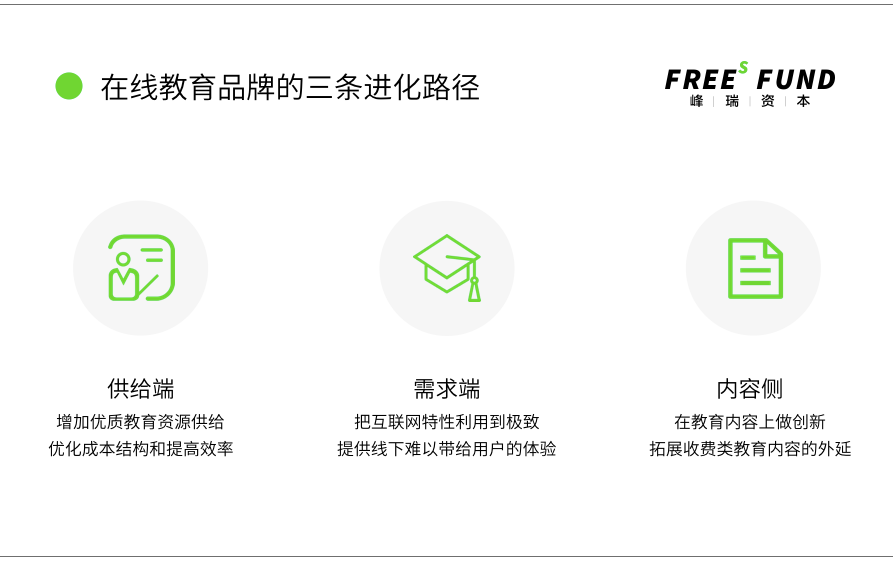
- Online education brands have three evolutionary paths: optimizing cost structure and efficiency on the supply side; improving the demand-side experience through AI, animated video, gamification, and other means; and innovating on paid educational content, expanding its boundaries.
We hope this offers fresh perspective. We welcome your thoughts on education in the comments.

/ 01 / Why Is This Springtime for Online Education, But Not for Online Education Companies?
Our discussion begins with a recent "debate" in the education industry.
On February 13, Li Haoyang, founder of Squirrel AI, told his staff: "In six months, perhaps 60% of purely offline small and medium-sized education institutions nationwide will go bankrupt. Survival is now the top priority."
On February 20, Zhang Xi, founder of ONE, said: "Online education has reached a point where multiple players are competing for dominance. In the next 1-2 years, leading online education companies will clear the battlefield. At least 60% of online education companies will fall."
One says 60% of offline institutions will close; the other says 60% of online companies will collapse. Who's right?
In our view, both are correct. The elimination round in education has already begun—both online and offline.
Let's start with online. We can say that spring has arrived for online education.
According to a QuestMobile report, in the week after this year's Spring Festival (February 3-9), the average daily active user base of education and learning apps grew 46% compared to normal days earlier in the year (January 2-8). Education and learning WeChat mini-programs saw their average DAUs surge 218.1% post-holiday versus normal days. Additionally, Tencent Education VP Chen Shujun told media that during the Spring Festival, the number of teachers and students using Tencent Classroom for online learning increased nearly 128-fold.
This spring stems from offline training being blocked during the pandemic, forcing everyone online. Whether as demand-side students and parents or supply-side teachers, all adapted to and experimented with online education in short order. Everyone who crowded into the online education track could capture a slice of traffic.
This spring won't be brief, because—like many other industries—accelerated digitalization is a long-term trend for education.
On one hand, companies that tasted success online during the pandemic won't easily abandon this new battlefield; they'll likely double down. New Oriental founder Michael Yu told 36Kr in a recent interview: "Online education that we expected would take three years to catch up to offline has now been fully accelerated."
On the other hand, all participants in online education—teachers, users, parents, students—having undergone this pandemic-era "special training," will have higher acceptance of online education and be more willing than before to treat it as an effective supplement to offline learning.
Yet the very cause of this online education surge (demand suddenly shifting online) has also planted seeds for the fierce "elimination round" that will follow the pandemic.
Undoubtedly, after the pandemic, users' time allocation will return to normal. K-12 users will return their time to offline classrooms; vocational education users will re-enter the workforce. Thus, the recent surge in online education traffic will eventually recede, possibly dropping 5 to 10 times from pandemic levels.
Then who gets eliminated, who gets favored? And among the survivors, who wins more share and emerges victorious?
In our view, the first to be eliminated offline will be small and medium-sized institutions with weak risk resilience that couldn't survive until the pandemic's end, or couldn't pivot online quickly enough. This is Li Haoyang's view: offline SMEs will face a wave of closures.
So whose opportunity is the market space vacated by these departing offline education enterprises?
Three possibilities: pure online education institutions; local education brands proficient in both online and offline; or nationally recognized offline education brands.
We believe market concentration in education will increase post-pandemic. A harsh law: the biggest beneficiaries may well be the leaders—nationally recognized offline education brands.
They've already built brand equity offline, with sufficient teaching resources and capital to sustain their scale. If they laid groundwork online beforehand, or rapidly pushed into online and seized this special opportunity where students, parents, and teachers all went online together, they'll be the most aggressive players competing for new territory.
The logic parallels fresh grocery. Companies with strong offline supply chains and brand accumulation plus online operational capability can emerge from the pandemic with highlighted competitiveness. Click to revisit "Post-Pandemic: New Patterns in Fresh Grocery, Catering, and Food | Frees Fund Research".
Similar shifts occurred in apparel. If you study Tmall Double 11 data over the years, the women's clothing category's top ranks were initially dominated by "Taobao-native brands" like Inman and Hstyle; but in the last three to four years, first place returned to Uniqlo and other so-called "traditional brands" that started offline. More "traditional offline brands" populate the Top 10. Once large offline-origin companies react and pivot online, they can reclaim lost share.
However, for offline education brands transitioning online, the hardest part is resolve.
Previously, they lived comfortably off physical classrooms. They "couldn't be bothered," "couldn't do it," and "couldn't be bothered to learn." Some felt anxious yet resistant internally, viewing online as too frenzied or too "cash-burning."
But under the pandemic, it's easy to imagine: the heavier a company's offline business weight, the stronger its motivation to transition online. Because without pivoting, it faces massive refunds, user loss, and阵地失守 (loss of position).
Thus, this time, what faces them is: "have to" go online.
Building online momentum isn't achieved overnight, but once they take this step and continuously optimize cost structure and improve efficiency, they'll ultimately hold advantages over pure online education companies.
Simply put, they have one more leg to stand on than companies that only do online education, able to graft on more services and experiences that pure online can't offer.
They also more easily become users' ideal choice. Imagine: with comparable teaching content, content format, faculty quality, and pricing, you have two education institutions to choose from—one capable of both online and offline, the other online-only. As a user, you'd likely choose the amphibious company with a powerful brand, because it offers more experiences, more services, and can flexibly meet your needs.
On one side, offline education giants crowding into online increases players and rivals in that market. On the other, users cooped up at home who've tried various online education products have matured, with higher standards for filtering products.
Both changes will intensify competition in online education, eliminating some uncompetitive online education enterprises. This is Zhang Xi's view.
Offline is attacking, online is defending; offline players have gained new capabilities, while online players have no retreat—this is the current state of online education. The melee forces online companies to do what offline can't. (We'll unpack this in detail in Part 2.)
So in online education's existing territory, who gets squeezed out first? We believe it's products or services whose content and format are homogeneous with offline.
For example, live-streaming companies that may currently see surging traffic—large-group, single-session, long-duration. They're emergency solutions when physical classrooms are inaccessible. Essentially, they've just moved offline classrooms to online live rooms; course content may be similar to offline, and the experience may even be worse. The hardest to guarantee is the currently traffic-surge online large-class and mid-size live sessions. With too many people, only one-way broadcasting is possible, with poor interactivity.
After the pandemic, their situation will be difficult. First, users' time allocation returns to normal; live sessions consuming large blocks of time won't be the first choice. Second, after experiencing various live platforms, users will brand-select faster, ultimately choosing institutions with long offline accumulation, abundant quality teachers, and strong user口碑 (word-of-mouth), as well as online education brands with brand effects.
So overall, while it currently looks like springtime for online education, in the end, this spring may belong to nationally recognized offline education institutions that completed their online transition. Online live and recorded streaming have entered elimination rounds; those that may likewise see springtime are companies providing online technology services, not education services.
/ 02 / Three Evolutionary Paths for Online Education Products
Within crisis lies opportunity.
Facing fierce offensive from offline education institutions, how can online education enterprises evolve to form sustained competitive advantage?
Overall, to build a moat, online education needs structurally supported adjustment enabled by technology. We see three evolutionary paths for online education products:
First, on the supply side: increase supply of quality education resources, optimizing cost structure and improving efficiency;
Second, on the demand side: maximize internet characteristics to provide experiences that offline struggles to deliver;
Third, innovate on educational content, expanding the boundaries of paid educational content.
(Welcome online education entrepreneurs with these ideas and characteristics to connect and collaborate with us.)
Let's examine the first path. From the supply side, expanding quality education resource supply and providing more and better education choices for different learner groups is core to education supply-side reform. If, on this foundation, technical means can optimize education product cost structure and improve efficiency, that's even more ideal.
Take Frees Fund portfolio company Y洋葱学院 (Onion Academy) as an example. It breaks down curriculum systems into many small knowledge points, then uses internet methods to transform course content into ~10-minute animated videos that primary and secondary students can easily absorb. While producing an animated video costs more upfront, subsequent human costs are basically nil—it can serve unlimited users, with marginal cost approaching zero.
Yet offline can hardly produce products with near-zero marginal cost. Whether small-group classes or one-on-one tutoring, more users require more teacher investment. This explains why in the one-on-one tutoring market, most companies can't make money: each additional student requires an additional teacher. The only two that profited from one-on-one—New Oriental and TAL—relied on scale advantages. They attract user attention through large-group classes, filtering cost structure once. When users develop brand trust and course experience, one-on-one courses are recommended.
Optimizing cost structure on the supply side has other methods too. For example, using internet means to build tool products, including dictionaries and homework search.
If these tool-based online operators can simultaneously provide high-quality education services, they may have advantages in customer acquisition cost structure. Tools can acquire users at low cost, but converting to education is genuinely difficult—though successful examples may yet emerge.
Now the second path. From the consumption side, users online may prefer education brands that better utilize fragmented time, offer more interactivity, and better satisfy personalized needs.
Onion Academy uses technology to achieve personalized education, creating a direct connection with students online. Through online learning behavior, it understands users' concentration levels, records learning outcomes, and adjusts course pace and question difficulty based on test results. It achieves personalization while improving efficiency—efforts difficult to scale offline.
For example, Liulishuo (LAIX) uses speech recognition engines to partially replace oral practice teachers, improving users' self-study English efficiency.
Another example: instrument learning is a dull, serious affair. Frees Fund portfolio company Deer Music uses intelligent audio recognition to accomplish real-time audio interaction and teaching feedback. It makes the learning process highly entertaining and interactive, sparking curiosity and inquiry.
Frees Fund portfolio mobile English learning platform Shanbay does likewise. Based on users' familiarity with vocabulary, it arranges learning pace and content according to memory curves. Users can also compete with WeChat friends in vocabulary battles, learning words through gameplay.
Whether better interaction, or achieving autonomous and personalized learning, these unique online experiences and services are core competitive advantages for online education platforms. During the pandemic, Onion Academy's DAU grew 6x; Deer Music and Shanbay both hit record user growth and revenue.
Providing high-quality online education services has barriers. Even offline education giants wanting to quickly follow will inevitably stumble—after all, online is new business, and the paths online education platforms once walked, they too must traverse.
Beyond optimizing supply-side cost structure and efficiency, and improving demand-side experience, online education brands' third path is innovating on paid educational content, expanding its boundaries.
You can understand this as: fully leveraging online's anytime, anywhere learning convenience, then moving offline's long-tail learning demands online.
Take Dedao as an example. You can learn to read financial statements with Warren Buffett, understand astronomy basics, or learn skin management and parent-child relationship handling. Offline, gathering people for training courses on these topics would be extremely difficult. Moving them online dramatically reduces difficulty. You might even be surprised to discover that many needs we assumed were small actually have vast audiences.
Yes, niche markets are rising. Frees Fund portfolio company Momself built an M-O-M curriculum system covering "positive parenting, self-growth, and joyful living"—three areas women care about most. It's developed multiple popular products, including time freedom training camps and minimalist mindfulness yoga designed specifically for mothers, plus parent-child financial literacy courses, and practical handbooks on love and sexuality.
Much content that can't be learned with proper decorum in physical classrooms can be found on K-12 education brand Juvenile Dedao. In our view, it expands two boundaries: First, in Chinese language courses—not aimed at tutoring textbook content, but using self-developed new tools and models to help children acquire structural thinking and writing techniques. Second, in reading—whether Harry Potter Reading Course, Juvenile Cosmology, or paleontologist lectures on 30 dinosaur species, they more cultivate children's curiosity and broaden horizons.
A topic worth exploring: like retail, when offline education institutions go online in batches, some online education platforms are also going offline. Is this a viable path?
It's not hard to see that online platforms going offline can enrich user experience. The challenge we observe is that education brands transitioning from online to offline need to consider: which is the funnel and which the supplement between online and offline business, and also need to solve offline's unit efficiency problems.
Four Open Questions
We'd also like to explore several questions with you. We have preliminary answers (but aren't fully certain). We hope to exchange ideas with founders and industry experts who've been immersed in the sector long-term.
- Education has historically struggled to produce platforms. After the pandemic, with increased education supply, will new platform-type companies emerge?
The pandemic changed supply-side behavior habits in education; massive numbers of teachers have become much more capable. They can teach offline and have learned online services—live streaming, recorded video, and various teaching formats are all within their grasp. Put plainly, one teacher can serve as multiple teachers, meeting different scenario teaching needs.
If we count one type of teacher skill as one SKU, this means education companies' effective supply has grown larger or even doubled.
When effective supply increases, this theoretically benefits platforms that can skillfully operate both online and offline. Take Qingqing Education, a Frees Fund portfolio company, as an example. It started as an offline door-to-door one-on-one tutoring platform, later transitioning to online one-on-one education tutoring, and independently innovated education quality control. Affected by the pandemic, both supply and demand sides are growing and can adapt to both online and offline—internet education companies like Qingqing Education will gain greater recognition.
This parallels our previous analysis of RT-Mart's logic: it used one supply chain to satisfy different scenario demands including home delivery and in-store shopping. (Click to revisit "Fresh Retail—Learning Early-Stage Investment from the Secondary Market")
But in the real world, education has historically struggled to produce platform enterprises because quality control is difficult. So in your view, with this pandemic having dramatically increased education supply, will new platform-type enterprises emerge?
- In lower-tier markets, will regionalized offline education brands eat into share originally held by online brands with traffic?
In recent years, in lower-tier cities with relatively scarce teaching resources, dispersed local offline education institutions have established local dominance, while some user education demands have been captured by online education institutions focused on下沉 markets (market penetration).
According to a QuestMobile report, in June 2019, over 56% of education and learning app users were distributed in third-tier cities and below. Citing砍柴网 (Chaijianwang) reporting from August 2019, most users of online learning platform Zuoyebang came from third- through sixth-tier cities; among the top 10 provinces with longest per-capita usage time, 8 were in central, western, and border regions.
COVID-19 provided a comprehensive online capability training for the entire offline education sector. Our question is: when scattered regional offline education brands in lower-tier cities also gain online capabilities, can they recapture some traffic through their regional influence?
- Will new categories emerge in education?
We're also considering whether new categories might rise in education.
For example, programming education has been quite hot in recent years—could it be a possibility?
Programming education's industry characteristics lean internet-native. Currently its market share is still small, with no established giants; doing it offline requires high investment in computer lab construction, etc. From this we speculate: if a new, relatively large-scale brand can emerge in programming education, it may come from online.
- Will the next "Dedao" emerge in video?
Beyond various online and offline education institutions, increasingly more content companies are transforming into education companies, further broadening education's boundaries.
The Dedao app is a typical example of a content company pivoting to education.
Dedao's predecessor was "Luoji Siwei" (Logical Thinking). Early on it distributed audio content through WeChat official accounts, later produced systematic book introduction content, then built the Dedao app, launched systematic online column courses, and now extends to offline "Dedao University," covering increasingly more education consumption scenarios.
If companies like Dedao ultimately prove that transitioning from media to education is an important path for content platform monetization, then other content companies wanting to pivot to education must consider the variables of media format and channel changes.
When Dedao first emerged, its most surprising aspect was that its online columns were neither like official account content nor like traditional offline courses.
If a general education company fitting video's传播形态 (transmission characteristics) emerges in video, it may be a new species—neither like current online knowledge-payment products, nor like established offline courses currently for sale. Otherwise, it would face existence in the cracks between these two competitors, struggling to break out.
The Essence of Education: Beyond Business, It Bears Social Value
Education products must ultimately conform to education's essential laws. Beyond creating commercial value, they always bear responsibility for achieving educational equity: improving quality, popularizing education. Thus, judging good education institutions also means examining whether they recognize and practice education's social value.
Through this pandemic, online education was forcibly popularized, and education resources to some extent completed下沉 (market penetration). In China, one of education's greatest meanings is solving uneven education resource distribution and下沉. This goal is largely accomplished through online education.
Onion Academy has always deeply believed that education must serve vulnerable groups. During the pandemic, Onion Academy synchronized its premium online courses to multiple online platforms and public institutions, freely opening them to teachers and students nationwide.
This wasn't their first公益 (public welfare) attempt. Over the past 6 years, Onion Academy's Onion Teaching Assistant Initiative has cumulatively provided free curriculum resources and teaching service support to over 40,000 rural teachers in more than 3,500 rural schools across 29 provinces, autonomous regions, and municipalities.
Similarly during the pandemic, Shanbay specially found medical knowledge workers to compile medical vocabulary books, freely opening them to users, hoping to assist medical students and practitioners on their paths.
Frees Fund portfolio company Juvenile Dedao, during the pandemic, selected 5 highly-rated courses from the Juvenile Dedao app and gifted them free to children in Wuhan. It also made video courses from 18 of Juvenile Dedao's renowned teachers freely available to primary and secondary students nationwide until their official school reopening.
We're honored to walk alongside these enterprises that fulfill social responsibility in their own ways during difficult times. When we invest in education-related companies, we pay special attention beyond commercial value to their spiritual inspiration and guidance of people.
Summary
-
After the pandemic, it's springtime for online education, but not for online education companies. The greatest opportunity likely belongs to nationally recognized offline education brands that have learned all the weapons. Online-offline integration will increase; once they master online, they can surpass online education companies from cost structure and overall efficiency perspectives.
-
After fierce elimination in online education, what ultimately wins users are platforms with large differentiation from offline products and services, that maximize internet characteristics.
-
Among education products most resembling offline, users will choose the best education products. Beyond big brands, users will choose those with high product experience and good user口碑 (word-of-mouth).
-
We can also derive general logic applicable across industries:
First, the pandemic accelerated online transition across all industries.
Second, once all players have learned online transition and it ceases to be a special capability, it becomes about who is fundamentally more efficient and who better solves problems.
As a result, those with more weapons will have greater long-term competitive advantage. Retail's key weapon is supply chain; education's weapon may be brand and teaching quality assurance.
Today's Thought
Welcome to share in the comments: after the pandemic, with increased education supply, what new opportunities do you see?
(Welcome to read, share, and like. For reprint requests, please reply "reprint" to understand reprint rules, and contact Feng Xiaorui [ID: freesfund] for authorization. Copyright belongs to Frees Fund.)

Post-Pandemic: New Patterns in Fresh Grocery, Catering, and Food | Frees Fund Research After the Pandemic, the New Era of "Good Companies" | Frees Fund Research Li Feng Column 16 | Fresh Retail—Learning Early-Stage Investment from the Secondary Market Li Feng's New Year Outlook | One Chart to See 2020 China Opportunities