The Mid-Game Battle of Double 11: What Chicecream, Saturnbird, Plant, and Huasheng Haoche Did Right

Swift as the wind, steady as the forest, fierce as fire, immovable as the mountain.
This year marks the 11th Double 11. Through round after round of negotiation among platforms, brands, and consumers, Double 11 has grown ever larger, its mechanics ever more elaborate. Beyond the changes, it remains an unparalleled opportunity for brands to expand their user base, build brand awareness, and stress-test their teams' operational capabilities. With traffic costs climbing steadily, how can consumer brands win a place in the Double 11 battle through continuous innovation?
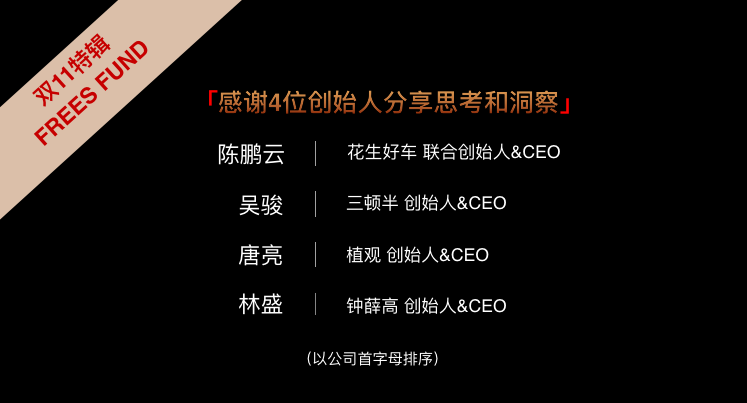
We invited four founders from the FreeS Fund family to reflect on the just-concluded Double 11 and share their thinking on product, brand, and operations: Chen Pengyun, co-founder of Huasheng Haoche; Wu Jun, CEO of Saturnbird; Tang Liang, CEO of Plantur; and Lin Sheng, CEO of Chicecream. Between them, they've participated in 11 Double 11s. This year, they respectively achieved: 1 billion RMB in sales, 10x growth and two category #1s, impressive cross-brand sales synergy between sister brands, and 300 million+ impressions from six crossover products.
The challenges they faced varied considerably. How did Plantur execute a cold launch for its new brand Innoxa in late September, right before Double 11? How did Chicecream stay top-of-mind during winter, ice cream's off-season? How did Saturnbird imbue coffee — a foreign import — with cultural resonance to take on instant coffee giants? How did Huasheng Haoche convince users in lower-tier markets to buy cars through an online platform?
Double 11 is hardly a new topic, but they found fresh angles. As users grow increasingly accustomed to the event, brands should place greater emphasis on daily sales accumulation and growth. Moreover, Double 11 isn't an isolated phenomenon — brands need to discern the patterns behind 618, 99 Juhuasuan, Double 11, Double 12, and the full calendar of shopping festivals, then plan holistically.
Below are their reflections. We hope you find them illuminating.
We welcome your thoughts and observations on Double 11 in the comments. By 9 PM on November 29, the five most insightful commenters will each receive a star product from Plantur, Saturnbird, or Chicecream.


Wu Jun, CEO of Saturnbird:
Double 11 as a 10x Revenue "Team-Building Exercise"
10x and #1
This was Saturnbird's second Double 11. Last year, we became the #1 domestic coffee brand; by Double 12, we ranked #2 across all coffee categories (behind Nestlé). In the just-concluded 2019 Double 11, our GMV was 10x last year's Double 11 figure, with single-day sales exceeding our entire previous year. We overtook Nestlé to become the #1 coffee brand overall — the first domestic brand ever to top the category.
Nestlé had held Tmall's coffee throne for a decade.
Some saw this as sudden, but in the 99 Juhuasuan sale — considered a Double 11 dress rehearsal — Saturnbird's flagship store had already surpassed Nestlé in sales, and our September total did as well. Nothing happens overnight; so-called explosions require sustained buildup.
Last Double 11, we didn't fully grasp the mechanics — we were essentially testing the waters. This year was different. We fully prepared for 618, then went through 99 Juhuasuan, testing everything: products, gifts, merchandise, vouchers, Easter eggs. Our 30 million RMB Double 11 target was based on September's performance, supported by Tmall's data.
Data really matters (I'm a liberal arts major; I knew it was important, but hadn't felt it so acutely). Think about it — how else would you know you could add a zero to last year's Double 11 sales? Operationally, to add that zero, you need to calculate the traffic, cart additions, and conversion rates at each stage from October 21 pre-sales through Double 11 itself.
Tmall can provide brands this data, and brands can validate it through 618, 99 Juhuasuan, and other sales events using the same system.
This time, my team and I tracked the data from start to finish. It gave me much clearer visibility into sales trends, revealed adjustments needed along the way, and enabled rapid action. Many of our marketing moves were based on trusting the data, and the results were strikingly direct.
Locking in Half Our Sales with a Supercharged Voucher
We had high expectations for this Double 11 and began preparing in June.
We didn't want to rely on conventional discounting — it felt uninspired. Coffee skews young, with post-90s users nearing 70%. They're rational, mature consumers who've seen every marketing trick. You need distinctive products and distinctive tactics to attract them.
So we focused on product and supply chain, not simply discounting or launching new SKUs, but layered mechanics. We created a 10 RMB "Easter egg" gift box containing 30 RMB in vouchers plus seven merchandise items, usable on orders over 169 RMB, with all merchandise shipping with the order.
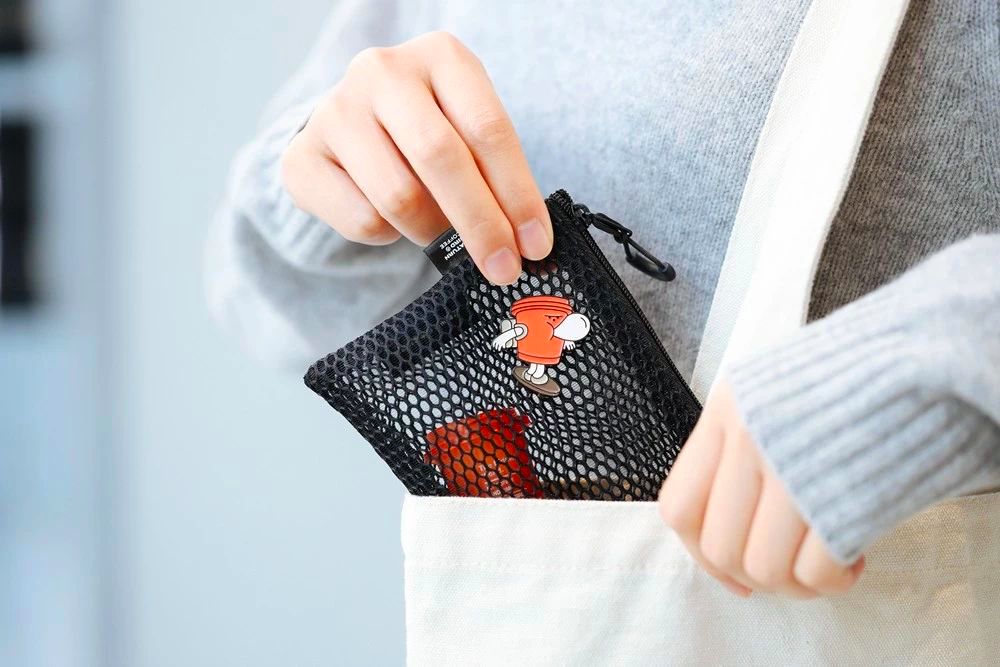
Some dismiss this as nothing new — just old-school vouchers. True, but we built a supercharged version, investing serious effort into the Easter egg products to create a "beyond expectations" feeling. Ultimately, we sold 70,000 voucher sets during pre-sales. The threshold was 169 RMB, but actual average order value exceeded 200 RMB. Those 70,000 vouchers locked in and drove nearly half our Double 11 sales.
These tactics look simple. The key is conceiving them, executing them, and executing with quality. When you nail the quality, results exceed expectations. Many merchandise-focused users told us after receiving our cups and pins: "Your gifts are better than my products!" I stand by that — we've been deep in supply chain for years, and quality output is what we should deliver.
Conveying Coffee's Cultural Dimension on the Landing Page
A distinctive landing page — Tmall's term for dedicated campaign product pages — also mattered.
Coffee carries cultural weight. We assembled Saturnbird's Easter eggs, merchandise, and product combinations into a page with our distinctive consumer culture and aesthetic. Essentially, we built an online café, hoping users would have an immersive cultural experience.
On Double 11 itself, if you visited our page, you'd sense that Saturnbird wasn't merely selling coffee, but weaving together moments and spaces in your life through coffee on Tmall's interface. You'd perceive how our products and merchandise could bring fresh, interesting experiences to daily life.
Our Double 11 landing page conversion exceeded 30% — meaning one in three visitors purchased directly. Not bad.
Of course, we don't confine ourselves to narrow definitions of coffee. We also use fresh tactics to attract young users, seizing on data and livestreaming trends. We collaborated with Austin Li, who promoted Saturnbird products in his November 10 livestream. Last Double 11, post-90s users were roughly 40%; this year, that rose to 70%. Our user base is growing younger, and increasingly attuned to the coffee culture Saturnbird communicates.
Treating Double 11 Excellence as Team Building
For emerging brands entering Double 11, you must understand its mechanics. Your team needs someone who's fully executed a Double 11 before. This matters enormously — you must know the rules, grasp the essentials; a hair's breadth of difference yields miles of divergence. Reviewing our own performance, we had operational missteps too.
You also need to set ambitious targets and rally your team to achieve them.
This time, even our cleaning staff knew our three goals: #1 in coffee category, #1 in single-item category, and 30 million RMB in sales. From National Day onward, everyone carried these three #1s in mind daily.
You could say we treated Double 11 as team building — extensive cross-departmental collaboration, everyone participating with defined roles, fully committed. So when we hit our targets, every smile was profound, every tear genuine. Everyone felt how this breakthrough affected the company and themselves personally. I believe we'll all remember this experience for a long time, and it will accompany us as we explore and grow further.
Saturnbird recently established a Shanghai office (headquarters remains in Changsha), hoping more people can discover and join us. We're currently hiring an HR Director to build our Shanghai team — resumes welcome at hr@saturnbird.com.

Lin Sheng, CEO of Chicecream: Slow and Steady on Quality, Fast and Agile on Brand
No Sales Target for Double 11, Focused on Sustained Growth and Daily Sales
This was Chicecream's second Double 11. Honestly, we didn't set a specific sales target. For one thing, Double 11 isn't built in a day — performance depends on your everyday foundation. We've maintained the fastest growth rate in ice cream across all platforms for the past year. Our daily sales have consistently been strong, meaning users buy even without promotions or discounts. So before Double 11, we were confident of continued rapid growth. We delivered — #1 in ice cream single-item pre-sales and sales across all platforms, despite Double 11 not being ice cream's main battlefield (it falls in that awkward November window when it's getting cold but heating hasn't started). In ice cream's true season, 618, our sales were five times Double 11's.
The Spring Festival Gala of E-Commerce and Consumption's Downward Expansion
After 11 years, Double 11 has evolved. Celebrating it now resembles watching the Spring Festival Gala. As kids, we'd anticipate it a month ahead, curious about the program lineup. We still watch today, but might only start talking about it two or three days beforehand.
Looking at recent Double 11s, both started warming up around October 20. Last year, user attention traced a saddle shape — high early, low in the middle, high again near the end. Pre-sales generated strong initial interest, which faded over 20+ days, then resurged approaching Double 11. This year was interesting — attention started low and rose, meaning most people only got excited as Double 11 approached.
This reflects normal consumer psychology. Accordingly, while brands still care deeply about Double 11, a new trend emerges: "lighter on festivals, heavier on daily sales."
Another change I've noticed: Alibaba's下沉 strategy has proven effective. This Double 11, overall consumption growth came largely from lower-tier markets. We see this in our regional sales mix. Beyond tier-1 and tier-2 cities, Chicecream's sales share in tier-3 and tier-4 cities grew steadily.
In lower-tier markets, snack foods have real opportunity because they don't demand high purchasing power. Assuming people can't afford things is classic "within the Fifth Ring Road" thinking. People in tier-3 and tier-4 cities may not afford Beijing apartments, but their food, drink, and clothing may be no worse than yours. Their absolute income may be lower, but so are living costs, leaving more time and better mindset to enjoy life.
Even If Users Don't Buy Ice Cream in Winter, They Must See Us
While Double 11 isn't our primary sales battlefield, we can make it a brand exposure battlefield. Users need not buy Chicecream in winter, but they shouldn't go a winter without seeing or hearing from us.
This Double 11, we partnered with Three Squirrels, Xiaoxiandun, Roewe, Nayuki, and Fiyta to launch six crossover products at once.
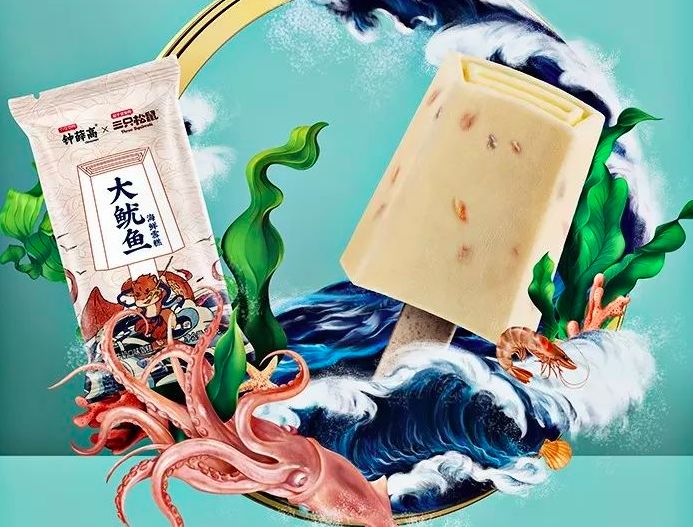
No one had played the crossover matrix before, but we wanted to test whether it could enhance brand perception.
Regarding how to cross over and with whom: crossover isn't slapping two logos together, not just chatting and saying "let's make a product." It means genuinely providing users with original, distinctive products.
Crossover relies on smart execution — partners must jointly invest resources to promote the product. Done well, the ROI is substantial. With six brand crossovers, each generated buzz across different channels, ultimately yielding 300 million+ impressions across all platforms, while the products themselves sold very well.
Chicecream's broad user base enables extensive crossover experimentation. Each crossover product targeted different users with different appeal points.
With Xiaoxiandun, we cultivated premium, valuable, autumn-winter nourishment concepts. With Three Squirrels, our "giant squid seafood ice cream" sounded bizarre but was genuinely distinctive. With Luzhou Laojiao, we made liquor the filling, creating a unique alcohol-infused ice cream. With Roewe, we crossed food and industrial product — unprecedented — ultimately crafting the world's only naturally blue ice cream. We're also exploring surprises like offering two users winter trips across Lake Baikal.
But people often harbor a "mega-SKU" delusion about crossovers. If you think one crossover solves two years of problems, that's fundamentally flawed. If it only solves one day, then one day it is.
Chicecream advocates being "slow and steady on quality," maintaining core quality consistently. But on brand, be "fast and agile," moving faster.

Tang Liang, CEO of Plantur: Crush Double 11, Forget Double 11
Double 11 Enters the New Normal, Hard to Drive Pulse Growth
This was Plantur's fourth Double 11. In 2016, our first, Tmall's GMV was 120.7 billion RMB. From 2017 to this year: 168.2 billion, 213.5 billion, 268.4 billion.
Tmall Double 11 GMV hits new highs yearly, but after 11 years, it's entered a "new normal" much like China's economy — and we should view it through that lens.
First, Double 11's growth rate is decelerating, understandable given the expanding base.
For startups, this means Double 11 once brought pulse-like growth when business was small — daily sales could reach 4-5x normal monthly sales. As volume grows, the multiplier becomes 2-3x.
If startups still pin all sales targets on Double 11, the risk is substantial. If daily sales are weak, expecting Double 11 to magically deliver volume is impossible. Imagine setting Double 11's target at half a year's sales — two likely outcomes: sell well, take the next day off; sell poorly, immediately liquidate at 20-30% discount or drown in inventory. Without coordinating the full operational chain, you'll spend a month post-Double 11 handling logistics, returns, and after-sales.
Second, Double 11's transaction structure is shifting dramatically.
At 11 years old, Double 11 has become a barometer of China's economy.
China's previous economic structure featured heavy export and infrastructure investment shares. This year on e-commerce platforms, home appliance segments tied to real estate underperformed, certainly connected to the property market's softness.
Conversely, consumption dominated this Double 11, with top brands looking quite different from early Double 11s. The Taobao-native brands that once dominated have mostly declined, replaced by strong international brands like Uniqlo and Nike performing impressively.
Solid Daily Business and Brand Building Enable Strong Double 11 Sales
Under this "new normal" framework, how should emerging brands approach Double 11?
We set two slogans: "Crush Double 11" and "Forget Double 11."
"Crush Double 11" because it remains the year's largest commercial window with massive traffic, consumers fully educated. This window can't be abandoned — we must go all in.
"Forget Double 11" because it increasingly reflects daily sales and brand strength. Why do Estée Lauder, L'Oréal, and similar giants consistently rank top? Strong brand power, well-maintained everyday pricing, healthy offline margins. One Double 11 promotion shifts users online, and sales surge.
Emerging brands can't expect such explosive growth. But with solid foundations — strong daily sales, good products, serving consumers well, slowly building brand — Double 11 will land at roughly 1.5-2x normal monthly sales, good or bad.
With this平常心 (ordinary mindset), we entered battle with Plantur products and Innoxa serum.
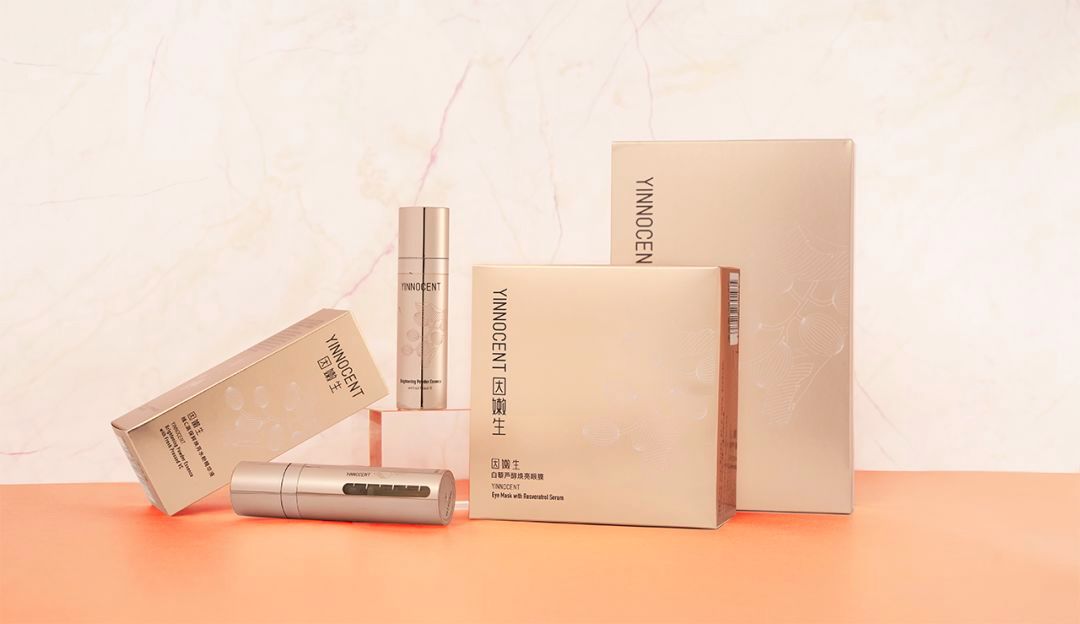
Plantur and Innoxa play different roles. Plantur sits between startup and mature brand, past cold launch with some recognition. We aim to operate it with平常心, maintaining steady small steps.
Innoxa launched in late September, with user feedback tested only in October. Normally, for Double 11 participation, products should be ready by March, with a small burst in June and another in September to capture Double 11 traffic.
Double 11 traffic is expensive; we couldn't compete for costly traffic for a new brand. Overall, Innoxa's sales weren't driven by Double 11 traffic but by existing-to-new — Plantur's million-plus accumulated users became Innoxa's seed users.
We created a "repurchase gift" campaign: users who bought Plantur between August and November 10 received Innoxa serum free with any Plantur repurchase on November 11.
Initially we had modest expectations, stocking 30,000 bottles. Repurchase demand exceeded that — 40,000 wasn't enough.
While Innoxa's final sales lagged far behind Plantur's, this single "repurchase gift" window put 40,000 high-potential users in contact with both Plantur repurchase and new brand Innoxa.
Over these months, we've also found Innoxa serum's repurchase rate is high. Plantur shampoo buyers typically repurchase every three months; users buying both 618 and Double 11 are loyal. Innoxa serum lasts one month, and many users commented they liked it and bought again, with much shorter repurchase cycles. We expect post-Double 11 sales from these users.
Going forward, we'll focus more on supply chain efficiency, customer acquisition costs, and user experience — not just hoping to pull off one Double 11 stunt. Pulse growth isn't normal; it's an outlier. Solid daily business and brand building enable strong Double 11 sales.

Chen Pengyun, Co-founder of Huasheng Haoche: Steadily Serving Small-Town Youth, Capturing Lower-Tier Market Dividends
Setting Sales Records in a Winter Auto Market
This was Huasheng Haoche's third Tmall Double 11, setting a new record of 7,466 units sold amid a winter auto market, with total GMV exceeding 1 billion RMB. To date, we've completed our 8,000-unit sales target.
We review Double 11 across three dimensions: sales volume, original mission, and new retail platform development.
First, sales — setting records during a difficult auto market period provides relatively objective validation. In 2017, we sold 5,168 units; 2018, 6,238. This year grew roughly 30%.
Before Double 11, Huasheng Haoche established strategic partnerships with SAIC Volkswagen, SAIC General Motors, Dongfeng Nissan, Dongfeng Yueda Kia, and Dongfeng Peugeot. During Double 11, we released hot models including Dongfeng Peugeot, Cruze, Nissan Sylphy, and Volkswagen Passat. The Dongfeng Peugeot 308 sold out twice, totaling 1,400 units.
Hot model success stemmed from both vehicle value and marketing optimization through differentiation and timely adjustments.
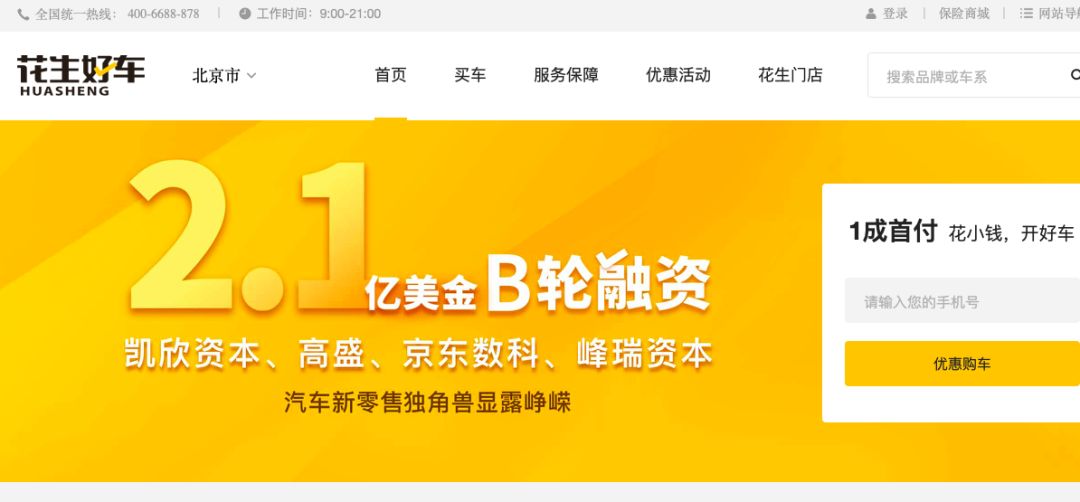
On October 20, we began warming up with 9.9 RMB vouchers worth 3,000-10,000 RMB off down payments, plus daily deals: 10 Kia K2s with waived down payments, 10 Kia Fortes with one year free driving. Our app featured three hot models and a 150-unit down-payment-waiver lottery.
On Double 11 itself, combining SaaS system data with sales terminal feedback, we intensified hot model promotions. Demand was so strong we organized a post-Double 11 return event.
Becoming the "Practical Value" Choice for Small-Town Youth
While hitting sales targets, we continuously ask: in this competitive auto market, does Huasheng Haoche maintain our original mission of "making car ownership easy for everyone," and do users genuinely benefit?
As tier-1 and tier-2 cities approach auto ownership saturation, tier-3 through tier-5 cities show significant growth. OEMs and financial institutions are exploring下沉 to tier-3 and tier-4 cities to tap incremental markets. Many auto e-commerce platforms are launching new advertising wars for traffic and growth space.
Huasheng Haoche consistently chooses to深耕 the lower-tier city auto new retail market, adhering to direct lease, direct operation, and direct procurement models, precisely targeting demographics underserved by traditional dealers and auto finance systems, to capture lower-tier market growth dividends.
We prefer to minimize advertising exposure, discard "brain-twisting" discount complexity, and genuinely deliver value — making car ownership easy for everyone.
Our core users are roughly 25-year-old small-town youth. Considering their needs and brand preferences, we focus on practical vehicles priced below 100,000 RMB.
For example, one Cruze variant lists at 104,900 RMB. Through traditional channels with installment plans, down payment exceeds 30,000 RMB. During our Double 11 promotion, with 7,000 RMB off, down payment was just 3,500 RMB, with 48-month payments of only 2,380 RMB monthly. We also waived purchase tax, registration fees, and included one year of insurance.
From Browsing to Confident Ordering
For Huasheng Haoche, a foundational question: are we fulfilling our new retail platform role?
As a new retail platform, we must do two things well:
First, optimize product supply — collaborating with upstream banks, OEMs, other e-commerce and social platforms for precise, customized product supply.
Second, operate channels more finely, delivering极致管家式服务 (ultimate butler-style service) to clients.
Because car purchases involve many considerations, users on auto e-commerce platforms mostly browse superficially, unable to impulse-buy like fast-moving consumer goods under promotional pressure. Hence traditional auto e-commerce underperforms.
So Huasheng Haoche uses stores as online order delivery scenes — users order online, pick up offline. We've built 500+ "community-style" directly operated stores across 400+ cities, continuously strengthening our direct channel network. Thus users confidently order through our app. During Double 11, app orders accounted for 43% across all channels — the highest share.
In this traffic-obsessed era, we aim to operate our proprietary app platform well, build private traffic, and fulfill our new retail platform role.
We welcome your thoughts and observations on Double 11 in the comments. By 9 PM on November 29, the five most insightful commenters will each receive a star product from Plantur, Saturnbird, or Chicecream.
Feel free to share to Moments. For republication on other official accounts, websites, or mobile apps, please reply "转载" for republication rules and contact "峰小瑞" (ID: freesfund) for authorization. Copyright belongs to FreeS Fund.

Startup Brand Breakthrough: From Traffic Thinking to Content Thinking
Li Xiang × Li Feng: 200 Million New Urban Residents' Consumption Awakening — Who "Harvests" It?