The Next Stop for Chinese Brands: From Hard Power to Global Narrative

How Can Brands Deliver Emotional Value to Users?

"Emotions are a product of human consensus." Scholar Lisa Feldman Barrett argues, from the perspective of "the theory of constructed emotion," that emotions are not innate. Rather, they emerge from the coordinated functioning of the entire body — encompassing physiological traits, a brain shaped by its environment, and the cultural backdrop and conditions of one's upbringing.
In today's business world, "emotional consumption" has become a hot topic. In the film market, Ne Zha 2 shattered multiple box-office records. In the IP space, a CITIC Securities research report projects that China's IP derivative market will exceed 500 billion RMB in 2025. In live entertainment, the first quarter of 2025 saw 536,000 total performances nationwide, with large-scale concerts up 7.3% year-over-year.
Fudan University's China Youth Internet Users Social Mentality Survey Report (2024) even coined the term "emotion-value consumption" — young consumers weigh not just a product's cost-performance ratio, but the emotional value it delivers.
As emotional value gains importance, how should startups build brands and meet user needs?
We invited Shiyong Wang, founder of 2:10 Animation; Tao Liu, founder of Speediance; Chunsong Wu (known as Lecheng), founder of TeKan Tech; and Ying Shen, executive director at FreeS Fund, for a discussion on "What's Next for Chinese Brands and Chinese IP."
Their conversation covered:
- What is the underlying logic of IP development?
- Why are most American superheroes middle-aged, while most Japanese anime characters are high schoolers?
- Why does creativity require "anti-consensus" thinking?
- How can brands deliver emotional value?
- How should we understand the critique that "Chinese brands have strong hard skills but weak soft power"?
- How do new media platforms differ across countries?
- How should companies manage their brand assets?
- How can startups differentiate and surpass established players?
We've edited highlights from the conversation, hoping to offer fresh perspectives.
Giveaway
What do you think — how can brands deliver emotional value to users? Leave a comment below. By 5:00 PM on April 21, we'll randomly select three readers to each receive a copy of Lisa Feldman Barrett's How Emotions Are Made.

01
Decoding the Underlying Logic of IP Building
Ying Shen: Consumer market growth has slowed in recent years, yet experience-driven consumption tied to emotional value has surged — Ne Zha 2's record-breaking run, the boom in concerts, the fever around IP economics. I'd argue that seeking emotional anchors and paying for products or services that deliver emotional value reflects a persistent consumer need. I'm curious how entrepreneurs view a phenomenon like Ne Zha 2.
Shiyong Wang: From the underlying logic of IP development, whether a country can cultivate IP is closely tied to its developmental stage and economic conditions.
I've observed that animation industries typically begin taking off once per capita GDP crosses the $20,000 threshold. When I started my company in 2007, China's per capita GDP was only a few thousand dollars. Consumer spending on animation was limited, and the industry struggled.
Globally, the US and Japan have the most robust IP industries. Both happened to surpass $20,000 per capita GDP in 1987.
The US is a veteran capitalist power now facing a "midlife crisis" with declining GDP. Correspondingly, most American superheroes are middle-aged — Batman, Iron Man. IPs that channel this "midlife crisis" sentiment resonate more deeply with American audiences.
Japan endured its "Lost Three Decades" of sluggish growth. Most Japanese companies practice lifetime employment; many people spend their entire careers at one firm. For some Japanese, life becomes fully predictable after college graduation.
When are Japanese people most idealistic?
During school — particularly middle school, what we call the chūni spirit. Most Japanese anime protagonists are under 17, and anime films typically outperform live-action films in influence and box office.
Compared to the US and Japan, China just emerged from three decades of rapid development. People's economic strength and self-confidence are rising; they feel capable of breaking through anything. In 2019, Ne Zha 1 became a smash hit, its "My fate is mine to control, not Heaven's" ethos striking a chord.
In recent years, China's growth has decelerated. Ne Zha 2 pushes back against "success-at-all-costs" ideology, weaving in more emotional elements — family warmth, mentor-student bonds. Going forward, reconciliation-themed stories may resonate more, as people's stress levels mount.
Ying Shen: One Ne Zha film consumed five years and involved over 100 companies in its production chain. 2:10 Animation contributed to the film as well. From an insider's perspective, what makes animated films like Ne Zha so difficult? And what's the payoff?
Shiyong Wang: Let's first distinguish two concepts: live-action film and animated film.
Their profit models differ. Live-action films invest heavily in star actor salaries, whose fame drives traffic to the film.
Animated films start completely from scratch. Animation resists industrialized production — only by assembling substantial animation talent can quality work emerge, which is why the industry has developed so arduously. Specifically, Ne Zha's production split into nearly 20 stages, with 130+ primary participants and thousands of collaborating animation companies.
But the benefits of animated films are equally clear. IP characters possess uniqueness and don't "collapse" [in scandal]. Through IP licensing, we can drive larger-scale economics — theme parks, plush toys. Live-action films struggle to achieve such extensions.
From what I understand, IP licensing for a single category runs around tens of millions of RMB. If a film licenses dozens of categories, that generates hundreds of millions in revenue. The licensed companies then produce derivatives, potentially driving a market worth hundreds of billions.
We've been asking: what are the standards in animation, and how do we define "creativity"?
In practice, I've realized creativity requires "anti-consensus" thinking. Director Jiaozi (Yang Yu)'s first film, The Big Swallow, contained plenty of anti-consensus creativity — for instance, depicting war as a card game played by powerful figures, sharpening the satire and highlighting anti-war themes.
With Ne Zha, Jiaozi shattered preconceptions about the character's image — deep dark circles under his eyes, hands stuffed in pockets. When we first collaborated, we were somewhat tentative. He would communicate repeatedly, virtually acting out every detail with dubbed lines to guide our animation.
In Ne Zha 1, 2:10 Animation contributed to the martial arts training sequences. In Ne Zha 2, we deeply participated in visual effects for major set pieces including the underwater dragon clan, sea demon chains, and heavenly soldiers — over 100 shots total — plus modeling, rigging, and rendering for 50+ characters.

▲ The underwater dragon clan in Ne Zha 2. Image source: Ne Zha: Mo Tong Nao Hai
How did we solve industrialization challenges in production? We developed software called Miarmy, which won a US Technology & Engineering Emmy Award. It automatically calculates and generates "armies of thousands" — tens of thousands of models with distinct movements and interactions — without manually crafting each model and animation.
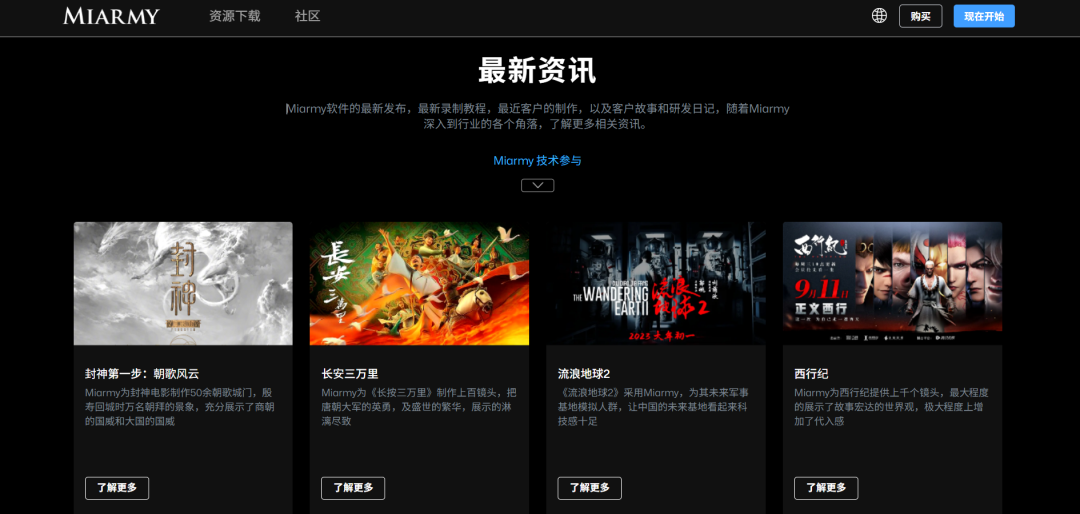
▲ Animation works featuring Miarmy.
Image source: Miarmy official website
Ying Shen: When we discuss brands and IP, we often focus on costs, pricing, and so on. But regardless of the vehicle we use, emotional value is an indispensable component.
Shiyong Wang: Brand is an extension of corporate culture and values. Everything a company produces emanates from strategy and values. In my view, brands carry a "mission of story" — why a company persists, the resonant narratives and goals behind it. These must be communicated to users to forge emotional connections.
02
The Overseas View of China —
"Chinese Brands Have Strong Hard Skills, But Weak Soft Power"
Ying Shen: After discussing domestic entertainment consumption, let's look overseas. TeKan Tech has conducted marketing collaborations with many brands in international markets. Broadly speaking, what strengths and weaknesses do you see as Chinese brands integrate into global markets?
Event Preview
The current tariff war has undoubtedly added uncertainty for Chinese brands going global.
On the afternoon of April 20, we'll host an offline event in Shenzhen on globalization. Interested friends are welcome to register and exchange thoughts, questions, and solutions with multiple guests and peers.
See the agenda details at the end of this article, or scan the QR code to register directly.

Lecheng: Chinese brands going global have strong hard skills; the challenge is insufficient soft power.
On hard skills: China has supply chain advantages, engineer dividends, the world's largest number of sellers, and excels at cost control. At this year's CES, I observed that compared to Japan and Korea, Chinese electronic hardware products lead by nearly a generation.
In soft power, compared to Europe and America, our cultural export capabilities remain underdeveloped. A few leading companies have invested heavily in overseas brand building, but most sellers focus on operations — listing products, selling goods, price wars — with limited attention to brand.
Ying Shen: In branding and IP, what opportunities do Chinese companies have to strengthen soft power?
Lecheng: It's very difficult for Chinese sellers to move goods overseas directly, especially breaking into local offline channels. Companies can combine products with content, using online channels like TikTok, Facebook, and Instagram to communicate with overseas users.
On TikTok today, merchants working with local KOLs often achieve solid traffic and conversion. If brands use authentic, localized expression and clearly explain products in video, results become more reliable.
For example, Cider, a cross-border fashion brand invested in by FreeS, has succeeded with short-video influencer marketing.
Operationally, Cider sends samples to Instagram and TikTok influencers, then posts their native, highly localized video content on Cider's own accounts. This generates initial traffic while completing product testing and marketing material testing.

▲ Content posted by Cider on Instagram
Image source: Instagram
Afterward, Cider's content operations team deconstructs viral video clips and uses our marketing tool Topview.ai to batch-generate derivative ad short videos, scaling distribution across Facebook, Instagram, and TikTok.
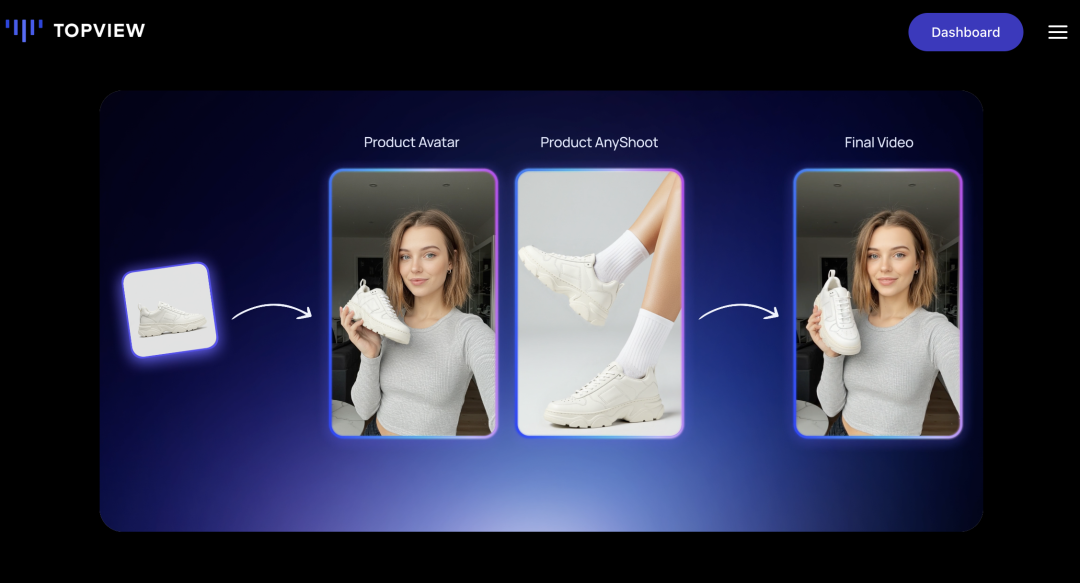
▲ AI-generated video marketing materials.
Image source: Topview.ai
For Cider, this combination of influencer marketing and ad short videos likely outperforms traditional image-text advertising by a wide margin.
Overall, Chinese global brands lead many overseas counterparts in content and traffic operations, plus AI tool application.
After all, short video originated in China. Overseas social platforms are learning from Chinese short-video platforms on algorithmic recommendations and content ecosystem construction. China's massive e-commerce market has cultivated vast numbers of operations talent and AI tools.
Short video platforms, operations talent, and AI tools — these three elements are key for Chinese brands to strengthen soft power overseas.
Ying Shen: How do new media platforms differ across countries? And in live streaming, are there any new play patterns worth sharing?
Lecheng: Traffic structures and live-streaming penetration vary considerably across global regions.
For instance, the US has high short-video penetration with a relatively mature ecosystem. But American users haven't developed live-stream shopping habits — TikTok Shop's live-stream commerce penetration is only around 10%.
In Southeast Asia, users have already cultivated live-stream shopping habits, with live streaming accounting for over half of TikTok's e-commerce volume.
We've collaborated with many brands' Southeast Asia business units — ANTA Group's overseas operations, L'Oréal Southeast Asia, and others — implementing AI live-streaming technology across Vietnam, Thailand, Indonesia, Malaysia, and Singapore for low-cost broadcasting. Overall, AI live streaming achieves about 70% of local human streamer conversion rates.
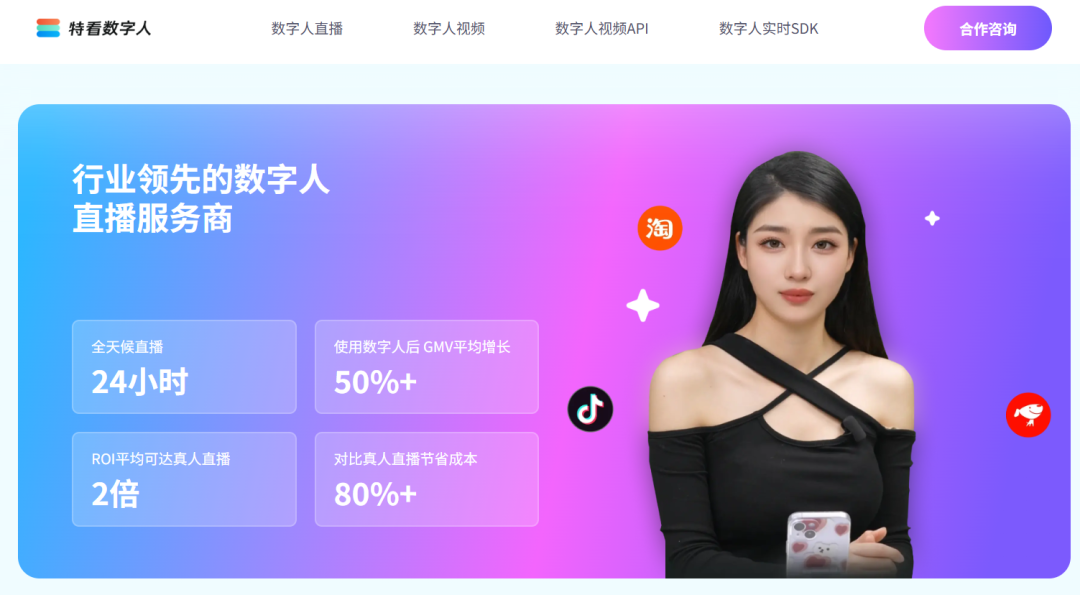
▲ TeKan Tech live-streaming service overview Image source: TeKan Tech
How Should Companies Manage Their Brand Assets?
Ying Shen: Currently, overseas markets account for the majority of Speediance's sales. How does Speediance approach branding, and how did you enter the fitness track?
Tao Liu: For Speediance, brand is an asset and an outcome, not a specific tactical method. Brand isn't decisively tied to budget size or celebrity endorsements. Product, service, word-of-mouth — these constitute your brand assets.
Broadly speaking, the essential prerequisite for building brand is refining products to meet previously unmet user needs. Brand enhances user trust and reduces transaction costs.
But what brands deliver to users isn't merely a product — it's the job users want to get done. We strongly identify with the "Jobs to be Done" framework. From this angle, brand is fundamentally about focusing on user value.
For example, our industrial design team once considered hiding screws on fitness equipment for aesthetic purposes. But industrial design must consider not just appearance, but user purchase costs and repair accessibility — these all represent user value.
Whether domestic or overseas, sports brands essentially help users accomplish fitness well. But we've observed that Chinese users haven't yet fully embraced strength-training fitness brands. Multiple factors underlie this: currently insufficient fitness population; like animation, fitness requires certain material foundations; fitness demands time and space, raising the barrier to entry.
So we turned to overseas markets. Speediance's strength-training equipment took roughly three years to achieve global shipment leadership.
 ▲ Speediance's smart fitness bike VeloNix.
Image source: Speediance
Ying Shen: Smart fitness is relatively new, yet already has high-valuation startups and even public companies competing. As a newer player, what strategies did Speediance use to surpass established leaders?
Tao Liu: Smart fitness leaders are primarily American. These companies have strong software capabilities but somewhat weak hardware, with supply chain as their Achilles' heel.
Fitness depends heavily on equipment; companies in this track need strong product control and iteration capability. Without solid hardware foundations, companies struggle to acquire new users and expand to new markets. China's supply chain capabilities far exceed America's.
Building on China's supply chain, how can companies develop globally leading advantages?
First, companies must identify directions for long-term deep cultivation and leverage technological compounding. DJI's technology chain is broad and long, continuously iterating on image quality, video transmission, navigation, and more, creating strong first-mover advantages. Some consumer categories have short technology paths; once they reach red-ocean stages, supply chains and platforms profit while brands may not.
Feng Shuo [Li Feng] often cites his investment rationale for Speediance: China's new energy vehicle industry has driven continuous motor and electric control development, which Speediance's training equipment incorporates; China will maintain supply chain advantages; China has engineer dividends, and so on.
I learned from a Harbin Institute of Technology professor that in motors and electric controls, Japan and Germany led ten years ago; now China leads globally.
Second, we should pay more attention to "blue ocean" spaces. DJI's drones, Shokz's bone-conduction earphones — products easily overlooked early on can become breakout hits. In blue oceans, you can more calmly lay out patents, cultivate talent, and identify technology directions.
The fitness equipment market, for instance, has been relatively stable for decades — dozens of companies sharing a market worth tens of billions of dollars, with very slow innovation and growth. Some companies barely have brands at all. Many people's first reaction to fitness is "it's against human nature." Now this industry's baton has passed to our post-90s generation. I believe AI will create more opportunities in fitness.
Giveaway
What do you think — how can brands deliver emotional value to users? Leave a comment below. By 5:00 PM on April 21, we'll randomly select three readers to each receive a copy of Lisa Feldman Barrett's How Emotions Are Made.
Event Preview
On the afternoon of Sunday, April 20, 2025, FreeS Fund will host "The Globalization Path for Tech-Consumer Brands" in Shenzhen's Nanshan district.
Global platform strategy experts, frontline entrepreneurs, and investors will discuss trends and response strategies in global supply chain restructuring, share practice cases in consumer industry digitalization and intelligence, and explore new ideas combining AI technology with consumer internet. Scan the QR code in the poster below or click "Read More" at the end of this article to register.


Tariff Barriers Escalate Again — How to Break Through on the Globalization Path? | 4/20 Offline Event Registration Open 7 Interdisciplinary Companies Close New Funding Rounds | FreeS Family Funding News Vol.22 How Can Tech-Consumer Products Go Global? 18 Charts to Understand Global Supply Chain Shifts | FreeS Research Globalization Has Slowed — Why Is Going Global Still a Must? | Li Feng Column
Star the FreeS Fund WeChat Official Account for timely business insights