The Power Game in the AI Era: Understanding China's New Power System

How Will AI and New Energy Reshape the Power Market?

When we talk about "electricity," we tend to feel it's both familiar and strange. It exists silently in every corner of our lives, driving the machinery of modern civilization. From the Second Industrial Revolution to today, electricity has become the core engine of human progress.
Right now, China's power system is undergoing new changes, especially in new energy. In July 2025, China's total monthly electricity consumption exceeded 1 trillion kilowatt-hours for the first time — equivalent to Japan's annual consumption, or nearly the combined yearly usage of France and Germany. At the same time, the "green share" of electricity keeps climbing: by the end of June 2025, China's installed renewable energy capacity had reached 2.159 billion kilowatts, with renewable generation accounting for nearly 40% of total national output.
What changes and opportunities do these numbers signal for the power industry? How should we understand the "new power system" that accompanies new energy? And what impact will AI development have on the sector?
Recently, power systems expert and founder of Bolian Zhidian (博联智电) Hairui Zhang sat down with Pengqi Liu, executive director at FreeS Fund, for an in-depth discussion on the new power system. Zhang has over a decade of experience in power systems product development, strategy, and entrepreneurship, and previously worked at Huawei's 2012 Labs, focusing on microgrids and large-scale new energy grid integration.
Their conversation covered:
- Where does the electricity in our daily lives come from? How has the power we use changed over the past 20-plus years? Why does green electricity matter?
- How are electricity prices determined? What does the power system have in common with e-commerce platforms?
- How do overseas grid systems differ from China's? Why are regions like Europe still experiencing large-scale blackouts in 2025?
- How does energy system development support AI computing infrastructure? And how can AI help build a better power system?
We've edited excerpts from their conversation below. For the full episode, search for "高能量" (High Energy) on Xiaoyuzhou App or Apple Podcasts.
Giveaway: What changes has new energy brought to your life? Share your thoughts in the comments. By 17:00 on September 29, 2025, the two most thoughtful responses will each receive a copy of Industry and Civilization.

/ 01 /
Where Does Electricity Come From? What Does It Mean for AI?
Pengqi Liu: Where does the electricity we use in daily life come from?
Hairui Zhang: Electricity in our lives mainly comes from hydropower, thermal power, and nuclear power. Power plants convert other forms of energy into electricity, which is then transmitted through the grid to millions of households. In this process, power plants solve the generation problem; the grid handles transmission, transformation, and reliability of supply.
Pengqi Liu: Power plants are easy to understand — they're essentially factories that take fossil fuels and natural resources as raw materials and convert them into electricity as a product.
The grid can be analogized to an e-commerce platform. It needs to match supply with demand and also provide services. For example, e-commerce platforms need logistics, payments, and customer service. Does the grid play a similar role?
Hairui Zhang: The grid-e-commerce analogy works well, with one important caveat: electricity is a real-time product. Energy is transmitted and transferred through electromagnetic waves, which are highly dynamic and difficult to control. So power requires special control and management.
Power plants, the grid, and electricity users form one large system. Once the entire power system is running, regulation and control never stop.
Power production and consumption happen instantaneously. The whole system must maintain real-time balance — whatever the generators produce, users consume; and whatever users consume, generators must produce. Any imbalance in between requires real-time dispatch and regulation by the grid. The grid has various regulation methods: for generation, there are peak-shaving and frequency-regulation technologies; for users, there are demand-response approaches to maintain real-time power balance.
In a power system, faults can occur on the generation, grid, or consumption side. If not addressed promptly, small faults can escalate into major ones, eventually affecting the entire system. So a series of monitoring, protection, and control systems are designed to ensure faults are resolved as quickly as possible within the smallest possible scope, allowing the system to return to operation.
Pengqi Liu: So the grid isn't just a transmission medium — it provides many services. Especially because of electricity's real-time nature, this precise supply-demand matching is critical. Otherwise, grid stability is compromised.
Let's shift perspective to how the power system affects other industries. In AI, for instance, competition in artificial intelligence essentially means competition in energy systems. How does energy system development help AI computing infrastructure? Conversely, how can AI help us build a better power system?
Hairui Zhang: AI development requires building massive computing centers, which in turn consume enormous amounts of electricity. So the AI industry has very large power demands. Where this electricity comes from and how it's managed and controlled are huge challenges. Solving AI infrastructure's power supply needs is several degrees more difficult than residential power supply. Addressing these problems represents significant opportunities.
On the other hand, AI is also very helpful to the power industry. From traditional energy to new energy, from traditional power systems to new power systems, the generation and control management in between is a process from low-frequency to high-frequency, from coarse granularity to fine granularity. Future power control will move from traditional models toward high-frequency, massive control of small and medium-sized systems.
When facing high-frequency, massive control of small and medium systems, we can't rely on centralized dispatch from large grids as in the past. So in the management process, real-time monitoring, analysis, evaluation, and control management of data and systems require AI empowerment.
Three years ago, Bolian Zhidian launched its "Virtual Power Expert" project, using AI to address problems that traditional grids can't handle, providing efficient power monitoring and management services for small and medium electricity users. Of course, in the process of AI empowerment, close integration with the power industry is needed to truly solve sector pain points.
/ 02 /
Observations on Overseas Power Markets
Pengqi Liu: In recent years, we've often heard about large-scale blackouts in Europe and North America — for example, the major blackout in Spain this April. How do overseas grid systems differ from China's? Are the blackouts caused by grid instability?
Hairui Zhang: We need to understand the historical context. In the transition from traditional energy to new energy, many changes have occurred, and China and foreign countries have approached these differently in terms of response methods and technical paths.
China's power and energy resources are mainly distributed in the northwest, while electricity consumption is concentrated in the eastern coastal regions — an inverse distribution. So we needed to build a strong ultra-high-voltage grid to transmit, regulate, and dispatch energy over larger areas. In grid construction, our pursuit of safety and reliability takes priority over economics.
In Europe and America, however, economic considerations in power development tend to dominate, with safety and reliability potentially being "compromised" to some degree. Under certain extreme conditions, grid security is challenged, and large-scale blackouts can occur.
For example, the "Spain blackout" in April is believed by industry to have been caused by control problems in a "high-ratio solar + traditional energy" operating mode. It started as a small voltage incident, but due to improper dispatch control and insufficient anticipation, it escalated into a massive blackout across all of Spain and Portugal.
Pengqi Liu: Overseas markets prioritize economic efficiency more, and marketization has progressed further than in China. The most intuitive feeling is in electricity prices — many European and American countries not only have high prices but also very high volatility. What factors determine electricity prices?
Hairui Zhang: There are two mainstream pricing mechanisms: cost-based pricing and market-based pricing.
Cost-based pricing is relatively straightforward: generation costs plus transmission and distribution costs, plus power service costs, equals the final user cost.
Market-based pricing is completely different. During summer peaks when everyone turns on air conditioning, with limited supply resources, whoever bids higher gets priority; conversely, when supply is abundant, users choose whoever offers cheaper power — sometimes even resulting in negative prices.
Negative prices occur when power supply exceeds demand, and generators need to pay users to consume electricity. In China, negative prices have appeared in many places in recent years. For example, solar generation peaks at midday, but many factories shut down for lunch breaks, creating supply-demand imbalances that can produce negative prices.
The higher the degree of marketization, the more prices are affected by supply-demand relationships. In terms of grid structure, China leads. In terms of marketization, foreign countries are relatively ahead.
Pengqi Liu: Overseas electricity prices are more affected by supply-demand relationships. How do specific prices compare with China?
Hairui Zhang: Foreign electricity prices fluctuate more, and there are more market trading varieties.
Overall, electricity costs in China are lower than abroad. If a household's monthly average bill is around 1,000 RMB, it would at least double in Europe or America.
Industrial electricity is more complex, with differentiated requirements for reliability and power quality, but overall domestic costs are also cheaper. China's manufacturing sector has benefited from low electricity costs to produce cost-competitive products.
Pengqi Liu: Do you have any particular observations or experiences with overseas power markets?
Hairui Zhang: Domestic and overseas needs are quite different.
In regions like Africa and Southeast Asia, people's need is for stable and secure power supply. These areas originally had weak grids and limited generation resources, with very unstable electricity. This requires building power plants and strengthening grid construction to solve supply problems, involving substantial investment in basic grids, basic generation, and new energy.
In recent years, many Chinese factories have set up in Africa and Southeast Asia. They find that while local labor costs are cheap, electricity is unstable. It's quite necessary for power supply systems to go overseas together with these manufacturing enterprises.
In regions like Europe, Australia, and North America, the need is to reduce electricity costs. Power markets in these places are heavily influenced by supply-demand relationships. Especially after the Russia-Ukraine conflict, European electricity has been very tight, with unbalanced supply-demand leading to very high costs. These regions need green electricity plus energy storage to address high electricity costs.
/ 03 /
China's Three Stages of Power Development: From "Source" to "Grid" to "Load"
Pengqi Liu: China's large-grid power system wasn't built overnight. What stages did China go through to develop this high-voltage power network?
Hairui Zhang: Overall, we've experienced roughly three stages:
The first stage, from around 2000 to 2010, was when society as a whole was short of electricity. We built high-voltage grids centered on "sources." For example, Three Gorges hydropower, and thermal power in Shanxi and Inner Mongolia — building high-voltage grids at major generation points to send electricity to the eastern coastal regions.
The second stage, from 2010 to 2020, China built large wind and solar bases centered on the "grid." In the previous decade, the tight supply situation had improved, and more emphasis was placed on developing new energy to address climate issues. During this decade, China's power system added substantial wind and solar capacity on top of traditional generation — for example, building large-scale centralized wind and solar bases in western regions.
The third stage, from 2020 to around 2030, China may shift to being centered on "load," building integrated source-grid-load-storage systems. Integration refers to the unified coordinated operation mode of power sources, grids, loads, and storage, achieving unified management of "source-grid-load-storage-intelligence."
In the future, the power system will emphasize regulation capability more, gradually achieving "zero-carbon" on the consumption side. Zero-carbon means using more green electricity, while adding more flexibility and economic efficiency throughout the entire process of electricity production, control, management, and consumption.
Pengqi Liu: What's driving these changes in the power system? For example, more and more consumers are shifting from traditional fossil energy to new energy — the most typical example being new energy vehicles, where people used to burn gasoline and now plug into the grid to charge.
Hairui Zhang: Several prominent changes are happening on the consumption side:
First, electricity consumption is growing — this is the general trend. Electrified equipment brings a better life, which naturally increases electricity demand.
Second, the consumption side is moving toward clean energy and new energy. In the past, the electricity we used came from the grid, but whether it came from hydropower, thermal power, nuclear, or wind and solar was hard to determine and hard to control. What we need to do in the future is gradually achieve zero-carbon across the entire consumption-side industry.
From 2010 to 2020, the new energy generation industry became very mature, with very low costs. Our demands for electricity have always been safety, reliability, economy, and efficiency. Even with the addition of green and low-carbon energy, these demands haven't changed.
/ 04 /
Growing Pains of Green Power: Costs Are So Low, Why Not Connect to the Grid?
Pengqi Liu: Over the past decade, many changes in the power system have been driven by new energy. What problems did new energy development encounter initially? What stages did it go through?
Hairui Zhang: Earlier we mentioned structural changes in the overall power system, but for new energy itself, it's actually not so "new" anymore. Take photovoltaic power — it too has gone through three stages so far:
- First stage, from 2010 to 2020: all new energy electricity that connected to the grid could be fully sold to the grid, with subsidies;
- Second stage: policies encouraged self-generation and self-consumption of new energy electricity, with surplus sold to the grid — for example, fishery-solar hybrid projects (combining aquaculture with photovoltaic generation);
- Third stage is now: new energy generation should avoid connecting to the grid as much as possible, being consumed locally in layers and zones. Because new energy's variability requires grid regulation, and the greater the regulation pressure, the higher the grid system costs.
The core issue behind this change: new energy generation costs are low, but generation is unstable and can't directly provide continuous, stable power to industrial and commercial users. The grid needs to dispatch thermal power, hydropower, and other resources to complement new energy — essentially "reshaping" new energy, turning unstable electricity into stable electricity.
Under the "no grid connection" scenario, new energy can only be consumed locally, giving rise to solutions like "green power direct connection," "microgrids," and "virtual power plants."
A microgrid is a medium or small-scale system with grid functions but smaller than the main grid, including generation, dispatch control, and distribution — serving as a complement to the main grid, common in remote areas and islands.
A virtual power plant connects to the main grid with power plant characteristics in its organizational management model, using distributed PV storage, large electricity loads, and other resources to achieve generation and flexibility regulation functions. Essentially it participates in main grid system power interaction and trading, somewhat similar to ride-hailing platforms.
Virtual power plants have generation regulation capabilities like actual power plants, but without building physical plants, offering great advantages in economic efficiency and flexibility. Of course, virtual power plants, like actual plants, need to solve communication control, trading settlement, and profit distribution issues.
Pengqi Liu: This reminds me of cloud computing. Behind cloud computing are physical servers; through virtualization technology, it can partition a single server's computing power or aggregate multiple servers' capabilities. Users don't perceive the underlying structure and simply use it as an independent device. Virtual power plants are essentially analogous to cloud computing.
Hairui Zhang: They are indeed analogous. Cloud computing is purely digital, handling computing power. But virtual power plants have one additional step compared to cloud computing: they need to control electricity, then integrate with computing management. That's the key difference.
Pengqi Liu: This year, there have been some new policies in the new energy sector, such as the "Notice on Deepening Market-oriented Reform of New Energy Grid Electricity Prices to Promote High-quality Development of New Energy" (known as "Document 136"), and the "Guiding Opinions on Accelerating Virtual Power Plant Development." What impact will these policies have on the future development of the power industry?
Hairui Zhang: In recent years, extreme weather has become more frequent, plus the Russia-Ukraine conflict has affected global energy markets, causing power shortages and sharp electricity price increases in some countries and regions. China has introduced policies related to power systems and new energy storage. Especially in the first half of this year, with Document 136 as the representative, various provinces successively introduced supporting policies, demonstrating our determination and capability to develop new energy.
After new energy experienced key development stages, energy storage also welcomed rapid development. From a macro perspective, storage plays a role in flexible regulation and stable support for new energy generation.
Before Document 136, many places required new energy projects to mandatorily install supporting energy storage. After Document 136, on one hand this mandatory storage requirement was eliminated; on the other hand, the marketization process for storage was accelerated, causing PV and other new energy to be re-evaluated.
Previously we mainly looked at "levelized cost of electricity"; now we need to comprehensively consider levelized cost, regulation management, and market supply-demand factors. Thus for new energy, being stably controllable and consumed nearby is the better choice.
Overall, the power industry is entering a stage of high-quality development, shifting from investing in power stations to energy management and operation; no longer just connecting PV to the grid, but moving toward a new model of "PV-storage integration, coordinated supply." With the implementation of Document 136, industry demand for new technologies and services like energy management, smart distribution, real-time communication, and AI virtual power experts has also significantly increased.
Pengqi Liu: Policy can address problems that pure market mechanisms or technical solutions struggle to solve directly. From a technical perspective, energy storage配套 isn't enough — better regulation mechanisms are needed to form source-grid-load-storage or microgrid systems, so that variable generation can be "reshaped" into relatively stable supply. From a market perspective, through the "invisible hand" of electricity market trading price mechanisms, generation companies and electricity users can be guided to adjust behavior, helping the grid reduce overall variability.
05
Technological Breakthroughs in the New Power System: High-frequency, Real-time, Intelligent
Pengqi Liu: The power industry is currently at an important inflection point. Although new energy has low generation costs, its high regulation costs are no longer fully borne by the grid, but increasingly pushed back to generation or consumption enterprises. This has given rise to the concept of the "new power system."
In this entirely new model, for systems like microgrids compared to traditional power systems, what key technical links need to be broken through? Simply adding energy storage clearly can't solve all problems — so what other technical challenges does the new power system face?
Hairui Zhang: Compared to traditional power systems, the new power system has major changes. Traditional thermal, hydro, and nuclear systems are electromechanical control systems with synchronous generators as the main characteristic objects, while the new power system is a control system with power electronic equipment under high-ratio new energy as the main objects. You could say the object system has become faster and smaller.
In the past, power changes and control were relatively low-frequency. In the new power system, new energy is high-frequency, and power electronics change very rapidly.
Technically speaking, high-frequency power changes require faster, higher-frequency monitoring, control, and management, and also require automated means.
Pengqi Liu: In the original power system, next-day electricity demand was predicted a day in advance, then generation plants were instructed to supply at corresponding power levels to achieve approximate balance. But now, generation equipment and consumption equipment have become highly variable — a cloud passing by can change PV output, or a charging station suddenly receiving many vehicles can spike power demand. Using traditional methods would face many problems.
Hairui Zhang: The new power system means not only changes in regulation and management methods, but also changes in regulation and management units. Past large power systems were more centrally managed, with centralized regulation of large power plants, main grid nodes, and large users. Now, down to the park level or even a single household, if there's PV, storage, and consumption, control and management are needed.
The entire system faces massive demand, and traditional power expert reserves and equipment can't meet growing needs. So forming a real-time online operational control system — from power data collection, management, and control to AI diagnosis — is essential.
Pengqi Liu: The challenges of the new power system may also be the starting point for Bolian Zhidian's entrepreneurship. What was your entrepreneurial opportunity, and what products and systems have you built to address these problems?
Hairui Zhang: Before entrepreneurship, I was at Huawei Digital Power and the 2012 Labs, engaged in microgrid and new energy grid-connected system research, product development, and promotion, and had been paying attention to changes in new energy generation systems and grid systems.
After the 2015 "Power Sector Reform Document No. 9" came out, obvious changes appeared on the consumption side, power IoT system demand and cloud-pipe-edge-device technology gradually matured; by 2022, user-side demand gradually emerged for high-performance power real-time control systems, requiring strong real-time performance, certain computing power, and the ability to solve system state collection and data processing. Addressing this demand, we developed corresponding power products and control systems.
Pengqi Liu: What specifically do your products look like, and how are they deployed in practice?
Hairui Zhang: We chose the familiar "distribution + software" entry point, defining products through software, including smart meters, smart circuit breakers, and gateways — we collectively call these networked devices. Similar to the transition from traditional phones to smartphones, deployment is the same, but the usage effect is completely different.
Inside the products, we added high-frequency data collection, algorithms and models, and industrial communications. Devices connect through a virtual bus, with unified management by upper-layer management software, so customers' power business scenarios achieve complete digital operation.
This system can achieve smart energy management, microgrids, and flexible regulation of PV-storage. For example, at State Power Investment Corporation, we achieved aggregation of distributed PV, simplifying complexity through networked systems; at Shanghai Electric's park, we did systematic construction of a zero-carbon park.
Pengqi Liu: It sounds like deployment convenience and costs are relatively controllable?
Hairui Zhang: Yes, from the beginning Bolian Zhidian designed products to be deployable in both centralized and distributed forms. We've done extensive development and optimization at the software-hardware level, with cloud-edge-device capabilities for rapid collection, transmission, and computation, and inter-device coordination.
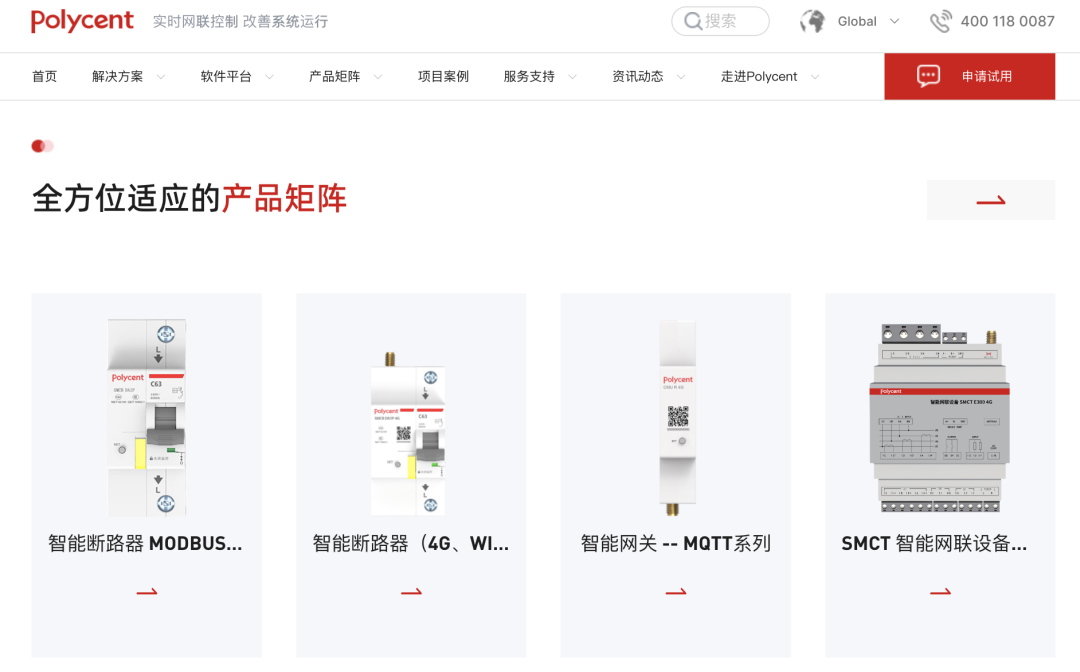
Image source: Bolian Zhidian From a commercialization perspective, user demands for electricity haven't changed: safety, reliability, greenness, and efficiency. Through networked devices and management systems, users can utilize more clean, cheap electricity while effectively managing consumption for efficient operations and maintenance. In off-grid areas or remote regions, this system can still help rapid PV-storage deployment at scale.
Giveaway: What changes has new energy brought to your life? Share your thoughts in the comments. By 17:00 on September 29, 2025, the two most thoughtful responses will each receive a copy of Industry and Civilization.

Is AI Healthcare Reaching Its DeepSeek Moment? | FreeS Research
Understanding Carbon Emissions to Know How to Achieve Carbon Neutrality | FreeS Research
The Road to Embodied Intelligence | FreeS Report 37
We're Turning Ten — Join FreeS and Go Further Together
The Busier the Robotics Track Gets, the More We Need to Respect the Fundamentals | Feng Li Column
Star the FreeS Fund WeChat Official Account for timely business insights