The U.S.-China Biotech Race: Where Are the Opportunities in Synthetic Biology? | FreeS Fund Dialogue

Over the next five to ten years, which technologies will have a significant impact on synthetic biology?
In 2022, China and the U.S. released development plans for the bioeconomy in quick succession. In May, China's National Development and Reform Commission issued the 14th Five-Year Plan for Bioeconomic Development — the country's first five-year plan dedicated to the bioeconomy, laying out specific tasks for its advancement. On September 12, U.S. President Joe Biden signed the Executive Order on Advancing Biotechnology and Biomanufacturing Innovation for a Sustainable, Safe, and Secure American Bioeconomy.
Since its founding, FreeS Fund has consistently tracked the synthetic biology sector within the broader bioeconomy, investing in companies including Bluepha, Yanwei Technology, Xisu Technology, and Hesheng Technology. Bluepha, in particular, received FreeS Fund's angel-round investment, with the firm subsequently participating in six consecutive funding rounds — a testament to its conviction in synthetic biology and in the greener, healthier, and more functional products that biotechnology can deliver.
On September 4, the first episode of the "FreeS Venture Dialogues: Environmental Protection and Carbon Neutrality Series" — titled Synthetic Biology: From Groping in the Dark to Riding the Wave — featured FreeS Fund partner Rui Ma in conversation with Bluepha co-founder and CEO Haoqian Zhang, and co-founder and president Teng Li. Together, they explored green innovation opportunities in synthetic biology.
You can watch the replay of this first session on the FreeS Fund WeChat video channel by clicking "Live Replay." We've compiled excerpts from their discussion, organized around the following questions:
- At the foundational level, how are synthetic biology and environmental protection/carbon neutrality connected?
- How receptive are domestic and international customers to green premiums?
- How can cost control be achieved in synthetic biology?
- Will synthetic biology produce "blockbuster" products with annual sales exceeding $1 billion, as we've seen in innovative drugs?
- How do you assess the current state of development in the synthetic biology industry?
- How do you break down synthetic biology's "three-step" strategy?
- What is the simplest way to evaluate a company's industrialization capabilities?
- What bottlenecks is the industry currently facing?
- What technologies will shape synthetic biology in the next 5–10 years?
This is the third installment in FreeS Fund's environmental protection and carbon neutrality series. We hope it offers fresh perspectives, and we look forward to your thoughts (feel free to reach out to the moderator of this conversation, FreeS Fund partner Rui Ma, at marui@freesvc.com).
Interactive Giveaway
From your perspective, what innovation opportunities exist in environmental protection and carbon neutrality? Share your thoughts in the comments. The six most thoughtful responses will receive "Little Zhang," a custom plush toy from Bluepha.

Upcoming Livestream
The second episode of the "FreeS Venture Dialogues: Environmental Protection and Carbon Neutrality Series" — New Energy in the Spotlight: Innovation and Development in Power Batteries — will air on Sunday, September 25 at 10:00 AM Beijing time. FreeS Fund founding partner Li Feng will speak with Feng Yuchuan, founder and chairman of QingTao Energy, about how to drive foundational innovation in power batteries amid the new energy boom.
Scan the QR code to register. We'll send the livestream link via email before it begins, and invite you to join our industry community.


Scan the code above 👆

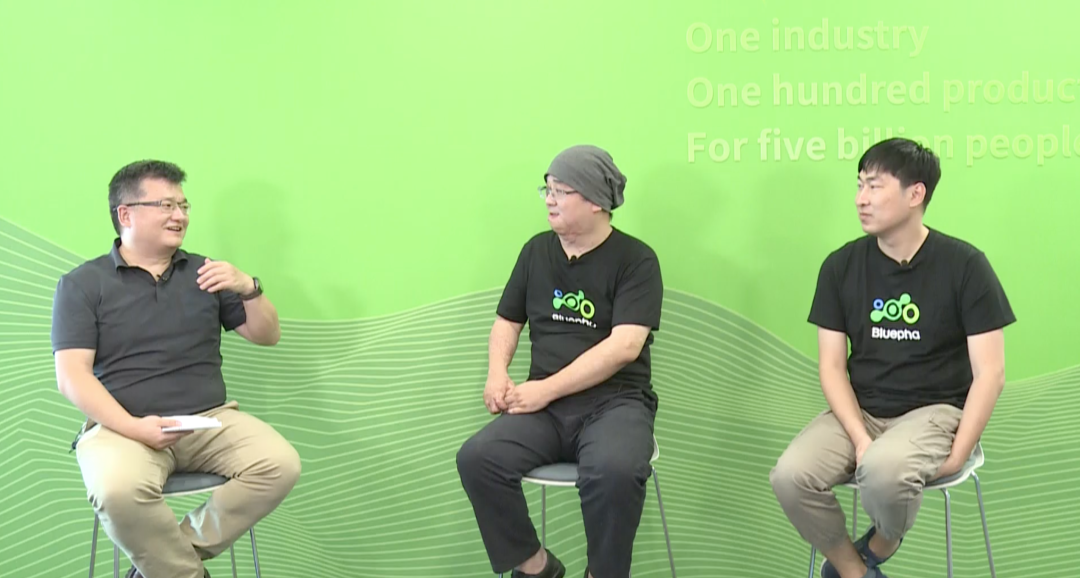
FreeS Fund partner Rui Ma with Bluepha co-founder and CEO Haoqian Zhang and co-founder and president Teng Li, discussing green innovation opportunities in synthetic biology.
01
Domestic Customer Acceptance of Green Premiums Has Improved Noticeably in Recent Years
Rui Ma: At the foundational level, how are "dual carbon" or "carbon reduction" goals connected to synthetic biology?
Teng Li: When we first started out, our motivation was simply our belief in the applications of synthetic biology technology. After the 2021 National People's Congress wrote "carbon peak" and "carbon neutrality" into the Government Work Report for the first time, this medium- to long-term national strategy gave synthetic biology a genuine opportunity to transform society and industry. We re-examined Bluepha's starting point. Right now, 83% of fossil raw materials are used for energy; the remaining 17% go to material production. We want to use synthetic biology to address that material production challenge.
Rui Ma: Why can synthetic biology help reduce carbon emissions?
Haoqian Zhang: The widely accepted method for calculating carbon footprint is Life Cycle Assessment (LCA), which accounts for the total greenhouse gas emissions across a product's entire life cycle — including raw materials, production, distribution, use, and disposal/recycling. According to our calculations, compared to conventional petrochemical plastics like polypropylene (PP), every kilogram of Bluepha's PHA product, Bluepha™ (PHA), reduces petroleum-based CO₂ emissions by 0.8–2.3 kg. We give a range because the actual figure depends on the specific process and type of feedstock oil used. We have to consider factors across the full product cycle in our production process, because the professionalism of LCA figures doesn't just affect R&D and branding — it affects sales too. Many climate-conscious customers calculate this number themselves. Although synthetic biology products haven't yet achieved economies of scale in replacing petrochemical products, they're already showing strong carbon reduction performance at the LCA level.
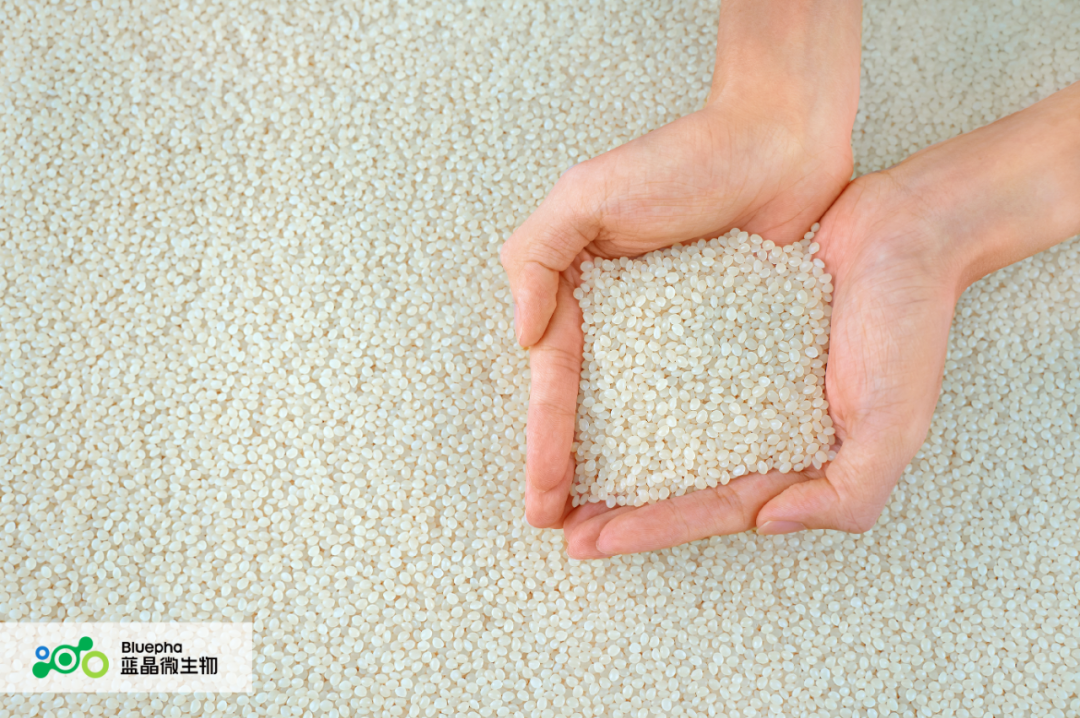
▲ Bluepha's product Bluepha™ — a natural polymer material (PHA) synthesized by microorganisms using starch or oils. Image source: Bluepha
Rui Ma: How do your customers view green premiums?
Haoqian Zhang: One of our customers is a well-known European beauty brand. They've set a clear target of making 100% of their product packaging plastic come from recycled or bio-based materials by 2030, emphasizing green science and sustainable development while dramatically reducing the carbon footprint across their products' full life cycles.
Rui Ma: Major customers like this also push their supply chains to adapt.
Haoqian Zhang: Exactly. Many big brands operate this way — their roadmaps are both clear and pragmatic, and they exercise strong control over supply chain development.
Teng Li: Many of the customers we've engaged with are very pragmatic — they genuinely believe in and practice energy conservation and carbon reduction. For example, in 2019 we invited an overseas customer to visit, and they declined. The reason: they had already used up their annual carbon emissions budget and couldn't take another international flight. That left a deep impression on me — from personal life to company products, they were seriously committed to carbon reduction.
Rui Ma: You've both described European customers. What's the situation with domestic customers? When I invested in Bluepha, I had no doubts about the technology, but I did wonder when the broader trend toward biodegradable materials would really arrive in China.
Teng Li: Overall, the shift in domestic attitudes over the past two years has exceeded our expectations. We can look at this from two angles.
First, from the carbon perspective: attention to "carbon reduction" has moved beyond sloganeering. Whether enterprises or government, evaluation systems have expanded from a single economic metric to two parallel standards — one measuring economic benefit, the other calculating carbon emissions. While many standards remain undefined, most things related to carbon are gradually being monetized, and this trend is becoming increasingly clear.
Second, from the biodegradable materials application market. China was once the world's largest importer of plastic waste, with a well-developed recycling system. In 2018, China formally banned plastic waste imports, transforming the global plastics ecosystem, accelerating plastic substitution policies, and leading global policy implementation and industrialization of biodegradable materials. Going forward, China will play a more important role in "dual carbon" efforts and drive growth in the biodegradable materials industry — that's a clear trend.
Haoqian Zhang: A well-known domestic tea chain shared some fascinating data with us: because of the "plastic ban," they switched from plastic to paper straws, and their orders dropped 30–40% that month. Many brands in the industry experienced this — paper straws collapse when you bite them, making it hard to suck up the toppings in milk tea, which hurt the user experience. Everyone understands environmental protection is important, but when the experience is too poor, customers leave. Later, merchants introduced biodegradable polylactic acid (PLA) straws. Between free paper straws and paying one yuan for biodegradable straws, 80% of consumers chose the latter — willing to bear this consumption premium.
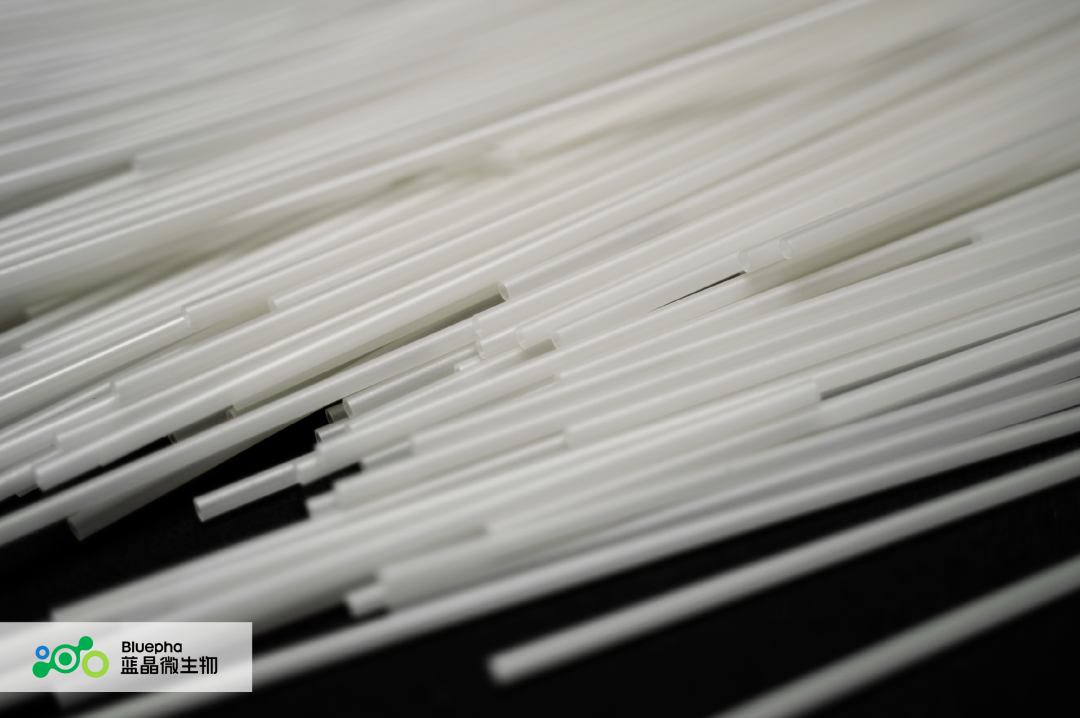
▲ Biodegradable straws produced by Bluepha. Image source: Bluepha
From a marketing perspective, introducing carbon credits can also increase consumers' sense of identification and reward with a brand. On how to build more value and opportunity into supply chains around the "biodegradable" concept, foreign brands have considerable experience worth learning from — including policy support, certification systems, and consumer education.
Teng Li: I believe there's now broad social consensus on green premiums. If we take a longer view, since the Industrial Revolution, when humans became Earth's dominant species, we've been more antagonistic toward the environment — extracting fossil resources stored underground for hundreds of millions of years that barely participated in natural cycles, and disrupting the rhythm of carbon circulation in nature. Ultimately, humans must bear the consequences of forcibly altering these natural cycles: waste pollution, rising temperatures, extreme weather, and so on.
Synthetic biology offers a new possibility. The prerequisite for realizing this possibility is that biologically synthesized materials must match traditional petrochemical materials in quality and performance while being more environmentally friendly. Only then can these green products integrate into the chain of people's production and daily lives, and the accompanying business models can function.
So in 2021, we reset our company's mission: to free humanity from dependence on petrochemical energy. To achieve this mission, we established three visions. First, create a new industry — the synthetic biology industry — and we hope Bluepha will become a leader in this field. Second, develop 100 products covering every aspect of people's lives. Third, we hope these 100 products will eventually serve 5 billion people. We look forward to 2050, when half the world's population, because of what Bluepha is doing, will return to a state of harmonious coexistence with nature.
▲ Friends interested in joining Bluepha, scan the QR code in the poster to learn more.
02
Choosing biomass is mainly a supply and cost consideration
Ma Rui: At the foundational level, synthetic biology is the process of introducing carbon and hydrogen sources into biological systems for biosynthesis. What types of carbon sources does synthetic biotechnology use?
Li Teng: There are two main categories of raw materials: petrochemical and biological, though petrochemical materials ultimately evolved from biological ones. Choosing biomass is mainly a supply and cost consideration — whether it can be supplied stably at scale and whether it makes economic sense. Currently, widely used biomass raw materials fall into two broad categories: sugars, such as glucose from various grain starches; and oils, such as soybean oil, castor oil, and palm oil. Sugars are fast-transmitting energy carriers, while oils are better suited for storage. Sugar is more efficient to use than oil, so it's used more widely.
As biotechnology advances, renewable raw materials are becoming increasingly accessible. For example, cellulose materials like corn stalks and millet stalks, which were difficult to utilize in the past, can now yield usable sugars. Another example: kitchen waste oil, once discarded as trash, can now be repurposed through bio-fermentation technology. Going forward, more renewable biomass materials will be developed and introduced.
Furthermore, the fundamental source of carbon is carbon dioxide. Light provides the energy to fix atmospheric CO₂ into chemical energy, which then evolves through different pathways into various products. So can CO₂ be used directly as a biomass raw material? Bluepha began foundational R&D in this area quite early, and we can now fix or directly utilize CO₂. I believe that as biotechnology develops, the industrial trend of carbon fixation will become increasingly clear. But we need to balance technical feasibility with economic viability, including how to achieve large-scale, low-cost production.
Ma Rui: How would you compare the advantages and disadvantages of these carbon sources?
Zhang Haoqian: Let's start with sugars, which divide into pentoses and hexoses. Hexose utilization is already quite mature and suitable for small-volume, high-value-added products, but the downsides are also significant. Although the technical barrier for using sugars is relatively low, hexoses (like C₆H₁₂O₆) contain few carbon atoms, making them economically inefficient for cost-sensitive products — a major problem that many biofuel companies face. At the same time, we have to consider food supply issues. China is a major agricultural country, but we can't use grain to make plastic.
Ma Rui: So from an industry perspective, you have to think through the carbon source question from the very beginning.
Zhang Haoqian: For a startup, it's hard to have all this fully figured out from day one. But as the company grows and develops long-term strategic planning, you absolutely have to consider these issues.
Li Teng: To be honest, we used sugar when we first started out. At the time, we thought sugar was the most suitable route technically, but we didn't consider the food-versus-fuel problem. So our second-generation process switched to non-food vegetable oils as feedstock, which meant higher technical challenges.
Ma Rui: What are the pros and cons of oils?
Zhang Haoqian: Oils are technically demanding. Although the utilization rate of oils isn't as high, the utilization efficiency is very high. Also, like grain, global oil production isn't that substantial. If you use non-standardized kitchen waste oil, you get product quality instability. Of course, we're considering all this at mass-production scale.
Beyond sugars and oils, there's cellulose. If pentoses can break cellulose down into sugars, that would be a good solution. The conversion rate isn't high, but the advantage is low cost. Cellulose sources are much cheaper than grain.
Additionally, there's the syngas route (industrial tail gas, coal chemical byproducts, etc.). There's an American startup that's worked on syngas utilization for many years and has partnerships with Chinese state-owned enterprises. This is an excellent technical route — it solves both cost problems and corporate carbon emissions.
From a technical difficulty perspective, sugars, oils, cellulose, and syngas get progressively harder. From the standpoint of direct contribution to carbon reduction, syngas is definitely the optimal solution. If you could collect all the waste gas from coal chemical emissions and convert it into desired products using microorganisms, that would of course be the ideal choice.
Ma Rui: How is the technology for using carbon dioxide as a carbon source developing?
Zhang Haoqian: The industry has relatively mature technology for microbial fixation of carbon monoxide and methane, but CO₂-related technology is still in development. From a technical route perspective, using CO₂ as a carbon source is entirely feasible. Cyanobacteria are extremely efficient at utilizing CO₂ — they can fix carbon and are important substances for maintaining global carbon balance. In recent years, research on cyanobacteria in the synthetic biology field has made significant progress, which is a fairly major breakthrough.
Ma Rui: To summarize, there are several important dimensions when comparing carbon sources. First, raw material cost. Second, from the perspective of energy density and utilization rate, whether this raw material is naturally preferred by biological systems. Third, what building blocks your target product requires. Fourth, the difficulty of engineering the biological system to use that particular raw material.
Three Key Points of Cost Control
Ma Rui: Bluepha has been operating for six years now. You must have taken cost control to quite an extreme level. Beyond selecting carbon sources with moderate technical difficulty and high energy density, what else have you done on cost control?
Li Teng: First, feedstock selection is important, but more important is feedstock conversion rate — how much of the raw material actually gets converted into product. The biggest difference between biomanufacturing and chemical manufacturing is that it's not a simple system where catalyst A becomes B. While A is becoming B, A must maintain its own catalytic activity. In this process, a lot of energy and material goes into the microorganism, requiring more precise control to reduce retention and maximize conversion to the desired product. For us, feedstock conversion rate is a critical metric — it determines raw material utilization efficiency.
Second is energy consumption. Reducing energy consumption throughout the entire production process is also crucial for cost control. Energy consumption has many components that are interrelated. Reducing it depends on technology, including strain development, process optimization, and production optimization, with the goal of driving energy use to an extremely low level. This is an ongoing process — there's still substantial room for improvement.
Zhang Haoqian: Third is waste treatment. For example, there are many ways to treat wastewater. Theoretically, you could use electricity to evaporate the water from wastewater, then bury or incinerate the remaining solid waste separately. But in reality, wastewater is mostly water — using electrical evaporation would make costs skyrocket, so you need sufficiently economical alternative methods.
Li Teng: At the same time, these aspects can't be viewed in isolation. It's a complex system. Solving the first problem might introduce or affect the second, requiring solutions or trade-offs. So our goal is to produce high-quality products at low cost, which requires continuous effort.
Promising Directions: Bio-based Polymers, Beauty, Medical Aesthetics
Ma Rui: Will the synthetic biology field see "blockbuster" products with annual sales exceeding $1 billion, like in the innovative drug sector?
Zhang Haoqian: Yes. We're optimistic about several directions: bio-based polymers, beauty, and medical aesthetics.
Take bio-based polymers as an example. Addressing climate change has become one of the international community's top priorities, oil supply faces shortages, and green consumption concepts are gradually taking hold and spreading — this has opened a window for bio-based materials, and the synthetic biology industry is welcoming a concentrated development opportunity. Whether it's polylactic acid or our Bluepha™ PHA, both are just getting started, and each material has its own uniquely suited applications. If we can solve the systemic support issues and deliver products that satisfy people's green consumption desires to consumers, the market has enormous room for expansion. If we can reduce PHA costs to just over 10,000 RMB per ton, global demand would reach 160 million tons — that's a trillion-scale market.
Ma Rui: What about beauty and medical aesthetics? The current market isn't that large — why are you optimistic?
Zhang Haoqian: This is our own view. If you're only making functional ingredients, the market is indeed small. But if you make base materials that account for the highest proportion of costs — like 1,3-propanediol — these products are used in large volumes and are cost-sensitive. Succeeding here would create sufficient leverage on the entire market. For a startup, you can certainly do high-value-added products to sustain operations. But if you want to move larger markets, you should do the hard but right things. The same applies to medical aesthetics.
We're also quite optimistic about food-related products. For example, functional foods — whether it's foods for special medical purposes or probiotics — I think there are opportunities. China is one of the world's largest production and consumption markets, with a relatively mature upstream and downstream industrial system, but this industry hasn't seen real technological breakthroughs in many years. The introduction of synthetic biology can bring some changes on the technical route front. Against this backdrop, we enjoy tremendous era dividends as entrepreneurs. Whether it's capital or the market, both will give you room to iterate.
Ma Rui: Since there are many tracks to choose from, there must also be cases of failed product selection?
Zhang Haoqian: Many. Aviation fuel, for example, isn't a particularly good choice.
Ma Rui: The aviation fuel market is large enough, but it's not a good market. What's the problem?
Zhang Haoqian: A friend of mine encountered this problem when starting a business in the US. He was working on biofuel — R&D and production were both in the US, the market was huge, but costs were very high. As long as oil prices stayed below $80, there was no profit, and you couldn't sustain a sufficiently large company. Feasible in biotechnology but economically unviable — that's a product selection failure.
Ma Rui: Following up on that question — bio-based polymers represent a trillion-scale market, and each molecule might be an exceptionally large molecule, possibly ten times that of a new drug. How do you view market opportunities for small molecules versus large molecules?
Li Teng: For small molecules, it depends on whether they're platform molecules. There are probably only about twenty platform molecules that are large enough and sufficiently well-defined. The problem is that all of these can already be produced from petroleum at very low cost. If the only advantage of making a molecule biologically is that it's bio-based, but the cost is high, that product lacks competitiveness.
Haokai Zhang: Yes, at first customers and the market were fairly tolerant. Many of the clients we approached would say they could place orders even if our bio-based products were five to ten times more expensive than chemically produced alternatives. But if you have an endgame mindset, you understand this state of affairs can't last forever.
Synthetic Biology's "Three-Step" Progression: Quality — Cost — Resource Allocation
Rui Ma: How do you view the current state of the synthetic biology industry and its development?
Haokai Zhang: The immediate priority for synthetic biology is solving supply problems. Because of the green premium and innovation, structural opportunities in the industry provide some margin for error within a time window. Right now, against a backdrop of broad demand, cost isn't the top concern — what matters is being able to quickly produce qualified products that meet market needs. Some less successful companies didn't fail because of cost, but because they didn't adequately solve impurity problems in their polymers, leading to issues with odor or color that kept customers from accepting their products.
An investor friend once asked me how to evaluate a company's industrialization capability. It's actually quite simple. Look at what price they plan to sell their product for, then offer 100 times that price and ask if they can provide a small sample. If they can't, there's definitely a problem. Many issues aren't about cost — they're about quality. Problems with the strain, upstream and downstream processes, or intermediate raw materials can all make it difficult to supply qualified products at scale. So the key is to first solve the supply problem, provide qualified products, and close the demand loop. Even if the current market is small, it's enough to sustain the company.
Once quality is solved, then comes cost reduction. Our experience has been that for every 4,000–5,000 RMB reduction in cost per ton of material, the market size increases by an order of magnitude.
Rui Ma: So first go from zero to one, meeting quality requirements, then reduce costs and expand market size.
Haokai Zhang: Exactly. The first stage is the quality hurdle, driven by R&D. The second stage is the lean hurdle — advancing R&D while cutting costs and improving conversion rates. The third stage comes as scale increases, when you hit development bottlenecks like raw material supply and energy consumption. At this point, you need not just lean operations but also resource allocation. This stage requires companies to do more upstream resource and downstream brand positioning.
Rui Ma: The third stage is a major industrial layout decision. Do I locate in Xinjiang or Inner Mongolia? Where does the grain come from, how do I convert it, who do I sell byproducts to?
Haokai Zhang: These three things can't be mixed together — different stages have different priorities. If a company is still in its early stages, industrial layout isn't the most urgent matter.
Li Teng: Right. As mentioned earlier, synthetic biology offers a potential solution. Theoretically, anything that can be made from fossil carbon can be produced biologically. But quality is the biggest issue. For example, fossil-based plastic is low-cost, high-performance — a thin layer has excellent load-bearing and tensile strength. It's a nearly perfect material; its only problem is environmental pollution. For alternative solutions to truly enter the supply chain and be commercially viable, they can't lag too far behind in performance, and ideally could even surpass conventional quality in the future.
The Current Bottleneck: Lack of Unified Standards
Rui Ma: What bottlenecks is the industry currently facing?
Li Teng: The main bottleneck for synthetic biology's industrial development is standards. Right now everyone has their own interpretation, making it difficult to integrate and reuse resources. The most typical example is that people have different understandings of what synthetic biology even means.
The narrow definition of synthetic biology is quite clear. But extend outward, and the boundaries blur. This is similar to AI. When a concept becomes widely known, many originally unrelated industries gravitate toward it. Conversely, when a concept lacks sufficient appeal, people re-emphasize specific applications. Now, as more people pay attention to synthetic biology, its boundaries are being expanded once again.
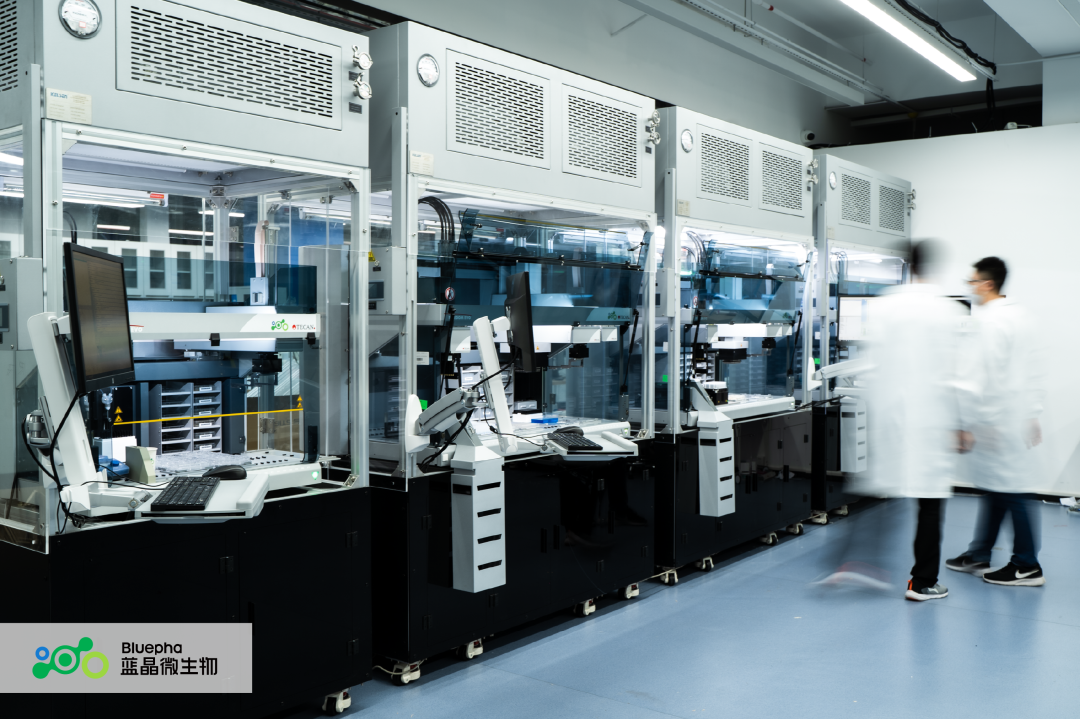
▲ Bluepha's strain development platform. Image source: Bluepha
Bluepha hopes to define some standards, and we've made good progress. Our internally built synthetic biology R&D platform, Synbio OS (Synthetic Biology Operating System), is a good example. Synbio OS covers the four major stages of synthetic biology — "design, build, test, ferment" — extending synthetic biology's influence from the laboratory to industrial scenarios. It allows the vast process data and engineering experience accumulated during R&D and production to be captured and reused in new product development, creating a "flywheel effect." Within the next three years, SynBio OS is expected to reduce Bluepha's complete product development cycle for a single product by 70% from current levels.
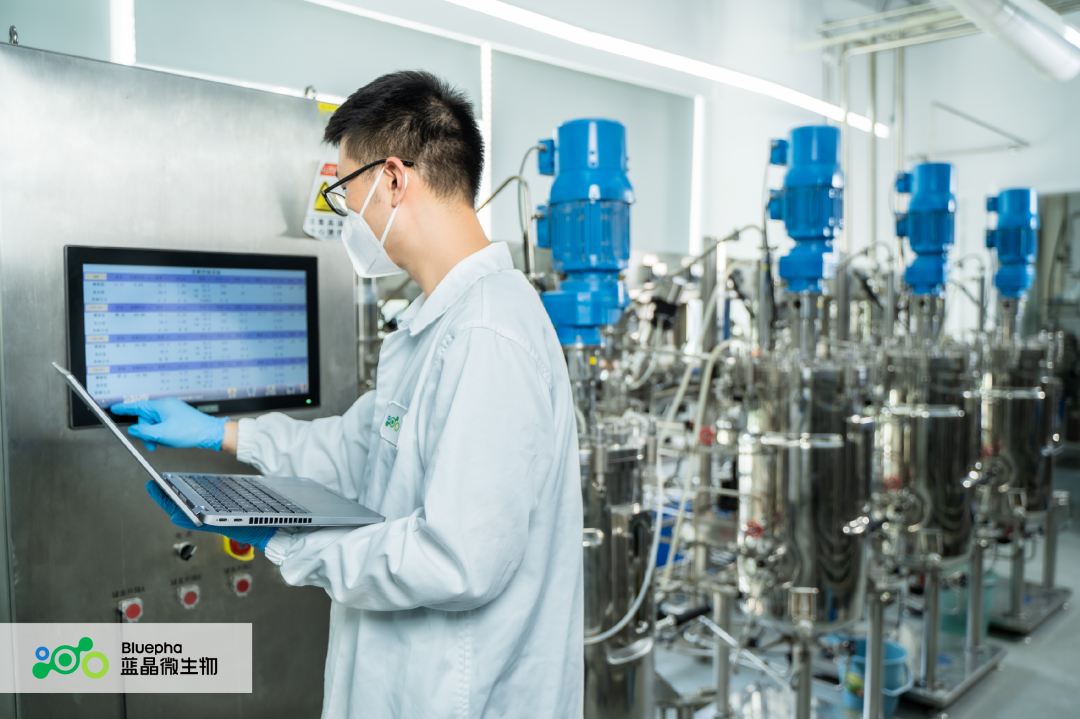
▲ Bluepha's process development platform. Image source: Bluepha
The prototype of Synbio OS was more than a dozen functional modules we designed independently, initially to solve problems encountered in R&D — such as R&D automation and data capture. To ensure internal clarity, we even defined standards for certain genetic components. But we later realized these modules had to be connected; otherwise they became data silos. So we built an integrated system linking all modules together. Currently this system is for internal use only, not open to the outside. In the future, we hope it can influence the industry. If the industry can establish unified standards, synthetic biology's development will unleash far greater potential.
07
Key Technology Directions That Will Shape Synthetic Biology's Future
Rui Ma: Over the next five to ten years, which technologies will have important impacts on synthetic biology?
Haokai Zhang: There are two technologies relevant to us.
First is computer-aided design for synthetic biology. For example, in designing synthetic pathways — can an algorithm help us design the enzymes needed for a reaction? Or the design target might not be small molecules but proteins, entire networks, or even whole cells. This involves algorithms, tool integration, and corresponding workflows. If a company can achieve this assisted design, the significance would be enormous. Of course, this is extremely difficult — it requires a fundamental understanding of synthetic biology at the team level.
The second direction I'm very optimistic about is R&D automation, particularly combined with microfluidics. We're very bullish on micro-nano fabrication technology supported by chips, applied in biotechnology, because this means high throughput. The major leaps in biotechnology over the past two decades have mostly come from micro-nano fabrication technology penetrating biotech — next-generation sequencing, for example.
Another technology not directly related to us but that I'm very optimistic about is chromosome-level gene editing in human cells. Quite a few genetic diseases are caused by chromosomal abnormalities or invisible mutations at the chromosome level. Technology capable of manipulating the human genome at the chromosome level would greatly advance genetic disease research.
Li Teng: I agree with everything Haokai said. I'll add two directions. These are closely tied to the bottlenecks in synthetic biology's development — one is "grows too slowly," the other is "can't be seen."
First, "grows too slowly." If you want to obtain data, for a microorganism you might wait two or three days; for a plant, half a year; for a human, over twenty years. The cycles we need to wait are extraordinarily long. This "extra-long" characteristic makes data acquisition in biology inherently very difficult. So I'm optimistic about introducing AI for meta-learning — predicting biological behavior with less data, gaining the most knowledge from the least data. What AlphaFold has been doing recently, for example, is training AI on very little data to accurately predict protein structure from sequence.
Second, "can't be seen." Because reactions occur at the microscopic level, invisible to the naked eye, synthetic biology is heavily dependent on the development of detection methods. So we very much look forward to breakthroughs in measurement tools.
▲ Friends interested in joining Bluepha, scan the QR code in the poster to learn more.
Reader Engagement
From your perspective, what innovation opportunities exist in the environmental protection and dual-carbon space? Share your thoughts in the comments. The 6 most thoughtful commenters will receive Bluepha's custom plush toy "Little Zhang."

FreeS Fund's Seventh Anniversary: Working Together to Go Further
Understanding Carbon Emissions to Know the Path to Carbon Neutrality | FreeS Research Institute
How We Think About Green Investment | FreeS Research Institute
How to Think About Biotech Opportunities Over the Next Decade? | FreeS Fund Dialogue