"There's always a new opportunity in AI hardware."

Key Insights from Three AI Hardware Entrepreneurs

On November 3, Morgan Stanley predicted that 2026 will be the pivotal year when AI-powered tech hardware sees explosive growth.
Even before this wave hits, we've already watched numerous entrepreneurs dive into smart hardware. Wang Mengqiu, founder and CEO of Zero Zero Robotics, has spent 11 years in the trenches, riding out market cycles while stubbornly pursuing flying cameras. Niu Yafeng, founder and CEO of AeroBand, survived his first six years on a few million RMB before launching products like a sensory drum kit and smart guitar. Hu Chengyang, founder and CEO of Pixboom, began developing high-speed photography cameras while pursuing his PhD at Tsinghua University.
Recently, at an AI hardware event co-hosted by Ant Group's investment arm, FreeS Fund, and the Mayi Entrepreneurship Camp, Li Feng sat down with Wang Mengqiu, Niu Yafeng, and Hu Chengyang to discuss product methodology and innovation opportunities in AI hardware.
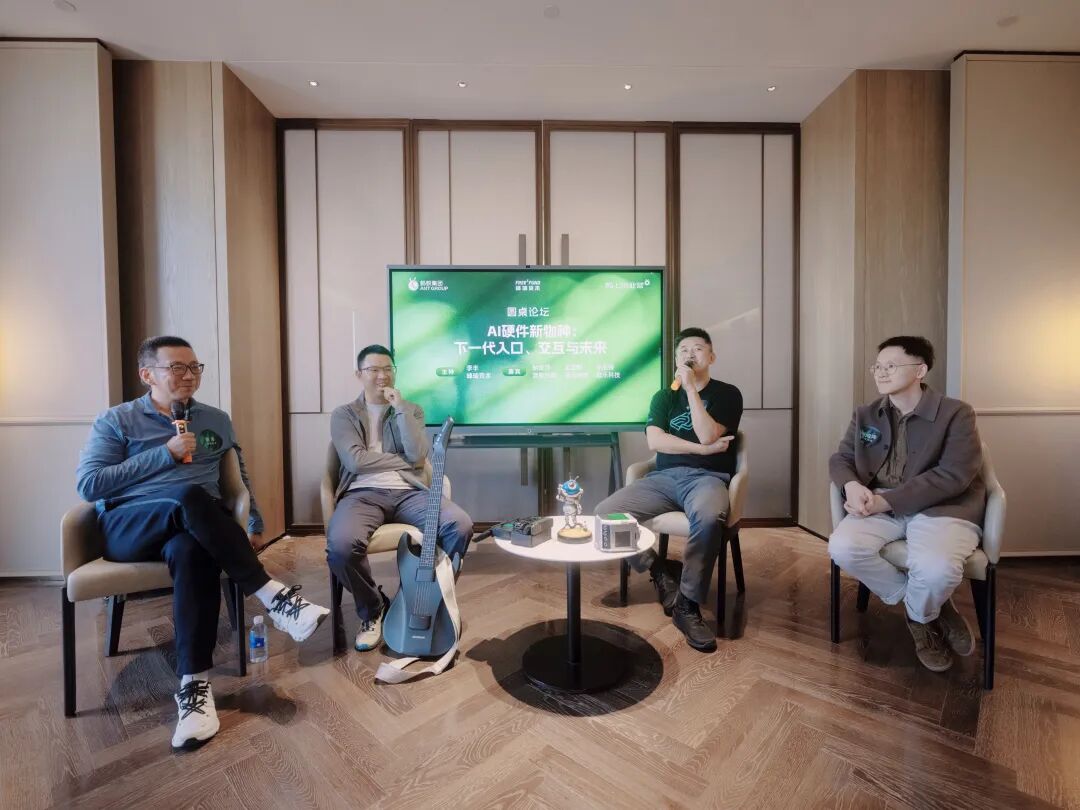
They explored:
- How hardware products transition from B2B to B2C — a process that requires founders to set aside some ego and toggle repeatedly between engineer and consumer perspectives
- How to run a successful crowdfunding campaign, where "success" encompasses both operational strategy and product maturity
- How to integrate AI technology into products in ways that genuinely improve user experience
In Li Feng's view, the AI smart hardware space will always present new opportunities; lasting monopolies are nearly impossible. Once any smart product achieves mass adoption, it fragments into verticals and niches, creating fresh entry points. We look forward to journeying alongside more innovators — reach out to us at bp@freesvc.com.
We've edited highlights from the conversation, hoping to offer fresh perspectives. This piece is part of our "AI Industry Observations" series, which will continue sharing firsthand practices and insights from AI entrepreneurs.
AI Industry Observations Series
From Foundation Models to AI Companions: What Cyclical Patterns Lie Behind the Rotating AI Hype?
Reader Giveaway
What AI smart hardware have you experienced, and what made it innovative? Share your thoughts in the comments. By 5:00 PM on November 12, 2025, the two most thoughtful commenters will each receive a copy of Industry and Civilization.

/ 01 /
Before This Wave of AI Hardware,
What Capital Cycles Did They Endure?
Li Feng: You're all hardware entrepreneurs. Let me start with a few questions: First, how many years have you been at this? Second, how many capital cycles have you lived through, and how did the market's temperature shifts feel? Third, what products are you building?
Niu Yafeng: I started in 2016, so nearly ten years now. Before Feng invested, we were rejected by countless VC firms. We survived our first six years on roughly a few million RMB.
Li Feng: Has your direction stayed consistent?
Niu Yafeng: Unchanged. We've always stayed on the smart musical instruments path.
We build intelligent instruments, including smart guitars and smart drums. The core idea is using technology and digitization to let everyone express themselves through music and "be heard."

A guitar from AeroBand.
Image source: AeroBand
Wang Mengqiu: I've been at this 11 years. Our product is an autonomous flying camera. You press a button, it flies out 3 meters, records video, and flies back. It has multiple modes — auto-follow, cycling, skiing.
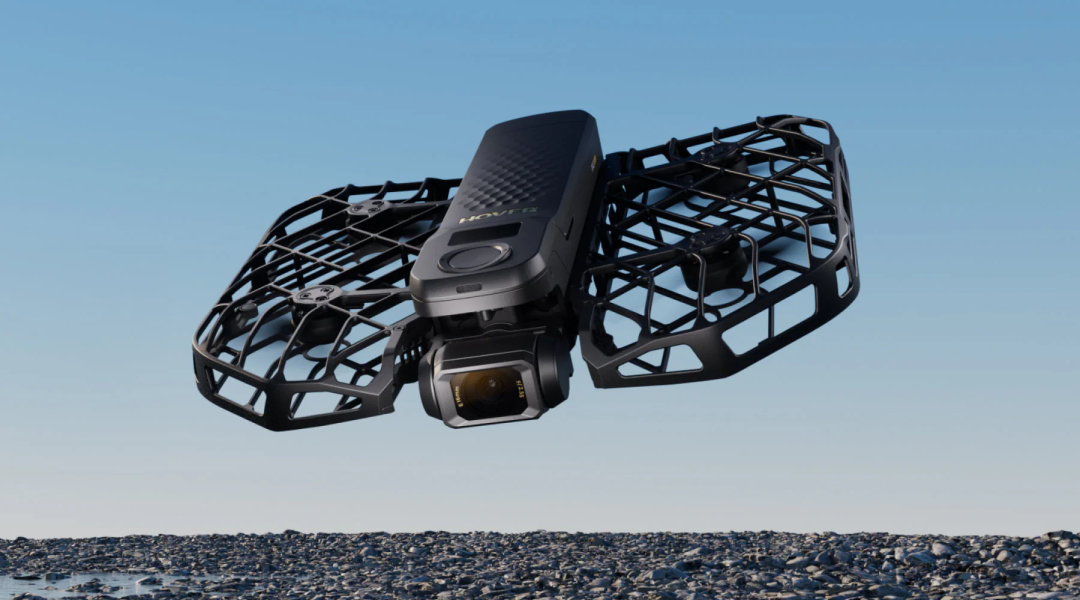
An autonomous flying camera.
Image source: Zero Zero Robotics
Feng once told me something that stuck: "Mengqiu, honestly, you've already gotten your money's worth. You've experienced everything a startup can go through short of actual success."
Around 2016, we were courted by a top-tier Silicon Valley tech company for full acquisition, but the deal fell through. In between, we even opened our own factory and spent four and a half years doing OEM/ODM. Three years ago, we returned to developing our own products.
Li Feng: What's the longest fundraising drought you've endured?
Wang Mengqiu: Two stretches, totaling seven years. One was the four years of OEM/ODM; the other was three years between funding rounds after closing one.
Li Feng: So you've lived through roughly two capital cycles. What's striking is that the flying camera product existed nine and a half years ago. For it to gain consumer and investor recognition a third time took this long.
Hu Chengyang: My entrepreneurial timeline is shorter — we founded Pixboom in 2023. But we've been working on high-speed cameras for much longer, dating back to my PhD. Initially, we served scientists, helping them capture fascinating physical processes like refractive index changes as light passes through crystals.
After starting the company, we briefly explored B2B services, but that wasn't what we truly wanted to do, so we pivoted toward consumers. In September, we officially launched our first creator-focused camera globally in European and American markets. Going forward, we'll stay centered on creators, providing tools for creative expression.
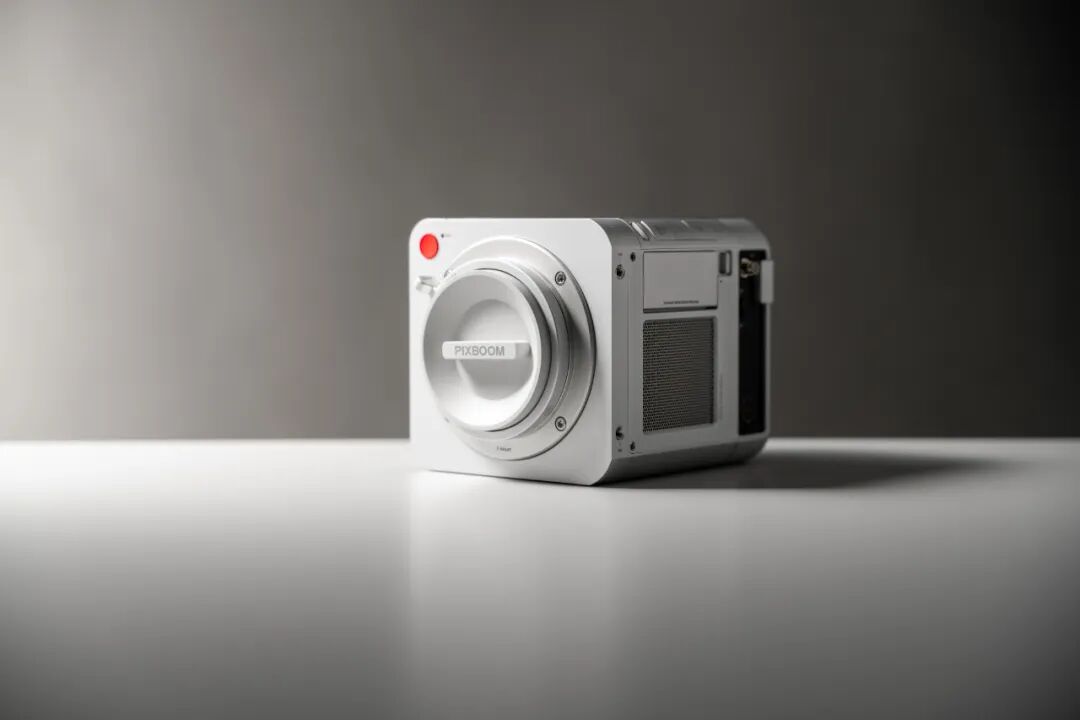
A camera developed by Pixboom.
Image source: Pixboom
Li Feng: Let me add some context.
What is high-speed photography? Standard video runs at 20 to 30 frames per second. High-speed cameras achieve 500 to 1,000 frames per second. They can capture an entire bullet passing through an object. Or those ads showing a water droplet falling, creating a column, then bouncing a smaller droplet back up — that's high-speed photography.
These devices used to cost hundreds of thousands of RMB, prohibitively expensive. Pixboom has brought the price down to around $10,000 — a dramatic reduction.
/ 02 /
From B2B to B2C: What Changes and What Doesn't?
Li Feng: In tech consumer products, many successful companies have technical founders rather than pure consumer backgrounds.
In traditional consumer goods, founders typically deeply understand consumers — think Zhong Shanshan of Nongfu Spring or Zhang Liaoyuan of Three Squirrels. But hardware is different; many successful founders come from technical, B2B backgrounds.
Why do B2B-background founders end up making successful B2C products? What capability shifts did you experience in transitioning from technical backgrounds to defining consumer products? What was that process like? What stayed constant?
Hu Chengyang: After our brief B2B stint, we felt uncomfortable — our team was actually better suited for B2C. And we held a foundational belief: in the long run, no consumer tech product has insurmountable technical barriers that time and money can't overcome. What matters more is whether we can stand with users and build a globally influential consumer brand.
From day one of our B2C pivot, we didn't build in isolation. We quite "unglamorously" connected with creators worldwide, conducting in-depth online interviews and visiting their studios and sets to understand their workflows. Every detail of our product ultimately came from frontline creators' practical experience.
Technical people making consumer products need to set aside their technical ego and genuinely stand with users. This brought me tremendous positive feedback and joy. Unlike working with tech geeks, collaborating with artists was genuinely exciting. Seeing our products capture their electrifying moments — the visual impact of that feedback was immense.
As a new brand, we dared to price our crowdfunding product near $10,000, which would have been unthinkable before. But our extensive co-creation built brand trust, convincing users to believe that a Chinese brand going global could produce something interesting in high-end imaging.
Wang Mengqiu: We barely did any proper B2B — we went straight to B2C from day one.
Over the past decade-plus, smartphones created massive tailwinds for many industries. Every component in phones reached extremes in cost, power consumption, and size. When I started out, I thought: strip a phone, discard the screen, run a real-time OS, and apply the NLP and computer vision techniques I learned at Stanford's AI lab to the phone hardware supply chain platform. That way, I could build low-power, low-cost, compact home robots.
The first thing I chose to do was transform the camera from a passive device into an active filming robot, delivering entirely different product form factors and interaction experiences.
The past three years have been fascinating. Our first post-revival product, the HoverAir X1 flying camera, was purely B2C, priced around 2,000 RMB, with users ranging from 4 to 80 years old, 60% of them women.
In 2024, we pivoted to the skiing use case. Today, Zero Zero Robotics is the designated Chinese brand of the U.S. National Ski Team. Our flying cameras have entered retail channels like Costco and were selected for TIME magazine's 2025 Best Inventions list.
Within the entire consumer market, the pace of intelligence and consumer experience iteration for flying cameras exceeded my original expectations, unlocking tremendous potential in us.
Li Feng: What capabilities need upgrading when shifting from technical backgrounds to consumer products?
Wang Mengqiu: I think consumers rarely buy products from a technical angle. They buy emotional value — whether from recording meaningful life moments or pure entertainment. I've visited many users and found that many overseas mothers buy DSLRs they use just once a year, for their child's birthday. Capturing important moments of loved ones is a universal value.
In consumer products, "have fun" matters enormously. The moment the product takes flight, the interaction experience, the packaging design — all deliver emotional value. What I find special about Insta360 is that they really "know how to play."
Innovation and "play" can't be separated. I wasn't the top student growing up, but I was the most popular kid in the neighborhood because I always came up with new ways for everyone to have fun. In a sense, Insta360 today is like a "big ringleader," bringing together people who want to play.
Li Feng: You've raised a crucial point. When transitioning from B2B technical backgrounds to B2C, you need to break conventions. Not cross red lines, but don't just step within technology's existing "footprints" — venture outside them to create something new. Entrepreneurs who are too rule-bound struggle to make great consumer products.
In your product, what's the split between "fun" and "useful"?
Wang Mengqiu: I want products that are both fun and useful. "Fun" moves users and dramatically reduces marketing costs. Our TikTok spread is all driven by "fun" — no one's seen a drone take off like this. "Useful" drives repurchases and word-of-mouth referrals.
Li Feng: Consumer products need to find their position in the "useful" versus "fun" matrix. For global brands, "fun" may be a better positioning than "useful." Because "fun" delivers emotional value, shifting user mindset away from price-performance comparisons. Once a product achieves fun, you need to keep it from gathering dust. Otherwise you get no data, no intelligence, and declining user engagement.
Wang Mengqiu: It's like golf: "Drive for the show, putt for the dough." Putting isn't pretty but it's useful — it decides the score. How cool your drive looks determines the first impression.
Niu Yafeng: I studied automation. My feeling about making consumer products is that entrepreneurs must first transform from engineer to consumer, then back from consumer to engineer.
In my first three years, I was more of a pure engineer, following technical intuition to define products. Our first product, "Air Guitar," was just a pick — more of a piece than a product.
The middle three years, we tried harder to think from the user's perspective. What scenarios does a guitarist face? What actions? Pain points? Expectations? Product definition grew around needs.
But turning user needs into well-executed products still requires technology — you switch back to engineer mode. How to design the strings? Speakers? Tone? Nearly every detail was a back-and-forth in our heads between "consumer on the left, engineer on the right," finally balancing into a product.
I think this is critical. Many people with strong consumer intuition can't "translate" needs into technical solutions. If engineer thinking dominates, technical solutions become heavy and costly. If you only focus on consumer experience, many solutions may be technically unfeasible. Good hardware product managers must navigate between both, using relatively low-cost technical solutions to deliver the best experience for what users need most.
Going further, you need philosophical-level thinking: what fundamental consumer need does this product satisfy? A guitar's function is three-minute singalongs or composition, but the deeper motivation is that music is a universal language — everyone has needs to "express" and "be heard." From these deep needs, we continuously build our hardware and software forms. For instance, if a user plays a melancholy song, and the system senses that emotion, perhaps it could recommend music that uplifts or resonates.
Li Feng: You've articulated something important yet easily overlooked. Some tech entrepreneurs have a typical mindset: "I'll use the best technology to make something great, then see who wants it."
But a hard market hurdle is understanding clearly what users need most and what might sell best, then figuring out how to deliver it with your technical capabilities at appropriate cost-performance. Sounds simple, but it's extremely difficult in tech entrepreneurship. Essentially, you must decide whether you're "finding a nail first, then a hammer" or "carrying a hammer looking for nails."
Once you've established the "nail finds hammer" pathway, you must also consider: how to make this "hammer" sell for more, with higher added value? This requires reverse-engineering, then returning to forward-engineering — thinking about how to use technical capabilities to enhance product value. From forward to reverse, then back to forward — for most tech entrepreneurs, this may be a hard threshold to cross.
How Can Smart Hardware Products Leverage AI Well?
Li Feng: What stage have your products reached in digitization or intelligence? Have you added AI?
Niu Yafeng: We're still studying where AI can genuinely deliver better user experience.
Digitization is actually the first stage. Our guitars contain sensors — the app knows everything about your playing and learning. We've built interactive courses where if you hit a wrong chord, the app tells you immediately.
Next, once digitized, user playing behaviors, aspirations, and preferred song types all reflect personality and musical taste — that's data. Our tones, sheet music, and other materials are gradually accumulating into a knowledge base.
On one side, user needs and characteristics; on the other, what we can provide. Once both layers are built, the next level up can be AI-orchestrated. If you're a folk music lover, AI pulls up relevant libraries and recommends appropriate lessons based on your level. Further down, if users want to create, AI can turn fragments into templates, letting users participate at key nodes to generate songs with their own personality.
I see this as a layered, progressive process. Introducing AI too early — users see all AI-generated content and wonder where their own participation is. AI must accompany user growth and needs, intervening at optimal moments, to deliver the best experience and solutions.
Li Feng: Well put. Simply put: first digitize user needs, preferences, playing levels, and guitar conditions. At sufficient scale, add personalization for precise user-content matching. Then, AI coaching — teaching the right songs in the right ways. Finally, AI creation matching user style.
Zero Zero Robotics developed a prototype ten years ago; the product finally took off a decade later. Beyond fundraising difficulties, what else changed?
Wang Mengqiu: Hardware demands strong fundamentals. We run our own factory with 130 assembly stations, 35 test stations — all MES systems, test software, and test data are ours.
Li Feng: That's quite similar to how Apple manages factories.
Wang Mengqiu: We also have a small factory in Xinchang, Zhejiang with over 30 workers. We pilot production in-house, running thousands of units before moving to other factories — this matters enormously.
Over this decade, our team has been on a "Long March" together, building deep revolutionary camaraderie. We studied all available attention mechanisms, reinforcement learning, and other techniques on the market, finding them unsuitable. Then we spent two years developing an efficient end-to-end system — one camera plus neural network technology achieves our current product performance.
I come from a statistical machine learning background. When I started, I didn't dare emphasize AI because the AI bubble had just burst. Statistical machine learning's characteristic is that you don't necessarily need to understand what's inside the model — you train complex models on large datasets, balancing bias and variance.
Li Feng: Let's talk about how Pixboom's high-speed camera uses AI.
Previously, high-speed photography faced massive challenges in storage and transmission due to enormous data volumes and density, making consumer products impossible and limiting the technology to expensive industrial equipment. Pixboom used AI to solve the data volume problem, enabling a compact consumer-grade product.
Hu Chengyang: Imaging systems have three main modules: front-end image sensor, middle ISP and codec, back-end data storage. Past high-speed photography generated too much data; our self-developed AI technology addresses this.
Reduced pipeline costs also owe much to domestic upstream and downstream development. Upstream image sensors — domestic manufacturers advanced almost in parallel with Japanese ones, enabling better image quality. Downstream storage manufacturers also achieved good localization. With upstream and downstream connected and Pixboom strong in the middle, the entire imaging system chain became domestic.
Li Feng: Pixboom used AI to solve the "soft" layer problems in high-speed photography — that's half the story. The other half comes from China's "hard" capabilities in chips, sensors, and optics catching up, with fast iteration and low costs. Combining both produced Pixboom's consumer product at a fraction of previous costs — from accessible only to few, to easily usable by many, anytime, anywhere.
"$3.5 Million Crowdfunded in 30 Days"
Li Feng: Pixboom shifted from B2B to B2C and launched its first Kickstarter campaign. What were the results?
Hu Chengyang: We raised $3.5 million in 30 days.
Li Feng: How did you achieve that?
Hu Chengyang: Many Chinese startups going global now use crowdfunding, and many consider external agencies. We contacted many last year but found them unsuitable. Our high price point meant using similar tactics to other products wouldn't yield good results. So we built an internal team to execute.
If I summarize key actions, there are three:
First, industrial design. For a global consumer brand, product form is always the first impression. At many offline events, numerous creators were drawn in by our product's appearance.
Second, content aesthetics. Our users are creators with extremely high standards for official promotional materials. So all our materials were produced in collaboration with top Nordic and North American creative teams. They recognized the brand early, became co-creation partners, and invested time and energy.
Third, offline events. We held events in many places where global creators gather, letting users touch and experience products firsthand, strengthening brand trust and credibility.
Li Feng: Simply summarized in three points: first, brand-related matters must be handled internally; second, regardless of price, deliver "beyond expectations" value in every aspect to elevate brand positioning; third, warm-up activities, core user engagement, community discussions — these standard moves are all essential.
Many entrepreneurs may wonder: how mature must a smart hardware product be in terms of appearance, functionality, industrialization level, etc., before it's suitable for crowdfunding? How do you get smart hardware products noticed on Kickstarter?
Hu Chengyang: Regarding product readiness for crowdfunding, my marketing lead and I discussed this extensively over the past half-year. Our final consensus: the mass-production product we ultimately deliver must be fully functional with perfect experience. But at the crowdfunding stage, not necessarily. Crowdfunding platform users have unique psychology — they support startups and can accept products at early concept stages.
Before crowdfunding, we sent machines to creators and KOLs for trial. Initially we worried about insufficient product completeness. But they told us that even a 3D-printed shell represented a quite mature product to them. This shows crowdfunding users naturally have lower expectations — it's especially suitable for products needing certain mass-production cycles but wanting early market data.
Li Feng: What crowdfunding advice does AeroBand have? Especially for technically-backgrounded founders.
Niu Yafeng: First, don't make crowdfunding scale your success metric. Crowdfunding is just the first step. Kickstarter's user base is very specific — mainly geeks or white males with strong DIY capabilities. Products that blow up there align closely with these demographics.
Also, pricing is critical. Kickstarter has tens of millions of users, but through paid acquisition you might convert only hundreds to thousands. Those hitting eight figures essentially turned crowdfunding into "pre-sales," backed by substantial resources and user accumulation.
If your product price is around $10,000, a few hundred units gets you to two or three million. But at just tens of dollars, 5,000 to 10,000 purchasers is already successful. The key is using crowdfunding to accumulate user bases for product iteration.
Li Feng: For example, an AI pet companion product we invested in performed much better in Japanese crowdfunding than American, because Japan has many elderly and people living alone. So target user-platform alignment matters.
In AI Smart Hardware, There Are Always New Opportunities
Li Feng: When facing consumer markets, how do you operate social media and build brand awareness, and what pitfalls should you avoid?
Niu Yafeng: We initially launched on Amazon but later realized Amazon operates on search-based e-commerce logic — without exposure, no one searches for new brands. We then shifted to independent site traffic acquisition, but efficiency was low because users don't necessarily buy on first ad exposure; ROI couldn't sustain it.
Later we realized music products are extremely well-suited for social media propagation. In 2021-2022, TikTok was rapidly rising overseas and starved for content. We decided to showcase product usage scenarios through short videos — guitar playing or drumming effects — to attract users. To close the distance with overseas users, we found foreigners in Shenzhen, shot by the seaside to simulate overseas settings, and filmed for seven or eight months before videos started going viral.
Li Feng: You built your own team to shoot videos, persisting seven or eight months before seeing results. Did your expectations shift during this process? How did you know whether persisting would eventually pay off?
Niu Yafeng: First, the broad direction was correct — we needed low-cost exposure, presenting product effects through short videos on TikTok and Instagram. This had to be done, sooner or later.
Second, not every video becomes a hit, so we worked hard to understand platform rules and algorithm logic. Like first-three-seconds content design, middle sections, and endings. At the time TikTok favored original content; once we gradually found our method, we could replicate successes, moving from one 5-million-view video to eventually producing videos breaking 10 million views.
Li Feng: After achieving initial distribution, how do you long-term track and understand evolving consumer needs and maintain close communication?
Niu Yafeng: At sufficient sales volume, user numbers grow. We collect feedback from social media, after-sales groups, and other channels through VOC (Voice of Customer) tools. We interact with consumers on platforms like Facebook to get product suggestions. Beyond gathering feedback, we actively洞察 market needs, thinking about how to improve next-generation products.
Li Feng: Let's talk about flying cameras. The consumer aerial drone space is now very crowded. I see you've moved into water drones. What's behind entering the water drone market?
Wang Mengqiu: Flying cameras still have huge untapped potential. Water sports are a natural extension — if someone loves cycling and skiing, they likely love water sports too (surfing, paddleboarding, etc.).
I think water sports may explode in China in 2026. Whenever we test water cameras on weekends, the roads to reservoirs are packed, reservoirs full of paddleboards like dumplings boiling. Two possible reasons: first, inflatable kayaks and paddleboards are becoming more accessible, lowering barriers; second, people increasingly value leisure time outside work, wanting to spend more time with family outdoors.
Li Feng: Beyond hardware supply chain and AI algorithm advances, I think the biggest change for camera products is that the largest traffic entry point is now video platforms.
Today, buying equipment that captures "never-before-seen" photos or videos — bullets passing through objects, yourself falling into water, extreme sports moments — can get you traffic. Spend 80,000 RMB on equipment, shoot 100 unique pieces of content, gain 10,000 followers. That's equivalent to spending 80,000 RMB on media buys, but with equipment you keep shooting and continuously gaining new followers.
Human desire to "see the world" is infinite — underwater, high-speed, panoramic, behind you... demand for such video isn't easily saturated.
In AI smart hardware, there are always new opportunities; lasting monopolies are nearly impossible. Once any smart product achieves mass adoption, it fragments into verticals and niches, creating fresh entry points. Just like phones: vivo emphasizes photography, Xiaomi focuses on extreme price-performance, Huawei leads in communications technology and imaging processing. As long as a category's market is large enough, it differentiates — hard for any single player to dominate.
Reader Giveaway What AI smart hardware have you experienced, and what made it innovative? Share your thoughts in the comments. By 5:00 PM on November 12, 2025, the two most thoughtful commenters will each receive a copy of Industry and Civilization.

From Foundation Models to AI Companions: What Cyclical Patterns Lie Behind the Rotating AI Hype?
AI-Era Power Games: How to Understand China's New Power System?
AI Healthcare: Has Its DeepSeek Moment Arrived? | FreeS Research
First Half of 2025: What Changed and What Opportunities Exist in AI Agent? | FreeS Research
Star the FreeS Fund WeChat Official Account — timely business insights delivered to you.