How Should Brands Go Overseas on TikTok and With Independent Sites? | FreeS Fund Going Global Series

Do China's hard-won lessons from domestic competition still carry weight abroad?
According to Forbes, an increasing number of Chinese DTC brands have become category leaders in recent years and are expanding globally. Some of these brands were born in China based on insights into Chinese target consumers, while others were born overseas based on insights into overseas consumers.
"China's cross-border e-commerce has currently entered a new inflection point in a new cycle. Going forward, we'll see more branding phenomena in China's cross-border e-commerce," Feng Shu once commented on the going-global track. Cross-border e-commerce players with Chinese DNA are gradually moving from "Made in China" to "Created in China," from "products" to "brands," and from "cost-effectiveness" to "quality."
So how do the players who have achieved something on this track perceive this view? The intensity of China's e-commerce ecosystem is well-documented. For going-global players, does the experience gained from competing domestically still work when applied to overseas markets?
At 10:00 AM Beijing time on February 26, Feng Shu joined host Zhuo Li for a discussion with Kyle Jiang, founder and CEO of JUNO & Co., in a live roundtable on going global hosted by MIT CEO.
Founder Kyle and his team have been exploring North American target users' consumption philosophies while flexibly applying e-commerce experience learned in China. Judging by the results, overseas consumers are buying in. In May 2021, JUNO became the #1 brand in Amazon's makeup remover category, with its official website growing approximately 10x.
But as a California-based brand, JUNO's ability to come out on top in an e-commerce environment with traffic models and cultural backgrounds completely different from China's domestic market doesn't rely entirely on copying domestic "battle experience." In the roundtable, Kyle and Feng Shu also discussed several key areas that going-global companies need to figure out:
- What advantages can Chinese market experience bring to going-global brands?
- What are the differences between e-commerce markets in China and the US?
- Should you build a DTC website, and how do you make it work?
- How can going-global brands achieve good growth on TikTok?
- Where are the better opportunities in current going-global business models?
...
This is the third installment in the FreeS Fund Going Global Series. We've transcribed and edited the conversation for you, hoping to offer some fresh perspectives.
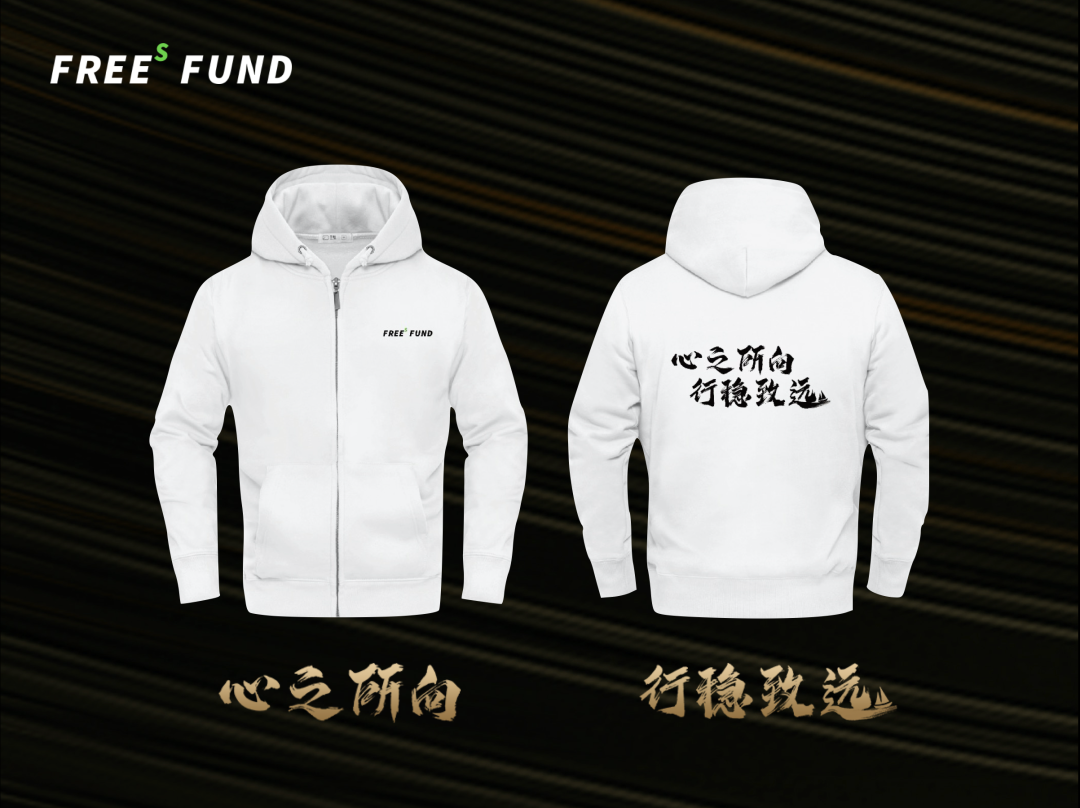
Interactive Giveaway: What are your thoughts on the keys to survival for going-global companies? Share your unique insights in the comments. By 4:00 PM on March 24, the three most thoughtful commenters will each receive a 2022 FreeS Fund custom commemorative T-shirt.

Host: Zhuo Li, MIT CEO Consumer Community Lead
Guest: Li Feng, Founding Partner, FreeS Fund
Guest: Kyle Jiang, Founder & CEO, JUNO & Co.
/ 01 / Two Waves of Growth in Chinese Cross-Border E-Commerce
Zhuo Li: China's cross-border e-commerce has experienced two distinct waves of growth — one beginning in 2015 and another in 2020. I'd like to ask Feng Shu: what were the different causes behind these two waves?
Li Feng: The 2015 growth in cross-border e-commerce was mainly driven by macro factors. Those who follow China's domestic economic situation may recall that at the 11th meeting of the Central Financial and Economic Affairs Leadership Group in 2015, supply-side structural reform was proposed. At that time, China was experiencing a supply-demand mismatch — consumers had strong purchasing power, but domestic enterprises' products and services couldn't keep up with demand growth. China had entered a period of "economic structural adjustment."
In fact, every time economic structure undergoes adjustment, the country places greater emphasis on foreign trade. Foreign trade indeed absorbed the pressures and challenges of economic development, so 2015 brought new opportunities and windows for the industry.
But there was another factor behind that year's growth: changes in traffic structure. Looking further back, China's earlier wave of foreign trade e-commerce, represented by companies like LightInTheBox, was primarily built on search traffic. At that time, PC traffic saw significant growth and high share, supporting the first wave of domestic foreign trade e-commerce.
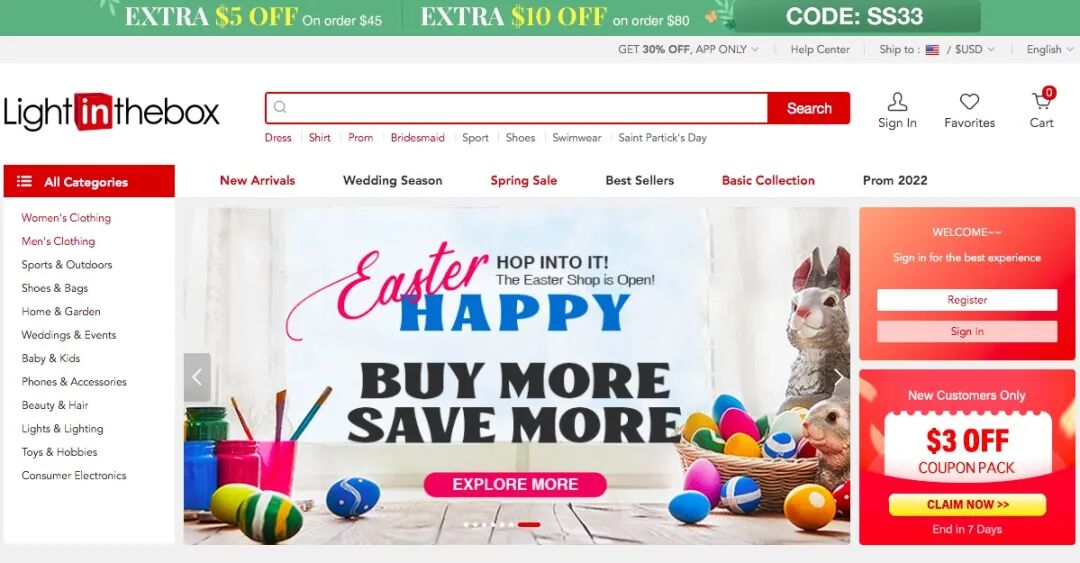
LightInTheBox official website
Around 2015, Facebook successfully transitioned its product from PC to mobile. Traffic structure shifted from search traffic to social traffic, from PC traffic to mobile traffic, with the added element of visual, image-based traffic that was rarely seen on PC. This transformation created new traffic opportunities.
The combination of these front-end and back-end changes produced the 2015 wave of cross-border e-commerce growth.
The second wave, which includes companies like JUNO, may be more representative of the present moment. I'll summarize briefly.
First, for cross-border e-commerce companies going global, the pandemic increased consumers' time spent at home and online across countries. Online shopping demand exploded as a result, and overseas e-commerce penetration rates rose rapidly — this was the demand-side change.
Second, while the pandemic disrupted some logistics, the rapid demand growth also tempered cross-border e-commerce companies' supply chains and infrastructure, leading to noticeable efficiency improvements across various stages.
Third, also on the supply chain level, during the pandemic, regions outside China — such as Europe, America, and Southeast Asia — saw their local supply chains affected by phase-specific constraints like inconsistent recovery rates across upstream and downstream areas. This meant that both demand shifted from other countries and their own new production capacity needs couldn't be brought online normally. Many online consumer orders thus flowed toward Chinese cross-border e-commerce, or cross-border e-commerce with Chinese supply chain DNA. Because at that time, China was the only country with a complete supply chain and relatively balanced recovery.
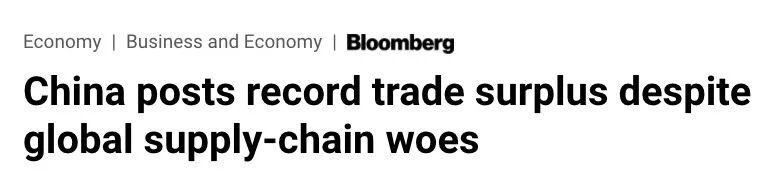
China's Trade Surplus Hits Record High Amid Global Supply Chain Crisis
Bloomberg, November 8, 2021
These three factors together drove the second wave of cross-border e-commerce growth. And this wave's growth trend may be more pronounced than the 2015 wave, with more obvious demand-side improvement, better or more valued logistics upgrades, more complete infrastructure, and higher coordination efficiency between supply and demand.
/ 02 / Does Going Global with Chinese DNA Offer More Advantages?
Li Feng: Kyle, you've done e-commerce in both the US and China, switching back and forth three times. Now you're operating in both regions, with the US as your primary market. In this process, what changes and differences have you observed between China and the US?
Kyle: Our team started in the US in 2019. After achieving some success, Chinese daigou buyers began purchasing our products to bring back to China. So in 2020, we built a team focused on the Chinese market.
After that, we were amazed by how fast the Chinese market changes. In just two years, traffic models shifted from Taobao and Xiaohongshu livestreaming to Douyin and so on. We learned as we went, and this experience quickly helped us scale in the US. Simply put: learn domestic Chinese traffic experience and playbooks, then integrate with our US market team's content to produce output.
So we were relatively early adopters of short video on TikTok and Instagram. Beyond product introductions themselves, we also emphasize communicating our mission and values through video and social platforms. For example, JUNO's new positioning is as a sustainable, vegan skincare brand. Based on this positioning, we launched a cleansing balm with only 10 ingredients. Through brand positioning and traffic operations, our growth was significant, and we reached #1 in our category.

JUNO's signature cleansing balm
The US domestic traffic structure is also changing, but not as fast as China's. It only gradually shows certain trends. This is why even with TikTok's obvious growth, we insist on operating Instagram, YouTube, and Google as well.
To speak more about differences, I've seen very different things on the consumer side in both countries. In skincare, American consumers may want products that are more streamlined and minimalist, while Chinese consumers may want products that are more elaborate and ritualistic. When we do product R&D, we need to output for both markets simultaneously, and this market demand difference has brought considerable challenges.
I've also thought about whether our products should cater more to the domestic market or the US market. But for now, we're scaling quickly in the US, so we've temporarily focused our center of gravity there, positioning the brand as a streamlined, eco-friendly skincare brand. This fits quite well with current American Gen Z consumers' consumption values.
Li Feng: So after going back and forth in China for over two years, being tempered by Tmall, Xiaohongshu, and Douyin — now looking back, when you're based in the US, in which front-end, middle-end, and back-end aspects has your domestic "battle experience" provided advantages?
Kyle: Personally, I feel the biggest inspiration from domestic "battle experience" for our team is having clearer brand positioning and faster front-to-back reaction capabilities. First, competing domestically changed our product development thinking. We used to estimate and produce what consumers wanted a year in advance. Chinese "experience" helped us obtain consumer demand from the front end more quickly, control inventory well from front to back, and helped JUNO develop reaction capabilities faster than most American brands. JUNO's iteration and launch of the eco-friendly cleansing balm with only 10 ingredients — this is the most direct result of that process.
Li Feng: One observation I have is that overseas brands and cross-border e-commerce brands built on China's supply chain all have very efficient front-, middle-, and back-office coordination, with extremely fast product iteration. Meanwhile, many American domestic brands seem to rely more on influence-driven marketing rather than product iteration to express and sustain a brand. What's your take on this, Kyle?
Kyle: You mentioned the front-, middle-, and back-office coordination earlier. But I think successful consumer brands still need to communicate their values clearly. China's "experience" has also helped our team become clearer and more certain that building a distinctive brand and set of values is the only path to global success. The rise and fall of traffic channels shouldn't affect brand positioning. Understanding your target audience and humanistic core are what ultimately determine a brand.
Li Feng: So will the "battle experience" learned on Douyin help you operate on Instagram and TikTok?
Kyle: I think it does. Actually, many American skincare brands have come to talk with me, surprised by JUNO's growth velocity, since we haven't entered Sephora for conventional offline sales. I've shared our methods, but they can't execute or apply them well to their own brands. The battle experience learned domestically has trained our team's execution capability and way of thinking, which is very helpful in driving projects forward.
Li Feng: The cross-border e-commerce entrepreneurs I've encountered basically fall into three categories: those with 80% of their life experience based in the US, those like you with about 40% based in the US, and those basically based in China. How do these background differences create opportunities, advantages, and challenges for entrepreneurs?
Kyle: It mainly depends on what product category the company is pushing. If the category has greater supply chain advantages in China and brand philosophy isn't consumers' top concern, then having a China-based team is more advantageous. If the category in the target market requires brand philosophy to outweigh supply chain advantages, then teams with deeper understanding of local culture and consumer values have the edge.
When a company's marketing team does local marketing, they need to not only understand the product and supply chain, but also the needs and pain points of consumers in that region, in order to communicate effectively.
Li Feng: Indeed, that's one dimension. Also, whether you're selling a product philosophy, or selling rapid response and diversification, etc. — these all make a difference.
/ 03 / The Meaning and Essentials of Doing DTC Well
Li Feng: I have two more questions. The first is also something that troubles us as investors: is building an independent DTC site worthwhile, and if so, how do you make it work? And do you do Amazon branding on Amazon?
The second question: how do you allocate onshore and offshore warehousing to neither tie up massive cash flow nor compromise user experience, while minimizing various risks like inventory backlog and offshore warehouse returns?
Kyle: Still taking JUNO as an example — we're primarily DTC through our independent site, with some limited online distribution through Amazon and other platforms. The biggest moat of an independent site, I believe, is the platform itself. To build a brand well, you must build an independent site well.
To do an independent site well, I personally think you should focus on these points —
-
Capture target audience pain points and differentiate your product, to build brand influence and core competitiveness.
-
Optimize page visuals, so users form a good impression at first glance.
-
Tell your brand story well, deepening brand impression and influence.
-
Make good use of data obtained from the independent site; it can help you iterate products quickly and shorten the front-to-back process.
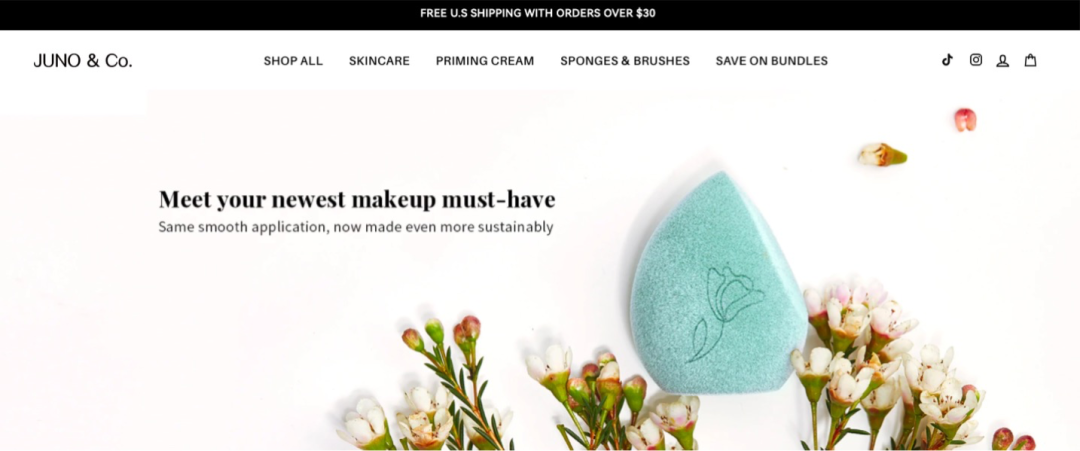
JUNO official website homepage
Running an independent site allows you to break down and optimize every link according to your brand's specific situation, and also provides consumers with a great experience. Amazon is mainly a single-product model; trying to achieve the above through Amazon branding is relatively difficult.
Regarding offshore and onshore warehouse planning: because we're in cosmetics and skincare, mostly standardized products (products with unified market standards, which typically have clear, unified specifications, models, or styles in the market), our biggest challenge is usually advance stocking. Before it might have been stocking one month ahead, now it's two months ahead, because demand has gone up and shipping costs are quite high, sometimes involving third-party partnerships. We need to ensure consumers receive products within 3-5 days of ordering.
Li Feng: Do you stock in onshore warehouses in the US?
Kyle: We have warehouses in both the US and China. About 30% of our global product orders ship from China.
Li Feng: There's something investors and entrepreneurs probably need to think about, but rarely define carefully when describing business plans — from dimensions like price point, product appearance, philosophy, values, etc., whose market are you actually competing for? Kyle, combine this with JUNO and tell us.
Kyle: The skincare category we focus on — 99% of competitors in the local market are American brands. This is from our market research. But when we first entered the market, the market share of our flagship product (cleansing balm) was actually very small. We observed that local consumers mostly used wipes or micellar water for makeup removal, so in our marketing we educated them that "cleansing balm is the best for your skin and the most environmentally friendly" — essentially educating a market into existence.
We're aiming for a young people's market. We're moving toward becoming the most transparent, eco-friendly beauty and skincare brand in our customers' minds.
What Cross-Border Model Is Worth Learning From?
Li Zhuo: I want to ask Uncle Feng — you've seen many cross-border business models before, and FreeS Fund has invested in quite a few. I'm wondering if there's any model you're particularly optimistic about right now?
Li Feng: Let me first expand on a point: Chinese cross-border e-commerce has currently entered a new inflection point in a new cycle. I mentioned the new cycle at the beginning of the roundtable — the front-, middle-, and back-end changes that have driven cross-border e-commerce growth in recent years. China's foreign trade used to have a famous label of "cost-effectiveness," generally偏向 the overflow of excess capacity from China's supply chain. But now it's gradually changing, or rather, becoming branded with certain premiums and quality.
For example, Haier — its Casarte brand has already become a mid-to-high-end home appliance brand in the US and Europe. Or Xiaomi, OPPO, and other brands' products, which also represent international premium products. This is no longer purely cost-effective products from the overflow of China's supply chain capacity, but has begun to become certain-premium Chinese manufacturing, or Chinese creation.
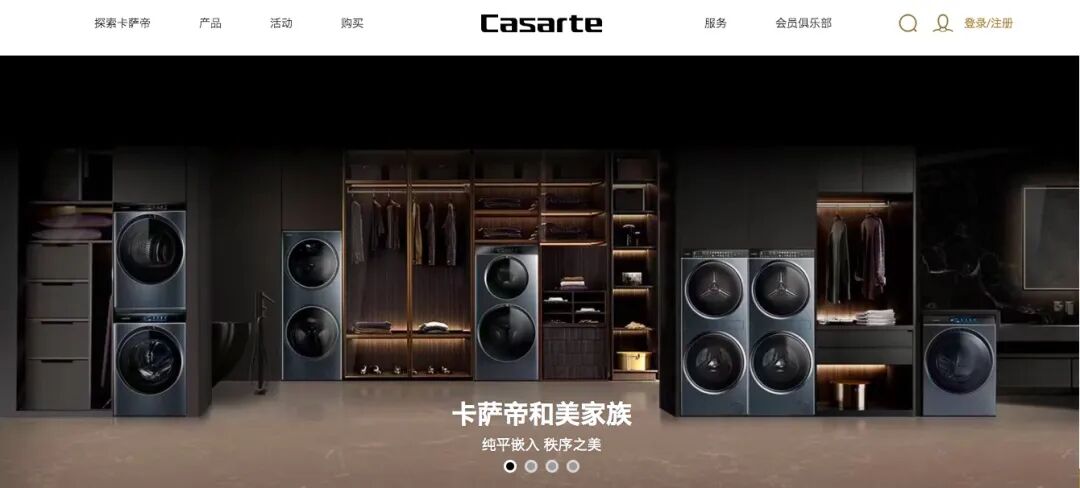
Casarte, which takes the mid-to-high-end route
The ability to command premiums, beyond the upgrade of brand influence itself, mainly comes from more technology and added value in supply chain, product iteration, materials, and craftsmanship.
So to come back to the question — what's working well now is premium brands brought about by brand upgrades, technology upgrades, and creation upgrades, while also aligning with foreign mass-market consumers' values and brand perspectives. This new inflection point naturally occurs after the new cycle reaches a certain stage, including new opportunities and new directions.
From What Dimensions Can You Build a Global Skincare Brand?
Li Zhuo: Next I want to ask Kyle two questions.
First, what is JUNO's business model? Second, JUNO currently has no presence in offline channels like Sephora. I'd also like to hear your views on relatively traditional retail or distribution channels.
Kyle: JUNO is still primarily independent site-based, with limited Amazon distribution. As I mentioned earlier, for DTC brands, an independent site is essential. You need to create distinctive visual branding, shape a compelling brand story, and obtain fast, immediate, precise user data through the independent site, optimizing every step from user order to unboxing to the extreme, inputting our brand philosophy at every touchpoint. We've also spent tremendous effort on upgrading the entire website.
We also do retail on Amazon because it has a solid user base. Though we currently only have one partner running Amazon, it can still effectively capture some traffic.
Regarding offline channels, we lean more toward whether a channel can properly endorse the brand. At this stage we're investing more energy online because the efficiency is indeed much higher than offline. In the future we'll probably find a balance point. When the brand is more mature and has more SKUs, JUNO will consider joining brand chain stores or even establishing our own stores.
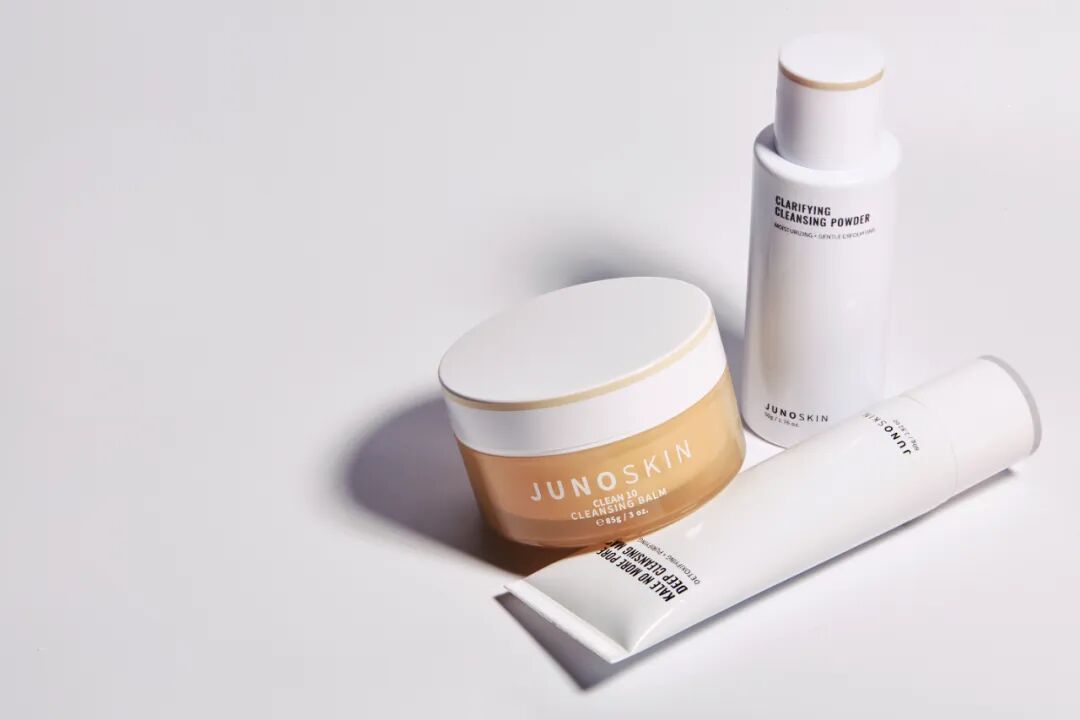
JUNO's product packaging is made from 100% recyclable PP, and outer packaging boxes are made from FSC-certified recyclable materials.
Li Zhuo: The theme of this event, from Made in China to Global Brand, and we've mentioned many brand-related topics. So what brand story does JUNO want to build?
Kyle: In our category, consumers have so many product choices. If our product philosophy and quality can't stay ahead of consumer expectations, we'll quickly be buried.
For JUNO, we've been making skincare products for several years now. I have a small personal concern: the products we sell are things consumers use every day. But after they finish them, where do the product containers go? In terms of consumption volume, human society produces 120 billion units of plastic packaging waste annually, and ultimately this waste ends up in landfills or discharged into the ocean. Less than 10% can be recycled. This waste is particularly harmful to the environment, especially the plastic suspended in oceans.
As a beauty and skincare brand that permeates consumers' daily lives, I feel JUNO has a responsibility to promote environmental awareness. I believe this will resonate with everyone. If we can promote it well, this force will grow infinitely. This is also the meaning of our existence, I suppose.
Our product formulas adhere to sustainable, vegan, and clean beauty principles — a brand that prioritizes healthy skin first. Sustainability and veganism are our long-term goals. From material selection to production processes and other aspects, we hope to build JUNO into an eco-friendly, streamlined brand with a strong sense of inclusivity.
Li Zhuo: Following up on Kyle's answer, I'd also like to ask on behalf of the women in our audience: "Every day, you're using so many skincare brands, and you hope that one day, when people think of this category, the first names that come to mind aren't traditional brands like L'Oréal or Estée Lauder, but JUNO. How far do you think JUNO is from those established global skincare brands? And what do you see as the core to closing that gap?"
Kyle: Great question — this is actually something I used to think about a lot.
Compared to traditional giants, our differences are mainly on the product side and brand philosophy. From a product perspective, we're not in direct competition with them at this stage.
For us, JUNO was born on the internet, so our grasp and adjustment of product demand is very nimble. Our team is very good at innovating and capturing the needs of a new generation of consumers. Take our emphasis on sustainability and classic ingredients, for example.
The other main gap is brand culture. These brands have decades of accumulated heritage, their own brand image and values. As a brand of the new era, the values I just mentioned — sustainability, greater inclusivity, more positive emotions — these are what we will express over the long term. To achieve the kind of deeply rooted brand influence that traditional brands have, we still have a long road ahead. But now with new channels like TikTok and Instagram, and the boost from new social media traffic, that distance can be narrowed to some extent.
How to View Changes in Traffic Channels? How to Do Traffic Marketing Well?
Li Zhuo: I'd like to ask Uncle Feng, since you've also observed that there have been some structural shifts in overseas traffic marketing in particular. I'd like to hear your take on the opportunities and challenges these changes might bring — including whether there are any newer, promising channels you'd recommend for companies and teams to explore.
Li Feng: Traffic operations may be just one small front-end piece of cross-border e-commerce. Let me use an example I often share in internal presentations.
In the text-based internet era, say before 2008, if you wanted to buy something online in China, you'd probably search for text descriptions first, then go purchase offline. In the text era, people typically had few product images to look at when making purchase decisions — they could only read text descriptions, like the differences in graphics cards, CPU, and memory between computers, where visual differences were minimal.
Under the strategic call of "Broadband China," from 2000 to 2010, broadband began spreading rapidly in China. Soon, the text-plus-image traffic combination started to emerge.
So who benefited from this shift in traffic structure? Categories where text descriptions alone couldn't showcase selling points — clothing, for instance. Having images to show was definitely more reliable than just text. Later, video distribution emerged. What couldn't be effectively promoted through images alone but could through video? Color cosmetics, for example.
Looking at this history, changes in "online" traffic structure often bring enormous new traffic opportunities. They also represent new distributions of user time, new media formats, and can encompass more different product types and category types.
Before 2012, the first wave of cross-border e-commerce relied on Google keyword searches, doing pure product descriptions. After 2012 came a wave of Facebook e-commerce, using图文并茂的 personalized brand operations to make an impression on consumers. Today's media forms are even more complex — Instagram has video product Reels, Facebook has also started pushing video products, YouTube has Shorts, not to mention TikTok. And text content hasn't been completely replaced either; different traffic formats each have their own adherents.
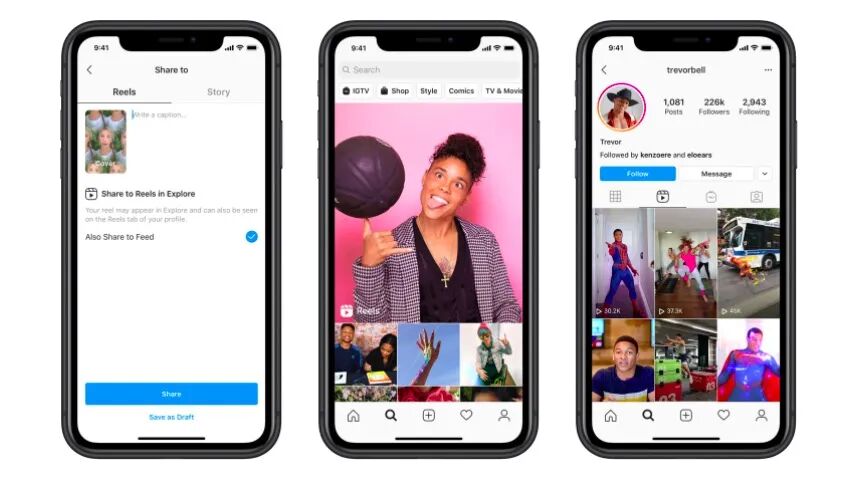
"On Reels, you can share daily moments and creations with your followers, and get massive exposure to the Instagram community."
Over the past six years, domestic traffic structure has shifted from WeChat official accounts to Xiaohongshu to Douyin — three waves of completely different traffic forms. Official accounts were text-primary, image-secondary; Xiaohongshu was image-primary, text-secondary; Douyin is video-primary. Each produced somewhat different brand effects — some long-term, some short-term.
From a short-term, results-oriented perspective, changes in media format always bring huge new opportunities for brands and categories. Of course challenges exist simultaneously. The iteration of domestic traffic formats, whether WeChat official accounts or Xiaohongshu, has proven that volume generated solely from media format changes doesn't necessarily become a brand in the end — it may just be ordinary waves rising and falling.
Li Zhuo: The next questions are for Kyle. First, how did JUNO achieve such successful growth on TikTok? Second, how do you view these social media platforms' own e-commerce layouts? Do you see them as a collaborative opportunity, or a potential new challenge?
Kyle: JUNO's initial traction on TikTok did draw on some lessons learned in China. But beyond TikTok, we advertise across major social platforms and even some American本土 magazines. With the boost from these media channels, people can quickly discover us and build awareness of new products and the brand.
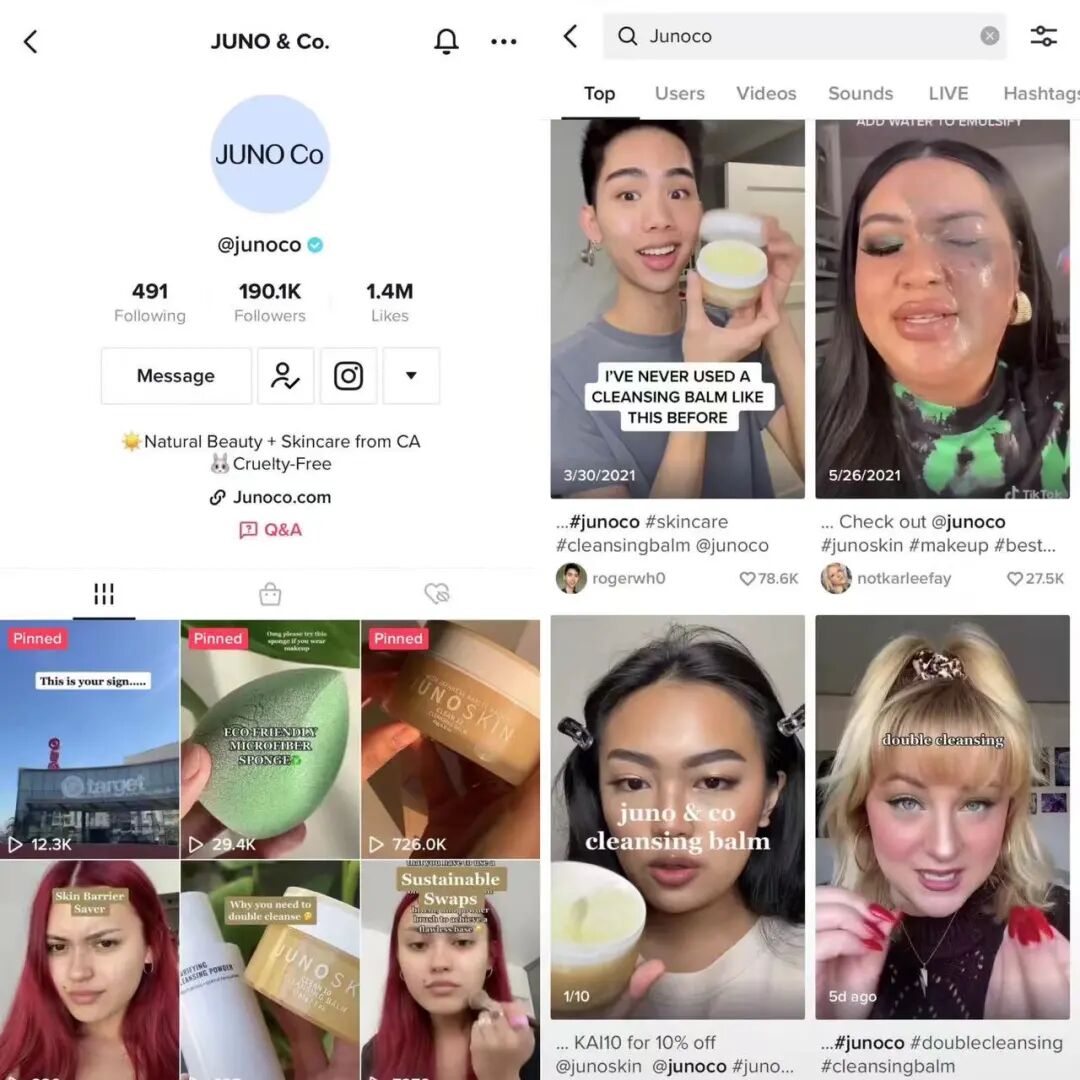
JUNO's TikTok homepage and product shares from international beauty influencers
Our own later analysis found that one campaign particularly valuable to our brand was a promotional project on TikTok called NoFilter Clean — sharing our products without filters. Because most local beauty influencers use beautification when filming, making their skin look perfect. Brands also tend to seek out these flawless, blemish-free influencers. But JUNO's core belief is that perfect skin doesn't exist. When we have influencers introduce our products, we ask them to show their most authentic selves, without filters. We believe this builds brand value more than any advertisement. Especially when so many brands online may be doing homogeneous competition, this type of video has particularly high distinctiveness.
Where does our category's consumer sentiment lie? Their sentiment is actually the pursuit of authenticity. When we share this product, this promotion in an authentic state, it brings us excellent feedback. This wave from JUNO also sparked a new trend on TikTok of sharing real, confident selves.
Li Feng: Kyle started doing retail business while still in school, and after graduation co-founded companies through various approaches, going from a two-person startup to independently leading his own venture. There must be considerable enjoyment to have made such different life choices.
Looking at audience questions, there are two common ones I find quite interesting and important. First, whether cross-border e-commerce should do customer service and after-sales support. Second, whether you're currently using outsourced agencies for various brand directions.
Kyle: Customer service is very important — many of our new product inspirations come from customer service, and I personally oversee it. We have teams in both China and the US dedicated to customer service.
Outsourcing is also quite important for our industry, because we need to stay focused on product R&D and brand building. What we're most lacking now are creative, design-capable talents. For this, we work with many outsourced design firms, especially for points requiring design ability and creativity.
Li Zhuo: We've also received many messages from our audience expressing strong interest in joining JUNO. We're approaching the "golden March, silver April" hiring season in China, when many graduates are making career choices. I'd like to ask the founder some questions on behalf of these eager candidates. First, in the出海赛道, what skills and qualities do you think would make someone a better fit for your team? And finally, what positions are you still hiring for? Feel free to plug away.
Kyle: For the teammates we're looking for, learning ability is very important. In the entrepreneurial process, the challenges you face every day are too numerous.
For JUNO specifically, what we've been trying to do is change the rules of the FMCG industry. The industry started with Sephora as its representative, but for us it's primarily D2C. The D2C model itself — in the US, there are really only a handful of skincare brands that have truly succeeded with it. We're doing something very challenging. JUNO's brand philosophy and current projects and directions are also quite leading-edge in the category. Not just in the US, but even globally.
I hope our partners:
-
Have strong learning ability, because every day brings new challenges.
-
Are interested in environmental protection and new R&D directions.
Additionally, our product philosophy is based on sustainable, vegan, clean formulas and healthy, positive skincare concepts, so we also hope to find talent who identify with these values. At the same time, we hope new partners both understand products and can artistically express selling points — this is quite challenging.
We very much need people with deep understanding of different cultures, who can grasp the psychology of local target audiences and turn that into our creative selling points. We need to find these people who love different cultures and have creativity, who can turn their creative ideas into executable promotions or conveyed philosophies.
Li Feng: What would be the ideal partner?
Kyle: The partners I most want to find are people who believe they can change the world, and who can share weal and woe with us. After all, entrepreneurship requires long-term persistence, unremitting effort, and consumes enormous mental and physical energy.
How to Make Career Choices in the出海赛道?
Li Zhuo: Today's final roundtable question goes to Uncle Feng. Since we just mentioned overseas students with many career directions and opportunities available. I'd like to ask Uncle Feng to analyze for graduating students, or young people facing career choices in general: if they were to join the出海赛道, or join an出海 startup, what different experiences do you think they would gain?
Li Feng: From an entrepreneurship and investment perspective, including the early-stage investing we do at FreeS Fund, the biggest characteristic and requirement is that the person needs to extensively experience things they've never encountered before, and find a relatively optimal solution — whether that's solving a problem or understanding an unfamiliar industry. This is what I see as the greatest gain, whether from entrepreneurship or early-stage investment.
The second point to mention is that looking ahead from today, the biggest opportunities come from interdisciplinary intersections. Kyle's company team, for instance, combines Chinese本土 traffic experience, foreign traffic structure insights, foreign consumer demand insights, internet penetration rates, and cultural trend changes, plus understanding of Chinese supply chains and China's manufacturing production iteration capabilities. The interdisciplinary field born from the interplay of these factors is called cross-border e-commerce. Beyond this, many disciplines today have also become interdisciplinary.
Cross-disciplinary boundaries may seem broad at first glance, but look closer and you'll find a great deal of logical coherence. At the same time, because there are more elements to understand, the bar is raised for investors and founders — demanding sharper judgment and ultimately giving projects stronger competitive moats.
Kyle and his peers are a case in point. Investors who only understand the U.S. e-commerce model will struggle to grasp what they're building; so will investors who only understand China's e-commerce model. Founders who only know the Chinese e-commerce system will find it hard to succeed in this space, and the same goes for those who only know the American system.
To sum up: interdisciplinary fields hold the greatest opportunity going forward. Whether you're founding a company, joining a startup, or going into investment, deepening your exposure to cross-domain, cross-sector, cross-border, and cross-disciplinary intersections will pay dividends for your career and your perspective.
Li Zhuo: Thank you both — Feng Shu and Kyle — for the wonderful discussion today. See you next time!

▲ Women Rising: 18 Voices from the World of Entrepreneurship | FreeS Fund 3.8 Special
▲ How to Build a Global Cross-Border E-Commerce Brand? | FreeS Fund Going Global Series ▲ Where Is Cross-Border E-Commerce Headed in 2022? | FreeS Fund Going Global Series ▲ How to Win Over Gen Z Consumers in China and the U.S.: The Strategy of a Streamlined D2C Skincare Brand | FreeS Business School ▲ With "Housing Is for Living In, Not Speculation," Is Home Renovation a Good Business? | FreeS Fund Interview