Can the Logistics Industry Produce an Uber or DiDi? | Frees Fund — Learning to Invest Through Investing
Following heavy trucks on their nocturnal runs for four years, this company has figured out what smart logistics actually looks like.
"Learning from Investment" is a column we launched in 2020. It aims to reconstruct our thinking, debates, and learning process from the initial stage to the present when we invested in some representative projects. It is also a tribute to entrepreneurs — witnessing them lead their companies forward and continuously overcome difficulties is how we gained deeper understanding and recognition of industry and business patterns. Now, we share what we've learned from them, hoping to offer some inspiration, and paying tribute to the countless entrepreneurs who work just as hard.
In the second installment of the "Learning from Investment" series, we want to share with you the evolution of the smart logistics sector, its core variables, and future trends — as seen through the development and exploration of Shenzhen Hande, a vehicle intelligent weighing platform.
Smart logistics is the inevitable trend, with its core lying in the intelligence and automation of every logistics link, which first requires digital transformation of each link. During the pandemic, the transportation and circulation of medical and living materials amplified the demand for smart logistics and raised the bar for its degree of digitization.
Regarding how this massive industry can achieve digitalization, many business models have been attempted. What Shenzhen Hande does is precisely the digitalization of real-time vehicle load weight and location information — the most critical aspect of logistics. This is a technically challenging path. They are also currently almost the only technology service provider capable of achieving very low weight error rates (2%) across multiple scenarios and industries. On March 2, 2020, Shenzhen Hande announced the completion of an 80 million yuan Series A financing round, with FreeS Fund making its third consecutive investment.
In this article, we will explore:
- When we first discussed Shenzhen Hande, how did we make our value judgment, and what internal controversies existed?
- Three years of investing in Shenzhen Hande — our observations: How do B2B companies identify "real demand"? How do they find benchmark industries and customers?
- Overall retrospective: How can digitalization across all industries be accomplished?
Before diving in, here are three perspectives to share:
- The right path is always the hard one. Installing sensors on vehicles and automating the data collection process is highly challenging. But in the long run, this path creates "positive accumulation" — the bigger it gets, the better it gets; the better it gets, the bigger it gets.
- For B2B companies, in the startup phase, they need to identify benchmark industries and benchmark customers for their technology and product applications, and only after forming a fully productized solution in one industry should they expand to other industries.
- Digitalization is not the end goal for users/customers. The solutions that ultimately win users and achieve digitalization must create other application value for users/customers, and the value provided must far exceed the cost they pay.
We hope this brings new angles for thinking. We welcome your insights on smart logistics at the end of the article.

/ 01 / Why we invested, and what discussions and controversies existed internally?
Could the logistics industry give birth to companies like Uber and DiDi?
The year FreeS Fund was founded, when we decided to venture into chip and sensor investments, we had a basic logical framework: the prerequisite for intelligence in the tech industry is digitalization — that is, generating new data by installing sensors into various objects, especially mobile ones.
There were many such examples in the mobile internet era. For instance, Uber and DiDi are business models born from location data generated by GPS built into smartphones; the ever-upgrading cameras in phones, producing image and video data, created Meitu, Bilibili, and Douyin.
Where else will new sensors bring new data and drive industry transformation?
With this mindset, in February 2017, we met Shenzhen Hande. Its founder, Miao Shaoguang, came from a big data and AI background, and wanted to enter the logistics industry from the angle of vehicle weighing. At the time, he had just begun installing sensors on a small number of heavy-duty trucks, charging ten to twenty thousand yuan per vehicle.
China is a major transportation country. By the end of 2018, China's expressway network had reached 143,000 kilometers, ranking first in the world. This "extensive network" of highways made accelerated circulation of goods possible. Over ten years, total logistics volume more than tripled, rising from 89.9 trillion yuan in 2008 to 283.1 trillion yuan in 2018, with 76.8% transported by road.
We were optimistic about the prospects of the logistics industry and admired the founder's industry knowledge, technical expertise, and determination. However, there was significant internal controversy over the Shenzhen Hande project at the time: logistics is a low-cost, price-sensitive industry — could its high-charging model be sustainable? To achieve hundred-million-level revenue would mean selling solutions to tens of thousands of vehicles.
We conducted basic industry research and had in-depth exchanges with the founder, gaining more understanding of the logistics industry.
The market structure of the logistics industry is a positive pyramid. At the bottom is full-truckload logistics for shipments over 500 kg; the middle layer is less-than-truckload (LTL) freight, with cargo between 20 kg and 500 kg; at the very top is B2C logistics — the express delivery we encounter daily, typically under 20 kg.
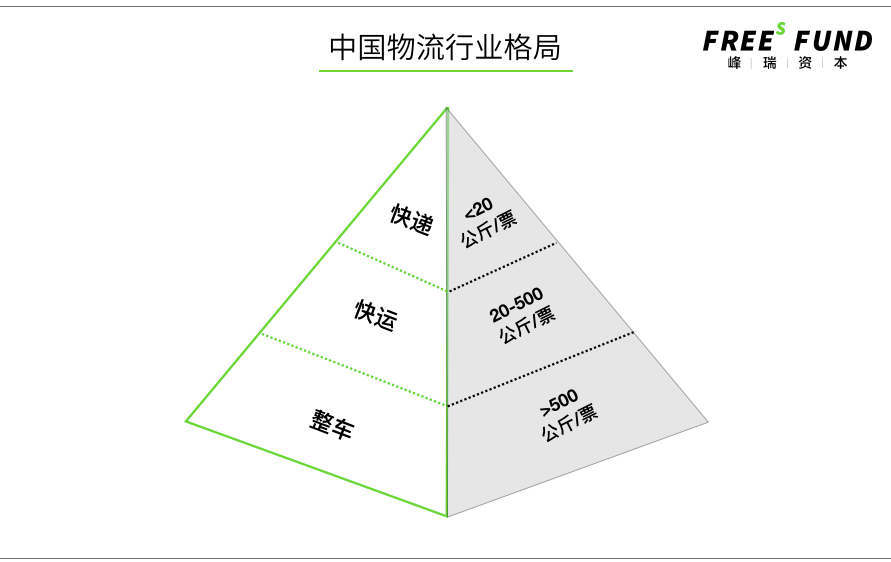
The further down the pyramid, the lower the industry's degree of digitalization. Express delivery at the pyramid's peak is the most digitized, with JD.com, Cainiao, and the "Three Tong and One Da" leading automation and intelligence in the express industry. Taking only the sorting环节 as an example, the express industry has begun using AGV robots, greatly improving efficiency and reducing reliance on human labor. Meanwhile, LTL and full-truckload transportation still rely mainly on manual labor, conveyor belts, and forklifts for sorting.
Shenzhen Hande's exploration was highly innovative. It targeted the digitalization of full-truckload logistics, hoping to generate new data by installing sensors on trucks: real-time location information and real-time weight. This new data is the most important for improving full-truckload logistics efficiency.
As long as the technology was genuinely feasible and market-recognized, we believed that what Shenzhen Hande was doing mattered greatly for the logistics industry. In March 2017, the investment committee approved, and FreeS Fund participated in leading Shenzhen Hande's angel round.
How to install sensors on vehicles, and how to ensure accuracy?
Traditional vehicle weighing methods use weighbridges. Trucks need to pass over twice to measure cargo weight — first, it's costly, at 50-100 yuan per weighing plus time and labor costs; second, it's inefficient, as weighbridges are immobile and can only perform single-point weight checks, possibly requiring fleets to repeatedly adjust loads, and manufacturers cannot monitor cargo changes during transportation, making theft, substitution, and diversion common.
Installing sensors on vehicles was, at the time, an extremely difficult and grueling task. Miao Shaoguang and his small team followed trucks for four years, continuously collecting information, measuring and calibrating, adjusting algorithms, and analyzing models before finally getting the algorithms to work.
Miao Shaoguang told us about those four years from June 2013 to mid-2017 of working nights, braving wind and rain, following trucks.
Every evening at 6 PM, the sensor-equipped truck would run ahead, with them following closely in a small car to collect data. His main task was staring at the laptop, observing how changes in the vehicle's state were reflected on his screen. One laptop's battery wouldn't last until dawn, so his car typically carried three or four laptops.
If he was lucky enough to catch a truck without an escort, he could sit in the passenger seat beside the driver and more directly observe how the driver's subtle operations caused data changes.
Beyond obvious factors like driving habits and load conditions, information such as vehicle age, road conditions, speed, and load distribution also had to be considered — otherwise, they would cause errors.
Over four years, Miao Shaoguang mainly followed two types of trucks: those carrying steel coils and those carrying coal. Each following session, he would pay the driver 2,000 yuan. The driver would cooperate with various experiments on the vehicle, including installing sensors at various positions, as well as stopping, reversing, and rerunning when he observed special data points to reproduce the data for analysis and judgment.
To determine whether a sensor's force point was appropriate, Miao Shaoguang mainly looked at two things: repeatability and linearity. Repeatability meant that for the same 50 kg load, the sensor's response should be basically similar. Linearity meant that at 100 kg, the sensor's response should theoretically be double that at 50 kg.
In this way, they separated all of the vehicle's real-time motion states: acceleration and deceleration, uphill and downhill, starting and braking, loading and unloading, overloading and uneven loading. They labeled each one, then analyzed this data offline, fitted it online, then built algorithms, followed up again, repeatedly verified, and finally tuned out a real and reliable mathematical model. In his words, they transformed a mechanics problem into a computer problem.
As time, distance, and experience accumulated, Shenzhen Hande's database grew larger, more comprehensive, and more precise, achieving very low weight error rates (2%) in practice.
Like a search engine, the more people use it, the better it gets; the better it gets, the more people use it. Even if someone had better technology, it would be hard to replicate or surpass.
This is "positive accumulation" — the bigger it gets, the better it gets; the better it gets, the bigger it gets.
/ 02 / After investing, what reflections and lessons have we drawn from Shenzhen Hande's development and changes?
Users don't buy GPS to get a ride; users buy a smartphone with GPS built in
Technical superiority isn't everything. The questions we debated internally before investing soon found their answers in the business world. Relying on selling even a high-value-added hardware device is hard to scale.
First, charging ten thousand yuan to install sensors on one vehicle was too expensive for the logistics industry, with its low margins and inefficient management. Second, the tension between shippers and carriers increased the difficulty of sensor installation. Shippers want to control the entire transportation process, but carriers don't want their transportation behavior monitored.
This returns to the most fundamental problem most B2B startups face: why should a customer install a device they never had before and pay for it — what's their motivation, what value do they see?
Countless wearable device companies have stumbled on this problem.
The hardest thing for "smart watches and bands" is having to tell users what benefits wearing them brings, not telling users they now have a bunch of data. Users won't pay for data itself. Returning to the ride-hailing example, DiDi and Uber's models work because both drivers and passengers carry GPS, but whether driver or passenger, what they bought was a smartphone, not GPS.
Finding enough scenarios to install sensors, and making customers feel that installing sensors itself is sufficiently meaningful, was critical for Shenzhen Hande.
For a time, founder Miao Shaoguang didn't know where the real demand was either. It seemed like there was demand here and scenarios there. He once listed 27 industries he thought had great potential, including asphalt, cement, crude oil, coal, logistics, sanitation, refined oil transportation, and so on. However, which demand could actually help the company grow — Miao Shaoguang had no certainty.
Finding benchmark industries and serving benchmark customers well
How to identify benchmark industries and customers for one's technology and products is the first challenge many B2B companies encounter when taking technology to market.
Shenzhen Hande was no different. From mid-2017 to the end of 2018, it tried almost every industry it thought feasible. Debugging and installing according to different industries' scenarios and demands required large upfront investment, but repurchase rates were unsatisfactory. In the end, because customers overall didn't take off, the company couldn't cross the threshold of scale.
After many detours, Shenzhen Hande finally found its suitable benchmark industry — cement. A leading cement enterprise was willing to use weight and location information for industry monitoring. But by then, Shenzhen Hande didn't have much money left in its account.
At the end of 2018, Miao Shaoguang came to us hoping FreeS would add another round of investment to support their productized application expansion in the cement industry. We invested again.
Why would cement, which sounds utterly traditional, be willing to lead in installing sensors on vehicles?
This relates to three characteristics of the cement industry: heavy weight, with goods priced by the ton; low cost, at only four to five hundred yuan per ton; and high freight ratio, sometimes accounting for nearly one-third of costs.
This means freight is a key variable affecting profit. The further a distributor is from the cement plant, the higher the freight they bear and the thinner their profit. Because profit = selling price - purchase price - freight.
To expand its sales radius and motivate distant distributors to purchase, the industry's common practice is to provide partial freight subsidies to distant distributors, making their profit levels comparable to nearby ones.
This creates opportunities for exploitation, and the "diversion" phenomenon that gives cement plants headaches occurs frequently. So-called "diversion" means obtaining cheaper goods through abnormal channels to seek greater profit.
For example, a cement plant in Beijing's suburbs — a Fifth Ring Road distributor calls a Second Ring Road distributor: "Help me buy a truckload of cement, you unload at the Fifth Ring Road, and we'll split the freight subsidy from Second Ring to Fifth Ring Road fifty-fifty."
Typically a truckload of cement is 40 tons. Assuming the freight subsidy from Second Ring to Fifth Ring Road is 80 yuan per ton, colluding distributors could earn 3,200 yuan in freight on this trip. Considering cement plants dispatch tens of thousands of times annually, this total amount is quite staggering.
Cement plants had tried various methods before without eliminating "diversion." Shenzhen Hande happened to solve this problem. It could monitor and analyze the entire journey's weight changes and location trajectories of cement trucks, turning into data: when loading occurred, how much cargo, when unloading, how much cargo, whether cargo weight changed during transportation, and so on.
Miao Shaoguang told us a story about a supplier "challenging" the device's accuracy. A supplier was supposed to deliver goods to Shangrao, but unloaded in Jingdezhen, 200 kilometers away. First he unloaded 3 tons, then during the journey unloaded 2 more tons, then 1 ton. His series of small maneuvers were all "caught" by Shenzhen Hande's device. After that, basically no one in that area "diverted" anymore.
Thus, Shenzhen Hande gained influence and reputation in the cement industry. Now, among the top 30 cement enterprises, over half have adopted its cement flow intelligent management and control services.
Shenzhen Hande also gradually defined its benchmark customer profile: primarily in bulk transportation; difficult to calculate how much cargo in the vehicle is worth by other means, viewing weight as the most important or even only calculation unit; and logistics accounting for a relatively large proportion of costs.
Now, Shenzhen Hande serves over 100 customers, covering coal, cement, steel trade, crude oil, chemicals, hazardous materials, and other industries. In express and LTL, leading enterprises like Deppon and YTO Express also work closely with Shenzhen Hande.
Overall Retrospective: Lessons and Insights on Intelligence in the Tech Industry
Intelligence is the inevitable trend — but where should it begin? The right path is often the hard one
Recognizing that intelligence is the inevitable trend is only the first step. For any specific industry, answering why it needs digitalization and where breakthroughs should occur is actually very difficult.
In the logistics industry, besides Shenzhen Hande's approach of putting sensors on vehicles to complete key link digitalization, there's another path on the market: matching vehicle and cargo information. Some connect trucks and cargo as information brokers; some build industry ERP systems.
This path's advantage is being lightweight to start and quick to gain momentum. But limited by the logistics industry's low margins, low digitalization degree, and urgently needed management efficiency improvements, they struggle to obtain accurate cargo logistics information, and even when they have it, face credit challenges.
Because whether individual shippers or logistics companies with fleets, being asked to enter information and upload it to the system is extra work. Over time, if they don't see obvious benefits, their cooperation will decrease, and data acquisition and usability will suffer.
To solve these problems, we've seen many vehicle-cargo information matching companies begin adding manual intervention into logistics' actual operations to ensure the entire process's digitalization.
In contrast, Shenzhen Hande was slow first, fast later. After enduring the earliest four years of grueling truck-following to train algorithms and models, then installing sensors on various heavy-duty vehicles, it completed data collection and accumulation through automation. While helping companies reduce costs and improve efficiency, digitalization became a natural result.
These two models — one operation-heavy, one technology-focused — both end up going the long way around, both must get heavy.
What we learned is that achieving intelligence across all industries cannot do without digital transformation of key links. But regardless of the angle of entry, one needs to "start with the end in mind": taking digitalization as the final result, reverse-analyzing the process, finding key countermeasures, and thereby achieving the goal.
Taking the automotive industry as an example, we're still in the transition toward digitalization. Therefore, what's most likely to happen now is that more and more new sensors will be installed on current cars, making vehicle information itself highly digitized. At the same time, more and more sensors, as we call the Internet of Things, will be installed everywhere, making various environmental information also digitizable. As these two types of information become highly digitized, if this data can then complete connection and circulation, we will certainly enter the final stage of intelligence.
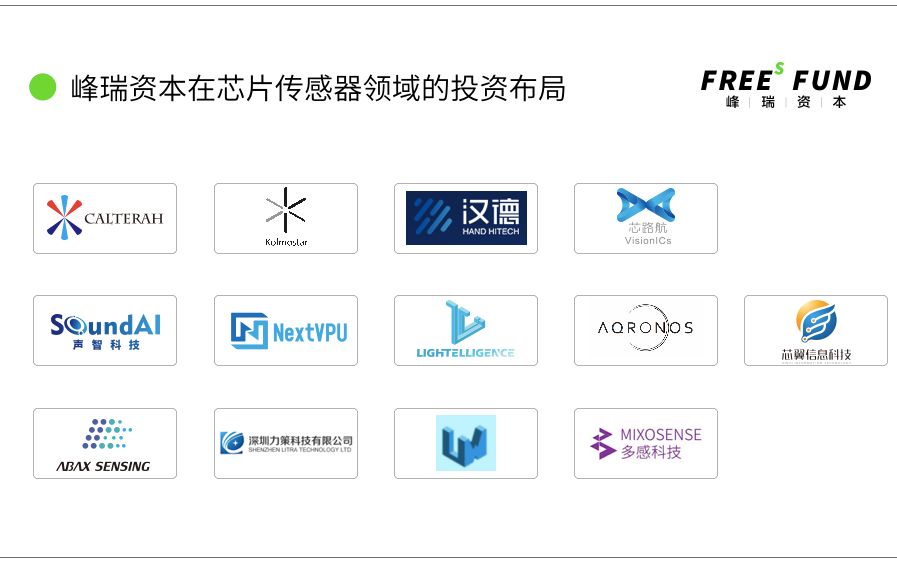
Therefore, FreeS has invested in over 10 chip and sensor innovation companies helping the automotive industry achieve digitalization, including加特兰微电子 (加特兰微电子), Kolmostar, VisionICs, 飞芯光电 (飞芯光电), and AQRONOS.
The Future of Smart Logistics
China's highway logistics — its major and minor arteries — constitute the capillaries of China's economy. Whether economic operations are smooth depends on the transportation efficiency of these capillaries. This also means that as social infrastructure, the logistics industry is often greatly affected by policy.
In October 2019, the Wuxi overpass on National Highway 312 collapsed, causing 3 deaths and 2 injuries. The bridge collapse was caused by two overloaded trucks carrying steel coils. After the incident, governments at all levels strengthened regulatory constraints on truck overloading and emphasized using technical means for real-time weight detection. Shenzhen Hande's cooperation with government also grew closer, applying real-time weighing, overload alarms, and uneven load warnings to overload governance.
Since 2020, the smart logistics direction has become more important.
The scheduling and transportation of various materials during the pandemic caused smart logistics demand to surge. We believe that after the pandemic, the country and industry will pay more attention to smart logistics, and the logistics industry's digitalization process will accelerate.
Recently, the logistics industry also caught the Smart Vehicle Innovation Development Strategy jointly issued by 11 ministries and commissions including the National Development and Reform Commission, Ministry of Science and Technology, and Ministry of Industry and Information Technology. Automotive intelligence doesn't only mean the vehicle itself being intelligent — the entire infrastructure serving vehicles must also be intelligent. And putting various types of sensors on vehicles is the necessary path to automotive intelligence.
For Shenzhen Hande, with more complete real-time vehicle-cargo location and weight information, it has become part of the efficient logistics operations system. Because achieving intelligent load allocation and dispatch for heavy-duty vehicles — or more efficiently matching vehicle-cargo flow information — requires real-time weight information of freight vehicles.
For example, just as DiDi significantly improves efficiency through order prediction, logistics companies have already approached Shenzhen Hande hoping to use its solutions to reduce driver waiting time, increase vehicle utilization, and thereby improve overall operational efficiency.
Over the past year and a half, Shenzhen Hande's fundraising has gone quite smoothly, completing two consecutive financing rounds, one of which was an additional investment from an investor who couldn't get in last time. Now new investors also hope to invest.
Entrepreneurship must not only address known problems but also be able to meet unknown challenges. This article serves as a stage record — we look forward to seeing Shenzhen Hande achieve greater development. We also hope to continue learning from the founder and accompanying the company's growth.
Summary of This Article
-
If intelligence is the final outcome, smart logistics must go through the process of digitalization.
-
How to achieve industry digitalization is a question of commercial value realization, and also a question of the relationship between commercialization and future value. Only very few people will buy from you now for very distant value — you must be able to help companies solve immediate needs to possibly be selected, and ultimately complete the industry's digitalization.
Today's Reflection
In the smart logistics field, what opportunities and possibilities do you see? We welcome your comments at the end, sharing your insights.
(Welcome to read, share, and like. For reprints, please reply "reprint" to learn reprint rules, and contact Feng Xiaorui [ID: freesfund] for authorization. Copyright belongs to FreeS Fund.)

Li Feng Column 16 | Fresh Retail — Learning Early-Stage Investment from the Secondary Market
After the Pandemic, Education's Survival Elimination Round | FreeS Research
▲After the Pandemic, the New Landscape of Fresh Food, Catering, and Food | FreeS Research ▲ After the Pandemic, the New Era of "Good Companies" | FreeS Research ▲Li Feng's New Year Outlook | One Chart to See 2020 China Opportunities