Wang Liming: Another Breakthrough in AI Protein Structure Prediction — What Does It Mean?

Brute force makes miracles?
Recently, AlphaFold, a program developed by DeepMind, won first place in a protein structure prediction competition and brought protein structure prediction to a level that's basically close to practical use.
What does this mean for the life sciences? How is the development of artificial intelligence changing the way humans understand the world?
We're sharing content from a "Life Sciences · Mountain Patrol Report" by Liming Wang, a professor at Zhejiang University's Life Sciences Institute, hoping to offer a fresh perspective.
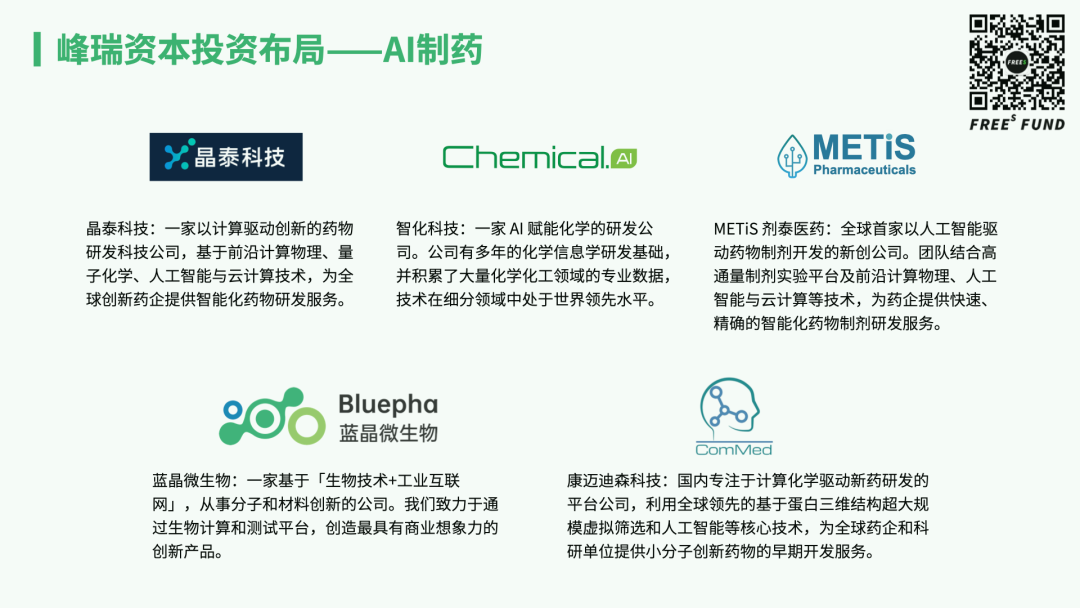
In the view of Rui Ma, executive director at FreeS Fund, biomedical problems are fundamentally data problems (click to read about innovation opportunities in biotech). FreeS Fund is very bullish on directions like accelerating the digitization of biological processes and data-driven intelligence, and believes this field will inevitably produce platform-type companies. FreeS has already invested in multiple AI and computation-driven companies across multiple stages of drug R&D, such as crystal form, formulation, synthetic route design, and lead compound generation (click to read why AI drug discovery is so hot).
The accurate predictions made by AlphaFold2 actually demonstrate that thanks to increased computing power and the use of the most innovative and cutting-edge algorithms, AI has already grasped the problem of protein structure prediction — even with limited data. We've taken another step toward moving the entire drug R&D chain into the digital world. Looking back at the new drug R&D industry, the fact that a large number of structures are now computationally generated, with the source problem cracked open, will have positive and significant impact on structural biology, every link in AI drug discovery, and biomedicine as a whole (click to view FreeS Fund's biomedical research collection).

Liming Wang: What Does Another AI Breakthrough in Protein Structure Prediction Mean? | Mountain Patrol Report
Source: The Intellectual
Author: Liming Wang
Hello everyone, I'm Liming Wang. On December 6, 2020, the Life Sciences · Mountain Patrol Report is back with you again.
I feel a bit embarrassed to say this, but there didn't seem to be much major news in the life sciences this past month that was worth dedicating a whole report to, and I thought I might get to take it easy this time. Then, on the very last day of November, what may be the most important breakthrough in life sciences this year — or even in the last decade — fell out of the sky.
So for today's Mountain Patrol, I still need to be on full alert and talk through this topic with you. To put it simply, on November 30, 2020, AlphaFold2, a program developed by DeepMind — the AI company under Google — achieved astonishing results in the 2020 protein structure prediction competition CASP14. Not only did it outperform more than 100 competing teams from around the world to take first place, but for the first time in history, it brought the task of protein structure prediction to a level that's basically close to practical use.
Speaking of DeepMind, you probably know it already. You might remember AlphaGo, the Go program that swept through the chess world and defeated Ke Jie, the world's top-ranked human player. For a long time, Go was seen as the most complex and open-ended intellectual game invented by humans. Many people predicted that computers wouldn't be able to beat the human brain at Go for hundreds of years. But in 2017, the sudden emergence of AlphaGo made many people truly realize the formidable power of artificial intelligence and deep learning. AlphaGo was also developed by this company called DeepMind.
So what is AlphaFold2, which has a similar name to AlphaGo? I suspect you've already seen plenty of news coverage these past few days, but my feeling is that most of the explanations missed the point — they were too busy being excited. For this Mountain Patrol, you might as well forget everything you've read recently. Let's start from the beginning and clearly explain the full story and the value of this achievement.
01
Protein Folding: One of Biology's Most Central Unsolved Problems
First, let's look at exactly what problem AlphaFold2 solved. As I mentioned, its target is protein structure prediction. In my view, this is probably one of the three most important questions in all of life science. The other two, I would argue, are the origin of life and how the human brain works.
"Protein structure prediction" sounds a bit technical, and outsiders may not easily grasp its significance. To put it more broadly, this question touches on the very nature of genetic information — how genetic information flows and how it influences the various characteristics of life on Earth.
You've probably heard of the so-called "central dogma" in biology. In a field of science full of exceptions, the central dogma is almost the only principle honored with the word "dogma" — its importance speaks for itself.
The central dogma states that as organisms reproduce generation after generation, each parent passes on its genetic material — DNA molecules — by making an identical copy and transmitting it to offspring, endlessly, one generation after another. And during each organism's lifetime, this DNA molecule can serve as its own blueprint to guide the production of vast numbers of miniature molecular machines, namely various protein molecules, which carry out diverse biological functions and collectively support the organism's survival and activities.
Essentially, the central dogma identifies two directions of genetic information flow.
One direction is between generations: DNA replicates itself through DNA → DNA, passing continuously from one generation to the next, ensuring that the genetic material carried by parents and offspring remains very similar, thus exhibiting high similarity. In this process, randomly occurring genetic mutations create small differences in each generation, enabling natural selection and biological evolution. The other direction is within every cell of the same organism: DNA guides protein production through RNA molecules (DNA → RNA → protein), allowing specific biological activities to proceed.
From the 1950s and 60s to the present, many technical details of the central dogma have been intensively studied. I've roughly counted — over more than half a century, at least twenty or thirty Nobel Prizes have been related to the central dogma. How DNA molecules achieve self-replication and self-repair; how DNA guides RNA production; how RNA is spliced and joined; how RNA guides protein assembly; how protein molecules are degraded — and so on. Interestingly, both clarifying the technical details of the central dogma and finding counterexamples to it can win you a Nobel. There are quite a few examples of the latter.
But within the complete picture of the central dogma, there remains one enormous gap, one crucial unanswered question: how are these protein molecular machines actually assembled and put to work?
We now know that the principle by which DNA molecules guide protein production is simple: three adjacent base molecules on the DNA chain correspond to one specific amino acid molecule in the protein. For example, the three bases ATG correspond to methionine, GAG corresponds to glutamic acid, and so on. Ignoring all technical details, you can imagine it this way: inside a cell, a DNA chain 300 bases long can guide the production of a protein molecule — a chain of 100 amino acids linked end to end.
As the carrier of genetic information, the physical structure of the DNA molecule can be considered irrelevant. Whether it's stretched into a straight line, tangled into a ball of yarn, or simply copied down in a notebook — as long as the names and sequence of those 300 bases aren't scrambled, the information it records remains complete and unchanged. But protein molecules are different. This chain of 100 amino acids must fold, twist, and coil into some specific three-dimensional structure within the cell before it can begin working.
Let me use an analogy. Say you want to produce a sedan. Whether the design blueprint is printed out or stored on a computer, laid flat or rolled up, written in red ink or blue ink — none of that matters. But during production, every component, from the engine to the windshield wipers, must be placed in specific positions and assembled in specific ways for the sedan to function properly.
So the real question becomes: how does a protein molecule know how to form a particular three-dimensional structure? Let's return to that chain of 100 amino acids — in the process of forming a 3D structure, how does it know where each amino acid should be positioned, and which other amino acids it should be close to?
As early as the last century, people made the correct guess. Simply put, this spatial information is contained within the protein molecule itself. More specifically, there are 20 types of amino acids that make up proteins. Some carry positive charges, some negative; some are larger, some smaller; some like to bind with water molecules, others hate them. Therefore, once a protein is produced, its constituent amino acids begin to move and combine according to these different properties.
This process is somewhat like magnetic assembly toys — throw a bunch of pieces together, shake them around, and they'll吸附 together into a big clump on their own. Of course, the sequence and properties of amino acids in a protein molecule ensure that in most cases it twists and folds into exactly the same shape, producing batches of functional protein molecular machines.
This guess was experimentally proven in the 1950s by American scientist Christian Anfinsen. Anfinsen found that even if the three-dimensional structure of a protein molecule was artificially disrupted by chemical methods, once these interferences were washed away, the protein molecule could spontaneously refold into exactly the same 3D structure. It became consensus that the base sequence of DNA molecules determines the amino acid sequence of proteins, which in turn determines their three-dimensional structure and biological function.
But this didn't solve all the problems. Theoretically, we already knew that protein molecules can determine for themselves how to fold, but we didn't actually know how they do it. Consider: for a protein molecule of 100 amino acids, the possible spatial arrangements of these 100 amino acids are virtually infinite. If you tried them one by one, you might search until the end of the universe without finding the correct one. How do real-world proteins manage to twist and fold into their optimal positions almost instantaneously?
By now, I think you can understand why I call protein folding one of biology's three greatest unknowns.
First, it concerns how hereditary information passed down through generations actually guides living activity. Second, it has strong applied value. Because the vast majority of drugs work by binding to specific proteins, if we can figure out how protein molecules fold and what their 3D structures look like, we can more conveniently design drugs that specifically bind to them to treat diseases. And finally, of course, because this problem is extraordinarily, extraordinarily, extraordinarily difficult.
02
Traditional Approaches to Solving the Protein Folding Problem
Such an important question naturally attracted the attention of large numbers of scientists, and over the past few decades, some decent progress has been made. Let me briefly review.
The most straightforward approach, and the one that achieved breakthroughs earliest, was to simply use experimental methods to "see" the three-dimensional structure of protein molecules — regardless of how this structure comes about, let's first figure out what it looks like.
In 1959, British scientist Max Perutz used X-ray diffraction — which you can通俗理解 as shining X-rays at protein molecules and then inferring electron positions from the angles at which the rays scatter — to resolve the three-dimensional structure of the myoglobin molecule. This was the first time in human history that we thoroughly saw the details of a protein molecular machine.
From then until today, the structures of more than 170,000 protein molecules have been resolved. Besides X-ray diffraction, nuclear magnetic resonance and the recently hot cryo-electron microscopy technology have also played important roles. Over more than half a century, research related to protein structure has already won more than 20 Nobel Prizes.
This "seeing is believing" approach has the advantage of being definitive — what you see is what you get. But its problems are equally obvious: it's technically too troublesome. Historically, scientists often spent years or even decades to obtain a clear three-dimensional structure of a single protein, making protein 3D structures a severe bottleneck in biology. For example, thanks to the rapid advances in gene sequencing technology, humans have mastered 180 million gene sequences — in other words, we already know the amino acid sequences of 180 million protein molecules. Yet among these, only 170,000 have had their three-dimensional structures thoroughly resolved, less than 0.1%.
This has therefore given rise to a counter-approach: since we know that amino acid sequence determines protein 3D structure, is it possible to skip experiments and directly predict the three-dimensional structure of a protein molecule from its amino acid sequence?
Along this line of thinking, people have also achieved some noteworthy progress. The technically easiest method is to infer unknown structures from known ones.
For example, the so-called "homology modeling" method. The logic of this method is simple: since amino acid sequence determines protein 3D structure, it's easy to imagine that if two proteins have very similar amino acid sequences, their 3D structures should also be similar. To use an analogy: pig insulin and human insulin are both composed of 51 amino acids, differing by only one amino acid, so the 3D structures of the two molecules can certainly be referenced against each other. If the former's 3D structure has already been resolved, predicting the latter's becomes relatively easy.
If two proteins' amino acid sequences aren't that similar, homology modeling becomes less effective. People have also developed so-called "protein threading" or "fold recognition" methods. Similar to homology modeling, threading also involves fitting unknown protein structures onto known structural patterns. Its underlying logic is that no matter how varied protein molecules may be, the basic folding types are limited — roughly about 1,500. So as long as you try enough times, you can always find a reasonably good fit.
Beyond this, others have developed a class of approaches that bypass known structures entirely and directly predict protein structure through computation. A representative figure is Professor David Baker at the University of Washington, who developed a computer program called "Rosetta" to predict protein structures.
This method freed itself from dependence on known structures, starting directly from the conclusion that "protein amino acid sequence determines its 3D structure." Its working logic goes like this: during protein folding, amino acid molecules spontaneously seek positions where they are most stable and comfortable — that is, where energy states are lowest. For example, positively charged amino acids tend to seek out negatively charged ones; those that hate water molecules tend to be buried inside the protein, far from water; a small amino acid might fit into a gap between two large adjacent amino acids, and so on. Therefore, if we could exhaustively enumerate all possible positions between every pair of amino acid molecules and their corresponding energy states, we could calculate an overall lowest-energy, most stable spatial arrangement, and the protein's 3D structure would be determined.
This logic is theoretically sound, but actually implementing it is extremely difficult. Due to limitations in computing power, we cannot possibly enumerate all possible positions of all pairwise amino acid combinations within finite time; due to limitations in fundamental physics theory, we don't actually know how to precisely calculate the energy state corresponding to each position. Let me give you an example. You've probably read Cixin Liu's The Three-Body Problem — the motion of three objects following Newton's laws in space is already fundamentally unpredictable. To predict the interactions of hundreds or thousands of amino acid molecules under various constraints? Physics doesn't allow it.
So in practice, Rosetta made plenty of compromises too. Rather than exhaustively computing every possible pairwise combination of amino acids, it broke proteins into small fragments, considered interactions between fragments, and then refined atomic-level positions and forces. For small proteins with regular arrangements, this worked reasonably well. But for anything even slightly more complex, its predictions weren't particularly trustworthy — barely better than nothing.
Let me quickly summarize:
Solving the protein folding problem and determining the 3D structure of protein molecules remains one of biology's great unsolved grand challenges. But to date, the dominant approach has been laborious direct observation through X-ray crystallography, cryo-EM, and similar methods. Direct computational prediction of protein structure using these traditional approaches simply hasn't worked well.
The AI approach: AlphaFold 1 and 2
With that groundwork laid, we can finally turn to our main subject: AlphaFold.
If you know the AlphaGo story, you probably grasp the basic logic of how AI, and deep learning in particular, solves problems. Simply put, it's the brute-force approach.
Traditionally, humans learning Go studied game records, practiced relentlessly, and cultivated ineffable "intuition." AlphaGo ignored all of that. Instead, it exhaustively enumerated possible moves, evaluated their consequences, then enumerated possible responses to those consequences, and so on. Through repeated training, AlphaGo accumulated enough "experience" to know which moves maximized win probability in given situations. Through this brute-force training, later versions like AlphaGo Zero could master the game with only basic rules — how to capture stones, how to determine victory — completely disregarding all human accumulated knowledge.
In 2018, DeepMind's first-generation protein folding algorithm, AlphaFold1, entered CASP13 and took first place, generating considerable industry buzz. But it didn't make much of a public splash. I suspect two main reasons. First, while AlphaFold1 won, its margin over second place wasn't dramatic, and it didn't demonstrate revolutionary improvement over traditional approaches. More importantly, AlphaFold1 wasn't fully AI-native — it borrowed heavily from academic research, particularly David Baker's Rosetta program and Jianbo Xu's RaptorX-Contact program from the University of Chicago. Incidentally, after CASP13, Jianyi Yang of Nankai University collaborated with David Baker to develop trRosetta, releasing all core code publicly. This program surpassed AlphaFold1's performance and was adopted by many CASP14 competitors this year.
But this year's AlphaFold2 is completely different. It's not an upgraded version of AlphaFold1 — it's an entirely new protein folding algorithm.
Though DeepMind hasn't yet published AlphaFold2's technical details, the general principles are public. AlphaFold2's working logic closely resembles the brute-force AlphaGo approach I just described. Let me roughly explain its training process:
From 170,000 proteins with known 3D structures, scientists select one and "feed" its amino acid sequence to the algorithm, which makes a rough "guess" at the 3D structure. The algorithm then compares its guess against the known structure, adjusting its guessing strategy based on accuracy. Through repeated training across all 170,000 structures, the algorithm gradually acquires the ability to predict 3D structure directly from amino acid sequence.
Of course, this explanation is grossly oversimplified. Without some foothold, the algorithm wouldn't know where to begin guessing. For instance, DeepMind's descriptions mention that the algorithm requires so-called "multiple sequence alignment" information. Incidentally, this approach wasn't DeepMind's innovation — it was proposed in 1993 by German scientist Chris Sander.
Simply put, for any given protein, databases contain numerous proteins with very similar sequences. Take insulin: human, pig, cow, and chicken versions differ only subtly. When we examine these near-identical but distinct sequences together, we observe that certain positions are highly conserved, others vary freely, and some positions change in coordinated fashion — either all unchanged or all changing together.
This information reveals relationships between amino acids in the 3D structure. If two amino acids are either always conserved together or always change together, we might infer they're spatially proximate and functionally coupled. AlphaFold2 uses this information to guide its initial guesses and training.
So how did it perform?
We can evaluate AlphaFold2 along two dimensions.
First, the horizontal comparison.
CASP competition rules work roughly as follows: organizers provide contestants with amino acid sequences for proteins whose 3D structures are either being experimentally determined or have been determined but not yet disclosed. After contestants submit predictions, results are compared against actual structures, scored, and ranked.
At CASP14 in 2020, AlphaFold2 placed first by a massive margin over David Baker's lab in second place. The gap between first and second exceeded the gap between second and last place.
Now the vertical comparison.
Since CASP began in 1994, human protein structure prediction capability improved slowly but steadily. For small, simple proteins, traditional methods already achieved high accuracy. But for larger, more complex proteins with few known structural homologs, performance remained unimpressive even through AlphaFold1's 2018 entry.
AlphaFold2 changed everything. Across all ~90 proteins, it achieved a median score of 92.4. Even for the most difficult subset, it scored 87. To interpret these numbers: 90 is considered the threshold where prediction and actual structure are essentially consistent.
In other words, AlphaFold2 achieved unprecedented progress in protein structure prediction. For the first time in history, humans can say: we can deduce 3D protein structure from amino acid sequence without experiments. The final missing link in the central dogma appears ready to close.
Of course, like all technological advances, AlphaFold2 isn't perfect.
For instance, its performance isn't perfectly consistent. We noted that scores above 90 indicate correctness, and AlphaFold2's median was 92.4 — yet for several specific proteins, its scores were substantially lower. There are hypotheses about why, but more research is needed to determine whether these are avoidable technical issues. This inconsistency affects practical utility: feed in a novel protein, and you can't know whether AlphaFold2 nailed it or misfired.
Additionally, AlphaFold2's capability for super-massive protein complexes, and for complexes of proteins with DNA/RNA/small molecules, remains to be tested.
But I suspect these technical refinements will be resolved quickly. Consider: humans dreamed of flight for millennia, yet only sixteen years separated the Wright Brothers' 36.5-meter hop in 1903 from transatlantic flight. After the 0-to-1 breakthrough, the path from 1 to 100 to 10,000 often reveals astonishing human ingenuity.
What does this achievement mean?
Finally, let's consider what this breakthrough portends.
Some implications are obvious. I imagine that within a few years, AlphaFold may be able to replace experimental research, mass-producing 3D protein structures directly from amino acid sequences. Recall that among roughly 180 million known gene sequences, fewer than 0.1% have associated 3D structural information. As AlphaFold matures, human understanding of protein molecules will undergo revolutionary expansion.
Perhaps this flood of structural information will dramatically advance our understanding of life itself. Perhaps someday, from a species' genomic DNA sequence alone, we could predict the complete 3D structure of all its protein molecular machines, then infer their biological functions. At that point, we could not only imagine a species' appearance and characteristics from its DNA, but reverse the process — designing desired proteins, then entire genomes, to achieve specified biological properties, truly creating life from scratch.
But before such science-fictional scenarios, AlphaFold has immediate practical value.
Consider this scenario: a cancer patient visits a doctor, who sequences the tumor cells and identifies a mutation in a specific protein causing the cancer. Simultaneously, the doctor predicts this protein's structure and designs a drug to bind and disrupt it, treating the cancer. All within days. Disease diagnosis and treatment would become highly personalized, with disease-gene-protein structure-drug design forming a complete closed loop.
Perhaps the biological implications already excite you? Let's push further.
From homology modeling to Rosetta to AlphaFold2, protein structure prediction reveals an intriguing historical trend: solutions increasingly dispense with human prior knowledge, and increasingly defy human comprehension.
In homology modeling, predicting a protein's structure required highly specific prior knowledge — a closely related protein with known structure to serve as reference. The step from known to unknown was minuscule.
Rosetta could operate without known protein structures, handling entirely novel proteins, but still relied on accumulated human knowledge of protein physics and chemistry — which amino acids stabilize when proximal, which repel, and so forth.
Conversely, with these traditional methods, we could roughly follow their logic: similar sequences imply similar structures, or energy minimization between amino acid molecules, and so on.
With AlphaFold2, after its initial training, it could perform structure prediction without relying on any prior knowledge whatsoever. In fact, during AlphaFold2's computation process, it doesn't even need to know that it's processing three-dimensional structures of protein molecules. From its perspective — if it had one — it's simply handling distances between vast numbers of nodes in three-dimensional space, and which configurations score higher. Whether it's dealing with the arrangement of amino acid molecules or the movement of a crowd in a public square makes absolutely no difference to it.
This creates a problem: we know AlphaFold2 performs exceptionally well, but we have no way of understanding what rules or principles AlphaFold2 follows to achieve such results. Even if AlphaFold2 possessed self-awareness and could converse with us, at best it would tell us the specific values of the hundreds or thousands of parameters used in its AI algorithm. As for why these parameters exist, why their values are what they are — it wouldn't understand, and neither would we.
In my view, this means that in the age of artificial intelligence, the logic by which humans acquire knowledge is about to undergo an earth-shaking transformation.
The methods by which humans understand the world and acquire knowledge amount to nothing more than induction and deduction from small samples. I spend several days observing sheep, notice they are all white, and therefore propose the proposition "all sheep are white" — this is induction. I believe all sheep are white, and before me is a black animal, so I conclude it is not a sheep — this is deduction. The results of induction and deduction are not always correct; my example just now was wrong, but it is the starting point of human cognition.
Through repeated application of induction and deduction, the human process of understanding the world looks roughly like this: observe and analyze limited small samples, attempt to extract general principles, then subject those principles to further testing to either confirm or refute them.
For instance, by observing the trajectories of some celestial bodies, people summarized Kepler's three laws and Newton's laws, and under the guidance of these laws predicted and discovered Neptune. In cases where these laws failed, people found entirely new principles — general relativity. Without these laws in our minds, when we look up at the night sky, we would see nothing but randomly moving chaos.
But with artificial intelligence, this epistemological methodology may be ineffective, or at least unnecessary. The "brute force" approach allows algorithms to know that something works while completely eliminating the need to know why. Today, algorithms can defeat world Go champions without understanding the spirit of Go or studying human game records; can perform precise facial recognition without knowing what a face is, or what eyes, noses, and mouths are; can process human language without knowing what grammar is, or what subjects, predicates, objects, nouns, or adjectives are; can predict protein structures without any protein chemistry theory... All of this requires only training on massive amounts of data. We must acknowledge that this is an entirely new cognitive methodology — one that humans are unaccustomed to and cannot truly understand, yet one that works extraordinarily well.
What does this mean for humanity?
Speculating is difficult, after all, since human speculation itself relies solely on induction and deduction. But I believe one thing is certain: we will have to get used to coexisting with vast amounts of "alien" new knowledge — we will know that it is correct, that it is useful, but we will have no idea where it came from.
Bear in mind that for humans throughout history, all knowledge came from induction and deduction, comprehensible modes of cognition. And through induction and deduction, we should be able to obtain all the knowledge we need — this was an unparalleled intellectual pride. When Hilbert said, "We must know, we shall know," the spirit behind it was precisely this.
But gradually, will we simply abandon our own pursuit of new knowledge, abandon the methods of induction and deduction, and become entirely dependent on algorithms to provide us with new knowledge? To use an analogy: as children, most of us probably learned why one plus one equals two and two plus three equals five by playing with small stones. If a person could only learn about numbers through a calculator from birth, they would certainly still grasp that one plus one equals two and two plus three equals five — but would they completely fail to understand, or even want to understand, the meaning behind these equations from the very beginning? Will we, too, gradually become like algorithms, accustomed to knowing that without knowing why?
In an era of rapid AI advancement, too many people worry about AI replacing human jobs, or even defeating and eliminating humanity. Compared to these speculations, I am more concerned about AI's impact on human cognition. What does it really mean for us to live in an era where answers are obvious, easily obtained, yet the derivation process remains completely hidden in darkness?
Oh, and at the end of this story, please allow me a brief rant.
Recently, the hottest topic in the internet industry has been tech giants pouring massive capital into the community group-buying race. Using data, using algorithms, using the cash in their hands, the giants are painstakingly studying how to deliver fruits and vegetables to every consumer cheaply, quickly, and precisely. After shopping, ride-hailing, and food delivery, grocery shopping has become the internet's most fashionable topic.
This is certainly a good business. But I can't help wondering: can we do something else? With their oceans of data and impressive AI algorithms, can internet giants produce something like AlphaGo or AlphaFold — something that might transform the face of human civilization?
There are two quotes I particularly love. One comes from PayPal founder Peter Thiel: "We wanted flying cars, instead we got 140 characters." The other comes from moon-landing hero Buzz Aldrin: "You promised me Mars colonies. Instead, I got Facebook." Both express disappointment with internet giants who command vast resources and advanced technology.
I suppose I might add my own complaint: could we please not obsess over a few bundles of greens and a few pounds of fruit? Whatever happened to the promised sea of stars?
Alright, that concludes this month's Mountain Patrol Report. On the 6th of next month, I'll continue patrolling the mountains for you.

Why Is AI Drug Discovery So Hot, and Why Now? | FreeS Fund Biomedical Summit Transcript ▲ How Can Interdisciplinary Collaboration Drive Breakthrough Innovation? | FreeS Fund Biomedical Summit Transcript ▲ Blue Ocean Strategy: How Can Early-Stage Biotech Companies Break Through and Win Alongside Big Pharma? | FreeS Fund 2020 Biomedical Summit Session 3 Registration ▲ Beyond the "Narrow Door": Real Stories of Early-Stage Frontier Biotech Entrepreneurship in China | FreeS Fund 2020 Biomedical Summit Registration Open ▲ Li Feng: Mapping Biotech Innovation Opportunities in One Chart | FreeS Fund 2020 Biomedical Summit Guide ▲ Standing at the Forefront of Gene Therapy | FreeS Research ▲ Hammer and Dance: Investment Opportunities in Healthcare's Next Wave Amid the Pandemic | FreeS Research ▲ FreeS Report 16: The Truth About Early-Stage Healthcare Investment and China Speed | FreeS Research ▲ FreeS Report 15: Life's Gamble — The Risky Journey of Drug Development | FreeS Research