What Happens When the Hottest Tech Sectors Collide? | FreeS Fund Chip Series

How do cross-disciplinary ventures that push the boundaries of imagination achieve steady, grounded commercialization?
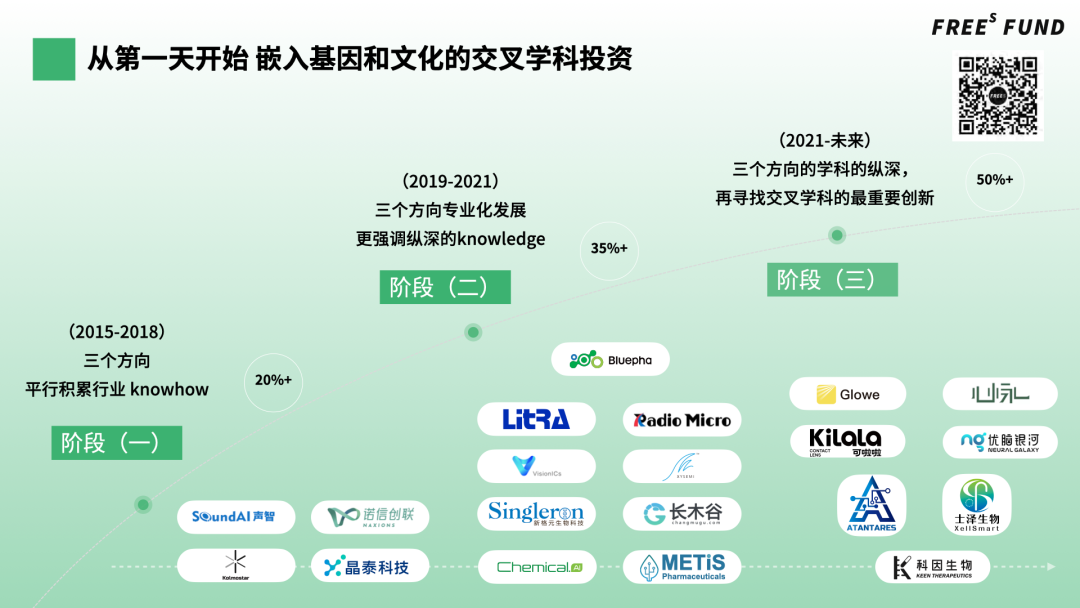
The convergence of frontier technologies often pushes the boundaries of human imagination. At the intersection of semiconductors and biomedicine — two of today's hottest tech arenas — Xinsu Technology synthesizes DNA molecules on chips, slashing experimental costs by two to three orders of magnitude; Xinyong Technology has claimed the holy grail of intelligent blood pressure monitoring and is gradually expanding its applications across medical and consumer domains.
In the third episode of the "FreeS Fund Dialogue · Semiconductor Series" livestream — Frontier Interdisciplinary Entrepreneurship — Zhao Xin, co-founder and CEO of Xinsu Technology, and Li Yibin, co-founder and CEO of Xinyong Technology, joined Ma Rui, partner at FreeS Fund, to explore the collision of interdisciplinary fields and how chips are reshaping industries far and wide.
Zhao Xin earned his bachelor's degree from Peking University and his PhD from MIT. In 2018, he was selected for China's national-level young talent program. He has produced multiple innovative academic contributions in the design, fabrication, characterization, and mechanisms of novel semiconductor devices, publishing over 40 papers in top-tier microelectronics conferences and journals. His semiconductor device research has been adopted by industry leaders including TSMC, IBM, and IMEC.
In 2020, Zhao founded Xinsu Technology. The company's vision is to build the infrastructure of the molecular biology era using semiconductor technology, with a focus on high-throughput synthesis and detection of DNA, RNA, and proteins to enable synthetic biology, biomedicine, DNA data storage, and other critical applications. The team brings over a decade of research and industrial experience in semiconductors, microfluidics, and biotechnology.
Li Yibin earned his bachelor's degree from the School of Information and Electronics at Beijing Institute of Technology and his PhD from the School of Integrated Circuits at Tsinghua University. He has spent ten years in medical electronics, specializing in portable intelligent medical hardware. His work spans self-developed sensors and biomechanical models, signal acquisition systems, and signal analysis algorithms, with extensive experience in electrocardiography, electroencephalography, blood pressure, blood glucose, respiration, and sleep monitoring.
Li founded Xinyong Technology in May 2020. The company is tackling the holy grail of medical measurement — portable, seamless continuous blood pressure monitoring — developing wearable products that are imperceptible, real-time, accurate, and portable across the full stack from underlying sensors to system integration, algorithms, and finished products. The goal is to use intelligent technology to give everyone convenient, anytime access to medically reliable blood pressure information, thereby preventing or reducing the harm of cardiovascular and cerebrovascular diseases.
The discussion was moderated by Ma Rui, partner at FreeS Fund, who focuses on materials and biotechnology investments with particular attention to computation-driven approaches, synthetic biology, frontier technologies, and novel therapeutics. His representative portfolio companies include Bluepha, NeuCyber Brain Medicine, XtalPi, METiS Pharmaceuticals, ChemMind, Xinsu Technology, and Xinyong Technology. Before joining FreeS Fund, Ma worked at the Ministry of Ecology and Environment, where he was deeply involved in national policy and planning development. He holds a PhD in civil and environmental engineering from Carnegie Mellon University and master's and bachelor's degrees from Tsinghua University.
They discussed:
- Why choose interdisciplinary entrepreneurship?
- How to integrate semiconductor and biomedical technologies, and what stage have these new technologies reached?
- How to commercialize frontier technologies?
- What makes interdisciplinary entrepreneurship difficult, and what reflections have emerged along the journey?
We've compiled portions of the conversation, hoping to offer some inspiration and food for thought. This is the seventh installment in the "FreeS Chip Series" — click here to revisit previous articles in the series.
Interactive Giveaway
We welcome your thoughts on interdisciplinary entrepreneurship in the comments section. The three most thoughtful responses will receive a FreeS gift package (each including Saturnbird coffee, Kilala contact lenses, Three Squirrels snacks, ACC Super Accessories jewelry, Innisfree masks, and Wanwu Up prebiotic solid beverages).


/ 01 /
Why choose the path of interdisciplinary entrepreneurship?
Ma Rui: Let's start with both guests sharing how you arrived at interdisciplinary entrepreneurship. Zhao Xin, you studied physics as an undergraduate, then semiconductors at MIT, publishing over 40 papers in top microelectronics conferences and journals, with your semiconductor device research widely adopted by leading international chip companies. What led you to healthcare?
Zhao Xin: From undergraduate through my PhD, I worked on CMOS advanced processes and devices, consistently following frontier innovations in semiconductors.
Looking back from around 2015, I realized that semiconductor — especially hardware — entrepreneurship in the US had cooled compared to earlier decades. The vast majority of innovation in semiconductors was being driven internally by industry incumbents.
During my internship at IBM, I discovered that biology had remarkably broad demand for semiconductor hardware. IBM was among the first in the industry to use solid-state nanopores for sequencing, which I found fascinating. Though I didn't know much biology at the time, I began paying attention to how semiconductor technology could interface with biological applications.
In fact, semiconductor applications in biology trace back to the 1950s. After the invention of the silicon transistor, electrical miniaturization became possible. Medtronic co-founder Earl Bakken and Wilson Greatbatch developed the first wearable, battery-powered external pacemaker. Before this, pacemakers used wired connections that severely restricted patient mobility.
Medtronic contributed to healthcare by leveraging semiconductor and battery technology. Medical wearables have continued miniaturizing along Moore's Law. Medtronic even developed the world's smallest cardiac pacemaker — capsule-sized, weighing just two grams.
Beyond miniaturization, chips also provide sensing capabilities for mechanical, thermal, optical, and electrical signals. For instance, on a 3nm integrated circuit, one can fabricate structures at roughly the same scale as biological macromolecules, enabling direct interaction with biomolecules for sensing, synthesis, and other functions.
Using semiconductor integrated circuits combined with biochip platforms, we can perform gene synthesis and detection — this is among the work Xinsu Technology is pursuing. We're seeing ever-expanding applications for semiconductor plus biotechnology. I could distinctly feel the innovation and vitality in this space. In exploring this domain, I was fortunate to receive support from FreeS Fund and returned to China in 2021 to start my company.
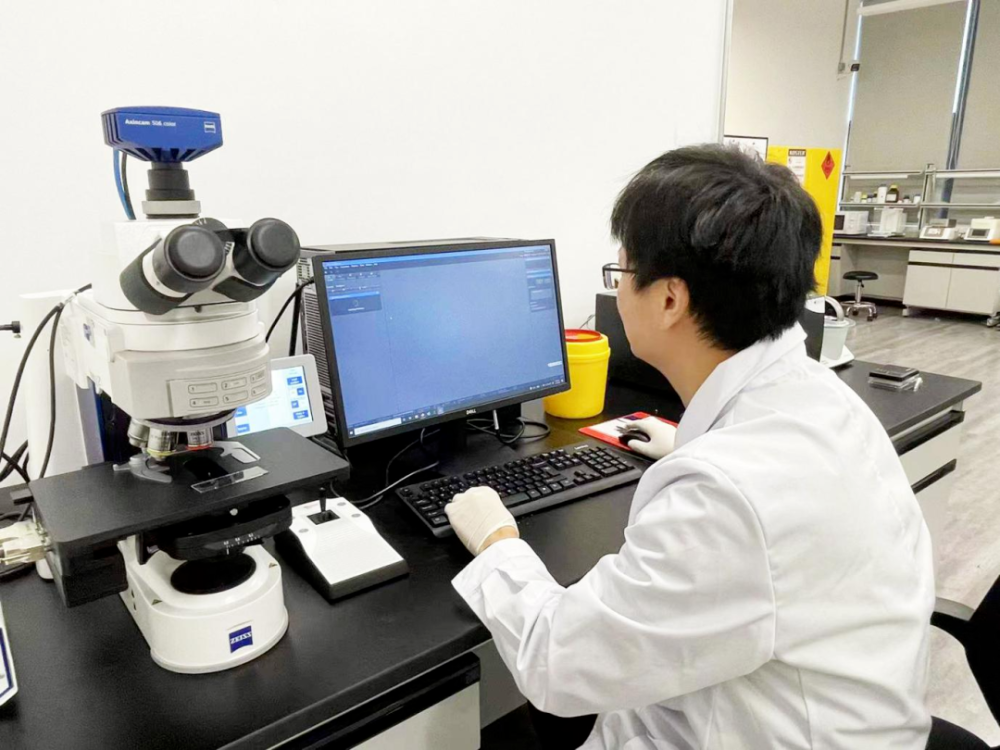
▲ Xinsu Technology R&D lab. Image source: Xinsu Technology
Ma Rui: To summarize — on the supply side, chips are becoming increasingly integrated, miniaturized, and functionally versatile, encompassing sensing and actuation across mechanical, thermal, optical, and electrical domains. On the demand side, applications are multiplying as chip dimensions match biological scales, enabling ever more scenarios. This led Zhao Xin to pivot toward using chips to serve biological applications.
Our other guest, Dr. Li Yibin, studied in the School of Electronics as an undergraduate and the School of Integrated Circuits for his PhD. You've also done entrepreneurship in EEG and spent ten years in medical electronics, with extensive experience in ECG, EEG, blood pressure, blood glucose, respiration, and sleep. Li Yibin, please share why you chose human signal monitoring for your venture, and how this direction connects to your previous research.
Li Yibin: From undergraduate through my PhD, I focused on microelectronics. After accumulating sufficient depth in semiconductors, there comes a point of厚积薄发 — where you need to consider which industry this technology can extend into. After observation and research, I concluded that healthcare was an excellent entry point.
More specifically, why blood pressure? Blood pressure is intimately connected to daily life. The traditional cuff-based measurement method has persisted for over a century. It struggles to achieve real-time, precise measurement, and is quite inconvenient for patients.
In 2020, we began productizing blood pressure measurement. Why were we positioned to revolutionize this? I believe three forces converged to bring us to this inflection point: sensor technology, AI technology, and rising health consciousness.
First, sensor technology. Back in 2010, before the Xiaomi Mi Band launched, we wanted to build something similar — continuously capturing blood flow parameters at the wrist. But sensor technology wasn't mature then. We had to build front-end analog circuits ourselves, convert to digital, and extract information — an extremely complex process far from productization. In recent years, sensor technology has advanced dramatically, particularly with the proliferation of photoelectric technology in portable devices. These sensors have become sufficiently mature for broad application.
Second, AI technology. When data accumulates to sufficient scale, AI can — operating as a black box — uncover patterns and problems that humans might struggle to perceive, revealing more fundamental insights. For example, blood pressure rhythmic variations, or how long-term blood pressure changes relate to physiological mechanisms. These questions would be extremely difficult to address using traditional methods alone.
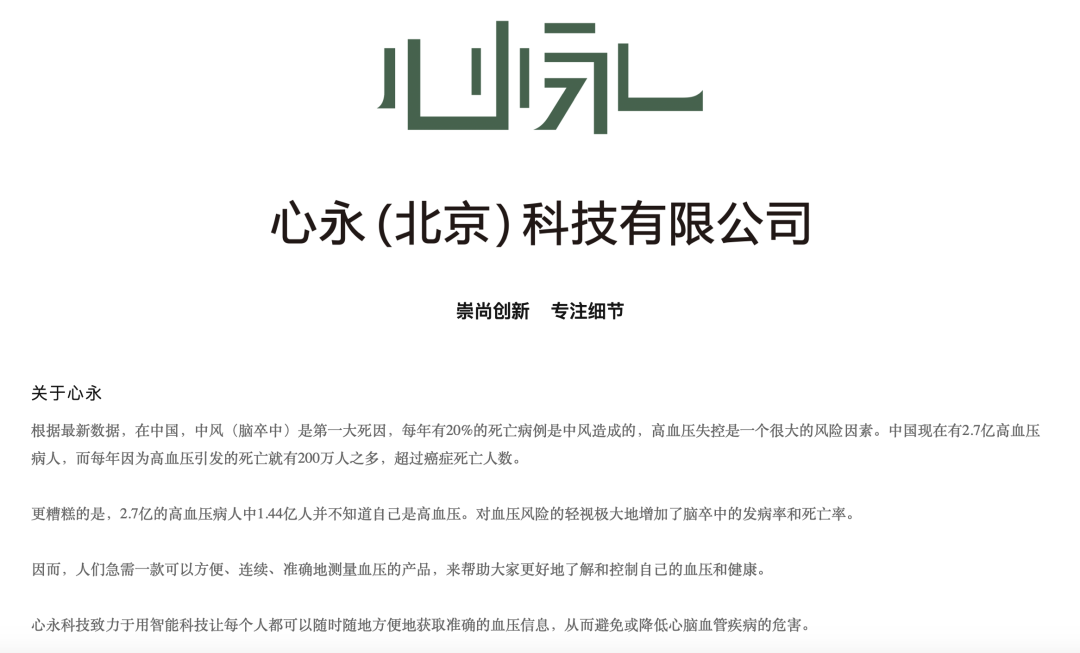
▲ Image source: Xinyong Technology
Additionally, rising health awareness has expanded the blood pressure measurement market. About a decade ago, most people went to hospitals for blood pressure checks. Now the importance of blood pressure monitoring is deeply understood — blood pressure monitors have become near-essential for elderly households.
/ 02 /
What stage has the R&D reached, and what are the applications?
Ma Rui: When we first spoke with Li Yibin, I immediately felt that their approach to problem-solving was typical engineering thinking — starting from clinical medicine to identify the problem of continuous blood pressure monitoring, then tackling it entirely as an engineering challenge. I'd like to ask Li Yibin: how did you determine that continuous blood pressure detection is so important? And what are its potential applications?
Li Yibin: Why is continuous blood pressure monitoring so important? Blood pressure is essentially the KPI of the cardiovascular system — long-term trends reflect the overall condition of cardiovascular health. To properly assess a patient's physiological state, doctors want longitudinal blood pressure data, keeping the patient's blood pressure within a reasonable range at all times.
But blood pressure itself fluctuates dramatically, making single-point measurements often unreliable. Even slight emotional changes, or drinking a cup of coffee or smoking a cigarette, can cause fluctuations of around 10 mmHg. Moreover, clinic blood pressure measurements often fail to fully reflect a patient's true physiological state — issues like masked hypertension or white-coat hypertension illustrate this problem.
Current cuff-based measurement methods essentially cannot achieve continuous monitoring. The closest alternative is 24-hour ambulatory blood pressure monitoring through periodic measurements, which yields an approximately continuous blood pressure curve. But this approach cannot capture short-term blood pressure variations.
An even more critical scenario is nighttime blood pressure. Nighttime and early morning are peak periods for cardiovascular and cerebrovascular events, and renin-dependent hypertension is also closely related to nighttime blood pressure levels. But having people use cuff-based measurements at night severely disrupts sleep and daily life. We hope that continuous blood pressure monitoring technology can provide a more appropriate solution for those who truly need it.
Once we have continuous blood pressure data, how should it be applied?
Applications for continuous blood pressure data are still in early stages. First, ensure the accuracy and reliability of the data itself — measure correctly, that's step one. Step two is using that data well. We can draw an analogy with heart rate: initially, people could hardly imagine what specific directions heart rate could be applied to, but after decades of development, heart rate has been integrated with exercise, sleep, chronic disease management, and digital health concepts. By providing front-end interfaces and data, it can offer highly accurate, reliable scientific foundations and quantified indicators for back-end diagnosis, treatment, and medication.
Ma Rui: The application aspect is quite interesting. Apple Watch integrates many human signal measurements — heart rate, blood oxygen, and others. When many sensors were added, people didn't know what they were for. Blood oxygen saturation, for example, normally stays above 95% in healthy people without much fluctuation.
But when COVID-19 hit, blood oxygen saturation proved valuable. U.S. research found that many COVID patients experienced sharp drops in blood oxygen levels — this indicator was even faster and more direct than antigen or nucleic acid testing. Once blood oxygen decline was detected, it might be time to go to the hospital for COVID testing.
Now looking at Xinsu Technology. Zhao Xin identified a major opportunity at the intersection of semiconductors and healthcare, with gene synthesis as the first entry point. How has gene synthesis technology developed? And how far has Xinsu Technology progressed with chip-based gene synthesis?
Zhao Xin: Through gene synthesis, researchers can precisely design DNA sequences that don't exist in nature. Gene synthesis is both a fundamental need in biomedicine and an enabling technology for the bioindustry (Enabling Products — the engine driving synthetic biology development, primarily including gene sequencing technology, genome editing technology, etc.). However, the pain point in gene synthesis is reducing synthesis costs — not just by 10% or 15%, but by orders of magnitude.
Initially, people used "column-based" methods, performing chemical synthesis on a tube surface. Later, Twist Bioscience, an American company producing synthetic DNA for biotech industry clients, introduced a "mechanical" innovation. This company etched micrometer-scale holes into silicon wafers, then used nozzles in an inkjet printer-like manner for high-throughput reactions. This approach effectively shrinks the reagent volume of each reaction unit and improves synthesis efficiency, helping reduce experimental costs by roughly three to four orders of magnitude.
With chip development, theoretically we can use integrated circuit approaches to create nanometer-scale tools — a fundamentally different approach from "mechanical" methods. On integrated circuits, we can potentially reduce each reaction unit's volume from the micrometer scale of "mechanical" methods to the nanometer scale of "chip-based" methods.
Xinsu Technology, which we founded, is developing third-generation "chip-based" products. We've developed a desktop synthesizer prototype for short-chain product demands; short-chain chip pilot production is complete and entering mass production. We've also completed proof-of-principle for chip-based long-chain synthesis and are developing the chips and synthesizer.
Compared to "mechanical" methods, "chip-based" products leverage CMOS chips to manipulate and sense individual molecules at the single-molecule level. "Chip-based" approaches could potentially reduce experimental costs by four to five orders of magnitude.
Ma Rui: Gene synthesis is "writing." In the "reading" direction, will Xinsu Technology be similar to Xinyong — both measuring some kind of signal, whether from the human body, proteins, or nucleic acids? Beyond gene synthesis, what other possible application directions does Xinsu see for using semiconductors to measure signals? And what is Xinsu's broader vision?
Zhao Xin: Gene "reading" means sequencing. We hope Xinsu Technology will establish presence in both synthesis and sequencing. With our chip-based engineering capabilities for genes, we'll continue exploring the boundaries of integrated circuit and biochip engineering capabilities, expanding chip applications in biotechnology.
From a business perspective, synthesis and sequencing share many common layers. Many sequencing technologies actually sequence while synthesizing, and synthesis also requires sequencing modules to further improve synthesis efficiency. Next-generation sequencing (NGS) doesn't use sequencing-by-synthesis, but rather single-molecule real-time sequencing. For future synthesis effectiveness, we'll also establish presence in single-molecule detection.
How Do Frontier Technologies Achieve Commercialization?
Ma Rui: Both Xinyong Technology and Xinsu Technology are very solid technically. But in commercial application, do you face difficulties?
For Xinyong Technology, for example, applying new monitoring indicators in the medical market involves regulatory compliance issues. For Xinsu Technology, "next-generation single-molecule detection" needs to be defined — whether to measure with mass spectrometry, chips, or whether spatial information needs more attention.
I'd like to hear both of your thoughts on commercialization, and your respective companies' current progress.
Li Yibin: Working at the intersection of disciplines, we feel like we're "the first to eat the crab." Obtaining medical device certification for our blood pressure monitoring device is our first milestone. But the more core question is how to get this technology truly accepted, replacing old technology. At the same time, using this technology to define new indicators, thereby advancing clinical medicine.
For commercialization, we're walking on two legs.
One is from the medical device angle: first obtain medical device certification, steadily build our research foundation step by step, then promote within the medical community. We continuously communicate with doctors, provide them our technology, conduct clinical trials, accumulate evidence-based medical evidence, and explore the relationship between continuous blood pressure and disease warning, diagnosis, and treatment. Early promotion focuses on the hypertensive patient population.
The other is from the daily consumer product angle: partnering with brands to promote the product. Most importantly, we need to establish the concept of continuous blood pressure monitoring — get people using it first.
Zhao Xin: From our perspective, "single-molecule detection" currently may not have such clear certainty domestically. But since we're starting from synthesis, the commercialization path for synthesis has more certainty. Moreover, our team has experienced the difficult stages of China's semiconductor industry development, so we're quite attentive to early-stage commercialization.
We'll first adopt more mature technical methods to provide products to customers, then continuously upgrade and iterate existing technologies. After iterating new methods, we can collaborate with academia to push forward and find more application scenarios. Solving existing needs is our starting point for commercialization; after establishing market position, we'll expand to new paths.
What's Difficult About Cross-Disciplinary Entrepreneurship?
How to Help More People Understand Cross-Disciplinary Work?
Ma Rui: What challenges does cross-disciplinary work present for entrepreneurship? I'd like to hear both of your perspectives.
Zhao Xin: In cross-disciplinary entrepreneurship, we're often asked why we chose to pursue R&D and exploration in ways somewhat different from proven approaches. Most people can hardly imagine using chips for molecular synthesis and sequencing, or what the prospects might be.
We've recruited many experienced people from industry, and initially everyone had somewhat fuzzy understanding of the new technology. We've done extensive internal training and written many articles about new technology to help people gradually realize its potential.
Fortunately, all three founders have years of cross-disciplinary experience, with respective cultivation and accumulation in certain directions: one in integrated circuits, one in biochips, one in biochemical and biological applications. The three of us together do create quite interesting chemistry.
Li Yibin: I feel similarly to Zhao Xin — sometimes we sense that "nobody understands us." "Cross-disciplinary" generally involves multiple vastly different directions. Xinyong Technology sits at the intersection of semiconductor technology, medicine, and fluid mechanics. Fully grasping and connecting these is extremely difficult. We started delving into portable sensing around 2011; after more than ten years, we only now feel we've achieved modest success.
In hiring, most people may need to understand Xinyong's work from scratch. A mature engineer who might smoothly transition into a role within a month at another company might need about three months with us to fully understand the logic. How to help team members truly understand and master the technology the company is developing — this is probably a problem most cross-disciplinary startups need to solve.
Ma Rui: Indeed, hiring is extremely important for cross-disciplinary startups. I'd like to ask both of you: what directions are you currently recruiting for?
Li Yibin: Xinyong Technology is currently focused on technology R&D. We warmly welcome software and hardware engineers of all kinds, especially those proficient in fluid mechanics, fluid-structure interaction, and related problems, to connect with us. We also welcome friends from the medical field or with various channel resources to join.
Two core technical components: one is front-end hardware development, the other is algorithm development. From circuits to sensors, all front-end hardware is developed in-house. The app and algorithms are also built by us. Algorithm development mainly divides into two core directions: one is physical modeling — modeling and analyzing physical processes. The other is AI models — data-based analysis and AI-based compensation. You can reach us through the email and QR code below. Welcome to join — we look forward to it!
Welcome to Join
We warmly welcome software and hardware engineers of all kinds, especially those proficient in fluid mechanics, fluid-structure interaction, and related problems, to connect with Xinyong Technology. We also welcome friends from the medical field or with various channel resources to join. Please send resumes to xinyong@heart-forever.com
Zhao Xin: Like Xinyong Technology, Xisu Technology is currently going through a phase of rapid expansion. Looking at the company's overall structure, we need talent across chip design, biochip development, microfluidics, automation, bioinformatics, proteomics, and other directions.
The Xisu Technology team comes from MIT, Berkeley, Washington University in St. Louis, Tsinghua University, Peking University, Fudan University, and Nanjing University. They have previously worked at world-leading companies such as Intel, Thermo Fisher, and Berkeley Lights, with years of research and industry experience in biotechnology, integrated circuits, MEMS, and microfluidics.
We look forward to having talented individuals from biotechnology, integrated circuits, MEMS, microfluidics, circuit design, and instrument design join Xisu Technology. With an innovative drive and cross-disciplinary thinking, let's contribute our efforts during this "chip creation era" of rapid technological advancement.
If you have relevant experience and are willing to explore frontier technologies with an early-stage team, we welcome you to follow Xisu Technology's official account, where we will share more technical insights and job postings.
Welcome to Join
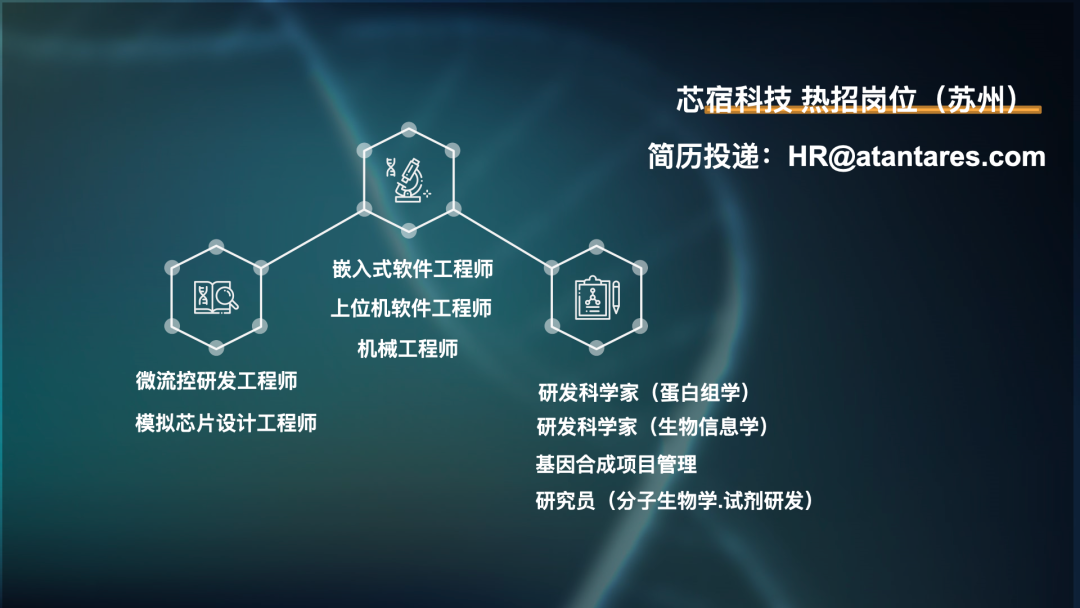
We look forward to having talented individuals from biotechnology, integrated circuits, MEMS, microfluidics, circuit design, and instrument design join Xisu Technology. Please send resumes to HR@atantares.com
If you have relevant experience and are willing to explore frontier technologies with an early-stage team, we welcome you to follow Xisu Technology's official account, where we will share more technical insights and job postings.
Having Seen the Hardships of Entrepreneurship, Believing in the Power of Accumulation
Ma Rui: I'd like to ask both founders to represent Boston and Tsinghua respectively and share your reflections on your entrepreneurial journeys so far.
Zhao Xin: Xisu Technology is the first venture I've led, but it's not my first experience with entrepreneurship. During my PhD in 2011, I joined a startup with an MIT senior. The company aimed to build a better EDA tool for analog circuits — a foundational domestic alternative. The chip market was extremely difficult back then, overlooked by capital. Both large enterprises and startups went through a tough period.
Later in Boston, quite a few star companies in AI-driven drug discovery emerged, such as XtalPi, which FreeS Fund invested in. When these AI pharmaceutical companies like XtalPi returned to China to start businesses, they received support from national policies and investment institutions. I could clearly feel the differences in entrepreneurship under different historical contexts.
Because I experienced the chip industry's downturn, in commercialization I emphasize both high ambition and doing some things that may seem a bit "unsexy" but can get off the ground quickly and generate revenue. But we maintain our long-term vision, believing that chip technology will hold a strategic position in molecular synthesis and detection.
Ma Rui: Zhao Xin has seen the hardships of entrepreneurship. Now, though riding this wave of opportunity, he still insists on balancing technology and business. Yibin, please share your thoughts on entrepreneurship as well.
Li Yibin: I think the biggest problem on the entrepreneurial journey is that it's incredibly easy to waver. If you don't have very deep accumulation and preparation in the early stages, you'll easily lose your footing when facing many temptations and problems.
First, entrepreneurship requires steadily getting things done, then thinking about how to serve others and commercialize. In 2016, friends asked me whether I wanted to take our research products out of the university and start selling them externally. But I felt the timing wasn't mature enough. Now we have a more comprehensive grasp of this matter, and roughly understand what the development trends look like and how to avoid upcoming problems.
Since we've chosen an interdisciplinary frontier direction, we're destined to face tough battles and go through a process of accumulation before breakthrough.
Reader Giveaway
We welcome you to share your thoughts on interdisciplinary entrepreneurship in the comments section. The 3 readers with the most thoughtful comments will receive a gift package from FreeS Fund (each package includes Saturnbird coffee, Kllla contact lenses, Three Squirrels snacks, ACC Super Accessories jewelry, Innisfree masks, and Wanwu Upward prebiotic solid drinks).

▲ Was Elon Musk Right? Will LiDAR Make It Into Cars? | FreeS Fund Chip Series
▲ As the IoT Industry Booms, How Should Chip Companies Position Themselves? | FreeS Fund Chip Series ▲ The "Chip Shortage": Entrepreneurial Challenges and Opportunities | FreeS Research Institute · Chip Series ▲ In the Chip Sector, How Do You Go From Scientific Innovation to Tech Entrepreneurship? | FreeS Fund Chip Series ▲ Yongcheng Yang, FreeS Fund: The Red Ocean Is the Ultimate Battle Entrepreneurs Must Face | Chip Series Livestream Registration ▲ Why We're Bullish on the Optical Chip Industry | FreeS Fund Chip Series ▲ Can Domestic Semiconductor Materials Outpace International Competitors? | FreeS Fund Chip Series
▲ Li Feng Column | A $2 Trillion Market and $10 Trillion in Output: Why We're Bullish on Chinese Chips? ▲ How Do Tech Companies Go From "Valuable Technology" to "Profitable Technology"? | FreeS Research Institute
▲ FreeS Fund 2021 Outlook ④ | The Endgame for Sensors Behind Autonomous Driving