Why Are New Energy Vehicles So Hot? And Are They a Good Bet Long-Term? | FreeS Research

An industry with more than a century of industrial history, the automotive sector has finally met its disruptor.

In recent years, the auto industry — with more than a century of industrial history behind it — has been transforming at remarkable speed. What the market is experiencing is a lane change: from internal combustion vehicles to new energy vehicles. We've all seen it — EV startups and legacy automakers alike are racing to enter the new energy vehicle space.
Will this be an opportunity to overtake on the curve? One electrifying fact: among the world's top four producers of EV power batteries, two are already Chinese companies — BYD and CATL.
We've partnered with Xigua Video on a column called New Knowledge in Ten Episodes, a video series where we'll talk about the new energy vehicle industry:
- From an investor's perspective, in the long run, are new energy vehicles a bubble or an opportunity?
- Is there currently a bubble in new energy vehicles? How does it form? How big is it?
- Compared to smartphones back in the day, what do new energy vehicles ultimately mean for China, for entrepreneurship, and for the industry?
The first episode focuses on answering that first question: why new energy vehicles are attractive in the long term. We're bundling the video and transcript here, hoping it offers some food for thought. Friends interested in following along can subscribe to the Xigua Video account (ID: Li Feng Business Insights). You can also follow the FreeS Fund video channel for frontline industry observations and investment perspectives from the trenches.
Watch FreeS Fund's original video — follow our video channel 👆
Contact Us & Join Us
FreeS Fund continues to track investment opportunities in consumer/TMT, hard tech, and biotech. Business plans are welcome at bp@freesvc.com, or you can reach out to Feng Xiaorui on WeChat (ID: freesfund).
FreeS is currently seeking investors in biotech, deep tech, and consumer/TMT across Beijing, Shanghai, and Shenzhen. We welcome candidates with industry backgrounds and an interest in investing (full-time or internship), and referrals of outstanding talent to hr@freesvc.com (resumes encouraged).

/ 01 / The Auto Industry Is One of the Engines of National Economic Growth
Today let's talk about new energy vehicles, a topic that's been heating up lately. The first question we'll explore: are new energy vehicles genuinely attractive in the long run? Why all the buzz?
Let's start with a simple conclusion — yes, new energy vehicles are genuinely attractive long-term. Here are the specific reasons.
First: they really are better. Why?
Of course, because they run on electricity — sustainable and clean energy. This carries enormous long-term significance for the emissions reduction and carbon neutrality goals our country has just announced.
Moreover, they're very consumer-friendly. Why?
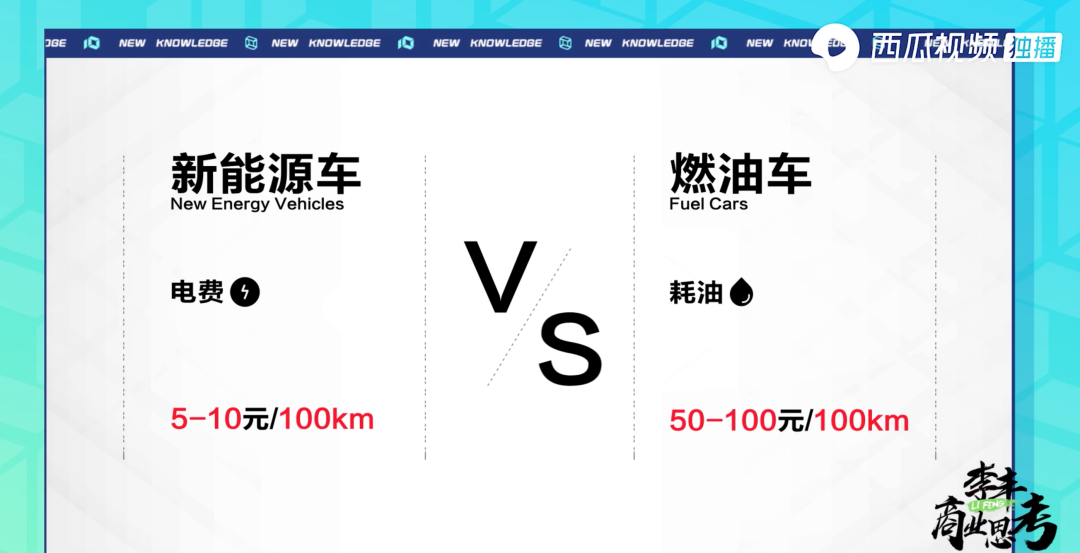
Typically, driving an electric vehicle costs roughly 5–10 RMB per 100 kilometers, depending on electricity rates. For a gasoline vehicle, depending on fuel consumption, you're looking at about 50–100 RMB per 100 kilometers. You can hear the difference — 5–10 versus 50–100 per 100 kilometers. It's substantial.
The second reason relates to our own market and consumption. China is the world's largest new car market, and developing the auto industry has significant economic multiplier effects.
Automobiles constitute a massive industry — but how massive? We sell roughly 20 million-plus vehicles annually. Even at a conservative 100,000 RMB per vehicle, that's a 2–3 trillion RMB new car market.
Beyond new car sales themselves, automobiles touch logistics, transportation, maintenance and repair, and whether charging or refueling — they connect to numerous industries.
Behind this 2–3 trillion in vehicle sales, there's also extensive manufacturing production. These manufacturing operations and component suppliers, beyond serving our domestic market, turned China into an automotive parts import-export market over a decade ago.
So behind this 2 trillion-plus, adding all these factors together, there's roughly another 3–4x multiplier.
Simply put, all auto-related industries — production, manufacturing, consumption, export processing and so forth — add up to roughly an 8–10 trillion RMB market.
This market is critically important to China. And China has one particularly significant characteristic: since 2009, it's been the world's largest new car market.
From these two perspectives, this represents a long-term advantage we should seize.
Because once we became number one in 2009, for a very long time — perhaps 20, 30, 50 years or more — we'll likely remain the world's largest market. We should naturally leverage being the largest consumer market to drive our own economic growth.
Therefore, looking long-term, over the past five years and for a considerable time ahead, whenever we need to stimulate the economy, we begin pulling auto consumption levers — purchase tax reductions, new energy vehicle promotion.
So beyond new energy vehicles being inherently superior, the auto market itself is enormous, with major implications for our economy, our consumption, and for driving China's overall development including foreign trade and manufacturing.
/ 02 / Why Developing New Energy Vehicles Gives Us Independent Innovation
Having established how massive the auto industry is and its significance for our country, a third question arises: in such a huge market, why focus specifically on developing new energy vehicles?
The reason is straightforward. In China's past auto market, the highest-cost component was, as everyone knows, the engine.
Starting in the late 1980s, what we called "trading market for technology" — opening our market to bring in numerous world-famous automakers to form joint ventures — aimed to digest, absorb, and achieve independent innovation in key technologies, specifically engine technology plus the powertrain. Engine and powertrain together account for roughly 15–20% of a gasoline vehicle's cost.
After roughly 30-plus years of development, how does China's independent gasoline engine technology stand today? We've made considerable progress, but not as much as imagined, particularly in mid-to-high-end gasoline engine independent innovation where we haven't reached the world's best levels.
Among China's top 10 bestselling vehicles, more than half now have genuinely domestically innovated engines, but we still lag the best global standards by some distance.
So we switched lanes — to new energy vehicles.
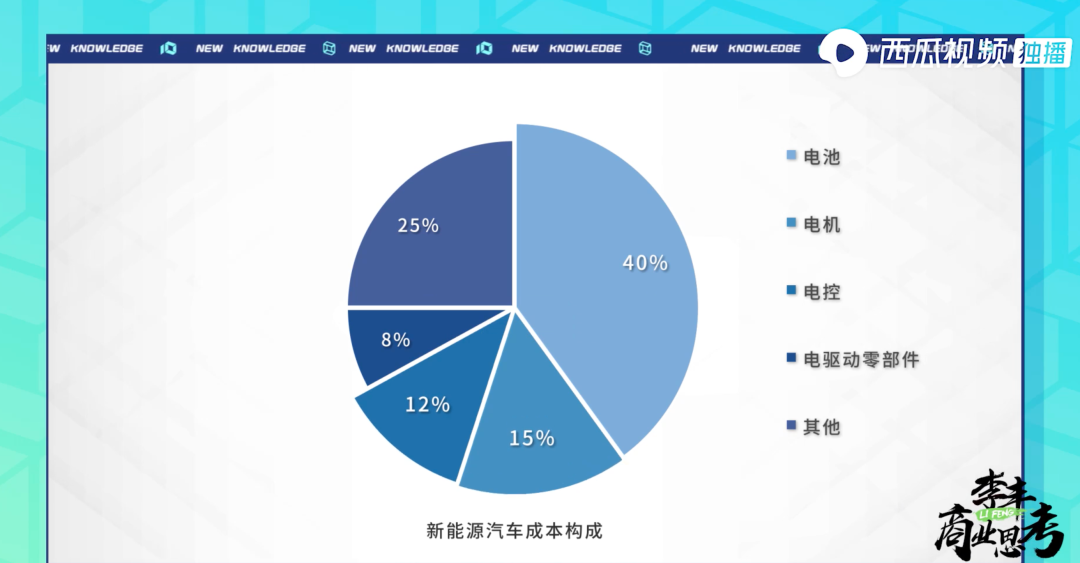
In new energy vehicles, what's the highest-cost component today? The battery. Batteries account for 40–50% of a new energy vehicle's cost.
(Data source: Elecfans)
Adding in the electric control and motor systems beyond the battery, these three components together reach roughly 60% or more of a new energy vehicle's cost.
Comparing these two scenarios, you can identify two problems.
First: even with national subsidies, new energy vehicles remain relatively expensive compared to gasoline vehicles. The reason is precisely that these key power systems — battery, motor, electric control — still represent a high share of total vehicle cost. In gasoline vehicles, the critical power system accounts for less than 20%.
This is why electric vehicles are expensive.
The other problem: on gasoline engine independent innovation, we pursued market-for-technology, surrendering nearly half of gasoline vehicle sales profits to foreign partners in these joint ventures, yet failed to obtain the highest level of independent engine innovation.
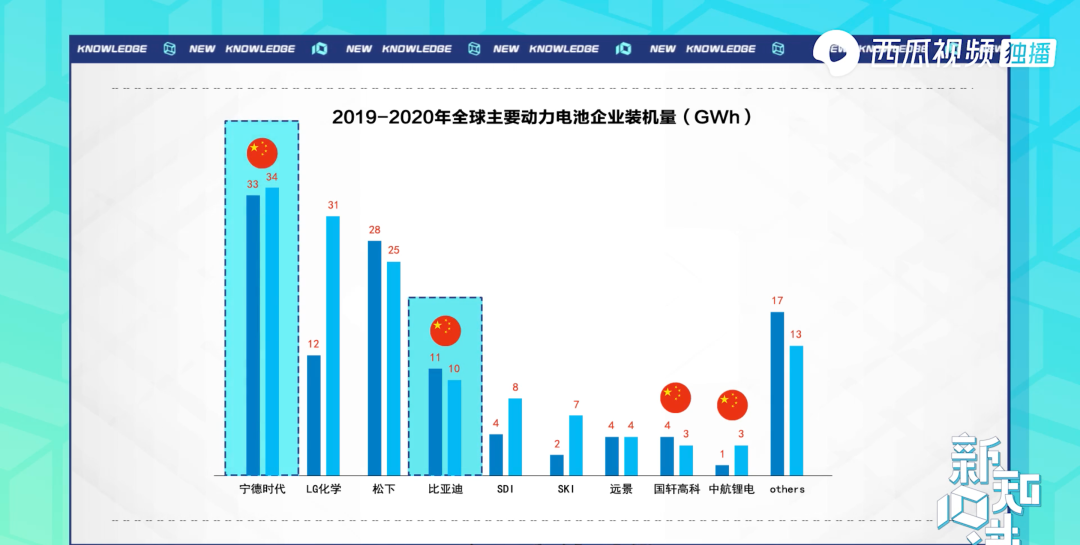
Switching to new energy vehicles, in just the past five years — perhaps without needing much explanation — everyone can see that in capital market performance alone, among the world's top four new energy vehicle power battery producers, two are already Chinese companies: BYD and CATL.
(Data source: SNE Research)
CATL held the position of world's number one new energy vehicle power battery producer by capacity for a considerable period.
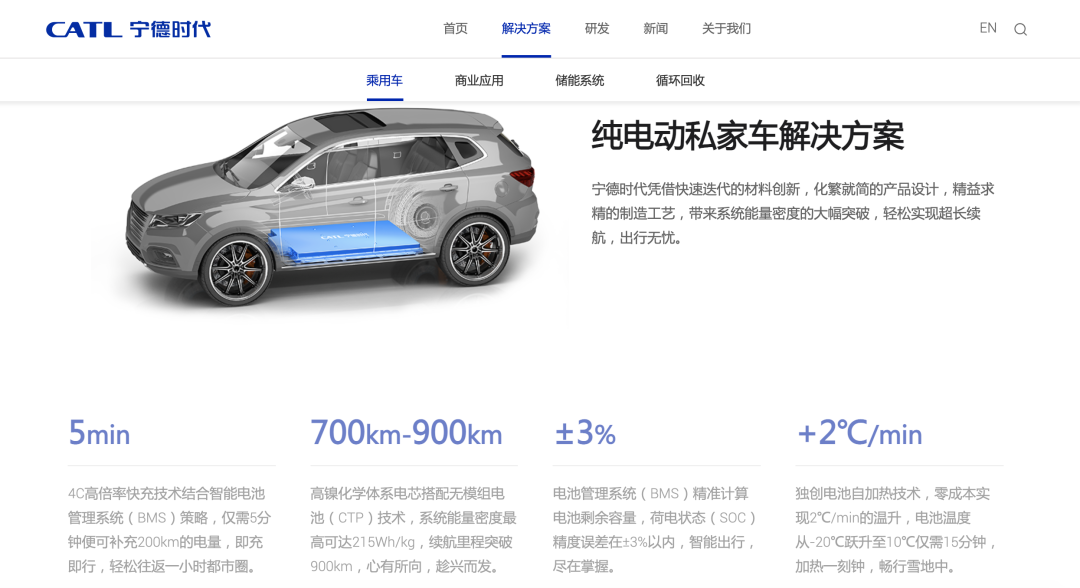
Comparing these two, you discover that on the new energy vehicle side, for power batteries — the highest cost-share component — China has reached world-advanced capacity levels, with technology not far behind either.
We'll also discuss later the three components (battery, motor, electric control) — these highest cost-share technologies in new energy vehicles where China has achieved solid independent innovation and world-advanced standards.
So comparing gasoline and new energy vehicles, their fundamental difference is this: with gasoline vehicles, 30 years of effort only barely achieved certain levels of independent engine technology innovation; on the new energy vehicle side, after just a few years of effort, we're already among the world's best countries for independent innovation and technical capability in new energy vehicle key components.
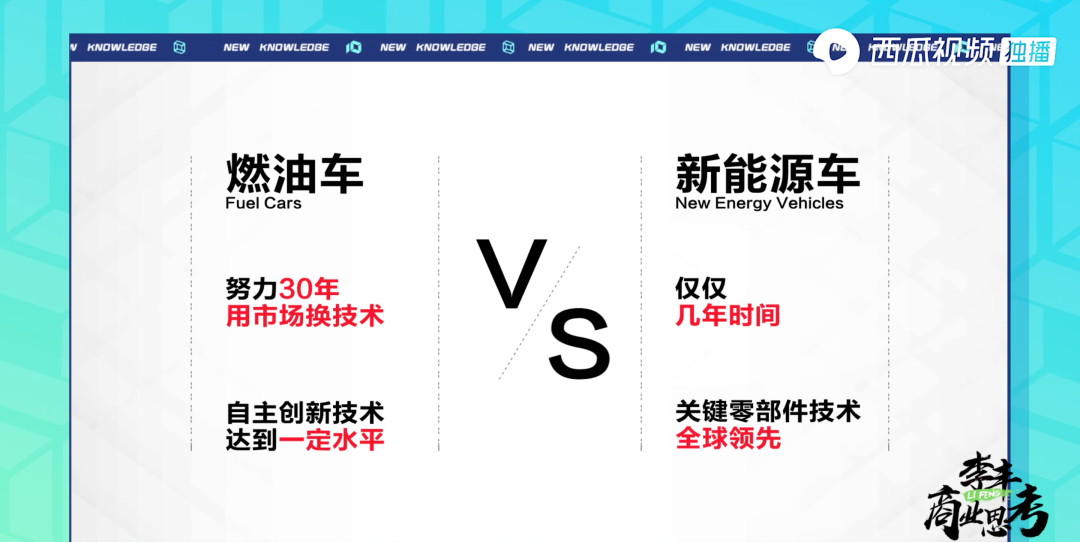
Therefore, looking long-term, developing new energy vehicles gives us independent innovation technology plus the world's largest production capacity. That's the third point.
/ 03 / The Energy Strategy Behind New Energy Vehicles
A fourth point — why new energy vehicles will do well long-term? This relates to something you may not know much about, but is critically important: our country's energy strategy and energy security. How to understand this?
As of last year, China had roughly 300 million vehicles on the road, consuming about 125 million tons of gasoline annually.
Where does this 125 million tons come from?
We know gasoline is refined from petroleum. In the refining process, roughly 4 tons of petroleum yields 1 ton of gasoline. In other words, 125 million tons of gasoline requires about 500 million tons of petroleum.
In 2017, China became the world's largest petroleum importer, surpassing the US. In 2019, China set a record importing 500 million tons of petroleum — our historical peak. This happens to match what our national vehicle fleet currently consumes in gasoline annually.
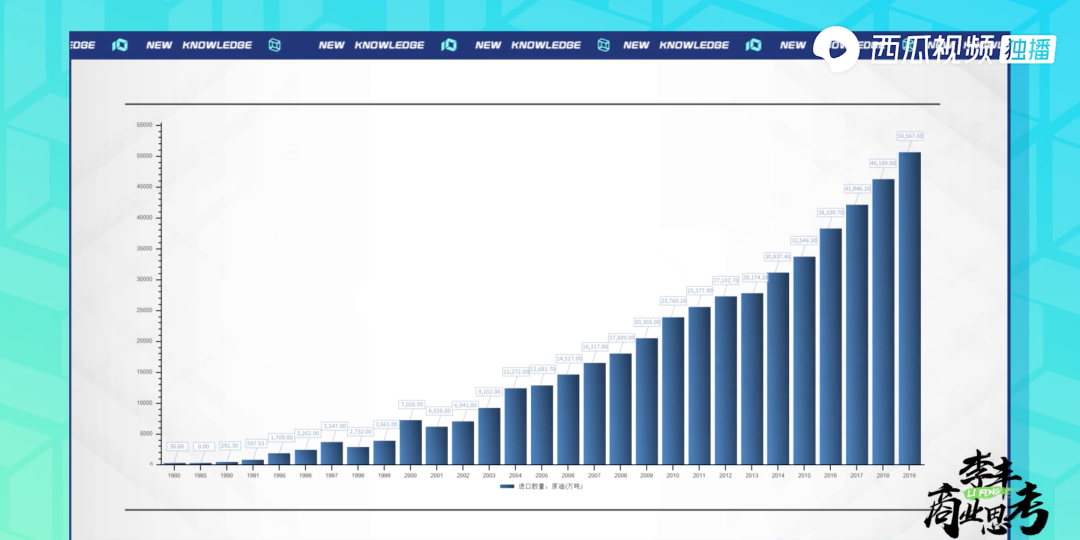
(Data source: Wind, General Administration of Customs)
Will China's auto market continue growing? Despite being world number one, we'll actually maintain moderate growth. Why?
Another auto market statistic: average vehicles per thousand people.
China's current figure? Nearly 200. Is 200 a lot? Actually not. Japan has over 500 vehicles per thousand people; the US has roughly 700–800.
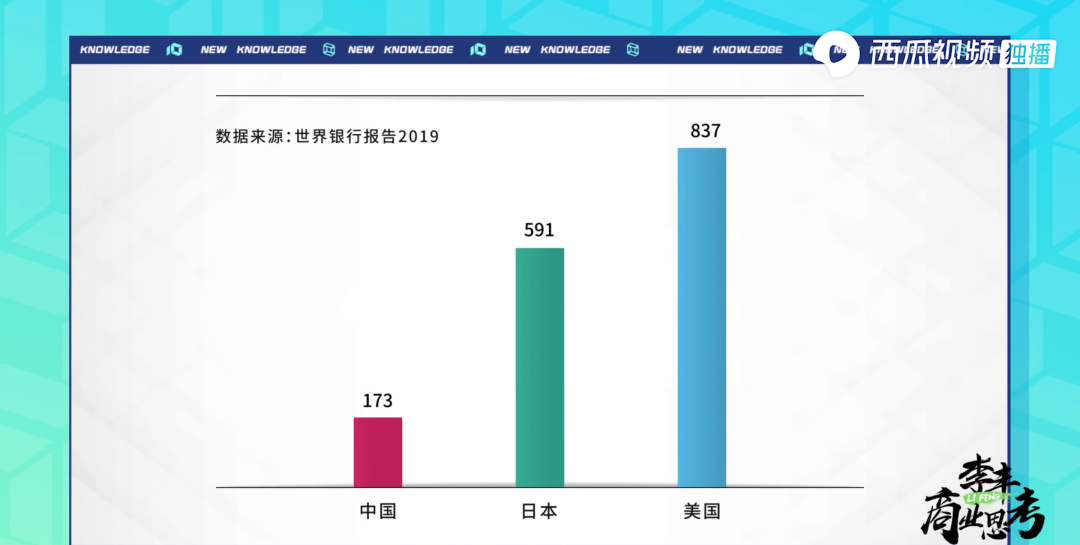
Even allowing that the US, with its vast territory and sparse population, can sustain higher vehicle ownership. At minimum, in terms of urban density, population density, and transportation conditions, we're comparable to Japan.
Over 5–10 years or longer, our vehicles-per-thousand should converge with Japan's.
So from our current 200 vehicles per thousand people, we'll likely increase at least 1–2x, to 400, 500, or 600 per thousand.
Recalculating with gasoline consumption: today we consume over 100 million tons annually; in 5–10 years, if all were gasoline vehicles, doubling that means another 100 million-plus tons of gasoline. Meaning another 500 million tons of petroleum annually for gasoline production.
In reality, China is already the world's largest petroleum importer, and in 2019 imports broke through 500 million tons — representing nearly 80% of our total annual petroleum consumption. In other words, China's petroleum external dependence is approaching 80%.
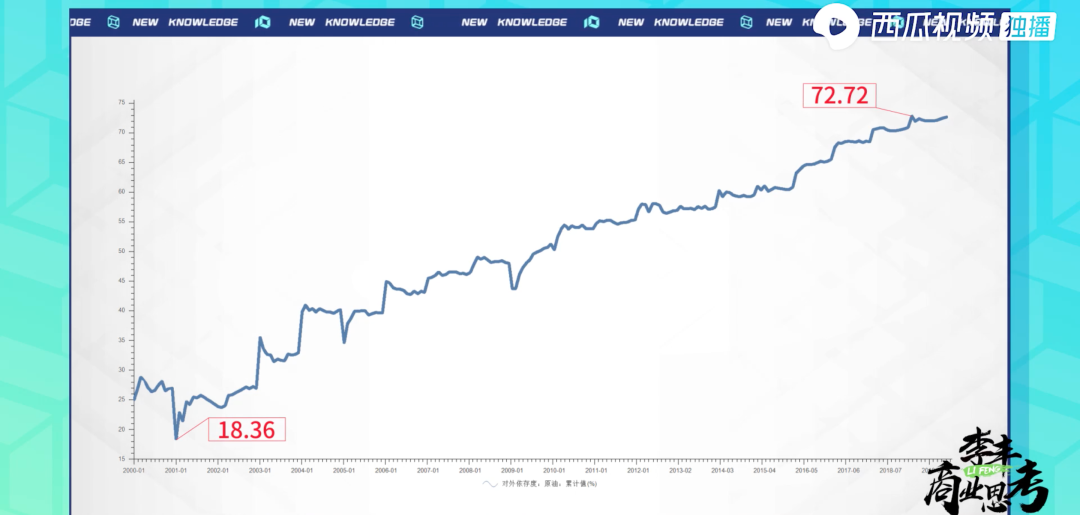
(Data source: Wind)
If vehicle numbers double again, you can imagine we'd be almost entirely dependent on petroleum imports to meet gasoline demand.
From a national perspective, if our energy becomes completely import-dependent, this poses significant challenges to energy strategy.
Because whether it's our relationships with petroleum-exporting countries, or major petroleum price fluctuations, both create substantial challenges to national energy security and energy strategy.
If we vigorously develop new energy vehicles, we can increase vehicles-per-thousand, raise living standards, improve logistics and transportation capacity — without needing to import more petroleum to fuel these additional vehicles, while remaining environmentally friendly, and with independent technology innovation.
04 Conclusion
Putting all these factors together, you can understand why new energy vehicles will certainly do well long-term, and why their current popularity is entirely justified.
First, because they're inherently environmentally friendly and very consumer-friendly in terms of operating costs.
Second, automobiles represent an enormous market where China is world number one — we should leverage this top position and massive market to drive economic development.
In the gasoline versus new energy vehicle comparison, our new energy vehicles have already achieved and will continue maintaining world-leading independent technology innovation, enabled by our position as the largest market.
Fourth, new energy vehicles, due to their energy consumption characteristics, carry major long-term significance for our country's energy strategy.
These four reasons lead us to our first conclusion: new energy vehicles, looked at long-term, will have enormous significance for China's auto consumption, technology innovation, and energy security — so they will certainly succeed.
(He Liuning also contributed to this article.)

Li Feng's 2021 Outlook: How We View China's Present and Future
FreeS 2021 Outlook ② | Three Trends in Biotech Innovation
FreeS 2021 Outlook ① | Eight Trends in Consumer Entrepreneurship
Understanding New Platform Birth in One Chart | Li Feng Column
China's Capital Market Reforms 2004–2020: Who Ultimately Benefited? (Part 2) | Li Feng Column
Will China's Capital Market Improve in H2 2020? (Part 1) | Li Feng Column
Understanding China's Industrial Chain Changes and Opportunities in One Chart | Li Feng Column
▲ Globalization or Deglobalization in One Chart | Li Feng Column