Why Is AI Drug Discovery So Hot, and Why Now? | FreeS Fund Biomedical VC Summit Transcript

Why We're Bullish on AI Drug Discovery
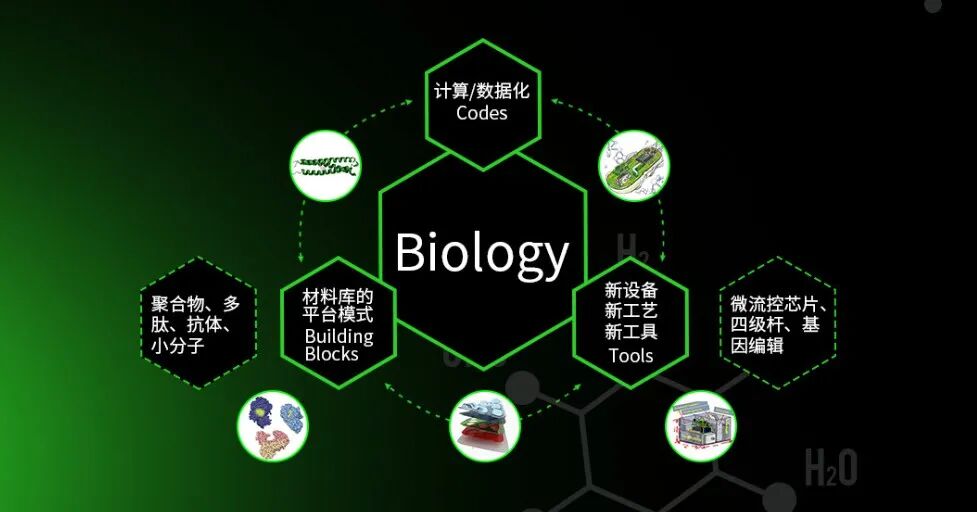
In 2020, the value of biopharmaceutical innovation became even more pronounced, making it the hottest sector in capital markets. In biopharma, three factors ran high: investor attention, corporate participation, and the speed of technological cross-pollination. In China's drug R&D space, industrialization and digitization were happening simultaneously. The shift toward innovative drugs was accompanied by the rapid application and continuous iteration of new tools like AI-driven drug discovery. High-growth technological inflection points could become the new foundation for future pharmaceutical R&D.
Data-driven approaches and computation represent a key investment angle for FreeS Fund in the healthcare sector. Since 2016, FreeS Fund has gradually built positions in multiple AI/computational drug discovery companies, covering molecular generation and screening, synthesis, crystal form, and formulation in the drug development pipeline.
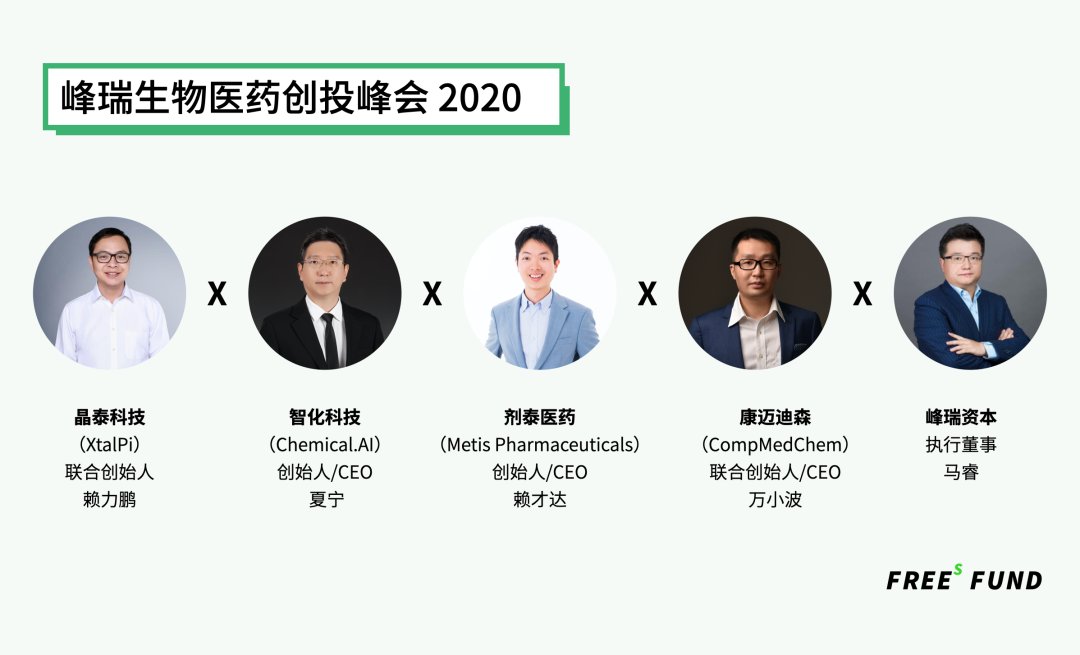
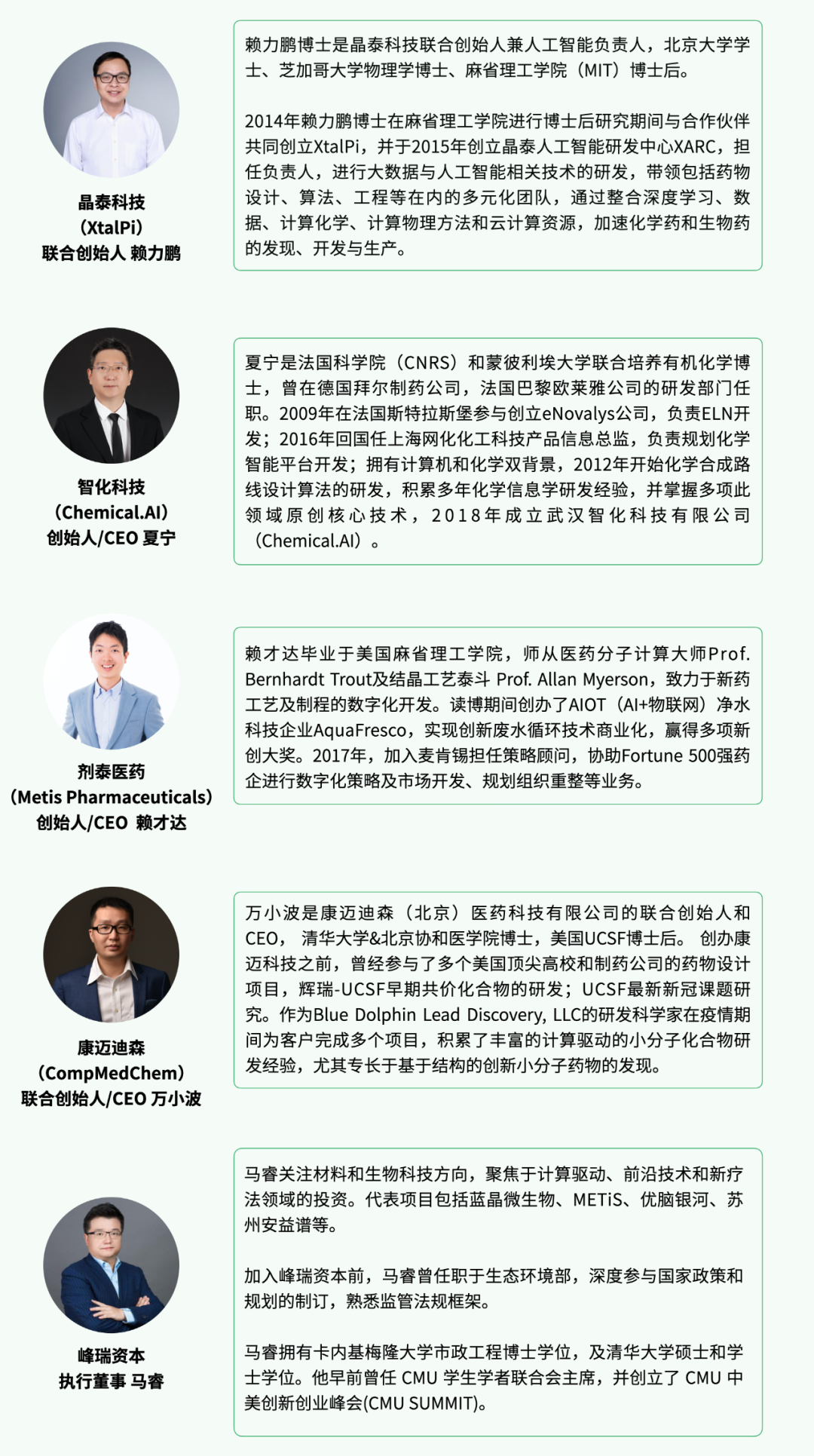
In the second livestream of FreeS Fund's Biotech and Healthcare Venture Capital Summit, Rui Ma, Executive Director at FreeS Fund, was joined by Lai Lipeng, co-founder of XtalPi, a leading AI drug discovery company; Xia Ning, founder/CEO of Chemical.AI; Lai Caida, founder/CEO of METiS Pharmaceuticals; and Wan Xiaobo, co-founder/CEO of CompMedChem. Together, they explored:
- What applications and new developments do AI and computation have across various stages of drug R&D?
- Why is AI drug discovery so hot, and why now?
- How should we assess the current development stage of AI drug discovery?
- First principles or AI?
- What needs and applications do different types of Chinese pharmaceutical companies have for AI and computation?
- What future trends will shape AI drug discovery?
- What kinds of talent have the greatest advantage in entering the AI drug discovery field?

/ 01 /
How Are AI Drug Discovery Companies Developing?
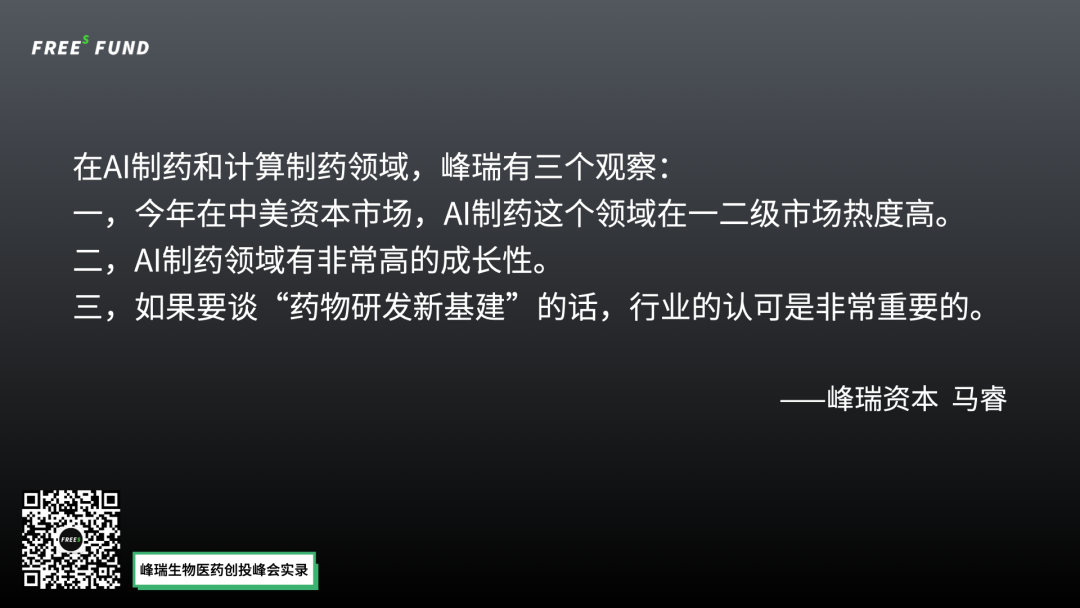
Rui Ma: All four guests here are founders of AI drug discovery companies in FreeS Fund's portfolio. In AI and computational drug discovery, FreeS Fund has three observations:
First, in 2020, the AI drug discovery sector has been heating up in both Chinese and US capital markets across primary and secondary markets. In the US secondary market, two companies went public in 2020: Schrödinger and Relay Therapeutics. Both now have market caps of around $4 billion-plus. Schrödinger's stock rose from its IPO price of $17 to nearly $100 at one point, and now trades around $60-plus.
Investment enthusiasm has transmitted from the US to China. In China's primary market, AI drug discovery-themed companies have been highly sought after. XtalPi recently completed an oversize $300 million funding round, reaching a $1 billion valuation. Several other companies in the market have reached valuations around $100 million.
Second, the AI drug discovery sector shows very high growth potential. On one hand, many brilliant people have joined the field. On the other hand, new technologies keep emerging — automation, high-throughput screening, molecular building block libraries, ultra-large virtual screening libraries, cloud computing GPU applications, new AI algorithms, and structural biology advances. There's genuine hard tech development injecting new momentum into the sector.
Third, if we're talking about "new infrastructure for drug R&D," industry recognition matters enormously. Will we eventually see AI and computation fully integrated into the foundational layer of drug R&D?
From where things stood a few years ago to now, whether pharmaceutical companies are participating out of FOMO — fear of missing out on new opportunities — or are genuinely leveraging AI drug discovery technology, their recognition of AI drug discovery has been continuously rising. This is also a key focus of our discussion today.
Let's start with each of you introducing your company and what your particular strengths are in AI or computation.
Lai Lipeng: Drug R&D roughly divides into two stages: clinical development and preclinical. XtalPi is building new infrastructure for biopharmaceuticals, providing infrastructure for drug R&D from a computational perspective, with particular focus on digitalization and intelligence in technology development and contribution.
XtalPi's main business covers two areas. One is in drug development, where we reduce experimental testing costs through accurate prediction of drug crystal forms and solid phases.
The other is in early-stage drug discovery, going from target structure or target information to preclinical lead compound design.
We have three core technologies. The first is first-principles-based computational chemistry, where we start from the Schrödinger equation and continuously pursue higher accuracy. The second is AI and deep learning, data-driven drug discovery, helping medicinal chemists search broader chemical space. The third is our engineering capabilities, currently supported primarily by cloud-based supercomputing resources. Through a multi-cloud architecture, we can schedule over one million CPU cores and GPU resources.
Xia Ning: Chemical.AI's English name reflects our vision: shaping the future of chemistry by integrating chemistry with artificial intelligence and big data technology, with particular emphasis on dramatically improving the efficiency of chemical synthesis, thereby accelerating the speed and success rate of new drug R&D.
One of Chemical.AI's core businesses is providing chemical retrosynthesis route design tools for large domestic and international pharmaceutical companies and CROs, currently at world-leading technical levels.
In the preclinical chemical R&D stage, beyond designing virtual molecules, you need to actually synthesize the physical molecules. This synthesis route design itself demands extremely high skill and experience from chemists. We're trying to use computational methods, big data plus AI, to design optimal routes and avoid failures. This can accelerate drug discovery to some degree and save substantial costs. We're also exploring synthesizability evaluation and de novo molecular design.
Wan Xiaobo: CompMedChem was just founded in September. We want to build a platform company focused on computational chemistry-driven new drug R&D. Our technical signature is building an ultra-large-scale compound small-molecule drug discovery platform based on protein 3D structure, using core technologies including ultra-large-scale molecular screening plus AI empowerment to search vast compound space in short timeframes.
The pain point we want to solve is breaking through the patent-tracking R&D model of domestic generic drug companies, helping small and medium-sized new drug R&D companies find pathways from zero to one for discovering novel compound scaffolds at relatively low cost, thereby providing them with early-stage development services for small-molecule innovative drugs.
Lai Caida: METiS Pharmaceuticals focuses on AI in a relatively underexplored area of pharmaceuticals: drug delivery.
Drug delivery does have some foundation, but as Mr. Lai from XtalPi just described, much of the new infrastructure for drug R&D is still in early stages of construction.
The first thing we've built is a big data platform — not just through known data, but with the capability to generate data. Through a high-throughput automated experimental platform, we generate highly useful physics parameters and data across various drug delivery formulations and delivery routes.
Based on this data, we use two approaches. One is first-principles computation to intelligently understand how molecules interact with nearby excipients and delivery carriers, and how this data scales well in human bodies.
The other is a fully AI approach, using the preceding experimental data and first-principles-derived physical parameters to advance and model, giving us significant advantages whether in early drug discovery, improving druggability through delivery, or 505(b)(2) new drug design.
METiS has two core business directions:
First, serving pharmaceutical companies in discovery and development stages, providing integrated druggability assessment from molecular structure design to drug delivery, completing drug delivery and formulation optimization, and even simulating process scale-up parameters.
Second, designing formulation new drugs to solve clinical pain points — such as toxicity, convenience of use — through our platform to create clinically differentiated pipelines. The new drugs produced this way create substantial value. We want to help domestic generic drug companies or API companies seeking transformation, as well as innovative drug companies, create truly valuable products.
Rui Ma: Although these companies are all in AI drug discovery, the field involves different stages — molecular design, crystal form, formulation, synthesis. Also, these companies have different business models. Some work across multiple stages, with both AI and computation, like XtalPi. Some are AI-based on data, like Chemical.AI. Some digitize molecular libraries and compute based on physics, like CompMedChem. Some use high-throughput to digitize formulations while using computation to reduce experimental steps and improve efficiency. From these companies' business directions, you can see that AI drug discovery is quite a complex problem.
/ 02 /
Why Is AI Drug Discovery So Hot?
Why Now?
Rui Ma: I'd like to explore with everyone: why is AI drug discovery so hot right now? Why is this the moment?
Also, any new technology must go through a maturation process. I'd like to ask everyone to give an overall assessment: what stage is AI drug discovery at now? That is, what can AI and computation roughly accomplish at this point? This may be a somewhat subjective question.
Lai Caida: The recent interest in AI drug discovery as an industry actually stems from the efficiency problem in pharmaceutical development — Eroom's Law (Moore's Law spelled backwards). The pharmaceutical industry faces a scenario where drug R&D costs roughly double every nine years. So a reasonable goal is to hope that Moore's Law of computing power, plus high-throughput and automated experimental technology, can help us efficiently design drugs more likely to succeed.
If we examine why R&D costs are high, we find it's at two levels:
The first level: during drug discovery, roughly 10–20% of R&D spending goes in, while clinical trials swallow over 80%. But the success rates and investments are completely mismatched — most failures happen in the clinic. In other words, when we screen molecules early in drug discovery, we're not actually picking the right ones.
Our goal with AI-powered drug development isn't merely to boost efficiency. We want to effectively bridge drug discovery with human clinical trials — to find good molecules. This is extraordinarily difficult. It requires deconstructing the body's immensely complex system into biochemical models, using first principles or data-driven approaches to achieve highly accurate simulations before ever reaching the clinic.
So the core of AI in drug discovery or development isn't just about efficiency gains. It's about improving success rates in the later clinical stages. This demands that we build on the rapid advances in gene sequencing over recent years, using our ability to read and write genes to generate massive amounts of biologically relevant data, then use AI to integrate that data and deeply understand the body's complex biochemical models.
The second level: when we understand biological conditions more deeply in certain niche areas — when we know a target or mechanism well enough — we can use better physics-based computational engines to design truly useful drugs. And when designing molecules, we can simultaneously assess all the risks that might arise later in CMC and clinical stages.
From an AI pharma perspective, we hope to digitalize and empower the entire chain at the earliest possible stage, reducing drug development risk and improving efficiency.
So we're still in a very early phase of AI pharma. Connecting omics data, in vitro experiments, and human biology remains a very long journey. Where we currently excel is in designing molecules, delivery methods, and chemical synthesis pathways once we sufficiently understand disease mechanisms — meeting early discovery needs. The AI pharma field is just getting started, and will likely grow even hotter, because the real dream is much bigger.
Ma Rui: Indeed, digitization is especially important — we're in the early stages of that. I'd like to ask Lai Lipeng from XtalPi: why is AI pharma so hot right now? And why is this the moment?
Lai Lipeng: Caida Lai covered this quite comprehensively — I largely agree.
Why is AI pharma so hot? Why now? I think the drivers are twofold: challenges in pharmaceutical R&D as an industry, and advances in computing technology.
The challenge — Caida just mentioned this — is that drug development costs keep rising while success rates keep falling. Very unbalanced.
On the other hand, in the drug market, whether from patient needs or national policy, there's growing expectation for more creative, higher-quality drugs. So we want to use computational methods to help pharmaceutical companies design better molecules.
The entire drug R&D pipeline, from early discovery through clinical trials to market, ultimately aims to produce good medicines. Technically, we have an initial search phase. The second phase is validation, testing, and evaluation.
At this stage, the primary value of computation in pharma lies in reducing the cost and number of iterations needed for later-stage evaluation, through relatively low-cost, high-quality investment upfront.

Current algorithms have advanced very rapidly in certain relatively niche areas, including data accumulation, cutting-edge computational methods, first principles, and AI approaches. These advanced technologies can help us do better design and screening.
Another factor is talent. Industries like the internet have produced large numbers of AI researchers and practitioners. When these people enter biopharma and work alongside medicinal chemists, they can design better algorithms.
Taken together, data, algorithms, and talent are all driving factors enabling this new AI technology to enter the biopharma industry.

Overall, I think people are no longer in the mindset of a few years ago — seeing a new technology and rushing to follow it for fear of missing out. On specific problem points, new technology is already demonstrating its value.
From XtalPi's own R&D results, including crystal form and novel drug structure discovery, AI can shorten timelines and significantly reduce costs compared to traditional methods. Additionally, in formulation and crystal form prediction, we can see the advantages these algorithms bring.
In the future, as more data and more talent come in, new computational methods will substantially accelerate early drug discovery and development.
Ma Rui: So there are opportunities across data, algorithms, and talent. Compared to a few years ago, AI technology has gone somewhat deeper, with imaginative possibilities at each step.
Xia Ning: I'll share my perspective from two angles — macro and technological.
From a macro perspective, we've reached an era very willing to embrace new technologies to find solutions.

Drug R&D has "three highs": high cost, long timelines, and high failure rates. But R&D investment returns have now dropped to a point where if you don't solve this, sustainable drug development becomes difficult. Drug R&D concerns the fundamental human need for health and longevity — we must solve this.
National policy has also prioritized biopharma as a key industry, driving an investment wave and generating more demand in biopharma. We hope to leapfrog and close the gap with large foreign pharmaceutical companies. In this process, we must try new technologies — using AI, big data, and high-throughput methods to reduce costs and improve efficiency. Market demand for new technology is clear.
Second, from a technology development perspective, novel drug R&D is about first principles. Theoretically, computation can solve many problems. In the past, technical bottlenecks in data, computing power, and algorithm development prevented large-scale investment by many companies. Currently, computing power, data accumulation, and algorithm maturity have reached a level that somewhat satisfies the infrastructure requirements for AI pharma. There are already solutions to previous technical bottlenecks, though still in relatively early stages.
The difficulty of AI pharma is certainly very large — it will be a long process — but the direction is sound. Through continuous R&D and accumulating various returns, large pharma and biotech companies are embracing this technology.
AI pharma is a very promising new technology with clear market demand, so it's quite normal that it's hot.
Overall, AI pharma is still in a very early stage. If we use a 100-meter race as analogy, we've run about five meters. Of course, in niche areas, the retrosynthesis route design we're focused on may be a field that's running relatively fast. Recently, some papers in Science and Nature have produced good results, even solving problems that chemical researchers couldn't handle well.
ChemMind has accumulated over ten years of R&D experience in AI pharma, bringing algorithms to a practically usable stage. In this field, algorithms may reach the level of quite skilled chemists within a few years, and may eventually surpass humans — this is the goal we're working toward.
Wan Xiaobo: I'd add two points. First, AI technology or high-throughput technology needs to go through a process of fusion with other technologies, rather than one technology solving all problems.
Some early technologies we use in drug design and screening were developed perhaps 40 years ago, widely used in the 1990s, but gradually people returned to rationality.
AI will follow a similar hype cycle — rising to a peak, falling, then developing again. But we're currently in the forward-moving phase, which is generally recognized.

Second, in this process, it's not just about technology itself — human experience and judgment are equally important. We can view this as finding how humans and machines can best combine, searching for the optimal entry point.
For example, you might say an algorithm improves things by 10% or 20%, but in project implementation, can you really improve the entire pipeline's efficiency by 10%? This requires considering the full drug discovery process. Only under conditions where human-machine integration is good can projects be executed well.
Should We Take the Physics-Based or AI Route?
Ma Rui: I'd like to ask everyone specifically — should we take the physics-based computational route, or the AI route?
Maybe "first principles" isn't the best term. Elon Musk also talks about first principles. The idea is something like fundamentally solving a problem of getting from A to B.
Should we use physics for computation, or data-based computation? With physics, some problems may be intractable because the computational demands are too great. With AI, sometimes there's insufficient data.
I'd like your assessment: which steps can use AI? Which can use physics? Which need AI + physics?
Lai Lipeng: I'm not from a pharma background. From target to preclinical compound, I think mathematically it's a screening process.
Screening requires balancing two things: diversity of exploration and accuracy of results. The number of potentially druggable chemical molecules is astronomically large. Whether virtual screening or lab screening, we can only explore a tiny fraction of this space. So the purpose of screening is to explore more new space — like mining, you need to know where more deposits are.
But for a drug candidate that eventually makes it to market, you're probably looking at a dozen or a few dozen such molecules further down the line. So once we've identified a "deposit," narrowing down from a vast space requires extremely high-precision calculations to ensure that what we compute matches experimental results as closely as possible.
From a use-case perspective, both technologies have their own roles and positions throughout drug R&D.
If we're starting from physics-based models — and an online audience member raised this point — physics-based calculations are highly accurate but also extremely computationally demanding. So they're better suited for precision mining after you've already identified the deposit.
AI methods, when data conditions allow, can explore rapidly and help us find more starting points for later precision calculations and experimental testing.
There's also convergence between the two approaches from a methodology development standpoint.
AI depends on data, but data accumulation takes time. In early-stage applications of AI for evaluating various properties of a drug molecule — its activity and druggability — we might only have thousands or even hundreds of data points. Nothing like the millions or tens of millions you see on the internet, or standardized datasets like ImageNet.
Algorithmically, we focus on how to make AI algorithms predict better, and most of this work comes down to molecular structure representation.
Think of it this way: in image recognition, you have red, green, and blue channels. Those three channels of information, plus pixel data, let deep learning do image recognition.
So when applying AI to biomedicine, what we're doing is figuring out: when modeling a molecule or a protein, what are its channels? If an image only used the red channel and ignored green and blue, prediction accuracy would suffer. When datasets aren't large enough, we have to rely heavily on computational chemistry or quantum chemistry calculations as features for molecules or proteins.
To summarize: these two methods play critical roles independently at different stages of drug R&D. Second, in terms of methodology development itself, they combine very well and complement each other. AI can help improve computational chemistry methods — in parameter optimization and global search, for instance. Computational chemistry methods can also enhance AI, mainly in feature extraction and data processing.
Caita Lai: Physics-based computing and AI are complementary — it's not that using one means you don't use the other. Most of the time, these two methods can be combined.
For example, in drug delivery, you need to consider solubility in intestinal fluid after the drug enters, permeability coefficients across the intestinal membrane, reactions in the liver after entering the bloodstream, and so on. If you have very detailed first-principles data for these processes, you can make relatively good predictions.
But the real world is complex. The complexity of biological systems makes it difficult to obtain first-principles physical parameters. The data we can get now is quite limited — in vitro studies of drug properties themselves, or in vivo animal data that approximates human delivery conditions as closely as possible. AI can help us, through these physically relevant parameters connected to first principles, make good preclinical predictions and help design clinically important indicators based on these parameters.
For example, microsphere release can be simulated with first principles in vitro, but the reaction of microspheres in vivo involves enormous complexity. So for IVIVC (in vitro-in vivo correlation), you need to build predictive models through data on different injection sites, delivery routes, metabolic pathways, tissues involved, and so on — this requires combining AI with first principles.
Additionally, drug development itself relates to process, whether in synthesis or formulation development, which can affect first-principles data — this also needs AI modeling.
So first principles and AI complement each other. Whether it's reasoning from experimentally obtained data or first-principles computational approaches — computational chemistry, computational physics, computational biology — the core is still to derive representative parameters and get the best possible prediction of clinical indicators that covers most of the population.
Ning Xia: First principles and AI need to be combined and balanced — it's not a single-choice question.
First principles can achieve relatively high accuracy, but the bottleneck is slow computation speed. For example, when we do retrosynthesis, chemists can hardly tolerate you spending another 10 minutes on quantum mechanical calculations. AI is statistics-based; its accuracy depends on data volume and system complexity, but AI's advantage is speed.
Overall, AI has inherent advantages in two areas. First, it works well where there's abundant existing data, because humans are inefficient at analyzing massive datasets, but AI can do this — finding targets from vast literature, tracking patents, designing synthetic routes. These all require analyzing massive amounts of data to reach conclusions.
Second, AI suits high-throughput processes that humans can't do, including processes where first principles also struggle with high throughput. Take docking — a few hundred is feasible, but a hundred thousand or two hundred thousand becomes very difficult.
So in areas like virtual molecule generation, batch property prediction, and synthesizability evaluation, AI is quite suitable. High-throughput, meaning automated synthesis, is also a promising future direction for AI application.
Rui Ma: Physics-based computing and AI approaches are complementary, playing different roles and fitting different application scenarios.
What do customers mainly want from AI drug discovery?
Rui Ma: One issue we care a lot about is how customers respond to service companies. I'd like to ask everyone: in your BD processes, when you engage with different types of pharmaceutical companies, what are their main needs for computing and AI drug discovery? What stage are they at in applying computing and AI drug discovery?
Ning Xia: ChemMind's main customers right now are major domestic and international pharmaceutical companies, plus large CROs. Compared to foreign pharma companies, Chinese pharma companies are generally somewhat slower to adopt new technologies. They recognize the value but don't move as fast. In the past two years, some domestic leading pharma companies have gotten out ahead and are willing to try new technologies to improve R&D efficiency.
Pharma companies are very pragmatic — they need to see results from your technology, whether you can get clear validation, which is quite important. For AI drug discovery, some stages are still quite complex to validate or have long cycles, which is a challenge. In China's innovative drug transformation process, AI drug discovery is a very critical technology, so everyone is now starting to look in this direction.

Caita Lai: First, from a tools perspective, how do we empower pharma companies? Since the national rollout of generic drug quality and efficacy consistency evaluation, drug formulation and drug delivery have become areas where pharma companies are relatively weak. They were very good at drug synthesis, but whether they can do formulations that meet consistency evaluation requirements, bioequivalence, or even more complex next steps — clinically differentiated improved new drugs — these are seriously lacking.
So from a tools perspective, beyond computing, basic experiments, delivery itself, formulation design, prescription design, process design — these are all quite insufficient. We first use computational tools, high-throughput data generation tools, to help pharma companies with drug formulation, prescription design, and process design. In preclinical development stages, we improve success rates or solve pain points in drug delivery.
Beyond tools, we also approach from a product angle. Through co-development or license-out, we partner with transforming pharma companies to generate products with real clinical differentiation. The pain point here is enormous domestically. From our conversations, whether it's generic drug companies or fast-follow innovative drug companies, they all need clinically differentiated improved new drug products that can enter the market very quickly. So in this area, we mainly approach with product-as-a-service.
Early on, based on several blockbuster drugs that these pharma companies are very good at — they deeply understand the clinical pain points of these blockbusters, the deficiencies in patient use, such as toxicity, patient compliance — we help them design products from this reverse angle. This design process is very valuable.
Ning Xia: From our business development perspective, customer demand for computational methods or combined computational and experimental approaches shows up in two ways:
One is tool demand — for specific steps in drug R&D, are there better methods than existing tools, whether AI, computational chemistry, or high-throughput experimental methods, that can help pharma companies reduce costs or increase success rates at that step?
The other is product demand — facing pressure for drug innovation, can we deliver, through co-development, a high-quality drug molecule, peptide, or antibody at the preclinical or clinical-entry stage?
There's a trend now where large pharma companies also collaborate with computational companies or companies with advanced experimental technologies for co-development. Large pharma, especially multinational pharma, has more demand for tools. They may have long-term, complete R&D teams, and now focus more on whether other companies can help them improve at specific points.
Besides large pharma using co-development models, some biotech or startup companies also have very strong demand. They may be very strong in biology themselves and want to rapidly convert their biological discoveries into drug products. Pharma companies will collaborate with XtalPi's technology platform, or with METiS Pharmaceuticals on formulation and delivery, to rapidly help them complete a stage of drug development. The two sides can complement each other well.
It can be foreseen that such platforms, beyond empowering existing drug R&D enterprises, can also foster many early-stage startups. Because these platforms can fill gaps in pharma companies' R&D capabilities. This is something we've seen quite often in our collaborations with pharma companies.

Rui Ma: Let me summarize. For pharma companies, from a formulation perspective, there's demand for pre-formulation and help developing complex formulations. Many large pharma companies actually need synthetic route difficulty assessment. XtalPi serves dozens of pharma companies. ChemMind can rapidly do docking and ultra-large-scale virtual screening.
For many pharma companies today, if they want to build innovative pipelines and develop first-in-class drugs rather than follow others, they need to rapidly identify lead compounds from targets through ultra-large-scale virtual screening. So the clients ChemMind is currently talking to are basically Chinese companies that have recently gone public or are about to go public — companies working on very innovative, first-in-class target lead compounds.
Should Service and Tool Companies Build Their Own Products?
Rui Ma: We've been talking about providing services to pharma companies. I want to continue exploring: should service and tool companies build their own products? Do any of you have plans to develop your own products in the future? What would your pipeline look like?
Caida Lai: METiS is a product-oriented platform company. Our goal is to generate a large number of clinically differentiated products, and through these products, offer services — pushing products forward through licensing-out or co-development models. We have many potential collaboration opportunities with XtalPi, ChemMind, and others. We enter as a digital pharma company, even from the early target identification stage. When designing drugs based on targets, we integrate dosage formulation and delivery considerations from the very beginning.
Lipeng Lai: To discuss products, we probably need to first explore how to define "product." The drug R&D process is extremely long. XtalPi's focus is on the preclinical stage — using tools, services, or co-development to help partners rapidly move from drug target to preclinical compound generation.
So on one hand, we collaborate with partners early in project initiation for co-development. We also explore whether certain risky projects could become products based on XtalPi's technology platform. For example, some pharma companies may find a project too risky, but if we have sufficient confidence, we can use XtalPi's AI and computational chemistry methods to collaborate with frontier companies like METiS Pharmaceuticals, ChemMind, and others — seeing how to combine these projects to generate early-stage, preclinical products.
For later stages of projects, XtalPi will mostly continue through co-development, handing work over to partners. XtalPi stays focused on early-stage technology development and product generation.
Xiaobo Wan: In recent conversations with large pharma companies, they've also mentioned products. They don't just need a designed virtual small molecule sitting in a computer — they need a product, an active drug that can be developed toward clinical stages.
When pharma companies handle products, on one hand they outsource testing to external CROs (companies like ours), while simultaneously running internal teams. In this process, we should think more about communication and collaboration methods — how to build sufficient trust between external and internal teams to jointly push forward co-development and reduce costs.
Ning Xia: We can compare this to the "gold rush" — during a gold rush, should you pan for gold (build products) or sell tools?
Both directions are possible. It's a dynamic equilibrium. If too many people are panning for gold and competition is saturated, selling tools might be better. Conversely, panning for gold might yield the greatest returns.
Unless there's an ideal situation: new technology achieves some degree of monopoly advantage. When others are using shovels to pan for gold, you can use excavators. That might be the best timing for building products. Finding a unique capability — achieving this "special move" — is an ideal business model for AI drug discovery startups.
Rui Ma: Very well said. Let me summarize: first, you can build products; second, you must have a unique capability — something that can't work without you. Whether building products or joint development, that's how you capture value.
Can Computation and AI Work on Difficult-to-Drug Targets?
Rui Ma: Pharma companies already have extensive experience moving from me-too to me-better drugs. Can computation and AI do something for difficult-to-drug targets? For example, targets like KRAS — can computation and AI help make them druggable?
Xiaobo Wan: When I was in the US, I worked on a project considered an undruggable target. It took me several years to figure out how to design for difficult targets.
Drug design itself should be tightly integrated with the latest experimental advances. There are several different strategies for undruggable targets now. The first strategy, which I'm more familiar with, is covalent compound design — for example, KRAS. Recently, that compound from Mirati Therapeutics (MRTX849) passed Phase II trials and may launch next year. The computational methods for designing such covalent compounds are worth learning from.
There are other technologies too, like PROTAC and drug design targeting RNA. These areas have some opportunities now, depending on how we combine our own strengths to do research in these directions.
Ning Xia: For undruggable targets, there are two difficulties: first, we may not yet understand their mechanism; second, we can't calculate accurately.
The mechanism problem requires new experimental technologies to hypothesize and verify. This isn't purely a computational problem — it's likely an experimental or pharmacological issue.
The calculation inaccuracy stems from not knowing how it binds at all. One approach is to synthesize more molecules using batch, high-throughput methods. It's like buying lottery tickets — if the winning probability is low, buy more. Synthesize more molecules, and you'll improve the odds.
Caida Lai: I'll add something delivery-related. Beyond the target itself — such as PPIs or proteins with complex 3D structures — another reason targets are undruggable is that molecules struggle to reach their site of action. Many disease proteins are intracellular, like transcription factors, or require blood-brain barrier crossing. Many new modality drugs specifically target these, and their core problem lies in delivery itself.
So a critical question is: can you effectively deliver drugs into cells? This requires not just computation but also good experimental data — screening data through high-throughput methods and designing good delivery technologies.
Lipeng Lai: On undruggable targets, computation's value lies first in determining drug mechanisms. We can do targeted design for a specific target, or use approaches like PROTAC or molecular glue. Different approaches mean computation handles different problems. In this process, how do we collaborate with biologists to study new therapeutic methods? This involves bioinformatics computations.
After identifying the target, we also need to determine target structure, binding sites, etc. Computation can do independent work, such as protein structure modeling or deep learning-based structure prediction, using dynamics simulations to see protein structure and dynamic properties.
There are also methods like binding pocket finding or epitope mapping to predict small molecule binding sites or antibody binding positions.
On another level, as Caida Lai mentioned, computation needs to combine with experiments. Now there are popular methods like DEL (DNA-encoded compound libraries) to study new targets, and methods like nanodiscs to study transmembrane proteins. Combining computation with DEL may help us, after getting DEL results, use computational methods for further, more quantitative analysis.
Also using AI methods to find binding sites or hits. For transmembrane proteins, computation can help experiments stabilize the structure or increase water solubility, helping structural biology achieve better crystallographic resolution, etc.
Overall, computation has many applications for undruggable targets and has already produced results in academic research and industry.
/ 07 /
What New Technologies Does Computation Need?
What Talent Do AI Drug Discovery Companies Need?
Rui Ma: You all mentioned that computation needs to combine with new technologies. What are these new technologies? Automation, high-throughput, structural biology, new screening technologies, new algorithms?
Also, to do these new technologies, startups need talent. In this interdisciplinary field of computation plus drug discovery, what kind of people best fit your needs? Please answer both questions together — new technology and talent may be related.
Lipeng Lai: From a collaboration perspective, XtalPi focuses on two areas. Technically, we're very interested in collaborating with high-throughput, automated experimental technologies — including higher-throughput screening, biological evaluation, and synthesis.
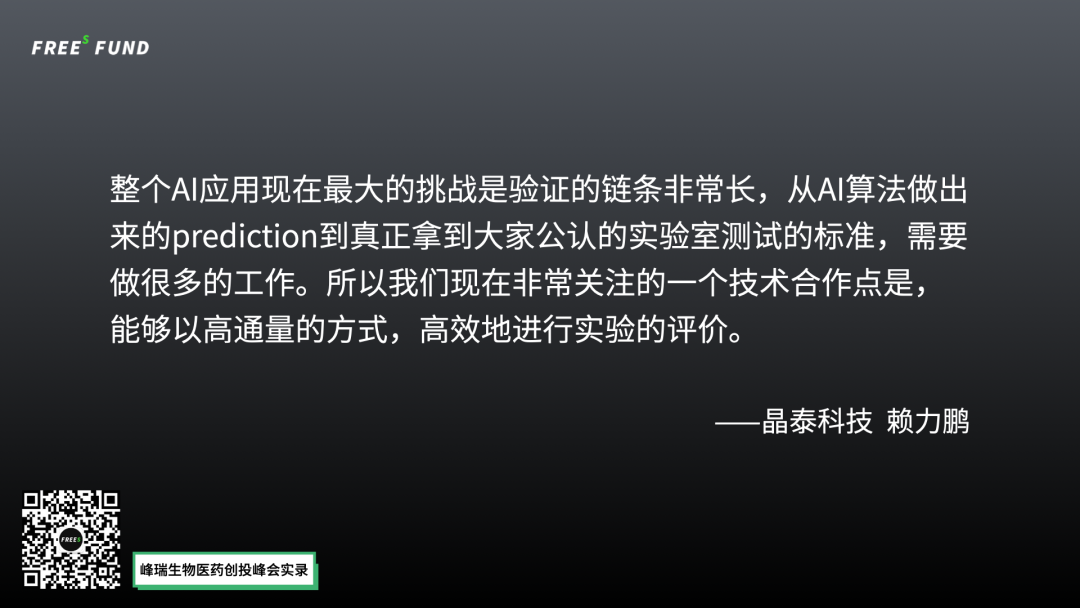
The reason is that AI's biggest challenge right now is the long validation chain. From AI algorithm predictions to getting recognized laboratory test standards requires substantial work. So a key technology collaboration point we're focusing on is being able to efficiently conduct experimental evaluation in a high-throughput manner.
On another level, as a foundational platform, we also highly value collaborators with biology backgrounds who can bring more insights to our algorithm development and overall project advancement.
So XtalPi's current talent focus is concentrated in two areas: drug discovery and algorithms. For drug discovery, especially preclinical experience and expertise from relevant study and work. For algorithms, including computational chemistry methods and AI methods.
We need talent from many different fields — after all, XtalPi does interdisciplinary work. We hope colleagues have deep expertise in their own domains: computational chemistry, structural biology, computational biology, or specific deep learning directions like natural language processing, etc.
Additionally, having an open mindset — embracing new technologies and actively participating in cross-disciplinary discussions. We really like such talent.
Caita Lai: We focus on the downstream end of the pharmaceutical pipeline, with drug delivery as our core strength. Building expertise across pharmaceutics — from in vitro physical models to in vivo human and animal modeling (IVIVC, IVIVE) — takes serious accumulation.
Beyond the computational backgrounds Lipeng just mentioned — computational biology, computational physics, computational chemistry, and AI algorithms — we also actively recruit talent with hands-on pharmaceutics experience. That includes simulation expertise, clinical trial and pharmacokinetic research (DMPK), high-throughput experimental design and execution for drug delivery systems (DDS), and clinical design.
We're expecting to enter the clinical stage next year, so our clinical team is a major priority. We're actively recruiting for pipeline development and clinical positions in both Hangzhou and Boston.
Xiaobo Wan: We're looking for talent with specialized experience in molecular generation and molecular screening.
On the application side, we particularly welcome hybrid talent who've worked through the full pipeline from early discovery to downstream biological validation. We also welcome people focused on underlying computational and AI algorithm development — iterating on our existing software to further accelerate the process.
On the experimental side, we'd love to bring in specialists in structural biology or cryo-EM who study small-molecule and protein interactions.
To put it simply: people who are confident in computation and genuinely interested in drug R&D are who we're looking for.
Ning Xia: We also need hybrid talent, especially people with substantial experience in synthesis — say, a PhD plus years of synthetic experience, combined with some algorithm R&D capability. That's our biggest gap. Being able to shape the future of chemistry together would be incredibly meaningful.
/ 08 /
How Does China's Technology Compare to Foreign AI Companies?
Rui Ma: One audience member asks: What advantages does China's technology have compared to foreign AI companies? Why would big foreign pharma companies want to work with us? Are there any FDA-approved drugs discovered through AI screening? People want to know what Chinese companies have actually achieved.
Caita Lai: On the first question — from our drug delivery perspective, AI-enabled drug development is still relatively uncharted territory globally, and we're leading in this direction. We've built up significant defensible capabilities, mainly in our big data platform, drug delivery simulation and modeling, and AI algorithms. Based on these strengths, we can help pharma companies assess developability during the molecular design phase, addressing the pain point where over 40% of molecules in early discovery fail on ADMET/PK delivery, effectively improving the probability of success.
Ning Xia: I'll also address the first question. From the retrosynthesis angle, we started relatively early globally — we weren't behind or copying foreign approaches. We had our earliest version in 2012. When we expanded into foreign markets, we were basically among the first to engage with these top-tier clients. After extensive benchmarking, they found our product was genuinely the best.
So it's not that domestic companies are inferior to foreign ones. It comes down to who started earliest and who focused on real-world implementation.
Rui Ma: Among currently FDA-approved, marketed drugs, are any produced through AI drug discovery?
Xiaobo Wan: This question really depends on how you define AI drug discovery or computationally found compounds. Do you mean end-to-end, or that the initial screening relied entirely on AI or computational chemistry?
As far as I know, there isn't yet a purely AI-discovered drug that's received FDA approval. However, some labs or companies have used AI methods to obtain PDC compounds ready for clinical trials, or have reached near-clinical stages.
Lipeng Lai: I agree with Wan. Investors ask us too whether we have any AI-discovered drugs.
Drug discovery is inherently interdisciplinary — dozens or hundreds of technologies may be involved. It's hard to attribute a drug to any single technology.
There were reports that Exscientia, an AI drug discovery company, had some drugs enter clinical trials, but you can't say those drugs were entirely AI-discovered — medicinal chemists, computational scientists, and experimental teams were certainly involved.
If we're talking about purely AI-discovered drugs — where an AI machine just runs and outputs a compound, you test it experimentally and it works, and it can advance to clinical trials — that's still a relatively idealistic, distant goal. For now, it's more about AI tools working together with people and other computational and experimental technologies to discover drugs.
In our current projects, some collaborative programs have advanced to near-PCC stage with AI involvement. In these cases, AI provided novel molecular scaffolds, or helped predict specific ADMET properties like membrane permeability, enabling medicinal chemists to better modify structures — and we've already seen some promising阶段性 results.
Rui Ma: We're still talking about AI at individual technical steps. We haven't yet reached the point where AI handles every link in the chain.
Actually, structure-based drug design has a long history — many HIV-targeted drugs are classic examples of structure-based or computer-aided drug design.
In the US, Nimbus Therapeutics probably pushed furthest — they had an ACC-targeted drug that reached Phase III clinical trials, though it ultimately failed in Phase III. It's hard to define whether reaching clinical trials, or actually becoming an approved drug, is what validates AI as a direction worth pursuing.
(Welcome to read, share, and hit "like." For reprint permissions, reply 「转载」 to learn the rules and contact Feng Xiaorui [ID: freesfund] for authorization. Copyright belongs to FreeS Fund.)

How to Break Through Innovation with the Power of Interdisciplinary Collaboration? | FreeS Fund Biomedical Investment Summit Transcript Blue Ocean Strategy: How Can Early-Stage Biomedical Companies Break Through and Win Alongside Big Pharma? | FreeS Fund 2020 Biomedical Summit Session 3 Registration Beyond the "Narrow Gate": Real Cases of Early-Stage Frontier Biomedical Entrepreneurship in China | FreeS Fund 2020 Biomedical Summit Registration Open Li Feng: One Chart to Understand Biotech Innovation Opportunities | FreeS Fund 2020 Biomedical Summit Full Guide Standing at the Forefront of Gene Therapy | FreeS Research Hammer and Dance: Investment Opportunities in Healthcare's Next Wave Amid the Pandemic | FreeS Research FreeS Report 16: The Truth About Early-Stage Healthcare Investment and China Speed | FreeS Research FreeS Report 15: Life's Gamble — The Adventurous Journey of Drug Development | FreeS Research