Li Xiang x Li Feng: Why Did ChatGPT Emerge Today? What Happens Next? | Li Feng Column

Is there still a chance to build a Chinese OpenAI?
This column is drawn from an in-depth conversation between Li Xiang and Feng Shu on the podcast "High Energy." Li Xiang is the curator of the Detailed Conversations book series and editor-in-chief of the Dedao App.
The conversation took place in mid-April, roughly a month after the establishment of the National Data Bureau, which oversees foundational data infrastructure, and as the AI race among tech giants was intensifying. Against this backdrop, Li Xiang and Feng Shu spoke for over an hour, starting from the digitization of text-based information and using datafication as a thread to trace the past three decades of the internet. They attempted to address several hot questions about ChatGPT:
- Why has ChatGPT emerged now? What will happen next?
- Which important companies will emerge along the ChatGPT value chain? Do startups still have opportunities?
- Is there still a chance to build China's OpenAI?
- Did the first wave of AI hype leave behind any valuable "legacy"?
- How will healthcare and autonomous driving achieve datafication? What will the future look like?
- What settled after the Web3 and blockchain frenzy?
More than two weeks have passed since the conversation. According to a May 6 report by Yicai, over 40 Chinese companies — including Baidu, Alibaba, Huawei, SenseTime, and iFlytek — have now entered the large model space. Amid this fierce competition, who will become the key players in this chain? We've edited and excerpted portions of the podcast, hoping to offer fresh perspectives. We welcome you to join us in continued observation and discussion. You can also find the full episode on the Xiaoyuzhou app or Apple Podcasts by searching for and subscribing to "High Energy."
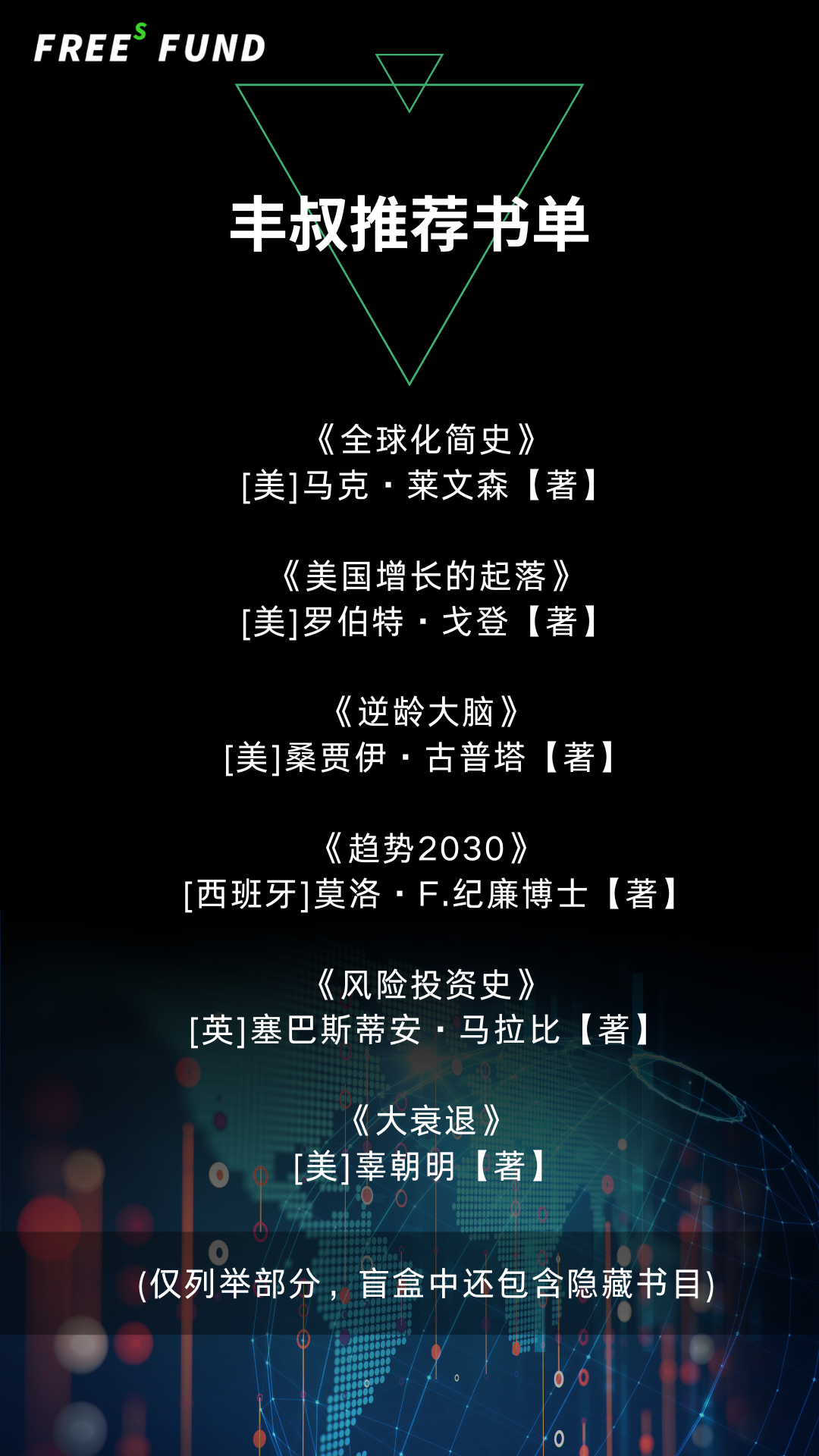
Engagement Giveaway: Have you used GPT-related tools in your daily life? How have these tools changed things for you? What opportunities do you see? We look forward to hearing your thoughts in the comments. The 6 most thoughtful commenters will receive a blind book box curated by Feng Shu (each containing 2 books, shipped randomly).
/ 01 / What Important Companies Will Emerge Along the ChatGPT Chain?
Li Xiang: From your perspective, what important companies will emerge along the ChatGPT chain? Based on news coverage alone, there might be model developers like OpenAI, or chip and compute providers like NVIDIA.
Li Feng: At this point, it's still three categories: data, algorithms, and compute. But ultimately, they'll evolve into different things at the application layer — and application-layer companies typically become larger than infrastructure providers, with stronger monopoly effects.
Building large models well and at scale isn't easy. If successful, they'll certainly enable good applications. But as productivity tools, they're more easily combined in vertical domains, especially for companies that need conversational flows plus broadly knowledgeable professional abstractions to deliver services.
For example, we invested in Glowe, which focuses on online psychological counseling. Online counselors chat with users to provide basic mental health services — essentially solving problems through knowledgeable conversational professional service.
Or take financial services, which require highly professional financial advisors to have thorough conversations with users before concretely uncovering their hidden needs over time.
Will there emerge something like a search engine, but not a search engine, that provides generalized text information with more efficient supply-demand matching? Maybe. If so, it would have absolute advantage.
Li Xiang: Microsoft Bing is attempting something like this.
Li Feng: Right. Here's an interesting thread: from search engines to Toutiao to Douyin, all are essentially supply-demand matching of text data.
But the biggest reason Toutiao succeeded was the change in interaction form and mass adoption of new devices, making input and usage scenarios dramatically different from the previous generation (PCs, laptops). The previous generation didn't adapt — Baidu was slow to pivot — which gave Toutiao its opening.
This "new" refers to changes in user interaction, screen changes, the disappearance of physical keyboards, multi-window switching in mobile scenarios, and inconvenient input. All these factors led users to filter information through dragging, tapping, or selecting rather than typing keywords on a keyboard.
On this foundation, a new business model for text information supply-demand matching emerged (we'll elaborate below on how new changes brought new business models throughout internet development). If someone were to build another one, the next probably wouldn't take the same search form.
/ 02 / Is There Still a Chance to Build China's OpenAI?
Li Xiang: More and more large companies are entering the space, and some fairly successful entrepreneurs want to build China's OpenAI. Do these startups still have opportunities?
Li Feng: There are several key variables here.
The first variable is whether good open-source versions will emerge?
Every coin has two sides. When giants compete fiercely, more and better open-source models tend to appear — and when that happens, applications become more prominent.
Without intense model competition, you could take open-source models, stand on giants' shoulders, make appropriate adjustments, training, and refinement within your professional domain, and turn them into productivity tools within specialized service labor — without fully replacing humans.
We also need to consider whether there's any new "small leap" in non-algorithmic cognitive logic?
This small leap is often like a window pane. In retrospect, the search box was that small leap — it combined already mature user habits and devices with available compute and algorithms to relatively accurately match users with needs.
Take AlphaFold, which intelligently predicts protein structures based on data people "feed" it. Beyond considering molecular thermodynamic models, AlphaFold also incorporates knowledge from biology, chemistry, physics, and other layers to understand molecular structure.
Beyond the algorithmic layer, AlphaFold's model achieved iterative progress at the cognitive level, better approximating and simulating molecular structures. People are astonished by AlphaFold's predictions because it approaches discovering protein structures that humans hadn't found before.
Li Xiang: To use an analogy — are electric vehicles difficult or not? If you say they're not difficult, it's hard to explain why no one before Tesla proved this was feasible and reliable. If you say they're very difficult, you can't explain why "Wei Xiaoli" emerged in China after Tesla.
Li Feng: That example works too, though it's more like physical technology. It requires enormous amounts of non-algorithmic knowledge and certain abstract-level cognitive logic to enter algorithms and fuse with them to enable progress. These things are highly cross-domain, cross-disciplinary, require inspiration, and demand very high standards.
/ 03 / Did the AI Wave Leave Behind Any Good "Legacy"?
Li Xiang: Around 2016 there was a wave of AI hype, with massive capital flowing into the industry and many excellent AI startups emerging. Looking back today, after all that capital investment, did anything valuable remain?
Li Feng: When new technologies trigger investment waves, we broadly categorize them into two phases: first, "valuable but not profitable"; second, "profitable but not valuable."
Take the big data industry. In 2012-2013, big data was a super hot investment concept in both the US and China. Today big data isn't fashionable anymore, but after a decade of development, the industry has reached certain scale, and some companies are quite profitable and have survived.
When a new technology emerges and becomes an investment craze, it's typically not profitable yet. Once embedded in application scenarios, the technology's普及性 increases and it becomes a productivity tool in some sense — then it's valuable. When electricity was first invented, people could imagine infinitely, but it was hard to落地. After Edison invented the light bulb, when it made lots of money and became widespread, the light bulb was no longer exciting technological innovation.
Li Xiang: Specifically regarding GPT and large models, what's the investment community's attitude?
Li Feng: One-third of investors have invested enormous enthusiasm and trust, and acted on it; one-third hold an overall conservative and calm attitude; another third are actively and meticulously evaluating it but haven't yet convinced themselves to cross the investment threshold. These three attitudes are roughly evenly split.
/ 04 / From the Datafication Dimension: Why Did ChatGPT Emerge Today? What Happens Next?
Li Feng: When investing, we often focus on "why today," "why did it happen," and "what happens next." So how did GPT arrive where it is today?
From Google using search keywords to find corresponding content for users, to ChatGPT organizing content through conversation for people, AI has made enormous progress in understanding and cognizing text.
We can use the dimension of information datafication to understand various internet-related business models over recent decades and changes that may emerge.
The internet's biggest contribution over the past 30 years has been transforming massive amounts of text information into text data.
In this text datafication process, the biggest winner and contributor was Microsoft. Through mouse plus keyboard plus graphical operating systems, Microsoft enabled enough people to turn text into data.
Next, how to satisfy people's information needs? The winner here was portals, with Yahoo being one of the most successful foreign companies. Yahoo took already datafied text information and edited and categorized it manually.
As more people came online and more contributed text data, BBS emerged. Forums were particularly typical in China — people produced and consumed content within smaller boards.
When there was too much text data on the internet and search ranking was poor, users might have to go ten-plus pages deep to find what they wanted.
In this situation, from the text datafication supply-demand perspective, social networks offered another solution: providing users with certain types of information they wanted. Platforms like Facebook and Twitter overseas, and Renren and Sina Weibo domestically, provided users with massive, personalized information.
Later, when text datafication reached very large degrees, volumes, and scales, manual categorization became increasingly difficult and inefficient. This required machine intervention to match the most suitable content to those with needs.
The iteration process is essentially three things: data on top, algorithms in the middle, and compute at the bottom. The main object that algorithms learn from — data — began growing massively, giving algorithms increasingly large training space.
At the algorithm layer, a typical successful application was Google. As a search engine, Google made two very interesting and important contributions.
The first contribution was the search box, which let you abstract what you wanted into one or several words — the computer received the demand, then searched all existing text data to match. The second contribution was ranking. At the algorithm layer, you could find all kinds of words, but which was relevant to you, which was more important? It introduced a reasonable cognitive logic: relevance ranking. This relevance was originally like scientific papers.
Li Xiang: Citation counts.
Li Feng: Right — equivalent to webpage link counts. This ranking was interesting progress, tightly integrated with application.
Starting from that earliest logical thread, we first completed datafication, then in some sense began entering automation plus partial intelligence. Jumping to today's GPT, text information now has extremely high proportions and volumes made into text data — a massive quantitative leap compared to 20 years ago — so the trained models are very intelligent.
Will this evolve further?
Yes. There's another transition node similar to Google in this process — the introduction of attention models. Simply put, you can understand attention models as focusing on specific parts rather than the whole, giving them different priority or resource support.
In the process of first solving digitization, then solving partial machine automation and intelligence, beyond the mathematical logic evolution of algorithms themselves, if new cognitive logic is introduced along the way, plus continuous progress in underlying compute, plus endless training on more massive data, it will produce jumping small steps. Like AlphaFold we mentioned earlier — not only algorithmic innovation, but also introduced multi-domain knowledge from biology, physics, chemistry.
Li Xiang: I'd like to offer another perspective for understanding text digitization's evolution. Whether from content production or content distribution, my entire career has been impacted by text digitization.
From the content production angle, compared to print media, portal-era content producers were still human. Website editors took already-produced text content, digitized it, and moved it to web pages.
Further along, major changes appeared on the production end. The internet lowered content production barriers, and users began producing content. This corresponded with new forms like blogs, and portals began aggregating blog content. Before AIGC, content production was still by institutions and individuals.
On distribution, search reorganized and distributed content. Then social relationship-based distribution emerged — the distribution logic became social networks, and social media concepts appeared, like Weibo and Twitter. Later, it became machine distribution, with Toutiao and Douyin emerging.
Now another major leap has appeared on the content production end: ChatGPT. It makes AI-produced content no longer "childish" — many say its output is no worse than undergraduates in many aspects. This advanced content production method, combined with advanced content distribution methods, may produce very advanced business models.
05
How Did Datafication Build
Apple, WeChat, and Douyin?
Li Feng: Everything we discussed at the bottom layer was text-based. In a sense, more important and powerful algorithms and models still need to reach visual information.
I just used the attention model example. When processing visual information, we obviously use attention models well. Looking around, though countless things exist, we have focus — we know what's most important right now, what objects need observation. These "unconscious" behaviors already require relatively complex, advanced cognition.
No one is born knowing how to type, but today children can directly use smartphones' interaction methods to find and do what they want — completely different from typing. Dragging, swiping up and down — these gesture controls are to text datafication's typing.
The most direct change is that users can rely on visual comprehension and intuitive control to complete the process.
In a sense, all algorithm, compute, and data iterations — the hardest parts still need to solve various information related to visualization.
Li Xiang: This was also an important reason why so many people were excited when virtual reality and metaverse concepts appeared. It's indeed not simply a one-dimensional text internet, nor a purely two-dimensional video or image internet.
Li Feng: Right. Why did transforming text information into data produce so many enormously huge companies? Because information matching is much harder than data matching. Once information is datafied, the cost of obtaining information becomes extremely low or nearly zero, while information liquidity approaches infinity.
On this foundation, whoever positively promotes or leverages zero flow cost and infinite liquidity, and completes some type of普及 or either type of撮合, becomes a super powerful company.
Going further, to the bustling mobile internet stage. Smartphones added many things the "Nokia era" lacked: microphone arrays, sound-related chips, rear-facing optical zoom HD cameras, GPS chips...
Who first integrated these?
Apple. Apple turned new information that hadn't been datafied before — location, higher-quality audio, better visual information — into data. After this process became widespread, Apple became an extremely important node, like Microsoft back then. This was step one.
Step two: all the super apps we know on mobile internet, without exception, likely leveraged datafication infrastructure in their development.
Today's Meituan came from two companies: Dianping, which got small and medium merchants willing to turn their information into data on the internet, and Meituan itself, which got consumers to datafy their demands.
WeChat leveraged ultra-high-quality communication data, or voice data, for voice data transmission and matching between people.
Douyin turned visual information into visual data through HD optical cameras. Consumers got completely different experiences and efficient content supply and matching.
I invested in Bilibili ten years ago. Analyzing Bilibili, there was an interesting phenomenon: China didn't have its own YouTube. At the time, China's video industry wasn't mature on both talent supply and data supply ends. So Bilibili returned to text datafication — beyond underlying video, people mainly consumed danmu (bullet comments), which is text data.
(Note: For more thinking on how internet companies grasped iteration patterns and opportunities to form new business models, welcome to read "One Diagram to Understand New Platform Birth | Li Feng Column")
06
How Will Healthcare and Autonomous Driving
Achieve Datafication?
What Will the Future Look Like?
Li Feng: In healthcare and autonomous driving, there are also typical datafication examples.
Over the past 15 years, we can simply summarize that major progress in new drug R&D mostly occurred in tumor pathogenic gene discovery and tumor treatment.
How did this happen? It was due to the invention and普及 of second-generation gene sequencers.
Gene sequencers can turn genetic information into genetic data, completing datafication of genetic information. Scientists could use large amounts of newly appearing genetic data for scientific discovery — equivalent to portals categorizing text data for enough consumers to browse.
If healthcare continues evolving along the datafication line, what possible trends might emerge? What investment implications?

I've only thought of part of this.
First, due to equipment progress and improved datafication capabilities, people will collect higher-throughput, faster, and more comprehensive information. Subtle differences appearing in cells may be disease-determining factors.
FreeS Fund portfolio company Singleron focuses on single-cell sequencing, discovering slight genetic variations at the individual cell level. Like computers — as CPUs get better, they can process finer, more complex information.
Second, as healthcare datafication increases, scientists dedicated to discovering relationships between data may gradually become "insufficient." In the future, might healthcare evolve to where computers directly predict, through data and algorithms, molecules and therapeutic drug forms related to disease treatment that genomic information reveals?
FreeS Fund portfolio companies XtalPi and METiS Pharmaceuticals currently use datafication in parts of drug manufacturing, with the ideal being full-process intelligence.
Intelligence means consciously discovering all data. Like when internet information increased and Google search platforms appeared — whatever people wanted to find, the platform provided.
Third, as devices collecting vital signs data become stronger, they become smaller, home-use, lighter, even wearable. Behind device changes, might new data types be collectable?
With optoelectronics, microfluidics, and other technology development, smartwatches can already measure pulse and blood oxygen. FreeS Fund portfolio company Xinyong Technology achieves continuous blood pressure monitoring through wearable devices. Bloomberg reporters revealed Apple may equip Apple Watch with non-invasive blood glucose monitoring.
When information devices shifted from computers to phones, many new models emerged. Similarly in healthcare, vital signs information datafication will also bring business model changes, just as gene sequencers transformed new drug R&D.
Vital signs datafication can also help address China's elderly care problem. When devices can timely monitor home-bound elderly health status, children and medical staff can respond on demand rather than needing someone watching the elderly full-time.
Another interesting example, also a current hot area — autonomous driving.
From 2015 to today, autonomous driving still faces certain challenges, especially at L4 and above (L1 to L3 can be understood as "human-machine co-driving," L4 means unmanned driving). Part of the reason is insufficient intelligence and sensors in vehicles — the automotive system can't fully grasp current vehicle status, surrounding environment, and other vehicles' conditions.
Imagine if today we equip all new cars with many sensors: lidar, visual, positioning... we'd datafy massive information about vehicle status, road conditions, environment, and algorithm and compute could iterate based on data input, feedback, and evaluation, thereby achieving autonomous driving.
To summarize: whether Meituan-Dianping, WeChat, and Douyin in mobile internet, or AI drug discovery and autonomous driving — these are all business models that emerged in the information datafication accumulation process. We can use the datafication thread to understand today's super apps and super companies.
Li Xiang: AIGC and ChatGPT represent particularly large changes on the content supply side. Almost every time supply is enriched, new supply is created, or matching efficiency is improved, new business models are created.
Li Feng: Returning to that foundational logic we summarized: either massively普及 some type of information datafication in the early-to-mid stage, or after datafication foundation is completed, how to improve matching efficiency. When technological progress is insufficient to improve data matching efficiency, other methods are used to enhance efficiency.
Microsoft was the core company普及 text datafication. Looking back, besides browsers, Microsoft should have laid out search earlier. On this foundation, Microsoft joined the war against Google — from a win-rate perspective, it had certain foundations.
Microsoft is also a key player on this development axis. Whether in the Yahoo era, browser era, or search engine era, it spent enormous effort catching up.
But these business models have obvious Matthew effects — latecomers often find it hard to surpass. Today, assuming supply-demand matching models have new changes in text information, Microsoft — from total data volume and its understanding and accumulation of things on this axis — may have opportunity to again become a key company on the text data matching efficiency主轴.
Li Xiang: Microsoft's厉害之处 is always staying on this axis — even if not the leader, always following behind.
07
What Settled After the
Web3 and Blockchain Hype?
Li Feng: Speaking of Web3 and blockchain, I'm more concerned with: after this hype wave, what actually settled?
Over 10 years ago, when investing in Coinbase and Ripple angel rounds, I made two presentations internally at IDG explaining a logic — why invest in digital currency?
The answer was relatively clear. Thinking infinitely far ahead, as more and more things are datafied, after certain industries or chains are almost highly datafied, datafication won't just solve information matching — it will very likely need to solve权益流动 and transaction problems.
In this case, previous mechanisms for distributing benefits or conducting transactions and settlements will develop efficiency problems.
Until this round, digital currency companies still considered relatively successful today mostly existed within digital currency trading closed loops. Whether doing wallets, trading, or providing trading撮合 tools or financial products — digital currency and trading itself is a fully digitalized closed loop, easiest to apply digitalization and new settlement methods.
In 2013, Silicon Valley saw its first digital currency wave, with countless startups trying all kinds of things — some even wanted to make Bitcoin ATMs a business model.
But some companies later failed to develop, mainly because they did "semi-open loop" applications. Certain links required artificially强行 converting offline things online. In semi-open loop business models, besides efficiency and cost issues, there were also integrity issues.
Looking at Web3 today, thinking furthest ahead: if eventually enough industries and chains reach sufficient digitalization, beyond transactions, organizational management and communication forms will also differ from today in efficiency and cost. In all these highly digitalized industries, new company forms, new management methods, new communication tools will be used, as will new transaction and exchange and权益 methods.
Over 10 years ago, when I had great difficulty explaining what virtual currency was, I used the example of P2P downloading. P2P downloading borrows others' computers' temporarily unused compute as parallel downloading nodes to accelerate downloads,极度 saving network resources and improving download speed — Xunlei was a typical company.
But P2P downloading didn't birth successful large companies, partly because it couldn't establish economic benefit models: contributed compute and received things were hard to correctly and completely measure economic value. So many such applications eventually became piracy download tools, because traceability was poor.
If digital currency had emerged 10 years earlier, then P2P downloading could have perfectly used digital currency, using decentralized settlement methods for new transactions and new business models. It could instantly complete massive计量结算, and when contribution happened, immediately give money to contributors. This is hard to achieve in any real world, so this is a small closed loop.
Li Xiang: I sometimes think: with digital currency and blockchain technology, we can now incentivize parties that previously couldn't be incentivized for contribution. But I also wonder: if Wikipedia had applied digital currency and blockchain technology, incentivizing its content contributors, might Wikipedia no longer exist?
Li Feng: First, many industries and models, once entering closed-loop digitization or full-chain digitization, do have monopoly characteristics — bigger is better, better is bigger.
Second, once entering datafication,权益 distribution, transaction confirmation, organizational management, communication coordination and all mechanisms may change to match this unimaginable efficiency improvement.
Engagement Giveaway: Have you used GPT-related tools in your daily life? How have these tools changed things for you? What opportunities do you see? We look forward to hearing your thoughts in the comments. The 6 most thoughtful commenters will receive a blind book box curated by Feng Shu (each containing 2 books, shipped randomly).

Everything Has Two Sides: How to Use "Nuclear Radiation" to Make Anti-Cancer Drugs? | FreeS Report 28
A Debate: How Two Investors with Different Directions View GPT | FreeS Research Institute
Li Xiang x Li Feng: The Dollar's "Monopolistic Success" and "Gradual Dilemma" | Li Feng Column
Why Are China and US VC Gradually Diverging? | Li Feng Column
Star the FreeS Fund WeChat Official Account — timely business insights delivered