Li Xiang x Li Feng: Institutional Restructuring, Silicon Valley Bank, GDP Targets, Capital Flows... A Chat on Recent China-US Macro Hot Topics | Li Feng Column

China's financial sector is at the starting point of a new structural adjustment cycle.
This column is drawn from a wide-ranging macro conversation between Li Xiang and Feng Shu (Li Feng) on the podcast High Energy. Li Xiang is the curator of the Detailed Conversations book series and editor-in-chief of Dedao App. The conversation was recorded in mid-March 2023. At that time domestically, the Two Sessions had just concluded, with financial institutional reform emerging as the centerpiece of this State Council restructuring. Overseas, Silicon Valley Bank had first revealed a liquidity crisis, triggering a bank run and a stock collapse before declaring bankruptcy. Then Credit Suisse, with its long history, also fell into trouble. This chain of events sparked market concerns about the spread of financial risk.
Against this backdrop, over the course of more than an hour, Li Xiang and Feng Shu discussed how to view the latest financial institutional reforms, how to understand regulatory tightening, prospects for China's capital markets, whether the annual GDP growth target of around 5% was conservative, why Silicon Valley Bank collapsed so suddenly, what chain reactions might follow, what lessons the episode holds for China's financial regulation, and international geopolitical developments and global capital flows.
Two weeks have passed. First Citizens Bank is taking over all of Silicon Valley Bank's deposits and loans. Some believe this transaction has given markets some breathing room; others see it as the calm before the next storm.
Meanwhile, we've also seen recent visits by Ma Ying-jeou and Lee Hsien Loong, and Apple CEO Tim Cook appeared at the Apple Store in Beijing's Sanlitun. In the coming April, French President Emmanuel Macron will visit China alongside European Commission President Ursula von der Leyen. Looking back now, this conversation from two weeks ago partly foreshadows the present moment.
We've excerpted and edited portions of the podcast for your reference. We welcome you to continue observing and discussing these developments with us. You're also invited to search for and subscribe to High Energy on Xiaoyuzhou or Apple Podcasts to listen to the full episode.
Interactive Giveaway
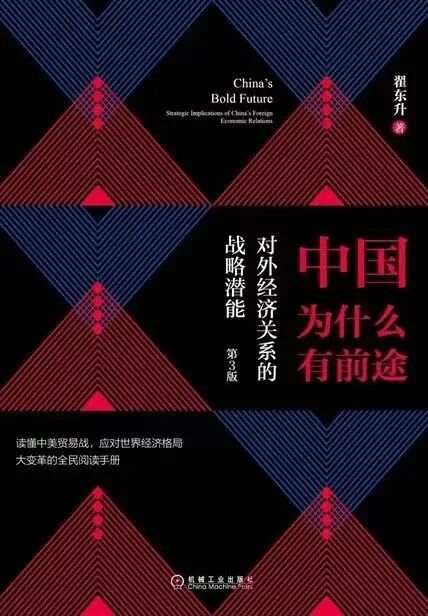
As the first quarter draws to a close, which macro event has left the deepest impression on you? We welcome your thoughts. The five most thoughtful commenters will receive a copy of Why China Has a Future. We look forward to your sharing.
/ 01 / How to Understand Institutional Reform and Regulatory Strengthening?
Li Xiang: Both China and the US have seen notable developments in the financial sector recently. Starting with domestic news, financial institutional reform was the focus of this State Council restructuring. The regulatory landscape shifted from the long-standing "one central bank, two commissions" model to "one central bank, one administration, one commission." Some view this adjustment as signaling strengthened financial regulation, which is typically seen as detrimental to industry dynamism. What's your take?
Li Feng: From a management structure and mechanism perspective, this round of reform merged several previously separate industry regulators to form the National Financial Regulatory Administration, now directly under the State Council. This will indeed strengthen oversight of the financial industry. However, we shouldn't be pessimistic about it. Because strengthened regulation of an industry usually means that sector is entering a particularly important development phase — one so significant it needs to be singled out for independent scrutiny and management.
There are many examples that help illustrate this point. For instance, in the 2008 institutional reform, the State Environmental Protection Administration was elevated to ministry-level status as the Ministry of Environmental Protection. This upgrade was enormously consequential for advancing national environmental protection efforts. For a long time afterward, environmental protection and green development became central themes — whether in the "beautiful mountains and rivers" initiative, or in what we today call new energy and dual-carbon goals.
Similarly, another major change in the 2008 government restructuring was merging the former Ministry of Industry and Ministry of Information Industry into the Ministry of Industry and Information Technology. 2008 was a rather special moment. Before this, aside from Alibaba's B2B business listing in Hong Kong in November 2007, internet companies going public were mainly news portals and gaming businesses. The vast majority of internet platforms and emerging internet companies we know today essentially germinated and took off around that period.
Another example: the 1998 government reform established the Ministry of Land and Resources. This was equally crucial for the development of the real estate industry. In 1998, the traditional welfare housing allocation system was abolished, replaced by commercialized housing. Within two years of the Ministry of Land and Resources' founding, China entered its first true real estate cycle.
The 2018 round of institutional reform created the Ministry of Natural Resources. Its remit was no longer limited to coordinating and allocating land for housing construction, industry, and agriculture. It integrated responsibilities from eight former ministries and agencies — including the Ministry of Land and Resources, the National Development and Reform Commission, the Ministry of Water Resources, the Ministry of Agriculture, and the State Forestry Administration — for确权登记 management of water, grasslands, forests, wetlands, and marine resources.
From the 1998 establishment of the Ministry of Land and Resources to its 2018 transformation into the Ministry of Natural Resources, this constitutes a complete real estate cycle. We generally consider the largest real estate cycle to have run from 1999 to roughly 2016 or 2017.
What we can see is that when a particular area of work is elevated to direct, dedicated, or coordinated management in ministerial reform, the corresponding industry typically experiences significant development and enters the mainstream of economic growth. In this sense, this year's national financial regulatory reform will likely follow the same pattern.
First, the National Financial Regulatory Administration was built on the former China Banking and Insurance Regulatory Commission, incorporating the central bank's responsibilities for daily supervision of financial holding companies and financial groups, as well as financial consumer protection, plus the China Securities Regulatory Commission's investor protection duties. The restructured central bank can focus more intently on monetary policy functions, while the CSRC was upgraded from a directly affiliated public institution to a directly affiliated agency of the State Council.
As we know, previously banks, insurers, and securities firms were almost all operating in a mixed model. Banks, for example, would set up asset management subsidiaries, engaging in both indirect and direct financing, commercial banking alongside private banking and investment banking; larger banks even had insurance operations. Securities firms and insurance companies were similarly mixed in their operations. Against this backdrop, maintaining vertical, cross-cutting management by separate lines easily led to conflicts. To some extent, from the perspective of regulatory convenience and uniformity, the regulatory system needed to be reshaped and functions integrated.
Several other contextual factors are worth noting. In 2022, the central bank issued a draft Financial Stability Law, aimed at further solidifying the primary responsibilities of financial institutions and their major shareholders and actual controllers, the territorial responsibilities of local governments, and the regulatory responsibilities of financial regulators.
Looking further back, following the 2018 removal of foreign ownership caps in banking, in 2020 we also eliminated foreign ownership limits for securities firms, securities investment fund management companies, futures companies, and life insurance companies.
If we review history, we find that at the beginning of a new cycle, besides establishing an important dedicated department for national coordination and management, and forming more comprehensive legal and regulatory frameworks, the corresponding industry typically also increases its openness to foreign investment.
If we connect these signals, the developments in China's financial industry over recent years follow this pattern, and it's not difficult to conclude: China's financial sector is at the starting point of a new structural adjustment cycle.
Of course, there's another angle worth exploring. Previously, in discussions about adjusting liability structures, local governments' hidden debt problems were frequently mentioned. This round of financial institutional reform, on one hand, strips local financial regulatory bureaus of certain management functions; on the other, it establishes regulatory functions for central financial regulatory departments' local outposts. Going forward, hidden bond issuance related to local governments may face greater restrictions — this touches on local hidden debt management.
Additionally, the CSRC being singled out in this adjustment, I suspect, may carry several meanings. While capital markets are part of the financial system, after the full implementation of the registration-based IPO reform, the CSRC's regulatory functions and system face profound transformation — reducing ex-ante admission review and similar work, while strengthening ex-post and ongoing supervision. This represents a different angle from specialized regulation of the overall financial system.
Moreover, previous financial reforms also emphasized vigorously supporting direct financing, which elevates the importance of capital markets in this financial structural adjustment cycle. So the CSRC being singled out and elevated a level this round may mean capital markets will enter China's primary medium-to-long-term economic runway.
The government hidden debt we just mentioned also relates to capital markets. Among government-held debt, a large portion consists of operable infrastructure assets like roads, bridges, and industrial parks. Whether these are good or bad assets is highly correlated with China's overall economic performance and the economic development of various local governments.
To use an analogy: whether an industrial park lies barren or sees land in tight supply depends on the total economic output and growth rate where it's located. When economic development is strong, the proportion of good assets increases substantially. But even good assets face a major challenge: maturity mismatch in the investment process.
For example, China's most profitable high-speed rail, the Beijing-Shanghai line, turned profitable in three years of operation. But for most high-speed rail segments, a six-year construction cycle might require six to ten years to become profitable, and recovering the investment might take another ten to fifteen years. So when we often heard "to get rich, first build roads," it meant investment must come first, yet returns are long-term — and only stable long-term returns can recover the investment. If recovery takes 25 years but the debt is structured at 5, 7, 9, or 10 years, a cycle mismatch emerges.
Therefore, to resolve government debt, beyond boosting the economy and increasing the proportion of good assets, another approach is to match the nature of assets with the nature of funding supporting them in terms of maturity and risk.
In other words, if you invest expecting long-term, stable, moderate returns with relatively diversified risk — and if problems arise, the burden is shared among multiple bondholders rather than a single institution — the risk is dispersed relative to single-holder concentration. This is another crucial function capital markets can serve.
/ 02 / Silicon Valley Bank's Rise and Sudden Collapse: Lessons Learned
Li Xiang: This touches on risk and maturity matching, which leads to our second topic today — Silicon Valley Bank.
▲ March 13, 2023: Customers queue outside Silicon Valley Bank. Image source: The New York Times
Li Feng: There have already been numerous professional analyses of Silicon Valley Bank, so I won't dwell on it. But SVB is quite interesting. It was founded in the 1980s in Silicon Valley as a small-to-medium commercial bank. Back then, Silicon Valley was truly Silicon Valley — there were companies making silicon wafers and others making end products, somewhat like China's manufacturing today. The asset-light internet model wasn't yet prevalent.
Li Xiang: Companies like Intel and HP were the superstars of that era.
Li Feng: Right, but compared to traditional manufacturing, these emerging manufacturers had relatively high value-add and were relatively asset-light. Meanwhile, venture capital was fully developing in the US. Silicon Valley Bank was born in this environment.
Early on, SVB had many innovative businesses. For instance, intellectual property could substitute for physical assets as collateral and security. Its business also featured the investment-loan linkage model: after you received venture financing, it would extend a matching loan. This way, the commercial bank's profit model wasn't just earning spreads on loans, but by providing an investment-linked loan, it obtained options on the company.
For example, if I lent you 10 million, I could obtain investment rights worth 1 million at your current round's valuation — the right to invest a certain amount at this financing round's price. I might not exercise this immediately, but rather in the next round or several rounds later, or even post-IPO, when I could monetize this investment right.
In other words, the bank's returns weren't just loan spreads — it used commercial banking's lending form while benefiting from the company's vertical value growth. Therefore, the bank could tolerate relatively lower interest on the loan portion. Low-interest loans were quite attractive to the large number of manufacturing enterprises in Silicon Valley that had factories and production lines.
Actually, this financing structure suits our present circumstances quite well. Because China's financing structure and industrial structure are also changing in the same direction. Domestic commercial banks could consider借鉴 SVB's investment-loan linkage model.
As for why SVB suddenly faced challenges, this relates to the massive US monetary easing or money printing in 2020–2021. Accompanying this largescale money creation, numerous US startups raised enormous amounts in primary markets, couldn't spend it all immediately, and habitually deposited it with SVB.
Because startup financing became so much easier, SVB found it difficult to issue loans. If you can raise money easily, why take an interest-bearing loan? This led to SVB's deposits growing substantially while its core lending business couldn't grow proportionally. So it purchased bond portfolios to earn coupon income.
Entering 2022, things reversed. After rate hikes, money rebalanced between equities and bonds; primary and secondary markets turned cold. Startup financing became difficult, and companies wanted to withdraw their bank deposits, demanding principal and interest payment. At this point, the bank's book liquidity became problematic.
Because the bank had originally expected deposits to accelerate over the next three to five years, but didn't anticipate a reversal within a year. Large numbers of companies, facing financing difficulties, came to withdraw money; the bank lacked sufficient principal to pay out, let alone interest. Forced to sell its bond holdings at discounts.
However, because the US was in a near-zero interest rate cycle in 2020–2021, the bonds SVB held had relatively low coupon rates. Now US rates had reached 4.5%–4.75%.
This meant that when SVB had to sell these bonds for liquidity, it needed to sell at a loss — the main reason for its massive bond book losses. When the market realized the bank itself needed to raise money to replenish capital, they recognized its liquidity problems, a bank run ensued, and the bank fell into deeper trouble.
So the core problem was risk-return and maturity mismatch. Most money deposited with SVB was placed for at most one year or even on demand. Startups needed to access funds periodically for use, so they accepted low or even no interest to ensure flexibility.
For the bank, receiving all these deposits, it couldn't let them sit idle given costs, so it invested them. But the investment products purchased were three, five, ten years in duration. Once concentrated withdrawal demands appeared, the maturity mismatch created problems. This time, interest rate adjustments also叠加 risk mismatch issues. So SVB's collapse resulted from a long chain of causes.
If we connect this to domestic developments, it can help us better understand some adjustment dynamics in our financial system over recent years, whether the 2018 asset management new rules or the recent establishment of the National Financial Regulatory Administration.
Originally, China's largest financial system was the banking system; banks also represented indirect financing. Banks had massive user deposits, enormous pools of funds, with all demand, time, long-term, and short-term funds in one pool. These funds had various uses. Sometimes these uses mismatched deposit maturities, and even risk profiles mismatched. Because depositors expected principal protection, but this money was invested in various wealth management products where principal loss was possible.
So the ongoing financial reforms can serve to drain the bank's original pool, matching each portion of water with its corresponding assets in maturity and risk.
For example, if a private equity fund now wants to raise capital through a bank, all investors know this money is a seven- or nine-year product with low liquidity, that may lose money or return several times. To some extent, the asset management new rules can help reduce the risk of a Silicon Valley Bank-type crisis occurring in China.
Li Xiang: Will the SVB event have chain reactions? When I first saw the news, I felt it differed from Lehman's collapse and wouldn't cause systemic crisis. But why has the SVB matter triggered such large reactions?
Li Feng: SVB's debt holdings were relatively manageable within the banking sector. However, because the Fed raised rates rapidly, its originally purchased debt showed book losses. If not sold, there wouldn't be actual losses. If held to maturity, returns would still materialize.
But because of the SVB incident, people realized that even principal in banks could be impaired, triggering bank runs. Then even if banks didn't hold long-term bonds, to ensure customers could withdraw principal and interest smoothly, they'd need to quickly liquidate assets. Once your funds are insufficient for large-scale distressed asset disposal, chain effects emerge.
On another dimension, if banks receiving such assets can't properly dispose of them, chain effects also arise. So this round of crisis poses particular challenges for smaller banks with less liquidity.
Li Xiang: Though US regulators have made what counts as a fairly strong response.
Where Will Globally Mobile Capital Allocate?
Li Feng: Right, the government stepped in promising SVB depositors could withdraw 100% of deposits, but then several smaller banks quickly faced redemption difficulties, and panic spread to some degree.
Today's challenge resembles the financial crisis in one respect: do you save everyone, or not save everyone?
But for bank depositors today, you don't know which of the next several banks facing similar situations the Fed will save or abandon. If it selectively saves, you don't know whether your bank will be rescued or sacrificed.
So bank run risks persist. Of course, the result may be people withdrawing money to deposit with large banks. But if large banks see sudden deposit surges, they also face the question of what assets to buy. I don't know if this will trigger similar reactions.
Additionally, banks may worry about depositors demanding principal withdrawal, and slow mid-to-short-term lending plans. Banks choose to hold liquidity so that if people come to withdraw, they can cope. This also causes credit contraction. Because the US is primarily direct-financing-based, negative effects are somewhat milder. But this contraction still poses challenges for monetary deployment and circulation, thereby negatively dampening the economy.
Currently, US inflation remains relatively high, and over the past three years of printing endless money, US GDP grew at an average annual rate of 1.69%. If the Fed truly pauses its hiking cycle, the result may be simultaneous economic stagnation and inflation — money may start allocating to assets outside the US. Because if you keep money in the US, you not only suffer inflation losses but also can't obtain high growth.
Of course, whether China can attract global capital allocation at this juncture is another question. Once the world passes the era of abundant liquidity and enters a phase of aggregate liquidity contraction, where will globally mobile capital allocate more?
In the 2022 environment, willingness to go to Europe was clearly weak; Southeast and East Asian markets are ultimately relatively small. Where this flexibly deployable capital allocates more — the US or China — becomes extremely important.
The US also needs money badly, because its rate hikes suppressed liquidity; it wants more non-US money flowing to America to ensure sufficient liquidity support for its economy. China's situation is similar. So this is also a博弈 process, mainly depending on who can show the market more certain growth and returns.
So this is roughly the past and present of the SVB matter from an overall perspective.
Li Xiang: Actually, purely from the SVB case itself, it faced a liquidity problem, not that its held assets were inherently terrible. So wouldn't its best outcome be acquisition?
Li Feng: I suspect it will be acquired by some financial institution, like how HSBC Holdings bought SVB's UK operations for £1 on March 13. SVB's assets and customers themselves have quality; there should be large banks willing to buy it. What's unknown today is the price. Because acquiring it means also absorbing its debt or losses, which may require some negotiation time.
So its ideal scenario is being bought by a large bank. After acquisition, the best outcome would be stopping several negative trends simultaneously. If people have confidence in the large bank's backing, there won't be further bank runs, and it won't need to distressed-sell large amounts of assets in the short term.
Meanwhile, with large bank backing, depositors or partners — including these quality startups — may continue to trust and be willing to work with the bank.
How to View the Around 5% Annual GDP Growth Target?
Li Xiang: Let's briefly review other macroeconomic topics from the Two Sessions. First, what's your view on the GDP expectation target?
Li Feng: The target was set at "around 5%." Why this number, and why not fixed, I suspect has several reasons.
First, coinciding with the economic leadership transition, this figure is essentially set by the outgoing team for the incoming team. Given a handover process, theoretically the target wouldn't be set too aggressively. Of course, aside from this reason, there are also more variables this year. Historically, years failing to meet GDP targets are extremely rare. This year still has macro uncertainties, so leaving some room in target-setting is quite reasonable.
Recently, January-February and standalone February financial data were released. Some indicators performed well, such as total social financing, corporate loan scale growth, and household consumer loans.
We can see February 2023 social financing scale increment was 3.16 trillion yuan, 1.95 trillion yuan more year-on-year. This scale is indeed quite large; optimistically interpreted, it's a good start. But some argue that while total volume rose, structural challenges remain, because growth was faster in short-term loans while long-term loans didn't rapidly rebound, indicating long-term confidence still needs recovery.
Notably, this year's January-February saw many year-on-year figures distorted, mainly because 2023 and 2022 Spring Festivals were misaligned — one earlier, one later — so January-February year-on-year macro data indicators are somewhat difficult to compare. Perhaps this year's GDP target also left some room for January-February macro data.
Additionally, regarding total social financing growth, we should consider whether there's some degree of monetary circulation without real economic activity. We can see February 2023 broad money (M2) grew 12.9% year-on-year. M2 typically reflects changes in aggregate social demand and future inflation pressure. We know that when financial institutions especially banks do annual funding planning and deployment, they tend to front-load.
If you go to a bank for a loan, the last quarter of the year is usually harder to get loans because banks have fewer quotas remaining. Because 2023's Spring Festival came early, after year-end planning, the post-Spring Festival period became an active lending period.
2022 was different; with mid-February Spring Festival, the active period came in March. Additionally, developing the economy is an especially important task in 2023, so government investment this year will particularly front-load. These factors may have contributed to some February data exceeding expectations.
However, unlike financial institutions and government, household consumption expenditure doesn't show this "front-loading" pattern. People don't rush to buy everything for the year right after Spring Festival; rather, household purchasing power is generally distributed relatively evenly following consumer confidence and policy changes.
Businesses are similar, going through a process of gradually recovering certainty and confidence. Businesses also won't immediately after Spring Festival's first month equip all production materials and personnel needed for expansion.
Another much-discussed point: the 2023 deficit ratio is planned at 3%, higher than 2022's 2.8%. Additionally, the government report mentioned "planned local government special bonds of 3.8 trillion yuan," higher than last year's 3.56 trillion.
So this year we can expect government to increase investment to develop the economy. With increased government investment and special bonds, I suspect this year's investment directions will differ from last year's.
More fee and tax reduction policies can also be expected. From a fiscal perspective, this may favor small and micro enterprises and industries with obvious employment stimulus effects; urban consumption and services were specifically mentioned. These were industries not reached by policy support last year due to pandemic impacts.
/ 05 /
A Peacemaker International Image,
Helping Attract More International Capital Inflows in the Future
Li Xiang: Diplomatic expenditure budgets also seem to have increased; the minister said China's diplomacy has pressed the "accelerator."
Li Feng: Speaking of diplomacy, an important event occurred in early March. On March 10, Saudi Arabia and Iran reached the Beijing Agreement; the three parties signed and issued a joint statement announcing the two sides agreed to resume diplomatic relations and develop cooperation in various fields. Many Middle East experts have already given very professional analyses of this.
My focus on this matter is: by facilitating the establishment of diplomatic relations between the two largest countries in the Middle East, China has demonstrated its successful role as a peacemaker in handling Middle East hotspot and sensitive issues, also reflecting that US influence in the Middle East may be declining faster than imagined.
Additionally, regarding the Russia-Ukraine conflict, China's stance has consistently been to promote peace and talks, "working with the international community to play a constructive role in the political settlement of the Ukraine crisis."
Connecting these two matters is very significant. Because since the Russia-Ukraine crisis erupted last year, several things have greatly affected China's performance in the global capital allocation博弈. Most typical is Western media hype that China might be sanctioned alongside Russia, that China's geopolitical issues might intensify, etc. Influenced by such narratives, global capital would reduce China allocations out of uncertainty and security considerations.
But starting from facilitating Saudi-Iran diplomatic restoration, if China can again play peacemaker this year — participating in or even mainly driving alleviation or resolution of the Russia-Ukraine crisis — it would substantially enhance China's international image, thereby increasing investor certainty about China, and help global capital become more willing to invest in China.
Li Xiang: Actually, the best way to unite Europe is to have a good resolution to the Russia-Ukraine issue.
Li Feng: Right. From another angle, Saudi Arabia and Iran are the Middle East's main oil and gas producers, also major suppliers in international oil markets; about half of China's oil imports come from the Middle East.
If the Russia-Ukraine conflict can be well resolved this year, it means both Central Asia and the Middle East — China's two largest energy import regions — become partners where China has sufficient influence and relatively friendly relations.
Though energy self-sufficiency remains the ultimate guarantee for long-term stability, in the present and short term "exogenous" energy security concerns would be alleviated, at least not as urgent as last year.
This way, whether from geopolitical positioning or security perspectives, global capital especially from Europe and the Middle East would be more likely to increase China allocations. Of course, US-China competition persists; currently China's development seems to have a fairly positive trajectory, but which side the tossed coin ultimately lands on, we must also prepare for various possibilities.
Interactive Giveaway
As the first quarter draws to a close, which macro event has left the deepest impression on you? We welcome your thoughts. The five most thoughtful commenters will receive a copy of Why China Has a Future. We look forward to your sharing.

▲ Discussing AIGC: How Can Vertical Sectors Find Opportunities in This AI Wave? | FreeS Fund Conversation
▲ Li Xiang x Li Feng: The Dollar's "Monopolistic Success" and "Gradual Dilemma" | Li Feng Column
▲ Expansion or Store Closures, Re-examining Offline Opportunities | Li Feng Column
▲ Breaking Consumption Industry Involution, Is the Secret "Making It Expensive"? | Li Feng Column

