What Kind of Spiritual Consumption Does Gen Z Need? | 2021 FreeS Fund Annual Investor Summit

What kind of consumer group is Gen Z?
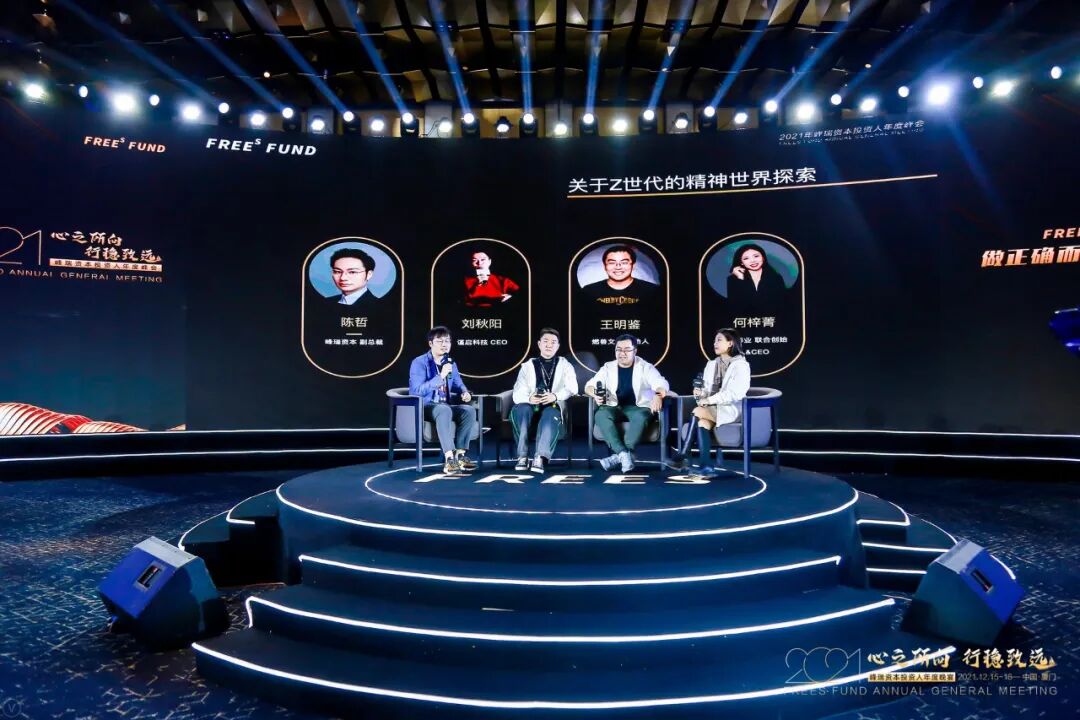
Not long ago, we held the "2021 FreeS Fund Investor Annual Summit" in Xiamen. The weather was pleasant, we strictly followed COVID-19 prevention protocols, and with a bit of extra luck, everything went smoothly.
Over the day-and-a-half conference, discussions ranged from AI drug discovery to brain and neuroscience, from stem cells to chip technology, from cross-border e-commerce to emerging product categories... Against the backdrop of explosive cross-disciplinary innovation, the rich variety of topics sparked continuous lively debate and reflection.
Click the video to watch highlights from the "2021 FreeS Fund Investor Annual Summit"
On the afternoon of December 16, FreeS Fund Vice President Peter Chen and three young founders wrapped up the summit with a roundtable on Gen Z's spiritual consumption.
The three founders were:
- Zijing He, Co-founder & CEO of Virtual Pictures
- Mingjian Wang, Founder & CEO of Ranshou Culture
- Qiuyang Liu, Founder & CEO of Jinqing Technology
Their businesses span original animated series and virtual idols built on 3D original animation derivatives, esports IP licensing, and online psychological counseling platforms. These ventures all touch on Gen Z (born 1995–2009) in some way, giving the founders unique perspectives on this demographic.
As an investor who has long followed Gen Z's spiritual consumption, Peter explored several questions with the founders:
- What are Gen Z's defining characteristics? What keywords would you use to describe them?
- What made League of Legends and related esports events so popular? Looking ahead, what opportunities remain in esports?
- Virtual idols once generated significant buzz—how has this industry evolved over the past three years?
- After COVID-19, the broader mental health space became much more active across many regions including the US, both in primary and secondary markets. What's your read on this phenomenon?
The founders' responses were candid and grounded, drawing on years of industry experience. We've compiled their perspectives to help you better understand and connect with Gen Z's spiritual consumption.
Contact Us FreeS Fund continues to seek innovative projects in entertainment content and spiritual consumption. We look forward to meeting more consumer entrepreneurs. Contact FreeS Fund VP Peter Chen (chenzhe@freesvc.com), or join our team (hr@freesvc.com).

/ 01 / What are Gen Z's characteristics? What keywords would you use to describe them?
Peter Chen: To set up our discussion, we constantly see new articles about Gen Z online, analyzing their behaviors and consumption preferences.
As investors, we frequently research Gen Z investment opportunities—what they like, how they differ from other consumer groups. Blind boxes, murder mystery games, bullet comments—all distinctly Gen Z phenomena that started as subcultures and gradually entered mainstream awareness.
What's interesting is that despite Gen Z being today's trendsetters, the media labels applied to them are no different from those used for previous generations when they first emerged: "individualistic." This descriptor was used by post-70s for post-80s, by post-80s for post-90s, and now for Gen Z.
This leads me to a supplementary observation about Gen Z—are these young people fundamentally similar to post-80s and post-90s, merely seen as a young consumer group at a particular life stage? As they enter society and start families, will their consumption behaviors and attitudes converge with today's post-80s and post-90s?
Broadly speaking, there may be no definitive answer. But from an investment and entrepreneurship standpoint, we're eager to explore this further. So I'd like to ask our three founders: from your perspective, what defines Gen Z? If you had to capture their characteristics in keywords, what would you choose?
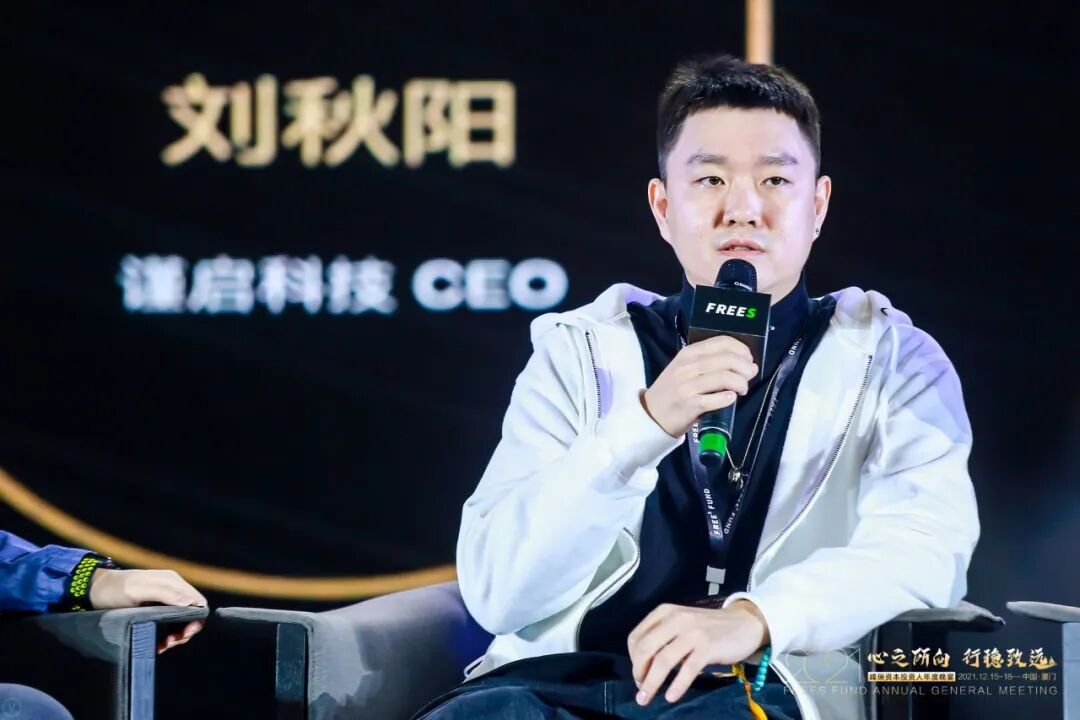
Qiuyang Liu: We primarily operate online psychological counseling, focusing on anxiety and depression services for young people. Unlike traditional counseling, we're fully online, and we interact with Gen Z extensively.
A key reason we targeted Gen Z is that most are only children—they grew up without siblings, not in communal courtyard environments, making the entire cohort relatively self-focused with high self-awareness.
This has its upsides: strong independent judgment. But also downsides: potentially weaker communication skills, and difficulty finding appropriate outlets for emotional expression when needed.
Building on Peter's point about "labels," the first clear Gen Z label I've observed is "strong self-awareness"—this comes directly from our user base.
The second is "digital natives"—this cohort has lived virtually their entire lives online, with all their user behaviors formed within mobile internet environments.
The third is "willingness to experiment"—stemming from their strong independent judgment, they're more inclined to try new things and take charge of their own lives.

Mingjian Wang: I have strong resonance with this topic. We're in IP licensing, rooted in gaming and esports that young people love. I've been in the gaming industry for nine years now.
Gen Z—roughly post-95s and post-00s—have fascinating traits. Their parents are largely post-70s who came of age during reform and opening-up, so Gen Z has enjoyed the benefits of rapid socioeconomic development from an early age. Their consumption attitudes are thus less influenced by others or their environment—they're quite "independent."
I particularly relate to this: my generation grew up offline, constantly learning to live online. Sometimes I search for something for ages, then suddenly realize I should have checked Xiaohongshu or Zhihu, feeling like I'm still not using the internet enough.
But Gen Z, represented by post-95s and post-00s, are true "digital natives"—socializing, entertaining, shopping, and learning online from childhood. So when they become financially independent, they actually have motivation to return offline and experience so-called "immersive" sensations.
If I had to use labels, the first would be "decentralized." It's increasingly hard to find the centralized publicity effects of 10 or 20 years ago, when a single ad before the evening news could make something household knowledge. That barely exists now.
Today every individual, every node, seeks their own center of belonging. This manifests strongly in Gen Z's consumption habits and preferences—you see them forming their own circles, finding social and interaction styles they want to engage with. This is completely different from previous centralized consumption and media patterns.
The second label, particularly in consumption, is "refinement-ism." This typically emanates from self-centeredness. We feel this intensely in our IP and licensing work. Previously, IP licensing meant slapping a famous cartoon character on a water bottle. Now such crude approaches barely resonate with Gen Z.
For younger consumers, regardless of what's trending, there must be something that triggers their "refinement-ism"—either distinctive aesthetics, like Molly blind boxes that give you that heart-fluttering feeling, or deep emotional resonance through nostalgia and memes. For this group, there's a sense of "refinement-ism" identification.
The third label is "rapid iteration in consumption behavior." Gen Z consumption may seem fragmented overall, but this isn't fickleness. For things they truly love, they can remain devoted from their teens into their twenties—but how they love and what they love about it iterates rapidly within their own world.
You'll see simple viral formats, basic传播 forms, short-lived trends become obsolete quickly among Gen Z consumers. A Xiaohongshu or Douyin sensation might be unfindable half a year or a year later, with no remaining resonance.
But for beloved things like games and esports, you see their engagement evolve from simply enjoying play, to gradually investing emotions in competitions, games, and characters. The speed and manner of their iteration keeps changing with their habits, consistently moving toward greater refinement-ism and more distinctive, circle-specific characteristics. Those are my quick observations.

He Zijing: Both of our speakers have already unpacked so many of the labels that resonate strongly with how we perceive Gen Z. In our own content work, we constantly think about how their individuality manifests, and about the loneliness they carry — we ask ourselves how to meet their emotional needs.
But in researching these directions, I noticed something. We've always been looking at them from an adult's perspective. I wondered whether we should actually try to understand what these young people really think.
I took the question Peter had sent me ahead of time and gave it to my younger brother's classmate — a student born in 2002 — and asked him to do a small-scale survey. The three labels he came back with were completely different from what we'd imagined: "calm," "mature," and "steady." These were the labels most of his classmates gave, with very high repetition rates.
I kept thinking about why this was, because it deviated quite a bit from our assumptions. I reflected on it and thought — probably ten years ago, when I was going through adolescence, adults also thought our generation of post-'90s kids was childish,非主流 (non-mainstream), 杀马特 (visual kei-inspired). What I strongly wanted back then was to be respected. I wanted to be seen as an equal, not studied from above to figure out what we liked.
With that mindset, I talked a lot with our colleagues. When creating content, our starting point shouldn't be researching them, pandering to them, making what we think they want or like. Actually, constantly trying to please them, studying what they like — in a sense that's also looking down on them.
So when we make content, we don't put "pleasing users" first, and we don't deliberately worry about whether they can accept a certain expression or understand certain content. We believe only when we're truly on level ground with them can we properly get how young people think and understand things themselves. When their emotions and attitudes are genuinely satisfied, that's when they'll give you positive feedback.
That's my own understanding — more than anything, truly treating Gen Z as equals, respecting them.
Peter: Thank you to all three guests. At first listen, there seems to be something contradictory in how we understand Gen Z's personality.
We see Gen Z as both introverted and extroverted. The extroverted side is that they're opinionated, they have their own ideas, they feel very mature and steady at a young age, and they pursue novel experiences and things.
The introverted side is that we see many post-'00s considering themselves socially anxious. That's why people seek comfort in virtual worlds and avatars online, find a sense of national and collective honor through esports competitions, look for so-called inner peace and answers to their inner questions on platforms like Gelou (an online psychological counseling platform), or in this era of information explosion and "fragmentation" where people increasingly rely on machine learning to produce information — leading to ever-more-differentiated circles — seek identification more intensely. Gen Z sounds like a fascinating group, and one very worth continuing to track and study.
02 How did League of Legends and its tournaments blow up? What does the future of esports look like?
Peter: Next I'd like to ask some more targeted questions. First, I'd like to ask Wang Mingjian (MJ). MJ has been deeply involved in esports for many years, driving the development of League of Legends, this top-tier IP, and its related tournaments in China and overseas.
Peter: The esports industry is quite interesting — it's always been hot, actually. Going back to the earliest days, twenty years ago there was an event somewhat like the Olympics for gaming called WCG. Back then it was mostly used by game publishers as a marketing activity, helping gaming companies acquire more users, boost user activity, as a gathering for gaming fans. Later, League of Legends did something — it tried to transform the league from WCG's annual model into something like the NBA's season-based model.
Today we see games like Honor of Kings, League of Legends, and Game for Peace shaping Gen Z user groups with an average age in the twenties. In China, there's reportedly a pan-esports user base of about 450 million. Compare that to traditional sports: the NBA's median viewer age is around 40, American football approaches 50, and baseball has the oldest median viewer age at roughly 57 — a very interesting phenomenon. We've always felt that esports, particularly franchised esports, could become Gen Z's NBA.
So this question is for MJ: In your past work building the League of Legends IP and the LPL esports brand tournament, what actually made it become as huge as it is today? And looking ahead, what opportunities remain for the esports industry?
Wang Mingjian: That's a big question. Let me briefly introduce my background. I started in investment banking, then joined Riot Games in 2013 to work on a game called League of Legends — a game many of you here have probably heard of.
I stayed at Riot Games from 2013 until the end of 2019, serving as General Manager of Riot China. I managed the entire team covering game publishing, product, esports, peripherals, and business development. We watched as the esports industry gradually gained mainstream recognition, bit by bit.
Returning to the earlier conversation, Peter already has quite deep understanding here. When we first talked with FreeS Fund, we were genuinely impressed by the depth of Peter and Feng Shu's understanding of the gaming and esports space.
Let me briefly introduce the concept of esports. Esports is fundamentally competitive gaming. People have gradually come to see it as an athletic competitive sport like basketball or soccer, just with video games as the medium, relying on mental reaction, strategic judgment, and other aspects of competition against each other — that's the narrow definition.
Broadly speaking, you could call it esports if you take two robot vacuums and have them bump into each other, but that's outside our discussion. In its early days, esports was indeed just a promotional tool for game companies, aimed at extending product lifecycles. But in this development process, we gradually saw esports starting from around 2012-2013 slowly grow beyond what game companies could control through simple management, and mature into its own industry.
In this gradual growth, we observed it progressively exhibiting three characteristics, and these three characteristics pushed esports step by step from growing up, to breaking out of its circle, to slowly radiating toward more people.
The first characteristic is its sports nature. As the name suggests, under increasing modern recognition, esports has become a new form of athletic competition. It combines sportsmanship, competitiveness, watchability, and so on. So while many Gen Z young people also grew up following soccer and basketball, esports more easily serves as a generational resonance that helps them find common topics with peers, find their communities, and thus become mainstream for them.
This athletic quality has grown increasingly pronounced in recent years. Connected to this sports nature, corresponding commercial infrastructure has gradually formed, including explorations of sports league franchising. Esports, like the NBA or NFL, is gradually developing a complete systematic framework of leagues, franchise systems, and professionalized management measures for entry and exit.
The second characteristic is entertainment. This is actually like young people liking a sports team — just switched to liking an esports team — and the nature of that fandom combines with gaming attributes. To some extent this can develop into entertainment fandom-style attachment to esports teams and players, step by step mapping into fan economy operations. This kind of operation hasn't been done well in many traditional sports, but has been increasingly thoroughly manifested in esports, particularly Chinese esports.
The third characteristic, which traditional sports generally don't possess, is its internet nature. This stems from esports originating from games, and games being code-based, a product native to the internet. People who love games have gradually elevated their emotional attachment from loving the game itself to — even if they no longer play the game today — still being willing to follow related esports tournaments.
So there's enormous room here to do productized internet things with integrated online-offline operations, which in turn feeds back into the esports ecosystem, bringing more commercial opportunities and fan economy operation opportunities. I think these are the factors that have driven esports to gradually grow stronger in the past.
Looking to the future, if we simply talk about the concept of esports itself — joking a bit, it's a bit like the metaverse, everyone has different understandings and ideas. But what we can see are several trends currently forming.
First, people are gradually shifting from singularly recognizing esports' sports qualities to recognizing the coexistence of its internet and entertainment qualities. This is a change in perception.
Second, in recent years we've clearly felt that esports in China has performed quite positively across official support, social recognition, and fan base growth. As an emerging industry gradually rising among young people and developing across circles, more and more groups are seeing the positive social and economic benefits esports can bring, including in real estate, entertainment, supporting commercial infrastructure, and so on. Esports has begun to show its potential for outward radiation and cross-circle breakthrough.
Third, the shift from "+esports" to "esports+." This is a concept we ourselves have proposed. In past years, from a commercial opportunity perspective, more and more well-known brands including Nike, KFC, McDonald's and others have been exploring "+esports" opportunities, and their feasibility has been fully validated.
These brands already have their long-established images, quality products, and their own fan circles, but they wanted to use esports as an entry point to reach Gen Z young people, this mainstream gaming and esports demographic. However, what we've observed is that the brand + esports path has gradually hit a ceiling in the past two to three years.
A trend we ourselves see and our judgment for the future is that there will be more "esports+" opportunities. Esports itself, as something that has gradually spread among young people and accumulated years of emotional resonance worldwide and particularly in China, has slowly begun to possess some IP potential. This is also why, from an IP licensing perspective, we're exploring these opportunities at BeastFire Culture.

▲ BeastFire Culture official website homepage
We hope to gradually build the esports IP concept, leveraging existing fan bases and emotional resonance to achieve cross-industry commercial empowerment, using esports' penetration among young people and deep brand interaction to bring influence that was impossible in the past. We're exploring more combinations of esports IP with new consumption, commercial scenarios, offline channels, and deep integration between different engagement formats.
Our judgment of the trend is that in the future, there will be more exploration of using esports and the demographic it represents to break across circles, using esports to empower more surrounding industries, forming a new "esports+" momentum. That's our own assessment.
Peter: Thanks, MJ. Let me help everyone better recall esports' influence. I'm sure many of you here remember a Saturday night in early November 2021, when your WeChat Moments suddenly got flooded with three mysterious letters: EDG. EDG was a League of Legends team representing China that defeated the Korean team in the World Championship this past November to claim the global title. This caused virtually all of Gen Z — whether they followed esports or not — to treat it as a cultural phenomenon during that period. Beyond the fact that this tournament continues to hit new viewership highs after ten years, these kinds of phenomena are actually what deserve more attention.
03 Virtual idols once sparked heated discussion. How has this industry developed over the past three years?
Peter: My next question is for Wikie (He Zijing). Before the metaverse buzz last year, virtual idols were actually a minor hot spot in entertainment. Virtual Cinema was FreeS Fund's first investment in the virtual idol space. Over the past year or so, nearly two years, has the virtual idol phenomenon met your expectations compared to when everyone was discussing it during that hype cycle?
He Zijing: We've always firmly believed in virtual idols. We're very confident about the future — it will definitely flourish. As the internet evolves and we enter the next era of the internet, virtual idols will certainly become core digital assets.
We never doubted this; we just didn't expect it to arrive faster than we imagined. In our view, this acceleration had two catalysts. First, this year it happened to catch the metaverse wave. Second, real-life celebrities have been frequently imploding this year, which gave the virtual idol track a massive opportunity.
This year, a lot of capital started pouring into this赛道 somewhat frenetically. This has its pros and cons. The upside is that with capital backing, the industry has more opportunities to develop upward and gain more exposure. Money can solve a large portion of this industry's problems.
But there's also a downside. When people see money in this industry, many practitioners and non-practitioners alike want to get a piece of the pie, leading to a flood of uneven quality or outright shoddy content.
When large amounts of such content appear, it actually lowers the perception that many fans or industry-curious viewers have of the entire field.
Back in 2019, we were already thinking about creating virtual actors — extracting strong, high-quality characters from our animated series and operating them as standalone virtual actors.
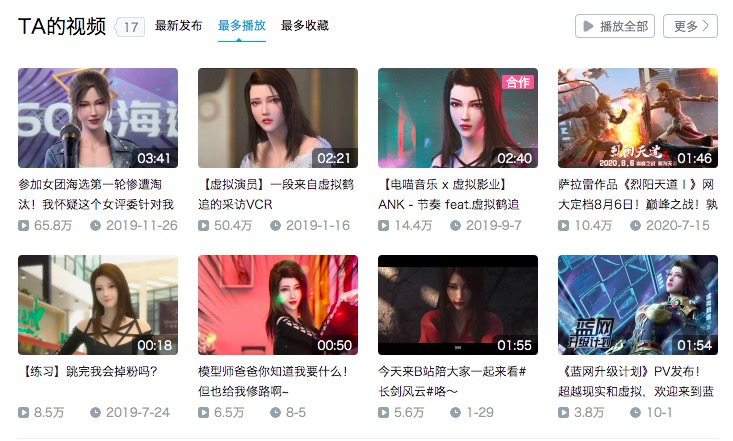
▲ Virtual Cinema's virtual actor Hezhui's personal Bilibili homepage
For a long time, this track was relatively flat. During this period, we would see sporadic simple-image VTubers or low-quality "paper cutout" characters emerging, including quite a lot this year. We feel that although they suddenly grew explosively and got massive exposure for a period, not all of these characters will necessarily last.
We believe that for virtual idols to necessarily exist and exist legitimately going forward, they must achieve multi-dimensional presentation methods and multi-scenario deployment. And while meeting these two conditions, they must maintain high quality standards across every dimension, every scenario, and every presentation method to have real future development potential. It's not enough to have a single static image that looks good but has no personality, no content, and isn't even a complete virtual human — and then launch them.
And we can't be certain that if an image looks good static, it will look good in motion, or look good in real-time livestreaming, or look good when we can view it 360 degrees in VR.
There are actually quite a few challenges here. One thing we're committed to doing is ensuring it looks good from every dimension, every angle, with more realistic presentation. We've put a lot of effort into details — for expressions, we focus on virtual characters' muscle textures, bone rigging, and when presenting, we even consider things like nasolabial folds.
▲ Virtual Hezhui being interviewed
We believe that only when virtual idols can express themselves authentically can they convey more emotion and create genuine emotional bonds with fans, becoming virtual idols that can continue to develop.
04 During the pandemic, the pan-psychology field became much more active in the transaction market. What's your take on this phenomenon?
Peter: Final question for Qiuyang. We've noticed an interesting phenomenon. After COVID hit, there was a research report in the U.S. about American teenagers' excessive use of social media represented by Instagram, which had started producing some fairly serious psychological issues — though this also had something to do with prolonged stay-at-home periods during the pandemic.
Combined with these two phenomena, after COVID in the U.S., the entire pan-psychology field became much more active in both primary and secondary markets. The primary market started seeing large funding rounds, including companies like Talkspace going public through NASDAQ, while the secondary market saw more and more psychology-related businesses being traded as stocks.
Domestically, we've also seen many psychology projects receiving funding again after many years. We feel this phenomenon may not exist only in Western society — it might be the same globally. Qiuyang, what's your view on this, and how will Glowe address this problem?
Liu Qiuyang: The growth in this market actually comes from many factors. A major factor is growing demand. Depression has a very high global mortality correlation. WHO data shows that approximately 1 million people die by suicide or engage in harmful behavior due to depression each year, and it's trending toward becoming the second leading cause of death for humans after heart disease.
So for the psychology industry, demand is continuously rising — that's a very clear trend. In both China and abroad, we're seeing more and more psychology service companies emerging, as well as products targeting depression, anxiety, and other psychological treatment needs.
Second, an important reason for domestic industry growth is that the government is gradually paying attention, media is continuously paying attention, and the general public is increasingly paying attention. Whether on Weibo or other media, we see news about celebrities or others harming themselves or dying by suicide due to depression — the social impact is enormous. At the national level, there's also hope that people stay healthy both physically and psychologically.
Third, there's the gradual maturation of academic applications and the progressive development of humanism. Psychology has developed for over a hundred years now. With the industry's rapid development over the past 50 years, we're starting to apply more advanced technologies and concepts with better user experience, such as CBT (Cognitive Behavior Treatment), short-term focal therapy, and so on.
They can deliver better user experience than before and are being taken seriously by more and more people. In previous methods, clients often had to wait quite long for positive feedback. Now, clients can adapt and engage in the counseling process more quickly, resolving their problems faster — this is a benefit that more and more people can feel.
Fourth, the pandemic accelerated industry growth. COVID was a special lever that accelerated everyone's psychological awareness of health. For example, you noticed that during pandemic prevention, someone always had to be quarantined, and during quarantine, a person's psychological state was extremely poor. I also experienced two weeks of quarantine — I was in a terrible state.
We hope to provide some spiritual comfort to users in these moments of solitude. This isn't just a need of commercial society or private enterprises; it also aligns with national needs. The country also hopes to improve the overall psychological quality of citizens. These are the four major changes I see.
Our Glowe product differs from traditional online psychological counseling institutions. Traditional online counseling institutions mostly just handle appointment and matching, and may not take responsibility for productization and digitalization. We approach our psychological counseling product more through standardization and productization.
We're probably more like — in addition to having solid behavioral theoretical foundations — we care more about user experience and humanism. Our product is relatively friendly to Gen Z users at this level, which has attracted many Gen Z users to our product.
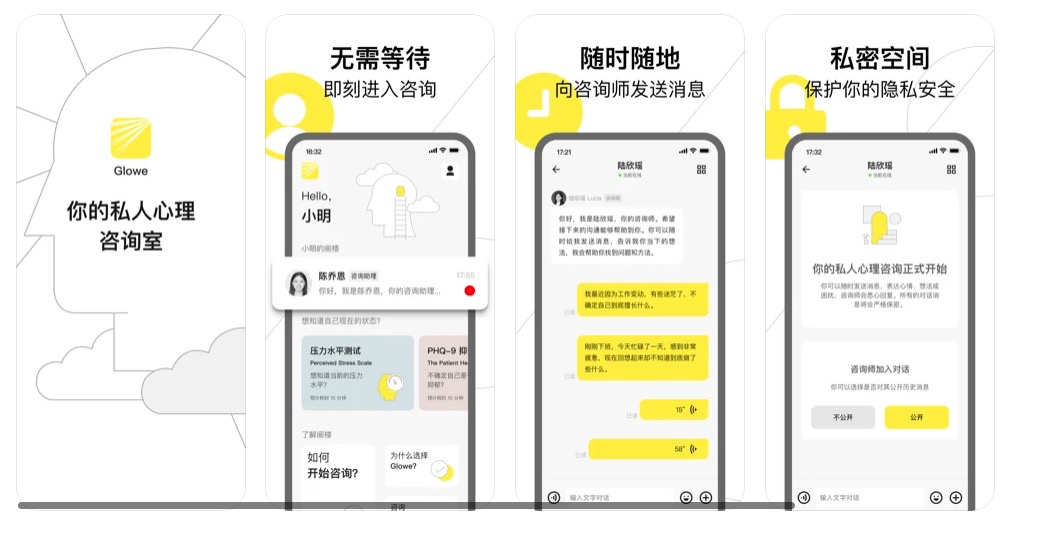
▲ Glowe
Peter: Thanks, Qiuyang. Let me add one point here. If you have the habit of browsing Weibo, you'll notice that over the past six months, the keyword "depression" has frequently appeared on Weibo's hot search. If you look at broader mental health keywords, you'll see even more. This shows that related pan-psychological issues have become increasingly prevalent, and users are starting to actively seek understanding and solutions for psychological problems. The market needs innovative products and services to address these issues.
Thank you all for your time. To summarize: over the past year, FreeS Fund has achieved some results in the spiritual consumption space, particularly around Gen Z's spiritual consumption investments, while also facing some challenges. As Feng Shu said this morning, we're good at getting ahead of many future high-growth-potential tracks, and we believe we can do this even better in the future, achieving more and better investment results. Thank you all.
Interactive Giveaway
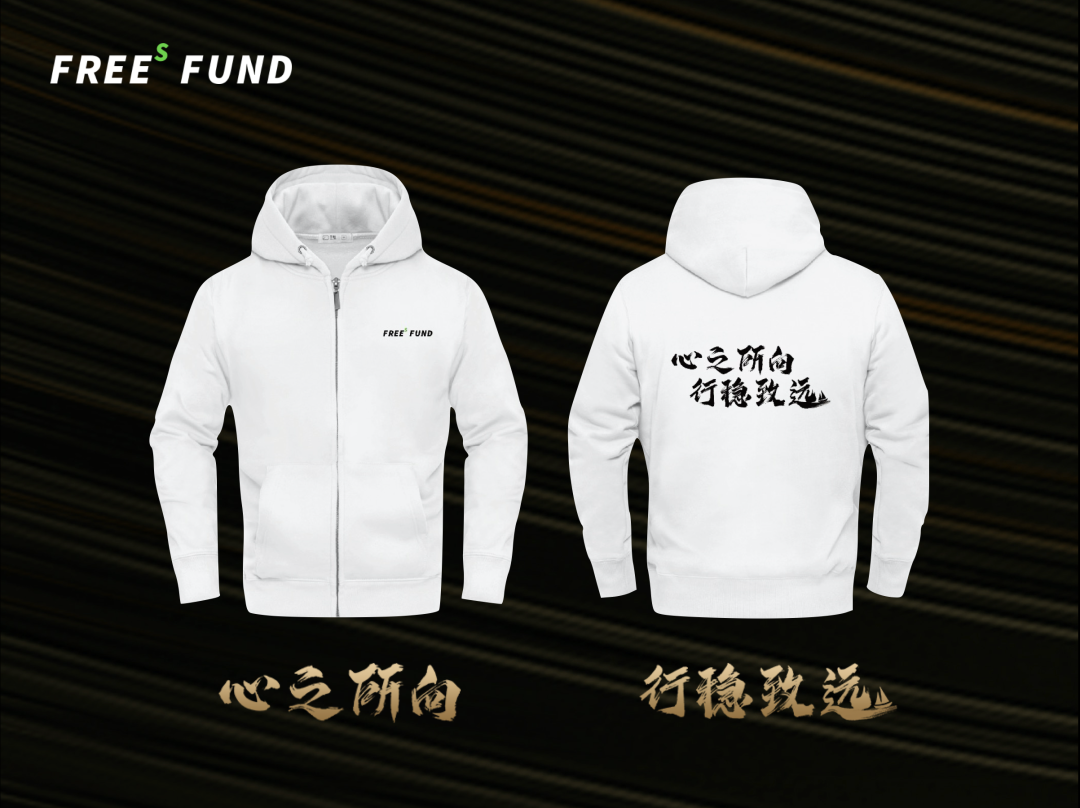
We welcome you to share your observations and thoughts on Gen Z spiritual domain consumption in the comments section. By 9 PM on January 6, 2022, the 5 users with the most thoughtful comments will each receive a FreeS Fund custom commemorative T-shirt.

How Tech Companies Can Go From "Valuable Technology" to "Profitable Technology" | FreeS Research
Building Virtual Idols: The Pitfalls and Barriers | FreeS Interview
Why We're Bullish on Virtual Idols | FreeS Research