Zhang Sai's 13-Year Oral History of Robotics Entrepreneurship: The Rise and Fall of the "Big Four," Grinding It Out to the End, and Betting on Embodied AI and Global Expansion

Embodied AI doesn't need to reinvent the wheel for industrial robots.
Sai Zhang, founder of Efort, says he has Transformers "living in his heart." The company's Jinan headquarters has an entire wall in its showroom dedicated to his Transformers collection. He even named the project to take Efort public "All Spark" — the "Cube of Creation" from the Transformers universe. On June 30 this year, Efort filed its listing application with the Hong Kong Stock Exchange.
Since founding Efort Automation in 2012, Zhang has spent 13 years in the industrial robotics space — both witnessing and participating in Chinese robot makers' contest against the "Big Four" (ABB, KUKA, FANUC, and Yaskawa). Today, the Big Four have "lost" to domestic competition in China, and Chinese brands are beginning to conquer overseas markets.
From 3C electronics and pharmaceuticals to food, semiconductors, and auto parts, Efort has deployed in thousands of light-industry scenarios. While many robotics companies are "walking around with a hammer looking for nails," Zhang insists that "real demand usually exists right there on the customer's factory floor." To win over Unilever, he built a one-to-one replica of their Jinshan, Shanghai plant so they could see with their own eyes what an automated production line looked like.
In 2023, Zhang made up his mind to steer Efort into embodied intelligence. In his view, with the development of large models and deep learning, embodied intelligence might finally crack the "hard nuts" that industrial robots have struggled with — flexible assembly and soft-material handling. But he refuses to "reinvent the wheel": "Moving boxes and tightening screws aren't necessarily real needs. There's no reason for us to go backward and do it all over again with embodied or humanoid robots."
Not long ago, Qianhang Yan, vice president at FreeS Fund, sat down with Sai Zhang, founder and CEO of Efort, for an extended conversation — reviewing the company's upgrade path from traditional industrial robots to intelligent systems, discussing strategic choices amid the embodied intelligence frenzy, and sharing opportunities and challenges for Chinese robotics going global.
In Zhang's eyes, "the world is a fascinating place. If you're willing to explore, you'll discover that behind seemingly trivial things, industrial robots are quietly holding everything up."
We've edited portions of this conversation, hoping to offer fresh perspectives. This is part of our "AI Industry Observations" series, which will continue to share firsthand practices and insights from AI entrepreneurs.
Reader Giveaway: What problems do you hope future robots can solve in your work or daily life? Share your thoughts in the comments. By 5:00 PM, October 15, 2025, the two most thoughtful commenters will each receive a copy of Industry and Civilization.
01 How Do Robots "Read" a Thousand Industries?
Qianhang Yan: Many people think industrial robots are far removed from daily life, but the truth is, behind everything we eat, wear, live in, and use every day, there's likely an industrial robot — including Efort's. How is this "invisible" automation quietly changing our everyday lives?
Sai Zhang: Let's start with "eating." You may have tried Dong-E-E-Jiao's Taohuaji Ejiao Cakes. Since 2017 — eight full years — we've deployed over fifty delta robots on their packaging lines, working tirelessly. If you've ever visited the "Dong-E-E-Jiao World" and seen through the floor-to-ceiling windows those mechanical arms precisely picking and neatly packaging, those are Efort robots.
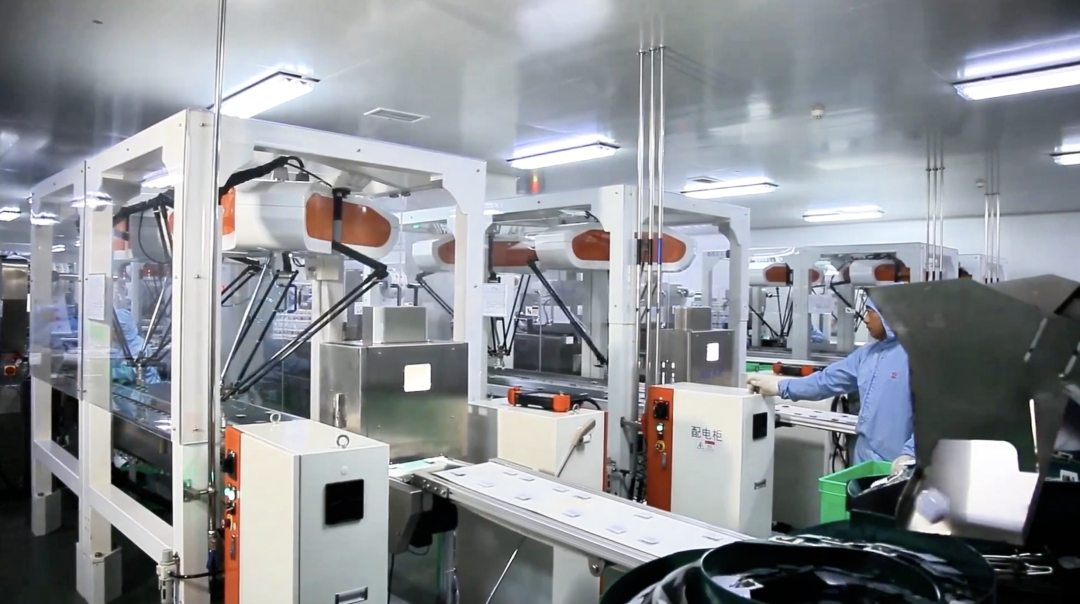
Dong-E-E-Jiao's intelligent production line. Image source: Efort
Then there's mooncakes, small breads, biscuits... Efort has been involved in many food factories' automated production lines. If you're in North America, the bread you eat daily may very well come from a production line we participated in. After visiting bread factories, I realized just how many types of bread exist — ciabatta (crispy crust), focaccia (thick and soft, with olive oil and herb aromas), and even just croissants come in Black (with cocoa powder), Strict (straight-lined), Moon shift (crescent-shaped), Pinch ("cinched waist" style), and countless others.
Next, "using." Consumer electronics is our largest business segment. Lens Technology, one of the world's largest suppliers of mobile phone glass screens, is our customer. Our equipment participates in over thirty processes from raw substrate to finished glass. So the screen in every iPhone in your hand likely involved Efort robots at some point. The assembly lines for Sony PS5 and Nintendo Switch controllers, done by customers like Foxconn and Goertek, also involve us deeply.
Then there's "beauty." Companies like Bloomage Biotech and Giant Biogene, with their hyaluronic acid and facial mask product lines, use Efort robots extensively on their packaging lines. If you pull out a wet wipe right now to wipe your sweat, the lid on it was probably glued on by our robots.
The world really is fascinating. If you're willing to explore, you'll find that behind many seemingly trivial things, there's the power of industrial robots holding everything up.
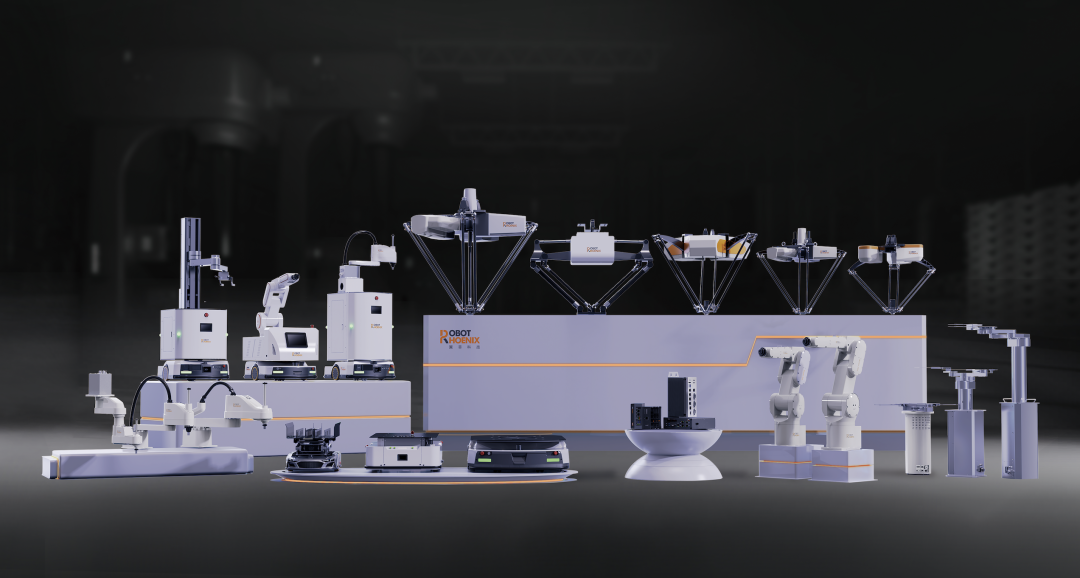
Efort's product lineup. Image source: Efort
Qianhang Yan: Different industries have vastly different processes. How does Efort quickly understand and adapt to these "non-standard" scenarios?
Sai Zhang: The key is: find commonalities within customization, and turn customization into modules.
In the past, automation almost equaled "non-standard" — every customer's needs were unique. Take Dong-E-E-Jiao's cakes: cutting, blister packaging, paper bag insertion, box folding, sticker application, lid sealing... You couldn't buy off-the-shelf equipment for any of this; it all needed custom development. Or mobile phone glass screens — they vary in thickness, edge shape (right angle or rounded), 2D or 3D. If we want to deliver screen inspection robots to customers, we still need detailed customization.
But throughout our non-standard work, we've constantly abstracted commonalities, breaking these scenarios into modules like "tray-placing module," "tray-stacking module," "bagged-goods handling module," "sorting module."
Now, even when we encounter entirely new scenarios, we can quickly assess how much of the work can actually be solved by combining existing modules.
I noticed that around 2023, customers' understanding of automation was visibly different from before. Previously, some customers might have thought certain modules could be handled by manual labor, but later realized robots were still necessary.
It was also at the beginning of that year that we conducted a deep reflection: as an industrial robotics company, what should our future direction be?
At the time, nearly all of Efort's robot products were bundled into "turnkey solutions" sold to customers. At leading manufacturers like Lens Technology and Goertek, we provided complete automated production lines — robots + control systems + integration services. Customers bought "results," not just "robot bodies."
This created a problem: many people started treating Efort as a "systems integrator," even forgetting that we were among China's earliest delta robot developers.
Our core is actually robotics technology, not integration services. Customers chose us because we have robot bodies, control algorithms, and self-developed underlying systems.
So in 2023, we made a major organizational decision: spin off the industrial robotics division into a subsidiary, "Efort Robotics," and elevate "Efort Automation" to a sub-brand under "Efort Technology."
From then on, our external brand unified as "Efort Technology," but we focused on building "Efort Robotics" as a technology brand, concentrating on "standard products."
Standard and non-standard robots may operate on completely different logics: standard products are product-driven, pursuing cost-effectiveness and scale; non-standard products are customer-driven, pursuing customization and service depth. Our previous automation integration was "non-standard project-based," with dedicated teams organized around major customers, going deep into vertical industries. The robots we're now expanding into fall in the standard product category — same model produced in batches, standardized delivery, looking identical whether used in phone factories or bakeries.
One employee can hardly excel at both standard and non-standard products. So we adjusted our organizational structure, separating the teams for standard products (Efort Robotics) and non-standard products (Efort Automation) — different offices, different performance metrics. Engineers make their own choice, and once decided, they focus on their chosen direction.
After this business adjustment, Efort Technology's revenue structure is changing rapidly. In 2023, robot bodies accounted for only 10% of total revenue; in 2024, it rose to 20%, and this year it's expected to climb further.
Qianhang Yan: Overall, the needs addressed by non-standard and standard products, and their commercial ceilings, are quite different. However, one thing is very clear: in many industrial and downstream scenarios, non-standard demand has always existed.
02 The "Tsinghua Mecha Boy" Behind Efort
Qianhang Yan: For a company founded over a decade ago, what has remained unchanged?
Sai Zhang: Our original intention hasn't changed — to build a world-class Chinese robotics company.
We believe industrial robots are indispensable infrastructure for humanity's march toward the intelligent era. They may not be as "cool" as humanoid robots or as "hot" as large models, but they've already achieved "intelligence" in factories: we introduced deep learning, neural networks, AI vision, and other technologies early on, giving robots perception, decision-making, and execution capabilities.
From this perspective, industrial robots themselves are a form of "embodied intelligence" — they serve as the combination of "body" and "brain" in industrial scenarios. Whether it's future home service robots or humanoid robots, the path they need to walk has already been traveled by industrial robots over past decades. We hope to use industrial robots to lead humanity into the intelligent era. (See From 1/10 to 1/3 Market Share: How Did Domestic Industrial Robots Achieve Explosive Growth? | FreeS Venture Dialogue)

Qianhang Yan: Speaking of the "intelligent era," everyone in robotics probably has a "mecha dream." Your video channel is called "Tsinghua Mecha Boy." Was this a flash of inspiration or a carefully considered choice?
Sai Zhang: Actually, before 2023, I barely touched short videos. Then my team persuaded me: "Boss Sai, you're an 'actor' delayed by entrepreneurship — you need to get out there and talk!"
When naming it, I wanted to blend the unique labels of "Sai Zhang" the person.
The first word is "Tsinghua." I graduated from Tsinghua — this isn't just honor, but responsibility. It constantly reminds me: I represent not just myself, but Tsinghua standards. The "Tsinghua" label reminds me to be rigorous and not embarrass my alma mater.
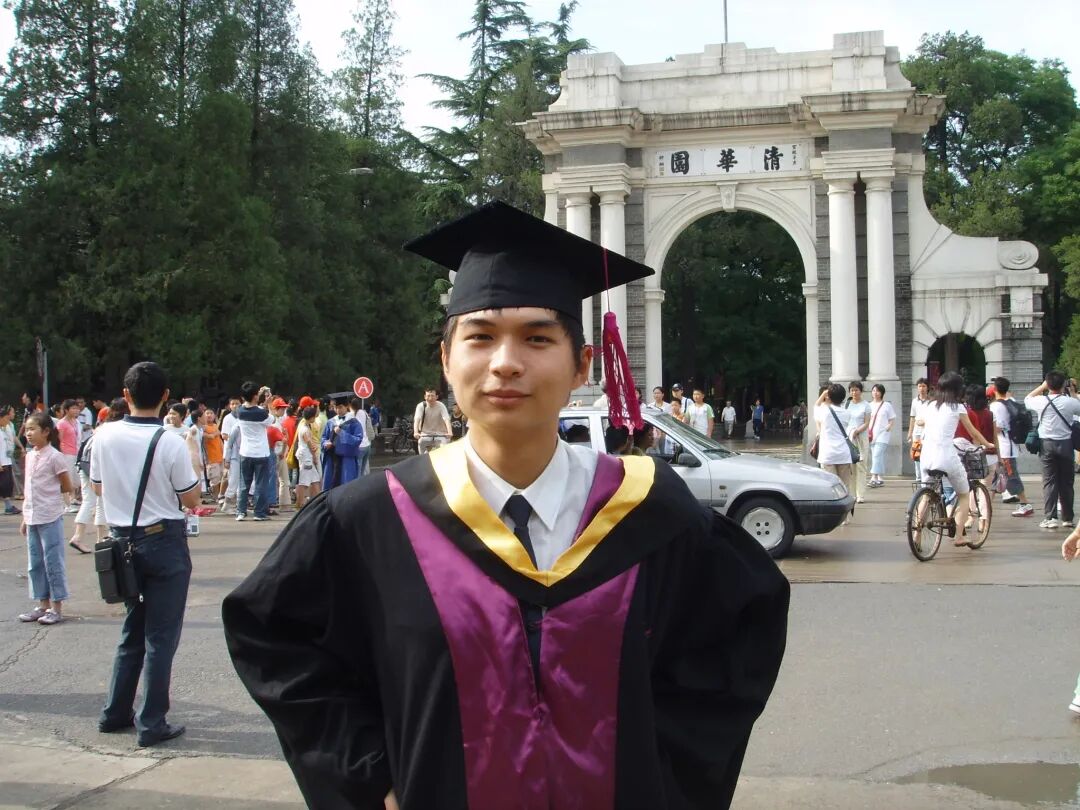
Sai Zhang's undergraduate graduation photo from Tsinghua.
Image source: Efort
The second word is "mecha." I'm actually someone with Transformers "living in my heart" — a Transformers fan since childhood. Our Jinan company showroom has an entire wall dedicated to collecting Transformers. We make industrial robots, but "robot" sounds too technical, and "machine" too cold. "Mecha" has technological feel, futuristic sense, and a bit of passion. Elon Musk building rockets and driving Teslas is, in a way, a "real-life mecha warrior." Someday, I really want to build an Iron Man-style exoskeleton mecha — that might actually happen.
Precisely because I love Transformers so much, I named the project to take Efort public "All Spark" (the "Cube of Creation" in Transformers). I feel the listing process could become the flame that leads Efort forward. During listing preparation, we encountered many problems that seemed "unsolvable." But as long as we wanted to keep building the company well and achieve listing, we could always find solutions. In the end, we successfully filed before June 30 this year.
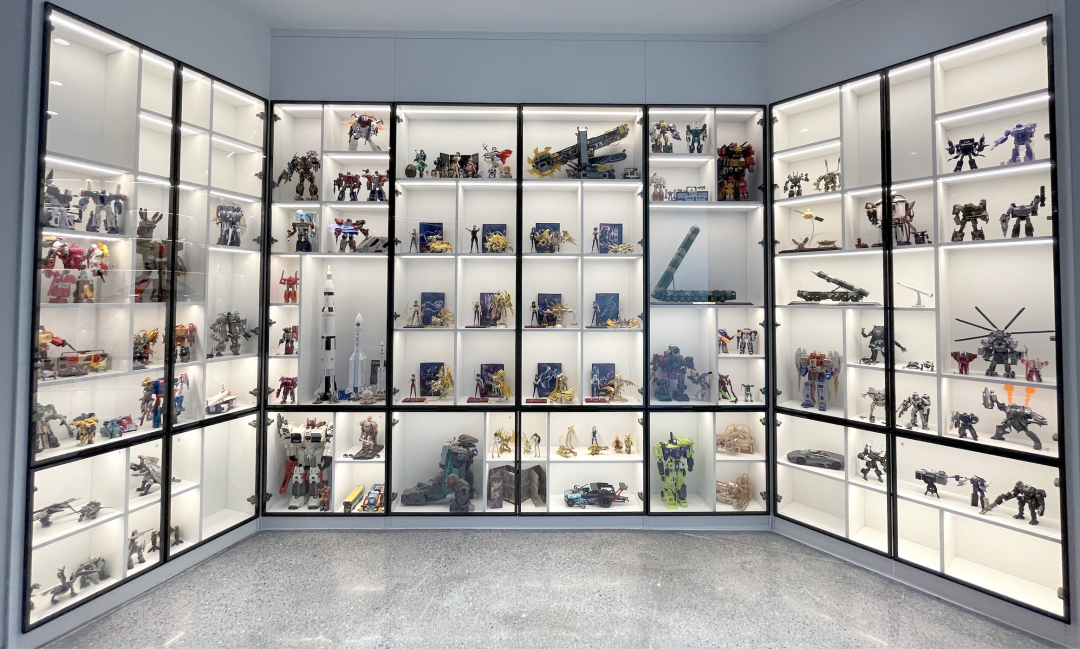
Efort's Jinan showroom has an entire wall dedicated to collecting Transformers. Image source: Efort
The third word is "big boy." After over a decade of entrepreneurship, with ups and downs. Even facing immense pressure, I have to find ways to decompress and convey confidence and positive energy to the team. I love escape rooms and murder mystery games — I like that sunny, cheerful state. That year I also heard a song called "Sunny Cheerful Big Boy" and thought it fit perfectly. And so, "Tsinghua Mecha Boy" was set.
/ 03 /
How Does a Technical Founder Lead a Team to Open Up Markets?
Qianhang Yan: I remember the first time I visited Efort, there was an old car parked in the company lobby. It was the small car Boss Sai drove when he first started the company. It witnessed Efort's entire journey from zero to one. Can you recall how you first broke into the market?
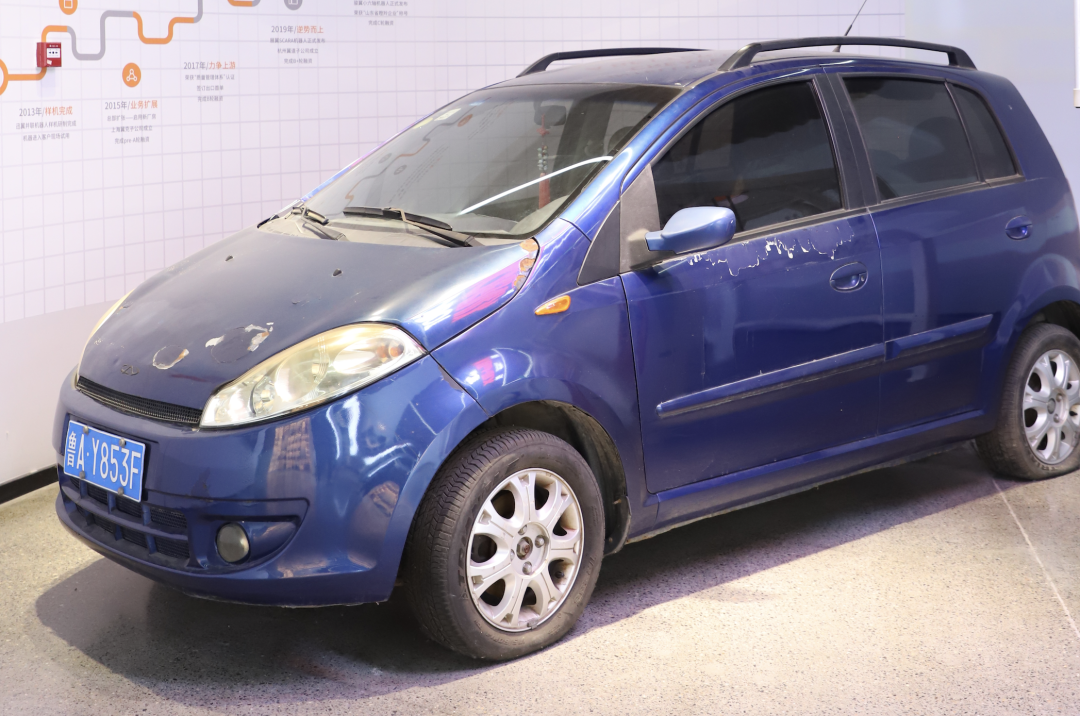
The small car that witnessed Efort's journey from zero to one. Image source: Efort
Sai Zhang: This old car accompanied me to countless customer sites. Later it was covered in "battle scars" and "retired," but we kept it as a memento.
In 2013, when we first started in Jinan, three of us in an 8-square-meter office, with two desks, built our first delta robot from scratch.
But nobody wanted to buy it. What to do? We waved the "Tsinghua + Columbia" banner and hawked our product everywhere. We drove to Zibo and told Qidu Pharmaceutical's customers: "You don't need to pay, try it first, buy it if it works." Surprisingly, they agreed.
We drove to deliver, cramming several people plus the robot into that small car. On site, workers had never seen a delta robot, gathered around to unpack it, incredibly enthusiastic, saying: "Don't you lift a finger, we'll install it!" That photo of "Qidu people are too enthusiastic, we can't even get our hands in" is still preserved.
But the first machine had constant problems — we stayed on site fixing it daily. Later, robot performance gradually stabilized, and our employees no longer needed permanent on-site repair. Back then there was no remote monitoring. To monitor robot operation, we bought dashcams, mounted them on the machines, and recorded fault videos for playback analysis.

After installing the first trial robot at Qidu Pharmaceutical, it was already past midnight; the Efort team slept on the floor. Image source: Efort
Qianhang Yan: Over these years, you must have encountered customers who weren't so easily convinced about robots. Was there one particularly memorable "hard battle"?
Sai Zhang: In 2015, we wanted to win Unilever's order. But as a multinational Fortune 500, they weren't easily accepting of domestic robots.
We first targeted Unilever's Jinshan, Shanghai factory as our breakthrough. This factory produced a seasoning packaged in oval bottles that traditional sorting machines couldn't handle — only manual labor worked.
To convince the customer to use robots, we directly rented a factory next door and built an identical production line. To realistically simulate line speed, we specifically hired several cleaners to manually place bottles on the conveyor belt, with robots picking up bottles and starting to fill them with seasoning.
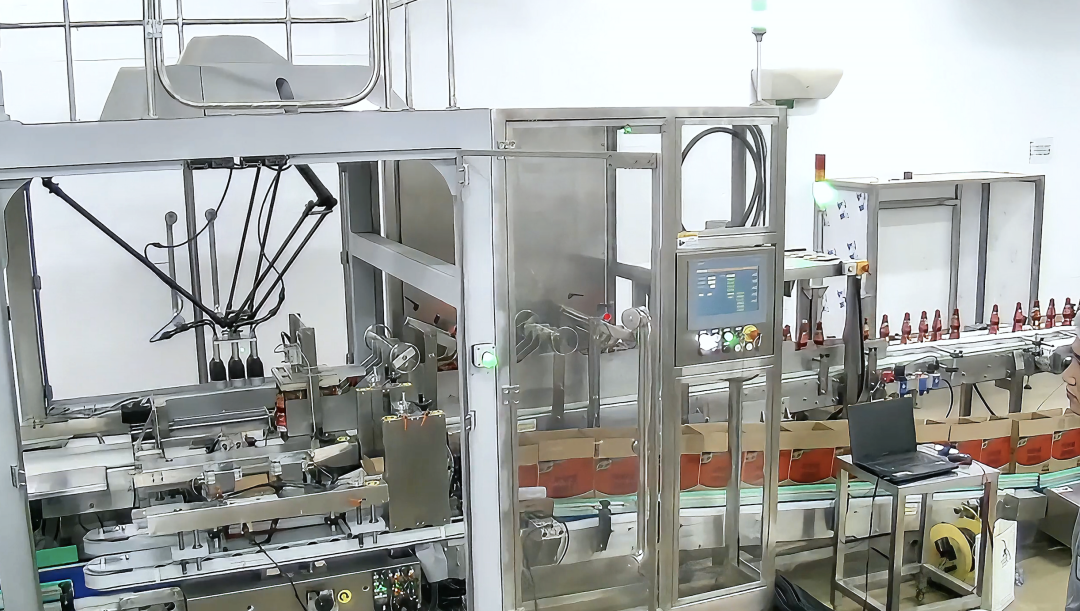
Unilever's automated production line. Image source: Efort
Finally, the factory director at Unilever Jinshan was convinced. After that, Unilever brought us into their entire group's supply chain. From then on, the packaging lines for chicken bouillon, MSG, stock cubes, and other products across the group all had Efort robots.
Qianhang Yan: Efort has won many major clients, which actually requires strong sales capability. What experiences can you share with fellow entrepreneurs?
Sai Zhang: I have three insights:
First, shift your mindset — you must become the "biggest Salesperson." Many entrepreneurs come from technical backgrounds; you can't say you're a "tech geek" or "not good with words" and avoid sales. Precisely because you understand technology, you can clearly explain what's good about the product. As founder, doing sales well is your responsibility. I trained myself too — practicing in front of mirrors, recording and listening back, refining repeatedly.
Second, be the "backup." When meeting clients, I'm not necessarily the one negotiating prices, but I maintain my presence. Whether as a "mascot" or demonstrating the company's technical level, I provide support for my colleagues.
Third, build a professional team. No matter how capable I am, I can't substitute for sales staying up all night revising proposals with clients. We need people who truly understand sales, who listen and satisfy customer needs.
/ 04 /
Transitioning from Industrial Robots to Embodied Intelligence: What Different Industry Knowledge and Advantages?
Qianhang Yan: At this year's Efort annual meeting, you pulled a "Steve Jobs-style" "One More Thing" — just when everyone thought the meeting was ending, you suddenly announced Efort would enter embodied intelligence.
"Embodied intelligence" is now a super buzzword, with large models, autonomous driving, and robotics companies all jumping in. As a company deeply rooted in industrial automation, why did Efort choose this moment to enter? What opportunities did you see that others didn't?
Sai Zhang: We're actually not a "To VC" company — we wouldn't do something just to chase trends. But choosing embodied intelligence was indeed grounded in industrial demand, with some underlying logic thought through clearly.
Over the years, we've noticed a phenomenon: even in the highly automated 3C industry, production lines still have large numbers of workers standing there. They're not doing high-precision work, but tightening screws, inserting batteries, applying labels — seemingly simple, repetitive tasks. Why haven't industrial robots completely replaced them?
The answer: cost-effectiveness doesn't work out.
Industrial robots excel at "fast, precise, stable" — but the prerequisite is stable products, large batches, and fixed production lines. Take phone accessories: you make them for seven or eight years, install an automation system, and the cost amortized per unit is extremely low.
But in reality, many factories face multi-variety, small-batch, frequently changing production modes. A customer takes an order, produces tens of thousands of units, and half a year later the order disappears, so the line must change. Your several-million-yuan industrial robot system might be "laid off" after just half a year. The non-standard equipment investment goes down the drain, the ROI doesn't compute — and at this point, human labor becomes the most "economical" choice.
We've summarized two types of "hard nuts" that industrial robots struggle to crack:
First, flexible assembly — like assembling hair dryers, computer casings. These assembly processes must account for plastic deformation, compression, snap-fits, and require tight alignment and fitting, relying on the feel accumulated over years of human experience. This assembly is very challenging for industrial robots. Once parts have slight deformation, they either won't snap in or might crush the parts.
Second, soft-material handling — like clothing fabric, too soft for mechanical grippers to pick up, and difficult for vision to locate. Because of this, the textile industry employs enormous labor forces, and automation has long been an industry challenge.
Now, with the development of large models and deep learning, I see problems that were previously unsolvable now seeming to have solutions.
For example, Stanford University's Mobile ALOHA robot can pull zippers, put on pillowcases, and shave people — scenarios I find quite disruptive, which traditional industrial robots would struggle to achieve with such "flexible" operations.
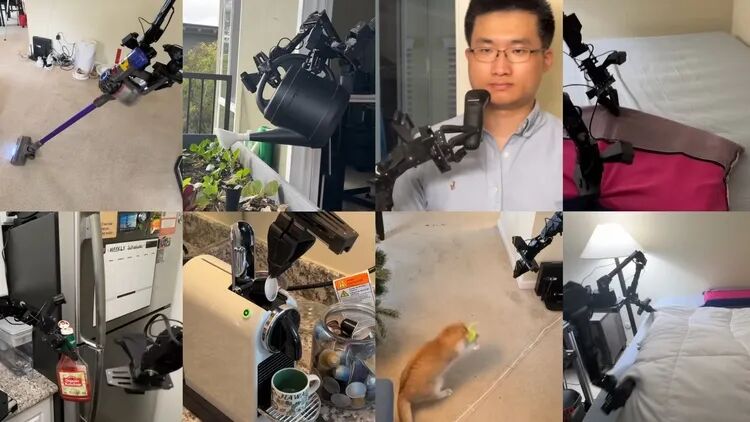
The Mobile ALOHA robot can complete tasks including carpet vacuuming, watering plants, assisting with shaving, and making beds with pillowcases. Image source: PingWest
Plus, more and more companies are doing extensive training for robots, making their generalization capabilities increasingly strong. Although current robot operations still rely on teleoperation and extensive training, the direction is right.
So Efort decided to enter the embodied intelligence field, to tackle those previously difficult-to-solve niche industrial scenarios like flexible assembly and soft-fabric manipulation.
Qianhang Yan: The whole thought process is — Efort saw demand, realized industrial robots' limitations, then discovered that today's technological development could solve customer needs. With so many embodied intelligence companies on the market now, what is Efort's advantage?
Sai Zhang: Our biggest advantage is understanding what customer needs actually are.
I feel that moving boxes or tightening screws aren't necessarily real needs — industrial robots already do these tasks very well. As an industrial robotics company, there's no reason for us to go backward and do these things again with humanoid or embodied robots.
For example, Efort's industrial robots can glue 120 wet wipe lids per minute, replacing about four human workers. There's no need for us to switch to four humanoid robots to replace the original industrial robots.
Real demand often exists on the customer's factory floor. Industrial data is highly confidential and won't be casually opened up. We've maintained years of cooperative relationships with customers, and they're willing to let us in to learn, test, and collect data.
Qianhang Yan: Wanting to do embodied intelligence well in industrial scenarios is the right thing, but not an easy one. Do you have expectations for when industrial robots will land in industrial scenarios?
Sai Zhang: We have clear plans. Within this year, we may release an embodied intelligence demo for industrial scenarios. Next year, we expect real scenarios to begin deployment. We've specifically assembled a new embodied intelligence team for this, and the industrial robotics team will also provide support to the embodied intelligence team.
But I believe AI development is discontinuous. Just before GPT emerged, nobody thought natural language could reach this level. Similarly, there may come a day when embodied intelligence experiences a "group intelligence" leap — robots no longer need to mimic human operations, but suddenly figure things out on their own. Once that moment arrives, embodied intelligence could potentially proliferate in industrial fields within three to five years.
/ 05 /
"The Big Four" Have Already "Lost" in China's Competition; Bullish on Chinese Robots Going Global
Qianhang Yan: "Going global" has been especially hot these past few years — home appliances, phones, new energy vehicles... Chinese products have fought their way overseas. Now even industrial robots are starting to go abroad, with more and more overseas distributors attending Efort's annual meeting. When did you decide to take Efort "out there"? How was this decision made?
Sai Zhang: Honestly, the underlying logic for going global is quite simple — domestic competition is too fierce. So we thought, is it possible to open up an overseas battlefield and take our products and services out there?
According to research firm MIR DATABANK statistics, in 2024, in the domestic industrial robot market, domestic brands' sales volume has already surpassed imported brands, with market share rising to 52.3%. This means whether it's the "Big Four" or other overseas brands, they can't beat us in the Chinese market anymore. So now if we go to their turf, if they're still putting on airs, reacting slowly, and charging premium prices for service, we have an opportunity.
We have two going-global strategies:
First, follow major clients overseas.
Major factories in Apple's supply chain like Lens, Foxconn, and Goertek have been building plants in Vietnam, Thailand, India, Mexico, and other places in recent years. But these clients, when they go overseas, find it hard to locate reliable automation suppliers, so they bring along domestic suppliers they've used smoothly. It's the same in new energy — CATL, BYD, and others building plants overseas, we've cooperated with them domestically for years, so naturally we follow to serve overseas projects together.
Second, build our own channels.
Early on we used overseas trade shows, LinkedIn, Google SEO, Alibaba International, and other channels to pick up scattered overseas orders. When clients used our products and found them good, we'd chat with them: "Since it works well for you, want to be our agent? Recommend it to others and earn commission."
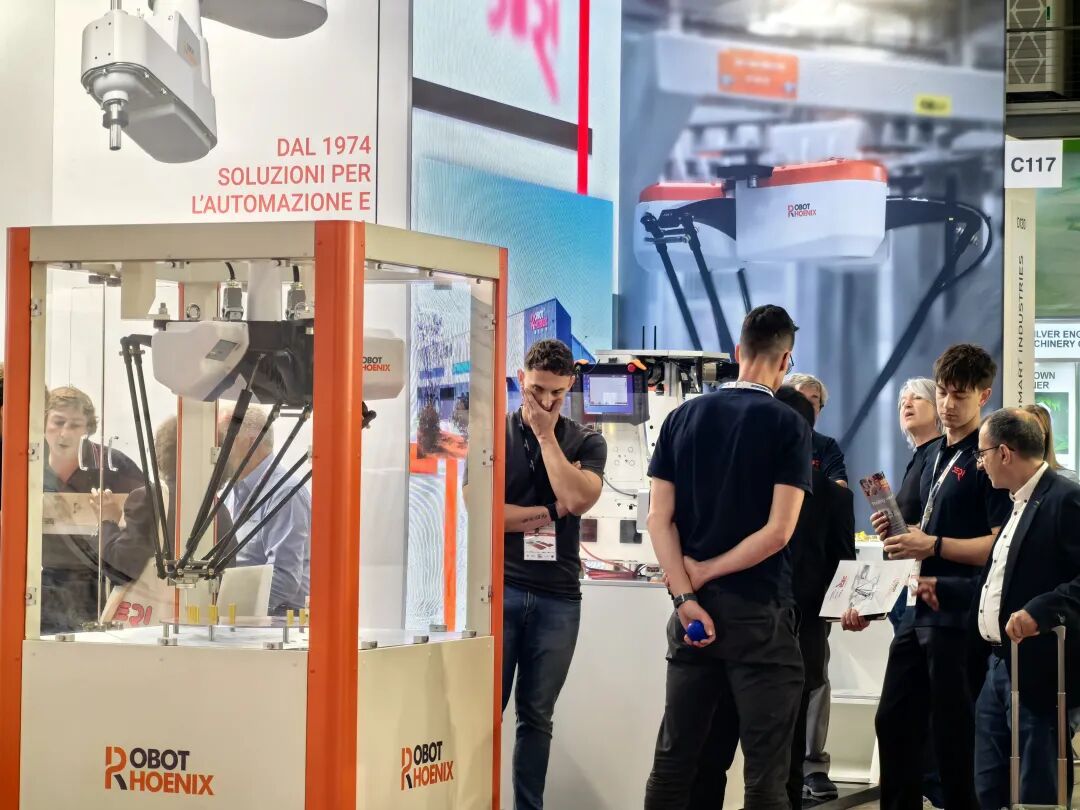
Efort participating in overseas trade shows. Image source: Efort
Many clients actually agreed. These clients have real production lines and know how to use robots — when others want to see results, they can just visit their factory. This way, we gradually built our own agent network in Southeast Asia, Europe, North America, South America, and other regions. Now these agents are proactively taking orders and shipping goods.
Qianhang Yan: Following clients overseas has a trust foundation, which may be relatively easier. Directly establishing new channels and developing new clients, getting overseas customers to accept "Made in China" robots — does this process encounter challenges? Have you encountered "bias"?
Sai Zhang: Five or six years ago, overseas customers almost only recognized the "Big Four" or other European and American brands in robotics, with hardly any concept of domestic robots.
How did domestic manufacturers go global back then? They had to take "circuitous routes."
Some producers would acquire overseas "century-old shops" — these companies might not achieve large scale in niche markets, and acquisition prices weren't high. After acquisition, manufacturers would sell Chinese robots under the acquired brand. This is "old bottle, new wine." Customers thought they were buying an established European brand, but were actually using Chinese technology. They found the quality comparable to before, and gradually accepted it.
Some companies chose a "dual-brand" strategy — one name domestically, another brand name registered overseas, with the actual controller still being Chinese.
These predecessors used various "tactical detours" to gradually build up domestic robots' reputation.
We went global relatively late, but precisely because predecessors paved the way, many foreigners' perception of Chinese robots has improved. Plus, with China's expanding openness, foreign merchants find it especially convenient to visit China. We have overseas clients who fly in specially for our annual meeting. I feel overseas customers' understanding and awareness of Chinese products has greatly changed, and their acceptance of Chinese products is increasingly high.
Qianhang Yan: In the going-global process, selling robots isn't the end — if after-sales service can't keep up, reputation may decline. How do you handle localized service?
Sai Zhang: We've done several things for localized service:
First, dedicated teams for overseas business. We have independent overseas teams with solid English, some also speaking Japanese and Spanish. We apply for various visas for these colleagues so they can travel overseas at any time.
Second, products should be as "foolproof" as possible. Robots are standard products; we need to debug them thoroughly domestically, with complete manuals and operation videos. We genuinely have clients in Italy and Brazil where we didn't send anyone, and they installed and used the equipment themselves, quite proficiently. This greatly reduces overseas service pressure.
Third, turn customers into our local channels. For example, we've developed deep cooperation with an agent in Italy. This agent has reserved office space and a "demo room" for us in their company. We train their engineers until they can independently do installation, debugging, and maintenance — and they can earn additional income.
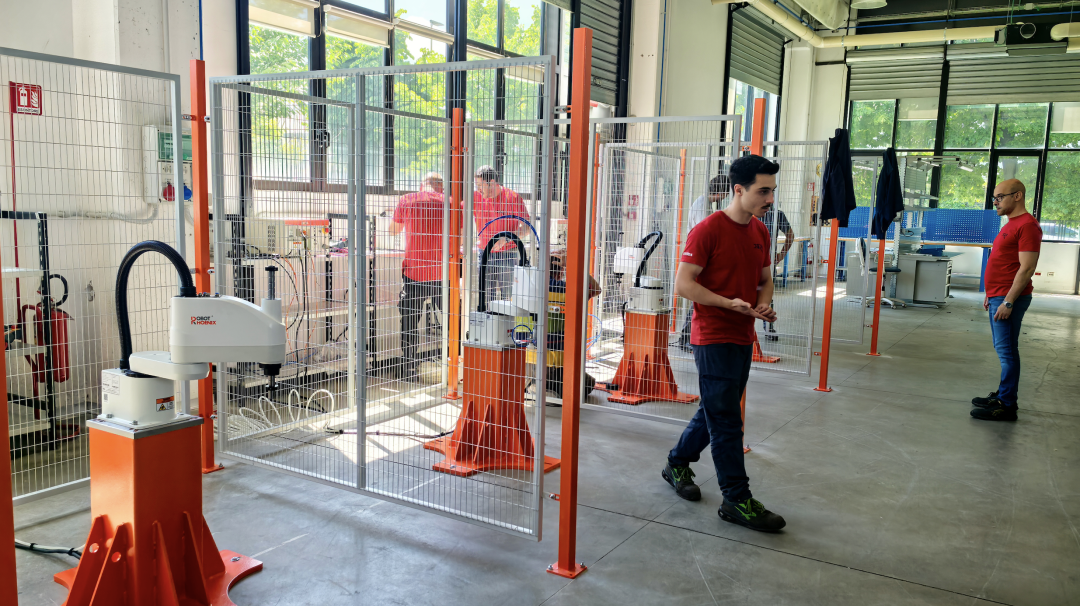
Overseas distributor product training.
Image source: Efort
Qianhang Yan: Alright, thank you Boss Sai. Let me briefly summarize: today we heard Efort share its transformation journey from traditional industrial robots to intelligent systems, and understood why Efort is resolutely entering this new track amid the embodied intelligence frenzy. Efort's going-global path is a vivid microcosm of Chinese enterprises moving from "product export" to "productivity export" — more and more overseas customers are beginning to know, trust, and accept domestic robot brands. Wishing Efort Technology a soaring flight and an increasingly bright future.
Reader Giveaway: What problems do you hope future robots can solve in your work or daily life? Share your thoughts in the comments. By 5:00 PM, October 15, 2025, the two most thoughtful commenters will each receive a copy of Industry and Civilization.

The Power Game in the AI Era: How to Understand China's New Power System?
AI Healthcare: Has It Reached Its DeepSeek Moment? | FreeS Research
The Hotter the Robotics Track Gets, the More We Need to Respect the Rules | Li Feng Column
How Did Humanity Create "Doraemon"? A Look Back at Smart Companion Product History | FreeS Report
First Half of 2025: What Changes and Opportunities in the AI Agent Field? | FreeS Research
Star the FreeS Fund WeChat Official Account — timely business insights delivered to you.