Only Two in China! Yang Yaodong's Team from the Peking University-Lingchu AI Joint Lab and DeepSeek's Wenfeng Liang Win ACL 2025 Best Paper | BlueRun Ventures Family Headlines

Continuously Challenging the Frontier of Innovation

ACL is the premier international conference in computational linguistics and natural language processing, organized by the Association for Computational Linguistics and held annually. It has consistently ranked first in academic influence within the NLP field and is a CCF-A recommended conference. This year's ACL marked its 63rd edition, taking place from July 27 to August 1, 2025, in Vienna, Austria. Total submissions reached an all-time high of over 8,000 papers (up from 4,407 last year). Among the four Best Papers selected this year, two were awarded to teams from the Peking University–Lingchu Intelligence Joint Laboratory led by Yaodong Yang and from DeepSeek (with Wenfeng Liang as a co-author). The ACL Best Paper award stands as one of the conference's highest honors, carrying exceptional prestige. BlueRun Ventures led the first-round investment in Lingchu Intelligence. We congratulate Professor Yaodong Yang's team on this major breakthrough and look forward to their continued exploration of AI innovation. Below are the specific award details.

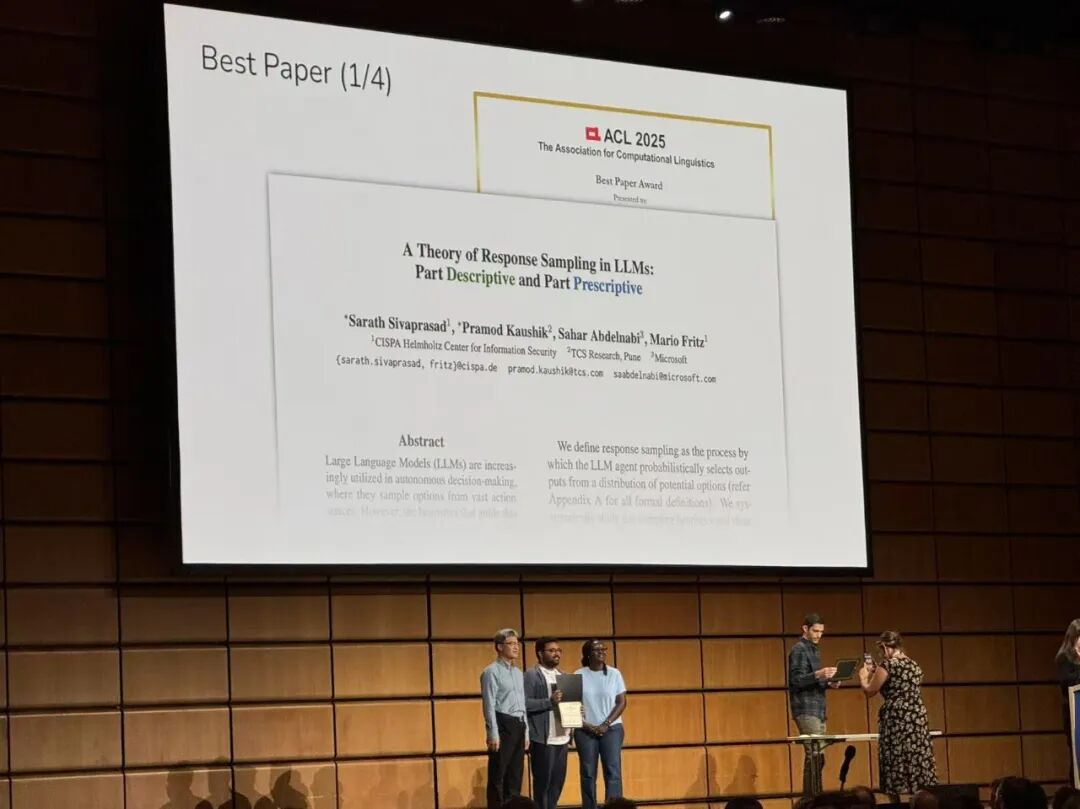
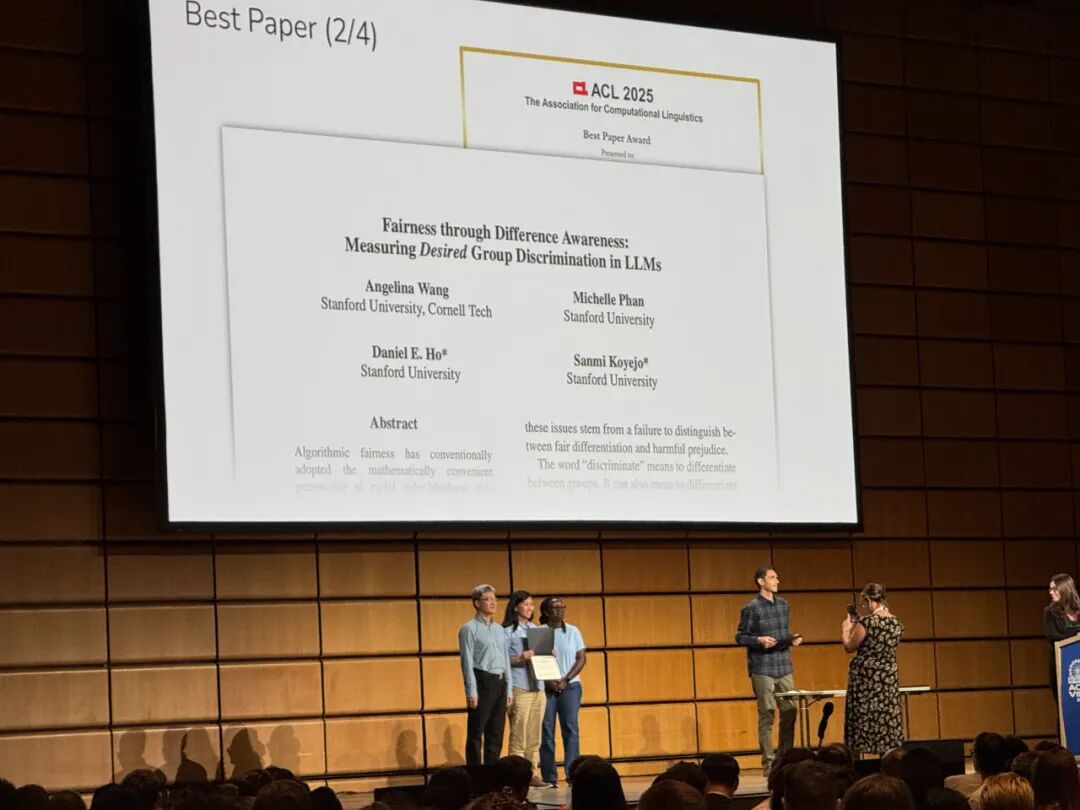
Among the four Best Papers at this year's conference, two went to DeepSeek (with Wenfeng Liang as a co-author) and Yaodong Yang's team at Peking University. The other two were awarded to teams from CISPA Helmholtz Center for Information Security & TCS Research & Microsoft, and Stanford University & Cornell Tech. Paper 1: A Theory of Response Sampling in LLMs: Part Descriptive and Part Prescriptive
- Authors:
$2
- Affiliations:
$2
- Paper URL:
$2
Abstract: Large language models (LLMs) are increasingly deployed for autonomous decision-making, sampling options from vast action spaces. Yet the heuristics guiding this sampling process remain underexplored. This team investigates such sampling behavior and shows that its underlying heuristics mirror those of human decision-making: composed of descriptive components of concepts (reflecting statistical norms) and normative components (implicit ideal values encoded in LLMs). The team demonstrates that the deviation of samples from statistical norms toward normative components consistently exists across concepts in various real-world domains, including public health and economic trends. To further illuminate this theory, the team proves that conceptual prototypes in LLMs are influenced by normative standards, analogous to human concepts of "normality." Through case studies and comparisons with human research, the team shows that in real-world applications, the shift of samples toward ideal values in LLM outputs can lead to significant decision-making biases, raising ethical concerns. Paper 2: Fairness through Difference Awareness: Measuring Desired Group Discrimination in LLMs
- Authors:
$2
- Affiliations:
$2
- Paper URL:
$2
Abstract: Algorithmic fairness has traditionally adopted a mathematically convenient perspective of racial colorblindness (i.e., treating all groups the same). However, this team argues that in a range of important contexts, group difference awareness is crucial. For example, in legal contexts and harm assessments, distinguishing between different groups may be necessary. Thus, unlike most fairness research, they study fairness through the lens of treating people differently — when contextually appropriate. The team first introduces an important distinction between descriptive (fact-based), normative (value-based), and relevance (association-based) benchmarks. This distinction matters because each category requires separate interpretation and mitigation tailored to its specific characteristics. They then propose a benchmark suite comprising eight distinct scenarios with 16,000 questions total, enabling evaluation of difference awareness. Finally, the study presents results from ten models showing that difference awareness is a distinct dimension of fairness, and that existing bias mitigation strategies may backfire. Paper 3: Language Models Resist Alignment: Evidence From Data Compression
- Paper URL:
$2
- Project URL:
$2
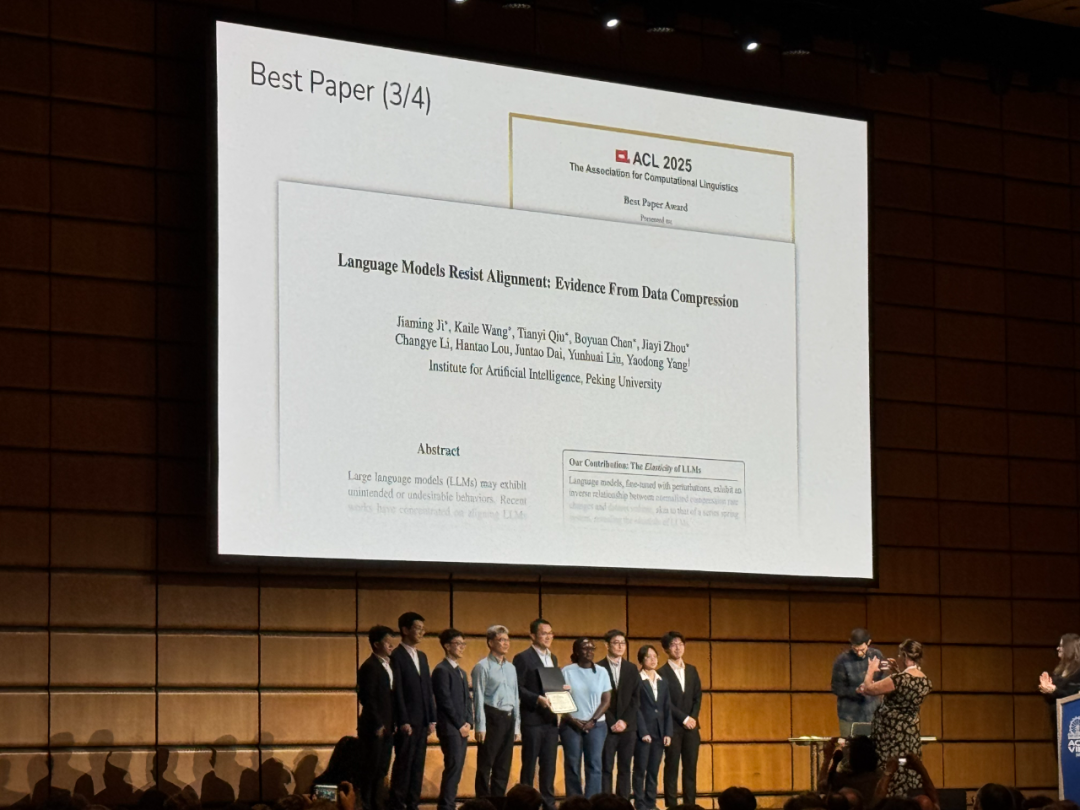
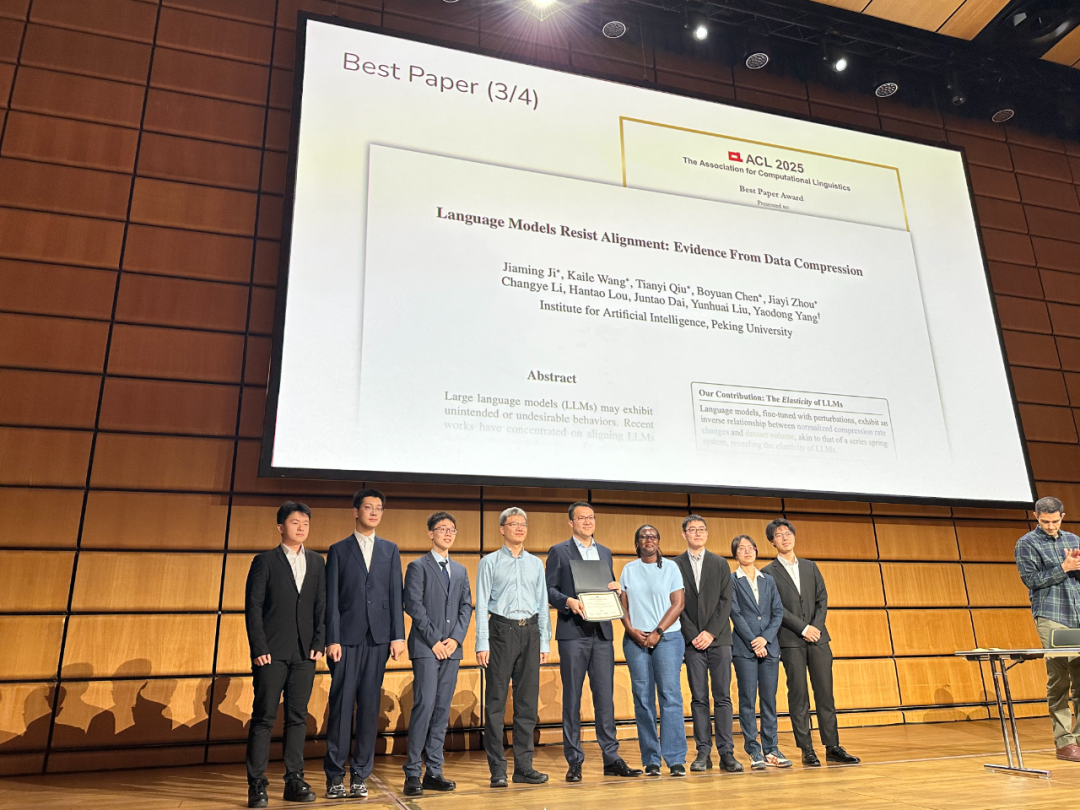
This paper presents, for the first time, systematic theoretical and experimental evidence revealing that large language models are not blank slates that can be arbitrarily shaped. Their parameter structures contain an elastic mechanism — originating from the pre-training phase and possessing structural inertia that drives distributional regression — causing models to potentially snap back to their pre-trained state after fine-tuning, thereby resisting newly imparted human instructions and producing alignment-resistant behavior. This means alignment is far more difficult than anticipated: post-training resources and compute may not only fail to decrease but could require levels comparable to or even exceeding those of pre-training. The paper notes that larger model scale and more thorough pre-training yield stronger elasticity and higher rebound risk during alignment. In other words, currently effective alignment methods may remain superficial and shallow; achieving robust alignment that penetrates deep into internal model mechanisms remains a formidable challenge. This finding poses serious implications for AI safety and alignment: models may not merely fail to learn but may feign having learned, presenting new difficulties for the pre-training and post-training fine-tuning alignment processes of current LLMs, VLMs, and VLAs. ACL 2025 reviewers and the conference chair highly recognized this research. They agreed that the paper's concept of "elasticity" breakthrough reveals the resistance and rebound mechanisms of large language models during alignment, providing new theoretical perspectives and solid foundations for the long-standing problem of alignment fragility. Area chairs further noted that the paper bridges compression theory, model scalability, and safety alignment, featuring rigorous empirical work, deep theoretical insights, and far-reaching governance and security implications.
The (independent) corresponding author is Dr. Yaodong Yang, currently a research fellow at the Peking University Institute for Artificial Intelligence, chief scientist of the PKU–Lingchu Intelligence Joint Laboratory, and a BAAI scholar (head of large model safety). He graduated from the University of Science and Technology of China, then earned his master's and doctoral degrees from Imperial College London and University College London, and previously served as an assistant professor at King's College London.
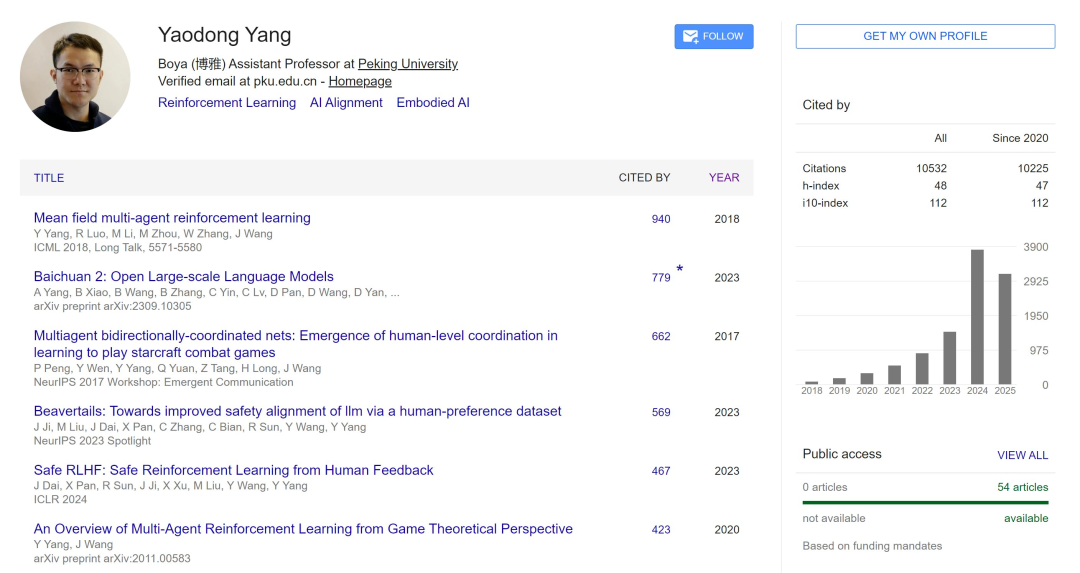
Dr. Yang's research focuses on safe agent interaction and value alignment, spanning reinforcement learning, AI alignment, and embodied intelligence. He has open-sourced RL toolkits including HARL, MARLlib, MAlib, TorchOpt, and Omnisafe. He has published over 100 papers in top AI conferences and journals, with more than 10,000 Google Scholar citations. Since 2022, his publication count ranks second among PKU AI scholars on CSRanking. He was a Best Paper finalist at ICCV'23, received the Best System Paper Award at CoRL'20, the Most Influential Paper Award at AAMAS'21, and won the NeurIPS'22 Robot Dexterity Competition. He also led a Chinese team to publish the first multi-agent reinforcement learning algorithm in Nature Machine Intelligence. He has led alignment work for Baichuan2, Pengcheng Mind 33B, and Hong Kong's HKGAI large models, with carbon materials LLM work published in Cell subsidiary Matter. He currently serves as area chair for ICML, ICLR, NeurIPS, AAAI, IJCAI, AAMAS, and IROS, and as associate editor for Neural Networks and Transactions on Machine Learning Research. As a company centered on VLA and reinforcement learning, focused on general-purpose embodied intelligence models, Lingchu Intelligence has consistently prioritized both research and engineering. From its founding, it established an embodied intelligence joint laboratory with Peking University, continuously deepening its work on VLA models, reinforcement learning, and task alignment to build a full-stack research ecosystem spanning algorithm theory, model training, and real-world validation. This ACL 2025 Best Paper award represents not only high recognition of Joint Laboratory Chief Scientist Dr. Yaodong Yang's long-term research contributions in AI safety and reinforcement learning, but also demonstrates Lingchu Intelligence's leading position at the frontier of research and industrial practice.
Paper 4: Native Sparse Attention: Hardware-Aligned and Natively Trainable Sparse Attention
- Authors:
$2
- Affiliations:
$2
- Paper Link:
$2
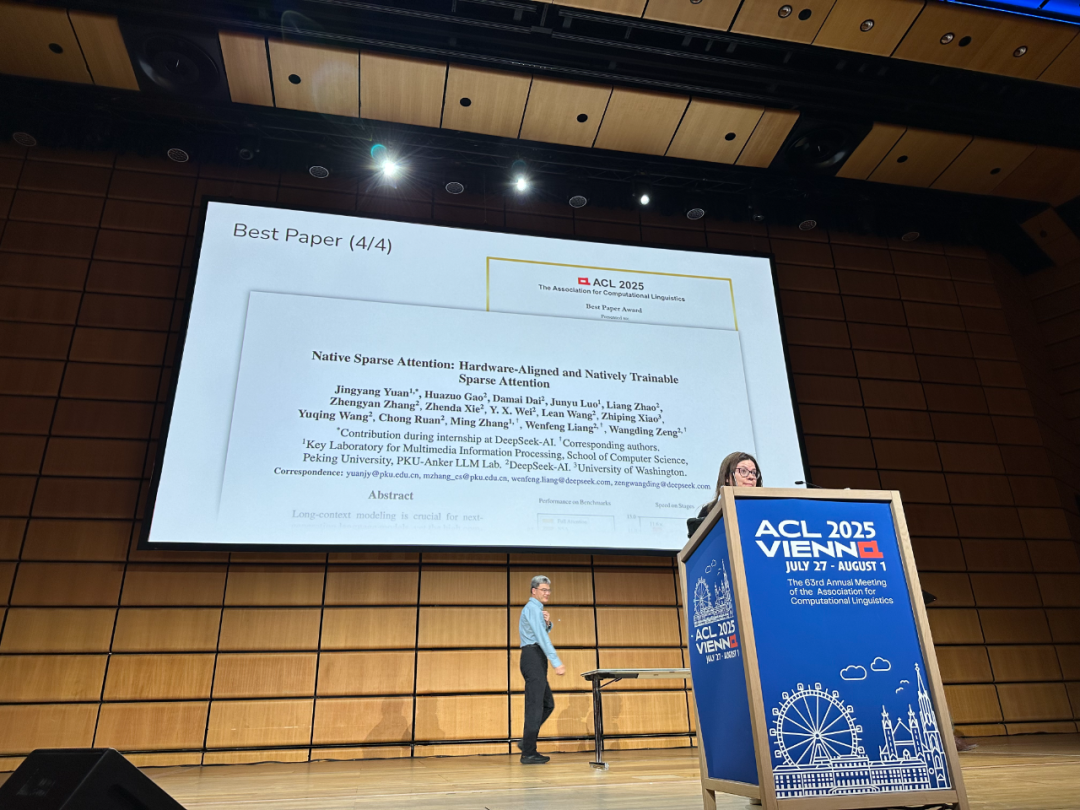
Paper Abstract: This paper, co-authored by Wenfeng Liang, founder of High-Flyer Quant and DeepSeek, introduces a novel attention mechanism — NSA. It is a natively trainable sparse attention mechanism designed for ultra-fast long-context training and inference, with hardware-aligned characteristics. Long-context modeling is a critical capability for next-generation large language models (LLMs), driven by diverse real-world applications including deep reasoning, repository-level code generation, and multi-turn autonomous agent systems. A natural approach to achieving efficient long-context modeling is to exploit the inherent sparsity of softmax attention: by selectively computing key query-key pairs, computational overhead can be significantly reduced while maintaining performance. Recent advances along this direction include various strategies: KV cache eviction methods, blockwise KV cache selection methods, and selection methods based on sampling, clustering, or hashing. Despite their promise, existing sparse attention methods often underperform in practical deployment. Many fail to achieve speedups commensurate with their theoretical gains; moreover, most methods focus primarily on the inference phase, lacking effective training-time support to fully exploit attention's sparse patterns.
To overcome these limitations, deploying effective sparse attention must address two critical challenges: hardware-aligned inference acceleration and training-aware algorithm design. These requirements are essential for achieving fast long-context inference or training in practical applications. Existing methods remain insufficient when considering both aspects.
Therefore, to enable more effective and efficient sparse attention, DeepSeek proposes NSA, a natively trainable sparse attention architecture integrating hierarchical token modeling. As shown in the figure below, NSA reduces per-query computation by organizing keys and values into temporal blocks and processing them through three attention pathways: compressed coarse-grained tokens, selectively retained fine-grained tokens, and a sliding window for local contextual information. The authors then implement specialized kernels to maximize practical efficiency.
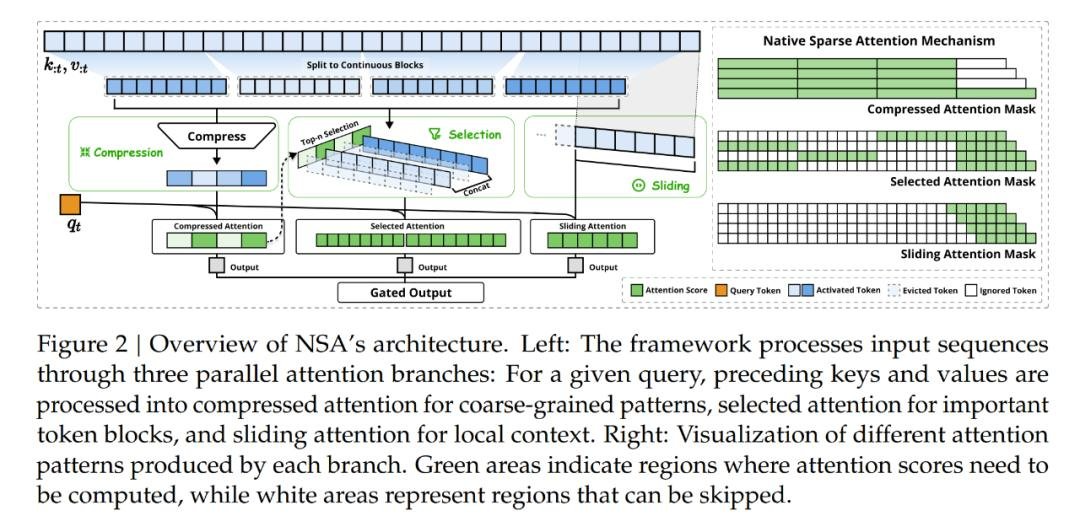
The research evaluates NSA through comprehensive experiments on real-world language corpora. Pre-training on a 27B-parameter Transformer backbone with 260B tokens, the authors assess NSA's performance on general language evaluation, long-context evaluation, and chain-of-thought reasoning evaluation. They further compare kernel speeds against optimized Triton implementations on A100 GPUs. Experimental results demonstrate that NSA achieves performance comparable to or better than the Full Attention baseline, while outperforming existing sparse attention methods. Additionally, NSA provides substantial acceleration in decoding, forward, and backward phases compared to Full Attention, with speedup ratios increasing as sequence length grows. These results validate that the hierarchical sparse attention design effectively balances model capability and computational efficiency.

ACL 2025 selected 26 Outstanding Papers, filling a full 6 slides:
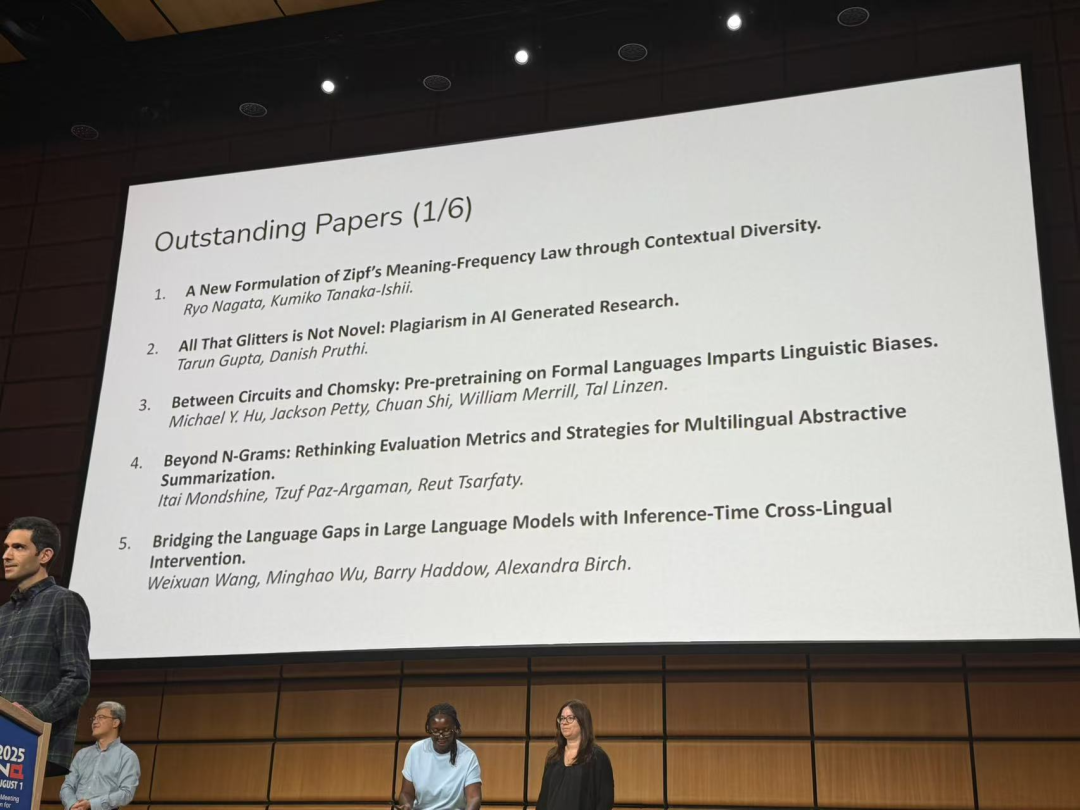
- A New Formulation of Zipf's Meaning-Frequency Law through Contextual Diversity
- All That Glitters is Not Novel: Plagiarism in AI Generated Research
- Between Circuits and Chomsky: Pre-pretraining on Formal Languages Imparts Linguistic Biases
- Beyond N-Grams: Rethinking Evaluation Metrics and Strategies for Multilingual Abstractive Summarization
- Bridging the Language Gaps in Large Language Models with Inference-Time Cross-Lingual Intervention
- Byte Latent Transformer: Patches Scale Better Than Tokens
- Capability Salience Vector: Fine-grained Alignment of Loss and Capabilities for Downstream Task Scaling Law
- From Real to Synthetic: Synthesizing Millions of Diversified and Complicated User Instructions with Attributed Grounding
- HALoGEN: Fantastic tiM Hallucinations and Where to Find Them
- HateDay: Insights from a Global Hate Speech Dataset Representative of a Day on Twitter
- IoT: Embedding Standardization Method Towards Zero Modality Gap
- IndicSynth: A Large-Scale Multilingual Synthetic Speech Dataset for Low-Resource Indian Languages
- LaTIM: Measuring Latent Token-to-Token Interactions in Mamba Models
- Llama See, Llama Do: A Mechanistic Perspective on Contextual Entrainment and Distraction in LLMs
- LLMs know their vulnerabilities: Uncover Safety Gaps through Natural Distribution Shifts
- Mapping 1,000+ Language Models via the Log-Likelihood Vector
- MiniLongBench: The Low-cost Long Context Understanding Benchmark for Large Language Models
- PARME: Parallel Corpora for Low-Resourced Middle Eastern Languages
- Past Meets Present: Creating Historical Analogy with Large Language Models
- Pre3: Enabling Deterministic Pushdown Automata for Faster Structured LLM Generation
- Rethinking the Role of Prompting Strategies in LLM Test-Time Scaling: A Perspective of Probability Theory
- Revisiting Compositional Generalization Capability of Large Language Models Considering Instruction Following Ability
- Toward Automatic Discovery of a Canine Phonetic Alphabet
- Towards the Law of Capacity Gap in Distilling Language Models
- Tuning Trash into Treasure: Accelerating Inference of Large Language Models with Token Recycling
- Typology-Guided Adaptation for African NLP

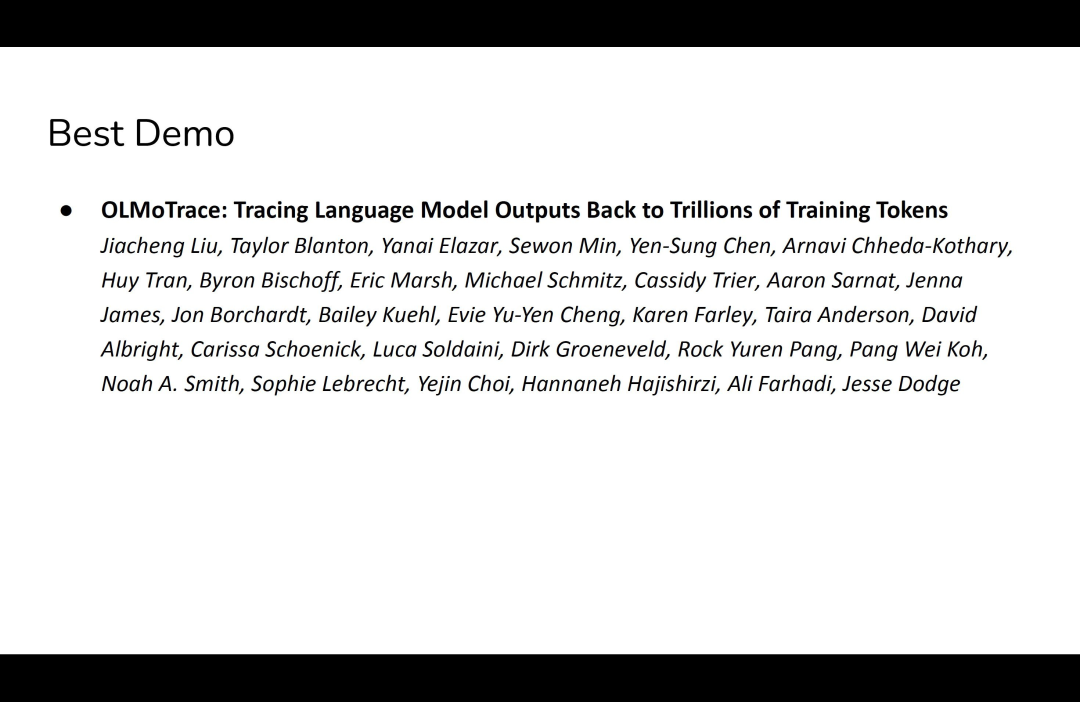
Best Paper: OLMoTrace: Tracing Language Model Outputs Back to Trillions of Training Tokens
-
Authors:
-
Affiliations:
-
Link:
Introduction: The paper introduces OLMOTRACE — the first system capable of tracing language model outputs back to their complete, trillion-token-level training data in real time.

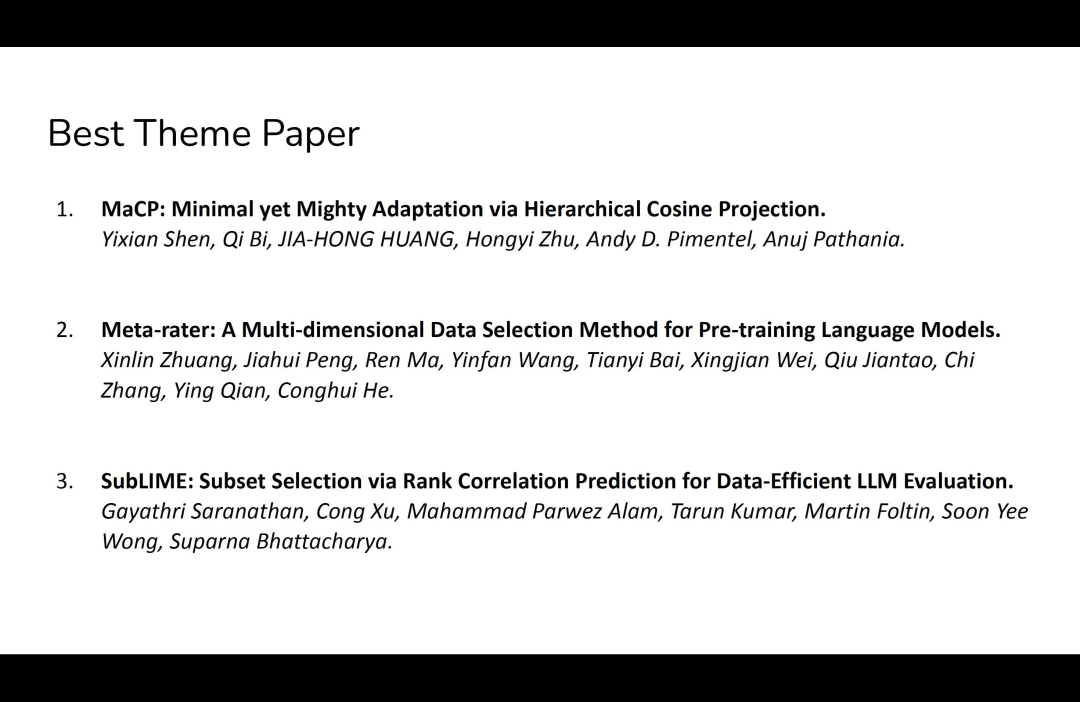
Paper 1: MaCP: Minimal yet Mighty Adaptation via Hierarchical Cosine Projection.
-
Authors:
-
Affiliations:
-
Link:
Introduction: This paper proposes MaCP, a new adaptation method — Minimal yet Mighty adaptive Cosine Projection — that achieves remarkable performance when fine-tuning large foundation models with minimal parameters and memory.
Paper 2: Meta-rater: A Multi-dimensional Data Selection Method for Pre-training Language Models
-
Authors: $2
-
Affiliations: $2
-
Link: $2
Introduction: The paper proposes measuring data quality across four dimensions: expertise, readability, reasoning depth, and cleanliness. It further introduces Meta-rater, a multi-dimensional data selection method that integrates these dimensions with existing quality metrics through learned optimal weights.
Paper 3: SubLlME: Subset Selection via Rank Correlation Prediction for Data-Efficient LLM Evaluation
-
Authors: $2
-
Affiliations: $2
-
Link: $2
**Introduction: The rapid expansion of large language models and NLP datasets has made exhaustive benchmarking computationally infeasible. Inspired by elite competitions like the International Mathematical Olympiad — where a small number of carefully designed problems suffice to distinguish top performers — the paper proposes SubLIME, which reduces evaluation costs by 80% to 99% while preserving ranking fidelity.

ACL 2025 awarded two Best Papers from TACL, as follows:
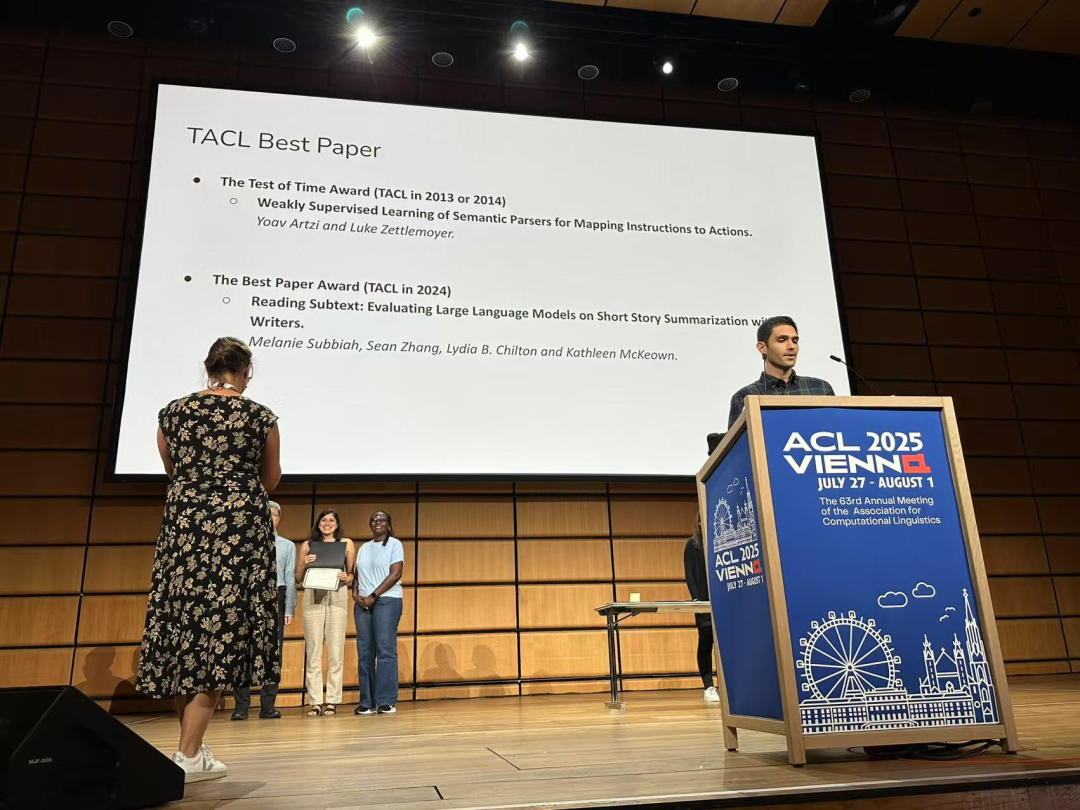
Paper 1: Weakly Supervised Learning of Semantic Parsers for Mapping Instructions to Actions.
-
Authors: $2
-
Affiliations: $2
-
Paper Link: $2
**Introduction: The context in which language appears provides powerful signals for learning its meaning. This paper demonstrates how to exploit this in an embodied CCG semantic parsing approach that learns a joint model of meaning and context for interpreting and executing natural language instructions, applicable to various types of weak supervision.
Paper 2: Reading Subtext: Evaluating Large Language Models on Short Story Summarization with Writers.
-
Authors: $2
-
Affiliations: $2
-
Paper Link: $2
Introduction: This paper evaluates how current mainstream large language models (LLMs) perform on the challenging task of summarizing short stories — a task involving longer texts that often contain subtle subtext or disrupted timelines. The study conducts both quantitative and qualitative analyses, comparing GPT-4, Claude-2.1, and LLaMA-2-70B. The findings reveal that all three models exhibit factual errors in over 50% of summaries, and struggle with detailed content and understanding complex subtext.

This year, ACL announced two Test-of-Time awards: the 25-Year ToT Award (2000) and the 10-Year ToT Award (2015).
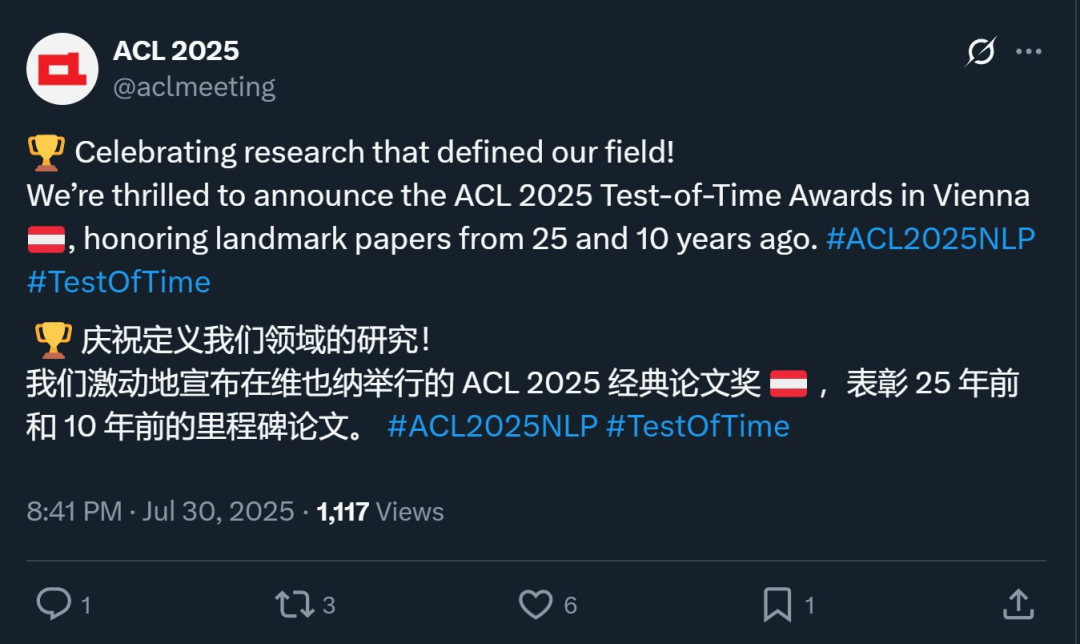
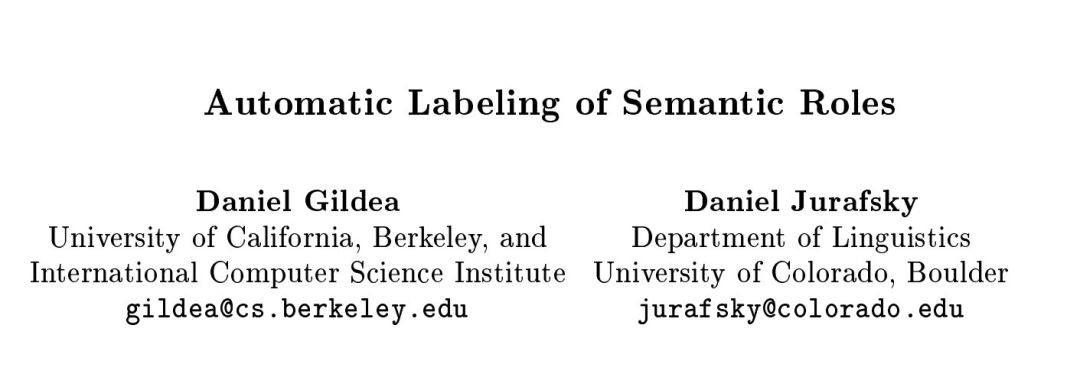
25-Year Test-of-Time Award (from ACL 2000): Automatic Labeling of Semantic Roles
-
Authors: $2
-
Affiliations: $2
-
Address: $2
This paper proposes a system for identifying the semantic relations or roles that sentence constituents play within semantic frames. The system extracts various lexical and syntactic features from parse trees and uses manually annotated training data to build statistical classifiers. In its official announcement, ACL called this a foundational paper that established semantic role labeling and subsequent research. The paper has been cited 2,650 times.
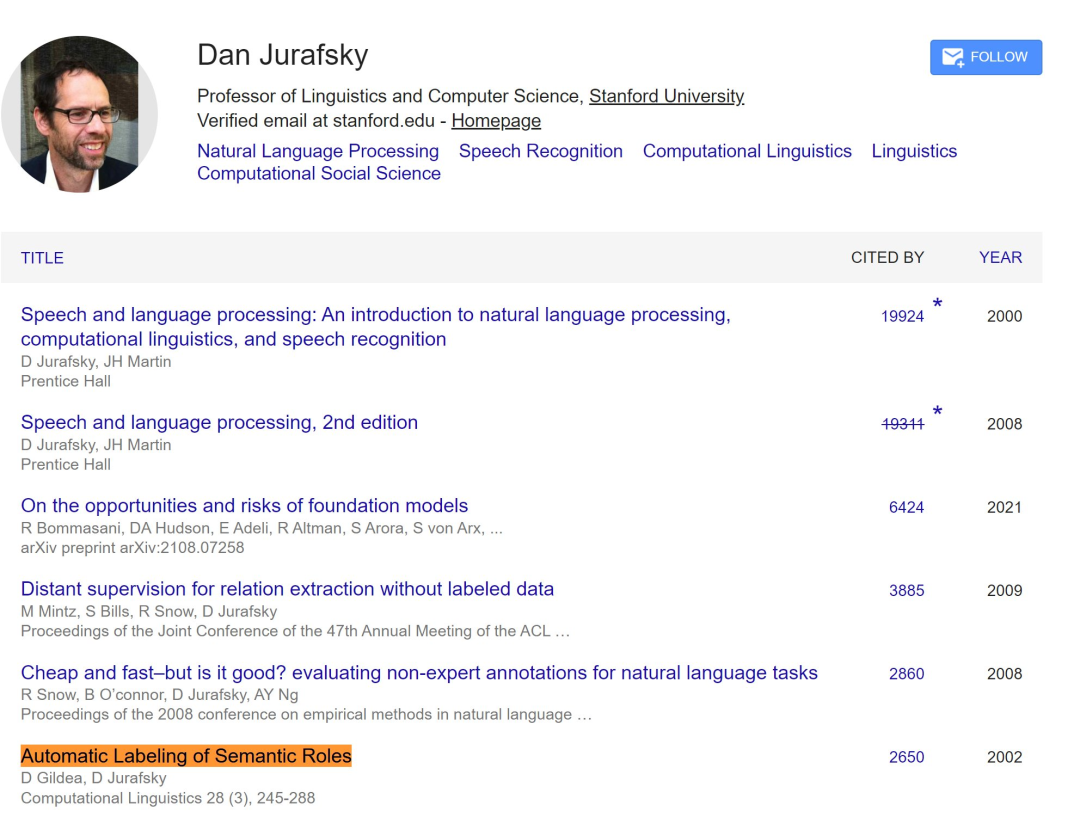
The paper's two authors — Daniel Gildea is now a professor in the Department of Computer Science at the University of Rochester; Daniel Jurafsky is a professor of Linguistics and Computer Science at Stanford University and a towering figure in natural language processing. His book Speech and Language Processing, co-authored with James H. Martin, has been translated into more than 60 languages and is one of the most classic textbooks in the global NLP field.
10-Year Test-of-Time Award (from EMNLP 2015): Effective Approaches to Attention-based Neural Machine Translation
-
Authors: $2
-
Affiliations: $2
-
Address: $2
This paper was written by the renowned Christopher D. Manning's team. ACL officially called it a landmark work on neural machine translation and attention mechanisms.
At the time, attention mechanisms had already been used to improve neural machine translation by selectively focusing on parts of the source sentence during translation. However, little work had explored effective architectures for attention-based neural machine translation. This paper studied two classes of simple yet effective attention mechanisms: a global approach — attending to all source words at all times — and a local approach — attending to only a subset of source words at a time. The authors validated both methods on the WMT English-German bidirectional translation task. Using local attention, they achieved a 5.0 BLEU point improvement over a non-attentional system that already incorporated known techniques such as dropout. Their ensemble of models with different attention architectures set a new state-of-the-art result on the WMT'15 English-to-German translation task, reaching 25.9 BLEU — a 1.0 BLEU point improvement over the best system at the time, which combined neural machine translation with an n-gram reranker.
The global and local attention mechanisms proposed in this paper simplified Bahdanau's complex structure and introduced the "dot-product attention" computation, laying the groundwork for the later Q/K/V dot-product similarity calculation.
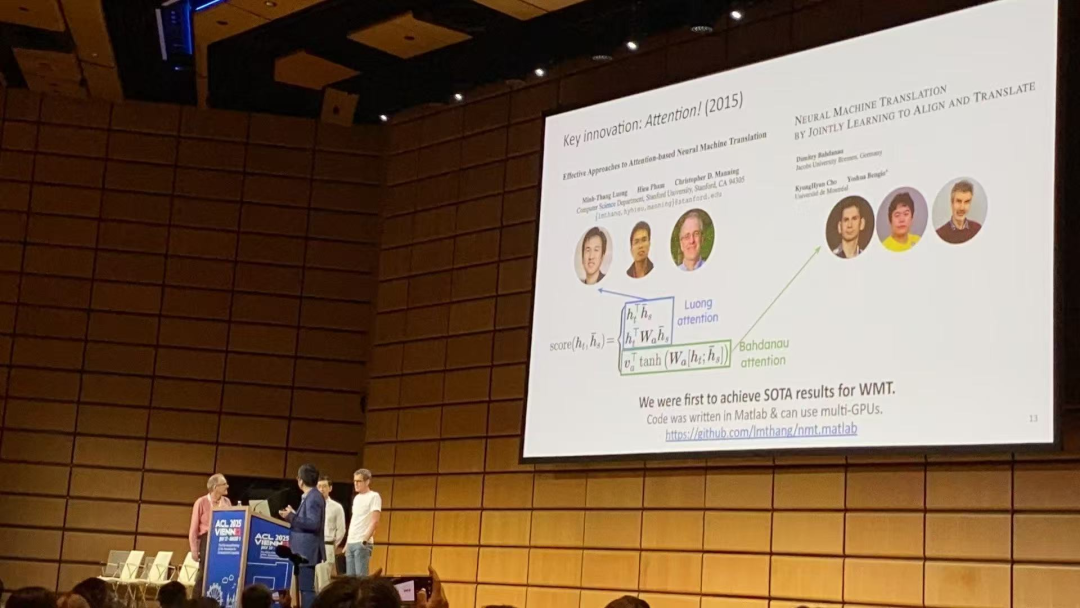
To date, the paper has been cited more than 10,000 times. First author Minh-Thang Luong earned his PhD from Stanford University, where he was advised by Stanford professor Christopher Manning, and is now a research scientist at Google.
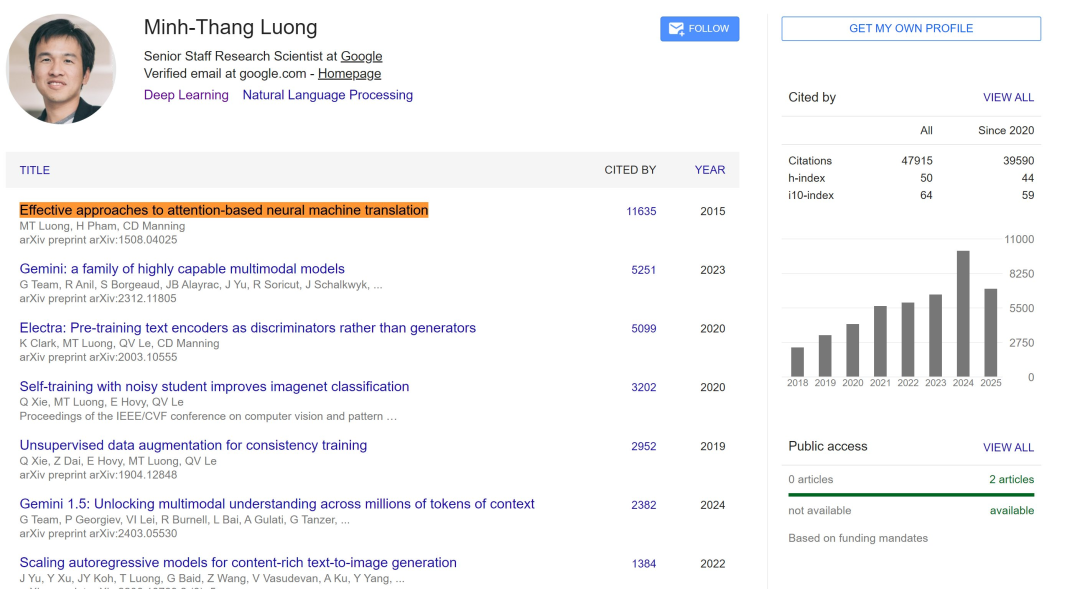
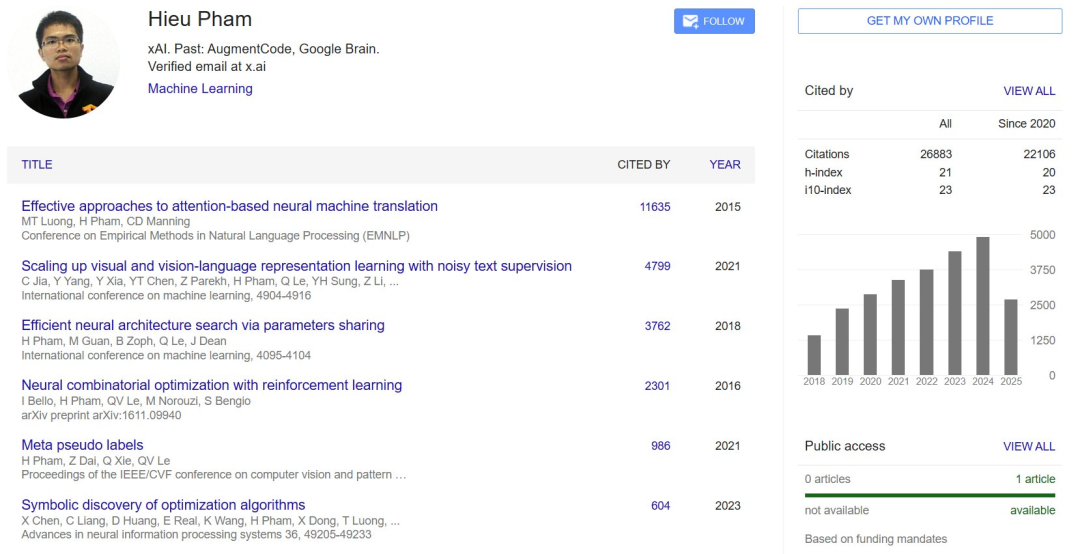
Second author Hieu Pham currently works at xAI; he previously worked at AugmentCode and Google Brain.
As for Professor Manning himself, little introduction is needed. This academic giant, with over 290,000 citations, has made numerous pioneering and foundational contributions to NLP and AI, while also making tremendous contributions to education and talent development.
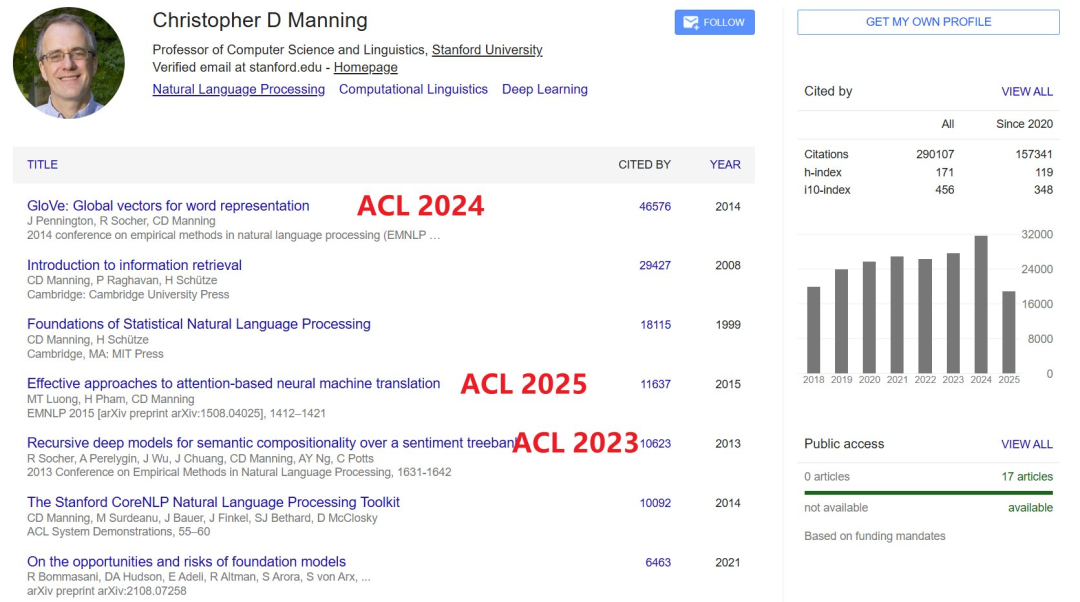
Incidentally, Manning's paper GloVe: Global Vectors for Word Representation also won the ACL 2024 Test-of-Time Award; another paper, Recursive Deep Models for Semantic Compositionality Over a Sentiment Treebank, received the ACL 2023 Test-of-Time Award. This marks the third consecutive year that Professor Manning has received an ACL Test-of-Time Award.

This year's ACL Lifetime Achievement Award went to Professor Kathy McKeown.
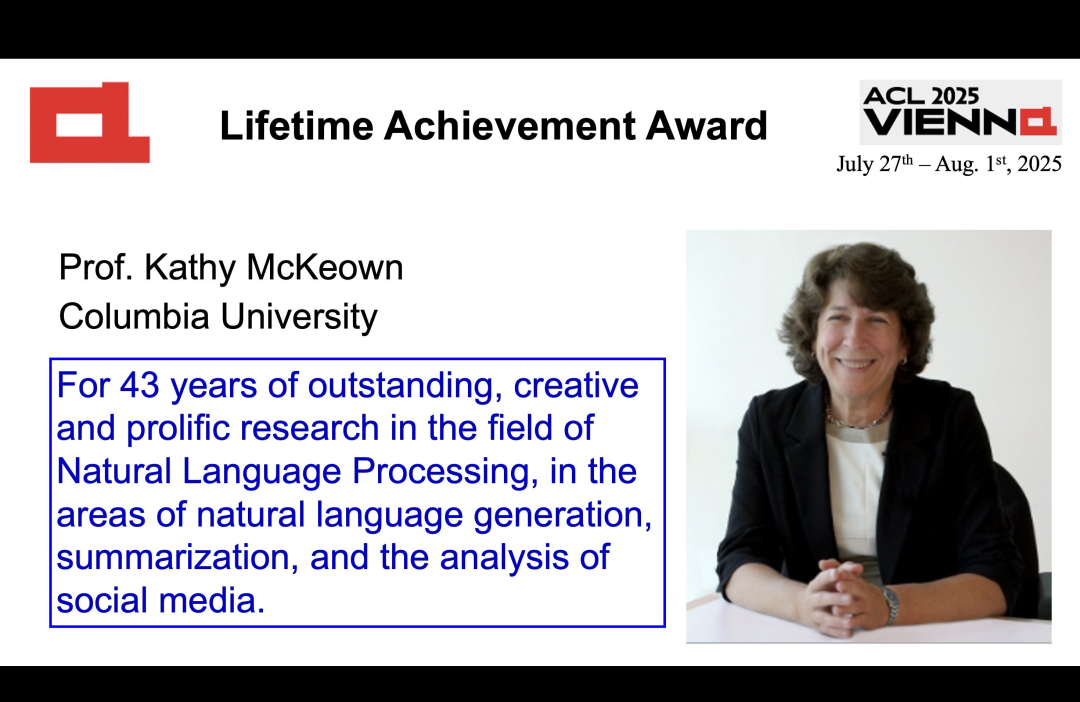
ACL's official announcement stated: "For 43 years, she has conducted outstanding, creative, and prolific research in natural language processing, with contributions spanning natural language generation, summarization, and social media analysis." Professor McKeown has not only laid the foundations of NLP but has also inspired generations of researchers through her vision, leadership, and mentorship.
McKeown is currently the Henry and Gertrude Rothschild Professor of Computer Science at Columbia University. She is also the founding director of Columbia University's Data Science Institute, serving as its director from July 2012 to June 2017.
From 1998 to 2003, she served as department chair of the School of Engineering and Applied Science, and later spent two years as associate dean for research.
McKeown received her PhD in Computer Science from the University of Pennsylvania in 1982 and has been on the faculty at Columbia University ever since. Her research interests include text summarization, natural language generation, multimedia explanation, question answering, and multilingual applications.
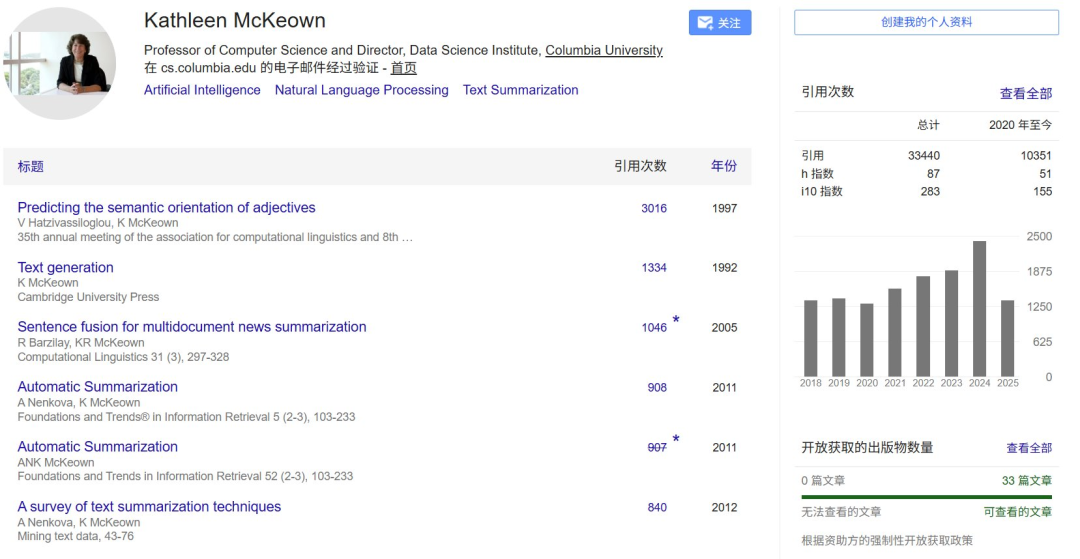
According to Google Scholar, Professor McKeown's total citations now exceed 33,000.

ACL 2025 also presented a Distinguished Service Award, honoring individuals who have made outstanding and sustained contributions to the computational linguistics community.
This year's recipient is Julia B. Hirschberg, professor of computer science at Columbia University.
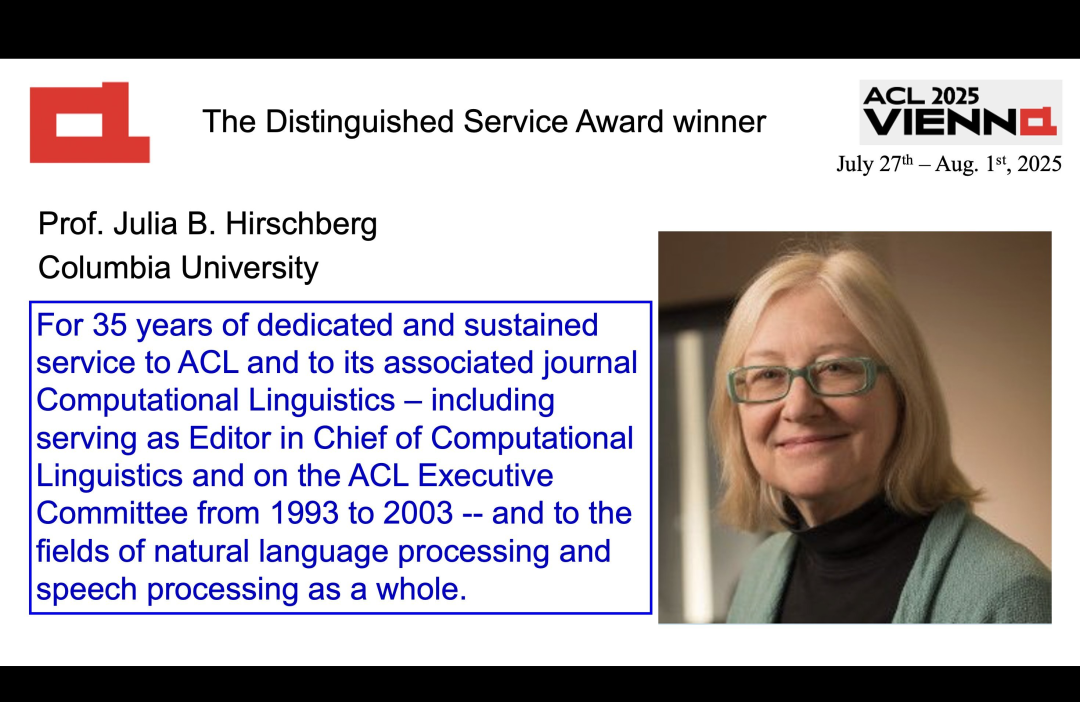
ACL wrote: "For 35 years, she has dedicated herself to serving ACL and its associated journal Computational Linguistics (including serving as editor-in-chief of Computational Linguistics and as a member of the ACL Executive Committee from 1993 to 2003), while also making exceptional contributions to natural language processing and speech processing.