BlueRun Ventures Headlines | BioMap's Yue Song and 10 Other Experts Named to "World's Top 2% Scientists" List
Continuously searching for new battlegrounds where AI can truly shine
Stanford University recently released its 2022 "World's Top 2% Scientists" list, with 11 scientists from BlueRun Ventures portfolio company BioMap making the cut.
As BioMap's Series A investor, BlueRun Ventures continues to seek out and support bold startups redefining the frontiers of life sciences and AI. This August, BioMap also partnered with fellow BlueRun portfolio company Luchen Tech to jointly develop one of the industry's most advanced solutions — the open-source xTrimo Multimer model.
Stanford University recently published the 2022 "World's Top 2% Scientists" list. Eleven scientists from BlueRun Ventures portfolio company BioMap were selected, indicating these scholars hold significant global influence in their respective research fields.
The list covers two categories: "Career-long Impact" and "Single-year Impact." BioMap Chief AI Scientist Dr. Le Song was named in both for his substantial contributions to artificial intelligence.
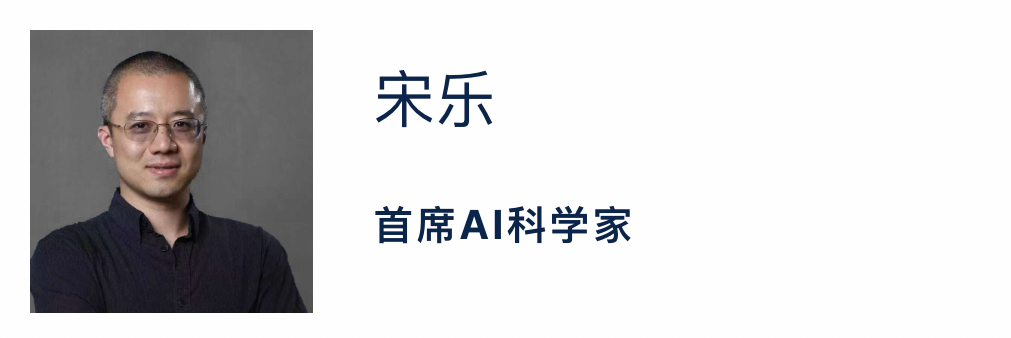
Dr. Le Song is a renowned expert in machine learning and graph deep learning. He previously served as a tenured professor at Georgia Tech's College of Computing and deputy director of its Machine Learning Center, head of the Machine Learning Department at UAE's MBZUAI, head of Ant Group's deep learning team (P10), and researcher at Alibaba's DAMO Academy. He has also served on the board of the International Machine Learning Society and brings extensive experience in AI algorithms and engineering.
Since 2008, Dr. Song has conducted bio-computation research at CMU, applying machine learning to target discovery and drug design with a series of breakthrough results. He has received Best Paper awards at major machine learning conferences including NeurIPS, ICML, and AISTATS. In community service, he has served as area chair for leading AI conferences including NeurIPS, ICML, ICLR, AAAI, and IJCAI, and will serve as General Chair for ICML 2022. He is also an associate editor for peer-reviewed journals JMLR and IEEE TPAMI.
At BioMap, he leads the team developing and iterating xTrimo, the world's first cross-modal pre-trained model system for biology.
This large-scale AI model system can represent multi-level biological problems spanning individual proteins, protein-protein interactions, immune cells, and immune systems, providing powerful computational biology capabilities for developing immune-modulating protein drugs.
Additionally, multiple experts from BioMap's Immune Expert Committee and Scientific Advisory Board were also selected, including: Committee Chair Academician Chen Dong, committee member Bing Su (Director of Shanghai Institute of Immunology); Scientific Advisory Board Chair Academician Qimin Zhan, committee members Robert Gentleman (Founding Director of Harvard Medical School's Center for Computational Biomedicine), Zhihua Liu (Vice President of Cancer Hospital, Chinese Academy of Medical Sciences), Zemin Zhang (Researcher at Peking University's Biomedical Pioneering Innovation Center and Beijing Advanced Innovation Center for Genomics), Zhanguo Li (Director of Clinical Immunology Center at Peking University People's Hospital), Jian Zhang (Distinguished Professor at Shanghai Jiao Tong University), Jing Huang (PI at School of Life Sciences, Westlake University), Jianzhu Ma (Associate Professor at Peking University Institute for Artificial Intelligence), among others.
BioMap is China's first bio-computation engine-powered innovative drug R&D platform, founded by Baidu founder Robin Li in 2020.
The company is dedicated to combining cutting-edge AI and biotechnology to build a high-throughput wet-dry closed-loop bio-computation engine that models the complex patterns of proteins, immune cells, and immune systems, thereby developing entirely new protein drugs — "ImmuBot immune robots" that reprogram the immune system to treat dozens of immune-related diseases.
Currently, the company has established three R&D centers and over 10,000 square meters of high-throughput laboratories in Beijing, Suzhou, and Silicon Valley, assembling a professional team of hundreds led by multiple academicians and industry experts. Its multi-omics immune atlas with hundreds of billions of relationships, multi-modal bio-computation large model with over 100 billion parameters, and intelligent protein and immune system experimental simulator producing over 100 million data sets annually rank among the world's most advanced scientific installations. The company has launched over 30 proprietary drug development programs spanning various tumor immunology and autoimmune diseases, and established dozens of joint development projects with renowned domestic and international institutions through its Developer Excellence Program.
About the "World's Top 2% Scientists" List
The Stanford University World's Top 2% Scientists list is a globally influential project jointly produced by Elsevier and Stanford professor John P. A. Ioannidis's team, published on Elsevier's Mendeley Data platform. It provides the global academic community with a metric for measuring scientists' long-term research performance, offering a more objective and authentic reflection of scientific influence. Based on "career impact" and "annual impact," the list selects the world's top 2% of scientists from nearly 7 million researchers across 22 fields and 176 sub-fields. The list comprehensively evaluates scientists' research status and long-term performance.
Using the Scopus database, the list's primary indicators include: 1) total citations; 2) Hirsch H-index; 3) co-author adjusted Schreiber Hm-index; 4) single-authored papers; 5) single or first-authored papers; and 6) citations of single, first, or corresponding author papers. This edition used all Scopus author profiles as of September 1, 2022, with citation data updated through 2021.
Link to the latest list: https://elsevier.digitalcommonsdata.com/datasets/btchxktzyw
** ▶ Join BlueRun ◀**
** ▶ More Content ◀**



BlueRun Ventures was founded in Silicon Valley in 1998. BlueRun Ventures China was established in 2005 as a venture capital firm focused on early-stage startups.
Currently, BlueRun Ventures China manages multiple USD and RMB dual-currency funds with over RMB 15 billion in assets under management, making it one of China's largest early-stage funds. The firm invests primarily at Pre-A and Series A stages, covering hard tech and innovative interaction, enterprise technology, new consumer, and healthcare sectors. It has invested in over 150 startups, including Li Auto, Waterdrop, QingCloud, Guazi.com, Qudian, Songguo Mobility, Ganji.com, Energy Monster, Yuntone Semiconductor, Machenike, CloudSaints, Anxin Shield, BioMap, among others.
BlueRun Ventures has been ranked #1 on Zero2IPO's "China Top 30 Early-stage Investment Institutions" and ChinaVenture's "China Best Early-stage Venture Capital Firms TOP30," and was named among Preqin's Top 10 global VC fund managers for sustained high returns.
Additionally, BlueRun Ventures has received consecutive recognition from Forbes China, 36Kr, Cyzone, Caixin Media, CBNweekly, Jiemian, and other media outlets as "China's Best Early-stage Firm of the Year," "China's Top Venture Capital Firm," "Most Entrepreneur-friendly Early-stage Firm of the Year," and "Most Influential Early-stage Firm of the Year."