$2 Billion Startup SurgeTech's Debut in Embodied AI Is a Blockbuster: Zero Real-World Data, Zero-Shot, 98% First-Attempt Grasp Success Rate | BlueRun Ventures Family Headlines

Sudo Tech's Embodied Model #Sudo R1 Makes Its Debut
This morning, Sudo's official website published its first technical blog, formally introducing #Sudo R1, a fully self-developed hardware and software robotics system. Last September, BlueRun Ventures participated in Sudo Technology's Pre-A round. Six months later, Sudo made its first product debut with a near-100% first-attempt grasping success rate — a pleasantly surprising result.
What level can an embodied robot achieve when continuously grasping 100+ never-before-seen objects (transparent, metallic, soft) within 60 minutes?
A latest model has delivered a pleasantly surprising answer:
First-attempt grasping success rate of approximately 98%, with near-100% success within two attempts.
Moreover, the model driving this grasping test used not a single piece of real-robot data during training, fully committing to a pure simulation route.
This standout performance comes from an embodied intelligence company that has kept an extremely low profile but has received continuous backing from top-tier investors and industrial clients — Sudo Technology.
QbitAI has learned that Su Hao, who just returned to China to take up the position of Haoqing Distinguished Professor at Fudan University and Dean of the Institute of General Physical Intelligence, serves as Sudo Technology's Chief Technical Advisor, supporting the company's technical direction.
This morning, Sudo's official website published its first technical blog, formally introducing #Sudo R1, a fully self-developed hardware and software robotics system.
It adopts an integrated world model and reinforcement learning design, achieving near-100% Zero-shot success rates on key tasks without using any real-robot data — a first in the industry.
By now, you probably share my question:
In an industry困境 where real-robot data collection is costly and difficult to scale, how did #Sudo R1 achieve such stunning results?
Let's start with #Sudo R1's actual test performance.
As shown, #Sudo R1 continuously executed grasping tasks in this 60-minute, unedited video.
The video covers 200+ grasping tests across multiple categories of real-world "hard nuts": transparent, flexible, reflective, and irregularly shaped objects.
The test environment included varying lighting conditions (dark room, daylight, night scene lighting) and random physical disturbances:
Dynamic backgrounds (using TV screens to simulate various scenes):
Obstacle constraints:
Spatial constraints:
The team artificially created diverse environments and sudden situations,尽可能 simulating real-world task objects and working conditions found in daily life.
Without cherry-picking, zero-shot success rates approached 100%.
Theoretically, if you dropped a robot equipped with #Sudo R1 into any environment, it could directly pick and place objects with zero demonstration teaching~
I must emphasize that #Sudo R1's high success rate owes much to Sudo's chosen training approach.
The current mainstream embodied model approach is represented by PI (Physical Intelligence) and models under Generalist.
They typically rely on few-shot adaptation — requiring demonstration teaching for specific scenes, separate parameter tuning for each scene, and achieving high success rates only under limited environmental and object conditions.
Every approach has its trade-offs.
The downside is that once the environment or objects change, cross-scene transfer becomes difficult, necessitating re-collected data and retraining.
Or to put it another way, current mainstream embodied model training methods are essentially closer to "task optimization" rather than generalization in the more通俗 sense.
Sudo did not choose this route.
The team stated they "don't want to adapt to any specific scene," preferring instead to give the model general泛化 capabilities, achieving out-of-the-box results under zero-shot conditions.
Following this思路, Sudo embarked on a pure simulation data training path.
Thus, without real-robot data, without teleoperation, without human annotation, the team began training the model.
They also wanted to verify whether a "pure simulation training combined with zero real-robot data" approach could independently support the model's Sim2Real deployment path.
Now, #Sudo R1, this freshly baked model, tells us the answer is yes.
Meanwhile, #Sudo R1 also directly confronts two core bottlenecks in current embodied intelligence development.
First is the data supply problem.
Although teleoperation, human-viewpoint collection, and UMI — the current industry-mainstream real-robot data collection paths — are continuously optimizing cost and efficiency, none are particularly ideal when it comes to scaling.
Human, equipment, and time costs stack up, making data supply unable to grow linearly with computing power. So if real-robot data alone serves as the single foundation for model training, it will limit the ceiling of model capability improvement for a considerable time.
Second, and more fundamentally, real-robot data, while containing both visual and action information, is neither complete nor direct when it comes to dynamics.
Yet the importance of dynamics cannot be overlooked — it is one of the most core elements of the physical world.
If a model's depiction of dynamics is not precise, the physical interaction laws it learns will also struggle to achieve strong stability and generalization.
This is the root cause of why most embodied systems perform unstably in real environments and are difficult to scale.
Facing these two bottlenecks, Sudo's solution is to redefine the data paradigm, building a scalable path through the combination of data and models.
Objectively speaking, simulation data and real data are not substitutes for each other — each has its own advantages.
So the focus of thinking should not be limited to which is superior between simulation and real data, but should more carefully consider how to dynamically balance their proportions according to specific scenes to achieve optimal results.
In Sudo team's view, simulation data naturally contains complete physical interaction information, with significant advantages in cost and scalability, making it highly suitable for building the foundation of broad cognition and physical常识 for models.
Real-robot data, meanwhile, carries authentic noise, sensor errors, and complex environmental disturbances, providing key signals aligned with real-world scene distributions.
But considering its persistently high costs, such data is more suitable as a scarce resource for later-stage real-world scene alignment and effect calibration.
The crux of the problem lies in: at which stage of model training should simulation data be the main focus, and at which stage should the proportion of real-robot data be increased?
Finding the optimal solution to this question requires both sufficiently deep understanding of simulators and precise judgment of how simulation and real-robot data collaborate in different scenarios — capabilities that cannot be accumulated overnight.
Sudo's data system is built on high-fidelity simulators, naturally containing direct expression of physical dynamics, enabling models to learn generalizable physical laws and making it more suitable as a pre-training data engine for embodied models.
With the problem of multi-dimensional physical information data solved, the model architecture can truly unleash its power.
We have also learned that Sudo is currently the only team in the industry capable of systematically achieving an integrated world model and reinforcement learning design at the foundational model level.
This integrated architecture allows pure simulation training to independently support the model in crossing the complexity and uncertainty of the real world, achieving the near-100% zero-shot success rate mentioned at the beginning of this article.
Indeed, #Sudo R1 is a阶段性成果 of the combined effect of Sudo's underlying data approach and model architecture, simultaneously approaching production-grade standards across four dimensions: generalization, agility, robustness, and spatial intelligence.
It is no exaggeration to say it breaks the industry's long-standing fundamental skepticism toward the Sim2Real path.
#Sudo R1 is the first model Sudo has publicly released.
Achieving such results at its debut shows the team behind it is undoubtedly formidable.
Business registration information shows Shanghai Sudo Technology Co., Ltd. was established in May 2025. Company director Han Zheng is also co-founder and CEO.
Several Sudo investors told QbitAI that Han Zheng is a serial entrepreneur with multiple 0-to-1 and scaling experiences in AI and hardware products, having led teams to achieve global business and M&A exits multiple times.
Industry insiders evaluate him this way: "(Han Zheng is) a rare CEO in the embodied space who combines technical understanding with business experience, with solid product capabilities. As the embodied track increasingly becomes project-driven, the industry is optimistic that he will break this path dependency and push embodied intelligence toward true productization."
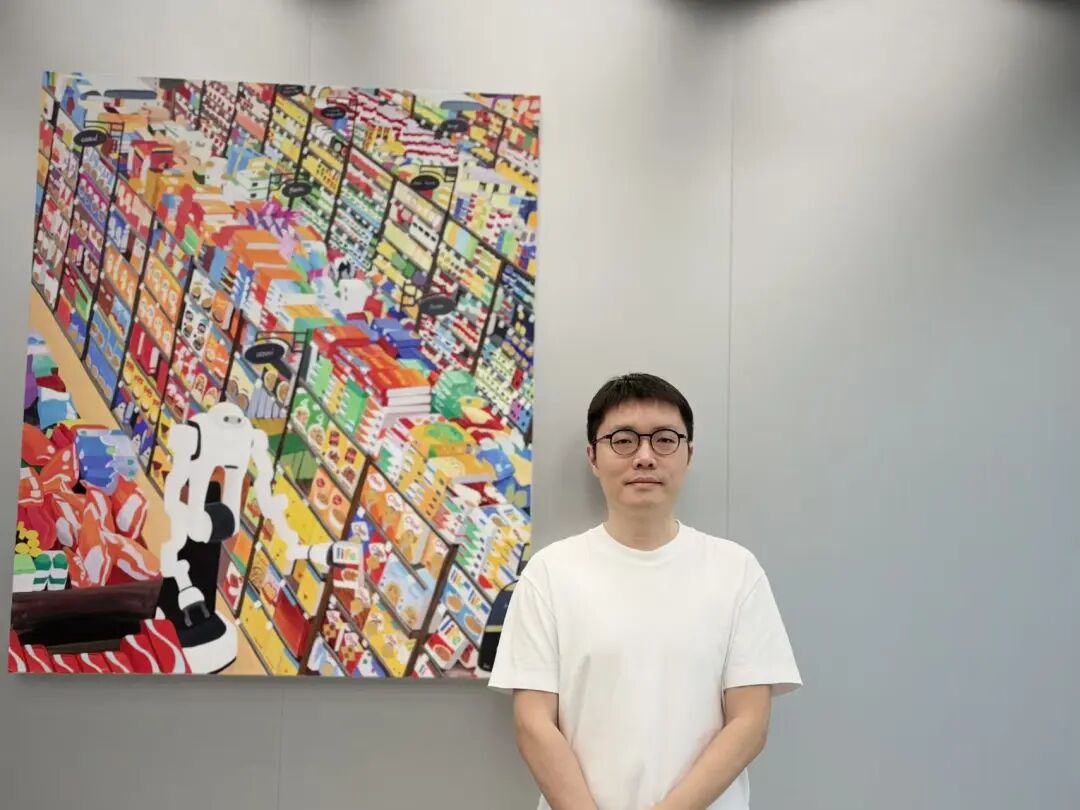
As mentioned at the beginning of this article, Fudan's Su Hao is Sudo's Chief Technical Advisor.
Friends familiar with the embodied intelligence field absolutely know this big name.
Su Hao studied under Professor Leonidas Guibas (member of three US National Academies), Academician Li Wei of the Chinese Academy of Sciences, Professor Harry Shum (member of both US National Academy of Engineering and UK Royal Academy), and Professor Fei-Fei Li (member of three US National Academies). He is not only one of the core creators of ImageNet but also led foundational 3D vision work including ShapeNet and PointNet.
Before returning to China, he was a tenured associate professor at UCSD and director of the Embodied Intelligence Laboratory; last week he officially announced his return to teach in China, taking up the position of Haoqing Distinguished Professor at Fudan University and Dean of the Institute of General Physical Intelligence.
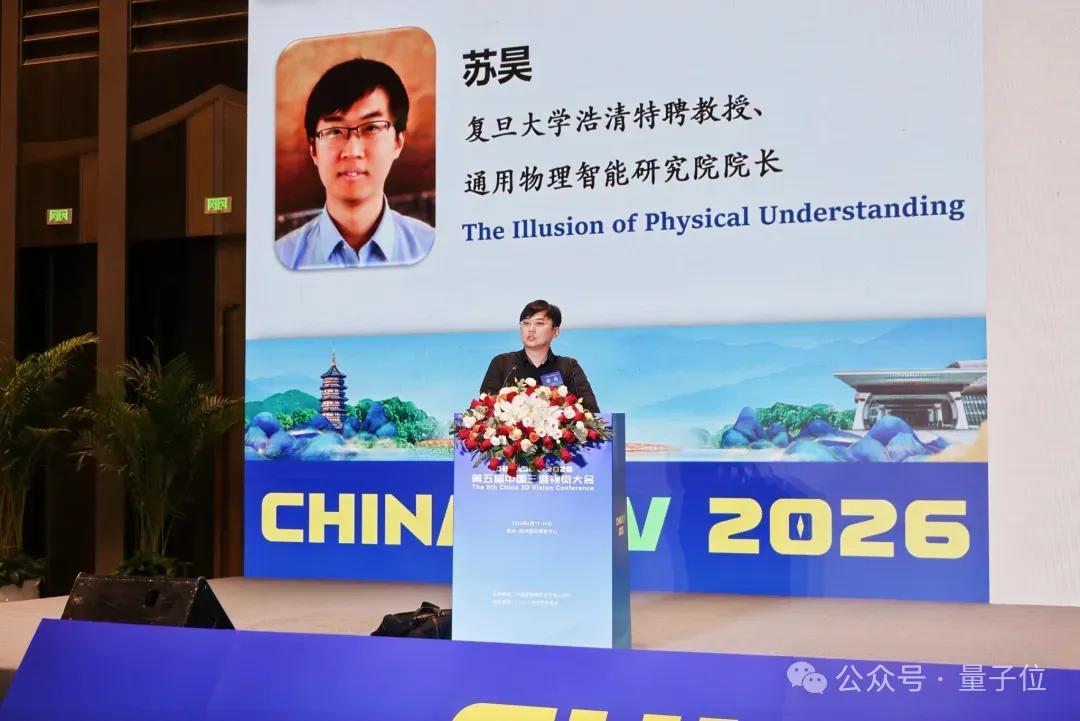
Currently, the company's Technical Lead Xu Zexiang is the former head of Adobe 3D Gen AI.
According to public information, he studied under Professor Ravi Ramamoorthi, an authority in graphics and UCSD Computer Science professor.
Xu Zexiang has long collaborated with Su Hao on research, jointly publishing multiple academically influential papers, forming highly consistent认知 on technical paths and core methodologies. Google Scholar shows his papers have been cited over 11,000 times. Meanwhile, Xu Zexiang also possesses deep industrial落地 and team management experience.
Additionally, we have learned that Sudo's hardware lead is Chen Runze, formerly an investor at Source Code Capital. It is revealed that during his investment career, he led the firm's bet on Unitree.
Zhang Xiaoheng serves as Sudo's Strategy Lead. Public information shows he previously worked at ABB, Huawei, and BlueRun Ventures, with dual experience in industry and investment, choosing to return to industry frontlines after investing in multiple star embodied intelligence and advanced manufacturing companies.
Furthermore, Sudo's current core team members include multiple backbone figures from the former Hillbot project.
Entrepreneurs, academics, investors, industry veterans... taken together, Sudo's core team has diverse backgrounds, with this composite configuration combining industrial实操, academic accumulation, capital视野, and industry experience.
Capital markets and industry have expressed affirmation of Sudo Technology from different perspectives.
On the capital side, although the company has maintained relatively low external exposure since its founding, QbitAI has verified from multiple sources that Sudo has continuously received recognition and support from industry-leading clients and global first-tier investment institutions.
The investor lineup is impressive, including CATL Puquan Capital, Alibaba, Hillhouse, China Life Private Equity Investment Company Limited, Oasis, Tencent, Ant Group, IDG, BlueRun Ventures, Digital Future, Futeng, Fudan Sci-Tech Innovation, and Yunhui Capital.
It is understood that Sudo has most recently completed a new funding round, with valuation exceeding $2 billion, and continues to receive support and participation from multiple leading and industrial institutions.
Notably, most institutions on this investor list have core advantages in long-term technology judgment and industrial depth understanding, with clear and consistent认知 regarding the building of general model capabilities (rather than short-term fitting under single scenes).

Meanwhile, Sudo's progress on the industrial side is also impressive.
We have newly learned that Sudo's model can complete preliminary deployment under zero-shot and high-success-rate capabilities without collecting client-sensitive data — it is precisely this key认知 that has gained higher recognition on the industrial side.
The company also plans to provide system interfaces and developer tools in a platformized manner, facilitating clients' rapid scene adaptation and system integration.
There are reports that Sudo, based on general model capabilities, is building the industry's first robotic system achieving multi-station coverage, enabling the same model to stably transfer between different stations and support rapid switching and continuous operation across multiple products.
Cross-station generalization capability is what supports flexible manufacturing needs. For actual production scenarios, the importance of this point goes without saying.
There are also reports that Sudo has already begun joint development with CATL across multiple core manufacturing scenarios, advancing the落地 verification of embodied intelligence systems around battery production and logistics links.
Sudo official website: https://www.sudo.ai/


BlueRun Ventures Completes New RMB 3.9 Billion Dual-Currency Fund Raise
BlueRun angel project Tashi Zhihang completes $455 million Pre-A round, building robots that "truly work, truly mass-produce" | BlueRun Family
China's Embodied Model Grabs Global #1! The Era of Human Data for Robots Arrives | BlueRun Family Headlines