Live from WAIC 2024: Has BlueRun Ventures' Portfolio Struck AI Gold Again?

New AI Product Drops
Recently, the 2024 World Artificial Intelligence Conference (WAIC 2024), a premier global tech event, was held in Shanghai, showcasing a concentrated display of the latest "AI+" innovative applications.
At what could be called the Met Gala of the tech world, BlueRun Ventures portfolio companies — Galaxy Universal, BioMap, Jishi Design, PPIO, Lanxin Technology, PowerLaw AI, and VITURE — were invited to participate, bringing cutting-edge technology demonstrations to attendees.
The BlueRun portfolio showcases covered general-purpose humanoid robots, industry vertical models, computing power, AIGC, smart hardware, enterprise services, and more. The vivid demonstrations of real-world applications gave participants a tangible glimpse of the massive changes AI is bringing, and earned BlueRun companies repeated recognition as "WAIC 2024's Hottest Booths."
Today, let's take a virtual tour to see what new AI hits the BlueRun family has unveiled —

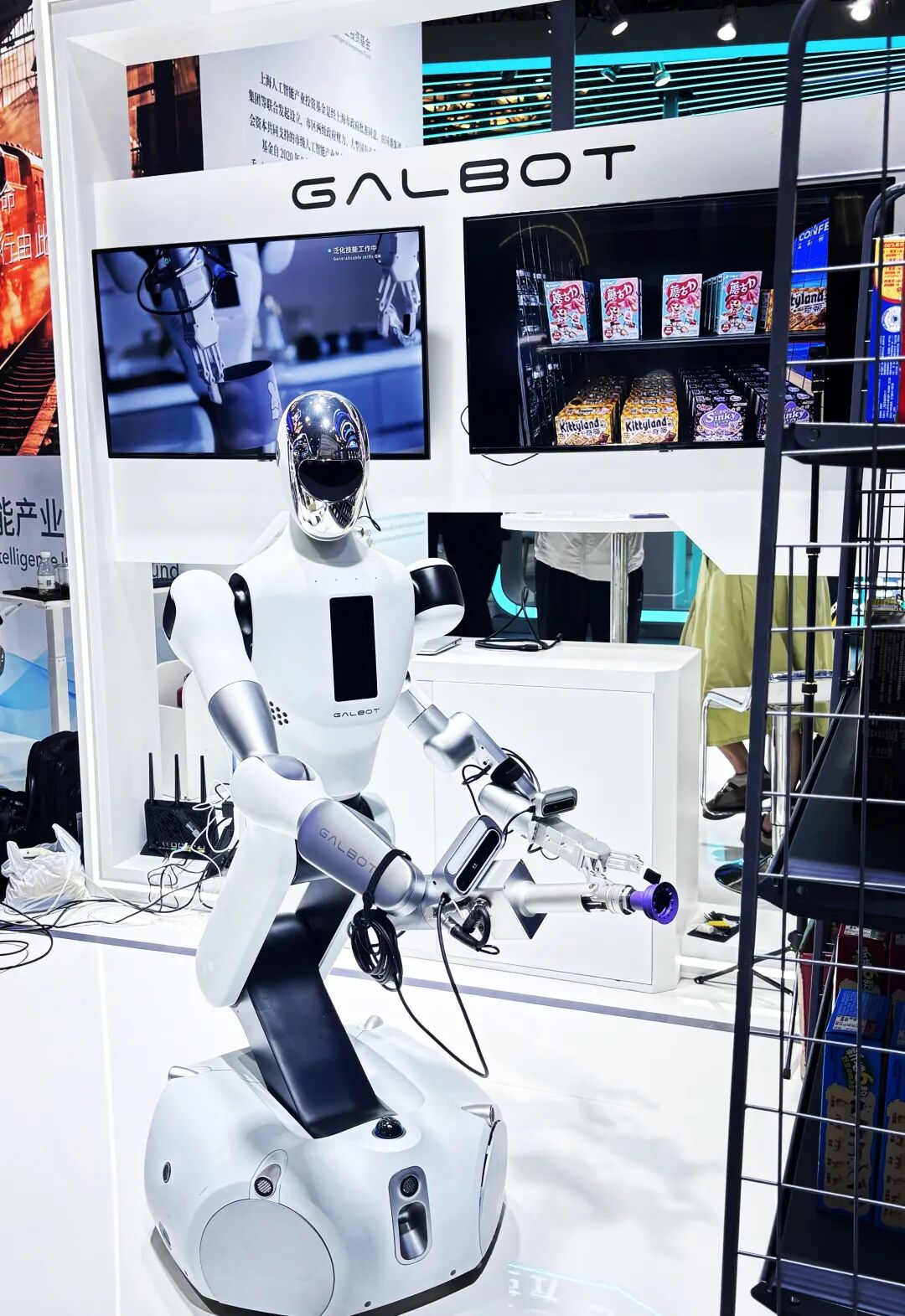
At this year's WAIC exhibition, Galaxy Universal unveiled its first-generation wheeled dual-arm general-purpose humanoid robot — Galbot, drawing significant attention from media and visitors who stopped to interact with it.
On the scene, we saw that Galbot is a 1.73m tall dual-arm wheeled humanoid robot with 71cm arm length and foldable legs. This design allows it to stably grasp objects on the ground in a "squatting" posture, while in standing mode it can reach up to 2.4 meters, giving it a larger operating range than humans. Its omnidirectional mobile chassis enables movement in any direction, making it especially suitable for navigating tight spaces.
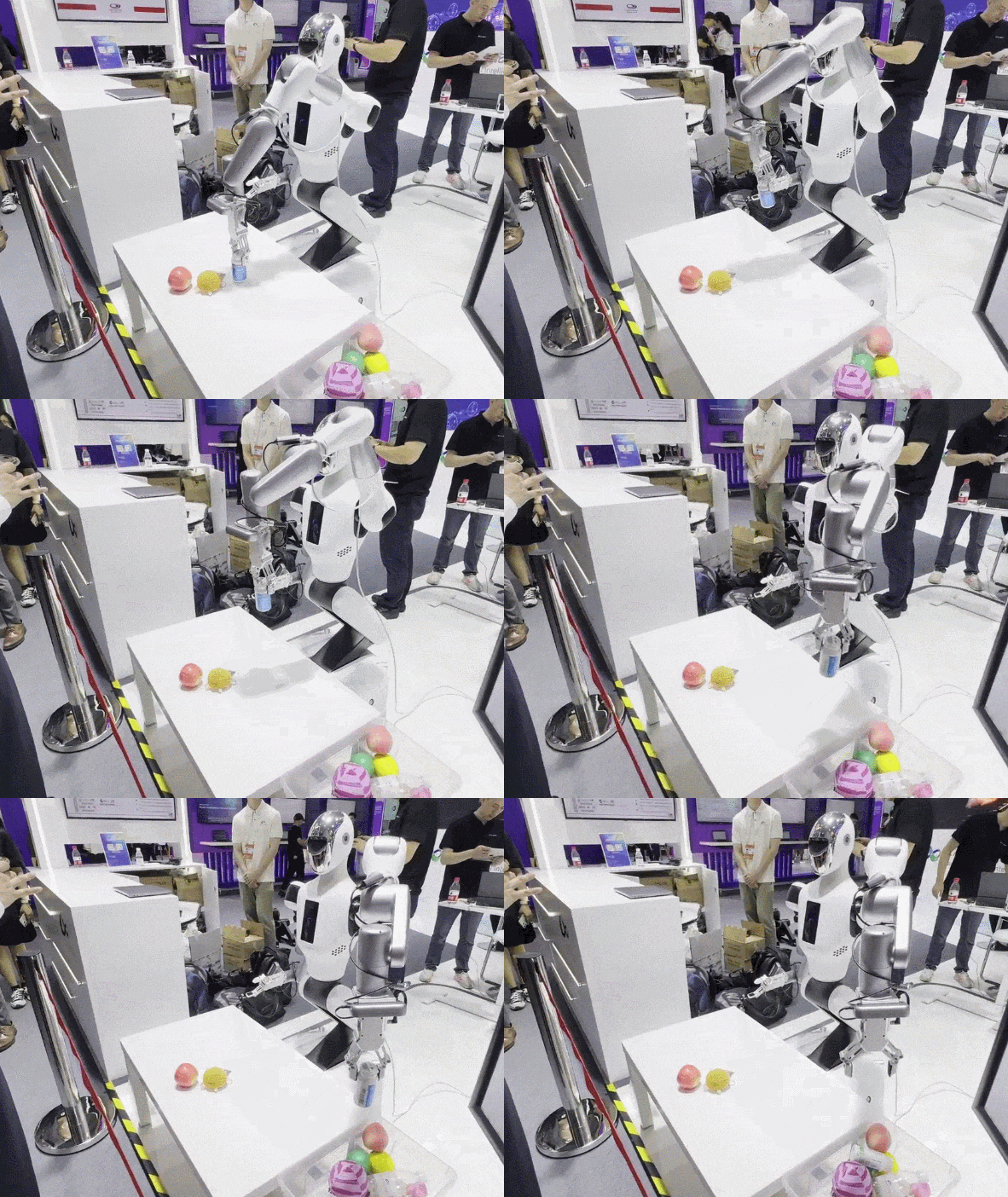
On site, various items of different sizes and shapes were placed on a table in front of Galbot. Upon receiving the command "clean up the desk," Galbot would collect any item on the table into a designated storage bin. Even water bottles and lipsticks handed over by onlookers could be grasped with precision. Staff explained that when faced with randomly placed transparent and highly reflective objects — widely recognized as challenging for robots — Galbot achieves a grasping success rate above 95%. It has also advanced to master generalized dexterous hand operations such as opening cabinets, opening drawers, and hanging clothes.
These capabilities are enabled by Galaxy Universal's separation of the "cerebrum layer" from the "cerebellum layer": the cerebrum leverages multimodal vision-language large models for general instruction understanding and scene perception, while the cerebellum handles various generalized robotic skills. After the cerebrum completes planning, it invokes cerebellum capabilities to drive the body in task execution.
For cerebellum skills, Galaxy Universal independently developed and synthesized tens of millions of scene-level data points and billions of grasping data points. Combining the cerebrum and cerebellum, Galaxy Universal developed Open6DOR, the world's first open-instruction six-degree-of-freedom pick-and-place large model system; NaVid, the world's first end-to-end video-based multimodal embodied large model; and SAGE, an operation large model system capable of reflection and improvisation. With the coordination of the cerebrum-cerebellum models, Galbot can already understand natural human language and interact with humans based on verbal instructions.

As a leading domestic AI large model-driven life science R&D platform, BioMap showcased its core technologies and latest achievements at this year's WAIC exhibition.
BioMap is China's first bio-computing technology-driven life science platform company, dedicated to building AI large models for the life sciences. It has constructed "xTrimo" (The Cross-Modal Transformer Representation of Interactome and Multi-Omics), a 100-billion-parameter cross-modal large model that stands as the world's largest life science language model to date, already serving hundreds of users including renowned multinational pharmaceutical companies such as Sanofi.
Going forward, BioMap will focus on cutting-edge protein application areas, providing AI large model technology and ecosystem empowerment to help research and industry teams achieve innovative R&D goals such as AIGP. It will also collaborate with global ecosystem partners to drive a series of innovation initiatives, engaging with multinational pharmaceutical executives, university scholars, and AI life science entrepreneurs to explore the practical applications, trends, and challenges of life science large models, jointly building a sustainable and thriving AI life science ecosystem.

The cloud-based UI design tool "Jishi Design" (Instant Design) showcased two main AI products at this year's event — Wegic, the world's first AI website designer and developer, and a1.art, an AI creative generation application.

On site, we found that Wegic is like a friend who simultaneously excels at website design and development, speaks dozens of languages fluently, and has an exceptionally good temper. Powered by GPT-4o, it helps ordinary people with no technical skills build websites — not just efficiently, with a three-page official website featuring interactions and animations completed in one minute; but also intelligently, understanding vaguely described requirements. Most importantly, it's hassle-free — it can publish your website with one click, customize domains, auto-adapt to all screens and sizes, and make entire site content SEO-friendly and Google-searchable... All of this is the magic of "AI × Design."
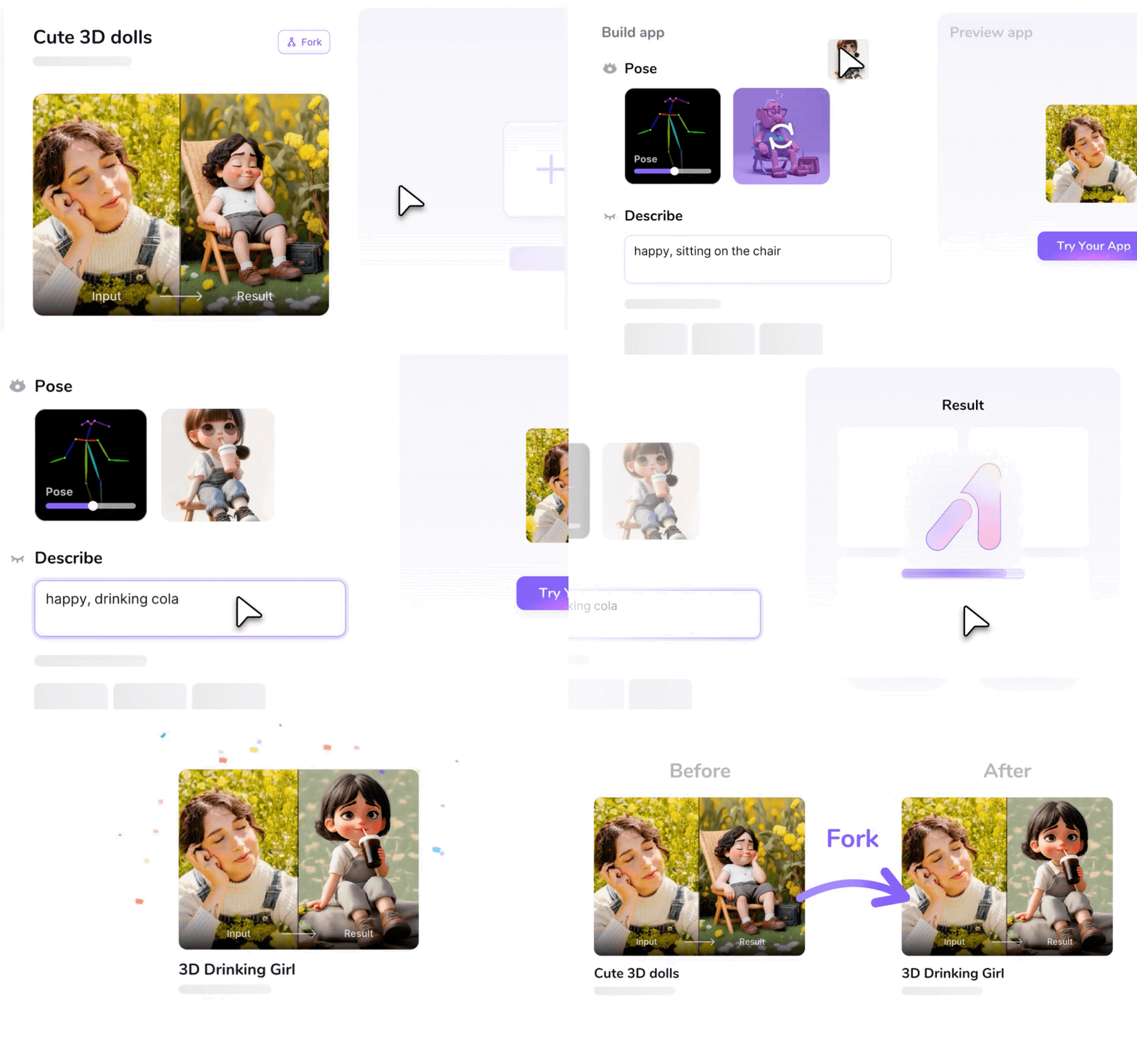
a1.art is like an artist whose inspiration never runs dry. Simply upload an image — no complex descriptions or repeated revisions needed — and a1.art stably outputs high-quality, beautiful, high-resolution images in 30 seconds, covering hundreds of scenarios including creative avatars, creative portraits, ID photos, pet photos, artistic typography, QR codes, and design. In the a1.art community, users don't need to understand Stable Diffusion or Midjourney to become app creators — making avatars, AI portraits, generating design materials, and more are all possible.
"Jishi Design" itself is a professional UI design tool with refined design capabilities, rich design resources, multi-user real-time collaboration, and one-click sharing and delivery of design deliverables, unrestricted by platform — open a browser and start creating.

BlueRun portfolio company "PPIO" showcased its latest cloud service achievements at the WAIC venue. As a leading independent edge cloud service provider in China, PPIO has long been committed to providing cost-effective AI computing power, models, and edge computing services for next-generation application scenarios including artificial intelligence, the metaverse, and audio-video.
At the conference, PPIO attracted numerous B-side merchants with its low-latency, high-availability, wide-coverage edge cloud-native services and comprehensive, professional, intelligent edge cloud solutions. Its flagship product Paiou Compute Cloud and core edge computing products were also on display.
Paiou Compute Cloud is PPIO's GPU elastic computing product, offering rich GPU models, extreme performance optimization, and extensive computing supply, providing cost-effective computing services for next-generation generative AI, cloud rendering, machine learning, and accelerated computing scenarios.
The core edge computing products demonstrated PPIO's distributed quality edge resources built in partnership with telecom operators' edge nodes, fully leveraging its resource reserves and scheduling management capabilities in edge networks. Through edge nodes, it provides customers with efficient, stable, and powerful computing and network services, reducing customer access latency and costs, while gradually guiding and integrating more industry applications.
Going forward, PPIO will continue to provide scenario-based technical solutions for diverse business scenarios and contribute to the innovative development of AI computing power.

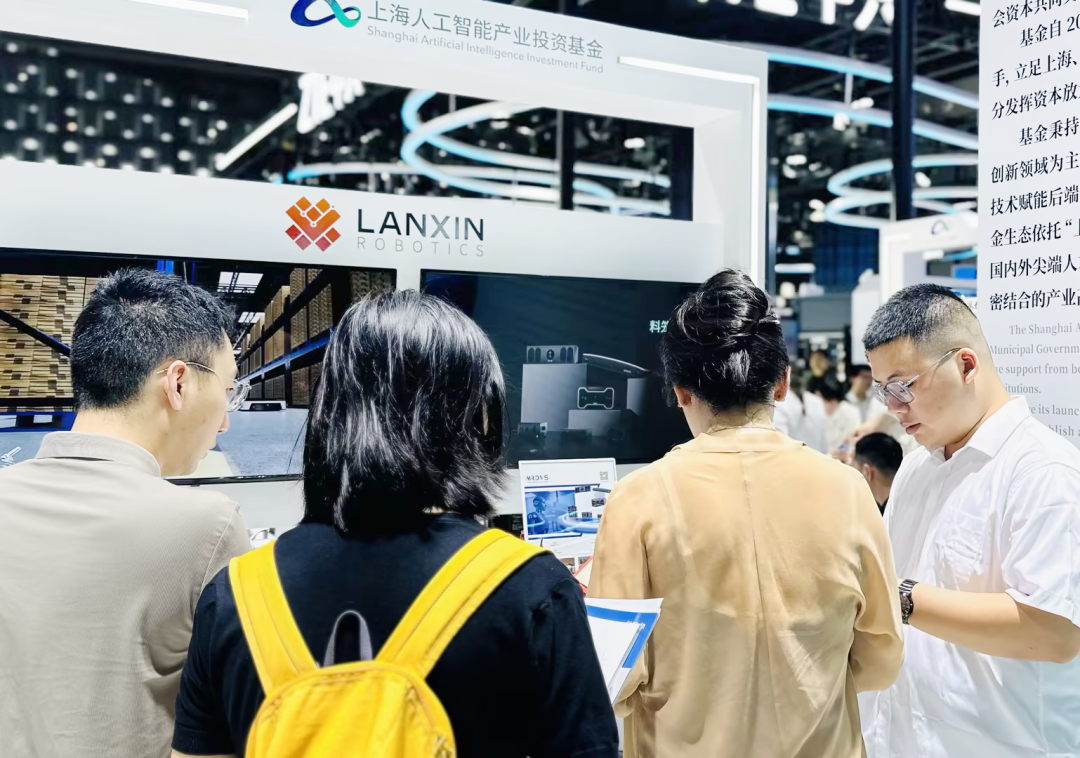
"Lanxin Technology" brought robot 3D vision sensors and robot core controllers, showcasing the company's "eye" and "brain" technologies in artificial intelligence.
Why are "eyes" important for robots? Take the much-discussed humanoid robot as an example: 3D vision sensors can provide detailed information about object shape, size, position, and motion state — information critical for robots to execute complex tasks, thereby endowing machines with human-like visual perception capabilities.
Meanwhile, with the development of multimodal large models, embodied intelligent agents require not only visual information but also auditory, tactile, and other sensory information to more comprehensively understand their environment. 3D vision sensors combined with other sensors such as sound sensors and tactile sensors enable intelligent agents to learn and adapt to environments through physical interaction, making more accurate judgments and decisions in complex environments.
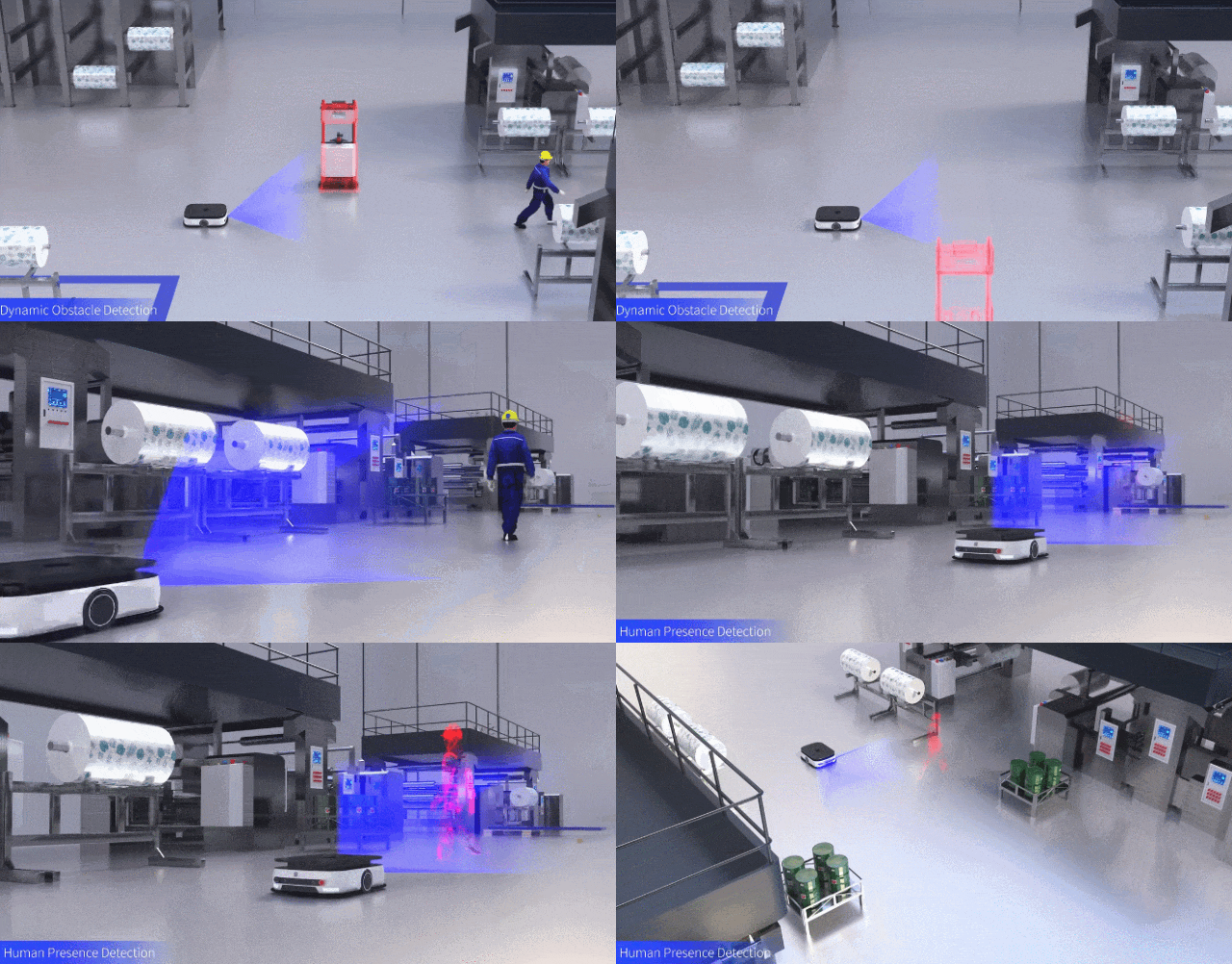
Lanxin Technology's subsidiary MRDVS (Mai'er Micro Vision) brought the robot's "AI Eye," which through self-developed 3D vision sensors, highly integrated visual processing systems, and advanced visual perception algorithms, can capture and analyze subtle changes in the surrounding environment in real-time, allowing robots to "understand" the world and thereby achieve precise environmental interaction and autonomous decision-making.
Lanxin believes that truly meaningful humanoid robots need not only "eyes" to see the world but also a "brain" to think about the world. The core controller serves as the robot's "brain," a key driver of intelligent robot development whose performance directly impacts the robot's overall work efficiency, flexibility, and safety. Lanxin Technology's core controller has been continuously accumulated and iterated across massive industrial application scenarios, aiming to produce robots with high safety, high stability, and high intelligence, adaptable to various complex environments.

During this conference, "PowerLaw AI" participated in the "GLM — Next-Generation Foundation Model Technology Frontier and Industry Application Forum" hosted by Tsinghua University's Department of Computer Science and Technology Knowledge Engineering Laboratory.
At the forum, PowerLaw AI founder and CEO Cunchao Tu delivered a keynote speech titled "Legal Large Model Application Practice," starting from specific application cases of large models in the legal field to demonstrate the significant achievements of large model technology in legal research, case analysis, and legal consultation, while looking ahead to the future development prospects of large model technology in the legal industry.
In his speech, Tu noted that a good legal large model should combine both general model capabilities and legal professional expertise. Large models highly match the "text in, text out" paradigm of legal scenarios, yet general models frequently produce errors, misleading responses, or vague solutions when answering legal questions.
Addressing the unique characteristics of the legal domain, PowerLaw AI launched the 100-billion-parameter legal vertical large model PowerLawGLM, and deeply empowered its intelligent contract business with legal large model capabilities to enhance product competitiveness centered on intelligence. Based on PowerLawGLM's capabilities, PowerLaw AI also launched a series of intelligent review solutions including MeCheck for intelligent contract review and MeFlow for full contract lifecycle management.

Where were the most gaming enthusiasts at WAIC 2024? Undoubtedly at XR brand "VITURE's" booth. VITURE brought its latest VITURE Pro XR glasses, along with the neck ring, Magic Dock Pro, SpaceWalker, and other full-ecosystem hardware/software solutions adapted for gaming, office work, and entertainment.

We tried on the VITURE Pro on site, and it dramatically changed previous impressions of XR glasses — because the battery and computing power are designed into the neck ring, the VITURE XR glasses are very lightweight to wear. The neck ring and glasses connect via magnetic interface; and with an electrochromic film on the lens surface allowing one-click adjustment of lens transparency, the VITURE Pro feels more like everyday wearable glasses rather than a product for specific purposes.
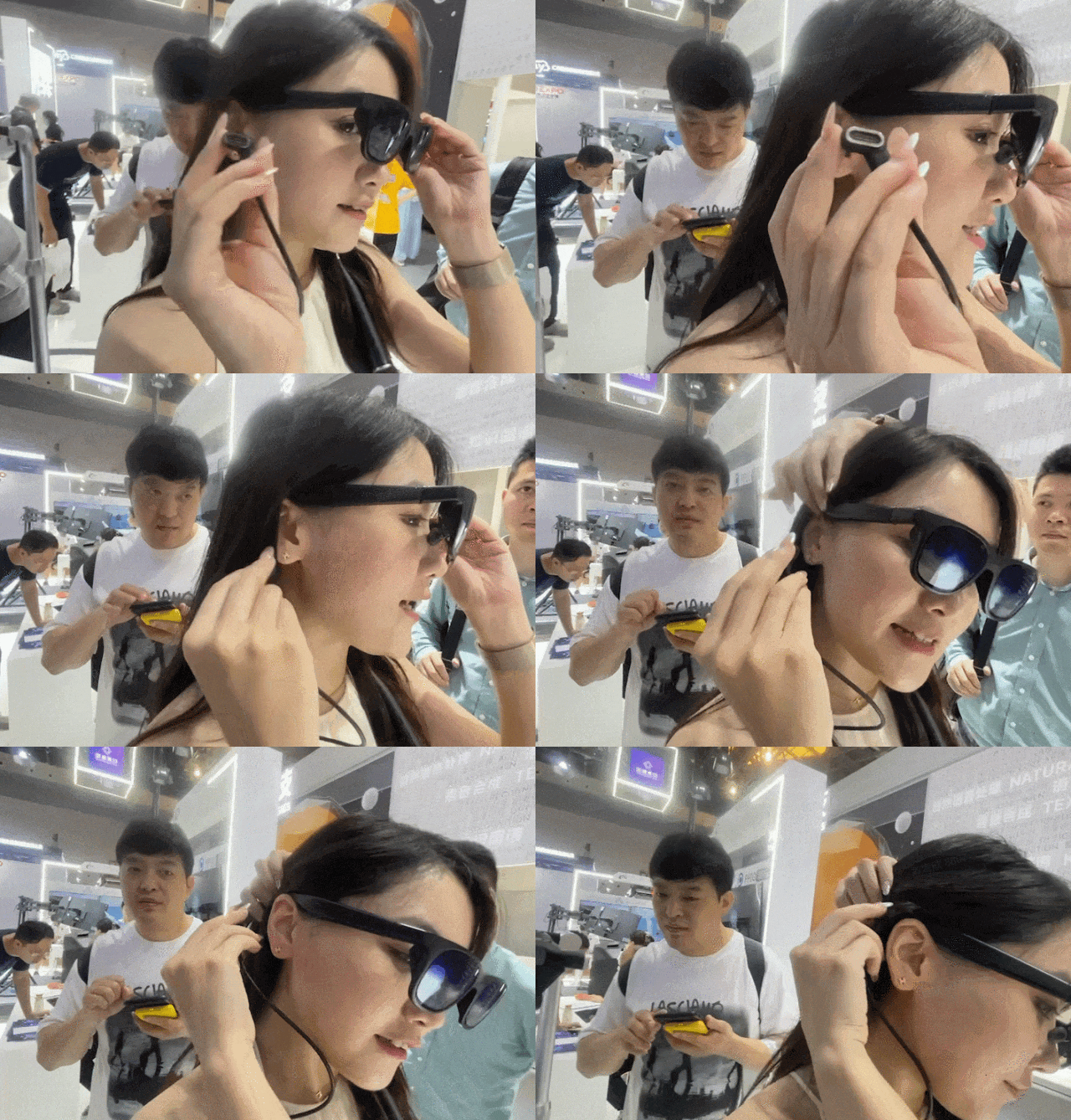
The VITURE Pro is also genuinely convenient to use. Through direct connection or streaming, it can adapt to full-platform gaming consoles including Switch, Steam Deck, PC, PS5, and Xbox. That means even without carrying a gaming console, you can get a 120-inch, 1080p HD virtual big-screen gaming experience through the XR glasses. Additionally, VITURE's Magic Dock enables connecting Switch to the glasses, making it possible to play Switch through XR glasses on mobile.
VITURE has already achieved significant success in international markets. Its debut product VITURE One, launched on the renowned global crowdfunding platform Kickstarter, quickly secured over $3 million in oversubscription within a single month. This March, VITURE officially entered the Chinese market, receiving unanimous praise from Chinese consumers and players upon launch, topping Tmall's XR device bestseller list in its first month and generating massive buzz among domestic gaming communities.

Other BlueRun portfolio companies were also present at WAIC 2024. Our tour was rushed and couldn't cover them all; and BlueRun's exploration of AI extends far beyond what we've shown — we continue pushing the boundaries of technology and application. If you have wild ideas about AI, feel free to reach out anytime 😉


Gaotu Techedu's Larry Chen: At 53, I'm Still a Baby! | Buming Seniors Speak

Sorry, BlueRun Doesn't Want That Kind of Startup Camp | Buming 2024 Now Recruiting

BlueRun Leads Galaxy Universal's First Round, Ushering in the Embodied Intelligence Era | BlueRun Family Headlines