BlueRun Ventures Family | VITURE, Which Just Raised $50 Million, Says: "AI and AR Will Eventually Converge Into a New Generation of Multimodal Devices"

The barrier to entry for AI glasses is high, requiring tight integration of software, hardware, and AI capabilities.
With AI glasses currently the hottest thing in tech, brands from the previous wave — AR glasses — face a common decision: should they jump into AI glasses?
Some have chosen to strike first. RayNeo and Rokid both released their first AI glasses last year. Others remain in a wait-and-see mode, still preparing.
VITURE falls into the latter camp. In the view of VITURE founder Gonglue Jiang, "the barrier to making good AI glasses is high, and the difficulty is real. You have to think carefully and move cautiously."
Jiang graduated from the Harvard Graduate School of Design with a degree in human-computer interaction. He previously conducted HCI research at Microsoft Research Asia, the MIT Media Lab, and Google X, and was involved in exploratory work on Google Glass.
Intelligent Emergence has learned exclusively that in late 2024, VITURE closed a $50 million funding round. Investors included Meituan co-founder Huiwen Wang and Singtel, among others.
BlueRun Ventures was the sole investor in VITURE's Series A+ round and has continued to back the company since. We congratulate VITURE on reaching this new milestone.
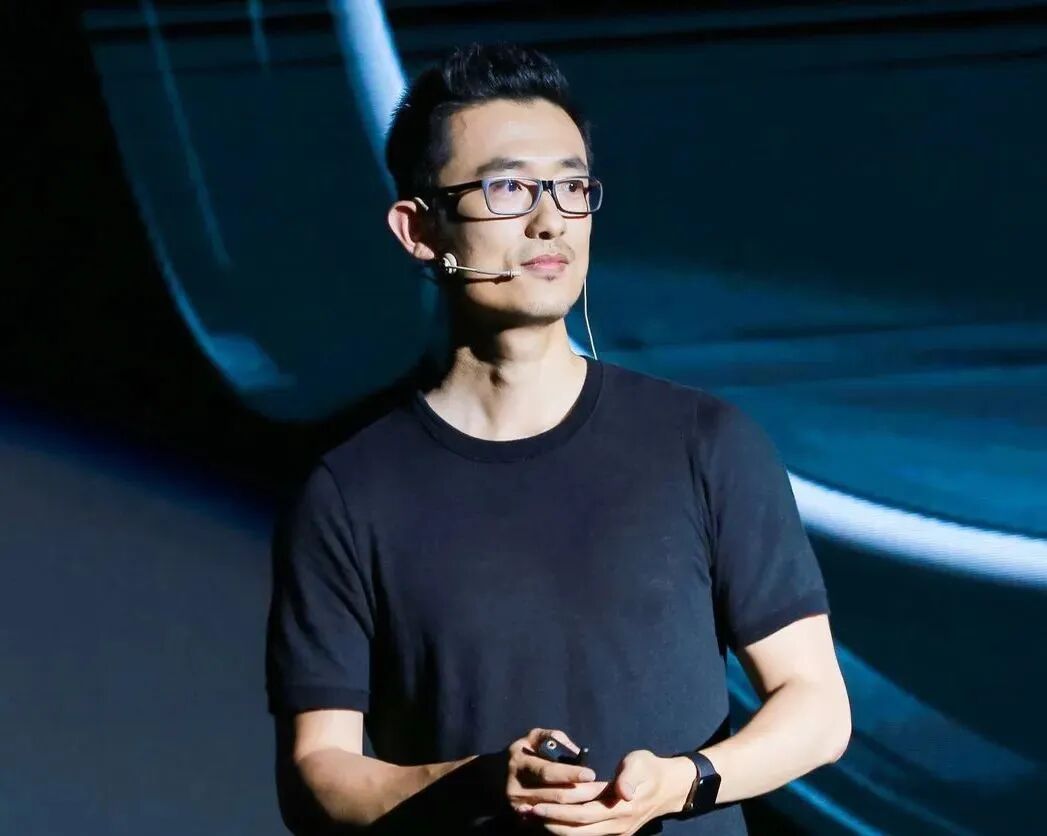
VITURE founder Gonglue Jiang
Since its launch in October 2023, Ray-Ban Meta has sold over 2 million units, heating up the AI glasses track. By comparison, global AR glasses sales in 2024 reached only 500,000 units despite years of development. The market opportunity and imagination for the former is far greater.
As the founder of an AR glasses brand, Jiang is highly bullish on AI glasses and has been observing and researching the space continuously.
Jiang told Intelligent Emergence bluntly: "The AI glasses on the market today, including Ray-Ban Meta, don't really count as true AI glasses. People buy Ray-Ban Meta for the Ray-Ban brand and the camera function — it has little to do with AI. True AI glasses haven't been proven in the market yet."
In his view, the core and "soul" of AI glasses should be AI capability, but the AI features in current products still fail to satisfy users. This gap represents an opportunity waiting to be filled.
"Today's AI is just a chatbot that can talk to you. The AI users actually want is an assistant that can send texts, order food delivery, and handle virtually anything you can do in today's mobile internet and digital world. That's the real value AI glasses can deliver."
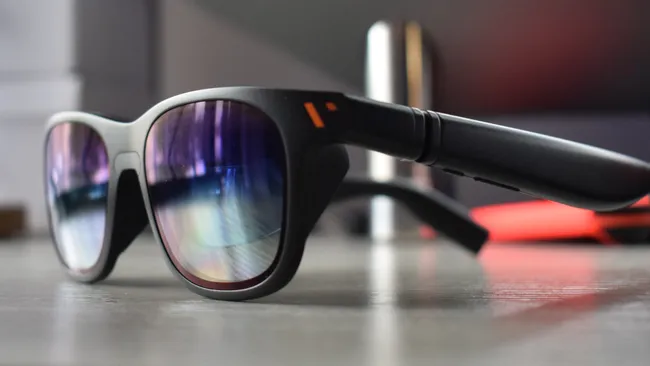
VITURE's AR glasses
The reason VITURE hasn't entered the fray earlier, Jiang explained, is that he sees how complex and difficult it is to make a great pair of AI glasses.
Industry players tend to underestimate the difficulty of making glasses — it's not just a matter of cobbling together a supply chain. Smart glasses have countless details that users will complain about. Without nailing those details, it's hard to build a product that sells well.
Beyond hardware refinement, product definition is the more critical challenge.
Jiang believes that to define a good AI glasses product, you need a clear target user group and wearing scenario with zero ambiguity in between. Otherwise you'll make huge mistakes.
The upper limit of expectations for AI glasses is "becoming the next smart terminal that replaces the phone," but Jiang disagrees. He doesn't think glasses will fully replace phones, just as phones didn't replace computers. The endgame will be organic integration.
The same applies to the relationship between AI glasses and AR glasses. He predicts that as AR glasses get lighter and AI glasses gain more features, the two will converge and merge — like two slopes leading to the same summit. That convergence point will be the multimodal interaction device of countless users' dreams: complete with display, camera, and microphone, with polished experience.
"AI glasses and AR glasses will eventually merge," Jiang told Intelligent Emergence.
Below is the full interview between Intelligent Emergence and VITURE founder Gonglue Jiang, edited for clarity:
Ray-Ban Meta Isn't AI Enough Yet — AI Capability Can't Just Be a Chatbot
Jiang: AI has become as ubiquitous as water, electricity, and air, so I believe AI glasses will absolutely become essential. As a vehicle for AI, we think AI glasses can achieve much larger scale than AR glasses likely will.
AI glasses and AR glasses will eventually merge. As AR glasses get lighter and AI glasses gain more features, there will always be a convergence point. That point is the ultimate, dream multimodal interaction device everyone imagines — with display, camera, and speaker, meeting weight and battery life requirements. We believe this will definitely be achieved in the future.
Intelligent Emergence: How do you evaluate the AI glasses products on the market today, including Ray-Ban Meta?
Jiang: True AI glasses haven't actually been proven in the market. People aren't buying Ray-Ban Meta for its AI features. Meta has two major selling points: one is the Ray-Ban brand — if you view it as a Ray-Ban sunglasses SKU, its sales numbers make perfect sense; the other is photography. It's essentially a head-mounted action camera in the vein of DJI and Insta360, which is a proven market, and the photo/music functions happen to combine perfectly with the sunglasses use case.
Intelligent Emergence: You say Ray-Ban Meta isn't AI enough. What would true AI glasses look like?
Jiang: True AI glasses need three key elements:
First, they need to be as close to normal glasses as possible, so people are willing to wear them all day, with multiple SKUs meeting personalized needs.
Second, distribution channels matter enormously. Competitors are partnering with optical shops, which I think is the right approach — you can't sell AI glasses relying solely on online channels.
Third and most important is AI capability. The AI people want is an assistant, a true AI Agent. But today's AI is just a chatbot that can talk to you, not help you get anything done.
For example, if you say "Send my mom a message saying I'll be home late for dinner," current AI glasses can't do it. True AI needs to help users accomplish virtually anything they can do in today's mobile internet and digital world. That's the real value AI glasses can deliver.
At the same time, AI glasses need to continuously understand user needs, have memory of you, and understand you like an assistant who's been with you for three to five years.
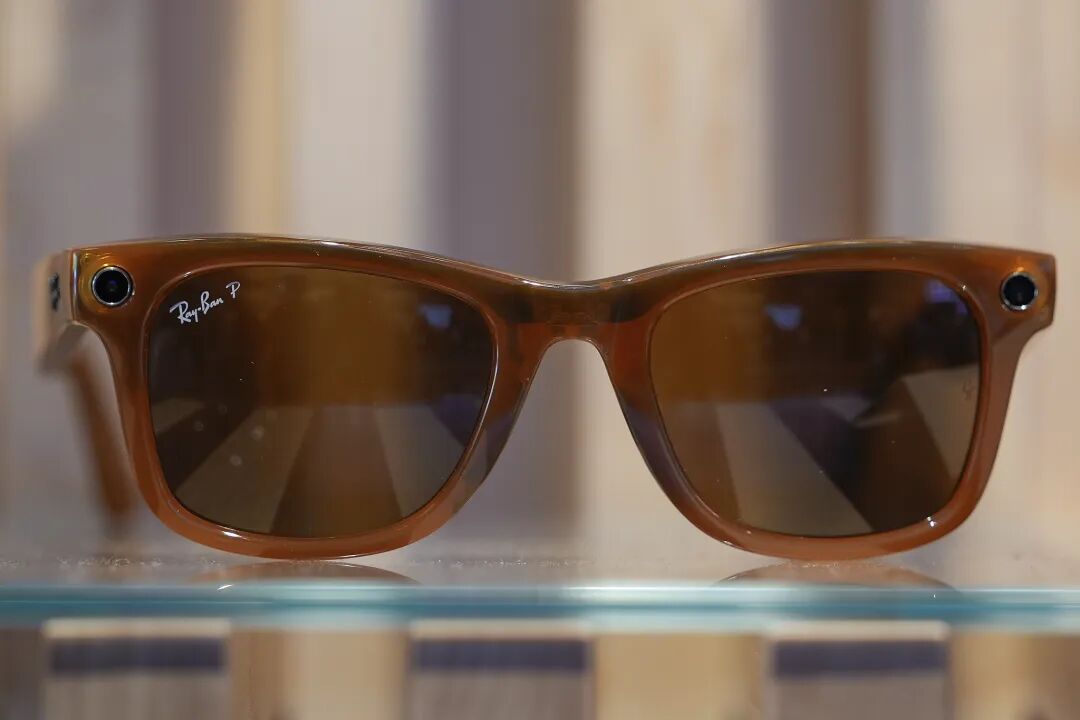
Ray-Ban Meta
Intelligent Emergence: Do you think AI glasses could replace phones in the future?
Jiang: A lot of people say AI or AR glasses will replace phones. I get asked this constantly, and my answer is always "no."
The human body only has so many organs for interacting with the outside world: eyes, ears, mouth, and hands. The future form factor will definitely be phone plus glasses — glasses handling mouth, eyes, and ears, while the phone handles hands. It's not about replacement. This follows the natural way of things; you can't force it.
But when AI glasses mature, AI will break down my needs into commands that computers and phones can understand, greatly reducing how often I need to use my hands. So I believe AI and AR glasses will replace most phone functions, and the human-computer interface will gradually migrate from phones to glasses.
Intelligent Emergence: How is VITURE's current AR product integrating with AI?
Jiang: VITURE explored AI very early on. 2D-to-3D conversion is currently the hottest feature on VITURE glasses — it can automatically convert images and streaming video to 3D in real time. This feature has helped enrich content for AR glasses. We were recently invited to NVIDIA's GTC conference to showcase this capability, which was made possible by advances and integration in AI capability and AI computing power.
We also have a game guide assistant called Wizard, built on a large AI model. While gaming, users can ask the Wizard assistant anytime how to defeat enemies. We built a game guide database and combined it with RAG (Retrieval-Augmented Generation) technology to enable this play-and-chat experience.
The Barrier to AI Glasses Is High — Hardware, Software, and AI Must Be Coupled Together
Intelligent Emergence: Is it difficult to expand from AR glasses into AI glasses?
Jiang: I think people often underestimate how hard it is to make glasses — it's not just cobbling together a supply chain. There are countless details users will complain about. Without nailing those details, it's hard to build a product that sells well.
Purely theoretically, making AI camera glasses to compete with Ray-Ban Meta itself requires massive resources. Some manufacturers may have a gap between what they want to do and the resources required, leading to unmet expectations.
Just on photography alone, leading phone makers have imaging teams of over a thousand people — capabilities that can be repurposed for glasses. So you need sufficient resource investment to do this well. But I also believe that through iterative updates, the experience can improve over time.
Intelligent Emergence: What about other categories of AI glasses? Can you elaborate on the details?
Jiang: Glasses are fundamentally different from phones, tablets, or AI toys — there are so many dimensions to consider. Glasses have very limited space; cramming in so many structural and electronic components easily leads to compromises, or they become too bulky for anyone to buy. Eyes are also a moving, bending, somewhat elastic part of the body, which creates high reliability requirements for the product.
Most critically, there's the balance between performance, power consumption, and battery life — unlike other devices where you just slap a big battery on a board. Future AI glasses might have 7-8 batteries, tucked wherever there's space, to achieve extreme form factor optimization.
Moreover, to make great AI glasses, you need not just hardware capability but strong software and AI capabilities too — all three coupled together to succeed. For example, achieving different levels of AI capability requires different SoC capabilities for the glasses, with corresponding differences in active and standby power consumption, which in turn creates different battery requirements. Hardware capability, software capability, and AI capability are integrated end-to-end.
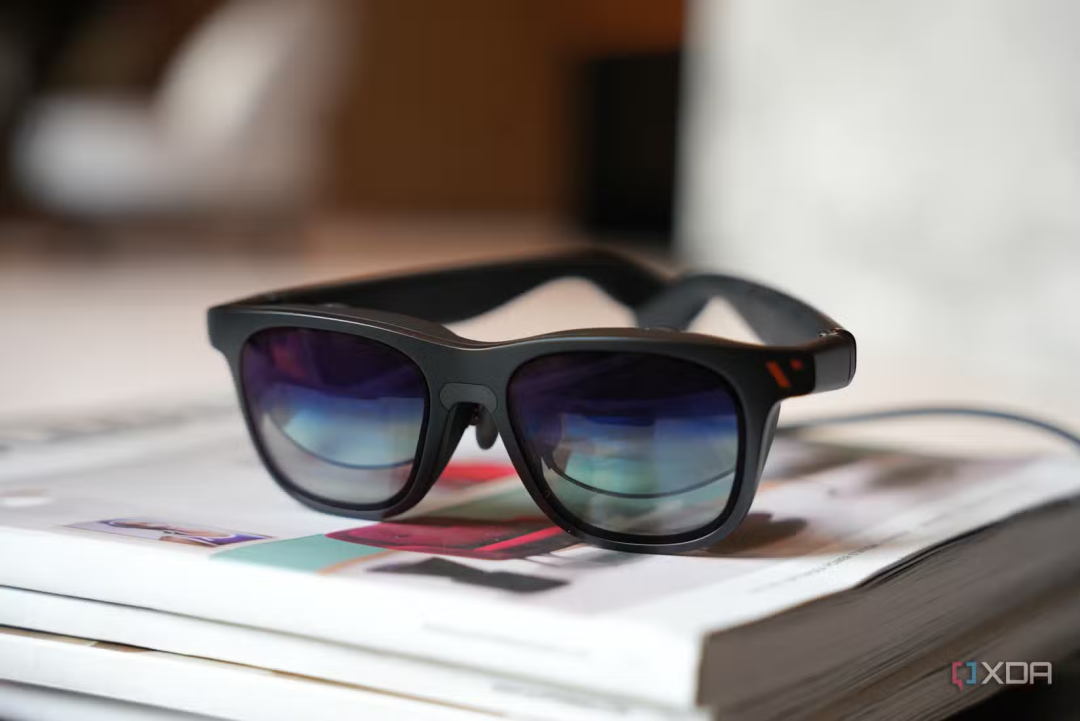
VITURE's AR glasses
Intelligent Emergence: How is VITURE thinking about use cases for AI glasses?
Jiang: I think the AI assistant I mentioned is the most important use case, more of a productivity tool. This is distinct from previous audio glasses that only made calls and played music without AI capabilities.
For target demographics, there's a classic four-quadrant framework: mass market versus vertical users, scenario-based wearing versus all-day wearing. Meta leans toward vertical users with scenario-based wearing, similar to AR glasses — that's a good starting point. The next step expands in two directions: vertical users with all-day wearing, and mass market with scenario-based wearing.
Of these two quadrants, we think vertical users with all-day wearing is the easier path. A product typically penetrates from a vertical user base when going from zero to one.
Intelligent Emergence: What daily interaction scenarios do you personally want from AI glasses?
Jiang: I have quite a few. For example, asking it to recommend a song, or having light music help me focus while working; having it read or summarize WeChat official account articles; or ordering a coffee for me.
To sum up, at its core it's a more efficient interaction method for getting information and using functions that you'd otherwise do on your phone.
Intelligent Emergence: If VITURE were to make AI glasses, what would be your different approach?
Jiang: The VITURE approach would always start with identifying the target demographic and market, then understanding channel dynamics and technology trends, and finally determining features and product-market fit. Not starting with what camera, chip, or display solution to use.
Even working with the same BB (Birdbath) solution — an AR optical imaging approach that allows users to simultaneously see physical objects in the real world and digital imagery generated by the display — VITURE differentiated its AR glasses by developing multiple popular accessories and software adaptations. AI glasses will be the same: the body construction may be similar, but software ecosystem and features are the differentiators. Whoever can best organically integrate AI Agent with glasses will achieve optimal PMF.
Another factor is exterior design. Smart glasses are a product that pursues extreme balance between function and wearability. Glasses inherently carry fashion attributes — making them fashionable is hard, and leading trends is even harder. It's not something you solve by hiring a design agency. The team itself needs design and aesthetic DNA, plus a humanistic, artistic, even spiritual understanding and belief in how technology integrates into life, to infuse that understanding into the product and resonate with users.
No True Leader in AR Glasses Yet — What Matters Is Capturing New Growth
Intelligent Emergence: You've been in the AR industry for years and witnessed the "corpses everywhere" phase. Why did you choose AR when you decided to start a company?
Jiang: Because when I started the company in 2021, I saw that AR glasses were truly ready for the consumer market, with a very clear growth curve visible. VITURE entered right at AR's takeoff moment. Looking at IDC reports, the industry's growth curve was flat before 2022, then suddenly exploded upward.
Since founding, VITURE's revenue has grown roughly threefold every year. Though only two months into this year, growth remains above 300%. I believe the AR glasses track itself has very broad prospects ahead.
Intelligent Emergence: Did you target gaming from the start?
Jiang: Yes. AR glasses work great for gaming, movie watching, and office work — we focused on these three scenarios. But the ranking of these three scenarios is crucial. We put gaming first, followed by movie watching, then office work.
The ranking determines which user groups you prioritize finding — this matters enormously. For example, it's hard to locate movie watchers or office workers. But gamers are a precise entry point we could target with focused advertising and marketing. So we concentrated on refining the gaming experience. For instance, our Mobile Dock was the world's first Switch-compatible accessory, and VITURE remains the only AR manufacturer supporting dual-player Switch gaming with AR glasses.
Intelligent Emergence: VITURE's product positioning leans premium. What's the thinking behind this?
Jiang: Two factors. One is team DNA — VITURE is suited to making extremely innovative, high-quality products, and good tech products inherently have relatively higher costs and pricing.
The other is that in an industry's early stages, or in relatively vertical markets, you need to understand what users actually want. Our current gamer audience cares far more about product quality and performance than cost-performance ratio. For example, our highest-priced product on Amazon is also our best-selling one.
So our products sell particularly well in the United States, Japan, Germany, and other countries. In Q3 2024, our North American sales surpassed Apple Vision Pro; in Q4 we surpassed PSVR. Across the entire AR/VR space we're second only to Meta, and ranked first in AR specifically.
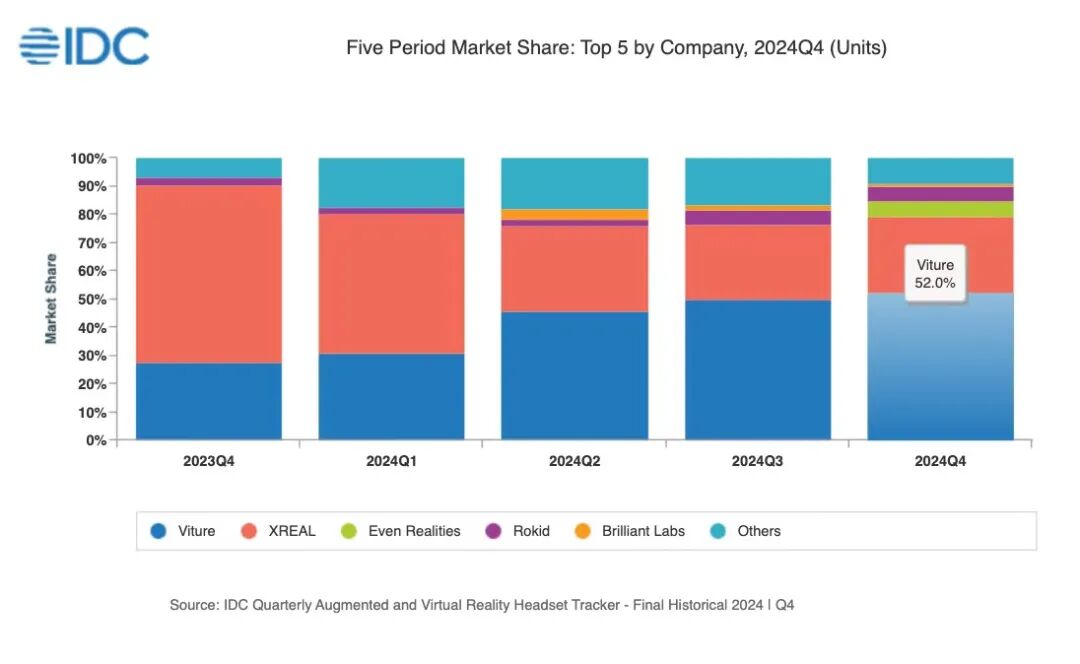
Q4 2024 North America AR Glasses Brand Market Share. Source: IDC
Intelligent Emergence: In terms of global market share, VITURE isn't number one yet, right?
Jiang: We haven't seen IDC's latest consolidated global data, but VITURE's strategy is radiating from the core North American market to Europe, Japan, Southeast Asia, and other markets. We entered China last August. I think being pure shipment volume leader in AR glasses isn't important right now, because the industry's installed base is still tiny — only 500,000 units globally. What matters more is who can capture the most future incremental growth while maintaining sustainable high-speed growth capability (profit margins, channels, reputation). That's the core. Only when the market truly reaches a certain scale and magnitude can we say who the core players in the future landscape will be.
Intelligent Emergence: Statistically, the AR market cooled in 2024 — flat compared to 2023. Why?
Jiang: I think the industry's market-opening approach over the past two years deviated from fundamental business logic — everyone started price wars before the market was even cultivated. This led to massive marketing spending and price competition without attention to profit. Trying to clear the field through price wars at an early industry stage was strategically problematic.
By 2024, the logic of burning money for sales volume no longer held. Capital markets gradually stopped buying into this model, so there was no more ammunition to sustain it, and sales naturally dropped.
VITURE has always pursued positive marginal net profit, with that number trending upward, to achieve a sustainable model. We basically rely on organic, natural marketing and let our core user base drive word-of-mouth. In an industry's early days, you must go from point to line, line to plane, and plane to volume — not start with massive advertising to get non-audience users to buy your product. That won't yield good ROI.
Cover image source | Visual China


$200 Million in Sales in Two Years Since Founding, VITURE Tops Amazon Smart Glasses Category | BlueRun Portfolio Spotlight

From VLA to ViLLA: AgiBot Releases First General-Purpose Embodied Foundation Model GO-1 | BlueRun Portfolio Spotlight

What Was Said at Last Week's Hottest AI Hardware Salon in Shenzhen | Booming Hub Recap
: When Embodied Intelligence Meets Reality | The Road to AGI