Racing to Go Global · Case Study | 79 Gaussian Robots Deployed at Thailand's Airports of Thailand (AOT)
Now operating at five airports in Thailand
Yesterday, Thailand's most celebrated festival, Songkran (also known as the Water Festival), came to a close. This marked the first Songkran since the China-Thailand mutual visa exemption agreement took effect on March 1, drawing a surge of Chinese tourists.
Tourism is one of Thailand's pillar industries, and Chinese visitors have long topped the rankings of international arrivals. Last year, the Thai government unveiled a five-year plan to push tourism revenue to at least 25% of GDP.
On the very first day of the visa exemption policy, Thailand's prime minister announced a nationwide airport upgrade initiative, aiming to establish the country as an Asia-Pacific aviation hub.
Airports hold critical significance for a nation's tourism industry. They serve not only as the primary gateway for visitors entering and departing, but also as a vital hub connecting the country to global travel markets.
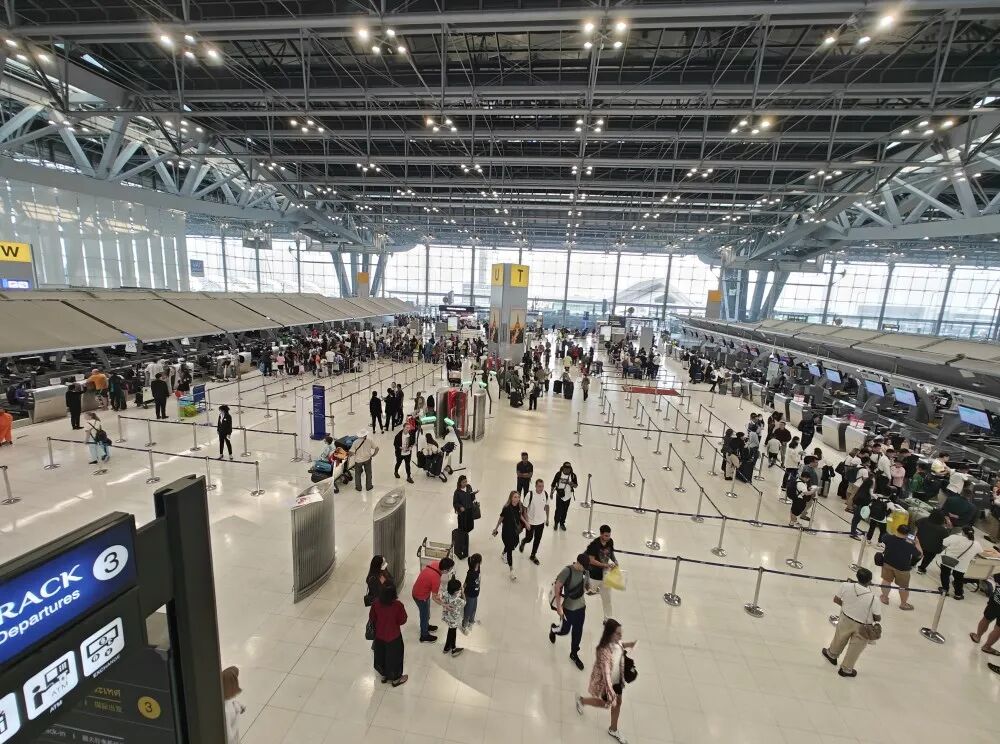
Did you know? Thailand operates 39 airports in total. The largest airport operator is Airports of Thailand Public Company Limited (AOT). As a state-owned listed company, AOT's core business encompasses the management, operation, and development of airport facilities across Thailand.
Currently, AOT operates six international airports: Suvarnabhumi (BKK), Don Mueang (DMK), Phuket (HKT), Chiang Mai (CNX), Hat Yai (HDY), and Chiang Rai (CEI) — all of which accommodate both domestic and international flights.
AOT, whose vision includes "operating the world's smartest airports," began deploying a substantial fleet of Gaussian Robotics cleaning robots in 2021. To date, Gaussian has delivered 79 units across five AOT international airports, supporting AOT's push to become a leader in smart airport operations.
The 79 cleaning robots are distributed across Suvarnabhumi International Airport, Don Mueang International Airport, Phuket International Airport, Chiang Mai International Airport, and Hat Yai International Airport.
Suvarnabhumi International Airport is Thailand's busiest and largest airport, and one of Southeast Asia's major hub airports. It officially opened in 2006 with an initial annual capacity of 45 million passengers and 3 million tons of cargo, supporting up to 76 flight movements per hour.
Thailand's airport upgrade plan features a particularly eye-catching goal: transforming Suvarnabhumi, the country's central airport, into one of the world's top 20 airports within five years.
With a terminal area of 563,000 square meters, Suvarnabhumi also holds the distinction of hosting the world's largest deployment of cleaning robots at a single airport — 34 units in total.
Don Mueang International Airport, Thailand's second-largest airport with a 220,000-square-meter terminal, is also one of Asia's oldest airports. It has deployed 30 Gaussian cleaning robots.
Phuket International Airport, Chiang Mai International Airport, and Hat Yai International Airport have deployed 11, 2, and 2 units respectively.
Tailoring its solution to the distinct characteristics of different airport zones, Gaussian customized a cleaning portfolio for AOT comprising three models: the Scrubber 75, Scrubber 50, and Vacuum 40.
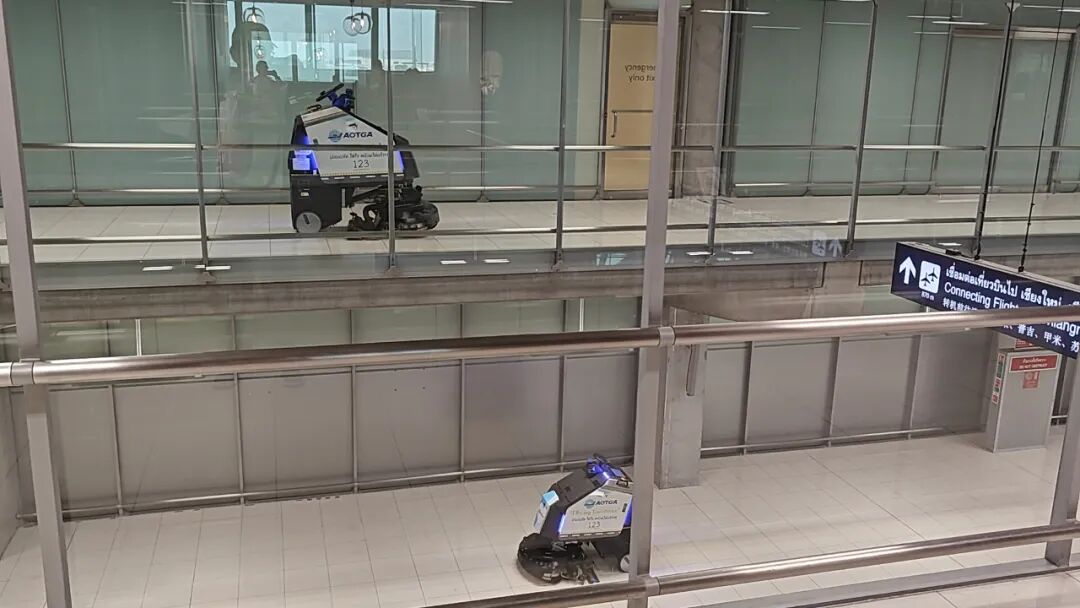
The Scrubber 75 and Scrubber 50 are designed for scrubbing and dust-mopping tile and terrazzo flooring. The larger Scrubber 75 delivers higher cleaning efficiency for expansive areas such as waiting zones, check-in halls, and terminal connecting corridors. The Scrubber 50 is deployed in waiting areas, commercial zones, and baggage handling areas.
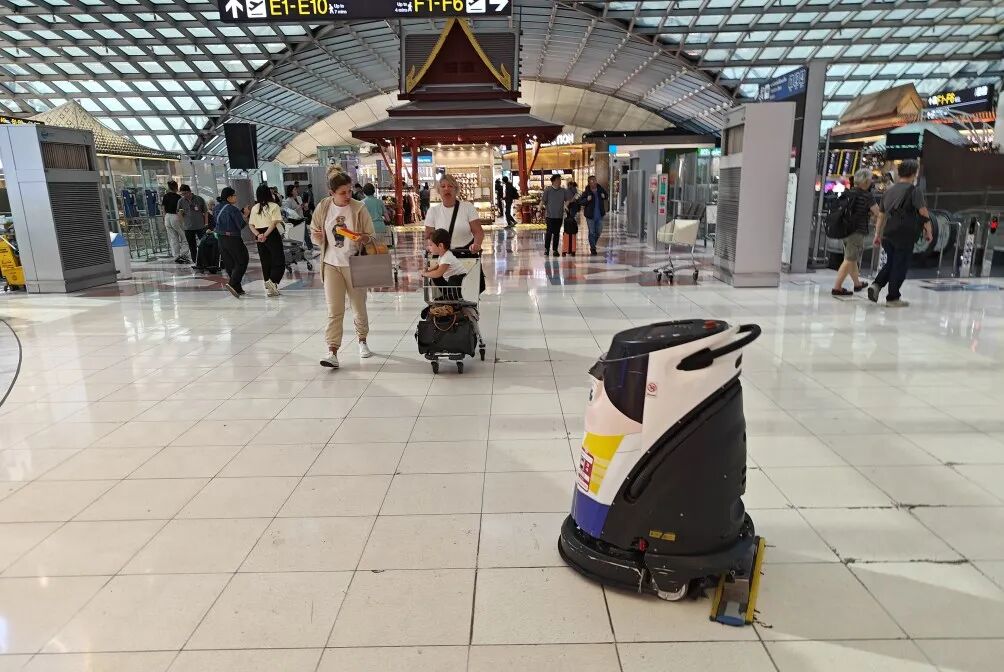
The Vacuum 40 handles vacuuming and dust-mopping in carpeted zones such as waiting areas and boarding gates.
Leveraging core technologies including autonomous navigation, intelligent obstacle avoidance, and high-efficiency cleaning, Gaussian's robots independently execute floor cleaning tasks in complex airport environments. They also feature intelligent dispatch capabilities, allowing flexible adjustments based on real-time airport conditions to ensure orderly cleaning operations.
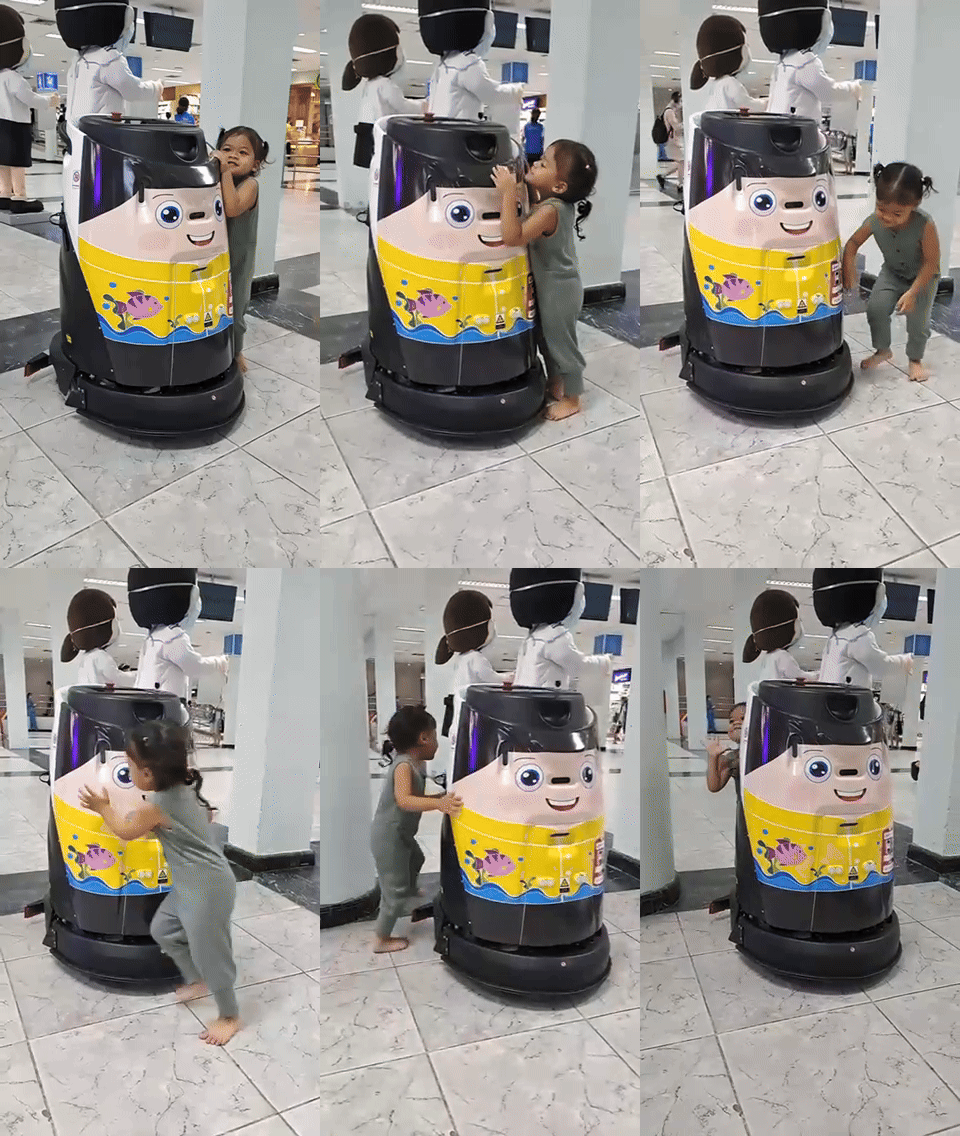
Bonus: Gaussian robot becomes a little girl's favorite toy
▶ More to Explore ◀



Founded in 2005, BlueRun Ventures is a venture capital firm focused on early-stage startups. The firm currently manages multiple USD and RMB dual-currency funds in China, with assets under management exceeding 15 billion RMB, making it one of the country's largest early-stage funds. BlueRun invests primarily at the Pre-A and A rounds, covering technology, consumer, and healthcare sectors. It has backed nearly 200 startups to date, including Li Auto, Waterdrop, QingCloud, Guazi.com, Qudian, Ganji.com, Energy Monster, Gaussian Robotics, Songguo Mobility, Yuntu Semiconductor, Machenike, CloudShen Intelligence, Anxin NetShield, and BioMap.
BlueRun Ventures has been ranked #1 on Zero2IPO's "China's Top 30 Early-Stage Investment Institutions" and ChinaVenture's "China's Best Early-Stage Venture Capital Firms TOP30," and was named among Preqin's Top 10 VC fund managers globally for sustained high returns.
The firm has also received consecutive honors from Forbes China, 36Kr, Cyzone, Caixin Media, CBNweekly, Jiemian, and other media outlets, including "China's Best Early-Stage Firm of the Year," "China's Top Venture Capital Firm," "Most Entrepreneur-Friendly Early-Stage Firm of the Year," and "Most Influential Early-Stage Firm of the Year."