A New Drug King Is About to Be Crowned. Does Peptide Still Have Its Next Billion-Dollar Target? | BlueRun Ventures Viewpoint

You can only find things when you're not looking for them.
Take note: a new drug king is about to be crowned. Yesterday (November 6), Novo Nordisk released its Q3 earnings — revenue up 23% year-over-year, with semaglutide as the biggest growth driver. Combined sales hit $20.306 billion, accounting for 69% of Novo Nordisk's total revenue. More importantly, in the first three quarters of this year, semaglutide's sales have already closed in on "K药" (Keytruda, pembrolizumab), with full-year figures poised to surpass it.
Over the past several years, GLP-1RA drugs have been pulling off one miracle after another. On August 8, 2023, the US stock market witnessed a historic day: Eli Lilly (LLY) became the world's first pure-play pharma company to surpass $500 billion in market cap. This was a company whose product pipeline had once dried up, dismissed as an industry failure, whose valuation had long hovered around $100 billion. But after its GLP-1RA diabetes and weight-loss drug tirzepatide won FDA approval in 2022, Eli Lilly's performance and stock price climbed relentlessly, cementing its position in metabolic disease.
Weight loss — this near-eternal consumer demand — is the core driver behind the GLP-1RA sales miracle. GLP-1RA, or glucagon-like peptide-1 receptor agonists, are a newer class of diabetes drugs. They activate GLP-1 receptors in the body to enhance insulin secretion in a glucose-dependent manner, delay gastric emptying, and reduce food intake through central appetite suppression, thereby achieving weight loss.
The sudden explosion of GLP-1 has turbocharged the entire peptide industry. But beyond this, the industry is also asking whether other opportunities exist, whether more blockbuster targets might emerge.
As short-chain molecules naturally present in the human body, peptides regulate blood sugar (like insulin), promote growth (like growth hormone), and perform other functions. Peptide drugs are synthetically produced molecules similar to these natural peptides, developed into therapeutics. As obesity, diabetes, cardiovascular disease and other metabolic chronic illnesses increasingly burden global health, as new chemical entity drug development grows ever harder, and as traditional small molecules struggle to meet demands for safety, efficacy and specificity, peptides are being positioned as a new frontier for innovative drugs.
Currently, thousands of peptide drug candidates are in development globally, with dozens expected to gain approval or enter clinical trials. A period of explosive growth for peptide drugs seems imminent. Previously, BlueRun Ventures co-hosted the "Peptide Drugs and Industry Chain Innovation Development Forum," where over ten guests from listed companies, industry leaders, and star startups discussed the current state and future possibilities of peptide drugs and their supply chains.
In this article, we summarize recent observations and thinking on peptides, and continue the discussion:
- Why has peptide finally found its moment, 100 years after its first application?
- What concerns lurk beneath the GLP-1 boom?
- How to seize the historic opportunity of this new wave of pharmaceutical transformation?
- Why is the peptide drug track actually not that crowded, with plenty of room for differentiation?
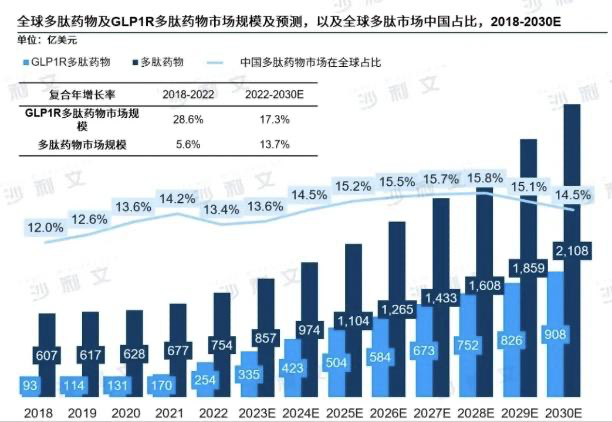
Just how hot is GLP-1RA? Goldman Sachs even believes its widespread use in the United States could boost US GDP by 1% in coming years. Domestically, GLP-1RA sales growth in the first four months of 2024 drove diabetes medications to over 100% year-over-year growth in retail channels outside hospitals. Multinational and domestic pharma companies alike are scrambling to acquire GLP-1-related assets; some domestic firms have even shifted their core business focus to GLP-1 product development.
While numerous GLP-1 drugs exist (such as liraglutide, exenatide), semaglutide and tirzepatide are currently the most successful weekly-dose GLP-1RAs. With semaglutide's China patent expiring in 2026, multiple companies hope to "get a piece of the pie," with several biosimilars nearing market launch.
Riding the downstream demand surge, China's upstream supply chain is also expanding rapidly.
WuXi AppTec, for instance, is currently working with Eli Lilly to produce a key component of tirzepatide, with Lilly stating that finding alternative suppliers "may not be feasible, or may take a very long time." In 2023, WuXi AppTec's oligonucleotide and peptide revenue reached 3.41 billion RMB, up 64.4% year-over-year, with order backlog up 226%.
BlueRun Ventures portfolio company Nankai HeCheng also participates in the tirzepatide supply chain. Its developed pharmaceutical adsorption resins, solid-phase synthesis carrier resins, and immobilized enzyme resins are already applied in solid-phase synthesis of peptide drugs and DNA drugs, as well as separation and purification of peptides and proteins. Nankai HeCheng began developing solid-phase carriers suitable for small nucleic acid synthesis back in 2004, entered scaled production in 2016, and currently possesses manufacturing equipment for functional resin products with particle sizes ranging from 20μm to 1.2mm.
How Did GLP-1RA Become the New Drug King?
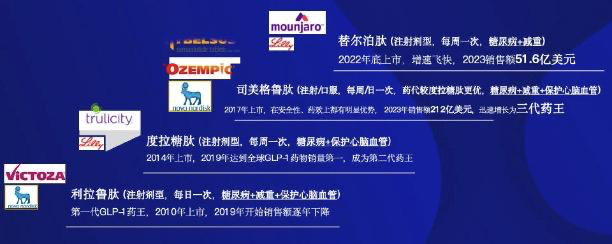
Few drugs have iterated so many diverse utilities in such a short time. From the first-generation GLP-1 blockbuster liraglutide's 2010 launch through dulaglutide, semaglutide, and tirzepatide, GLP-1 drugs have evolved from daily to weekly dosing. Beyond extended dosing intervals, efficacy and safety have continuously improved, with indications expanding from diabetes alone to diabetes + weight loss + cardiovascular protection and beyond. Even today, there's no sign of this iteration slowing — broader applications remain possible.
Second, beyond glucose control and weight loss, the GLP-1 target may address other metabolic diseases, including but not limited to:
- GLP-1 can directly bind to GLP-1R widely expressed in the heart and vasculature to deliver cardiovascular protection, with glucose-lowering and lipid-regulating effects providing indirect cardiovascular benefits. In the past month, semaglutide was approved in the UK for reducing risk of serious heart disease or stroke in overweight and obese adults, while tirzepatide was shown in a Phase 3 trial to help reduce hospitalization, death, and other complications from common heart failure in obese adults.
- GLP-1 binding to liver cell receptors can reduce hepatic steatosis, showing strong performance in metabolic dysfunction-associated steatohepatitis (MASH): earlier this month, Novo Nordisk announced preliminary results from Part 1 of the ESSENCE trial, showing semaglutide 2.4 mg achieved statistically significant improvement in liver fibrosis versus placebo, without worsening of fibrosis in MASH resolution. Previously, Eli Lilly's Phase 2 data for tirzepatide in MASH showed 73.9% of patients receiving the highest dose had MASH resolution without fibrosis worsening after one year.
- Additionally, GLP-1's effects on improving insulin sensitivity, lowering blood pressure, and reducing kidney inflammation confer positive therapeutic effects on chronic kidney disease (CKD): Novo Nordisk's FLOW kidney outcomes trial, begun in 2019, showed semaglutide reduced risk of kidney disease progression and cardiovascular/renal death by 24%.
- Furthermore, GLP-1 can reduce neuroinflammation and oxidative stress related to Alzheimer's disease (AD). 2023 Phase 2 clinical data presented by Novo Nordisk showed liraglutide substantially slowed brain atrophy in patients with mild-to-moderate Alzheimer's, with slower decline in MRI volume and cognition.
The emergence of GLP-1 as a blockbuster target has lifted the entire peptide drug market. We're asking: beyond GLP-1, what other potential explosion points exist for peptide drugs? Setting aside this single bright spot, is the peptide industry as a whole expanding or contracting?
Back to Basics: What Are Peptides?
From a drug property perspective, peptide drugs occupy a middle ground between traditional small-molecule chemical drugs and protein biologics, typically composed of several to several dozen amino acids. This "compromise" nature allows them to combine advantages of both — in efficacy, peptides have moderate molecular weight, retaining small-molecule permeability while possessing macromolecular specificity and binding affinity, often outperforming both. Compared to small molecules, peptide drugs typically show high specificity for biological targets, enabling precise recognition and binding to reduce off-target effects. Compared to large molecules, peptides generally have lower immunogenicity, improving safety to some degree. Moreover, since peptide drugs are built from common biological amino acids, they generally demonstrate good biocompatibility, reducing immune system activation and rejection.
| Feature | Small-Molecule Drugs | Peptide Drugs |
|---|---|---|
| Structural complexity | Relatively simple | More complex |
| Primary administration route | Oral | Injection |
| Stability | More stable | Easily degraded |
| Cell membrane permeability | Better | Poorer |
| Production cost | Relatively lower | Usually higher |
| Modification flexibility | Limited | Diverse |
| Screening methods | High-throughput screening, rational design | Phage display, peptide library screening |
| Delivery systems | Traditional formulation technology | Requires special delivery systems (e.g., liposomes, nanocarriers) |
| Screening library scale | Up to millions of compounds | Usually smaller than small-molecule libraries |
| Delivery challenges | Relatively few | Significant (e.g., oral absorption, cellular uptake) |
Though GLP-1RA has only recently exploded in popularity, active peptide drug development is hardly a new field.
As early as 1996, China approved its first peptide drug, goserelin, for prostate cancer, endometriosis, and advanced breast cancer. In 2009, the first GLP-1 class diabetes drug exenatide was approved in China, followed by liraglutide, dulaglutide, semaglutide and others. As of November 2023, China's drug regulator had approved over 40 peptide drugs, with anti-infective, anti-cancer, and metabolic disease applications dominating.
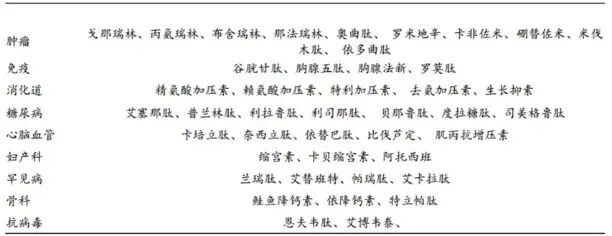
Major peptide drugs by indication. Source: Asymchem
Peptide drugs weren't widely adopted previously due to dual constraints: technically, peptide synthesis and purification were difficult, with stability issues, low oral bioavailability, and poor cell membrane permeability; commercially, high costs and scaled production challenges limited profitability, while patent protection was relatively weak. Additionally, complex regulatory requirements, limited market awareness, and inconvenient frequent dosing hindered development. Small-molecule drugs, by contrast, received far more R&D investment and market attention.
However, recent advances in technical methods and interdisciplinary approaches are driving a peptide drug renaissance, revealing enormous potential.
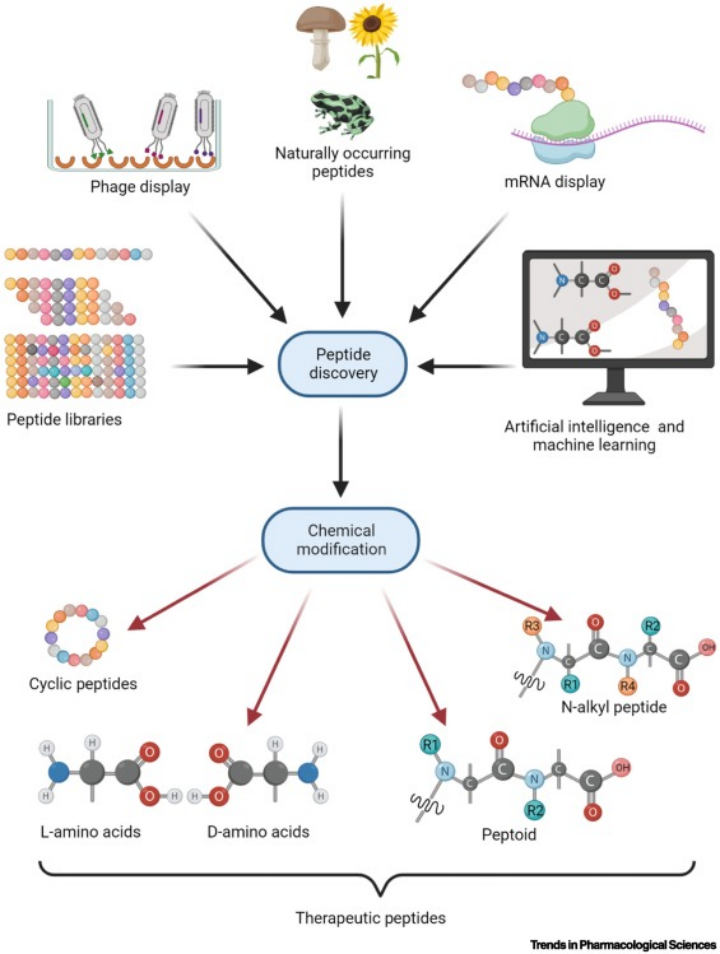
The very structure of peptide drugs makes them readily adjustable and modifiable to alter biological activity, efficacy, biodistribution, and metabolic properties; multiple peptides can also be linked to create unique biological functions such as membrane penetration and extended duration. Today, genetic recoding technology can synthesize peptides containing non-natural amino acids to enhance stability; novel chemical and enzymatic methods enable precise modification at specific peptide positions; AI and machine learning can help predict structure-activity relationships to accelerate optimization...
Meanwhile, external conditions favor peptide drugs' emergence — patents on many blockbuster protein and small-molecule drugs have expired or are expiring soon. This "patent cliff" leaves many pharmaceutical companies facing revenue challenges, creating urgent need for new growth drivers. In recent years, the industry has increasingly turned its gaze toward peptides.

Yet beneath the prosperity, concerns shadow peptide drug R&D.
First, capacity constraints. The US FDA's updated drug shortage database in mid-April showed tirzepatide supply shortages in Q2 this year, while Europe's EMA had already projected intermittent semaglutide shortages throughout 2024. Even as Eli Lilly and Novo Nordisk rush to invest in factories or partner with manufacturing suppliers, GLP-1 supply problems remain difficult to resolve.
Edgardo Hernandez, Eli Lilly's president of manufacturing operations, has noted that synthesizing tirzepatide takes months because it requires a series of chemical reactions linking amino acids into peptide chains, plus purification and quality control. This challenge applies not just to GLP-1 but to all peptide drugs. Peptide drug structures are complex and difficult to control for impurities. Unlike small-molecule drugs that can achieve 98.5% or even 99% purity, peptide drug purity reaching 93%-94% is already considered ideal.
More importantly, the peptide drug industry currently clusters around just one target: GLP-1. If GLP-1 drug effects are excluded, global peptide drug growth isn't particularly fast. Peptide drugs hold only 6% of the global drug market, versus 80% for small molecules. To create more value, seeking target differentiation is a crucial direction for peptide drug development's next phase.
In BlueRun Ventures' view, amid the red ocean, those who find differentiated paths will have greater opportunity.
Differentiation in Peptide Production
Currently, domestic peptide production mainly employs chemical synthesis, dominated by liquid-phase and solid-phase synthesis. Among these, solid-phase synthesis still has considerable room for optimization: novel resins can improve peptide production efficiency, provide higher amino acid coupling conversion rates, accelerate synthesis speed, and shorten reaction times. Excellent mechanical properties and chemical stability can improve reaction conditions, increase resulting peptide purity, facilitate separation and purification, and ultimately enhance peptide drug quality. Developing resins suitable for green solvents can also push peptide synthesis toward environmental friendliness and sustainability.
Beyond chemical synthesis, domestic peptide production shows converging trends with biological fermentation and enzymatic methods. Synthetic biology may help address peptide capacity constraints through genome editing, metabolic engineering, cell factory construction and other means to integrate and optimize peptide synthesis systems.
For example, biosynthesis methods can optimize peptide expression vectors, engineer and optimize host bacteria, introduce non-natural amino acids, and utilize various sensors for real-time monitoring and analysis of key bioreactor parameters, or employ microfluidic fermentation systems to parallel-optimize multiple fermentation conditions, achieving high-throughput, digitalized peptide production.
Continuing to Upgrade GLP-1 Drugs
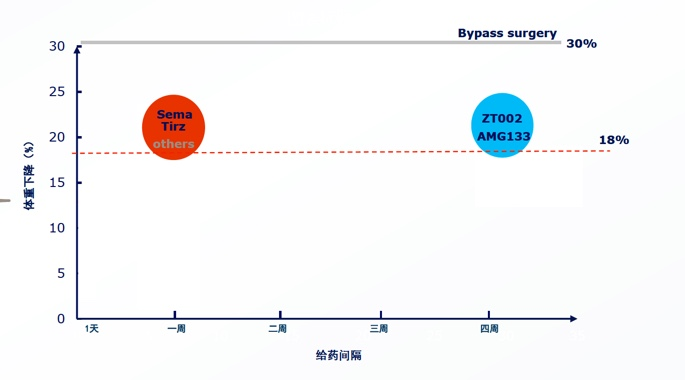
For chronic disease medications, drug adherence is paramount. On one hand, following treatment regimens better ensures efficacy; on the other, high adherence typically means better product sales. Methods to improve adherence mainly include three approaches: extending dosing intervals, changing administration forms, and reducing side effects.
For example, Amgen recently attracted market attention with a monthly-dose GLP-1, AMG-133 — from once-weekly to once-monthly injections, a significant improvement for needle-phobic patients, dubbed the "semaglutide upgrade."
In fact, domestic companies are also developing monthly formulations. BlueRun Ventures portfolio company Qurient Biotech's pipeline candidate ZT002 is a monthly formulation. As an ultra-long-acting GLP-1, ZT002 uses fatty acid side-chain modification technology to extend peptide circulation time in vivo, combined with albumin binding to leverage albumin's long half-life to extend the peptide drug's own half-life.
Qurient Biotech is a representative biotech company focused on recombinant protein drug production using E. coli. Currently, few domestic companies possess independent R&D capabilities in fatty acid modification technology. Through differentiated competition, Qurient Biotech has potential to become a significant player in metabolic disease domestically and globally.
Shifting administration from "injection" to "pill" is also an effective adherence improvement method, but peptides are difficult to develop as oral drugs because protein macromolecules are readily degraded in the stomach, resulting in extremely low bioavailability. Though an oral semaglutide version exists on market, its efficacy (at equivalent doses) lags the injectable version. However, oral formulation development barriers represent enormous opportunity. Qurient Biotech has doubled peptide drug oral bioavailability through optimized formulation recipes and drug molecules, combined with its QLLong ultra-long-acting technology platform and QLOral oral peptide technology platform. Its developing ZT006 has potential to become a next-generation oral GLP-1 following oral semaglutide.
Developing multi-target combination products helps reduce gastrointestinal side effects — the most common adverse reaction with GLP-1 drugs. Tirzepatide's milder side effects owe partly to its dual targets (GIP/GLP-1).
Of course, another benefit of multi-target combinations is synergistic mechanisms enabling multiple therapeutic effects such as weight management and fatty liver treatment. For example, Innovent Biologics and Eli Lilly's jointly developed GLP-1R/GCGR dual agonist mazdutide uses GLP-1R to promote insulin secretion, lower blood glucose, and reduce body weight, while GCGR agonism enhances weight loss efficacy and improves hepatic fat metabolism. This combination has shown even superior weight loss effects versus tirzepatide in clinical trials.
Qurient Biotech is developing a GLP-1/GDF15 fusion protein drug. GDF15 can suppress appetite and regulate energy metabolism, playing important roles in obesity and metabolic disorders, with potential biomarker value in neurodegenerative diseases and cancer.
Beyond GLP-1: Exploring New Peptide Drug Modalities
ADCs have been white-hot for the past two years. In this "everything can be conjugated" era, peptide structures offer flexible design — they can serve as therapeutic or targeting conjugation objects, and as excellent conjugation linkers. Peptide-drug conjugates (PDCs), peptide-oligonucleotide conjugates (POCs), peptide-radionuclide conjugates (PRCs), and others are popular new molecular drug types based on peptides.
| Research Area | Representative Companies | Representative Products or Pipeline |
|---|---|---|
| Peptide PDC | Mersana | XMT-1536 (ovarian cancer, in development) |
| Sutro | STRO-001 (hematologic malignancies, in development) | |
| Peptide POC | Ionis | POC platform co-developed with Bicycle |
| Alnylam | POC platform co-developed with PeptiDream | |
| Peptide PRC | Novartis | Lutathera (neuroendocrine tumors) |
| Novartis | Pluvicto (prostate cancer) | |
| Fusion | FPI-1434 (solid tumors, in development) | |
| Cyclic peptide PDC | Bicycle | BT1718 (solid tumors, in development) |
| Oral cyclic peptide | Merck & Co. | MK-0616 (oral PCSK9 macrocyclic peptide inhibitor for lowering blood lipids) |
Peptide carriers have broad applications. Optimized peptides can carry radionuclides, oligonucleotides, small molecules, cytotoxins and more, greatly expanding applicable disease areas.
For example, renowned small nucleic acid drug companies Ionis and Alnylam both possess their own peptide-oligonucleotide conjugate platforms. Alnylam is gradually moving toward peptide-oligonucleotide delivery systems, using innovative peptide molecules to achieve tissue/cell-selective delivery of oligonucleotides, improving in vivo pharmacokinetics for oligonucleotide drug development in oncology, metabolic disease, and other areas.
Another example: this year Novartis invested $5 billion to double down on macrocyclic peptide radiopharmaceuticals. This therapeutic approach combining peptides with radionuclides or radioisotopes can effectively control advanced, metastatic tumor progression while reducing side effects. Compared to antibodies, peptides' special half-life characteristics and lower affinity provide higher tissue penetration and cellular uptake efficiency. Novartis, renowned for radiopharmaceutical technology, aims to seize first-mover advantage in this heavyweight anti-tumor drug category.
Looking to the Source: Breaking Through Early Peptide Discovery
"Early discovery" refers to new target discovery and molecular screening for peptide raw materials. Because peptides differ from small-molecule drug target structures, traditional structure-based virtual screening methods are difficult to effectively apply to peptide target discovery, limiting lead peptide discovery efficiency. AI can play an enormous role here — machine learning-based virtual screening methods can rapidly identify lead peptides with strong target binding from massive peptide libraries.
For example, BlueRun Ventures portfolio company TenDia Bio leverages AI and mRNA display technology to screen for cyclic peptide drugs with picomolar-level affinity, and plans to launch high-value target discovery projects this year.
And protein structure prediction algorithms like AlphaFold provide new approaches for predicting peptide three-dimensional structures. AlphaFold can generate high-quality complex structures, revealing key sites and patterns of peptide-protein interactions, and can also assess effects of peptide sequence modifications on structure and activity, accelerating peptide structural modification.
Some companies are already attempting AI-based approaches to build peptide molecular libraries using combinatorial library methods to enrich library diversity. Work based on these foundational technologies can drive more downstream peptide drug discovery.
Beyond Pharmaceuticals: Peptides' Crossover Applications
Beyond drug-making, peptides have already deeply penetrated beauty. Through variations in amino acid composition and sequence, functionally diverse peptide molecules can be obtained. Some possess multiple bioactivities including antioxidant, anti-aging, whitening, moisturizing, and repair functions, able to regulate skin cell physiological functions and improve skin condition.
For example, Korean company Caregen is a leading enterprise in peptide skincare, holding over 200 peptide-related patents. CTP-EGF repair peptides, SYN-AKE peptides and others are unique anti-aging peptide patents owned by Caregen, which has long supplied peptide raw materials to renowned cosmetic brands including Estée Lauder and Lancôme.
Peptide anti-aging "never goes out of style," and has become an important direction for domestic startups as well, with ZYAN Technology being one example. Currently, ZYAN Technology has established a bioactive peptide laboratory at Jiangnan University, using small-molecule peptides and retinol ester ingredients to construct anti-aging compositions, revealing synergistic effects of small-molecule peptides and retinol esters while mining new anti-aging pathways and molecular mechanisms for multi-compositions on this basis.
Peptide anti-aging research and product production have high barriers; controlling supply can help companies consolidate market position or improve pricing power. Meanwhile, as consumer-oriented biological products, peptide beauty and skincare items face end consumers directly, with relatively greater demand-side autonomy.
Peptides' broader application scenarios include agriculture, where peptide products may play roles in modern farming as biopesticides, yield-enhancing fertilizers, and animal vaccine adjuvants.

OpenAI researchers Kenneth Stanley and Joel Lehman's book Why Greatness Cannot Be Planned notes: "You can only find things by not looking for them." How similar this is to GLP-1's tortuous success: for decades before its breakthrough, GLP-1 stumbled along — no one would have predicted it could support a ten-billion or even hundred-billion dollar market.
Today's situation is the same. Human peptide development may have tapped less than 1% of potential, but this also means 99% of future possibility. Any innovation and breakthrough doesn't advance along a fixed route toward a clearly visible target, but rather resembles treasure hunting in a fog-shrouded swamp. So if you're a peptide entrepreneur with unique ideas about the industry, welcome to contact BlueRun Ventures — we'll accompany you to patiently hunt for treasure!

Venture Studio: When Investors Become Entrepreneurial Producers | 创业有何蓝

稚晖君: The Wild Iron Man, Starting a New Adventure | 创业有何蓝

Bytedance's Full Acquisition of Oladance: AI-Native Hardware About to Dance | 通向AGI之路