BlueRun Ventures in Conversation with Galaxy Universal, AgiBot, and Lingchu Intelligence: When Embodied Intelligence Enters Reality | The Road to AGI

Between Science and Reality
As the critical mechanism for interaction between the physical world and AI systems, embodied intelligence is widely regarded as the key path toward AGI.
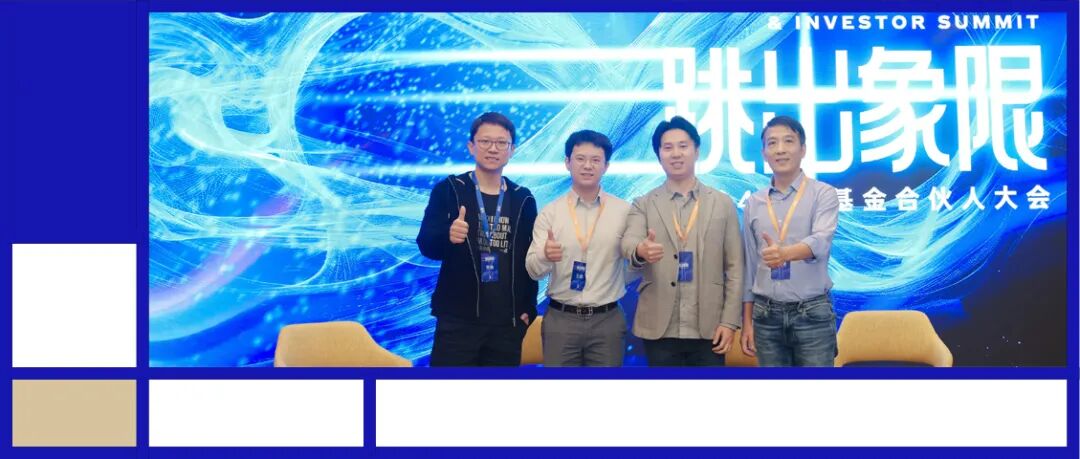
At BlueRun Ventures' 2024 Annual Fund Partners Meeting, BlueRun Ventures Partner Cao Wei sat down with Wang He, founder and CTO of Galaxy Universal, assistant professor at Peking University, and BAAI scholar; Yao Maoqing, executive director of AgiBot's research institute and head of embodied intelligence business; and Wang Qibin, founder and CEO of Lingchu Intelligence. They explored many fascinating questions —
With an endless stream of new demos emerging, what counts as genuinely impressive intelligence? How quickly is the core technology of embodied intelligence evolving? From demo demonstrations to real-world applications, from scientific research to industrial deployment, this conversation offers deep reflection on the present and future of embodied intelligence.
We've compiled a transcript of the dialogue, hoping it brings you insight and inspiration:
Cao Wei: This year has been incredibly hot for embodied intelligence. From the beginning to the end of the year, we're seeing new demos every few weeks. All three of you are talents in research and product development. What do you look for when watching these demos? How do you judge whether the intelligent performance is truly excellent?
Wang He: We've demonstrated Galaxy Universal's product Galbot at BlueRun events multiple times — you place an order on your phone, and Galbot walks straight to the shelf to grab drinks, snacks, and various items for you. This shelf scenario clearly targets the hundred-billion-scale retail front-warehouse, logistics, and automotive factory markets. The generalization, speed, and accuracy shown in the demo can give everyone greater confidence that embodied intelligence doesn't just exist in papers and videos, but can enter these scenarios in the near future. The skills required for Galaxy Universal's large-scale deployment product with Meituan have been fully demonstrated.
Yao Maoqing: Whether there's a gap between demo and actual performance still needs to be tested through offline interaction. Take Figure 02 placing metal blocks at the BMW factory — according to feedback from visitors who actually went to the factory, it still needs improvement in generalization and pose variation; and because they use a pure bipedal configuration, there have been falls during actual operation. When I watch demos, I don't focus much on algorithms. I pay more attention to the configuration, because hardware remains the limiting factor at this stage — arm, wrist joint, and dexterous hand design, whether they feel refreshingly innovative.
Boston Dynamics is renowned for its body design and powerful joints, but throughout the entire operation workflow, you can see that its upper and lower body are controlled through decoupled algorithms. For example, the pick-and-place positions are fixed, not based on general navigation capability but on navigation after mapping. The grasping part is also based on modular CV (computer vision) design, detecting objects in advance and then planning the grasping position.
Tesla's videos also show technological capabilities across different generations. The battery-grabbing demo uses end-to-end technology, with low generalization requirements and very fixed positions. But in the more recent carrying demo, you see keypoint detection and object detection/segmentation capabilities, seemingly the previous generation's vision-based technology. From our firsthand exposure to customer demands, this also makes us wonder whether these actions will face serious skepticism when deployed in real scenarios — Is the success rate really that high? Is the cycle time comparable to humans?
Wang He: Boston Dynamics' core technology is actually KFC Fusion — the combination of kinematics, force, and camera. It's about pose tracking of known objects, moving along a pre-designed motion trajectory within an MPC framework. In other words, how the object moves is designed in advance. The advancement of its technology still lies in control. The openness of tasks and generalization of objects are not demonstrated. Wheeled robots don't need control because they simply don't fall over.
Wang Qibin: Products that truly deploy in industry need to achieve 99.9% success rate; proof-of-concept needs 95%. Many investors ask me about PMF. I think one metric to look at is total unit shipments. Everyone likes to talk about the GPT moment, but I personally believe more in Tesla's Model S moment. The Model S shipped over 2,000 units in its first year, 10,000 in the second year, 100,000 in the fifth year, and one million in the tenth year. The Model 3 iterated rapidly using this paradigm — 100,000 units in year two, one million in year five. For robotics companies, before reaching 10,000 units, first see how long it takes to reach 1,000 units.
Cao Wei: What do you think are the most critical technical challenges or bottlenecks facing current embodied intelligence?
Wang Qibin: The biggest challenge remains data. The data problem isn't about how much data there is — it's about how much synthetic data and real-robot data we need, and how to maximize the intelligence of synthetic data.
Another question is what methods to use for data acquisition. Data has three developmental stages: first, in-house lab data; second, data centers that most domestic companies are currently building; third, deployment in real top-tier customer scenarios. Do all three stages require real robots and vehicles? We don't think so. There may be ways to achieve low-cost real-robot data collection, combined with synthetic data to rapidly iterate models.
Cao Wei: I can see everyone has both technological foresight and clear industry-side deployment planning. These are all tied to insight and understanding of technological boundaries. So in your view, what will the iteration of embodied intelligence technology look like in the short term of two to three years, and the medium term of three to five years?
Wang He: Don't equate embodied intelligence with embodied AGI — time is needed between them. So when we discuss foundation models for embodied intelligence now, we shouldn't expect all skills — like knitting sweaters or tying shoelaces — to be contained in one model. Instead, we should focus on skills that can be deployed, have large demand, and can achieve certain levels of success rate and reliability.
From academic frontier to industrial application, I think we should focus on mobile pick and place — that is, mobile robots that can correctly grasp items at the right location and place them at the correct destination. Many application scenarios like retail and food delivery, hotel hospitality services fall within this paradigm. It doesn't involve particularly fine manipulation. Through existing graphics simulation contact models, we can fully achieve physical realism comparable to the real world. More complex manipulation skills can be gradually solved on this foundation.
Galaxy Universal's short-to-medium-term goal is that from now to the next three to five years, we will make "1x speed" mobile pick and place better, more generalized, and more successful, thereby opening up a hundred-billion-scale humanoid robot application market. In the medium-to-long term, Galaxy Universal will continuously extend to deeper skills. For example, doing laundry is also pick and place. I think we should cut into at least one complete task flow in home scenarios. If humanoid robots can do laundry well, this will become an important "killer app" for humanoid robots entering homes. This goal may be achieved in five years.
Yao Maoqing: I think embodied intelligence development still revolves around the main elements of AI: hardware body, algorithms, and data.
First, looking at algorithms, the recently released "National First Batch of Humanoid Robot Embodied Intelligence Standards" divides intelligence levels from basic to advanced into five stages G1-G5. We're currently roughly at the G3 stage, which means achieving end-to-end models for single tasks with high cycle time and high success rate. G4 is the next stage, developing end-to-end models for different tasks into general models, and achieving "point and shoot" through instruction following. I'm relatively optimistic — for example, tasks like putting dirty clothes into the washing machine, drying them after washing, and folding them, I think may be achievable next year.
Second is data. Data is the key factor limiting embodied intelligence development. Unlike large models that have massive amounts of free internet text and image data readily available, embodied intelligence requires more sensor data from virtual or real-world operations of joint bodies. Currently, this data is missing. However, many companies have begun large-scale real-robot data collection this year. Roughly estimated, after one year of such collection, the data volume could reach the token count of large language models. If data can break through, the development of many elementary applications may be faster than we imagine.
Another point: I think body improvement will be crucial for embodied intelligence development in the coming years, showing a spiral ascent. Better bodies will spawn new algorithms, new algorithms will challenge body limits, thereby driving bodies to higher development. For example, I think dexterous hands may be an important R&D direction accounting for half of future robot development investment, because it's these hands that distinguish humans from animals. So dexterous hands and their corresponding sensors and tactile/force sensing devices will be the driving force for the spiral ascent of embodied intelligence.
Wang Qibin: Over the past few years, quadruped robots have developed very rapidly in China, thanks to Cheetah's hardware open-sourcing, ETH's reinforcement learning algorithms, engineering deployment, plus data in the entire simulation environment. Based on this model, I believe that within the next three years, embodied intelligence may see rapid iteration in general manipulation. Hardware becomes more stable and durable, with excellent algorithms and data support.
Upper-body general manipulation has very high value. Our current focus is dual arms and dual dexterous hands, because in many real scenarios, we need one hand for one operation and the other hand for another. For example, in actual operation workflows, staff need to hold several items in the left hand while scanning with a barcode gun in the right hand. We believe such applications could be achieved within three years.
Currently, Lingchu Intelligence focuses on multi-skill combined operations, like the Lego-building operation everyone has seen. Because I personally believe simple operations may not achieve deployment in complex environments, we will combine pre-grasping, grasping, and placing into a minimum viable product with very high success rate. This is an achievable outcome within three years.
Cao Wei: We have a matrix diagram showing the development thread from simple tasks in simple scenarios, gradually moving to complex tasks in simple scenarios, and finally transitioning to complex tasks in complex scenarios. I think everyone's sharing reflects some position on this matrix diagram. On this point, there are some disagreements and different emphases among everyone — this is precisely the important manifestation of ecosystem vitality and innovation in the great explosion of embodied intelligence.
Next, I hope everyone can discuss from the hardware and software levels: how large is the gap between leading U.S. robotics companies like Tesla and Figure, and our domestic leaders like Galaxy Universal, AgiBot, and Lingchu Intelligence? How do you view the upcoming competition between China and the U.S. in embodied intelligence general-purpose robots?
Wang He: For Tesla, I think its hardware and teleoperation are indeed quite good. Tesla has invested heavily in imitation learning, but they dare not demonstrate generalized object grasping capability. Galaxy Universal uses supervised learning, which differs from imitation learning. The VLA paradigm we currently use can grasp a novel object not in the training set from a pile of cluttered objects.
The newly released π0 model used nearly 10 million real-world collected data points, concluding that large models trained on mixed data have no generalization and cannot be directly used in the real world. Real-world tasks require over 1,000 high-quality post-training imitation learning data points for novel objects.
Galaxy Universal's current VLA, in its internal version, can achieve over 80% success rate on unseen objects in the real world without post-training. We believe over 1 billion high-quality synthetic data points are needed to truly drive generalization. Currently, I haven't seen any published technology worldwide that can achieve this.
Yao Maoqing: Regarding the China-U.S. gap, I think robotics is still part of manufacturing, a hardware matter. Looking at new energy vehicle development, Tesla truly took off after having Model 3 and Model Y factories in Shanghai — localization reduced costs, product reliability increased, and this drove the wave. The robotics field will be very similar. Tesla itself has said the target is to make robots priced at $20,000-30,000 for mass adoption, which localization must bring. For AgiBot, this is already reality rather than a target. Because in China, based on the reality of lower labor costs, the ROI for entering scenarios must make sense for deployment to be possible.
From the algorithm perspective, π0 doesn't feel that leading to me personally — it's basically some VRA plus Diffusion technology mixed together. Because it's also a U.S. company without hardware bodies, the data may not be the optimal combination either. From this point, AgiBot itself will release a million-level dataset based on our single configuration this year, shared with the entire industry. At the same time, I believe some models better than π0 will be released.
Wang Qibin: Including Tesla's Optimus Gen 2 and Figure's Gen 2, I'm particularly focused on two important hardware developments. First, battery life has significantly improved — Figure Gen 2 claims up to 5 hours of operation. Second, hand degrees of freedom have greatly increased — Tesla reached over ten degrees of freedom, while Figure continues to push higher. This proves the importance of achieving highly dexterous manipulation, especially complex bimanual operations, in real work scenarios.
From the algorithm perspective, Tesla's imitation learning for placing battery blocks — we believe this path has a ceiling. Imitation learning relies on human-demonstrated data. Some high-dynamic operations, like pen spinning or playing tennis, cannot be obtained through imitation learning. Superhuman hip joint movements also cannot be achieved through imitation learning. Therefore, Lingchu Intelligence builds on imitation learning with high-density reinforcement learning, doing large-scale synthetic data reinforcement in simulation to achieve very dexterous operations — building blocks is one example.
Regarding π0, I think it's more of an academic research. First, its arm is not biomimetic; its movements differ significantly from humans, so training is actually problematic. Second, the gripper has low degrees of freedom — only 3 DOF per gripper, 6 DOF total. Our current minimum configuration is 6 DOF for a single hand plus 7 DOF for the arm, 26 DOF for dual arms. This is very difficult to train through VLA at this stage.


Ten BlueRun Ventures Portfolio Companies Selected for 36Kr WISE2024 Business King Annual Enterprise List
 BlueRun Ventures Leads AllinkBio's $42 Million Series A Round | BlueRun Family
BlueRun Dialogue with Moonshot AI, Muyan Zhiyu: Standing at the AI Industry Crossing | The Road to AGI