Stop Asking Me What an AI Agent Is | BlueRun Ventures x Volcano Engine Event Recap

Deep Thoughts on AI Agents
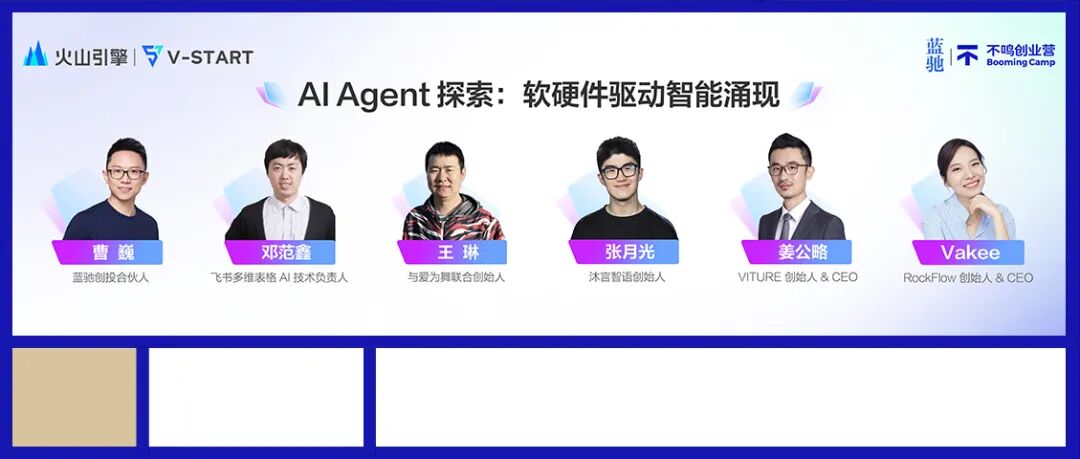
On May 15, BlueRun Ventures | Buming Entrepreneurship Camp and Volcano Engine | V-START Accelerator co-hosted the "AI Frontier, ATRenew — Intelligent Agents and Multimodal Industry Forum," focusing on the technical evolution and entrepreneurial practice of intelligent agents and multimodal AI.
This was a curated industry forum co-created by one of China's largest early-stage funds and its most advanced AI tech giant. The participants included frontline staff from multiple ByteDance business units — such as Seed, Lark, Dreamina, Trae, and Volcano Engine — as well as several AI companies from the BlueRun Ventures portfolio — including Muyan Zhiyu, Yuaiweiwu, VITURE, and RockFlow. The event also attracted guest speakers from star companies like Zhipu AI and Yingmo Technology.
Originally planned for 80 attendees, the venue was packed to capacity with nearly 140 participants from AI startups and ByteDance, mostly founders and C-suite executives from startups alongside ByteDance algorithm and product experts, who engaged in in-depth discussions during the free talk sessions.
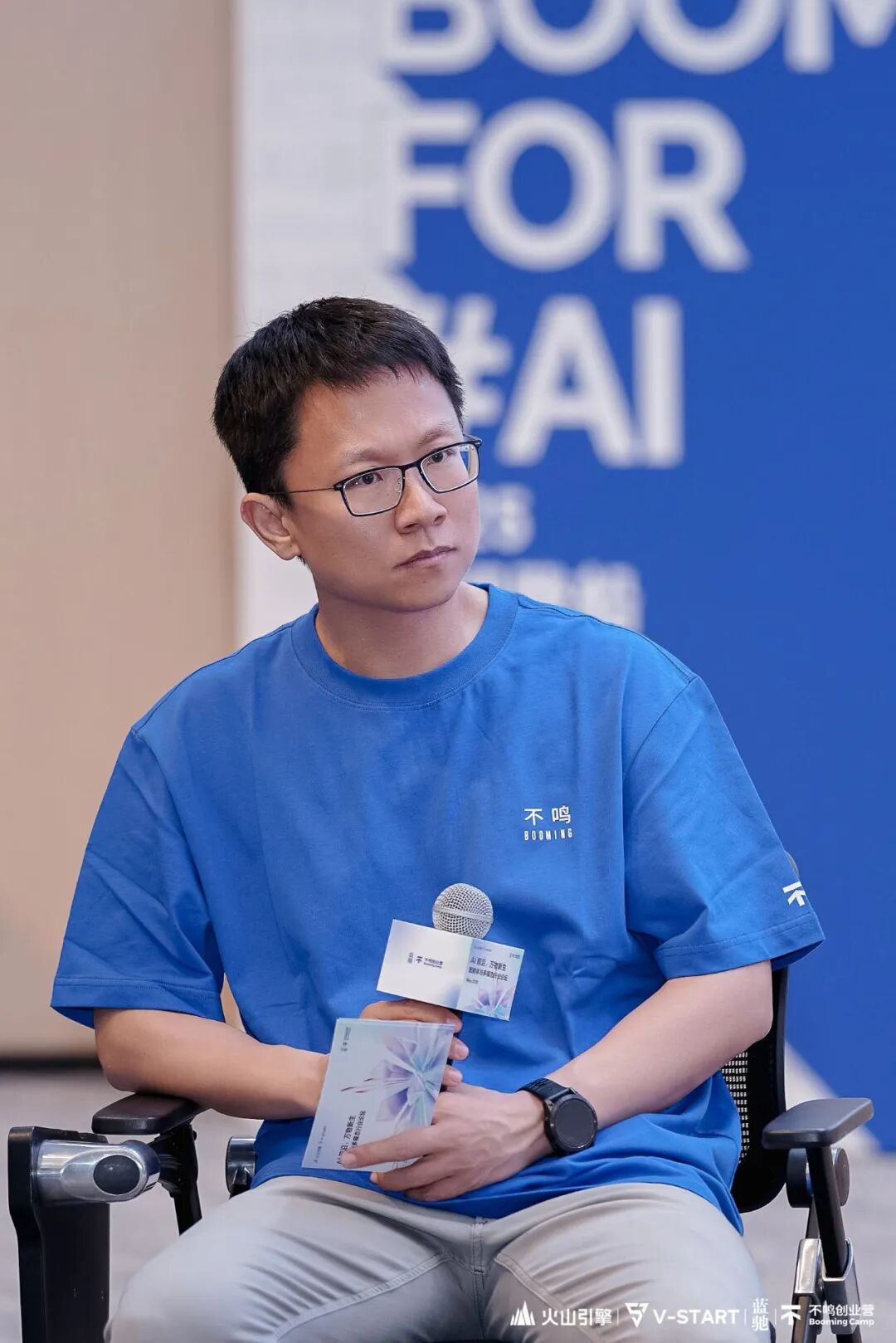
Cao Wei, Partner at BlueRun Ventures
Following this, Cao Wei, Partner at BlueRun Ventures, moderated a roundtable on intelligent agents. Fanxin Deng, AI Tech Lead at Lark; Lin Wang, Co-founder of Yuaiweiwu; Yueguang Zhang, Founder of Muyan Zhiyu; Gonglue Jiang, Founder & CEO of VITURE; and Vakee, Founder & CEO of RockFlow joined the discussion. They shared deep reflections on technical evolution, product definition, and scenario-based implementation.

Fanxin Deng: This year, the hottest topic has been the relationship between Agent and workflow. OpenAI introduced the concept of "Agentic system," bringing in "injectiveness" — the degree of AI autonomy. Agent represents higher injectiveness, while workflow represents lower injectiveness. There are also transitional states between them, with different systems having varying degrees of autonomy.
Traditional RPA and BPMN involve fixed process orchestration, whereas the key to an Agentic system is truly achieving "goal-oriented" design: starting from the user's primary objective, breaking it down into multiple sub-goals, some completed through API or function calls via workflow, others requiring systems with injectiveness. Only such a system can be truly complete: if all sub-goals are autonomously completed by AI, that's an Agent; if all rely on fixed processes, that's a workflow.
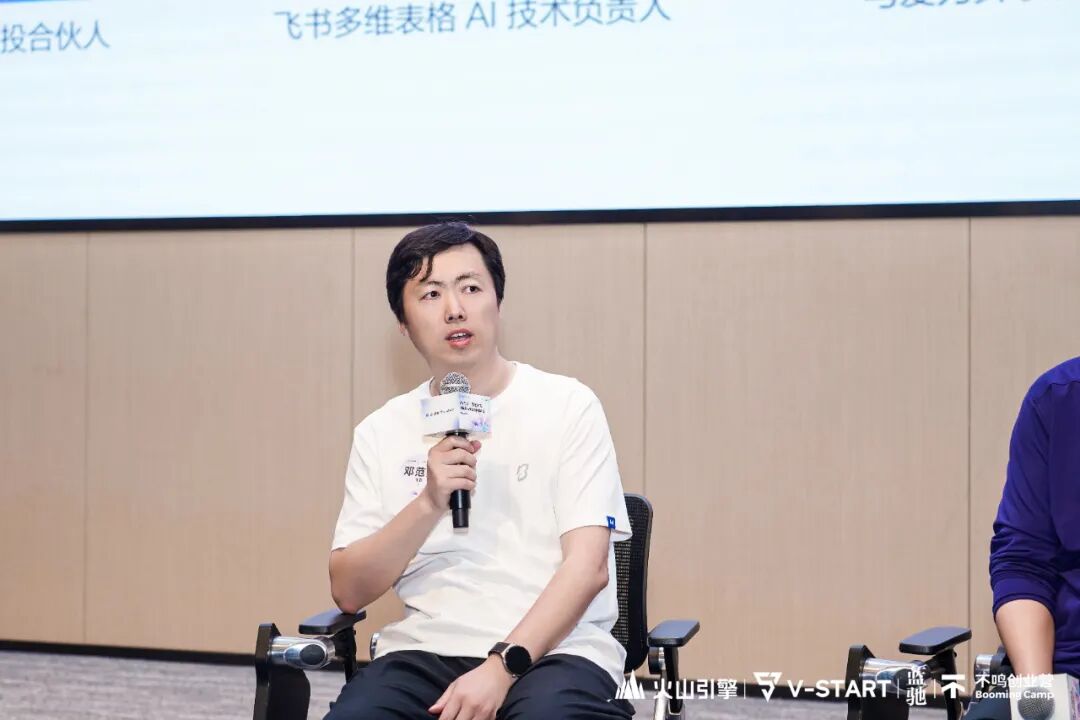
Fanxin Deng, AI Tech Lead at Lark
Lin Wang: The core of Agent has two elements: first, it can autonomously complete many uncertain tasks, unlike RPA which relies on preset processes; second, it possesses self-evolution capabilities.
Yueguang Zhang: The most intuitive way to understand an Agentic system is to look at whether it has flexibility within a certain range — otherwise it's just a workflow. Traditional workflows can also call functions and tools; the key difference is that Agent has a more flexible decision-making mechanism, capable of dynamically selecting tools based on changing requirements.
Another distinction is that Agentic systems introduce more atomic tools. For example, Manus gained popularity thanks to its code-react-based heuristic programming, enabling Agents to more efficiently invoke these foundational capabilities.
Gonglue Jiang: The industry generally believes that AI glasses are the optimal vehicle for Agents, for two main reasons: first, glasses can be always on, collecting data nearly around the clock; second, they can capture multidimensional information that phones, watches, and computers cannot access.
Based on this data, Agents can handle tasks users don't want to do themselves while also providing emotional companionship. For consumer-facing scenarios, Agent design should note several points:
-
Boundaries: Users need to clearly understand what it can and cannot do;
-
Categorization: Like a strategist, driver, or coach beside a boss, each Agent should have clearly defined responsibilities and applicable scenarios;
-
Task reliability: Agents must complete tasks efficiently and accurately, rather than frequently responding with "sorry, missing feature, missing data."
Ultimately, the long-term value of AI glasses lies in forming a data flywheel: through continuous user interaction and daily data accumulation, feeding back into the Agent system to continuously optimize the experience.
Vakee: I believe the biggest difference between Agent and traditional RPA or workflow is this: every node possesses reasoning and intelligence capabilities — that's the core. The defining characteristic of Agent is: inferable, evolvable, and capable of real-time computation, making it extremely suitable for complex, personalized scenarios. Traditional product design pursues the "greatest common denominator," while Agent supports high personalization — the clearer your own preferences, the better it performs.

Fanxin Deng: There are two typical characteristics that can help identify which scenarios are suitable for vertical AI:
-
High knowledge barriers: Data in this domain is invisible and unlearnable by general-purpose large models, such as non-public data in specialized industries.
-
Strong demand for diversity: Even when multiple models have similar capabilities, different models produce different styles. Some users dislike GPT-4o's output style and want to see answers from different models and perspectives.
So if in the future you can provide differentiated styles and more possibilities in creative or expression-oriented domains, there remains significant value.
Lin Wang: Vertical Agents are irreplaceable in many domains. Take the education industry I'm familiar with: only by mastering students' deep-level data — their personal situations, learning processes — can you truly provide valuable services. Data in these domains is not only highly specialized but typically privatized, and this private data is precisely what improves Agent quality. It can further form a data flywheel, making the Agent better with use.
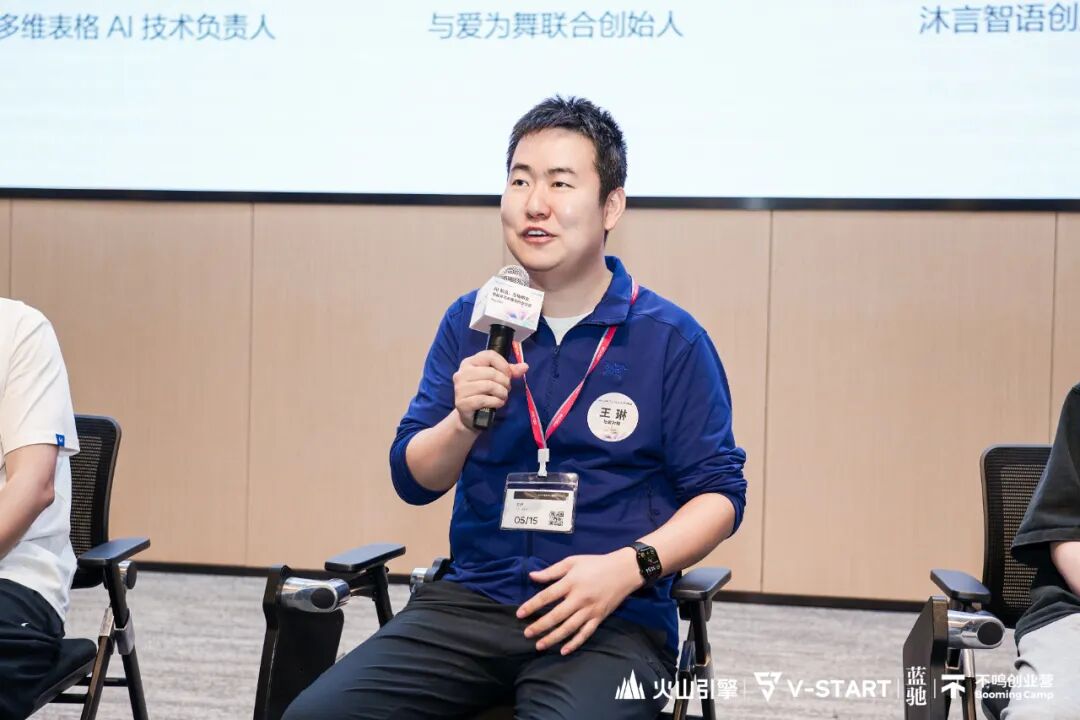
Lin Wang, Co-founder of Yuaiweiwu
Yueguang Zhang: I'm very optimistic about the development of vertical Agents. The industry currently faces two core problems:
First, insufficient delivery quality — many Agents remain at the "toy" stage, struggling to truly meet user needs;
Second, users don't know how to describe their tasks — they find it difficult to articulate their requirements when faced with a blank input box.
The common solution to both problems is "moving toward concrete scenarios." In well-defined scenarios, vertical Agents almost certainly outperform general-purpose Agents. When users open a vertical product, they at least know what problem they're trying to solve; the Agent can more easily acquire context, and the experience feels more natural. So I don't believe there will be a single Agent that covers all tasks in the future.
Of course, general-purpose Agents also have value. Similar to search in the mobile internet era, general Agents can handle long-tail, low-frequency, unpredictable needs, potentially eventually forming a dominant "unified entry point." For example, Tencent is also exploring building a unified Agent System through WeChat plus mini-program ecosystem, suggesting that platform-based ecosystems may also satisfy long-tail demands.
In summary, high-frequency scenarios will be dominated by vertical Agents, while low-frequency scenarios will be captured by general-purpose Agents — this will be the long-term evolutionary direction of the Agent ecosystem.
Gonglue Jiang: The evolution of Agents resembles natural structures: there are both universal genes (like DNA) and diversity across species and individuals. In the AI era, we will also see a pattern of coexistence between general-purpose and specialized models.
Vakee: We use Agents to solve needs, and needs broadly fall into two categories:
-
High-risk needs where errors are unacceptable, such as finance and healthcare, where you must score above 70 — one mistake can have serious consequences.
-
Low-risk needs with high fault tolerance, such as writing emails or business communications, where 60 or 70 points suffice, or where the main goal is simply saving effort.
The conclusion is clear: high-risk scenarios with extreme demands for accuracy and timeliness must use vertical Agents. Low-risk needs can fully utilize general-purpose Agents, significantly lowering the barrier to entry and cost.

Fanxin Deng: From Lark's perspective, we need a smart Agent to assist in building systems. If foundation models make significant advances in multimodal capabilities — such as understanding and generating images, text, and code while performing interface validation — Agents can operate more effectively. But the challenge is that foundation models don't understand our domain of business system construction. How to equip them with relevant experience is the problem we're currently tackling.
From the customer side, they also want to use AI capabilities to build their own vertical Agents. The ideal state is that models provide good fine-tuning capabilities, or even achieve expected results with minimal data. Of course, there's a trade-off here: if the out-of-box performance is good enough, customers might not need fine-tuning at all.
Lin Wang: Our demands for foundation models mainly come from two core application scenarios:
First, improving internal system efficiency. Education is a heavy-decision, complex system with an entire B-side business chain behind it involving many roles. We hope to automate these processes as much as possible through AI. Take phone calls: AI can currently handle simple notifications, but if it needs to talk with a client for half an hour, it still tends to get stuck. Breakthroughs in language understanding or multimodal technology would be immensely helpful.
Second, building an AI teacher for the consumer side. If foundation models can make significant advances in long-form video generation, stable video output, content production, and especially long-term memory capabilities, it would greatly enhance the effectiveness of AI teachers — these are directions we're very much looking forward to.
Yueguang Zhang: First is model personalization capabilities. Many application scenarios are currently bottlenecked not by content quality but by relevance to the user. This is actually a systemic problem involving the model, information collection during interaction, user memory management, context length, and compression. Ultimately, we expect model outputs to truly "fit me" — this is a direction I care deeply about.
Second is low-cost, long-duration visual signal acquisition and understanding capabilities. Roughly 85% of the information we receive daily is visual. If an Agent isn't strong visually, its understanding is essentially limited to that remaining 15% of non-visual input. So improving visual capabilities is, I believe, a fundamentally crucial breakthrough direction.
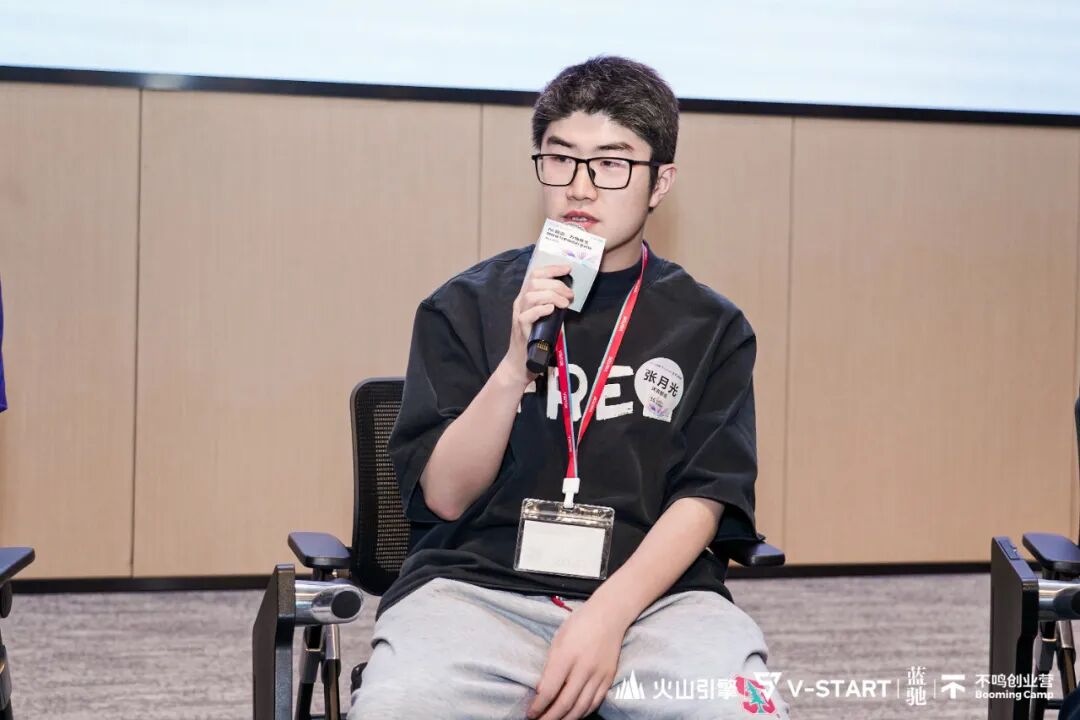
Yueguang Zhang, Founder of Muyan Zhiyu
Gonglue Jiang: The "lower cost, better looking, more comfortable for extended wear" glasses I mentioned earlier are precisely the direction we're developing. Such glasses can not only collect more dimensional data but will also become an important means of driving future improvements in Agent and foundation model capabilities.
First, how to enable small models with greater capability and efficiency is highly significant.
We also look forward to foundation models breaking through in data dimensions they currently lack, such as binocular vision and multidimensional spatial understanding. Most current large models are trained on monocular vision, while human perception relies on binocular, multimodal input. If this capability can be trained using data collected through glasses, it will open new paths for model evolution.
Additionally, lighter, more power-efficient sensing methods deserve attention, such as using IMU instead of binocular cameras for spatial understanding, using VAD for audio capture, and using event cameras instead of traditional cameras. These ultra-low-power sensing methods provide non-comprehensive but critically important data, supporting lower-cost, more efficient intelligent inference.
In the future, large models will rely not only on internet data but integrate these new modalities from the physical world, thereby gaining more authentic, three-dimensional understanding capabilities. This will be a key breakthrough point for next-generation intelligent systems.
Vakee: Our most direct and core demand is speed. Because our system architecture is complex with numerous nodes, each requiring real-time computation, any improvement in model speed translates into multiplicative gains in overall system efficiency. After all, in our scenario, efficiency = accuracy × time — accuracy we may need to optimize ourselves, but the time component can be directly improved by foundation models. As model capabilities strengthen, our serviceable audience will expand: from currently serving only quantitative trading users, to eventually covering professional investors, and possibly one day serving all of Wall Street. That segment of professional users has extremely high trading frequency and information processing demands, and their trading volume often constitutes the vast majority of the entire market.
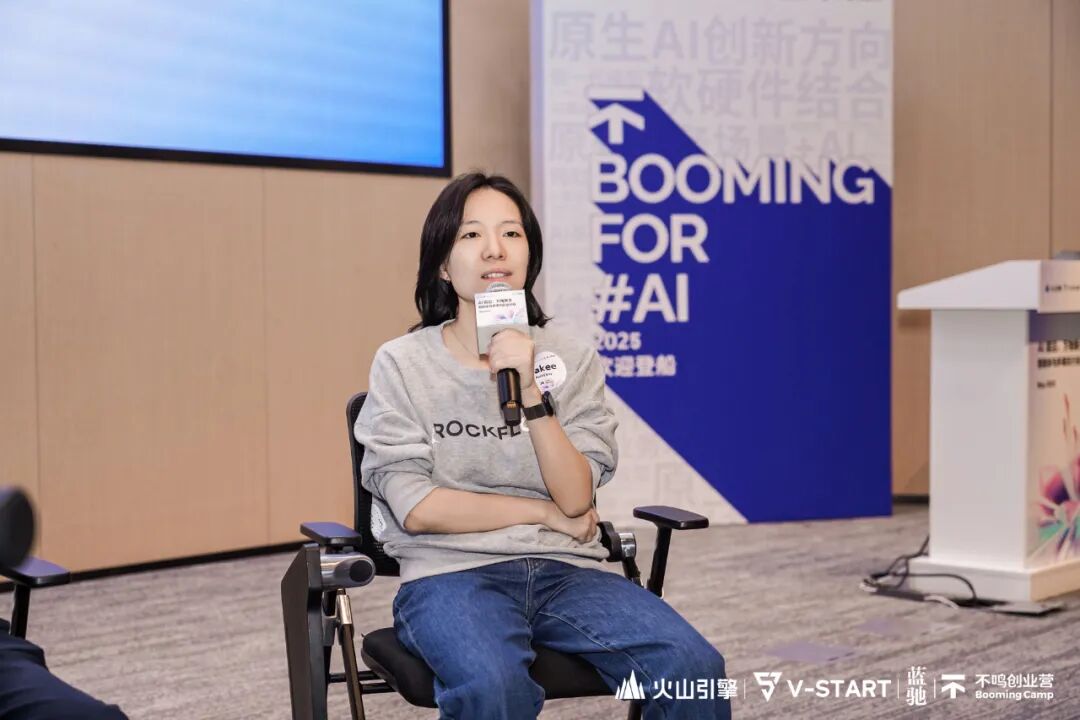
Vakee, Founder & CEO of RockFlow

Vakee: I believe Agent represents a generational shift in our product system, especially in consumer-facing transaction scenarios — it's the key breakthrough for improving product experience and conversion. Many people didn't use Excel not because they were bad at math; similarly, users not operating financial tools doesn't mean they lack trading ability. It's a barrier problem, not a cognition problem. Agent can directly understand user intent through natural language and complete the transaction闭环, transforming these expression-oriented users into action-oriented users, driving genuine interactive conversion. So for us, Agent isn't supplementary — it's the core path to building future moats.
Gonglue Jiang: Today people use glasses to "see clearly"; in the future they'll use glasses to "understand the world." This is essentially a fundamental shift in human-computer interaction paradigm: traditional devices (phones, computers, watches) require users to actively decompose needs into click behaviors; but in the Agent + glasses form factor, users only need to express naturally, and the system understands and executes.
The most important difference is that in the phone era, user demand data沉淀 at the app layer. In the Agent + glasses era, users' raw demand data沉淀 at the system/hardware layer, with Agents handling understanding and distribution.
For startups, this means: the earlier you start and the faster you establish user behavior and data flywheels, the more likely you are to build system-level moats.
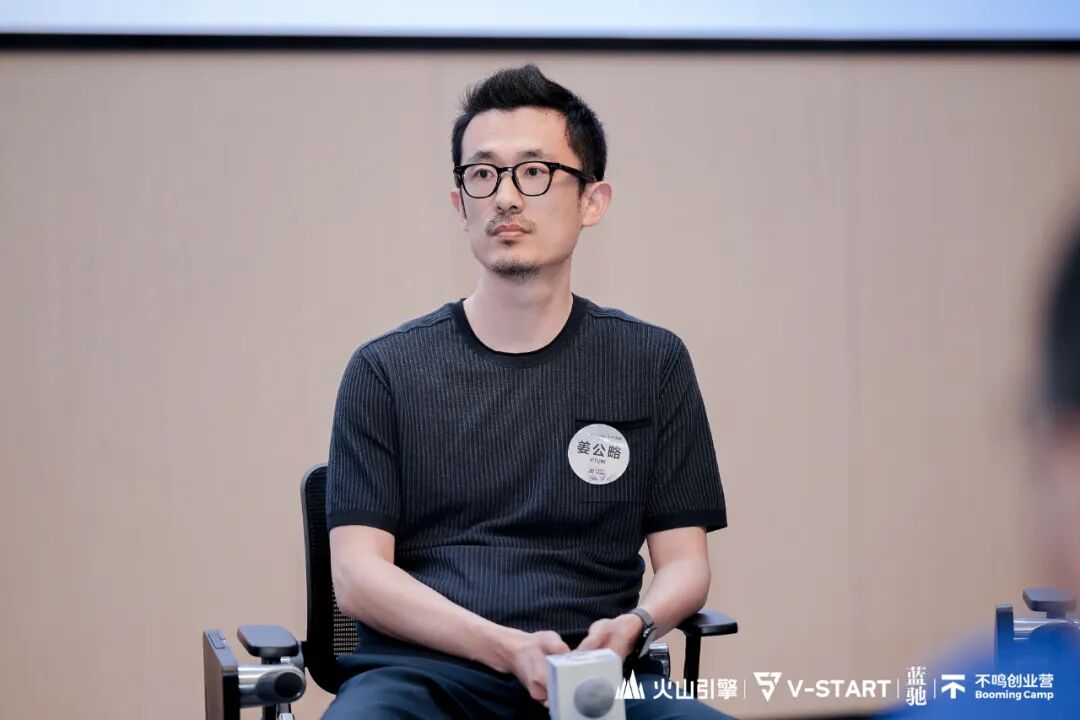
Gonglue Jiang, Founder & CEO of VITURE
Yueguang Zhang: I believe that polishing the Agent experience itself constitutes a moat. Although you often hear people say Agents are just a few layers of models, a workflow, and an engineering framework, in practice we've found that even with the same direction, a 10% difference in engineering implementation, product experience, and user-need alignment at each step compounds into a massive experience gap. "Using" model capabilities well in real systems and "getting right" the experience design is itself extremely difficult and highly defensible.
Lin Wang: The near-to-medium-term moat lies in: solving AI-human collaborative cooperation. We want Agents to reuse human work as much as possible, even gradually replacing it, achieving seamless transition. The key to this process is creating collaboration methods that are both efficient and human-adaptive. The long-term moat lies in: as user numbers grow, continuous accumulation and training optimization based on our private data, making Agent performance increasingly better, thereby building a powerful data moat.
Specifically, our business is complex with numerous roles, and AI's participation is gradually moving from auxiliary to primary: initially AI merely assisted human salespeople, then AI could generate high-quality sales scripts. Now AI can make calls and do personalized selling, and in the future AI may handle 90% or more of sales tasks.
Throughout this process, the collaboration model between AI and humans continuously evolves at each stage, and exploring and refining this collaboration pattern is precisely our key path to continuously building moats.
Fanxin Deng: AI's value centers on ease of use. The emergence of AI chatbots made people wonder if they would replace traditional visual UIs. After extensive discussion, we believe fully replacing visual interfaces with chatbots has problems. Humans are visual creatures after all; visual interactions, like spreadsheets, have remained widely used for decades, showing their importance to human structured thinking. We found in building visual workflow tools that while simple for experienced users, a large number of ordinary users still can't build complex workflows — the barrier remains high.
In contrast, expressing needs through language is more natural and easier for them, so users will choose the more convenient interaction method depending on the scenario. Overall, future product forms will likely strike a balance, preserving the structural and cognitive advantages of visual interfaces while allowing users to complete operations more conveniently through language, rather than completely replacing traditional interfaces with chatbots.

Intelligence Surging: BlueRun's AI Portfolio Unveils New Products Again! | BlueRun Family Headlines

AI is Calling, Pick Up Soon | BlueRun is Hiring
Recap: What Was Said at That Hottest AI Hardware Salon in Shenzhen Last Week | Booming Hub Review
When Embodied Intelligence Enters Reality | Path to AGI