BlueRun Ventures' AI Annual Outlook: Survival, Evolution, and Narrative for China's AI Founders | Booming Talk

"Chinese people can now define a narrative of their own in AI too."
"One moment you feel like AI can do anything, the next you have this crushing sense of 'this isn't really my ability.'"
When asked to describe the state of entrepreneurship in 2025, Fan Zhang, founder of Yuanli Intelligence, settled on the word "vertigo." "You're riding this euphoric feeling of imminent takeoff, while simultaneously fearing the fall." That year, Zhang left his role as COO at Zhipu AI to start his own company, repeatedly experiencing the whiplash of "new ideas being instantly shattered by newer technology" amid the frenzy of model iteration.
Fan Zhang is hardly alone in feeling this vertigo.
Terry Zhu, managing partner at BlueRun Ventures, put it this way: "We can clearly feel the wheels spinning faster and faster, almost being lifted off the ground by the AI wind." This acceleration is also reflected in investment pace. In 2025, BlueRun noticeably accelerated its AI deal flow — nearly every discussion and bet revolved around AI as the central variable.
Behind this sensation of ever-spinning wheels, what exactly are entrepreneurs experiencing? Earlier this year, BlueRun Ventures conducted intensive interviews with 13 AI founders. They came from BlueRun portfolio companies including Moonshot AI, AgiBot, Galaxy Universal, and Yuanli Intelligence, spanning model development, embodied intelligence, hardware, and applications. We wanted to know: as the AI industry sprints ahead at super-Moore speed, what new trends and shifts are those actually inside the vehicle observing?
This is the first installment of BlueRun's annual AI outlook, focusing on several compelling questions: What has it actually felt like to build an AI company over the past year? Have their own companies been reshaped by AI? And in their eyes, what does a truly AI Native company look like?
If you have fresh perspectives on the AI industry, we welcome you to share them in the comments.

Kelvin Sun, co-founder of DINQ, spent ten years in the venture capital world. Today's bustling AI entrepreneurship ecosystem gives him a sense of "returning" — he thinks back to mobile internet in 2015, and consumer brands in 2020.
"In recent years, I felt like the VC circle was almost 'dead.' A lot of people switched careers, even shut down their firms," he said. "Now there's light back in entrepreneurs' and investors' eyes. I've reignited my own entrepreneurial drive, drawing on nearly everything I've accumulated."
Qiu Qiu, founder of Daqian Technology, put it more directly: Chinese AI entrepreneurs can now compete globally with genuine confidence.
This isn't just sloganeering. In January 2026, Moonshot AI open-sourced its K2.5 model. Extensive evaluations showed Kimi K2.5 achieving state-of-the-art results across coding, vision, reasoning, and agentic tasks. Yutong Zhang, president of Moonshot AI, once noted at the Buming Entrepreneurship Camp: "External market conditions can change in any way, but we can still build world-leading models."
From April 2025 to January 2026, GenSpark surpassed $100 million ARR within nine months. Kun Jing, founder of GenSpark, observed: "AI chatbots haven't eliminated work itself — people are still busy with transactional tasks... GenSpark and its millions of users have proven that the AI era demands an entirely new way of working."
"In AI, Chinese people can now define a narrative," said Sam Gao, co-founder of DINQ. "The old stereotype was that Chinese people could only follow behind others. Whether on technical approaches or consumer breakthroughs, you'd propose something and no one would listen. Now in AI, Chinese people can define a narrative. China has world-leading models. We have the confidence to tackle difficult, challenging things."

The flip side of confidence is unprecedented tension.
Mengyang Yang, co-founder of Kaiwuji, previously worked at Microsoft in the UK. Through daily interactions with leaders and mentors more accomplished than himself, he "saw his own ceiling after 20 years in a big tech company." Before deciding to start up, he and his co-founder "had late-night calls for several weeks straight."
After returning to China in 2025, Yang was surprised by the domestic intensity. His team is based in Shanghai's Zhangjiang AI Innovation Town; going downstairs for meals, he found nearly every table discussing AI. "The capital markets are hot. It feels like an invisible hand pushing us forward," he said. "This atmosphere pushes you to move faster."
Wang He, founder of Galaxy Universal, senses the generational difference in this "speed." From internet to mobile internet to today's AI, each generation of technology and product iteration moves faster than the last. Qiu Qiu also feels this rhythm shift. Having experienced both mobile internet and AI entrepreneurship, she notes that "AI has democratized technology on one hand, while shrinking the window for technical leadership from years to quarters, even months."
Behind "fast" lies a composite talent structure. The biggest difference between embodied intelligence and traditional AI is its cross-disciplinary comprehensiveness. Galaxy Universal's core team combines founder Dr. Wang He from the cutting edge of AI research with robotics veterans deeply rooted in industry. This dual DNA fusion gave Galaxy Universal clarity from day one: build embodied foundation models to create general-purpose robots that truly serve industry, rather than staying on a single path of academic exploration or pure engineering.
Jia Peng, CEO of Zhijian Power, said: "Embodied intelligence is one of the most competitive tracks in AI. AI applications can iterate quickly with small teams, but embodied intelligence must respect hardware's own iteration cycles. The efficiency approach we can think of is borrowing from the new energy vehicle industry — introducing standardized processes and manufacturing techniques."
As domestic AI competition intensifies, Shentingji chose to enter the North American market. Founder Wang Tao explained: "Partly to avoid excessive domestic competition, and partly because North American users have strong demand for outdoor lifestyles — high penetration in hiking, camping, and similar scenarios — strong willingness to pay for new technology, and increasing acceptance of Chinese-made products, making it our core growth market."
Hyper3D.AI released Rodin Gen-2 Edit in 2026, the world's first product supporting natural language editing of 3D models, achieving breakthroughs in controllability and editability that make 3D generation accessible to broader user bases. They summarized their past year with the phrase "advancing with determination" — "excitement from technical progress, joy from market validation, exhausting and thrilling, ultimately still moving upward."

In the torrent of speed, some choose to deliberately slow down.
Whisper, founder of Trooly.AI, rejected being "incubated" by others before his own entrepreneurial vision had fully formed, instead embarking on six months of "wandering" to experiment with various AI-based product directions. "In 2025, the industry was basically 'money chasing people,'" he said. "But if I had taken funding then, I might not be doing what I actually want to do. Now I enjoy going to work every day. My team and I found something we can treat as a mission."
In 2026, Trooly.AI accepted investment from BlueRun. Whisper recalled: "It was奇妙 — I thought it would take one to two weeks of decision-making, but received the term sheet the same day."
Zheng Han, founder of Hillbot, hopes his team can move more steadily. Han is a serial entrepreneur. Around 2010, while running his first company, he met Jui Chan, managing partner at BlueRun Ventures, at a Demo Day event. In 2025, Hillbot received BlueRun's investment. In his view, "BlueRun is more willing than other funds to make early bets, and they do so earlier and more accurately."
In 2025, Google DeepMind's restructuring and the return of a research-focused atmosphere deeply resonated with Han. He believes that for AI's underlying technical breakthroughs to map into commercial success, teams themselves need strong half-scientist, half-business DNA. "You need strong technical conviction, and may even need to distance yourself somewhat from places as frenetic as Silicon Valley."

As these entrepreneurs work to transform industries with AI, we were curious: have their own companies been reshaped by AI? And in their eyes, what does a truly AI Native company look like?
"If AI hasn't genuinely reduced people's working hours, then it's not AI Native." For Jia Peng, a clear metric for whether a company has entered an AI Native state is whether AI has become real productivity. Have team members learned to collaborate with "silicon-based employees"? Has individual working time been significantly shortened?
For Wang Tao, a truly AI Native company should be built around intelligent systems logic from day one. "AI doesn't change a single process — it changes collaboration itself." When humans only handle architecture, decision-making, and creativity, delegating all automatable steps to AI, the organization's energy loss drops dramatically.
Sam Gao described what he understood of OpenAI's culture as "order within chaos." Especially the research teams: "Most people are confused when they first join. Do whatever, you find your own research direction." Seemingly loose, yet bound by shared objectives.
Kelvin Sun offered another perspective: traditional "company boundaries" are being eroded, and the concept of organization itself is blurring. "Is OpenClaw a company? Are creators on Douyin considered Douyin employees?"
Internally, Zhijian Power emphasizes information transparency. Jia Peng actively shares strategic thinking with the team. "Only with aligned goals and understanding can people form collective force." In his view, AI companies need to be like AI itself — high in information transparency.
Mengyang Yang believes future companies shouldn't have hierarchical redundant management structures. His ideal company culture is "unburdened collaboration." "If someone wants to solve a problem, everyone around them actively helps and supports them — that's the best kind of company culture."

"In the AI era, a company might remain very small in scale." Fan Zhang's assessment isn't radical. He believes each additional person raises communication costs and organizational entropy. AI amplifies individual capability and makes small teams viable. "Team size contracts, but intellectual density increases."
Kelvin Sun noted that AI Native companies often take an "inverted pyramid" structure. What truly drives decisions is a small number of highly creative people.
Behind rising intellectual density, the environment is also forcing adaptation. Qiu Qiu pointed out that from mobile internet to AI, technology windows keep shortening. A subpar decision shows negative feedback faster. The entire business environment demands far higher decision quality than the mobile internet era. This raises the bar for individual capability enormously.
Product decision-making is also changing. Sam Gao noted that product discussions now rarely start from abstract ideas — they start from working results. "Show the result first, then discussion has foundation." When the Daqian Technology team pushes products, they heavily incorporate vibe coding; product managers will directly hand-craft demos to accelerate R&D progress.
When talent density is extremely high, the CEO role also shifts. Qiu Qiu said, managers need to become servants. "Observe what they need, where efficiency is low — the CEO has to coordinate from the middle, identify where mechanisms might hinder information flow, and fix them."

Interestingly, many founders haven't completely rejected traditional management methods. AI has brought people into a new world, but that doesn't mean all old-world management approaches are obsolete.
Whisper once spent considerable time thinking about organizational innovation. He believes OKR remains an extremely effective tool. "If you're doing fundamental research, you need to let everyone explore their interests to the extreme. But for commercialized companies, there must be clear mission and direction — excessive divergence only reduces effectiveness."
Fan Zhang also believes, "We don't necessarily need to emphasize opposition between new and old organizational forms. In the AI era, some traditional organizational management methods still work."
The Hillbot team is even reading books by Qian Xuesen on solving systems engineering problems. Founder Han believes that today's AI companies, gathering scientists with different specializations to collectively build a systems engineering project, resemble the Manhattan Project or the Two Bombs, One Satellite program. Embodied intelligence's demands on systems engineering exceed those of language models or autonomous driving. To achieve breakthroughs in the overarching technical framework requires leveraging cross-disciplinary power for systematic thinking.
Specifically on hiring, founders display an almost "primitive" insistence.
Qiu Qiu emphasizes one hiring criterion — "loyalty." Not loyalty to the company or the boss, but to oneself. In her view, someone sufficiently loyal to themselves won't have low standards for their work. To find such people, she insists on in-person interviews for key positions, flying out to meet candidates even if they're in different cities. She believes the information conveyed through genuine in-person connection cannot be replaced remotely.
The DINQ team shared a case: the founder of a Hong Kong-listed tea beverage company spends every morning's first thing browsing recruitment sites, personally calling candidates. This company's CEO was found by the founder himself on a recruitment site.
In an era of rapid AI evolution, people remain the core variable.

The AI era isn't just restructuring organizations — individuals are changing too.
The DINQ team shared what AI Native Talent looks like on their platform: most haven't turned 18, never used "old things" — they program with vibe coding, their first design software was Lovart, video editing happens on Keling AI.
"If you explain mobile internet logic to these people, it's like explaining what a pager is — they don't understand." They're not "learning AI"; they're growing up inside it.
Whenever a new product emerges, whenever someone uses it to create new value, the world turns a new page. BlueRun continues paying attention to innovation practices at the frontier of technology. What we care more about are those people undefined by existing paths, daring to reconstruct organizational and cognitive boundaries.
Perhaps the true AI era isn't about models becoming more powerful, but about companies and people both learning to think about their genuine value in more systematic, more intelligent ways.
🎙️ Share your vision of the AI world 🎙️ If you were to sketch a portrait of an "AI Native company," what would it look like? All-AI employees? A CEO who's an Agent? Or office desks all being charging stations? By March 10, we'll select 5 readers with the "most futuristic" comments to receive a custom BlueRun gift. See you in the comments~

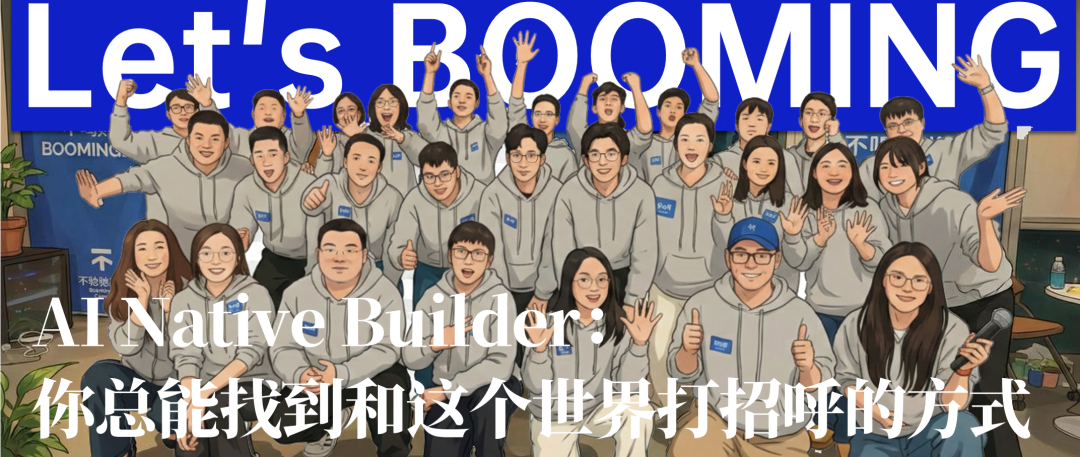 AI Native Builder: You Can Always Find Your Way to Greet the World | Buming Entrepreneurship Camp
 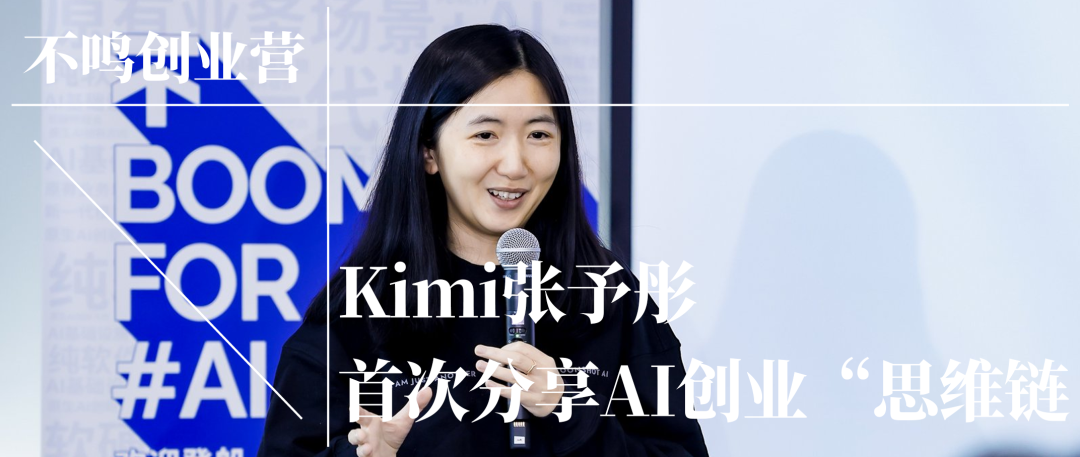 Moonshot AI's Yutong Zhang Shares Her AI Entrepreneurship "Chain of Thought" for the First Time | Buming Entrepreneurship Camp
$50K Invested, 500 AI Users Surveyed: 10 Interesting Findings About AI Product Monetization