The Inefficient Side of AI Is What Makes Us Human | Booming Club Round 2

The inefficient side of Beijing is no longer hidden from view.
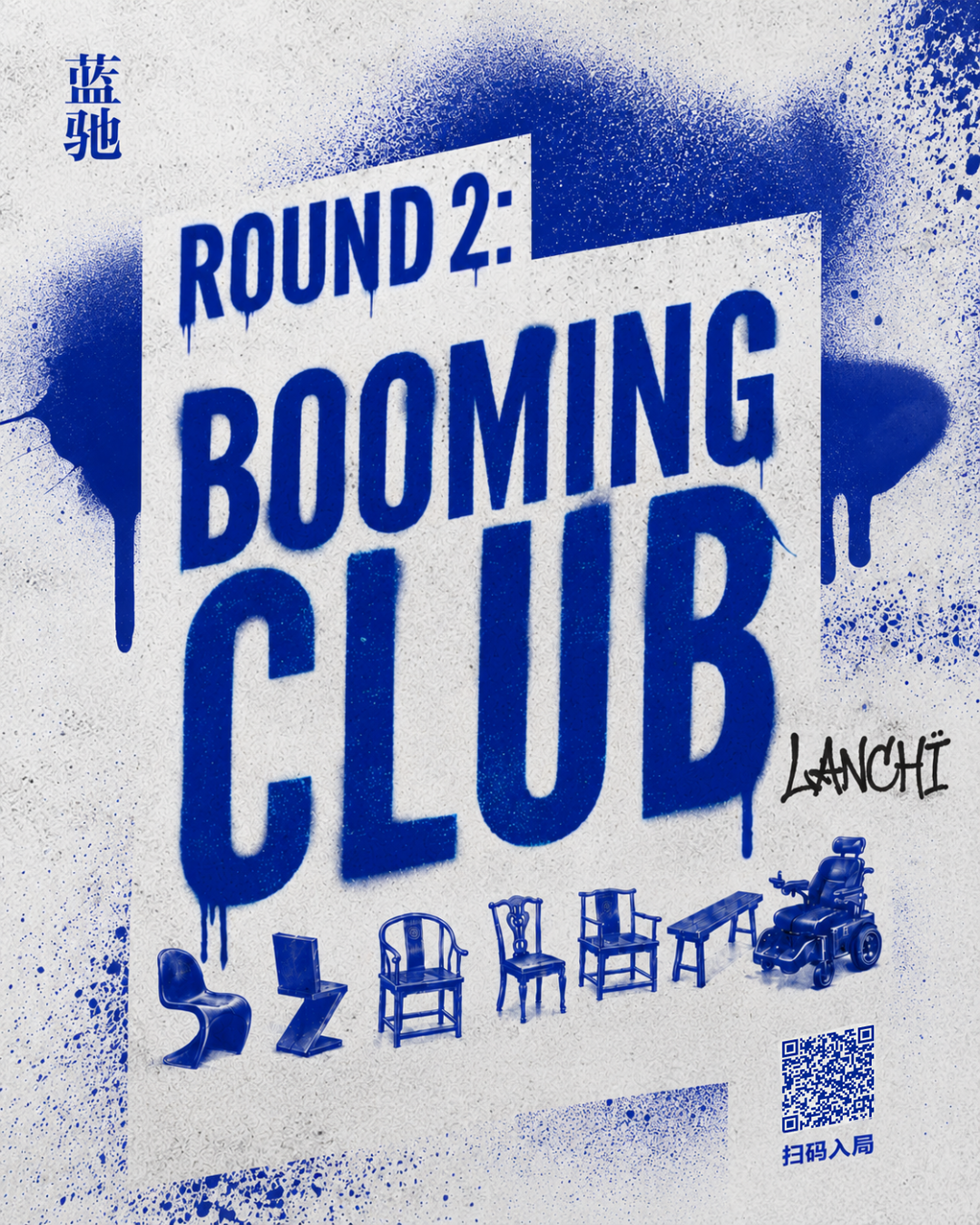
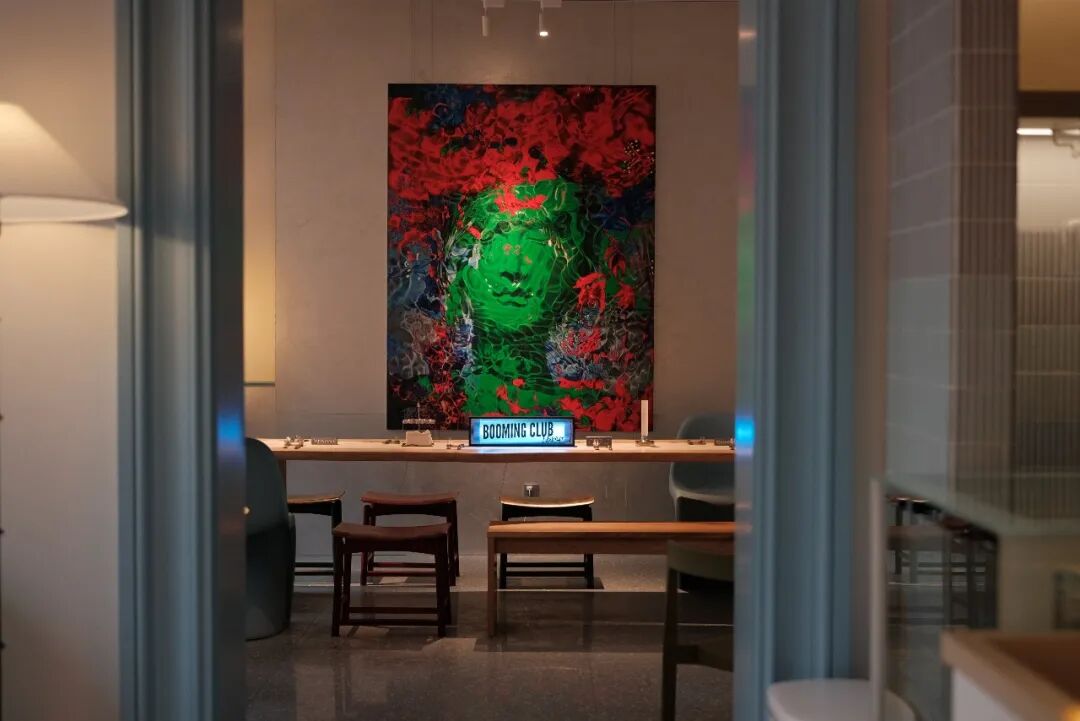
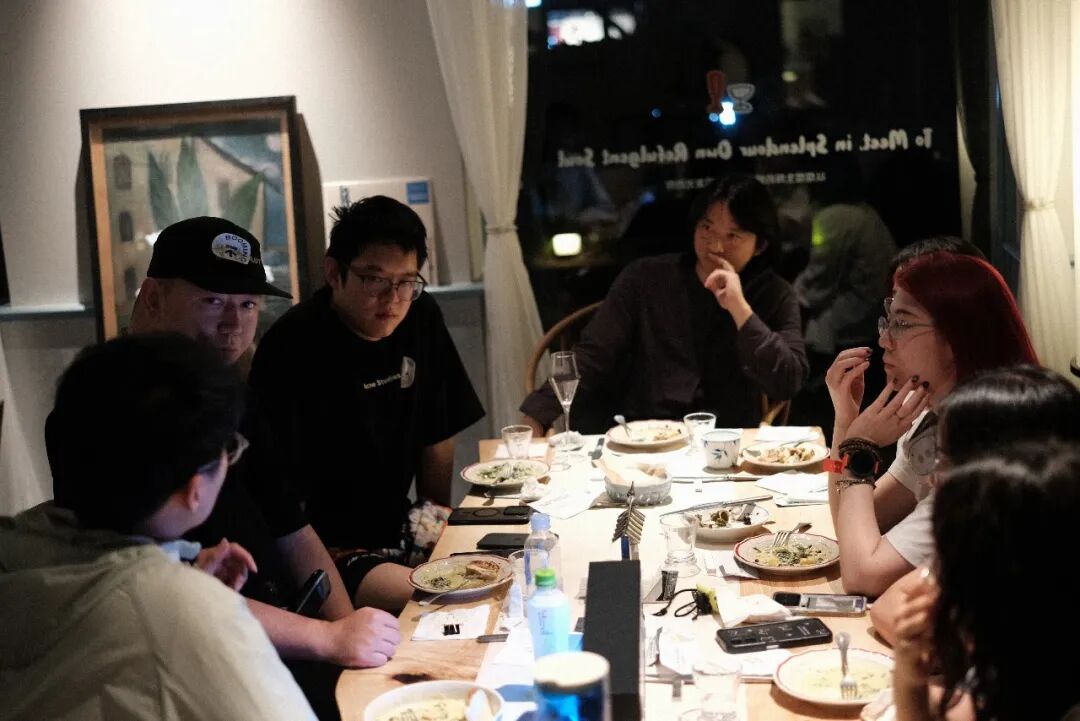
At a French restaurant near Beijing's Drum Tower, still weeks from opening, seven mismatched chairs sit around a single table.
Some the owner collected herself; one she dragged straight from her father's study. There's an avant-garde designer piece, and an old wooden bench from a teahouse.
The seventh chair is the one nobody saw coming — an electric wheelchair rolling in, parking itself with precision in the "spot" everyone had left open.
Its owner is a founder, a former stand-up comic, and someone living with a rare disease. He paid an aesthetic premium for it, because it looks futuristic, the joystick shaped like a game controller,
and anyway, it's cool.
Not a single standard-issue chair among them, as if foreshadowing the theme of BlueRun Ventures' second Booming Club gathering: "AI Inefficiency".
"The industrial age solved for the common denominator; the AI age solves for the extremes."
Vince, the BlueRun investor who set the theme, put it this way.
He organized this gathering to ask: beyond celebrating efficiency's victories, beyond worrying about being replaced for "not being efficient enough," what other narratives do we have?
BlueRun wants to find outliers who can spot those "extremes" and push solutions to their limit — knowing that what looks "niche" or "fringe" often holds lonely resonances waiting to be found.
01
If we only talk about efficiency, AI will always just be a tool
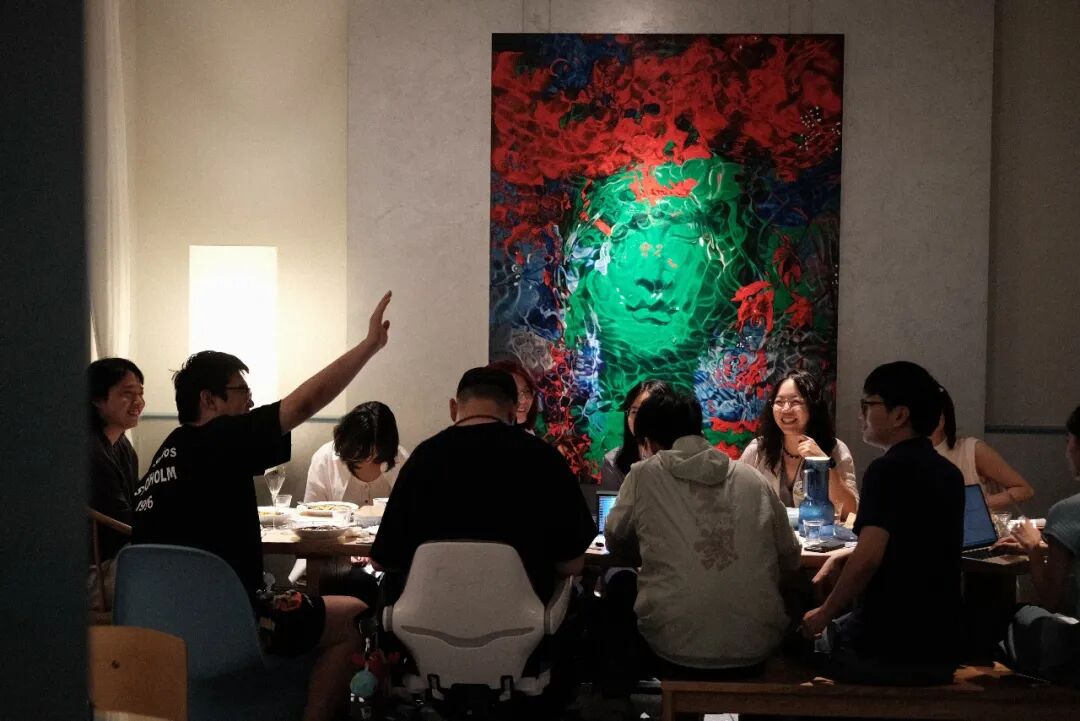
"I'm the frontend dev who got replaced by AI. Got laid off this Monday." The first self-introduction landed like a punchline.
Zhengyue, the former programmer, grinned. "The severance N+2 — that's the last programmer money I'll ever make."
He's pouring more energy into writing adventure game scripts. That's how he's asserting his existence in the AI era.
He genuinely loves coding, but that's on pause for now.
Who knows, maybe someday there'll be a heritage hand-coded experience shop?
His neighbor Aili is also a creator. He did stand-up; maybe humor started as a weapon against pain — he's living with a rare disease, misdiagnosed for years as a child.
Talking about how the big tech companies are all doing "human preference training" on their models, Aili floated a thought: maybe to make AI understand laughter, someone will train it on data from the hundred funniest people on earth.
"Pretty scary if it works," Aili said, pointing at Zhengyue's card that read "codes by day, writes scripts by night."
"You just lost the first half. If the big model can tell jokes, you lose the second half too."
Then Jessica introduced herself, and everyone gasped — so young! ...Can you even drink?
Jessica, 17, incoming Stanford freshman. She connected with us because BlueRun sponsored a hackathon at her previous school.
She had a string of ideas, one being an AI desk pet. When you haven't talked to a friend in a while, your little pet crawls over to their phone and says hi for you.
"Isn't that just QQ Pets from when we were kids? QQ Pets would visit your friends' houses!"
Jiayu, a post-90s girl, shot back.
People love these small designs because people want to be remembered, and want to care for others lightly.
Jessica's desk pet idea resonated with where Rick starts his products.
Rick noticed that "no AI actively cares about me" points to a gap in current AI: the absence of initiative.
Right now humans and AI are still user and tool, but people crave companionship where they feel seen, actively cared for.
Rick has been building AI products focused on the mind. He started with an AI feng shui app.
After seeing a lot of "cyber feng shui," he had an insight: "People who come for feng shui actually have something wrong inside." Problems with living space are often shadows cast by a person's inner world onto the physical one.
So he pivoted, exploring wearable and smart home integration that actively reads user stress
— when the product sees you stress-eating, sees your home getting messier, it senses these as signals of internal disorder.
Slowly, a desk lamp lit up in his mind.
When someone works until 3 a.m., the most natural companionship might be that lamp on their desk...
He didn't expect that lamp to become the doorway for everyone's imagination that night.
02
Every inefficient moment
is a feature of carbon-based life
What's the most inefficient thing you've done that was worth it?
Blind boxes. Fidgeting with walnuts. Smoking and spacing out and gaming. Eating well and sleeping — as people talked, they realized: these are all dictated by our bodies and hormones.
Silicon's ultimate goal is immortality, painlessness, omniscience. But we humans die, hurt, have preferences and biases and obsessions. Every inefficient moment that makes us smile is a feature of carbon-based life, not a bug to be fixed.
These answers pointed to a new question: when it comes to efficiency, AI is already beating humans in more and more ways.
What uniqueness do humans still have?
Or: what won't AI do?
AI can't tell good jokes. Probability-based models can simulate human emotion but can't replicate it.
AI won't despair at the world. AI won't space out.
Someone also quoted Korean writer Kim Ae-ran —
The conversation eventually looped back to Rick's latest creation — that lamp.
Rick wanted this lamp to come alive like the Pixar lamp from the studio's intro, with its own personality, caring about its owner's mood.
He showed everyone the demo he hacked together at a 48-hour competition, and imaginations took off again:
This lamp could combine with Jessica's desk pet; as an agent it could make its own requests, proactively recommend things to humans. It could even date the neighbor's lamp, creating a "lamp-to-lamp" model...
Efficiency's foundation is convergence — all paths narrowing to one optimal solution. But real innovation almost always comes from divergence.
Someone takes a path that looks "unreliable" and collides with something nobody predicted.
Back to the question: what won't AI do?
AI always pursues clear goals. AI won't actively take the long way, but we will.
At least at this night's Booming Club, we're not rushing.
03
The AI age solves for extremes:
Even the only demand in the world can be answered
"In the AI age, the most inefficient things are the things that can't scale — those very personal creations," Jiayu reflected.
She works at Keling AI, witnessing countless inefficient AIGC fragments: a mother uploads a photo of her child crying on the floor, prompt writes "replace the floor with lava" — a somewhat dark but real emotional outlet.
The demand starting from the individual resonated with Taoshi too.
This Gen Zer with bright red hair joked that she's "been driven by efficiency her whole life," with both work stints in AI productivity tools.
Her side project looks pretty inefficient: a shared video diary platform.
The starting point was a friend who, on her therapist's advice, filmed daily videos to send to friends. Taoshi genuinely wanted to support and respond, but genuinely couldn't keep up.
From pure information communication efficiency, her project isn't optimal, doesn't fit so-called "first principles." Some AI enthusiasts might say the better solution is everyone having their own agent, letting agents communicate first to vastly improve efficiency.
But sometimes it's the redundant parts between people that sustain a relationship.
"What everyone talked about tonight is making what you most need, into a product," Aili said.
This is what excites him most about the AI age — "even that one demand from the only patient in the world can now be met."
Because of this hope, he says he might be "the only person not anxious in the AI age."
Aili actually encountered that "only patient, only demand."
In the khub rare disease open-source community he founded, among 1,500 patients, a girl from Guangdong stood out.
Her illness atrophied her right sternocleidomastoid muscle. She tried to move like normal people, but couldn't sustain normal exertion beyond 15 minutes. She'd tried every neck brace, none could soothe her pain — real, literal pain.
She applied for an event Aili organized, messaging him: "Bro, could you put a bed in the venue?"
Months ago, watching AI-enabled technology progress, Aili suddenly thought of what he could do for this girl.
He pulled together a project team to custom-build her a neck brace, with different airbags and inflation modes, adjustable by phone. When her right neck couldn't hold, inflate the right more. When the right tired, inflate the left more.
A neck brace only one person in the world needs would never get approved under an efficiency framework.
Our modern life runs on efficiency, but a world with only efficiency would be incomplete.
Recently, Aili's new project references Japan's "robot café," letting housebound rare disease patients remotely control café robots, going out to work for them.
For this, he's already argued twice with his AI partner. They were discussing how to implement the action of picking up a coffee cup. The AI company person said, just write an algorithm.
He shot back: "Bro! I specifically don't want an algorithm!"
He spent a long time explaining that the robots he wants are for rare disease patients to control themselves with their own hands, eyes, fingers.
This is inefficiency, and dignity, a small hope.
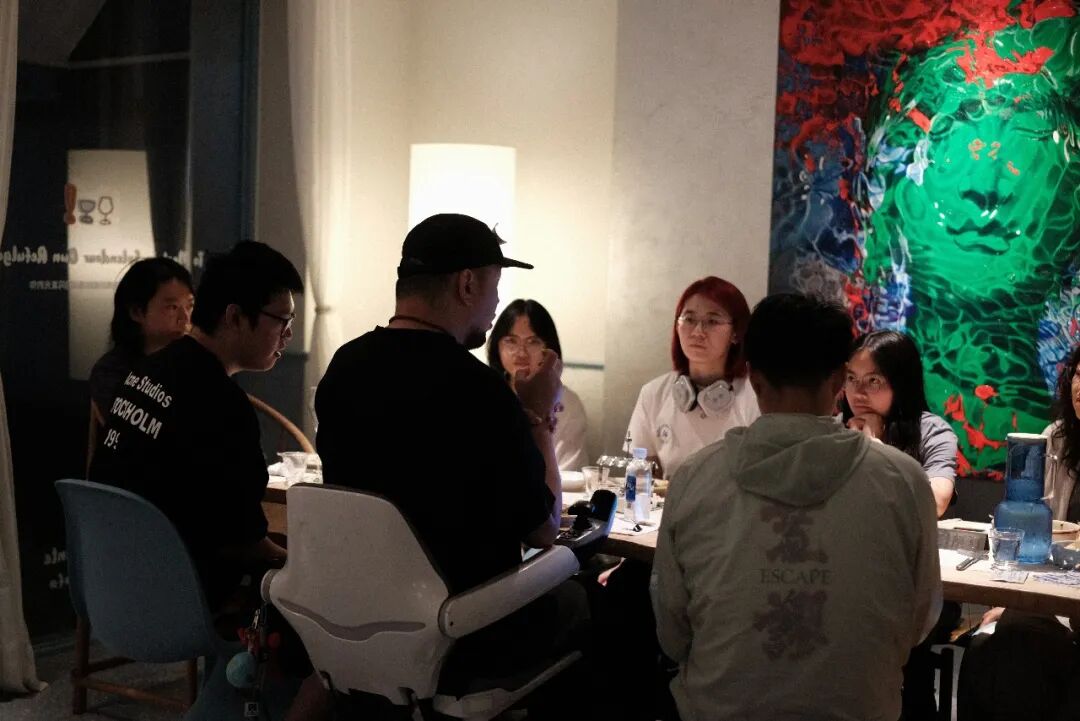
Zhengyue, the self-mocking "AI-replaced" former programmer, had been listening carefully to Aili, following each community case.
Days later when we reached out again, we found Zhengyue was already discussing with Aili what they might build together — that N+2 wasn't the last programmer money after all.
The "replaced by AI" script got its twist and next chapter at Booming Club.
"After doing open-source community, different people always appear around you, walking a stretch of road with you. Pushing something toward a goal point. Same goal, different people, different contributions," Aili messaged us.
BlueRun's Booming Club and Aili's open-source community share a similar ethos: no preset output, no deliberate incubation or investment, just gathering people with certain qualities and letting connections happen naturally.
The opposite of this organizational form might be the beehive — the ultimate efficiency, each individual executing only their function, no redundancy, optimizing for the mean, converging to optimal output.
Technically flawless, but if this becomes the only solution for organizing human society, we'd struggle to define what it means to be human.
Having seen Aili as founder, connector, and cool wheelchair owner, we now come to him as someone living with a rare disease.
His condition is FSHD, facioscapulohumeral muscular dystrophy. Muscles atrophy bit by bit, starting from the face, then shoulders, arms. It won't take a life immediately, but it grinds down one's spirit.
Aili is 26, knowing life's limits far earlier than most peers.
Efficiency maximalism would tell such a young person: you have less time than others, you should spend it on what has the most impact. But he spends enormous energy on a neck brace only one person in the world needs.
He hasn't explained why. Doesn't need to.
This is a choice a person makes that a machine wouldn't.
04
Those who keep talking
after the gathering ends
As dinner wound down, the seventh chair that had sat empty finally filled — multimodal researcher Zhantao had come from out of town specifically, knowing it was almost over, curious to see.
He's published a stack of multimodal papers, but in contrast, his hackathon champion project was a "shipping couples" app.
Until finishing it, he didn't even know what "shipping" meant, but he didn't care — just teamed up on the spot with a girl nearby, caught her need solidly, four-hour demo, "and won."
His AI-generated card read: a hackathon champion shuttling between model training and human emotion.
Labels might be the most efficient way to know someone. And the way to miss them.
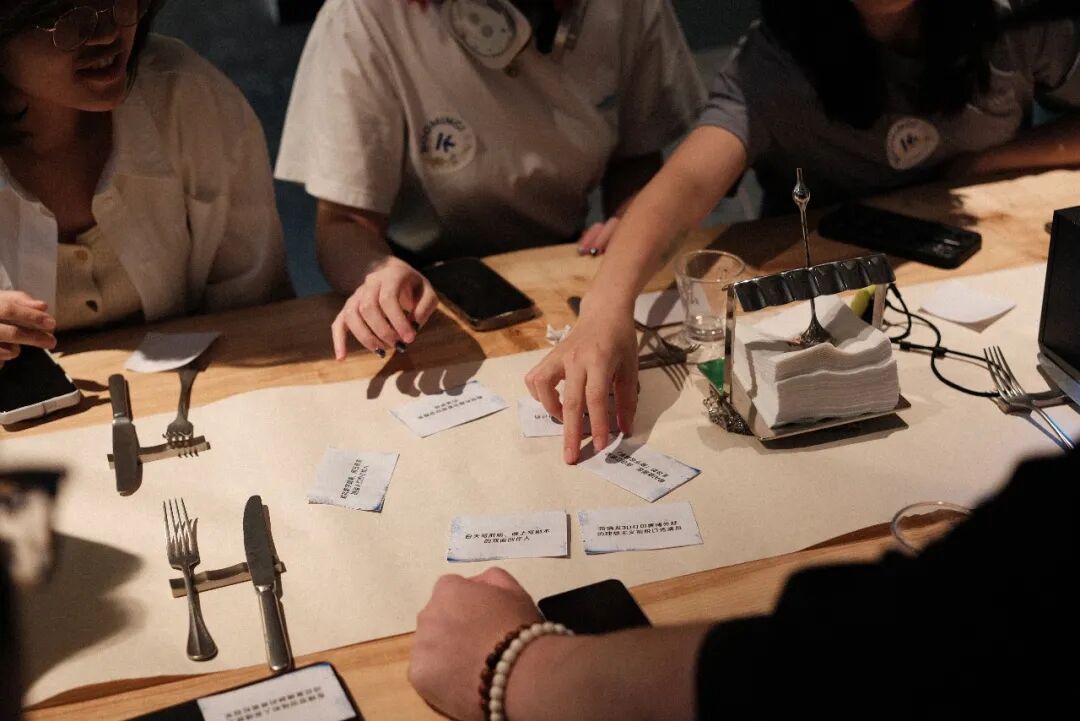
After the gathering dispersed, he and Taoshi kept sitting at the small outdoor table, talking.
At first, this multimodal heavyweight seemed to still be looking for projects, but gradually the conversation drifted to musicals.
Taoshi spends her free time in a musical theater club; they're exploring using AI to improve lighting design and live execution efficiency. Zhantao's eyes lit up — he'd seen so many musicals in the UK. "I specifically asked staff in the UK, just changing gels for stage lights is incredibly complex," he said.
They agreed: on stage, the sweeping "AI replacing humans" narrative fails.
Theater is among the most inefficient things there is. One show needs a huge crew, actors performing live start to finish. Film came, television came, vertical short dramas came — theater wasn't replaced.
Theater is a stretch of naturally flowing time, unable to be compressed or distilled. Art is such a stretch of time; so is life.
Zhantao and Taoshi kept talking.
This Friday night at the Drum Tower, many such conversations were happening simultaneously.
Beijing's inefficient side unfolded, no longer folded away — in taverns opened in Taoist temples, at hutong corners, by roadsides, in young people talking, before them.
End.

BlueRun hosts small gatherings every month. If you want to join Booming Club, follow the BlueRun public account
 We Met a Bunch of "Unserious" Yet Shining Weirdos | Booming Club Round One Recap
AI Native Builder: You Can Always Find Your Way to Greet the World | Buming Entrepreneurship Camp
Before AGI Arrives, This Is the Last Night on Earth | Booming Night