BlueRun Ventures Headlines | Xiang Li: The Two Scariest Things in Life

First, you don't know what you don't know. Second, you can't seek truth from facts.
This article originally appeared in China Entrepreneur magazine, by Yafei Ren
These two things are: not knowing what you don't know, and being unable to seek truth from facts.
In January, China Entrepreneur sat down with Xiang Li, founder, chairman, and CEO of Li Auto. Li candidly addressed the 2022 misalignment between the new automakers' pace and the industry's explosive growth, and shared his reflections on what went wrong.
If Li's internal letter from a few days prior offered guidance on Li Auto's mission, vision, values, and code of conduct, this interview reveals how they plan to achieve those goals — combining philosophical thinking with practical solutions to real problems.
BlueRun Ventures was one of Li Auto's early investors, backing the company across five consecutive rounds. Entrepreneurship is the intersection of glorious adventure and perilous struggle, and we are forever energized by journeying alongside founders. Enjoy —
On the first workday after the 2023 Spring Festival, Li published a letter to all employees. He noted that Li Auto had achieved four "firsts" in 2022, and laid out four guiding directions: the company's mission, vision, values, and code of conduct.
As Li Auto's founder, chairman, and CEO, Li believes that only by continuously elevating one's understanding and fighting against inertia can one truly control their own destiny. "For me personally, there are actually only two truly terrifying things. The first is not knowing what you don't know. The second is being unable to seek truth from facts," Li said during his January interview with China Entrepreneur.
Born in 1981, Li is not only the youngest entrepreneur in China's auto circle, but also a serial founder. Before building cars, he founded PCPOP and Autohome. He once summarized his three entrepreneurial journeys this way: the first time, he focused only on competition and ultimately lost; the second time, he focused more on users and won the market; the third time, he's focused more on organization.
In 2022, as the first tier of new automakers — "Wei Xiaoli" — reached the critical period of密集换代 for their first-generation products, the challenges of organizational management multiplied alongside rapid expansion in business scale and headcount.
Li demonstrated formidable systems thinking. In January 2023, China Entrepreneur had an in-depth conversation with him.
- Key takeaways from this conversation: 1. The biggest difference between people is their use of tools. You use a gun, I use a knife — I can't beat you. 2. Culture isn't about filling gaps; it's about what you're genuinely excellent at, what helps you succeed, and what everyone will defend to the death. 3. For me personally, there are actually only two truly terrifying things: not knowing what you don't know, and being unable to seek truth from facts. 4. At small scale, speed is efficiency; at large scale, quality is efficiency. 5. Stage mismatch is the biggest problem for many companies — they don't have the destiny of a certain stage, but they contract the diseases of that stage. 6. I have no retreat. I can't fail and then go find a job, because I've never worked for anyone else. 7. The core of strategy is trade-offs. I never believe in winning with less, but in every battle I invest more than others. 8. I live to control my own destiny and challenge the limits of growth, so I will always choose the biggest industries and the most difficult fields, and verify myself through results.
The following is an edited transcript of the conversation:
The Next 3 Years Will Be an Extremely Brutal Elimination Round
China Entrepreneur: Both William Li and He Xiaopeng described 2022 as a year of navigating curves. Do you agree with this characterization? What was your experience of 2022?
Li Xiang: First, the overall growth of new energy vehicles in 2022 outpaced the growth of the three new automakers — this is a notable phenomenon. The root causes are twofold. One, the auto industry operates on long cycles, and much accumulation simply takes time. Two, it's closely tied to effort — you need both effort and time, neither alone suffices.
Second, all three new automakers were launching second-generation products in 2022, but due to various reasons — including our own insufficient preparation — deliveries that should have been complete in Q3 were pushed to Q4. For some companies, delays merely changed the production ramp curve; for others, delays meant missing a market opportunity entirely. So the common problem among the three new automakers was slower timing on second-generation products, though the causes and impacts of that slowness differed.
In short, the three new automakers' pace became misaligned with the industry's explosive growth. But for Li Auto specifically, I'd say 80% of it was still our own capability and management problems.
China Entrepreneur: You said 80% was self-related. What kind of reflection did you do? What behaviors, if changed, could have made things better?
Li Xiang: I think the auto industry isn't one where you can change a specific behavior, because intelligent electric vehicles represent a more complex management and operating system than traditional cars. Since 2017, we've used a product-centered cross framework to examine company problems.
The first is brand. Brand has two aspects: externally, how to clearly explain who you are to users; internally, our mission, vision, and values — how to clearly explain who you are to the team. What does strategy mean in such a complex system? It means having a clear brand and cultural positioning, and conducting a series of complex, precise work around that positioning. Actually, among this wave of new automakers, many companies lost at this very first point — they didn't know who they were. They neither knew how to explain themselves to consumers nor how to explain themselves to employees.
Next is product. Product must build a very strong professional system, guided by brand. For example, Li Auto serves families, which requires trade-offs, but many companies don't know how to make trade-offs because they haven't figured out who they actually serve. Also, I think any product must perform well on three dimensions. The first is aspiration — users buying a product for a new era must feel a sense of aspiration. The second is value — even wealthy users care whether seats have ventilation, and whether that ventilation blows air or sucks it. In China, the total population that can buy cars above 200,000 RMB is only tens of millions; these people are predominantly rational. The third is safety, because a car carries an entire family. This includes both hardware and software — hardware must exceed user needs, while software must meet them.
Below that is business model. There are only three business models for cars. The first is manufacturing, where roughly 10 points of gross margin suffices. The second is consumer goods, where 10 to 20 points of gross margin is already quite high for autos. The third is becoming a technology company, which requires above 20 points of gross margin to support R&D investment. These three business models differ in difficulty, system requirements, and investment needs. Different business models also determine different resource allocations.
You can think of brand as my "head," product as my "body," and business model as my "blood." Next, in the product-centered cross framework, how does product extend left and right?
One extension is R&D. R&D has three layers. The first is product R&D, similar to traditional automakers, focused primarily on integration. The second is platform R&D — in traditional autos, because they were less complex, autonomous driving was mainly done by mega-tier-1 suppliers. But today their software and AI capabilities are insufficient, so we must do it ourselves. Especially for the core platforms of intelligence and electrification, we actually do better than suppliers. The third is underlying system R&D — our supercomputing, cloud services, operating systems, etc., similar to the underlying capabilities Apple built later. Over time, we'll end up with three-layer R&D investment like Apple and Tesla, because ultimately what everyone competes on is R&D capability, and each layer deeper makes you stronger.
Beyond R&D capability is delivery capability, which is comprehensive capability. We divide this into three parts. The first is commercialization capability — how to manage multiple models and complex regions. One model versus multiple models is different in difficulty; doing only tier-1 and tier-2 cities versus also doing tier-3 and tier-4 cities is different in difficulty, and even management approaches must change. The second is supply capability — not having your own core component production base is your bottleneck, but this is very complex and requires long-term construction. What we see today are actually results of what we did three years ago. The third is organizational capability, which is the hardest because this can't be solved by effort alone.
China Entrepreneur: Often the harder you work, the bigger mistakes you make.
Li Xiang: Right. So looking at this cross framework, our strongest capability is definitely product; our business model was determined long ago. So we need to build our brand and cultural capabilities, and our R&D capabilities. For example, our platform R&D is now systematic, but system R&D has just begun. Our commercial capabilities still lag significantly, supply capability lags significantly, and organizational capability lags significantly — but these are all opportunities.
China Entrepreneur: In 2022 a new situation emerged: above you have Tesla and BYD, below you have a mass of追赶者, with Wei Xiaoli caught in the middle. Has this pressure changed?
Li Xiang: I think the markets we address are somewhat different, and the long-term value differs. If you're in a cheaper market, like the ride-hailing market, it's somewhat similar to early smartphones — those thousand-yuan phones sold well, but whether they could sustain themselves to become complete smartphones, there was a clear difference. The lower market is definitely bigger; it's a pyramid structure. But I think you need to take a longer view.
China Entrepreneur: How do you see 2023? Or if we extend the timeline, looking at 3-year or 5-year cycles, what kind of competitive state do you think the industry will enter?
Li Xiang: I think 2023 to 2025 will be an extremely brutal elimination round. Because I don't think we need that many companies.
China Entrepreneur: What will the landscape look like in 2025?
Li Xiang: I won't make that assumption. Our core focus is capturing 20% market share in the passenger vehicle market above 200,000 RMB.
The Biggest Difference Between People Is Tool Use
China Entrepreneur: When facing something as complex as the automotive business system, two words are especially important: trade-offs.
Li Xiang: So you must clearly answer "who are we." This is the most important question.
China Entrepreneur: How long did you spend thinking about "who is Li Auto"?
Li Xiang: At the beginning I actually had a pretty good teacher — Zhi Qin (former CEO of Autohome). The first thing Zhi Qin did was help us establish a system; later he helped us梳理 the entire organizational management system. I found this truly immensely beneficial, and this stuff really works.
We also studied some great companies. I think that over the past few years, if you look at the most successful companies in the world, Microsoft absolutely ranks number one. Under Steve Ballmer's leadership, Microsoft's culture was lost. But Satya Nadella rebuilt that culture. He got cloud right, and he got AI right. The new things OpenAI is doing have basically put Google at a life-or-death moment.
China Entrepreneur: Nadella broke Microsoft's "curse" of being unable to do hardware.
Xiang Li: And he transformed Microsoft from a company everyone hated into a company everyone liked. The first thing Nadella did was work with Bill Gates to reshape Microsoft's culture.
China Entrepreneur: You just mentioned that Zhi Qin provided a lot of help when you were figuring out "who is Li Auto" — that was during the Autohome era. Later, when you actually started building cars, how did you think through the question of "who am I"?
Xiang Li: When it comes to the timing of building culture versus building brand, I still think Zhi Qin provided the most help. He gave us an excellent best practice, which had two phases. The first phase was operating on instinct. Because if you come in talking about a bunch of things, people won't believe you. To answer who you are, you have to actually be that thing. You have to be different from others, and that difference has to be something that helps you keep winning. But this needs to be validated. So Zhi Qin gathered Autohome's employees to work through it together. He wrote on the whiteboard: "Over all these years, what key decisions did we make that helped us succeed?" Then he had everyone vote.
First, put consumer interests first. Second, do the right thing, not the easy thing. Third, get to 60 points first, then aim for 100.
People came up with countless examples. At that point, everyone believed it. Because culture isn't about filling gaps — it's about what you're genuinely good at, what genuinely helps you win, and what everyone would defend to the death. That's your real culture.
China Entrepreneur: I once discussed something with a friend from Alibaba. When you're holding a brick and you tell people, "This brick is for building a cathedral, not a pigsty" — because everyone wants to work with someone building a cathedral — the hard question becomes: why should anyone believe you?
Xiang Li: The first phase is really about being forceful. Because a company's initial stage is necessarily centralized — it's determined by the core leadership team at the top. So there's not much room for discussion. You just do it. Once you've achieved it and everyone looks back to summarize, it's easy to see the same patterns.
China Entrepreneur: So winning battles is the best team-building.
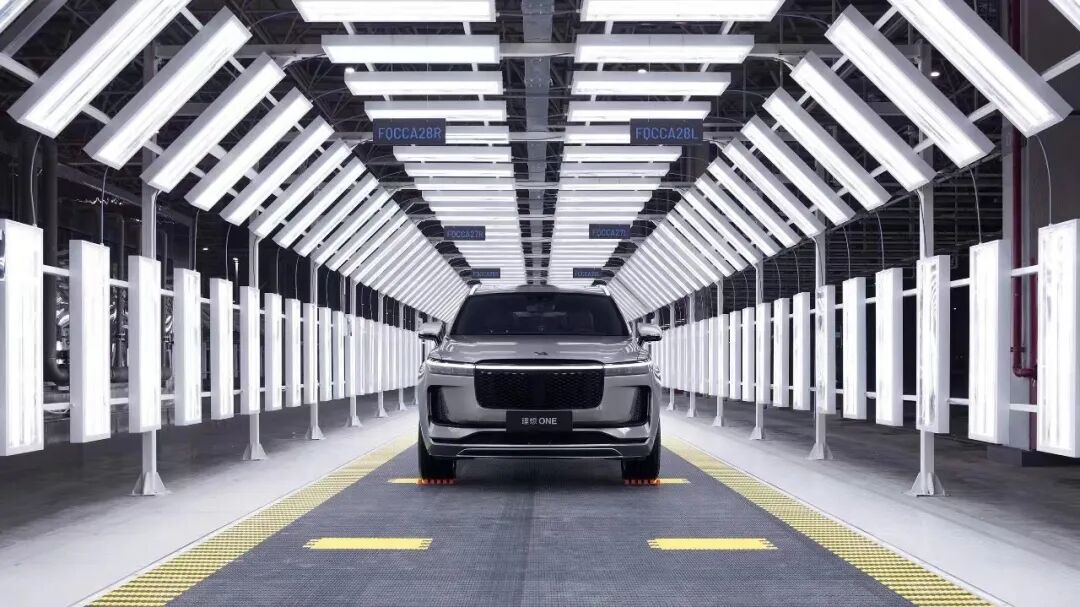
Xiang Li: If you can't win battles, you won't survive either. I think phase one is about survival — concentrating resources, centralizing decisions, and distilling the key elements that emerge along the way. Then people believe. At first, everyone thought the Li ONE could only sell 1,000 units. When you hit 10,000, then you say serving families was the right call? Of course it was right — you've already exceeded user needs.
People see that the first principle in your code is putting user value first, not user demands first, and they believe it. In this process, your values determine which tools you choose. Solving problems is easy, but we solve all problems systematically. We use Toyota's TBP (Toyota Business Practices), which requires eight steps — complete analysis, planning, problem-solving, and process generation. At first no one believed in this, but as we kept doing it, people found that communication and collaboration across the whole company became incredibly easy. I think the biggest difference between people is their use of tools. You use a gun, I use a knife — I can't beat you.
China Entrepreneur: No matter how skilled you are with primitive weapons in the jungle, the moment you step out, you're instantly eliminated.
Xiang Li: Right. But when you look at all the tools a company chooses, you'll find they align with its values.
The Biggest Challenge of Organizational Transformation Is Cognition
China Entrepreneur: Actually, for new carmakers, organizational management is extremely difficult because there's an internet component, a manufacturing component, and upstream and downstream components — the entire industrial chain is very long. This organizational complexity exceeds that of most companies today, and it's hard to find a management benchmark. What are your thoughts on organization?
Xiang Li: I think the core problem a company faces is moving from not knowing what you don't know, to knowing what you don't know. Analyzing organization from a certain angle means looking at openness, convergence, complexity, controllability, and uncontrollability. Openness means leveraging external resources. Convergence means what you can do yourself. Controllable means things may be complex but you can control them. Uncontrollable means things like ecosystems that you can't plan for. We're fortunate to have caught a relatively good rhythm.
First, let me define Software 1.0 and Software 2.0. Software 1.0 is where we set the rules, we program, and the program serves us. Today's internet, terminal devices, and apps are all built this way. Software 2.0 is where machines learn from humans, machines program themselves, set their own rules, and serve themselves — neural networks, AI. We use a robot, but we don't use any of its specific functions; the robot is autonomous. These are two different eras.
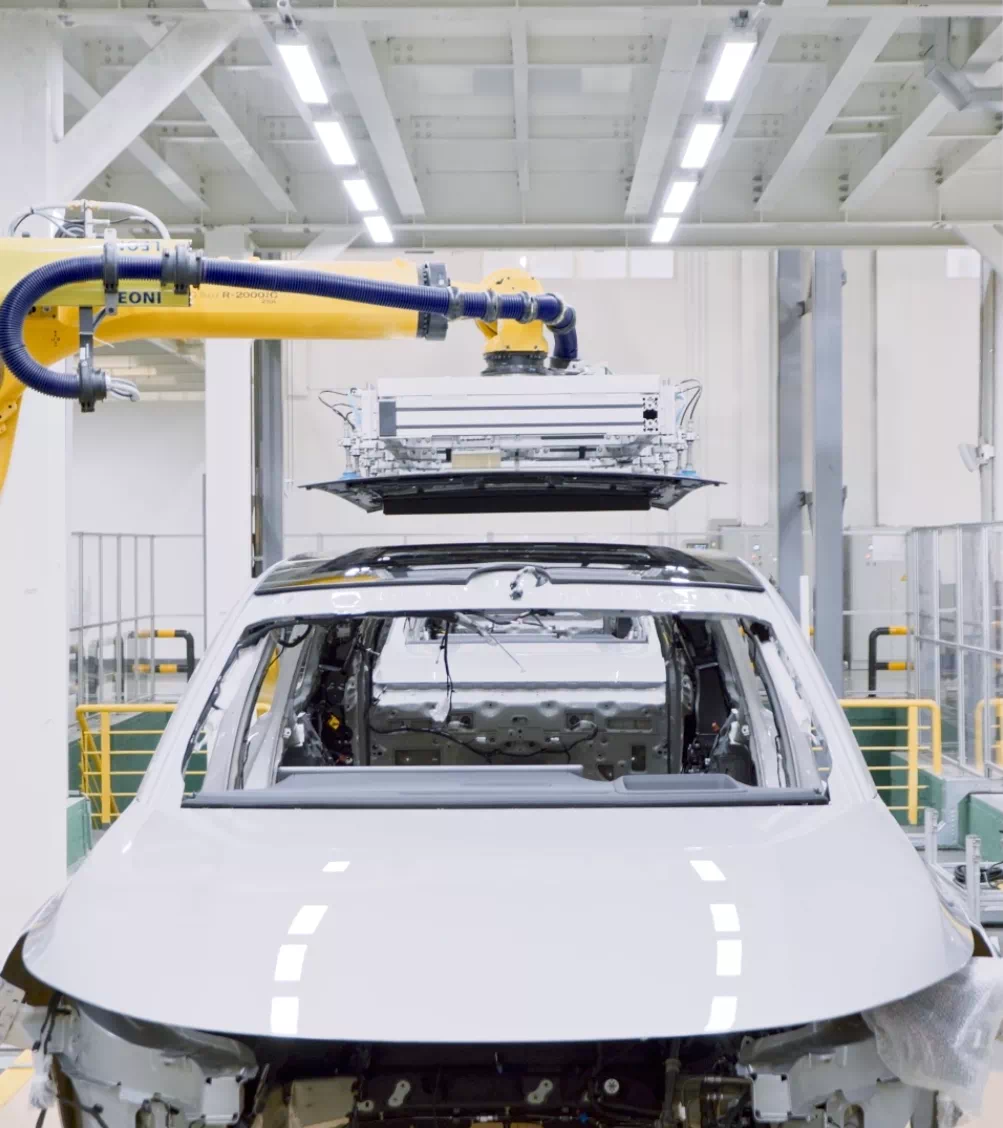
At Autohome, we built apps and internet products, so we had experience managing Software 1.0. When we got into cars, we had to do sales and service, but to us that was relatively open and controllable — within logical bounds. Then we needed to add industrial capabilities, so we had to learn. We studied Toyota, studied General Electric, studied standard automotive R&D, testing, and manufacturing processes. We specifically recruited experienced talent from traditional automakers. We even learned Toyota's problem-solving tools. So we mastered industrial capabilities. Along the way we encountered issues, like the two sides not knowing how to collaborate, so we introduced OKRs to get everyone aligned and understanding each other.
Then we had to solve the capability for multi-model platformization. So we looked at how systems companies do things, and we introduced IPD (Integrated Product Development). The most important problem we needed to solve was how to integrate product R&D with platform R&D. Otherwise you get the problem many automakers have — R&D is R&D, the research institute is the research institute, and they never come together.
After gradually filling in these capabilities, what's the next challenge? Software 2.0. The intelligent driving and smart cockpit we're doing today are still Software 1.0 approaches. When it truly becomes Software 2.0, it's uncontrollable. That challenge hasn't really arrived yet.
I think another organizational challenge relates to scale, because different scales determine your management approach. When you're small, a functional structure works fine. But for a company like ours involving software, hardware, AI, and various complex factors with long cycles, how do you achieve both certainty and flexibility? Then you have to study the most successful companies in the world.
For a while we were stuck in a misconception, always thinking we were different from others — but it was really because we hadn't studied others enough.
For example, from 2020 to 2022 we had something we kept agonizing over. Our favorite company is Apple, but everyone thought Apple was a functional organization. So we wasted more than two years wondering if we should switch to a matrix structure. Fortunately, in 2021 we tried a matrix structure for product R&D, and the results were excellent. Later I discovered Apple is actually a typical matrix organization. How did I find out? I cross-read three books — Steve Jobs, Jony Ive, and Tim Cook — and realized Apple is a matrix organization.
China Entrepreneur: Which practice succeeded?
Xiang Li: IPD. Our L9 and L8 were both strictly done according to IPD.
China Entrepreneur: What's the marker of success?
Xiang Li: Sales. Because people always said Li Auto just got lucky in a niche market — could we succeed afterward, could we keep producing hits? Now everyone sees the L9 is, the L8 is, and the L7 will be too. Then they believe. It's about moving from accidental to inevitable.
China Entrepreneur: I remember you mentioned earlier that when you first started pushing OKRs at the company, you faced some confusion. Later you read a book and truly understood how OKR should be done. What was the misunderstanding about OKR?
Xiang Li: The first book I read was problematic — it was called OKR Work Method. It described a very small company, just over a dozen people, completely different in scale from us. Then I happened to be home sick for a while and studied another book called Measure What Matters. It said you must use an online system, must have weekly meetings, must do retrospectives. We followed the book strictly, and by 2019 our collaboration became remarkably better.
China Entrepreneur: Actually, your experience proves one thing: reading helps. Especially for people running businesses — even with a bookshelf behind you, it's hard to unite knowledge and action. But I find that much of your knowledge comes from reading. The key is that understanding the book is already hard; being able to apply it afterward — how do you do that?
Xiang Li: I often talk about two things internally. First, the difference between people is their ability to acquire information and their ability to process information. Also, as everyone studies more advanced companies, we find there are two ways to acquire information: one is self-awareness, the other is powerful tools. The logic behind all kinds of advanced management tools worldwide is basically the same — it helps you discover what you don't know earlier.
China Entrepreneur: What challenges have you encountered in the process of organizational transformation?
Xiang Li: The biggest challenge is still my own cognition. For example, in our first phase, we kept thinking we were different from others, that we were special — but that's only because you haven't yet figured out how others operate. In the second phase, you go out and look, but you don't look deep enough. If you bring in top-tier consulting firms to help you see, it's completely different from looking yourself. It's like seeing a doctor — often I only know where it hurts, but I basically lack the ability to diagnose myself, so I need to rely on external forces for diagnosis: reading books, taking courses, consulting good advisory firms, communicating with good companies.
China Entrepreneur: How did you feel different from others?
Xiang Li: I think this might be a common ailment among internet companies. Because China's traditional business system wasn't mature in the past, internet companies that did well started feeling like they were different from everyone else. Actually, when you reach a certain scale, the way you manage an organization is the same — there's no difference. Because the problems we face today, others have already faced them. Especially when you have no revenue, you feel different; but when you have revenue, what's at the core? Revenue and expenses. Aren't expenses just how you use resources? Your resource usage reflects what your organization is doing — you also have R&D expenses, sales expenses, and administrative expenses. It's all the same.
China Entrepreneur: There's something very interesting here. When you were seriously studying Apple's product model, Apple's car project wasn't that clear yet. When you applied its model to Li Auto, Apple's car-making path gradually became clearer. Have you done relatively deep research on Apple's car plan?
Xiang Li: From an industry perspective, I think Apple making cars is definitely the world's number one topic. Apple has very strong foundational capabilities, but I think it will also face a huge challenge — also on the organizational side. The reason Apple succeeded is that its culture and system are very well-suited to the products it currently makes. But when facing a more complex product, it actually has two serious burdens: an organizational burden and an idol burden.
Facing the organizational burden, it has two choices. One is to upgrade its current organizational approach to adapt to automobiles, but its current organizational approach is too successful — so the people making phones would ask, why should such changes happen? The second is to incubate a new organization, and then another problem arises, especially for a company with such a strong cultural brand: it will find that if this "child" looks like it, it doesn't matter whether you spin it off or not; but if this child is more suited to smart cars and smart driving, it will look increasingly different from Apple. It's like two white parents suddenly having a Black child — they definitely couldn't accept it.
The idol burden is: once the product is made, it needs to go through 0 to 1, 1 to 10. Many people will say if Apple doesn't sell a million units, there's a problem, so they won't approve of you, they'll drive your stock price down, and then Apple becomes even more hesitant.
China Entrepreneur: When you truly deeply study Toyota, study manufacturing companies with very long histories, you might be even more shocked — but you probably didn't have this feeling before.
Xiang Li: I've always respected them, for example Toyota's lean methodology. At first you think TBP only solves manufacturing problems, then later you discover it can solve everything, even help you solve problems in life. The reason they succeeded is they built very strong productivity tools — it's like having guns, having artillery, having vehicles.
China Entrepreneur: When a company has several different cultural genes, we often say it's an amphibian. What you just described — actually amphibian isn't even enough, you might need triphibian, quadribian.
Xiang Li: These correspond to different organizational capabilities; actually it's not culture. Our culture is still very, very unified.
China Entrepreneur: But sometimes these capabilities can cause some cultural confusion — for example, the openness of the internet or粗放型增长 [extensive growth], corresponding to the lean control and stable output on the manufacturing side. In your transformation process, did you feel this sense of tearing?
Xiang Li: I think there were two things Qin Zhi did that were particularly good. The first was telling you why — why do we need to use internet management methods? Because nobody is dumber than anyone else; they just haven't seen it before, they don't know what they don't know. Once they know, they'll make the same judgments and choices as you. Although we're a manufacturing team, our embrace of data is even more positive than internet teams, so the intelligence level of the entire factory, the degree of datafication, is unbelievably high. Who would refuse to master a stronger tool? Just because I have a gun, does that mean I can't wear a bulletproof vest? So making sure everyone knows is our obligation as management.
The other thing I also learned from Qin Zhi was unified language. The reason we used Toyota's tools at the time was that we had hired people from all kinds of auto companies — you have to understand that even describing the same term, General Electric's definition and Ford's definition are different. At that point everyone thinks they're right, and then we can't manage anything. What did I do? I called together everyone at director level and above, and we collectively analyzed who in the world does things best. We listed together General Electric, Ford, Motorola's Six Sigma, Toyota — these mainstream management approaches. Everyone researched them, and after researching, everyone voted. In the end, everyone collectively chose Toyota's (management) approach. For this we also specifically recruited people from Toyota, invested a lot of money in training — only then did we establish the problem-solving system.
China Entrepreneur: After looking at so many companies, why did you still feel Toyota's system and tools were better?
Xiang Li: Actually, most of the time you just need to look at which company has more books written about it — it must be because it's more advanced. And you can read what Japanese people write, what Americans analyze, what Chinese people analyze, and you can also bring Toyota people over to explain to you, because Toyota wants to export these things outward.
I always believe one thing: the differences between people aren't that great. When everyone can see the full picture, it's very easy to make the same choice.
China Entrepreneur: The biggest difficulty here is that you yourself have to break your own attachments, and make the team break their attachments — never think that what you see is already the whole world.
Xiang Li: Yes. I think this is the biggest博弈 [game/struggle] for a company, and also the company's biggest growth. For me personally, actually the two most terrifying things are: first, not knowing what I don't know; second, not being able to seek truth from facts.
Stage Mismatch Is the Biggest Problem for Many Companies
China Entrepreneur: Actually, organizational transformation isn't just a hard but correct thing — it's a hard but correct, and long-term thing. It's very hard to achieve overnight. Because an organization is like a living organism — it changes, encounters new challenges, and has relatively high fluidity.
Xiang Li: We hadn't operated at this scale before. In 2019, we caught the end-of-year pandemic and only sold for less than half a month. We started having formal revenue from 2020 — 9 billion-something in 2020, over 20 billion in 2021, over 45 billion in 2022. Over these years, one of my biggest realizations is that organizational upgrading and change always exists — it's basically impossible to achieve overnight. Moreover, organizational capability upgrading is closely tied to scale. When scale is small, we internally say speed is efficiency. But when scale reaches a certain level, quality is efficiency — because any low-quality decision, low-quality product, low-quality manufacturing management capability could make you lose billions or tens of billions, or even directly bankrupt your company. In short, you need to make some dynamic adjustments, but more importantly, study what companies at corresponding scale stages actually did — don't learn the wrong things.
China Entrepreneur: This point is very critical. For example, many people are studying Huawei now.
Xiang Li: Right, many companies study Huawei, study Samsung, study Apple — they all have serious problems. On the surface they seem to be studying process upgrading. A key component inside an organization is process; process is like your product. Many companies only studying this part actually have problems. At least based on our current understanding, an organization has four rings that are interlocked. The first ring is you need to have culture, unified values. The second ring is process. The third ring is talent system. The fourth ring is incentive system.
China Entrepreneur: You also specifically went to Hupan University to study for this organizational adjustment, right? Did your understanding of organizations become deeper at Hupan University?
Xiang Li: What was the biggest problem we encountered at the time? At the end of 2017, beginning of 2018, we announced our first product had failed. So I feel Li Auto's founding began with a strategic failure. My thinking at the time was that I needed to study strategy, and to study strategy I should learn from the best people. We discussed internally and said the person who does strategy best in all of China is Professor Ming Zeng. At the time he was the dean of Hupan University, so I firmly applied to Hupan University.
China Entrepreneur: What was your exchange process with him like? Were there a few sentences that made you feel like a layer of window paper was suddenly pierced?
Xiang Li: Professor Zeng taught us three things. First, strategy isn't thought up by a small number of people — it's co-created. The core purpose of co-creation is to let everyone look at this world together; as long as you see it, often you know how to plan.
Second, he helped us sort out what to do from 0 to 1, what to do from 1 to 10, what to do from 10 to 100. Because stage mismatch is the biggest problem for many companies — not having the fate of this stage, but catching the disease of this stage. For example, he mentioned that from 0 to 1, what you actually need to verify is your survival capability; from 1 to 10 is taking what you've verified and amplifying it. But many companies aren't willing to do the 0 to 1 work, and instead want to do 10 to 100 things from the start — then they definitely fail.
Third, he helped us design an organizational architecture diagnostic method: more open or more convergent, more controllable or less controllable.
China Entrepreneur: Did Li Auto have this kind of mismatch at the time?
Xiang Li: After learning it, we didn't anymore. So I think the core is knowing that we don't know.
China Entrepreneur: Often you only realize after suffering losses; without suffering losses, it doesn't work.
Xiang Li: So a strategic failure that didn't kill us was very important to us.
China Entrepreneur: Normally, 70% of companies can't get past this hurdle after a strategic failure. Looking back now, why were you able to survive after the first product failed, and even bounce back from the bottom?
Xiang Li: First, we were particularly good at facing failure. When we stopped the SEV at the time, the company had 1,100 employees. I spent many days communicating with each of them — one conference room, about less than 100 people each time, held more than ten sessions, explaining to everyone clearly why we needed to stop, including what policy problems we encountered, what scale problems. I believe as long as everyone sees the same problems, they'll all make the same choice. So at the time many employees wiped their tears and continued working on the Li ONE.
Second is related to myself: I had no retreat. I couldn't go find a job after failing, because I've never worked for anyone else. Of course for entrepreneurs like us this is also a good thing — many entrepreneurs leave themselves too many retreats, and that actually becomes a problem.
China Entrepreneur: Why did you choose to talk with over 1,000 people in ten separate sessions instead of holding one big meeting?
Xiang Li: You can't get through to people that way. You have to speak with them face to face. The employees in Changzhou came in batches, taking trains and flights to hear me.
China Entrepreneur: How long was each session?
Xiang Li: Basically two hours each.
China Entrepreneur: So you had to repeat the same problems ten times in a row.
Xiang Li: Yes.
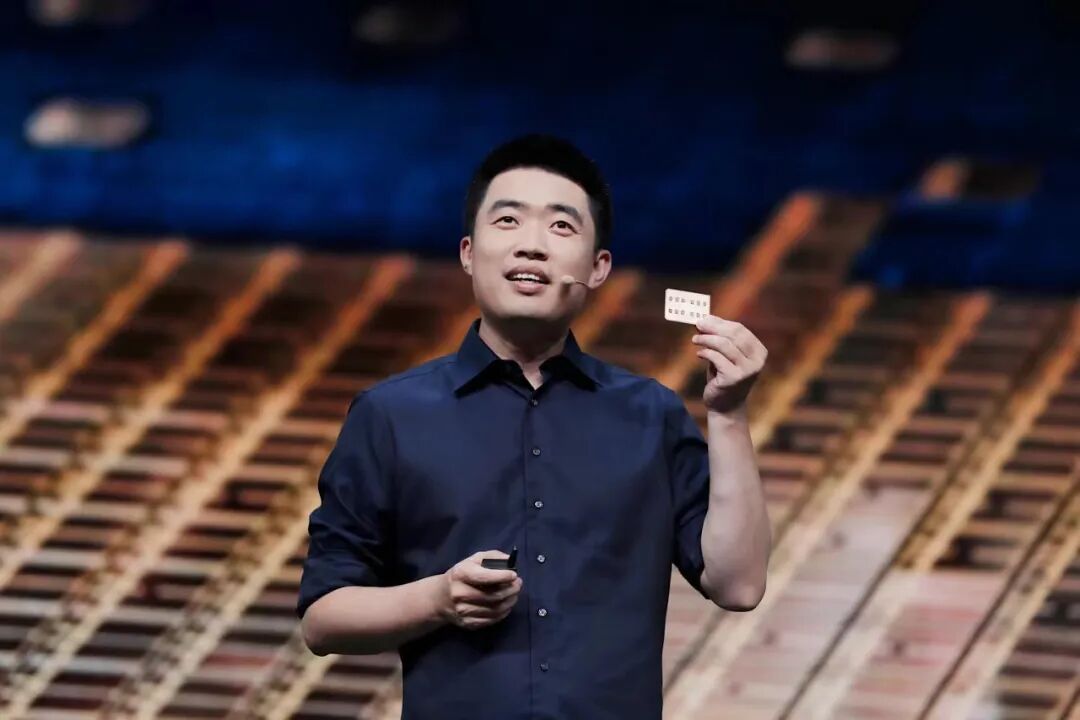
NIO Is Like Haidilao; Li Auto Prefers Starbucks
China Entrepreneur: Many people still see the extended-range route as a temporary, transitional solution. Now that you're also making pure EVs, how do you view this assessment?
Xiang Li: I think we still need to solve the industry's biggest problems. If we can solve the industry's problems, we'll become its leaders. If we can solve the competition's problems, we'll win in competition. The industry's biggest problems haven't changed from my initial judgment: charging infrastructure and battery costs.
The most critical issue with charging isn't range anxiety — it's slow charging speed. Slow charging creates a terrible user experience, and second, the business model doesn't work; it's not commercially sustainable. The key is that if speed improves, the experience gets infinitely closer to that of a gas car. I've been waiting for the 800V era, which is like going from 2G to 4G. If you can charge a car in ten minutes, turnover rate increases sixfold, and countless people will enter this industry to invest because there's money to be made. So behind all this is a generational shift in technology.
The other issue is battery cost differences — the core is how to use less battery cost for effective range.
The reason we need to solve these major problems is to achieve large-scale replacement of gas cars. Extended-range first meets this need, and high-voltage pure EV also meets this need, so we've never stopped R&D on high-voltage pure EVs.
China Entrepreneur: You have a way of thinking that works backward from results. It's not about attachment to extended-range or any particular mode, but ultimately solving users' fundamental problems.
Xiang Li: On the contrary, we actually believe that today's pure EVs with slow charging speeds and 400V architecture have the shortest transition period — they'll be phased out very quickly.
China Entrepreneur: What's your current thinking on supply chain? How deep should vertical integration go?
Xiang Li: We divide supply chain into four modules. The first is where traditional and new energy vehicles have no difference — seats, rearview mirrors, etc. We choose to work with mature suppliers and don't build our own factories. The second module relates to chips and computing units; we partner with chip manufacturers, do our own R&D, but also don't build factories. The third module is batteries — similarly, we choose to co-design and develop battery packs with supply chain partners, but don't touch cells. The fourth module we solve through self-building, like our silicon carbide factory in Suzhou, drive motor factory in Changzhou, and range extender factory in Mianyang.
This doesn't include batteries because we believe the battery industry will become a scale market in the future — the larger the scale, the higher the efficiency.
When deciding what to do and what not to do, we have two criteria: one, I must do it because no one will do it for me; and two, if the more closed I am, the higher the efficiency, then I'll do it myself — if the more open I am, the higher the efficiency, then I'll hand it to others.
China Entrepreneur: Let's talk about your thinking on user operations. The three Wei Xiaoli companies each have very distinctive characteristics in user operations.
Xiang Li: I think it's closely tied to a company's values and the life experiences of its team. For example, if William Li invites me to dinner or to chat, the places he chooses are basically similar to NIO Houses. I would choose Starbucks — they provide professional coffee, and the rest is self-service. We think Li Auto is more like Starbucks: we do enough, but guarantee you sufficient convenience, speed, and efficiency, and you solve the remaining problems yourself.
So look at how we build stores, including renovation costs — our large stores reference Starbucks Reserve, and regular stores reference regular Starbucks.
China Entrepreneur: That's a great metaphor. Both approaches are valid; William Li probably places more emphasis on ritual and ceremony.
Xiang Li: (NIO is) the Haidilao of the auto world, but we like Starbucks. We've actually recruited quite a few people from Starbucks, mainly related to the service system.
I Never Believe in Winning with Less
China Entrepreneur: We've talked at several key moments, and I feel you've changed a lot personally. Killing your past self is especially difficult, but I see your iteration in you. What do you think are the different personal requirements of being CEO of a $1 billion company versus a $5 billion company versus a $10 billion company?
Xiang Li: It's still cognition. When facing the same difficulties, we have three possible relationships with them. One is being crushed beneath the difficulty, living a fate worse than death, in agony. One is facing it head-on, gaming against it. And one is standing above it, treating the difficulty as a game, as a project to solve. These three relationships are all determined by cognition. When cognition is low, you're crushed beneath the problem. When cognition is a bit higher, you face off against it. When cognition is high, you realize it's just a problem — let's go solve it. And as scale expands, the difficulty and challenge of the problems you face are also different.
China Entrepreneur: You've been talking about cognition. If you push further to the hundred-billion-dollar scale, what do you think the cognitive challenge will be?
Xiang Li: I think it never changes — it's actually three layers.
One layer is the philosophical level: the company's mission, vision, and values, answering "who am I" and "where am I going."
The middle layer is industry-related: one is the system supporting the business, one is the system supporting the organization. What I fear most here is not knowing what I don't know, so I'm constantly fighting against this — how to use more external brains, consultants, and tools to ensure everyone can perceive it.
At the bottom layer, I believe every company has a baseline. My two baselines: one is seeking truth from facts, so we care deeply about data because these things don't lie. I don't want people telling me stories, don't make me PPTs, don't make me Excel sheets — I want to see real things, data from the system. The second is inclusive collaboration — we can't do everything ourselves. We need an increasingly strong senior team, and partners who also become increasingly strong. The moment we become closed off, we're dead.
China Entrepreneur: What has building cars changed about you?
Xiang Li: Building cars has changed me in three important ways.
First, when you discover endless problems emerging one after another, you really have to think about philosophical-level questions. Its greatest benefit is helping you step back to view these problems. Otherwise you'll be in pain, unbearable pain, because it's too complex, too painful, problems keep coming. Later you realize these things aren't targeting you — they're the same test given to everyone.
Second is how to face complexity. If you don't have good methods, complexity similarly becomes your pain. When you can see all kinds of advanced tools and management methods worldwide, what you see isn't complexity but richness. How to turn complexity into richness — how the world's most powerful companies and organizations do this — that's what I learned.
Third is understanding of scale. We used to wonder why Microsoft, Apple, and Huawei made things so complex. Later we realized this is purely related to scale. Because each person can only drive limited scale — you might be 10x better than others, but you can't be 100x better. That's why these companies develop complex processes, because processes solve baselines. Without baselines, there's chaos.

China Entrepreneur: For you, which was harder: 2019 or 2022?
Xiang Li: 2019 was harder — we were almost out of blood. After Xing Wang invested in 2019, the first thing he told us was that we should have invested in supply chain earlier. I understood his logic at the time, but why didn't we do it? We only had enough money to survive, not enough to invest — poverty stifles ambition. Later why did we decide to invest? After raising funding, we had tens of billions on our books. Now why can we transform? First, the company is developing healthily; second, we actually have money.
China Entrepreneur: So everyone says that among the three new carmakers, Li Auto has the most extreme cost management, even using "stingy" to describe you.
Xiang Li: We're not as complicated as people think. The core is actually concentrating resources, with all benefits flowing from one opening. The core of strategy is trade-offs. I never believe in winning with less, but in every battle, I invest more than others.
China Entrepreneur: It seems Xing Wang has had a big influence on you too?
Xiang Li: First, he "supplied blood" to us, and it was sending charcoal in snowy weather — this is definitely a lifelong debt of gratitude. Second, Xing Wang often gave me inspiration at the cognitive level. I think these are the two biggest helps he gave me.
China Entrepreneur: Nowadays you rarely see founders so active on social platforms. Relatively speaking, you speak out quite a lot, though of course many people criticize you. My feeling is that if someone criticizes Li Auto's products, it definitely touches your reverse scale. Are you aware that you need to make some changes?
Xiang Li: I still try hard to change, hoping to express my views without bringing too much trouble to them (the PR department).
I actually get angry about two baseline issues. The first is when our values are negated, and it's non-factual — I can't help it because I have to defend our values baseline. The second baseline is, don't spread rumors about my organization, because the organization is also our product. The organization is the product facing inward; the business is the product facing outward. I think these two must be resolutely defended, otherwise everyone will make rumor-mongering a habit — that's not allowed.
China Entrepreneur: Finally, evaluate William Li and He Xiaopeng?
Xiang Li: The three of us actually pursue different things.
I think William Li's defining trait is that he wants to construct a grand vision, and then validate it through the company's operations. These characteristics are tied to his field of study and his life experiences, and he's able to act on them with genuine consistency — his team truly believes in these things.
Xpeng's core is technology. Whether it's voice interaction or autonomous driving, Xpeng was the earliest to invest, and very resolutely so. He wants to validate the world through technology.
I think Li Auto is a reflection of myself. I'm alive to control my own destiny, to challenge the limits of growth. Growth and challenge are the key, so I will definitely choose the biggest industry and the most difficult domain to work in, and validate it with results.
In this process, compared to the two of them, I think my sense of purpose is stronger, because goals are a validation of growth, and I don't set any upper limits for myself. So, at least at this stage, all three companies reflect the thinking and projection of their founders as individuals.
Image sources: interviewee, Visual China, Deng Pan (photography), video screenshots.
▶ More Content ◀




Originating in Silicon Valley, BlueRun Ventures was established in 2005 and is a venture capital firm focused on early-stage startups.
Currently, BlueRun Ventures manages multiple USD and RMB dual-currency funds in China, with assets under management exceeding RMB 15 billion, making it one of the largest early-stage funds in the country. Its investment stage focuses on Pre-A and Series A rounds, covering hard tech and innovative interaction, enterprise technology, new consumer, and healthcare sectors. It has cumulatively invested in over 150 startups, including Li Auto, Waterdrop, QingCloud, Guazi Used Car, Qudian, Songguo Mobility, Ganji.com, Energy Monster, Yuntu Semiconductor, Machenike, CloudSaints Intelligence, Anxin Network Shield, and BioMap.
BlueRun Ventures has been ranked first in Zero2IPO's "China Top 30 Early-Stage Investment Institutions," first in ChinaVenture's "China Best Early-Stage Venture Capital Institutions TOP30," and named among Preqin's Top 10 Global VC Fund Managers with Sustained High Returns.
Additionally, BlueRun Ventures has repeatedly received honors from Forbes China, 36Kr, Cyzone, Caixin Media, CBNweekly, Jiemian, and other media organizations, including "China Best Early-Stage Institution of the Year," "China Top Venture Capital Institution," "Most Entrepreneur-Friendly Early-Stage Institution of the Year," and "Most Influential Early-Stage Institution of the Year."