BlueRun Ventures in Conversation with QUA Biotech, AllinkBio, and Zenitar: Breaking Out of the Red Sea — The "Value" Evolution of China's Innovative Drugs
The Leap from "Imitation and Followership" to "Original Innovation"
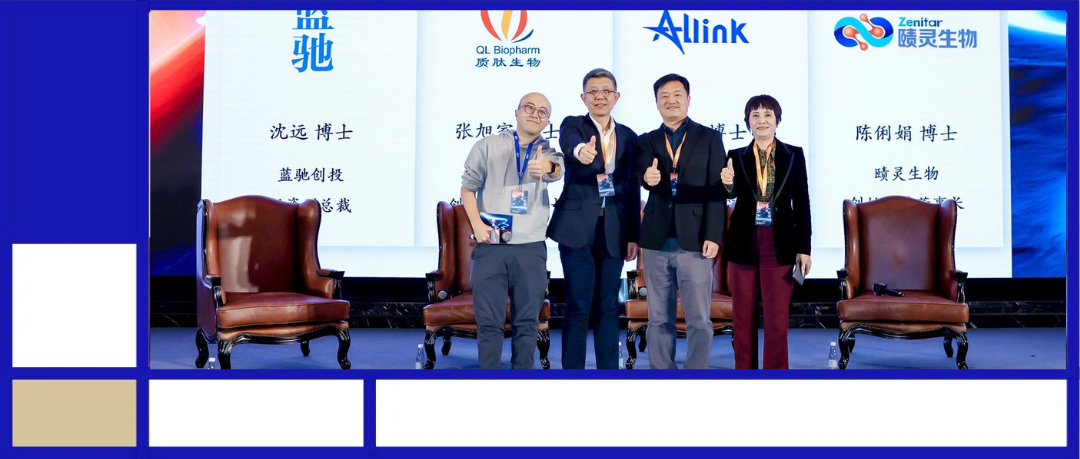
China's innovative drug industry is navigating an era of "breaking through the red ocean," as the sector undergoes a leap from "copycat followership" to "original innovation." The country's global advantages in supply chains and clinical resources, along with the aspiration to build homegrown global MNCs, are being re-examined and redefined. How can domestic innovative drug companies break through when squeezed between global giants and cutthroat domestic competition? How can they efficiently leverage China's comparative advantages like engineer dividends and clinical resources? Under immense pressure from "red ocean" competition, how can companies identify differentiation at the project initiation stage and create Best-in-Class value? In this in-depth conversation, Yuan Shen, Investment Vice President at BlueRun Ventures, and BlueRun Ventures portfolio company founders — Xujia Zhang, Founder and Chairman of QLT Biotherapeutics; Hui Feng, CEO and Founder of AllinkBio; and Lijuan Chen, Founder and Chairman of Zenitar — engaged in a spirited discussion around these critical questions.
Their insights and practices offer profound inspiration for understanding the core pathways through which China's innovative drug industry can evolve and create value amid intense competition. Selected highlights from the conversation follow:
Yuan Shen: China's innovative drug sector has advanced remarkably fast and is now competing fiercely on the global stage against top-tier MNCs and biotechs — an intensely red ocean. What we'd like to explore with our guests is how Chinese innovative drug companies can break through in this environment. How have they been able to evolve so rapidly from early-stage copycats and Me-Too drugs toward Best-in-Class and even First-in-Class? How does each company find its own differentiation and drive industry-wide evolution? Our guests are all seasoned industry veterans, and it's an honor to speak with them today. Let's start with brief introductions:
QLT Biotherapeutics, Xujia Zhang: I'm Xujia Zhang, founder and chairman of QLT Biotherapeutics. We focus on developing innovative drugs for metabolic diseases such as diabetes and obesity, primarily the now-highly-watched GLP-1 class. Before founding QLT, I worked at Novo Nordisk leading the E. coli technology platform, so I have considerable experience in both metabolic disease and recombinant protein production.
Our pipeline has progressively entered clinical stages, with particular note that we have the world's most advanced monthly GLP-1 drug, which is about to enter Phase III trials.
AllinkBio, Hui Feng: I'm Hui Feng, founder and CEO of AllinkBio. I spent ten years at Junshi Biosciences, overseeing R&D operations and manufacturing, and was fortunate to witness the entire takeoff of China's innovative drug industry, including the first approved PD-1 in China. After Junshi's PD-1 successfully obtained FDA approval in the United States, I founded AllinkBio in September 2023, with sharper focus on bispecific antibodies and bispecific ADCs.
We focus on globally differentiated Best-in-Class (BIC) and First-in-Class (FIC) ADC drugs to address unmet clinical needs. For example, immunotherapy alone has limited efficacy, while immunotherapy combined with chemotherapy, though more effective, lacks precision. ADCs enable more precise targeting — not only enhancing immunotherapy outcomes but, more importantly, using biomarkers to enrich for truly responsive populations, ultimately delivering real benefits to patients.
Zenitar, Lijuan Chen: I'm Lijuan Chen, founder and chairman of Chengdu Zenitar Biomedical Technology. The name "Zenitar" signifies innovation and exploration. I come from the State Key Laboratory of Biotherapy at West China Hospital, Sichuan University, where I was a professor in new drug R&D.
Facing red oceans and involution, my first principle in founding the company was to achieve differentiation, avoiding blind Me-Too or Me-Better pursuit, and truly starting from clinical needs. Since our founding in 2019, we've focused exclusively on small-molecule drugs. My strategy is to find less crowded market niches: tumors involving rare diseases, autoimmune areas such as hair loss, and neurological diseases like Alzheimer's, Parkinson's, and sclerosis — challenging but with tremendous potential. After several years of development, we've established eight R&D pipelines.

Yuan Shen: Chinese biotech is at or past an inflection point of explosive growth and has attracted significant overseas attention. The data shows that China's share of top global BD deals has risen from roughly 20% a few years ago to over 40% in the first ten months of this year. I'd like to ask you three frontline practitioners: from your perspective, why has China's innovative drug industry reached its so-called "DeepSeek moment"? What comparative advantages enabled China to transform from a generics-dominated industry to one with genuine innovative capabilities in such a short time?
QLT Biotherapeutics, Xujia Zhang: The speed of development in China's biopharma sector, especially in the past year, has been palpable — but this didn't happen overnight; it's the result of long-term accumulation. I believe the primary drivers are the engineer dividend and infrastructure development. When I started my company in 2018, finding upstream and downstream services like CROs and animal models was still difficult — for instance, synthesizing a high-quality fatty acid chain was challenging. Today, this infrastructure is highly mature, with sophisticated CRO services available. As someone put it, you can now essentially start R&D at places like WuXi with just a credit card. This human capital and infrastructure buildup is a fundamental reason for the recent surge in innovative drug development.
AllinkBio, Hui Feng: When I returned from AstraZeneca in the United States in 2013, I saw that many of China's top-selling drugs were traditional Chinese medicine injections — the gap with global leaders like Humira and Avastin was staggering. At that time, people only dared to make generics because there was no exit pathway for innovative drugs. The biggest change over this decade has been regulatory reform, massive talent return, and the foundation of the engineer dividend. Companies founded after 2010, like BeiGene and Innovent, attracted substantial talent, supported by policy and capital backing from Hong Kong's Chapter 18A and the STAR Market — together forming the ecosystem for today's explosive growth. Second is the remarkable advantage of CRO supply chains: China's R&D supply chain is the most complete globally, with enormous cost advantages — for example, GLP toxicology studies cost roughly one-third of what they do in the United States, dramatically improving R&D efficiency. Finally, the world's best clinical resources: our products are in simultaneous clinical trials in China, the United States, and Australia. In terms of quality, the US and China are the best, but China's clinical centers are well-standardized, PIs are highly motivated, and the population advantage provides abundant patient resources. Whether in completion quality or data presented at international conferences, Chinese clinical trials have reached international standards — this is the greatest dividend for drug development.
Zenitar, Lijuan Chen: Beyond talent resources and policy support, the key accelerator for China's new drug R&D speed has been capital injection, especially early-stage state capital investment, which has played an excellent role in ultimately realizing innovative drugs. Being at West China, building animal models is extremely convenient for us — our company can even achieve full-chain self-development, directly obtaining patient tissue from West China to rapidly establish disease models that closely simulate clinical conditions. We can "get tissue in the morning and build the model by afternoon" — a clear speed advantage.
I also want to emphasize the national emphasis on basic scientific research. When I first returned to China, equipment was scarce, but after 20 years of investment, there's now no equipment you can't find. For example, Sichuan University has two cryo-EM machines worth 120 million RMB each — this kind of massive government investment is an underlying driver that's hard to match abroad. Additionally, Chinese culture has a diligence advantage; we're willing to sacrifice weekends, significantly saving time costs. We can compress the timeline from PCC to clinical trial application to eight months, while abroad they might still be in the project approval process.
This platform-driven capability comes from breakthroughs in original basic research — they are the technologies that drive original design. Drug developers must connect these foundational technologies to the market to greatly accelerate the pace of original drug development. For example, in drug design, AI's accelerating effect depends on structural biology — AI can act like a funnel to rapidly screen hundreds of thousands of compounds down to candidate molecules.

Yuan Shen: You all mentioned China's rapid progress, and project selection was inevitably part of your entrepreneurial journeys. I'd like to ask how you formulated your project initiation strategies on Day One — how did you find differentiation and positioning for your products in crowded fields dominated by giants?
QLT Biotherapeutics, Xujia Zhang: QLT's goal is to develop products that truly solve patients' suffering and deliver benefit. I believe drug development requires two dimensions: one is the technology platform, such as bacterial production of recombinant proteins. If you only have a technology platform, you might as well do CRO work. The other is the therapeutic area — you need genuine understanding of the disease, market needs, and unmet clinical needs. Only by combining these two can you ultimately form a product.
Our team comes from Novo Nordisk, with the world's best E. coli recombinant protein production technology platform, combined with deep understanding of metabolic disease. Our project initiation approach starts from clinical needs, because companies must ultimately be profitable and achieve investment returns, and the closed loop in pharma is that products must solve patient suffering to generate purchases. In metabolic disease, we chose GLP-1 because its efficacy surpasses insulin, and today it has expanded into obesity indications. At the time, market products required weekly injections, but chronic diseases face compliance issues — patients easily discontinue. So we established the goal of developing a longer half-life GLP-1 enabling monthly injection, a differentiation based on convenience.
AllinkBio, Hui Feng: Differentiation for its own sake is meaningless; it must address an unmet need or solve defects in existing drugs. Our team came from Junshi, saw the pain points of PD-1 immunotherapy, and wanted to create next-generation drugs with greater value. Our differentiated project initiation was based on observing current drug limitations. For example, Amgen's bispecific Blinatumomab shows good short-term efficacy but has ocular toxicity, forcing discontinuation before six months and losing the effect. Based on this pain point, we initiated development of our next-generation molecule, ALK 201 (targeting FGFR2b), aiming for better efficacy and tolerability to solve the side effect problems of existing drugs. We target not only gastric cancer but also, through IHC, discovered high expression of this target in tumors beyond gastric cancer, offering larger clinical development space. Through this investigation, we found a substantial differentiation opportunity. Only by subsequently proving our superiority over existing treatments in clinical trials can we avoid red ocean competition — for example, using biomarkers to enrich responsive populations, generating efficacy even in chemotherapy-resistant groups.
Zenitar, Lijuan Chen: I believe companies must survive, must target market needs, and can't rely on sentiment alone.
Our project initiation strategy is to select established targets that have unmet clinical needs and large markets. For example, our drug for myelofibrosis, which is about to enter Phase III, requires long-term patient use, has large market potential, and long survival periods. Our strategy: first, large market with long-term patient use; second, efficacy must surpass existing drugs with higher selectivity. We design from structural biology to improve selectivity, and conducted head-to-head comparisons in animal models against globally approved drugs, with superior results. We then spent nine months building a more precise animal model simulating myelofibrosis, using it to validate our drug, ensuring that preclinical model rigor determines how far you can go clinically. What we're doing now are all head-to-head superiority clinical trials, requiring tremendous courage and solid prior scientific validation. Ultimately, we don't boast about Best-in-Class or First-in-Class — we let others acknowledge it through head-to-head efficacy. The rigor of your preclinical models is what determines whether you can beat your competitors.
Yuan Shen: For our final question, please take one minute each to share your views and vision for the future of China's innovative drug industry and how trends will evolve.
QLT Biotherapeutics, Xujia Zhang: China's innovative drugs will definitely keep getting better. Currently, our BIC and FIC efforts are still largely based on fast follow, leveraging our engineer dividend, talent dividend, infrastructure dividend, and clinical dividend to achieve faster development speed than others. But in original innovation, we still have gaps. In terms of vision, I believe the true mark of maturity for China's innovative drug industry will be when our drugs can be sold in the United States.
AllinkBio, Hui Feng: I'm personally very optimistic. We have clinical advantages — for example, West China Hospital's achievements in cell therapy. Currently Chinese biotechs mainly rely on BD, but we're seeing companies like Innovent, Legend, and BaiLiTianHeng shifting toward co-development and profit sharing, seeking deeper global partnerships with international giants.
I believe that in the next five years, China will birth our own global MNCs, no longer dependent on others. Additionally, I'm very optimistic about how AI-driven approaches will transform the pharmaceutical industry. Current diagnostics are still quite primitive; I look forward to AI helping us detect tumors earlier and guide treatment. Though our current expectations for AI transforming pharma may be slightly optimistic, if AI can play a role in target discovery, diagnostic imaging, and treatment guidance, it will truly change the slow pharmaceutical model where we currently rely on engineers screening one by one.
Zenitar, Lijuan Chen: Our vision is co-development, but this isn't the ultimate dream — China will eventually birth our own large pharmaceutical companies. The second vision is AI-driven development. AI-driven clinical trials, through unbiased patient screening, can accelerate clinical speed — this is extremely important. Third, I believe clinical speed will continue to depend on policy regulations and innovation pathways. Special pathways like the one West China has established at Boao for innovative technology clinical trials are very difficult to achieve abroad. US clinical trials are slow, possibly taking 30 months longer than ours. Our clinical advancement speed must rely on policy. West China is currently investing heavily in AI-driven patient screening — this is the future trend. Ultimately, major hospitals need to recognize that China's innovative drug clinical soil is irreplaceable by any developed country.
Yuan Shen: Thank you, thank you very much to our three guests today. Starting from China's innovative drug "comparative advantages," we discussed how to "discover opportunities," how to "prove value," and how to position for the future. If the "red ocean" represents challenges, today's discussion has given us a clear view of the "breakthrough" path — starting from clinical needs, conducting deep insights, then leveraging clever scientific and clinical validation to ultimately produce products with genuine global innovative capability.

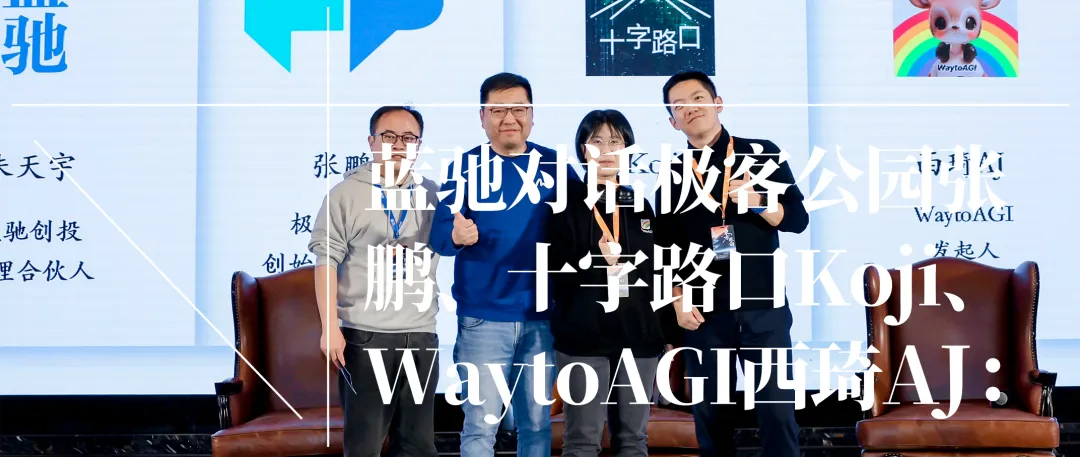 BlueRun Ventures in Conversation with GeekPark's Peng Zhang, Crossing's Koji, and WaytoAGI's Xiqi AJ: "New Species" and "New Ecosystems" in the AI Wave
 Dawn Breaks in the East, Walking Toward the Light | BlueRun Ventures 2025 Annual Fund Partners Meeting
  Beyond Quadrants, Walking an Undefined Path | BlueRun Ventures 2024 Annual Fund Partners Meeting