Botree Cycling Raises Tens of Millions of RMB in Series B Extension, Targeting International Battery Recycling Market | BlueRun Portfolio

Charging to the Front Lines of International Battery Recycling
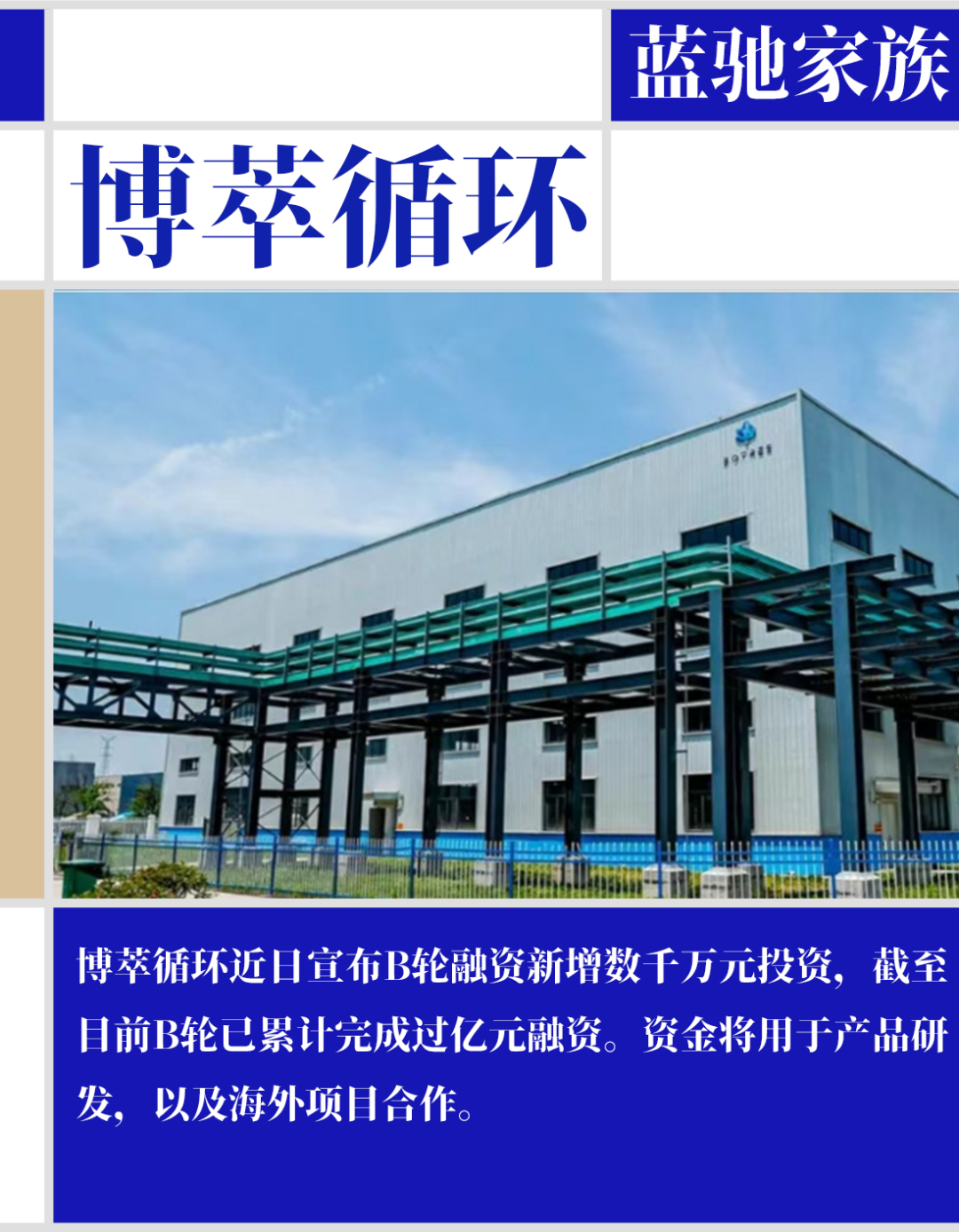
Suzhou BCTC Technology (hereafter "BCTC") recently announced an additional tens of millions of RMB in its Series B funding round. The new Series B investor is Taiping Technology Innovation Fund. BCTC had previously completed the closing with the lead investor of its nearly 100 million RMB Series B round, bringing total Series B funding to over 100 million RMB to date. The capital will be used for product R&D and overseas project partnerships.
BlueRun Ventures was the sole investor in BCTC's Pre-A round.
Founded in May 2019, BCTC provides end-to-end solutions for recycling critical battery materials, covering pretreatment, metal extraction, separation and purification, and material regeneration. Founder Xiao Lin previously served as a researcher at the Chinese Academy of Sciences' Institute of Process Engineering, where his work focused on critical metal separation and green manufacturing of battery materials, earning him a National Technology Invention Award.
BCTC currently operates in more than ten countries across Asia-Pacific, Europe, North America, and the Middle East, serving over a dozen Fortune 500 energy companies and leading domestic and international battery and energy firms with industrial consulting, technical services, distributed intelligent equipment, and the design, development, supply, and operation of large-scale engineering projects — executing more than 60 projects to date.
A McKinsey & Company report indicates that by 2030, the global passenger vehicle market is expected to exceed 80 million units, with new energy vehicles reaching roughly 50% penetration. The typical lifespan of a new energy vehicle battery is 5–8 years. As demand for power batteries continues to expand, battery recycling is becoming an increasingly urgent global challenge.
In Lin's view, China is the largest and most concentrated market for battery recycling, and the world's best proving ground for engineering solutions — but recycling business models that succeed in China cannot be directly replicated overseas. "Most retired batteries in China circulate through trading and markups at each level, so by the time they reach recyclers, prices are already quite high. That makes recovery rate the most important technical metric by default in the Chinese market. But overseas, battery processing capacity is insufficient, environmental requirements are stricter, and energy and labor costs are higher. In Europe, the most cost-sensitive items are electricity and labor, so the technical priorities are completely different from China's."
The EU's New Battery Regulation, which took effect in August 2023, requires producers to bear responsibility for waste battery collection, including establishing collection networks and covering processing costs. By the end of 2031, recovery rates for critical metals like cobalt and nickel must reach 95%, and lithium recovery must hit 80%. Leading Chinese battery recyclers have already generally achieved nickel and cobalt recovery rates above 95% and comprehensive lithium recovery rates above 90%.
Lin summarizes that unlike the product exports seen in new energy vehicles and batteries, Chinese battery recyclers going global is fundamentally a service export — one that safeguards the product exports of the "new trio."
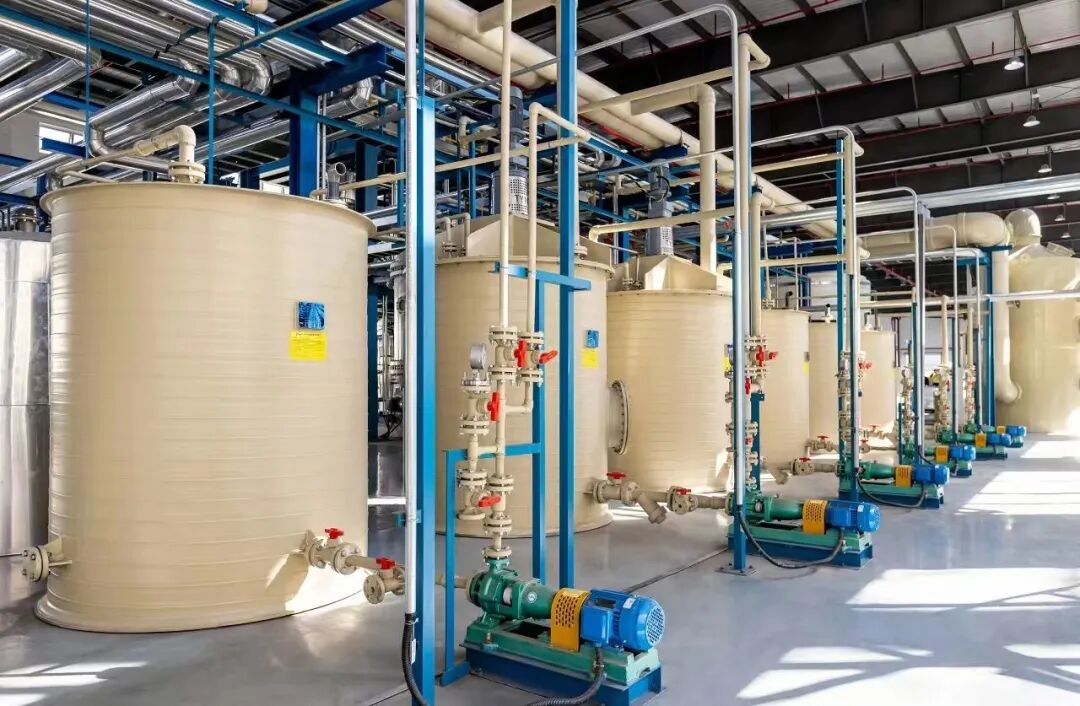
BCTC's LFP multi-component recovery line "From the start, we never saw ourselves as merely a recycling solution provider — we've always positioned ourselves as an operations and maintenance service provider for energy infrastructure," Lin explains. Whether power batteries in transportation or storage batteries in energy, these will become public infrastructure and assets. Under the new energy transition, energy infrastructure will gradually move toward asset standardization and public ownership, requiring unified professional O&M and replacement services.
Accordingly, BCTC does not source waste batteries directly from social channels as a recycler. Instead, it focuses on large B2B clients — leading recyclers, battery manufacturers, automakers, and energy companies — providing them with technology, equipment, and ongoing O&M services.

To go international, technical capability is the foundation. Lin notes that BCTC has developed two technical pathways based on battery chemistry: For batteries like ternary lithium that can be iteratively improved, the approach starts from the material level — using the same nickel, cobalt, and lithium to produce new batteries with higher performance and energy density, such as high-nickel ternary batteries or even semi-solid/solid-state batteries, upgrading both quality and quantity. For lithium iron phosphate batteries, whose material performance is near theoretical limits, the company uses a direct material-to-material repair route. "This technology depends on feedstock with consistent specifications, requiring a stable end-of-life battery collection system across the value chain," Lin adds.
At the core materials stage, BCTC has built an independent R&D extraction system. Its novel co-extraction system can simultaneously extract nickel, cobalt, and manganese to directly produce battery-grade materials. According to calculations, compared with conventional processes, this reduces extraction equipment investment by over 30% and extraction energy consumption by over 10%. Before deploying technology, BCTC conducts lab testing and on-site pilot trials based on client needs to verify extraction performance and ensure long-term stability.
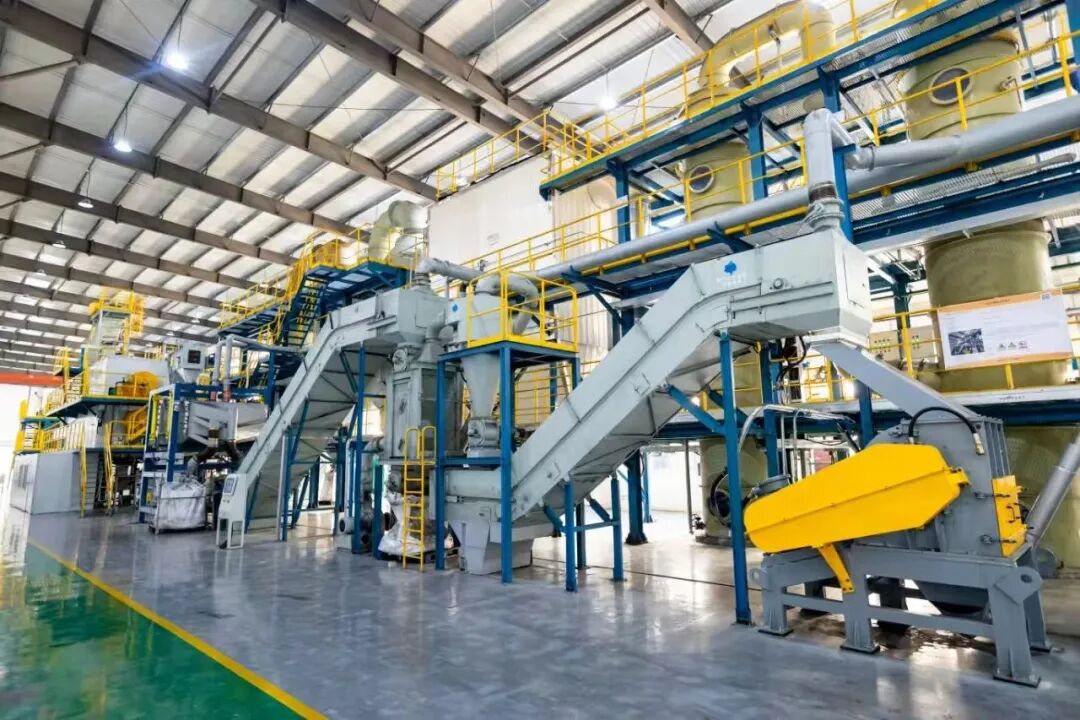
BCTC's full-process pretreatment production line Lin explains that BCTC primarily operates globally through project-based technical services: "To provide recycling services locally, you need to build factories locally — so this is quite challenging." Taking BCTC's Spanish joint venture as an example, in January 2025, BCTC announced a joint venture with ILUNION and EFT-System to build a 6,000-ton-per-year LFP battery recycling plant in Spain, supporting local recycling and closed-loop recovery of LFP batteries in Europe. The facility will operate as a Special Employment Center (SEC), ensuring over 70% of employees are persons with disabilities. Prior to this, BCTC had already collaborated with ILUNION for two years, providing technical support services that laid the groundwork for the joint venture.
"During implementation, we build a production line in China so clients can see the actual product, then obtain CE certification in Europe and train future floor managers there. Finally, we ship the equipment to Europe for installation and commissioning," Lin acknowledges. This model essentially mirrors how foreign automakers entered China. Through this process, BCTC's revenue model has expanded from technical service fees to equipment sales and operational profit-sharing.
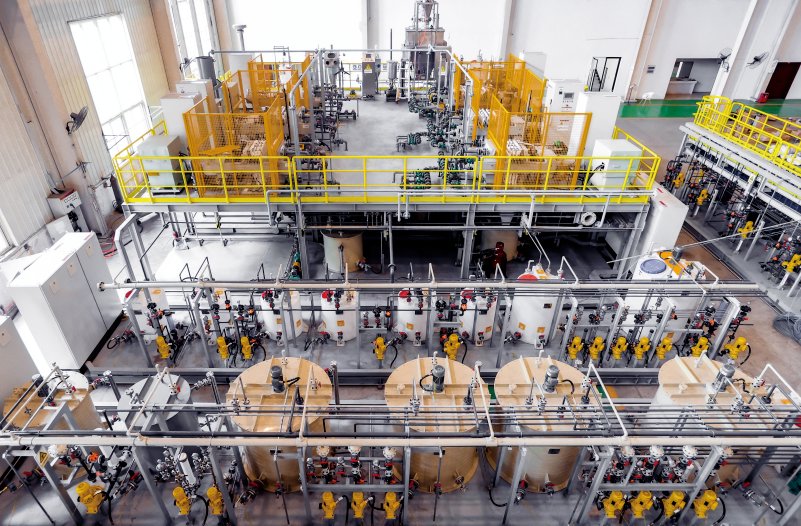
BCTC's Poland project skid-mounted equipment In summary, BCTC's overseas business model has three main components: First, technical services, covering front-end recycling technology development tailored to local regulations, engineering design, and project implementation; second, production line hardware sales, including complete production lines and spare parts; third, O&M services, initially partnering with local clients in various countries to co-build factories, with the O&M model evolving over time. Meanwhile, the company must balance project revenue against R&D investment across each R&D pipeline and overseas project to ensure overall profitability amid frequently shifting international conditions.
With this funding round bringing in Taiping Technology Innovation Fund, BCTC aims to collaborate with insurance capital on new energy vehicle insurance and risk coverage for Chinese new energy companies' overseas expansion. BCTC's core goal going forward is to develop localized solutions tailored to regional requirements worldwide, then synthesize the best elements of these local solutions into a second round of integration for continuous iteration and upgrading, serving the battery recycling industry both domestically and internationally.

 BCTC Successfully Completes Nearly 100 Million RMB Series B Funding | BlueRun Family
  BlueRun Family | Cloud Energy Storage New Energy Completes Tens of Millions RMB Series A, Building Digital Energy Computing System
  ZeroG Aircraft Industry Completes Nearly 100 Million RMB Series A, Advancing New Energy Aircraft Development and Application | BlueRun Family