We Met a Bunch of "Unfocused" Weirdos Who Actually Shine | Booming Club Round One
Turns out, every persistence that goes ununderstood will eventually find its resonant echo.
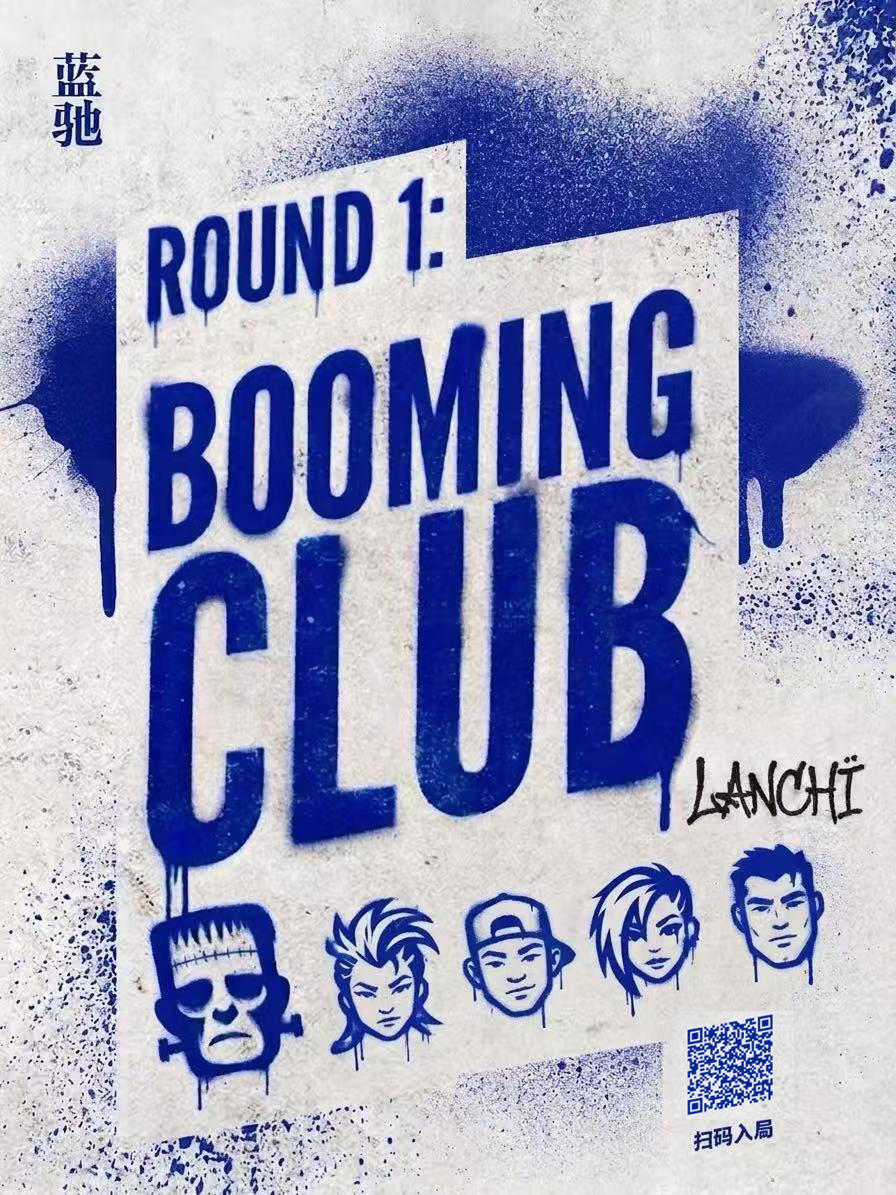
"Turns out the weirdos were never a small minority. Turns out every stubborn thing you've done that nobody understood will eventually find its echo."
Beijing, the evening of May 8th. Spring was starting to turn warm.
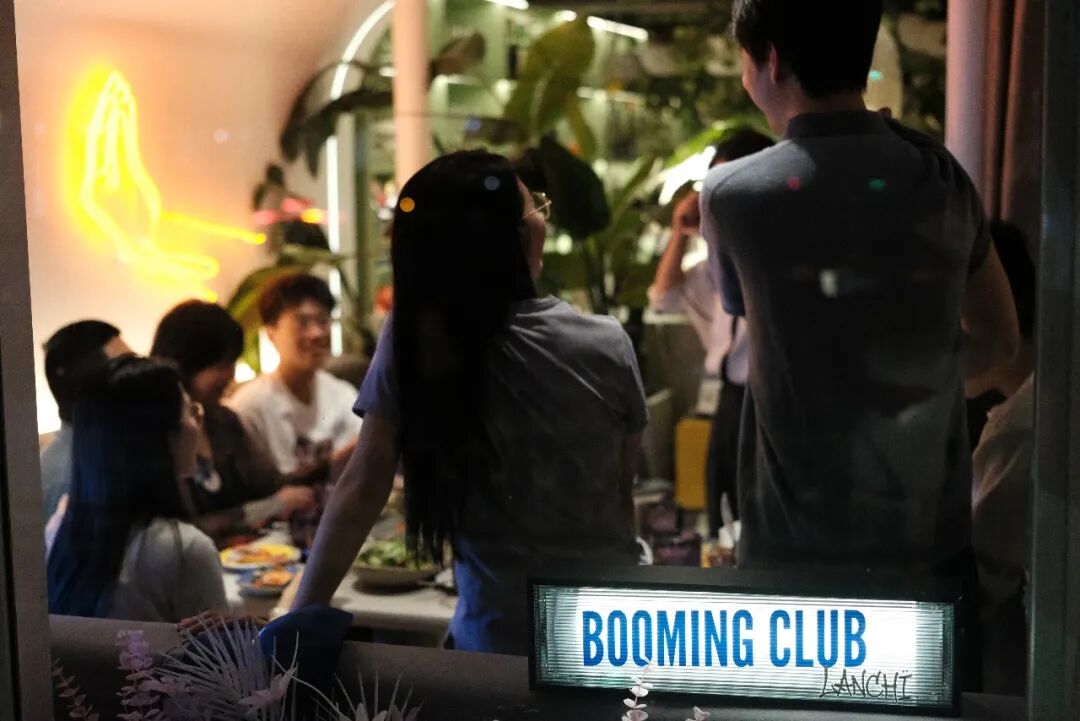
A modest room. A dozen or so people. A few glasses of water. A table of food.
That table of food sat untouched until nine.
This was the first gathering of Booming Club. They talked from seven deep into the night. Nobody rushed to leave.
Later, someone posted on WeChat Moments: "I haven't enjoyed voicing my opinions this much in so, so long."
Someone else wrote: "Thanks to Buming for starting this gathering with no rules, no agendas, nothing but souls colliding."
Booming Club is a new facet of BlueRun Ventures' "Buming" founder ecosystem — an "underground base" built for entrepreneurs. That night's theme was "The Weirdos." Ten unconventional founders gathered, each with a physiological obsession for what they loved, guarding their own coordinate systems and growth rhythms in the age of AI.
Afterward, we tried to reconstruct what happened that night, only to realize some things can't be retold — only lived.
But we still want to try, to send out these signals from the scene. And we welcome you to show up next time.
01
The Weirdos in the Room
In this room, nobody really needed to explain themselves. Self-introductions weren't about résumés — they were about understanding each other's most natural growth trajectories.
So we met them:
Liang, "The Dangerous Element" As a kid, he synthesized explosives in his family garage and was investigated by police multiple times. Testing high-voltage equipment at midnight until it exploded. Building a cannon on campus... After turning 18 and losing his "novice protection period," he entered the National Youth Science and Technology Innovation Competition with a self-developed electroshock device, becoming the first champion from the three northeastern provinces in 38 years, and made the national team. He also holds a Class B radio license, legally allowed to set up antennas on mountaintops — "otherwise people would arrest me as a dangerous element."
Someone asked what the value of doing these things was. His answer: fun. Now 19, he's building desktop CNC machining centers. His team includes national team members and gold medalists from competitions, PhDs from top schools...
Oliver, "The MIT Dropout Ski Champion" Obsessed with alpine skiing since childhood, he became one of the world's youngest New Zealand Level 2 ski instructors. "Every frame of every skiing video on YouTube — I remember what they're doing." In college, his first-year grades bottomed out. Then he suddenly "caught machine learning," and skiing moved to second place. Hand-deriving neural networks from scratch, he made it to MIT for his PhD. After publishing a NeurIPS first-author paper, he decided it was "too theoretical" — dropped out of MIT and started a company in Silicon Valley.
He also has a Xiaohongshu account with 25,000 followers. Right after he mentioned it, a colleague suddenly looked up: "I'm your fan... no wonder you looked so familiar."
Jingjing, "The Art Philanthropist Who Healed Herself" Grew up with a paintbrush in hand, top of her class in academics. On the college entrance exam, she missed her dream art school by 0.23 points. Sophomore year, severe depression. She withdrew from school, locked herself in her room, sleeping and starving. What pulled her out was a job at an art studio — there, she and the children healed each other.
Junior year, she launched the "Hugging the Star Children" charity project. Applied for competitions multiple times; her department wouldn't even give her a slot. Finally, a judge saw the QR code on the last page of her pitch deck and added her at 4 a.m.: "We've decided to give you a chance." It was her university's first-ever slot in that competition. Three years later, she'd won every major college entrepreneurship award.
This March, she made an even "crazier" decision: providing art therapy for elderly people with mental disorders. "I've been through the darkest rain, so I know how to hold an umbrella for others. They're not burdens — they're artists who haven't been seen yet."
We also met: the senior who went from math failure to Peking University's School of Mathematical Sciences; the preventive medicine student who took a gap year to do VC internships; the post-2000s kid who started from a non-elite university and interned at every top tech company; and the girl who overslept during her high school entrance exam, got escorted to the test by police car, and didn't even flinch...
Ten people. Ten paths. The weirdos were never a small minority.
02
When Weirdos Meet Weirdos
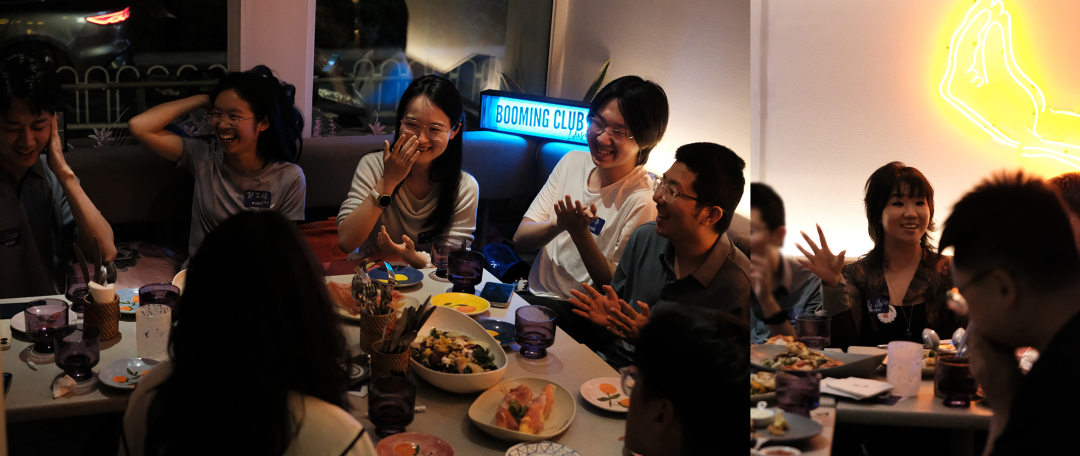
We'd actually worried about awkward silence. Ten people from completely different backgrounds around one table — it could easily become ten disconnected monologues. But the opposite happened. That night's conversation had almost no gaps.
The magic of this gathering, perhaps: everyone was the "weird one" in their original circles, but when they gathered around one table, being weird made them the most alike.
"The System and the Rebellion"
Everyone present had experienced suppression by institutions or rules, but not a single story was bitter or vengeful.
Ruby was the "good girl" we least expected. Top of her city since childhood, best at English and physics, worst偏偏 at math. When filling out her college application, she went stubborn — applied directly for math. Freshman year broke her: advanced algebra, mathematical analysis grinding her down again and again. For the first time, she tasted what it meant to be a "bad student." "For the first time in my life, I realized I thought I just had to work hard. But actually, most people choose what they're already good at." She didn't run. She stubbornly ground her way to Peking University's School of Mathematical Sciences.
Liang's "rebellion" was another kind of calm. The last 100-plus days before the college entrance exam, every night he'd tell his homeroom teacher he was going to the study room — actually sneaking out with his buddies to eat their way through every snack stall around school. He told this story with offhand lightness, like it was the most natural thing in the world. "Education alienates people," he smiled. "So I alienate it right back."
Jane's unflappability started even earlier. The afternoon of her high school entrance exam's math section, her nap ran long. The principal called three times; a police car parked outside her house to rush her to the exam. She walked in, and everyone in the room stared at her. She said: "I actually didn't feel much emotional fluctuation at the time."
Maybe what separates these weirdos from ordinary rebels: they're not fighting against something. They're just being themselves.
"AI Anxiety and the Ten Thousand Hours"
When the conversation turned to AI, disagreement finally emerged. But what's interesting is that the seemingly opposing sides were actually answering the same question: when machines can do what you do, what do you have left?
Jack was the most pragmatic person that night, self-deprecatingly calling himself an "old man." His background: non-elite university, but he'd interned at every top tech company. His anxiety was direct: "I think ordinary people won't have headcount in the AI era." He was talking about the tens of millions of college graduates each year, and the ever-stronger top-tier students in the next cohort. His countermove: buy Bitcoin, betting on the sustainability of assets rather than people.
Jane, born in 2004, now interns at a top tech media outlet, spending her days on arXiv and GitHub. Her assessment matched Jack's: "AI is replacing knowledge-based brain workers faster than people think."
But there was another voice at the table.
Oliver had done the math from Silicon Valley: of the top 100 companies by ARR, every single founder had "ten thousand hours of specialization." He saw people overemphasizing the benefits of "zero experience" right now, and found it dangerous. "The ten-thousand-hour rule has never been broken, from ancient times to now."
BlueRun investor Vince offered another perspective from model architecture: AI is essentially minimizing average — its capability is the capability of the mean. "So the question is, you as a specific person: are you the mean, or are you the outlier? If you're the outlier, you're very hard to average out."
Ruby's answer was the most straightforward: "We're all human. This world was never perfect to begin with. After AI arrives, whether something is perfect or not becomes even less important. Who you think you are — that's who you are."
"We're Not 'Post-2000s'"
We asked one question: these past few years, the VC world has been chasing "post-2000s founders," slapping all kinds of golden labels on young people — have you felt this?
Not a single person in the room thought "post-2000s" was a privilege.
Liang said half-jokingly: "I don't really feel like post-2000s have some natural halo." Then he turned serious: "Once you actually put a product into the market, you're still competing with the post-1980s generation. Sometimes 'post-2000s' is actually a burden." He talked about some post-2000s startup projects around him — they all felt silly. This group was wearing the post-2000s halo, "hand-bubbling some small bubbles, not seeing real demand. 'That famous college student competition' is basically a bunch of college students pretending to be CEOs, talking to a bunch of judges pretending to be investors. In the end, all the CEOs go back to campus."
Ruby's feelings were more complex. She later realized that those "post-2000s myth" projects — one year old, millions in revenue — weren't actually propped up by young teams, but by people who'd already been grinding in the industry for many years. The post-2000s halo was more often used as packaging, not as an answer to any real question.
Nobody saw themselves as post-2000s. They felt it was a way of being disciplined — the older generation using it to understand them, not to see them.
03
And Ten Grandmas Who "Walked In"
During her self-introduction, Jingjing pulled something out of her backpack — ten handwritten postcards and hand-painted badges.
"Actually, I brought ten 'weirdo grandmas' with me today." The room froze. Some people even started glancing toward the door.
The afternoon before coming to Booming Club, she'd been doing art therapy at a nursing home, running a session with the grandmas. She told them about this gathering she was attending, and read that recruitment article to them word by word.
When she got to "all those who are undefined and misunderstood can find support here," a grandma with paranoia and delusions, who'd never been truly understood in her entire life, turned red-eyed on the spot. Another grandma, Xi Liu, who'd worked as an engineer in Germany in her youth, fell silent for a long time after listening. She said, "I was once a maker too. I want to join you all, to keep doing something." And Grandma Caixia, who always hid in the corner of the activity room and never joined group activities, had been secretly listening at the door for a long time that day. She had no children; her only family was a stray dog she'd rescued, "Little Flower." She suddenly pushed the door open and walked in, asking softly: "Can I join you all too, and leave something behind?"
The grandmas asked Jingjing: "Can we join the Buming Club too?" Jingjing said, yes. In your own way. So the grandmas picked up their paintbrushes. Each painted a badge, wrote a postcard, kept busy until 8 p.m.
But these letters weren't given out randomly. Jingjing brought ten "grandma blind boxes," each requiring someone at the gathering to say a specific keyword to unlock.
At 20:22 that evening, the first blind box was opened. Because the grandma who painted it had an almost obsessive love for the number "2" — so many important moments in her life were connected to 2. Later, someone started talking about pets, unlocking another. Grandma Caixia had painted it to commemorate the little dog who'd accompanied her all her life. Another grandma, who usually favored Jingjing the most, had said: my gift isn't given casually. "Give it to the first person you talk to for more than three minutes tonight."
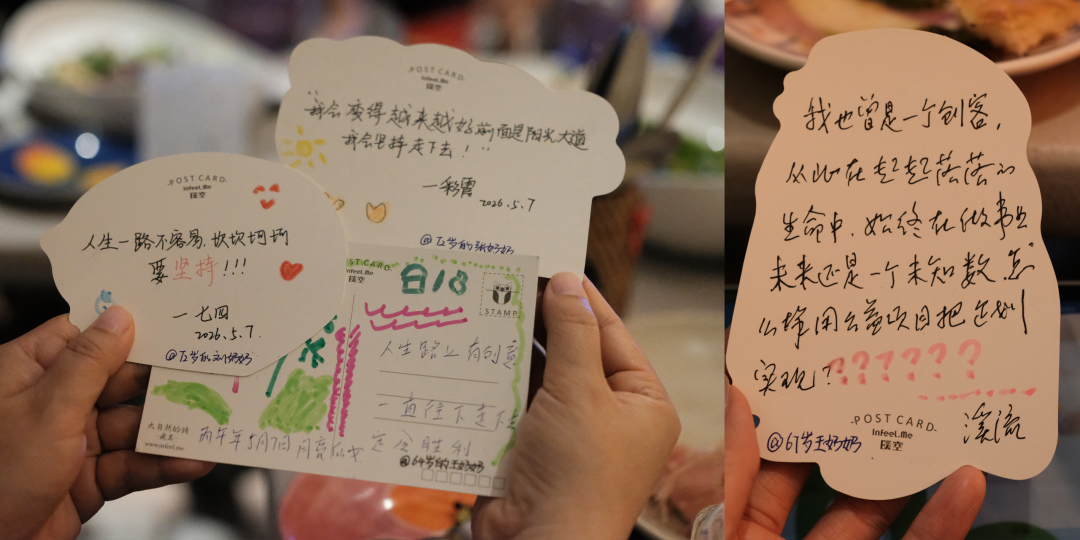
Turns out the undefined ones were never just us. These grandmas labeled with "mental disorders" were also weirdos hidden in the folds of time. Every card was a sentence only dare written after living a whole life. Their once-scorching lives, their misunderstood stubbornness — still waiting for a chance to be seen.
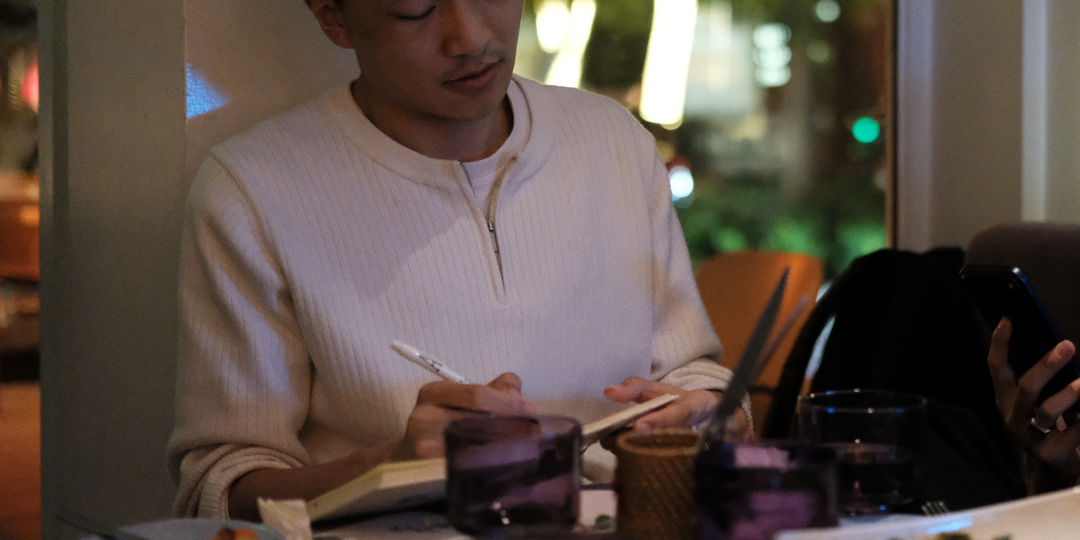
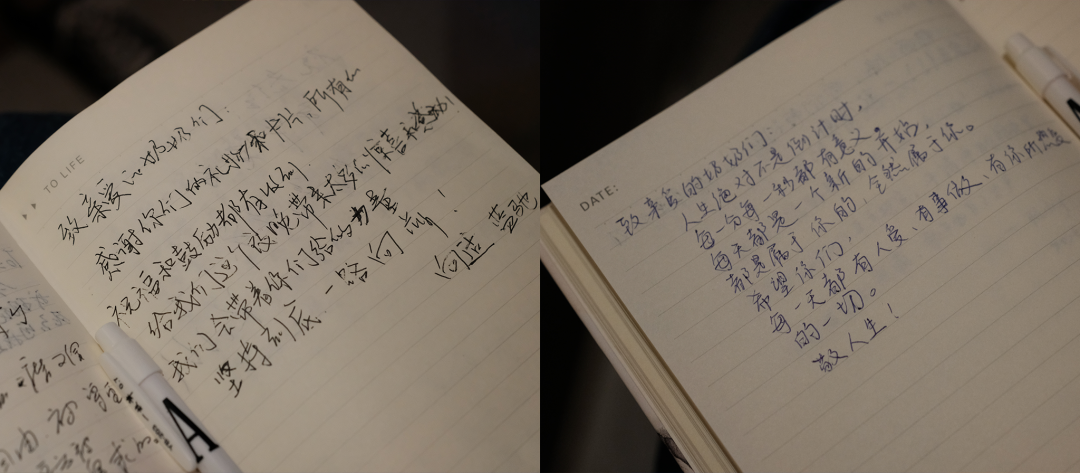
For the last half hour, people chatted while passing around a notebook. Since the grandmas couldn't be there in person, they'd write replies, let them see.
$2
The next day, Jingjing sent over the grandmas' echoes.
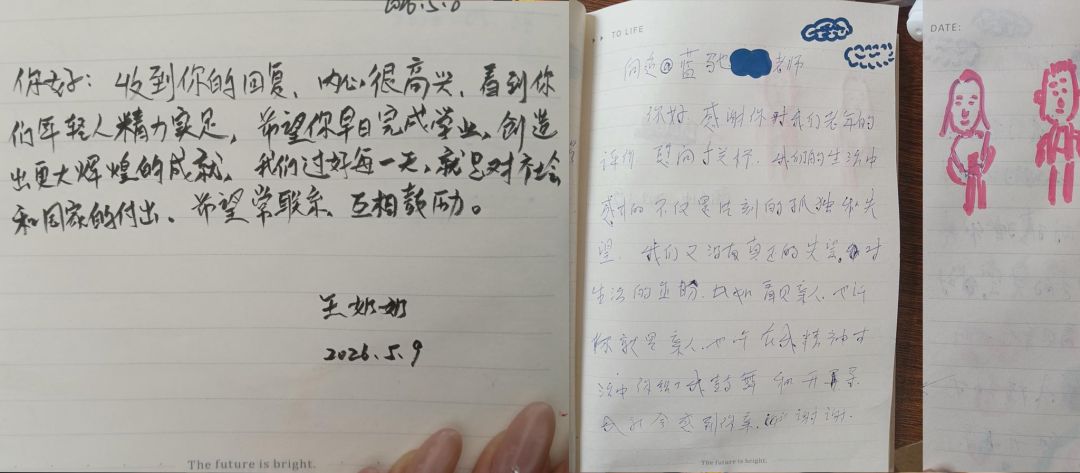
$2 $2
This was the most "off-topic" moment of that night — yet the closest to what Booming Club is about.
All of them — the elderly, the young, those labeled with mental disorders, those called geniuses, the weirdos — they all participated in us in the most authentic way, because here was someone willing to not define them.
04
You Yourself Are Your Creation
The night grew late.
Robbie, the founder of the Weirdo Gathering and a BlueRun investor, said: "Have you heard 'I Want to Go to Guilin' — when you have money you don't have time, when you have time you don't have money. These years I've lived what I wanted, but I've also felt myself getting older." He paused. "So all the more in your prime years, live as the person you want to be."
What was the meaning of this gathering? Not to issue term sheets, not to find unicorns, not to slap on another label of "post-2000s" or "young people." Just putting a few resonant souls around one table, letting them see each other, and letting people outside the room see — the weirdos were never a small minority.
The market's description of the next generation of founders is flat: young, elite school, AI, hard tech, the big-story narrative. But the people in this room offered another coordinate system: curiosity, burning the boats, stubbornness, my journey is my story. These things don't go into pitch decks, yet they're precisely the only un-copyable part of a founder in the AI era. AI can write pitch decks, can imitate any "excellent founder" persona, but it can't imitate the joy of someone climbing a mountain at midnight to make satellite contact, can't imitate the ruthlessness of winning the world after being rejected five times and coming back anyway.
You, this specific person, with your specific obsessions, the detours you've walked, your uncompromising stubbornness — this is the only thing in this world that cannot be copied. You yourself are your only creation.
This is also what BlueRun wants to keep doing: finding those who are writing their own stories, and walking a long enough stretch of road with them.
End.
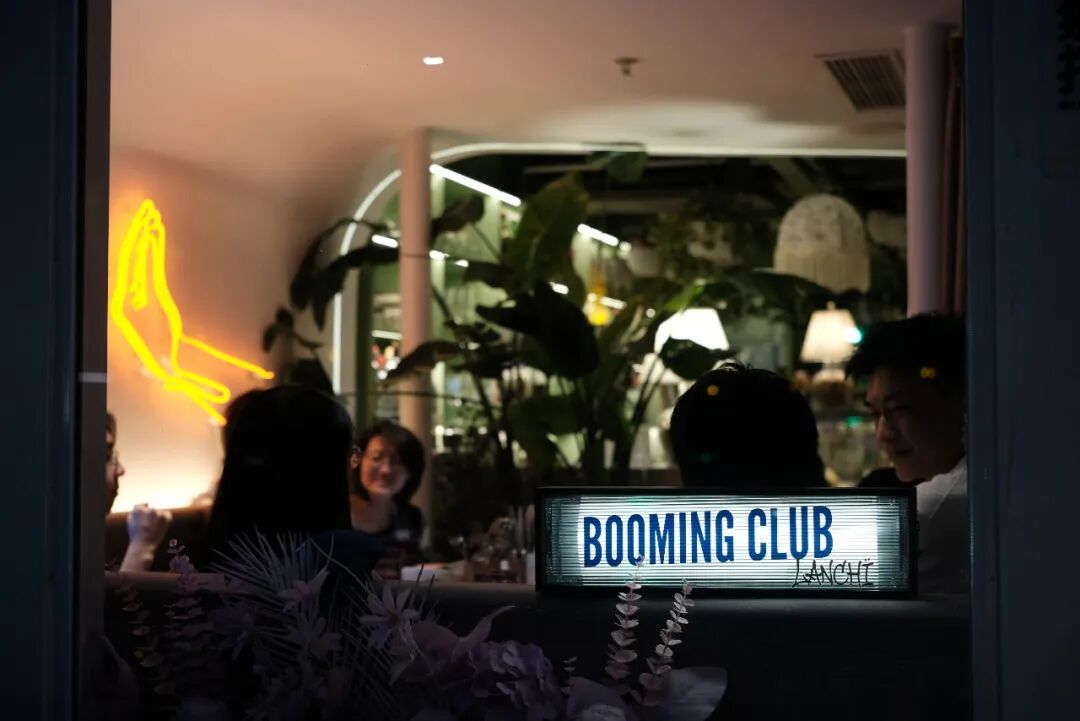
BlueRun hosts small gatherings every month. If you want to join Booming Club, follow the BlueRun WeChat official account
 If You're Fighting, You Should Be in the Room: Booming Club First Gathering Recruitment
AI Native Builder: You Can Always Find a Way to Say Hello to This World | Buming Entrepreneurship Camp
Before AGI Arrives, This Is the Last Night on Earth | Booming Night
One Hour With OpenClaw — What Can You Build? | BlueRun "XiaKeSong" Live Experiment