After ByteDance's Full Acquisition of Oladance, AI-Native Hardware Is Ready to Take the Stage | The Road to AGI

Redefining AI Hardware

Since ByteDance's full acquisition of oladance, many friends have reached out to congratulate the BlueRun Ventures team — thank you to all our peers for the encouragement. Congratulations to both parties on the deal; we're very much looking forward to seeing them continue pushing the boundaries of AI-native hardware.
AI-native hardware is a key focus area for BlueRun Ventures, spanning embodied intelligent robots that are moving "from science fiction to reality," smart glasses with cameras and intelligent assistants, and AI toys and AI headphones already gaining traction among niche audiences. Their value is determined by the combination of excellent wearability, AI's multimodal capabilities, and the compounding data moats they build.
Beyond oladance, BlueRun has also backed multiple teams building native AI hardware products. We hope to support these founders in exploring the future form factors of AGI interfaces.


Wearables aren't new, but we're seeing new technological variables — LLMs and multimodal AI — that are giving hardware far greater room for imagination.
1. Foundation model upgrades unlocking generative capabilities, logical reasoning, and multimodal abilities
Take Haivivi's BubblePal, an interactive conversational toy built on AIGC technology. Preschoolers aged 3-8 are naturally curious and demand high levels of interaction, and large models' generative capabilities can deliver immediate, abundant emotional value along with imaginative content.
Keyi Tech's pet robot "Loona" achieves autonomous decision-making through reinforcement learning. The team converted Loona's database-indexed interaction model into a deep learning-based AI model, conducting reinforcement learning directly on the physical Loona unit.
2. New data input and interaction paradigms: voice, video, body movement, eye tracking, EMG, and more
On the data input side, AR devices for example can receive signals through ring-based physical controls or eye tracking. Their value lies not in augmenting reality, but in augmenting human perception — enhancing users' ability to express information and solve problems, whether in stranger socialization, remote collaboration, or learning to play piano.
On the interaction paradigm side, the aforementioned "Loona" employs an interaction generation system. At the perception layer, Loona's 3D-ToF camera and other sensing components and algorithms enable facial recognition, dynamic and static gesture recognition, human skeletal recognition, and other perception functions.

What's the significance of AI + hardware? Analogous to past "AI+" waves, AI落地 in vertical industries certainly creates value, but the greater significance lies in creating higher-order AI. Similarly, the spatial data generated by AI applications on hardware is precisely the key to unlocking the next iteration of AI toward higher orders.
So we believe the core characteristic this generation of AI-native hardware must possess is this: maximally activating a device's AI capabilities through contextual data, establishing new data flywheels, and achieving the revolutionary user experience brought by Proactive Perception AI.
In terms of form factors, we believe these multimodal data streams will give rise to new super-apps that may no longer live on phones, but rather emerge from combinations of new interaction interfaces and execution terminals like embodied intelligence. Investing in AI hardware is, at its core, an exploration of the possibilities of execution terminals.
From first principles, AI-native hardware must meet consumer electronics requirements for comfort, aesthetics, and long battery life, while using new interaction methods and new sensors to enable frictionless data collection — all to deliver more revolutionary user experiences.
Everything comes back to BlueRun's underlying logic for following AGI: the triple wave overlay of AI + 3D interaction + robotics, with Web3 as auxiliary. These three waves correspond to different spatial and execution capabilities, and we believe the 3D interaction dimension presents an opportunity for a new generation of interaction interfaces to emerge.

Amid these shifts, founders building AI-native hardware will need a more composite capability matrix: making a great AI + hardware product requires not just hardware product definition and supply chain management, but also AI application definition, edge computing, consumer electronics sales and marketing experience, and more. In the fiercely competitive smart glasses赛道, Viture has built product moats through continuous optimization of its cloud-edge integrated computing architecture, paired with more powerful local compute, enabling ever-stronger end-to-end transmission capabilities that ensure a smooth user experience. But the team hasn't stopped there — they've also been deliberately building long-term moats in underlying technology, supply chain, and marketing.
There are no shortage of teams making AI toys on the market right now, but most products remain stuck at the engineering stage and struggle to commercialize. This also relates to teams lacking full-stack R&D talent — AI toy hardware teams need capabilities spanning embedded development, chip-level code, network transmission, application development, backend development, and more. Currently, Haivivi has 23 people total, with multiple full-stack talents on the R&D team who possess cross-disciplinary capabilities.
We believe teams that combine product definition, technology R&D, and marketing capabilities and experience will have stronger growth potential in the AI-native hardware赛道.
BlueRun Ventures believes the fertile ground of AI-native hardware innovation will give rise to more disruptive products, and we look forward to discussing with more founders how AI can define new scenarios and create new interactions on hardware.
If you've already made interesting explorations
We'd love to connect
Contact Us
Xiaofei Guo
Vice President, BlueRun Ventures
Email: xfguo@lanchiventures.com
Reference:
"Implanting Emotion into Companion Robots: Keyi Tech Develops Human-Robot Interaction Intelligent Decision Model," https://36kr.com/p/2311158886182146
"Tmall Genie Co-Founder Starts New Venture, Uses Large AI Models to Bring Plush Toys to Life, Backed by 'DJI Godfather,'" https://36kr.com/p/2879147157099137


PPIO Launches New Compute Cloud Product, Enabling 1000x Cost Reduction for Large Model Inference | BlueRun Ventures Headlines
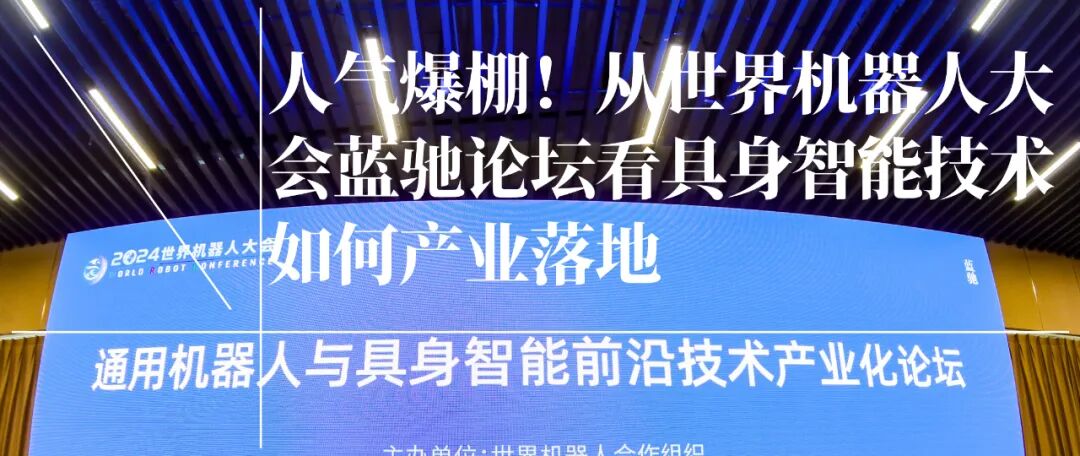
Packed House! How Embodied Intelligence Technology Is Moving to Industrial Scale — Takeaways from the World Robot Conference BlueRun Ventures Forum
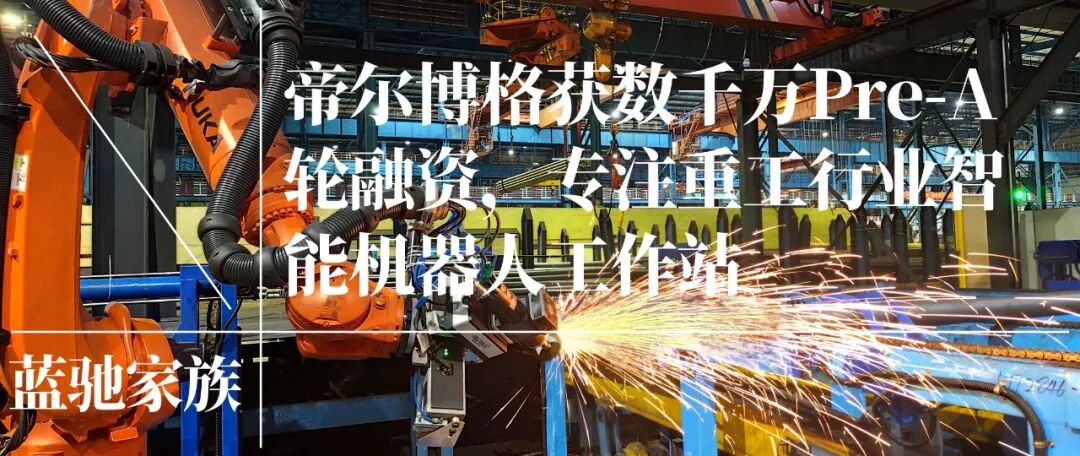
Deeroborg Raises Tens of Millions in Pre-A Round, Focused on Intelligent Robot Workstations for Heavy Industry | BlueRun Ventures Family