CCTV's *Dialogue* with Fangping Chen of CloudSaint Intelligence: Betting on the Trillion-Yuan Low-Altitude Economy to Tackle Pressing Public Needs | BlueRun Ventures Headlines
The Low-Altitude Economy Takes Flight
On the evening of May 18, CCTV-2's Dialogue program aired an episode titled "Has the Era of Low-Altitude Economy Arrived?" Dr. Fangping Chen, founder and CEO of Ceying Intelligence (Yunsheng Zhineng), joined two other entrepreneurs working across different applications of the low-altitude economy — Deli Zhao, founder and president of XPENG AEROHT, and Bin Peng, founder and CEO of XAG — to discuss new quality productive forces and the development of the low-altitude economy.
BlueRun Ventures was the Series A investor in Ceying Intelligence, and also participated in the company's Series B and B+ rounds.
Dr. Fangping Chen on CCTV-2's Dialogue
During the program, Dr. Chen discussed how the low-altitude economy will continuously expand the boundaries of human production and life into a four-dimensional world, empowering traditional infrastructure — which he sees as the true value of the low-altitude economy. As a practitioner in this space, Ceying Intelligence remains committed to improving production and life efficiency through four-dimensional capabilities, alleviating the hardships of people's livelihoods.
Below are the key highlights from the program:
Host Weihong Chen: What is the market scale of the low-altitude economy?
Dr. Fangping Chen: The low-altitude economy essentially lifts our production and life from the previous two-dimensional world on the ground to a three-dimensional spatial world in low altitude, and even further into a four-dimensional world as time progresses. Through our proprietary four-dimensional spacetime management, we can conduct advance early warning, real-time analysis during events, and post-event decision-making. If things were linear in the two-dimensional world, the value brought by three-dimensional transportation now needs to be multiplied by a factor of 4 to the power of n.
So if we say the low-altitude economy is a trillion-level industry, it's because it can cross-empower much traditional infrastructure and solve many problems. I think that's where the enormous value lies.
Host Weihong Chen: What are the enterprise-related application scenarios for the low-altitude economy?
Dr. Fangping Chen: Our products are mainly applied in national infrastructure sectors such as power and new energy, fire and emergency response, smart forestry, and smart cities. It's an integrated system combining heaven and earth — both drones flying in the sky and the drones' "home."
Our products achieve true unmanned operation: no pilot, no remote controller, no manual battery replacement, no manual swapping of sensors or payload pods. The customer only needs to provide their operational pain points and scenario-based requirements, and our products can intelligently and autonomously fly to the target location to solve the customer's problems. The customer forgets about the drone's existence and simply focuses on their core business.
Ceying Intelligence drones widely used across various industry scenarios
The Drone and the Drone's Home
Dr. Fangping Chen: From the very beginning of my entrepreneurship, I was determined to build a thoroughly unmanned drone. Our scenarios are industrial, with complex environments, various temperatures, extreme weather, and strong electromagnetic interference... How drones can operate long-term in such complex environments was a key issue we focused on. So we added a fully automated airport to the drone — the drone's home — which can automatically replace batteries and sensor pods, eliminating the waiting time for charging and the need for manual payload swapping.
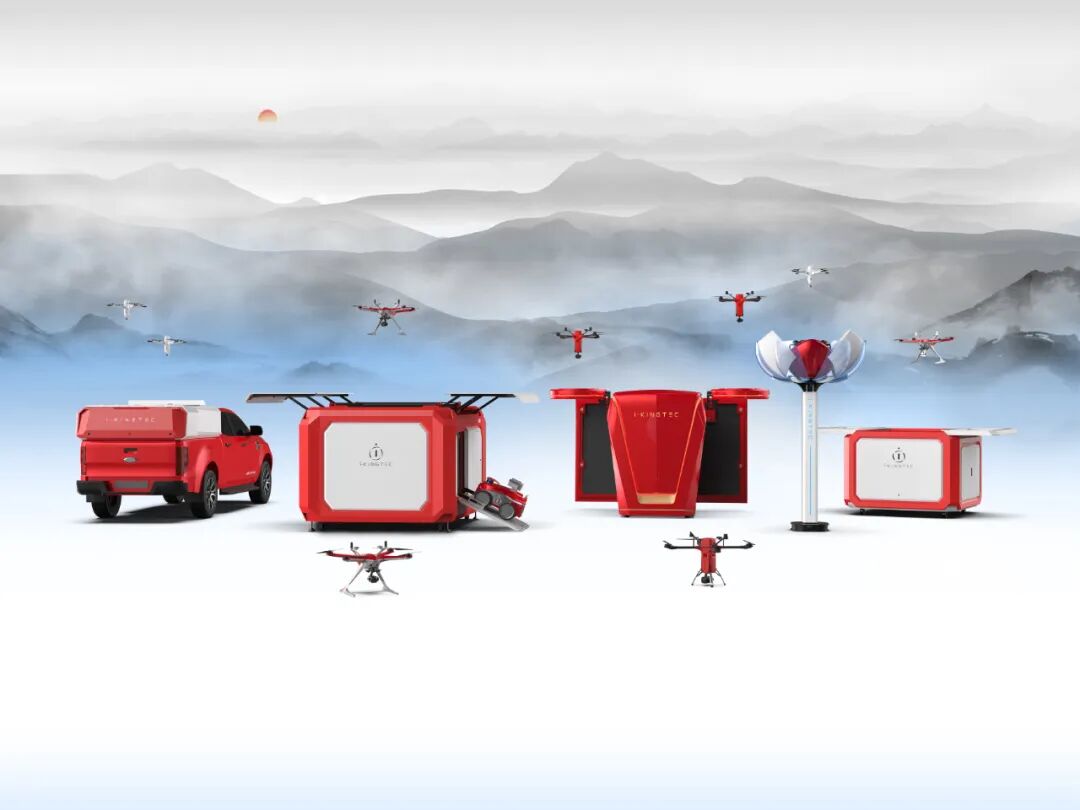
Ceying Intelligence drone and the drone's home
When our drones perform power line inspection, they face strong electromagnetic interference. To avoid compass interference, we also gave the drone eyes — quad fisheye cameras — enabling it to perceive its surroundings like a human and achieve visual positioning.
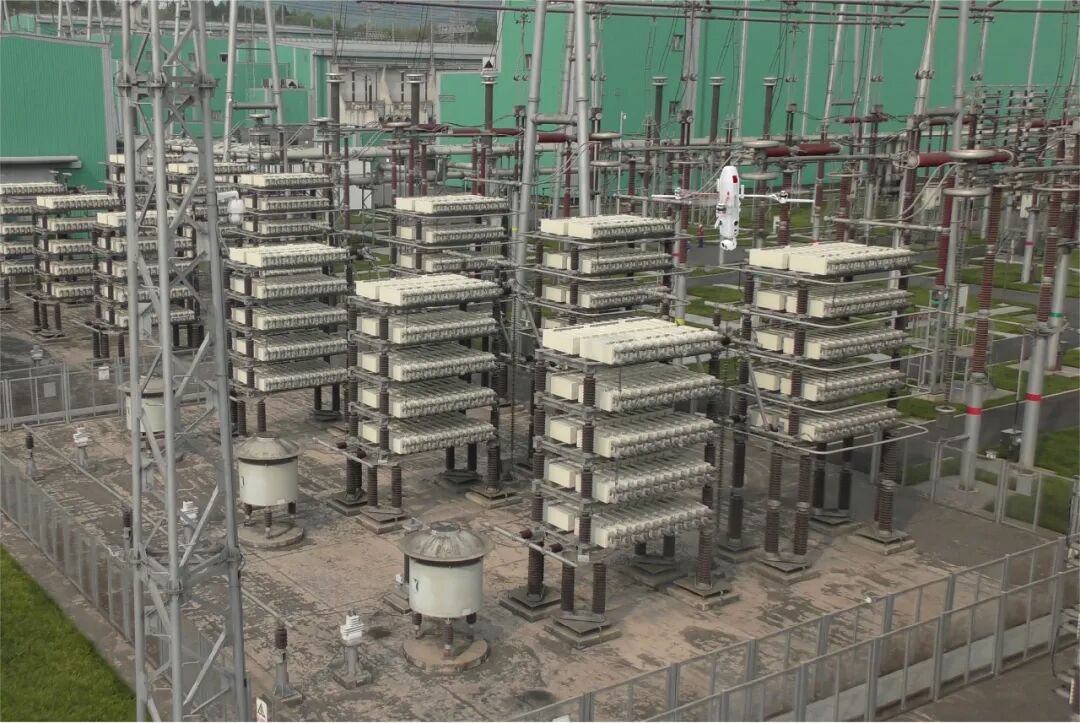
Ceying industrial drone using visual positioning technology to inspect a converter station
Host Weihong Chen: What was your original entrepreneurial vision? What difficulties have you faced?
Dr. Fangping Chen: I started my company in 2017, during my second year of master's studies at Peking University. In the summer of 2017, I went to a power company and accompanied line inspection workers trekking through mountains and rivers. My pants got torn on several occasions. After three months of inspection, I understood the pain of the industry and the hardships of the line workers. I truly felt where the industry's pain points were. I decided then to build a thoroughly unmanned drone that could solve these industry pain points, to address these difficulties and hardships. So from that time on, our company's mission has been "to improve production and life efficiency through four-dimensional capabilities, alleviating the hardships of people's livelihoods."
2022 was the year of my doctoral dissertation defense. Some people told me: if you start a business, you won't graduate with your PhD, you'll drop out; if you finish your PhD smoothly, then your company definitely won't succeed. Peking University also has high requirements for doctoral graduation. During that period, I slept 1-2 hours per day. I was in a state where I could fall asleep leaning against a pillar. Only then did I realize how blessed sleep is. Being able to go all-in on a startup is something to enjoy. Being able to focus on writing a doctoral thesis is also enjoyable. But entrepreneurship is about constantly balancing and iterating through these processes.
Host Weihong Chen: What is your pricing strategy?
Dr. Fangping Chen: Pricing can be divided into two dimensions. First, value. Then we can discuss cost and price.
On the value dimension, it's about continuously solving problems and creating value based on the customer's application scenarios and needs, bringing product R&D, design, and production back to customer value creation. On cost and price, we implement a "machines building machines" strategy, building a fully automated production line where a fully automated airport can be manufactured in 15 minutes. So costs naturally decrease, and prices decrease accordingly.
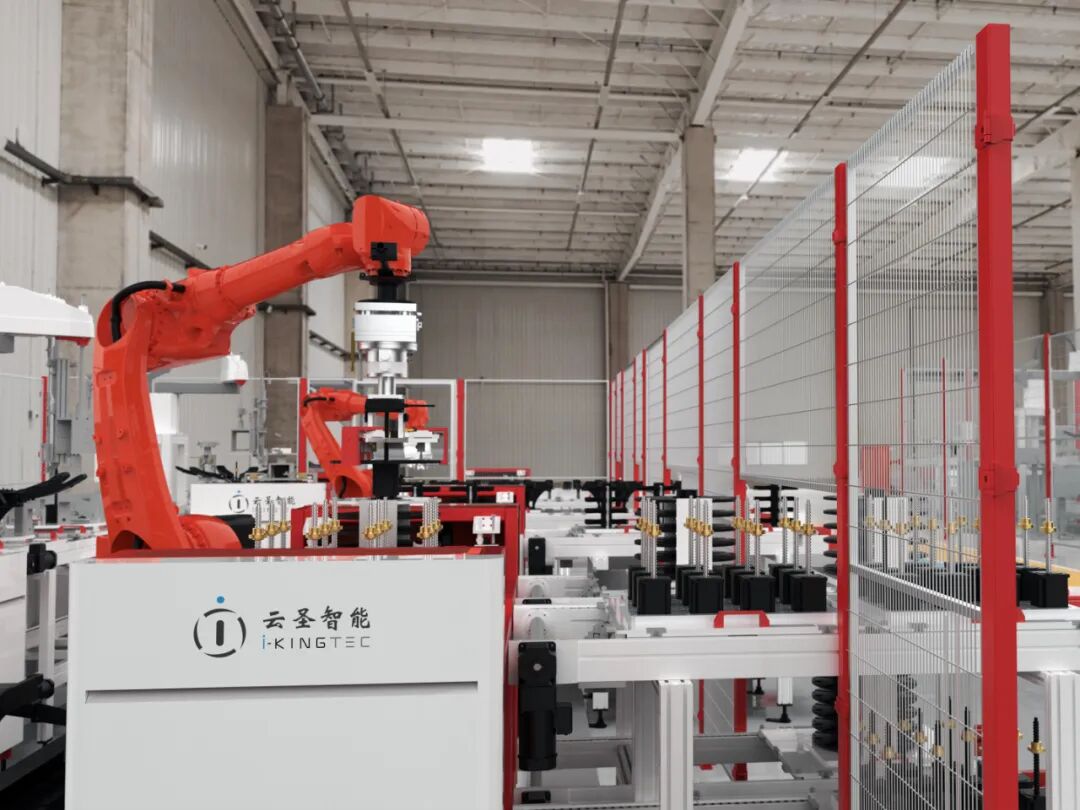
Ceying Intelligence's super intelligent factory
Host Weihong Chen: With the vigorous development of the low-altitude economy, what changes have you observed?
Dr. Fangping Chen: Large numbers of local governments and customers have come to our company for research, visits, and hands-on product experience. Previously, when it came to urban applications and governance, people may not have thought drones had much relevance. Now the concept of grid workers has transformed from humans to drones flying in the sky. Each of our inspection systems can serve as an aerial grid worker, conducting autonomous inspections of its service grid, rapidly sensing and recording urban vital signs, and generating centimeter-level 3D real-scene models. Combined with our unique four-dimensional spacetime management, this enables full-lifecycle urban supervision. Now, government workers in many regions have invited our drones to serve as grid workers in their cities to solve urban governance problems.
Host Weihong Chen: Has the era of the low-altitude economy truly arrived?
Dr. Fangping Chen: When a trend arrives, we should return to the essence of business, return to customer value creation, and perfect our products to the extreme. So the more a trend emerges, the more I feel we need to settle down, cultivate our internal capabilities, and not be impetuous.
Professor Yangjun Zhang: We are still in the early stage of the industry. It is an emerging industry in cultivation. Some technologies need breakthroughs. We lack industry-level planning and corresponding laws and regulations. There are still relatively few chain-leading enterprises. The resilience of the full industry chain is also insufficient. So overall, there is still a series of challenges.
Michael Mao, founding partner and chairman of Hongtai APlus: The main issue is the opening of airspace. In fact, Western countries — Europe, the United States, Canada, and Australia — opened airspace below 3,000 meters back in the 1960s. If this aspect isn't opened up, I think it will be very difficult to develop.
Host Weihong Chen: With global competition in the low-altitude economy, what are enterprises' chances of success?
Dr. Fangping Chen: Our products have already been sold overseas. Locally, people see a blooming lotus flower, and a drone flies out from the lotus. Many foreigners gather around and say "Amazing." So we need not only confidence in our technology and products, but also to export our national cultural confidence.

Ceying "Sacred Lotus Lamp" fully autonomous drone inspection system blooming in overseas markets
Why do we integrate excellent traditional Chinese culture into our products, infusing the spirit of "the lotus rising unstained from the mud," and designing traditional Chinese painting elements into our drone airports? It is to perfectly fuse China's excellent culture with technology and art, forming a Chinese impression for export overseas. I believe this is what young people and entrepreneurs of this era should do.
Ceying industrial drone taking off from the Sacred Lotus Lamp fully automated airport
Host Weihong Chen: What is your timeline for the industrial dream of the low-altitude economy?
Dr. Fangping Chen: I believe that in 2024, Ceying Intelligence, as a low-altitude infrastructure solution provider, will be able to further empower national infrastructure construction, providing more empowerment to industries such as power and new energy, smart forestry, fire and emergency response, and smart cultural tourism, alleviating the hardships of people's livelihoods.
▶ More Exciting Content ◀




BlueRun Ventures was established in 2005 and is a venture capital firm focused on early-stage startups.
Currently, BlueRun Ventures manages over RMB 15 billion in assets under management, making it one of the largest early-stage funds in China. The firm invests primarily at Pre-A and Series A stages, covering technology, consumer, and healthcare sectors. It has cumulatively invested in over 200 startups, including Li Auto, Waterdrop, QingCloud, Guazi.com, Qudian, Ganji.com, Energy Monster, Gaussian Robotics, Songguo Mobility, YTMicro, Machenike, Ceying Intelligence, Axin Network, and BioMap.
BlueRun Ventures has been ranked #1 on Zero2IPO's "China Top 30 Early-Stage Investment Institutions," #1 on ChinaVenture's "China Best Early-Stage Venture Capital Institutions TOP30," and named among Preqin's Top 10 Global VC Fund Managers for Sustained High Returns.
Additionally, BlueRun Ventures has been repeatedly recognized by Forbes China, 36Kr, Cyzone, Caixin Media, CBNweekly, Jiemian, and other media organizations as "China's Best Early-Stage Institution of the Year," "China's Top Venture Capital Institution," "Most Entrepreneur-Friendly Early-Stage Institution of the Year," and "Most Influential Early-Stage Institution of the Year."