Chen Gang of Cat Cat Fruit: 12 Years in Dali, Raising a Bunch of Happy Kids
How Is a Happy Child Raised?
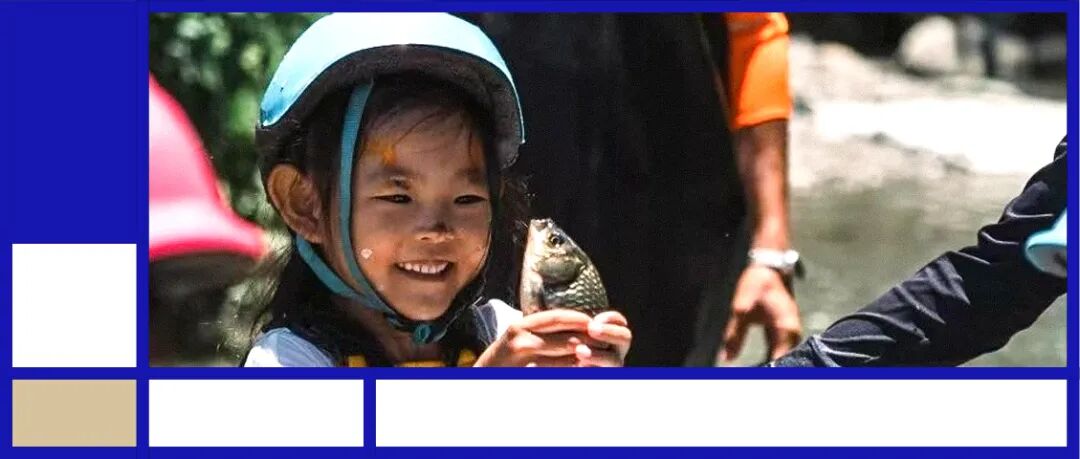
Have you ever heard of a kindergarten like this? The principal goes on "strike," and the kids make their own rules, becoming the true masters of their campus. At the foot of Cangshan Mountain in Dali, there's a kindergarten called Maomaoguo'er. Twelve years ago, Chen Gang — who had spent a decade running a volunteer teaching college — moved to Dali to escape the smog, bringing his children with him, and launched his own experiment in early childhood education.
Chen Gang believes that children need freedom far more than discipline. At Maomaoguo'er, kids are encouraged to observe, question, and create rules. And between children, parents, and the school, Chen has tried to replace the traditional "education as a purchase" model with a community ecosystem — with all three parties co-creating the school together. This probably counts as an early real-world practice of DAO principles in education.
All of a person's secrets are hidden in their childhood. If that's true, then creating happy childhoods for children is crucial for society's positive development. Many adults still carry wounds from childhood — wounds that limit themselves and harm others and society. And the arrival of the AI era has introduced new variables to education: How do we help children build inner traction? How do we guide them to play life as an infinite "game" of lifelong growth?
The exploration of education, like tech investing, is an attempt to build a better world for tomorrow. At the start of 2025, let's first turn our attention to the masters of tomorrow's world — the children. In this podcast episode, we invited Chen Gang, principal of Maomaoguo'er, to talk about how to raise happy children and how AI might help us. Enjoy:

Below is the full conversation, edited and condensed:
Terry Zhu: In September 2013, I happened to visit Maomaoguo'er Kindergarten in Dali. What was supposed to be a leisure trip turned into an exploration of Dali's education scene. That's when I realized Dali was fertile ground for educational innovation — so many interesting, idealistic people were there searching for new possibilities in education. I'd like to start today's conversation from that experience: Why did you decide to devote yourself to this kind of education? What important choices did you make along the way?
Chen Gang: Around 2007 and 2008, Beijing had terrible sandstorms. Many families from northern China and Shanghai relocated to Dali — typically middle-class or intellectual families. Actually, the smog problem was mainly about the children — parents worried about their health. So the people who came to Dali also cared deeply about their children's education. Back then, there were a dozen or so family alliances in Dali — several families pooling together to start a kindergarten and teach their own kids. It sounded great, but what happened when conflicts arose between children, or when educational philosophies diverged? Usually, they'd hit an impasse and fall apart. At the time, I realized that these founders' educational philosophies were heavily constrained by their own family backgrounds and parent-child relationships — this wasn't good early childhood education. So starting in 2008, my wife and I traveled across China studying early childhood education. Around 2012, we started our first kindergarten — Maomaoguo'er.
Terry Zhu: I think before we discuss Maomaoguo'er, there's a question that needs clarifying: When you went everywhere to study, you wanted to explore what good education is. So what do you see as the biggest problem with education today?
Chen Gang: First, the talent standards that accompanied the old selection system have become obsolete. The future doesn't need people who fit perfectly with assembly lines and systems — it needs "living people" who can create more possibilities and higher-level desires. This is a crucial proposition for the future of humanity. Second is the question of "how does one be with oneself?" For example, children who graduate from Maomaoguo'er naturally embrace two things: there are no two identical people in the world, and I believe I'm good. This means children are primarily self-evaluating rather than relying on external validation to motivate themselves. External evaluation can push children toward complexity and richness, but strong self-identity is the source of their hope in the world. Many children may never achieve this kind of self-identity even into adulthood.
Terry Zhu: So what's your solution?
Chen Gang: Our teaching research has a closed loop from phenomenon to theory — discover phenomena, conduct discussions, and synthesize them into theory. It took the kindergarten about two to three years to form an educational system. In summary, what we teach in kindergarten is mental models — how people grow, how people react when facing diversity, others, freedom, or rules — allowing children to gradually build cognition from the ground up.
Our children's community has three dimensions of classrooms: kindergarten, teacher college, and parent classes. There's one prerequisite for everyone participating in these classes: voluntary participation. What is community? The free association of free people. This constitutes the foundational color of this kindergarten — freedom.
Terry Zhu: A key word has emerged: freedom.
Chen Gang: There's an interesting little story. How did our first rule written on paper come about? Four children were playing in a sandpit. One child accidentally stepped on another child's sand creation, and a conflict arose between two children. The teacher asked the children: We have a conflict now, how do we handle it? One child said: We need to have a meeting. Because in kindergarten, they hold meetings every morning and evening — the children would review: what happened after school yesterday? Was I happy or unhappy today? After doing this for a while, they learned how to hold meetings.
That day at the meeting, they established a rule: if someone makes a creation in the sandpit, the child needs to put a small stick next to it, indicating the creation needs to be preserved.
The teacher then asked: What do you think rules are? The children said: Rules are for making everyone happy.
So when do we need to make rules? When we find that someone is unhappy, and their unhappiness will affect us. (laughs)
I think these are two very profound questions, and the children who made this rule averaged only four and a half years old. Over the past ten years, all of Maomaoguo'er's rules have been made this way.
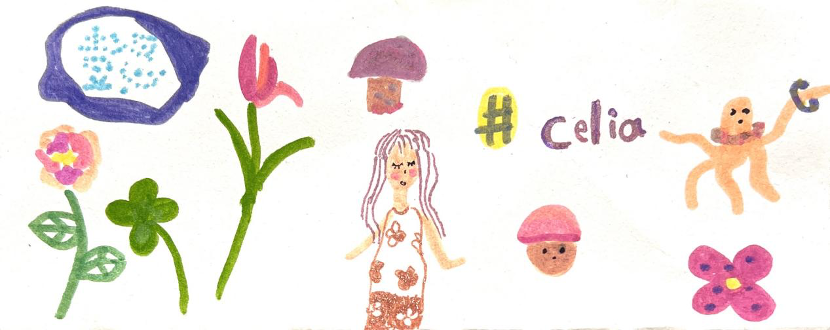 A self-portrait by Xiaoxiao, a student at Maomaoguo'er
Terry Zhu: Over the past decade-plus, Chen Gang and I have been in continuous conversation, and I've discovered Maomaoguo'er's most important characteristic: it's not building a school, it's building a community — students, parents, teachers, all stakeholders co-creating this community. What does this mean? It means it has invisibly completed the three pillars of education: school education, family education, and social education. So I'd like to push further: How does the community fulfill an educational function?
Chen Gang: There's strong professionalism involved here. Our theoretical foundation is constructivism — first you have to discover the problem, lock onto the problem, model what this problem actually is, and then use methods matched to that problem to design lesson plans that solve it. The most important part is understanding what's at the bottom of the problem, while also recognizing that the current problem belongs only to this era — twenty years ago, what we see as a problem today might not have been seen as a problem at all, but rather as a good thing. So when new problems of this era are revealed to us, you can only solve them with this era's methods. Externally, people often think we're innovating, but actually we're constantly discovering problems.
There was a period when I was quite troubled, because every parent had absolute voice and wanted to transform the school into their ideal version, so parents started arguing with each other. At that point, I would "make a mountain out of a molehill" — stimulate various discussions, let parents argue to their hearts' content (laughs), forcing them to become education researchers too. This actually transferred the kindergarten's curriculum thinking to the parent community.
Terry Zhu: Right, I remember around 2016, when I went to Dali to find you, you said you were annoyed.
Chen Gang: Very annoyed (laughs), parents came to me about everything.
Terry Zhu: That day you discussed with me the idea of stepping away from the school, letting parents solve problems themselves, establish rules themselves, and practice co-governance. Later you really chose to step back for a while — what happened then?
Chen Gang: This is quite interesting. When the school was first established, all teaching was autonomous — teachers could teach whatever they wanted. But who corrected deviations? Other teachers and the owners of the school — the parents. We found it created ecological self-correction — when a teacher's behavior was right, the teaching research group would support them, their colleagues and parents would give lots of positive feedback; but when their colleague relationships had problems, teaching research couldn't close the loop, and more importantly, when parents' gazes and tones in conversation with them changed, they knew something was wrong. Because in the community, the relationship between teachers and parents is more like neighbors. When the entire external environment forms rejection or questioning toward you, that teacher will definitely change, and parents will change too — we found this more effective than any evaluation system.
Later we coined a term: "ecological evaluation system" — using an ecosystem to give you feedback. From an educational perspective, when you have strong self-identity and you're a grower, all feedback from the environment might make you feel incongruent. And in the process of seeking new self-understanding, real learning naturally occurs.
Terry Zhu: Quite interesting — decentralization forces everyone to pay attention to relationship building, and only with relationships can your so-called ecological evaluation system form. At the same time, it dissolves parents' notion that they're purchasing teaching services, dissolving that somewhat adversarial relationship.
Chen Gang: At first, things went unrealistically smoothly — everyone was euphoric, smiling at every encounter. But when teaching became very orderly, problems emerged. At that point, parents particularly craved a principal — an authority — to come out and solve problems. I had two choices: if I pursued efficiency, directly intervening would be best; but if I was doing something about improving the soil of education, not being an authority was best. Later I held a meeting with parents and said: from now on, I'm never entering the campus again. To this day, I haven't entered the campus since.
Terry Zhu: Then everyone might be curious about one question: What are the students you've cultivated like now? Or how do you evaluate your educational practice? What's the standard?
Chen Gang: At the start, we said our kindergarten goal was to help children form self-identity under a pluralistic worldview.
I made a mistake back then — I wanted to pursue constructivist education in elementary school, helping children form lifelong learning ability. But after two or three years of practice, we found this couldn't be done in elementary school. Because the structuring of abilities typically happens earliest in second or third year of middle school — that's when a person's learning model truly lands. Elementary school should form the motivation for lifelong learning — children's curiosity, their attitude toward the world, should be enough to support their future lifelong learning. The goal of middle or high school is finding passion, and based on that passion, restructuring their existing knowledge base, so students' thinking and mental models can settle.
As for family education, if family concepts can't support a child's growth, school education achieving 100 points is useless. First, children must be placed in complex environments. If the family creates a simple environment for the child, even if everything else is right, it's wrong. The most responsible thing parents can do is place their child in a complex environment, then support them with love. Complex environment doesn't mean scale — it means degree of freedom. A dozen free children can create far more diversity than thousands of unfree children.
Second, when children are free and experiencing all kinds of fresh stimuli, how do parents guide them? Some parents say: don't hang out with that child; I'll stand up for you. I think neither is right. Parents need to give children a feeling that this world can be understood — it's just that I don't understand enough yet.
As long as parents and teachers are continuously growing, children's growth is a natural consequence — no effort needs to be directed at the children themselves.
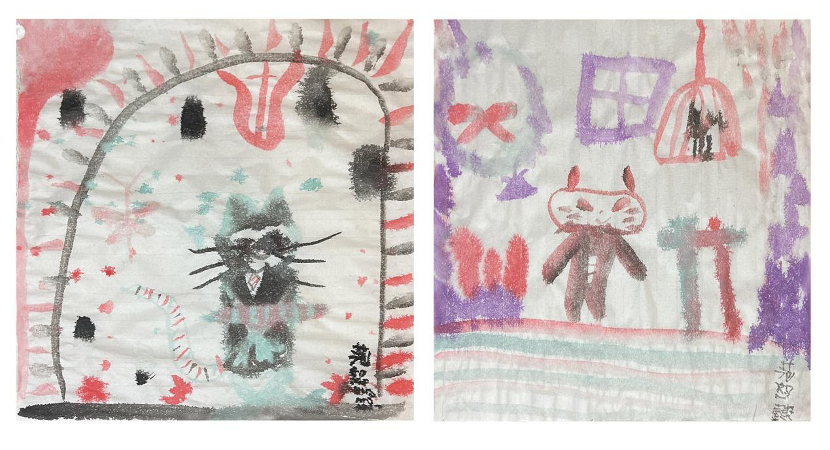 A cat drawn by a Maomaoguo'er student in a magic academy art class
Terry Zhu: You mentioned "finding passion." How do you help children find their passion? Today, many adults may never have found theirs.
Chen Gang: It must happen in a community environment, because no one can find their destined passion detached from others. The first environment a child faces is family — from the moment they come into this world, their parents' curiosity about them accompanies their main growth stages. What's crucial is: when失控 [loss of control] appears, what's the parents' first reaction? Curiosity or control? If the gaze they receive from parents is curiosity, they'll likely find their talent and passion. If parents' reaction is norming, controlling, they'll likely lose it.
In adolescence, due to motivations and role pursuits in peer relationships, children may also develop a functional passion — but this isn't destined passion. For example, now I'm in a cell with eight prisoners, and I find my intelligence is the best — I can always help the boss achieve his management goals. Over time, I immerse myself in continuously receiving positive feedback, and mistakenly believe this is my life's value. In this example, the person is drawn to "passion" by positive feedback, not by their own pursuit.
If throughout elementary school or before fifth grade, parents view this child with curiosity, then in adolescence, this child will use self-leadership for peer collaboration, and won't easily lose their original passion due to peers' particularities.
Adolescents can vaguely find the direction of passion, but moving from vague to precise takes a lifetime. In this process, the subject finds self-evaluation difficult — sometimes it's hard to accurately say this is my passion — but from an other's perspective, it may be clearer. We mentioned providing diverse environments because in complex environments, forming relationships with others, exploration can be more complete.
Many people now want to minimize complex relationships with others. What's the motivation behind this? I think perhaps because whether work relationships or family relationships, they're always unclear or overstepping boundaries, and people worry about pressure. All relationships are intersections, but our culture, this era, has a force that can cover all relationships. Sometimes to resist relationships being covered, we choose not to establish relationships. This is overcorrection — because only in complex environments do we have the ability or opportunity to regulate what this intersection is, and how much.
Terry Zhu: A simpler understanding is "read ten thousand books, travel ten thousand miles." You need to encounter all kinds of people, and you must learn to get along with them — in this process, a person's self-awareness improves, and their ability to improve and manage relationships grows. Not just education — any relationship is like this. Following this understanding, I want to push further on another thing you said: "This world can be understood, it's just that I don't understand enough yet." How so?
Chen Gang: This is our training for parents and teachers. When children receive various external stimuli, how should you guide them to respond? I think it must be through understanding with love — never zero-sum games and pursuing absolute fairness. In kindergarten and elementary school, parents and teachers very easily become judges, adjudicating fairness. This way, children might grow very solid within a closed system, but they'll miss much of life's unknowns and possibilities. Zero-sum games don't have co-creation ability, don't have a discovering gaze — their ceiling is limited and singular.
We once conducted an experiment, collecting over 800 last words, and found they could be divided into five categories. The first is personal level: "Lao Wang next door owes me 20,000 yuan, help me get it back." The second is intimate relationship level: "The only thing I can't rest assured about is you two, mother and child." The third is social level: "If it weren't for petty people stabbing me in the back, I'd have been a high official long ago." The fourth is like Li Shutong's, writing "sorrow and joy intertwined" as a life realization at deathbed. You'll find that people can only understand downward, not upward — the degrees of freedom these four types of people possess are completely different. Actually, large numbers of people in our society stop at the second level. We may not understand "sorrow and joy intertwined," nor can we understand Elon Musk's pursuit of freedom in time and space. This strengthened our conviction in what education is ultimately for: enabling people to have freedom on a larger dimension.
Terry Zhu: What you just said about cognition of complexity and problem-solving ability — it's all for this.
Chen Gang: To let children penetrate the small universe their family created for them, and possess a larger universe. I think this can be achieved through community-based education.
Terry Zhu: After the AI era arrives, what new challenges will education face? Will your series of goals, methods, and evaluation systems change? And how to respond?
Chen Gang: I think the emphasis will shift. For now, AI doesn't seem to have a major impact on the fundamental principles of education, but it creates more possibilities.
What can be done clearly in elementary school: first, in open organizations, quickly form task-oriented groups, allowing children to quickly form collaboration with different team members. In elementary school, we hope to cultivate children's ability to cognize problems — so for every problem studied, we need to find the most matched learning partner for the child, completing this learning through self-leadership and peer guidance.
Second is continuous questioning. Facing problems, children probe deeper until their abilities are exhausted — we find this is a process of continuous questioning and ability construction. Each time they reach bottom, children gain new cognition, and they need to continuously migrate and apply this cognition to new phenomena. Continuous questioning has two dimensions. The first dimension is Socratic continuous questioning, which can cultivate constructive critics. The other is curiosity-driven questioning — we find in group teaching, curiosity gets continuously amplified in discussion, your curiosity triggers my curiosity, possibly triggering more people's curiosity. This process is somewhat like wandering in the wilderness — we're exploring the unknown driven by curiosity.
The second dimension is aesthetic ability — it's more important now. In our prediction of the future, AI can quickly identify and satisfy your desires, which will make the process of satisfaction very cheap. Originally we had abundant curiosity and desires, wanting to personally participate in and experience life, with seemingly infinite possibilities worth exploring. But when AI appears, AI makes many things that were originally considered infinite suddenly become finite. Then what is your life's value? How do you play finite games as infinite games? How do you generate new needs and desires? I think this needs to be supported by aesthetic ability.
Terry Zhu: That is to say, previously, human self-motivation might have been pulled by complex problems. But if problems are all solved by AI, where does our traction come from? How do we build new traction? This is the challenge AI brings that we need to think about. So how do we solve this through aesthetics?
Chen Gang: I think aesthetics isn't determined by mind, nor by function — it's determined by feeling. When beauty arrives, time slows down, mind disappears, judgment is absent — so beauty is a feeling.
Terry Zhu: What you said reminds me of an interview with Ang Lee. Ang Lee said everything in film, ultimately, the core is creating a moment. This moment is feeling. And this is endless.
Chen Gang: The first step is expressing feeling. The second step is being able to list out viewpoints and facts without emotional state. The third step is finding the connection between viewpoints and feelings unrelated to facts. The fourth step — rewriting feeling — is the goal. So I think in the learning process, it's the same. For example, we just talked about facing fresh external stimuli, the child can't continue to be self-consistent, the feeling isn't good, but this is precisely the process of learning — this bad feeling is constructive.

 Venture Studio: When Investors Become Entrepreneurial Producers|Chuangye You Helan
Zhihuijun: The Wild Iron Man, Starting a New Adventure|Chuangye You Helan
 I Deliver Packages, Giving North America a Little Tech Shock|Chuangye You Helan