Kun Jing, Genspark: Before Vibe Coding, Try Vibe Working First

New Forms of Work in the Age of AI
Kun Jing's column is back. In his Seeing AGI series, Jing has explored how AGI will transform human life, how humans should take action, and how to build AI-native teams. His latest piece tackles another defining question of modern life: how AI will change our work. Following Andrej Karpathy's concept of "Vibe Coding," Jing discovered the beauty of "Vibe Working": no longer merely "using AI tools," but co-creating with AI as an intuitive partner. Work ceases to be a struggle against resistance and becomes riding the wave of technology. Jing urges all professionals to drop their nitpicking, control-oriented mindsets and genuinely embrace AI as a collaborator — to feel the transformation AI brings to work.
Since its launch, Genspark has experienced rapid growth. Jing recently shared good news with us: Genspark has become one of Anthropic's first Trusted Partners, reflecting both token consumption volume and strong user reception. This isn't just good news for Genspark — it shows everyone that the future is arriving faster than ever before. If you want to ride the wave, start with Vibe Working.
Below is Jing's original article, translated by BlueRun Ventures. Enjoy reading:
"This might sound a little crazy, but I believe AI will ultimately transform how we work, enabling everyone to work just three days a week. The starting point for this transformation is a new mode of working — what I call Vibe Working." In my previous three articles, I discussed AGI's arrival, how we should respond, and how to build teams that truly integrate AI — with the human element always at the core. In this fourth piece, I want to share a surprising discovery: AI's impact goes far beyond enhancing capabilities — it's reshaping how work feels.
Like many people, I've carried the weight of work for years. Whenever the pressure became unbearable, I'd tell myself: this stress is good, grinding through hard problems sparks creativity. That was my way of coping, of pumping myself up.
But over the past year and a half, something shifted. As I began deeply collaborating with AI, I found that self-reassuring script gradually becoming unnecessary. Not because I wanted to escape pressure, but because the texture of work itself had changed.
The tension eased. The sense of collaboration deepened. AI made problem-solving feel natural and genuinely enjoyable. This transformation in the work experience is what I call Vibe Working. I believe it signals an important direction for future human-AI collaboration.
To understand Vibe Working, consider Andrej Karpathy's concept of Vibe Coding: "Fully immersed, embracing infinite possibilities, even forgetting that code exists." He describes a programming state where you no longer micromanage control, but flow with AI's capabilities — accepting suggestions without line-by-line review, letting AI fix errors through conversation rather than manual debugging.
I realized this phenomenon extends far beyond programming. Vibe Working applies this mindset to all work — strategy, design, writing, analysis, planning. It means dropping the "controller" posture, genuinely handing autonomy to AI, and enjoying the process of co-creating with a super-intelligent partner. You are no longer merely "using AI tools" — you are improvising together, like musicians in a jam session or a team with seamless chemistry. The final output feels alive because it emerges from an authentic creative process, not mechanical execution.
What struck me most was the emotional shift. Traditional work often feels like "fighting resistance" — struggling through complexity, forcing progress, grinding out results. Vibe Working feels like riding the wave of technology. When you finish, you feel energized rather than depleted, excited rather than merely relieved — because you genuinely enjoyed the act of creation.

My shift to Vibe Working happened gradually. In early 2023, like everyone else, I used AI as a tool: drafting emails, summarizing documents, answering specific questions.
The real turning point came while developing Genspark's AI Slides feature. Previously, making presentations was a grind: weeks of research, learning new topics, distilling key points, outlining, then begging colleagues to make it look decent.
But the first time I used Genspark Super Agent's AI Slides, I was stunned. It researched, generated content, and designed everything in one go. It gathered more comprehensive information than I could, designed in styles I'd never imagine, and regularly surfaced insights I hadn't considered but that hit the mark precisely. What used to take weeks now took 5-10 minutes.
The psychological impact was massive. My inner voice shifted from nitpicking — "this isn't good enough," "there's an error," "it's fine I guess" — to amazement: "My god, this is incredible!" "So much better than what I could do!" "So what should I do now?"
This revealed something essential about human psychology: when machines haven't surpassed us yet, we instinctively find fault; but once they clearly outperform us, the question that arises is: "What is there left for me to do?"
After that moment, everything changed. Once I genuinely acknowledged that AI far exceeds me in many ways, I stopped "fighting" it and began "merging" with it. As I embraced this collaborative mode, my body naturally relaxed. We moved from "using a tool" to a true partnership. From there, I entered the state of Vibe Working.
My thinking shifted: if the result falls short, it's usually because I didn't give my AI partner enough information. Good AI collaboration, like good human collaboration, hinges on clear communication. This shift brought immense mental relief, physical energy, and skyrocketing efficiency.
This change didn't just happen to me. Our entire Genspark team underwent this psychological transformation. We now launch new products weekly, with AI writing 80% of the code. The remarkable thing is: the more work AI takes on, the less stress I feel, while my efficiency multiplies.
I believe this experience will soon become the norm — every individual, every organization, will undergo the same psychological and work-style transformation.
Through extensive practice and observing team changes, I've mapped human-AI collaboration into four levels:
Level 1: The Nitpicking Tool User We ask, AI answers, yet we instinctively find flaws. Our inner monologue: "this won't work," "there's a problem," "it'll do." We maintain tight control over direction and decisions, constantly questioning AI's output. This is most people's starting point, and where many remain stuck — not because AI isn't capable, but because we haven't yet recognized its strength.
Level 2: The Efficient Delegator We assign tasks, set direction, but still posture as "I know better than you." AI does the work while we oversee from above. Efficiency appears improved, traditional management structures preserved, yet AI's true potential remains locked in a box — because we're still thinking like managers, not collaborators.
Level 3: Collaborative Flow The psychological shift happens here. We recognize AI surpasses us in many areas, stop fighting it, and start flowing with it. True back-and-forth begins: AI challenges our ideas, we challenge it back. The mindset becomes: "AI didn't do well? Must be something wrong with how I'm using it." Vibe Working begins here, and stress starts to decline.
Level 4: Creative Symbiosis This is the magical peak. We co-create with AI in real-time, ideas flowing seamlessly between us, no longer distinguishable who contributed what. We finish energized and exhilarated. Traditional planning frameworks dissolve; creativity surges like living water — solutions feel vibrant because they emerge from collaborative creation, not forced management. Once you've tasted this, traditional work feels impossibly slow and limiting.
The biggest barrier isn't technical — it's psychological. Most of us treat AI like a subordinate. But Vibe Working begins when you treat AI as a smart partner.
-
Start small: Don't begin with core projects. Try prompting AI to draft a report or presentation, don't edit it yourself, just refine the prompt.
-
Share your confusion: In multi-turn conversations, share more thinking context. Don't just ask "how to solve X?" Try: "I'm thinking about X, but confused about Y, and worried about Z." When you lay out your thinking process rather than just demanding answers, magic happens.
-
Ditch the testing mindset: Stop validating AI's capabilities with test questions. Treat AI as a super-smart partner, engage in ongoing dialogue, iterate and refine.
-
Shift your mindset: "Treat AI as a smart colleague — it needs information input, it can't read minds." Honestly, I'm writing this series not to promote my own product. I simply want to share my thinking with friends and peers. But I must point out: currently, Genspark is the only fully automated intelligent agent collaboration platform. If you genuinely embrace it and experience what I'm describing, you can feel the magic of collaboration firsthand.
Those who liberate themselves first will gain the greatest productivity and emotional fulfillment.

We are witnessing the birth of an entirely new way of working — fundamentally different from the pressure-driven, heads-down grind of the past.
Vibe Working brings not just efficiency gains; it means more relaxation and time from work, time for family or whatever you love.
The wave is here. There's no turning back.
 Genspark CEO Kun Jing: Don't Want to Be Replaced by AI? Here's What I Suggest You Start Doing Now
 Genspark CEO Kun Jing: I See AGI. I Hope I'm Wrong | BlueRun Family Headlines
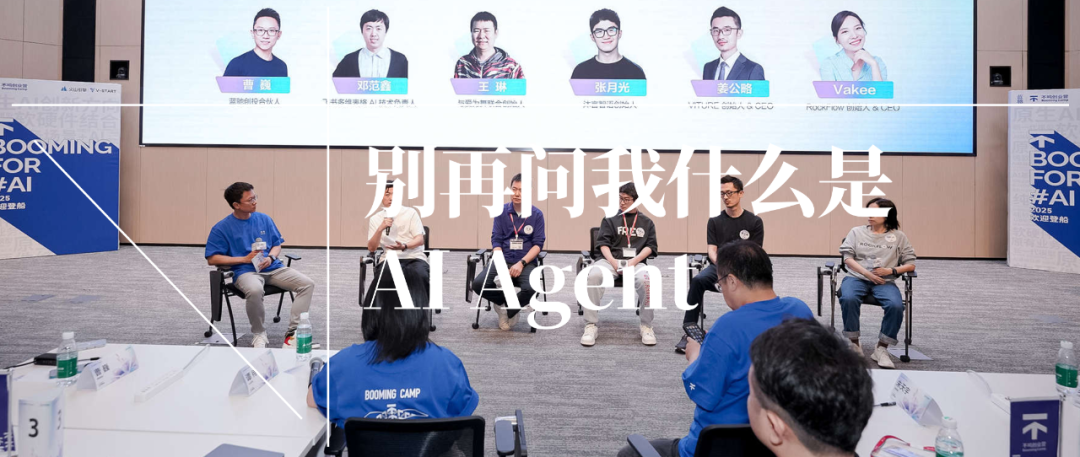 Stop Asking Me What an AI Agent Is | BlueRun x Volcano Engine Event Recap