BlueRun Ventures Family Headlines | Galaxy Universal Unveils GraspVLA, the World's First End-to-End Embodied Grasping Foundation Model, Defining a New Paradigm for Fully Synthetic Large-Scale Pre-training!

Exploring the Boundless Possibilities of Embodied Intelligence


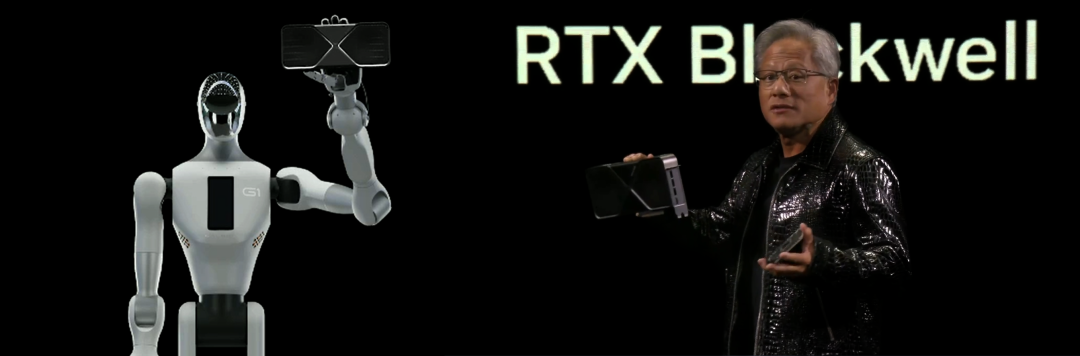
At the just-concluded NVIDIA CES 2025 keynote, Galbot stood behind NVIDIA founder Jensen Huang and, before a global audience, held aloft the company's newly unveiled next-generation graphics card — the RTX 5090.
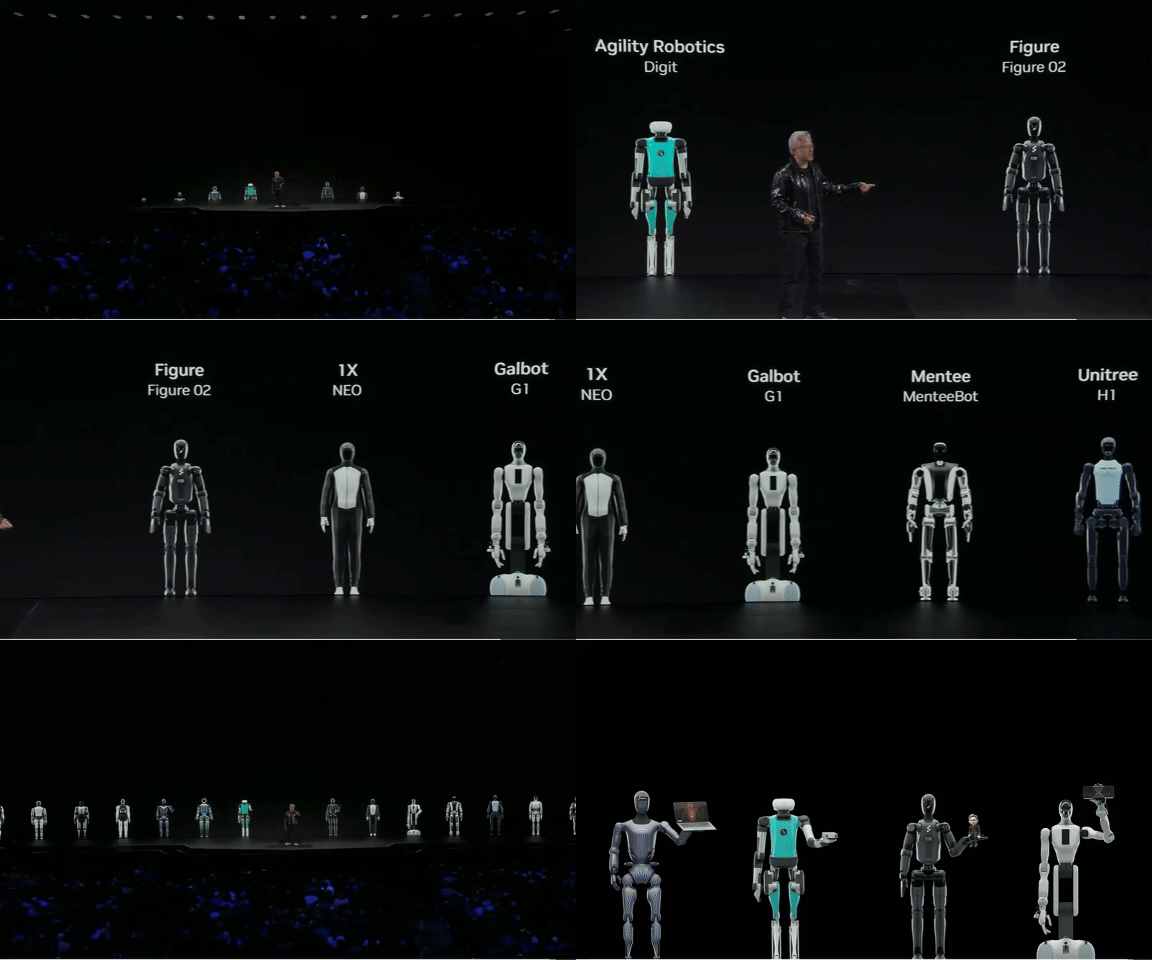
Shortly after, Galbot and team members received Jensen Huang at their offline booth, demonstrating unmanned retail pickup capabilities on the spot to great acclaim.
In an instant, Galaxy Universal commanded worldwide attention. What qualified this startup to earn such favor from Jensen Huang?
Today, Galaxy Universal delivers a definitive answer with the release of the world's first end-to-end embodied grasping foundation model.
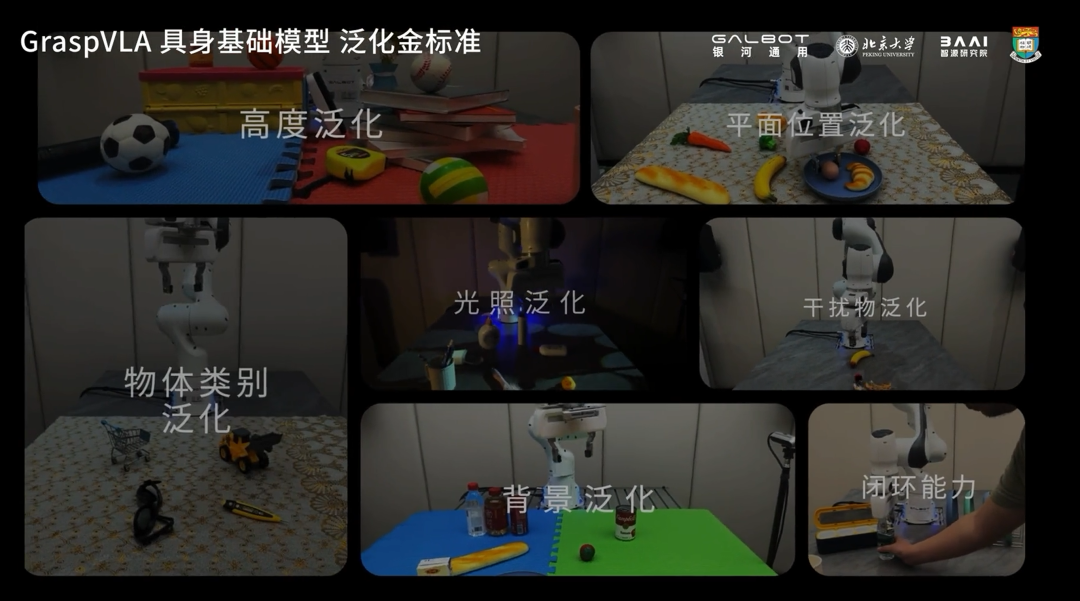
Galaxy Universal, in collaboration with BAAI, Peking University, and The University of Hong Kong researchers, formally announces GraspVLA — the first comprehensively generalized end-to-end embodied grasping foundation model. GraspVLA's training consists of pre-training and post-training phases. The pre-training phase relies entirely on synthetic data, reaching an unprecedented scale — one billion frames of vision-language-action pairs — to acquire generalized closed-loop grasping capabilities and achieve foundation model status. After pre-training, the model can directly transfer from simulation to reality (Sim2Real) for zero-shot testing on unseen, highly varied real-world scenes and objects, demonstrating for the first time globally seven remarkable generalization capabilities that satisfy most product requirements. For specialized needs, post-training requires only few-shot learning to transfer foundational capabilities to specific scenarios, maintaining high generalization while developing professional skills tailored to product demands. As a truly end-to-end embodied foundation model, GraspVLA demonstrates a pre-training process that achieves foundation model status without large-scale real-world data, using only synthetic data, and further shows how this generalist foundation can rapidly grow into a scenario-specific "expert" through minimal fine-tuning — defining a new paradigm for VLA development. This paradigm carries profound significance, breaking through two major bottlenecks currently constraining embodied general-purpose robot development worldwide. Data bottleneck: Real-world data collection is not only prohibitively expensive but also struggles to cover all possible practical application scenarios, resulting in insufficient data volumes to train foundation models and excessive collection costs that preclude profitability. Even if cost were no object, because humanoid robot hardware remains far from converging, hardware updates would dramatically diminish the value of existing data, causing massive waste. Generalization bottleneck: Data scarcity directly limits robot generalization and versatility. Most robots can only perform specialized tasks in specific environments, with specific objects, and under specific conditions — preventing humanoid robots from achieving scaled commercialization. The Galaxy Universal technical approach, exemplified by GraspVLA, features low cost, massive data, and high generalization, breaking through the development bottlenecks of embodied intelligence and proving worthy of the responsibility of holding aloft the chip giant's next-generation core product. It will lead end-to-end embodied foundation models toward scaled commercialization in 2025! As the lead investor in Galaxy Universal's first funding round, BlueRun Ventures looks forward to the company continuing to lead embodied intelligence research globally, bringing general-purpose robots into households everywhere at the earliest opportunity. Below, we examine in detail the series of generalization tests this new paradigm has undergone and the powerful transfer capabilities demonstrated by its foundation model.

In recent years, embodied foundation models have made certain advances in generalization. RDT initially demonstrated generalization to different backgrounds and objects within the same category with varying appearances. OpenVLA, π0, GR-2, and others further showed generalization to distractors and planar position variations.
Yet to this day, the generalization of end-to-end embodied foundation models remains inadequate for real-world demands and cannot support product deployment. Accordingly, we present for the first time the seven golden standards that a VLA must meet to qualify as a foundation model. All results below are zero-shot tests on unseen scenes and objects, demonstrating GraspVLA's seven comprehensive generalization capabilities as a single model.

Real-world working environments such as coffee shops, convenience stores, production floors, and KTV venues feature diverse lighting conditions — variations in color temperature and intensity, both gradual and abrupt. Across all these scenarios, GraspVLA performs without exception and with consistent stability:
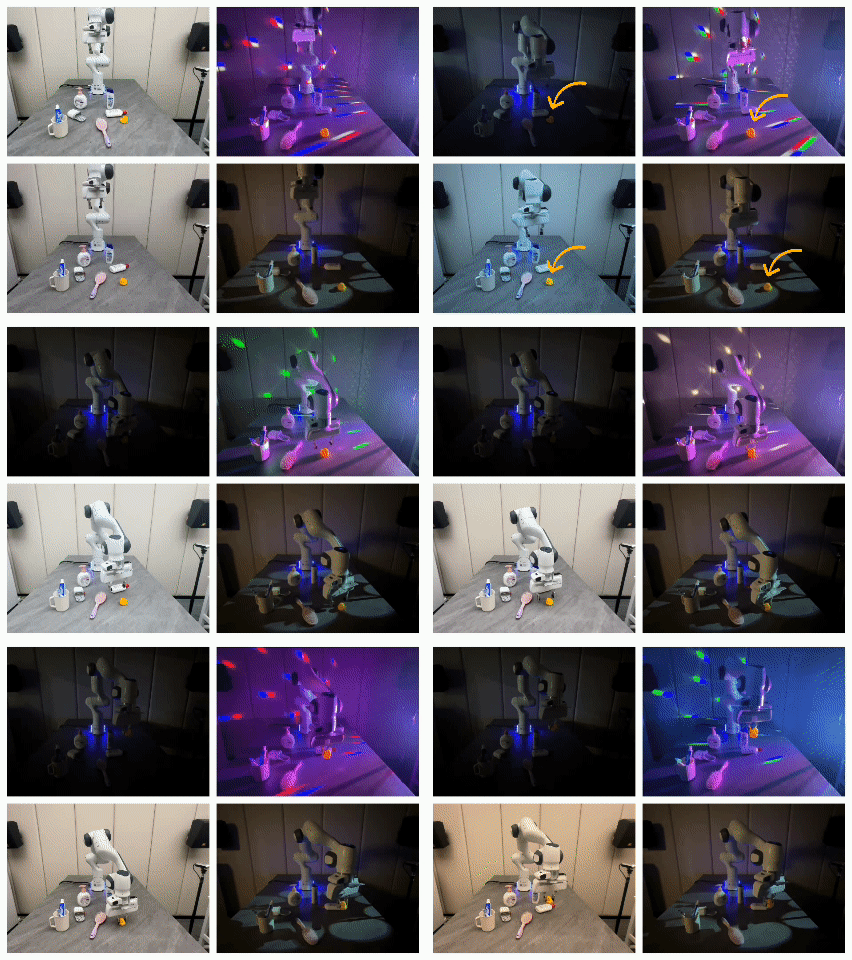 Video played at 2x speed
Even in extreme darkness with moving target objects, GraspVLA can accurately locate and successfully grasp:
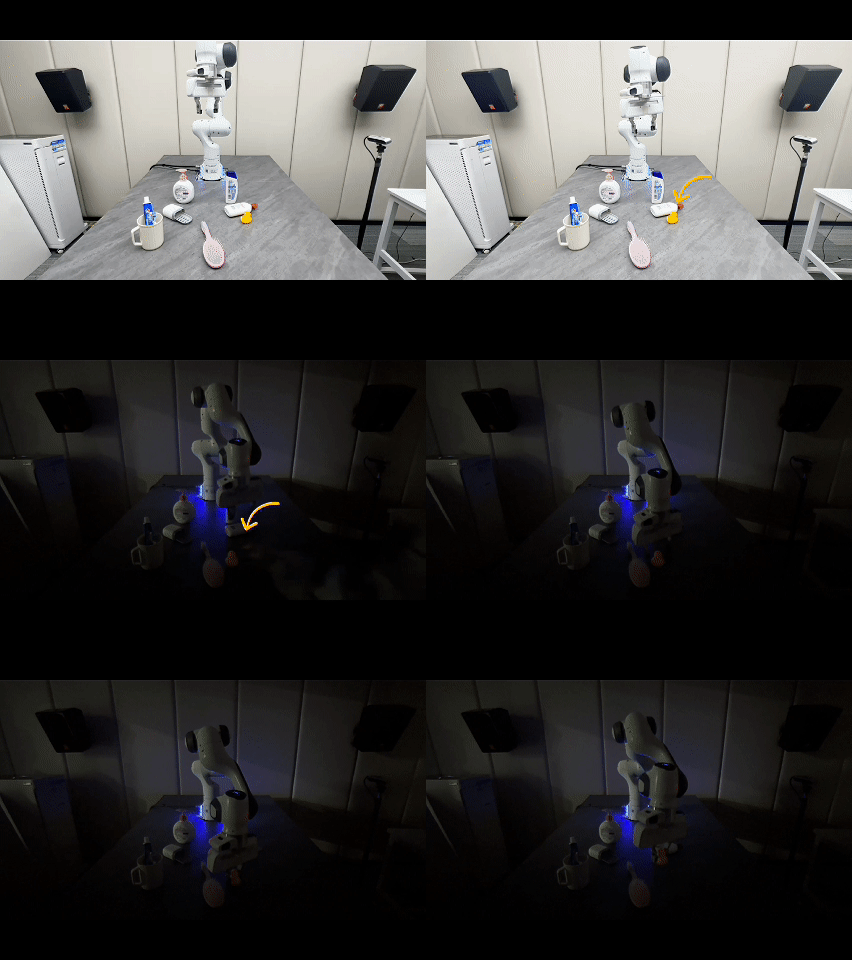
Video played at 2x speed

Robots operate in varied real-world scenes. Facing work surfaces of different materials and textures, or even dynamically changing backgrounds, GraspVLA remains unaffected and grasps steadily:
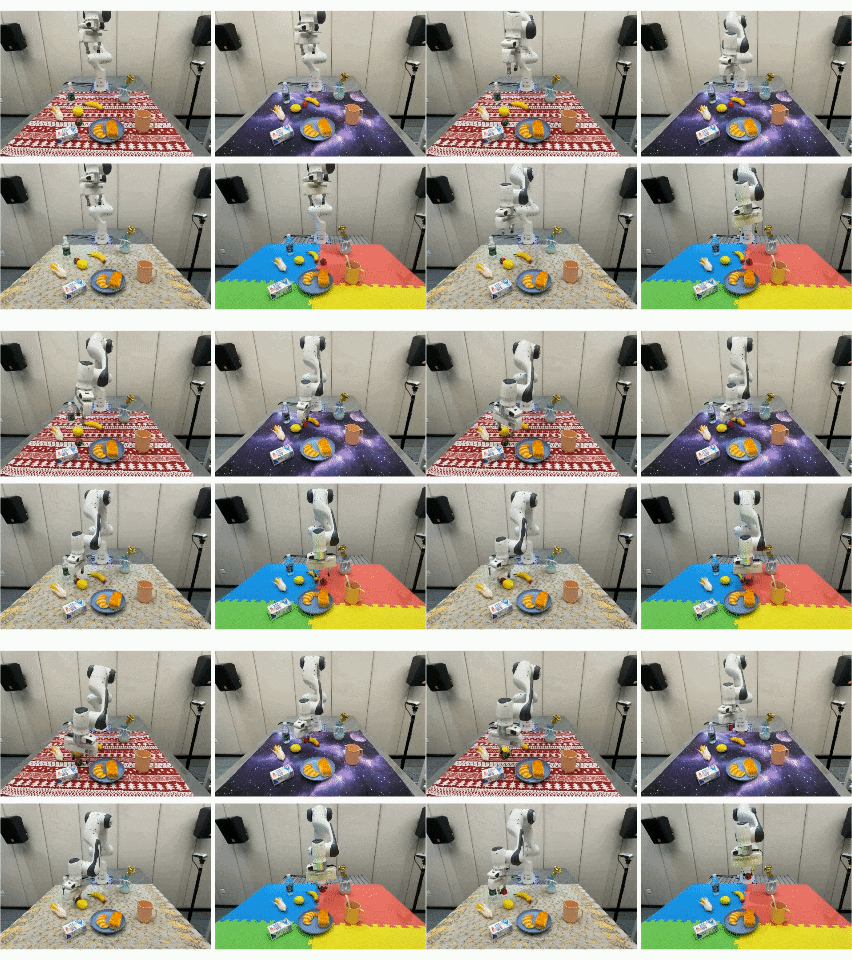 Video played at 3x speed
Similarly, GraspVLA is unaffected by dynamically changing backgrounds (note: GraspVLA uses dual-camera perspectives as input; the demonstration video corresponds to the robot's front-facing camera view):
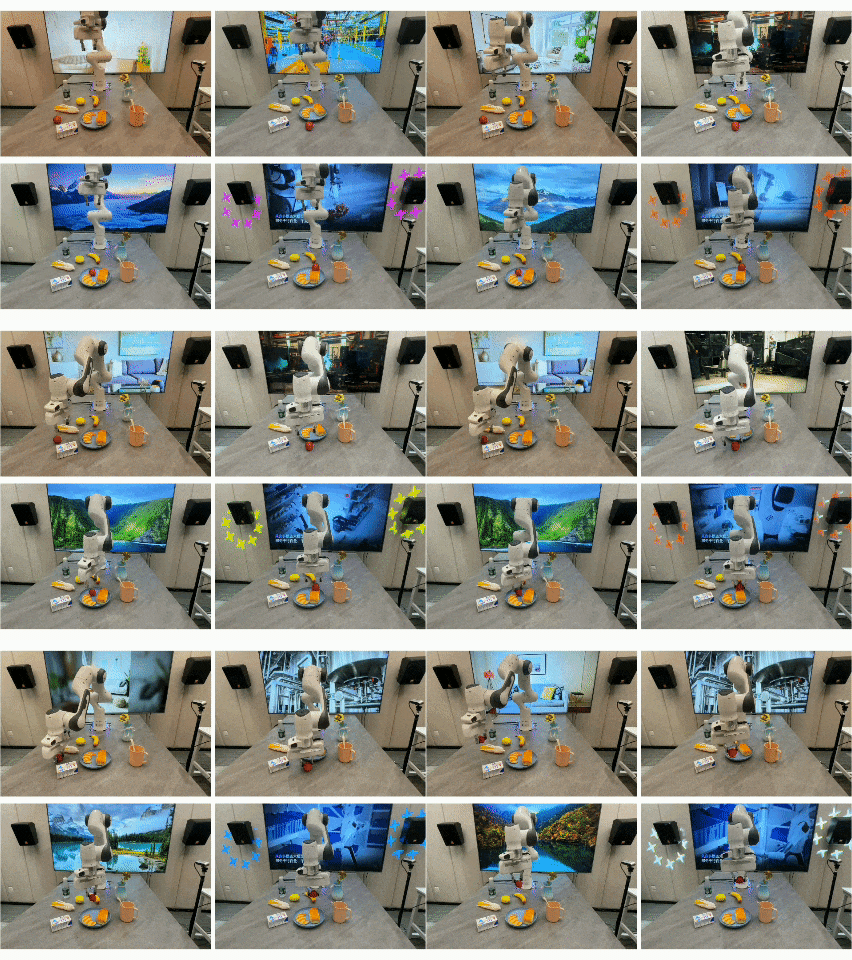
Video played at 3x speed

With objects arbitrarily translated and rotated on the tabletop, GraspVLA remains thoroughly adept:
 Video played at 2x speed

GraspVLA possesses powerful height generalization capabilities. Even when facing workbenches with objects placed at varying heights, users need not worry about the model becoming confused:
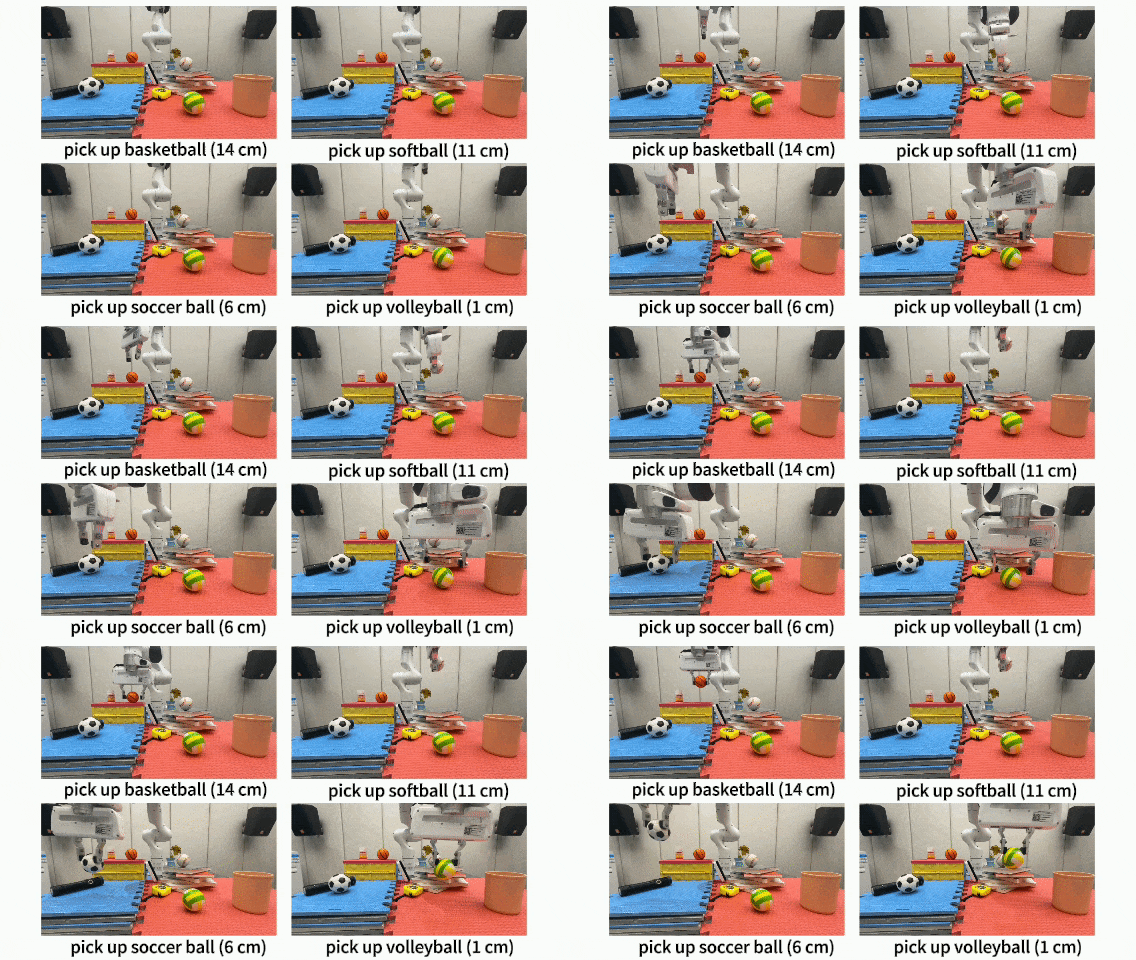 Video played at 2x speed

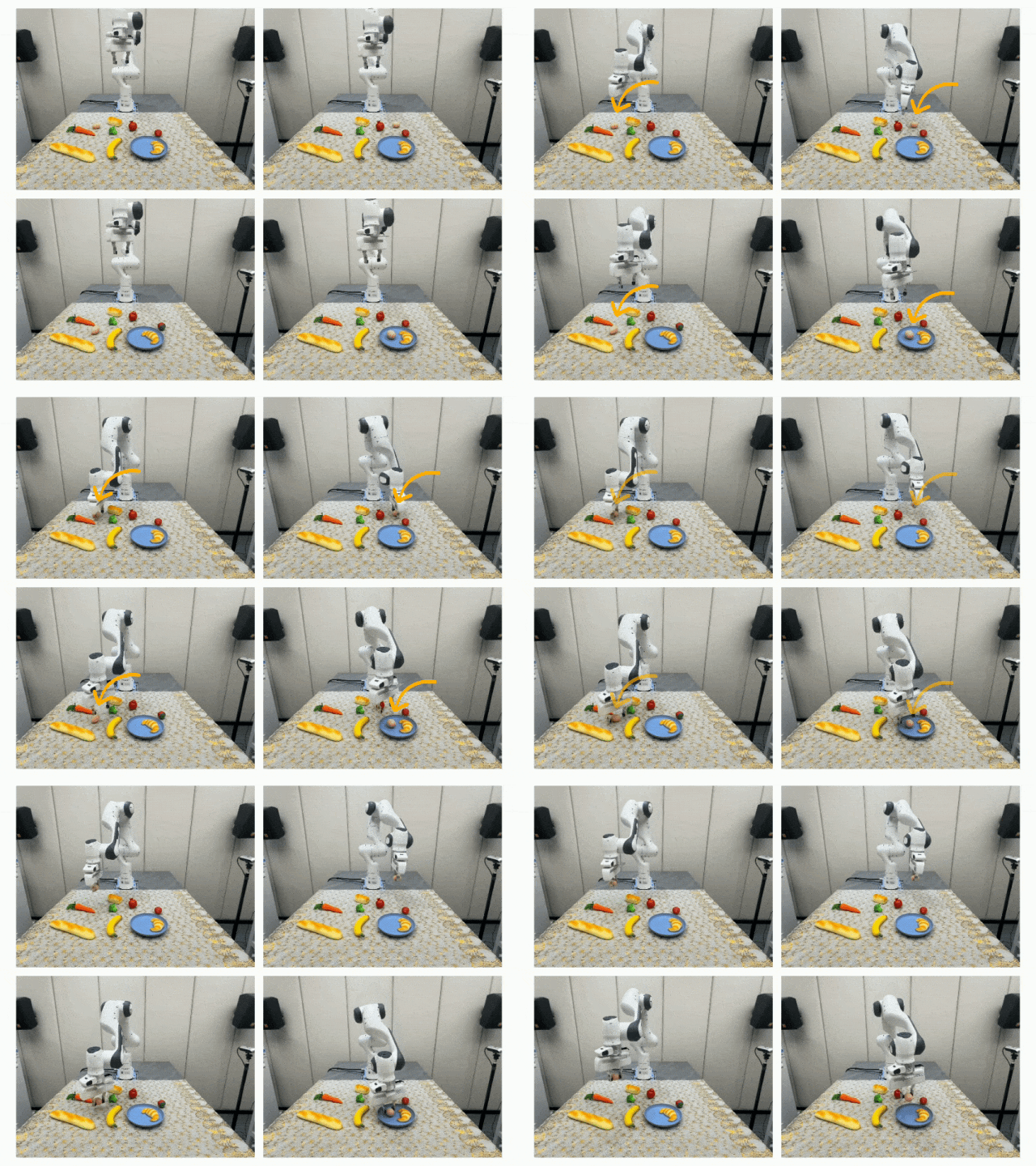
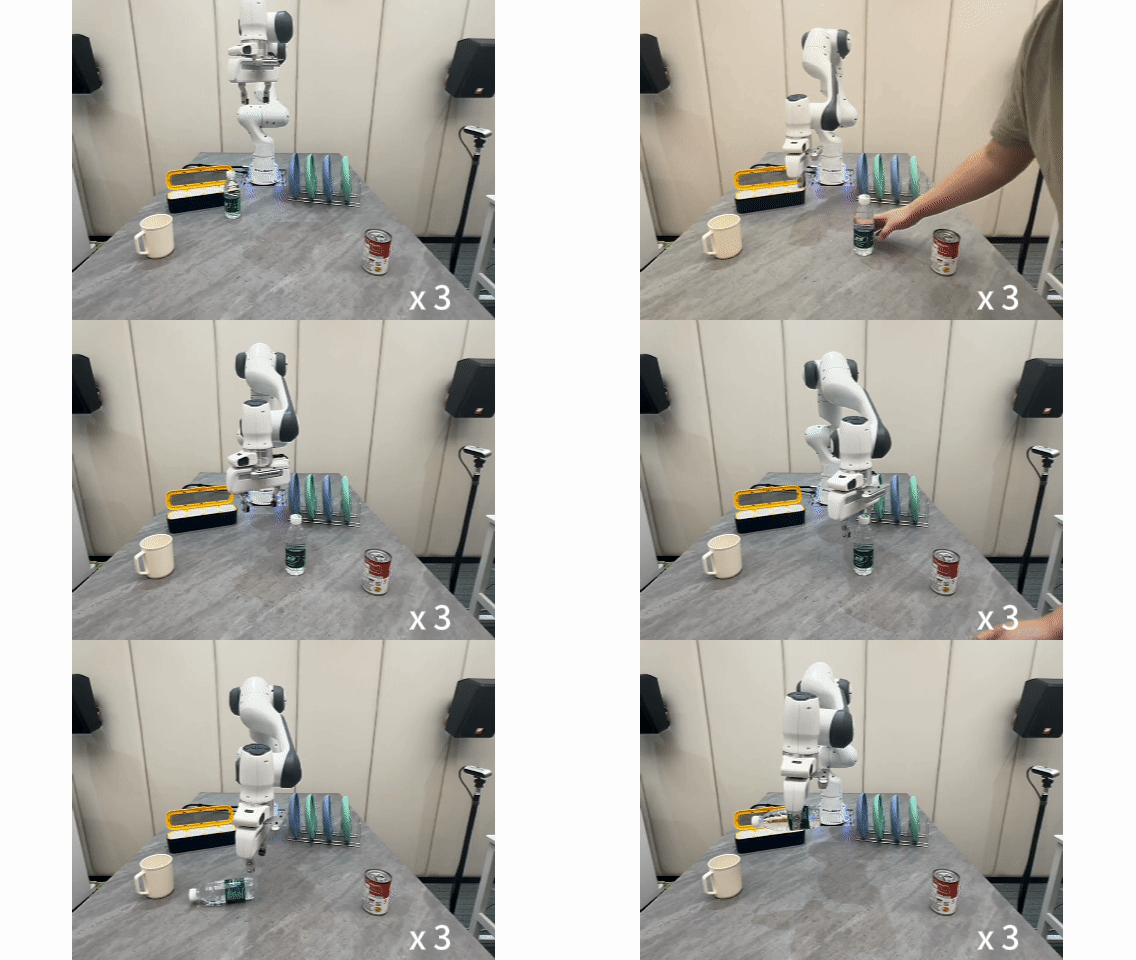
GraspVLA performs real-time inference and decision-making. It not only follows moving targets but also automatically adjusts its strategy based on object and gripper pose for different orientations — vertical, inverted, or otherwise — selecting the safest and most reasonable grasping approach, handling complex situations with ease:

Real-world working scenes are complex and variable; robots frequently encounter interference during task execution. Even when distractor objects are randomly added to the workspace, or collisions occur causing target objects to shift randomly, GraspVLA maintains stable task completion:
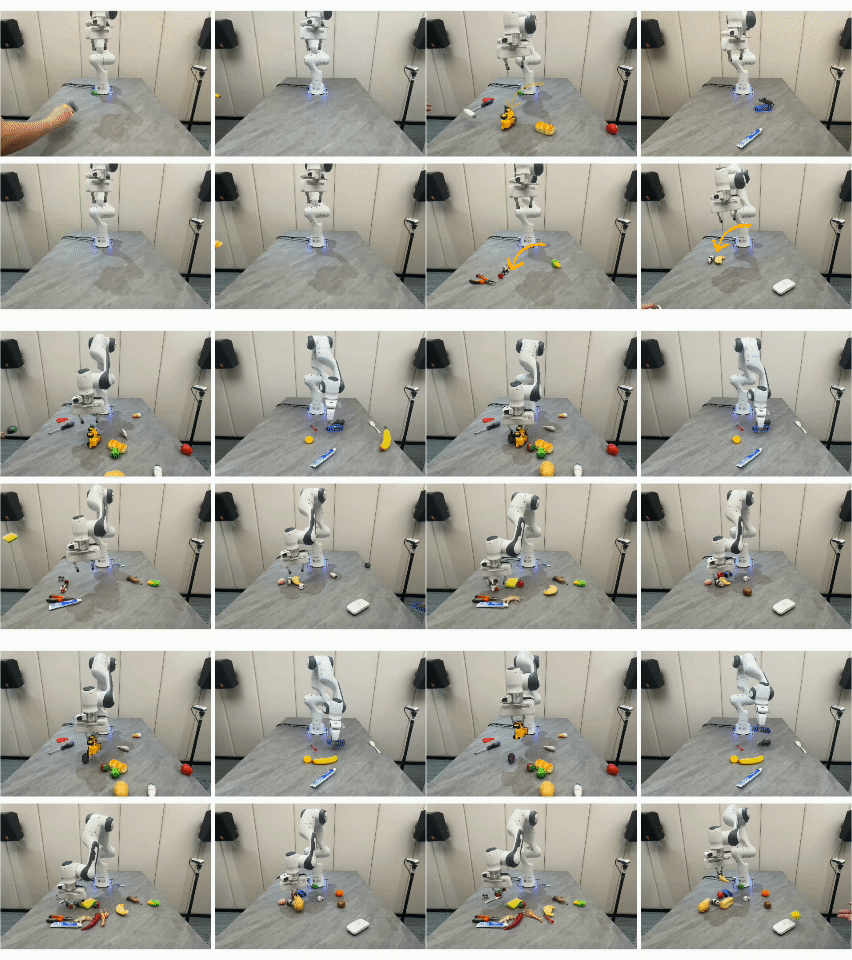 Video played at 2x speed

In all tests above, no objects, scenes, or placement configurations were used in training. GraspVLA achieved zero-shot generalization testing in the real world based solely on semantic and action capabilities learned from synthetic simulation data. Furthermore, through joint training of synthetic action data with massive internet semantic data, GraspVLA can generalize and transfer its acquired action capabilities to object categories for which no action data was learned:
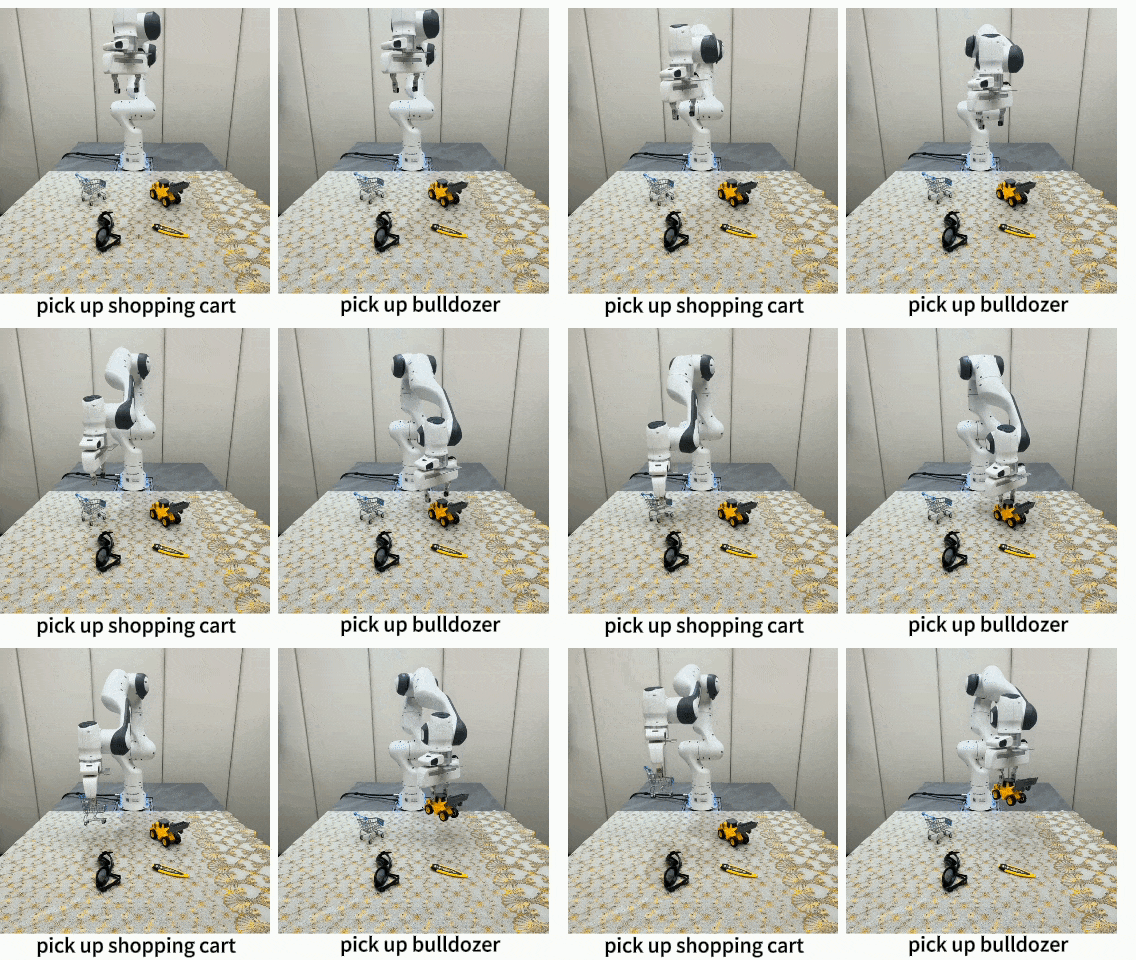
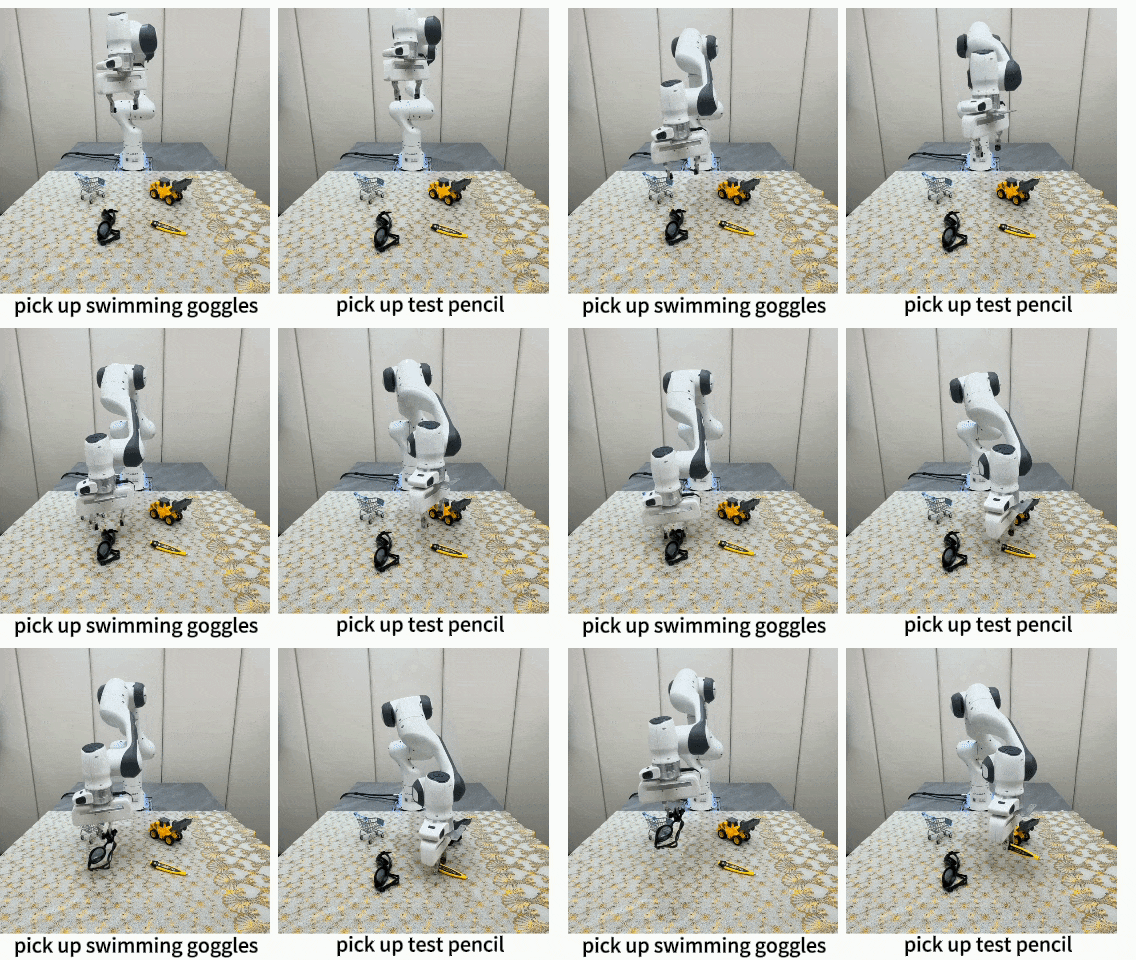
Video played at 3x speed

After pre-training on massive synthetic data, GraspVLA already satisfies most application requirements natively. However, products and specific scenarios often present special demands. Below we illustrate three post-training scenarios in retail, factory, and home settings to demonstrate GraspVLA's rapid adaptation and transfer capabilities for new requirements.

In retail scenarios, while GraspVLA possesses generalized grasping capabilities and can easily retrieve specified products after pre-training, users may want the model to extract items of the same category in sequence.
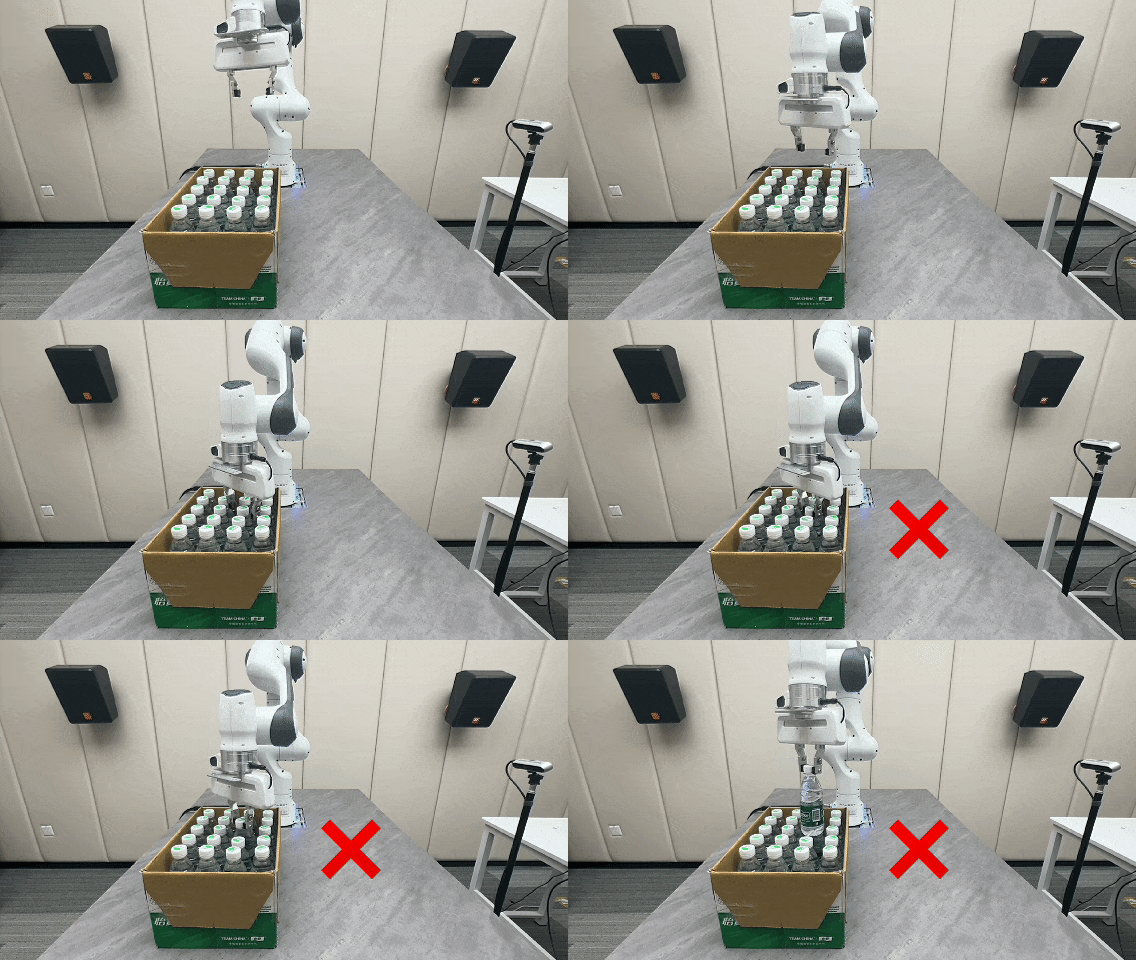
Video played at 2x speed
To satisfy this user requirement, for a case of C'estbon mineral water, we need only collect a small amount of real-world data (less than one person's day of teleoperation) for GraspVLA to understand and fulfill the sequential grasping requirement: few-shot learning enables sequential grasping of specified products
Natural generalization to out-of-distribution (OOD) post-training scenarios With post-training on data collected from just one person-day on C'estbon, GraspVLA can generalize from this few-shot learned behavior and automatically transfer it to other beverage brands (Nongfu Spring, Oriental Leaf), sequentially grasping similar products with different bottle colors and cap sizes according to placement order. This fully demonstrates the foundation model achieved through massive synthetic data pre-training.

In industrial scenarios, there are often large quantities of specialized parts unique to the industry. While the model can grasp arbitrary parts after pre-training, it may struggle to grasp the correct object based on language instructions — for example, when instructed to "grasp the window controller," it might instead pick up a wiring base.
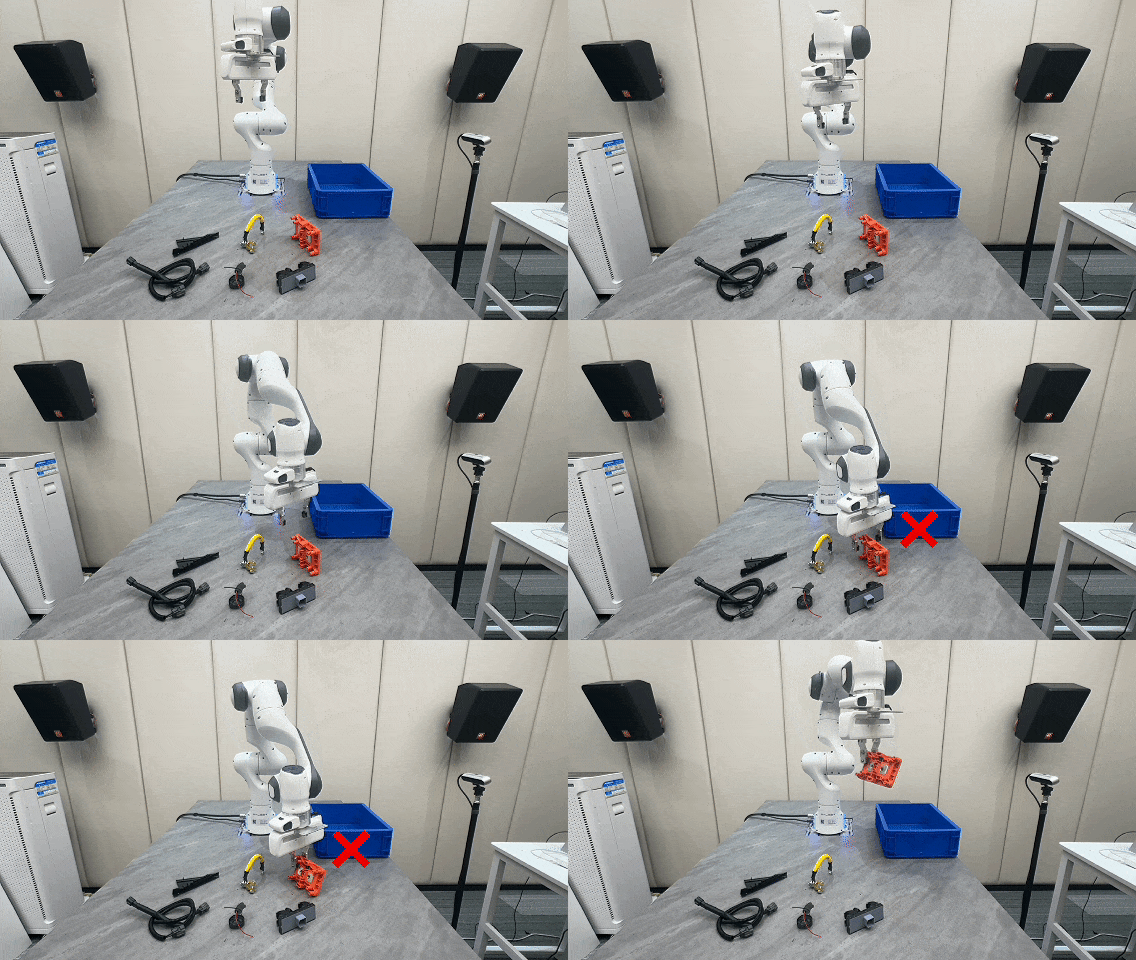
Video played at 2x speed
To enhance the model's ability to recognize rare parts, only a small number of trajectories need be collected for rapid post-training. GraspVLA quickly masters specialized industrial terminology such as Wiring Base, Triangular Panel, and Black Hose, precisely identifying corresponding parts from arbitrarily arranged dense scenes:
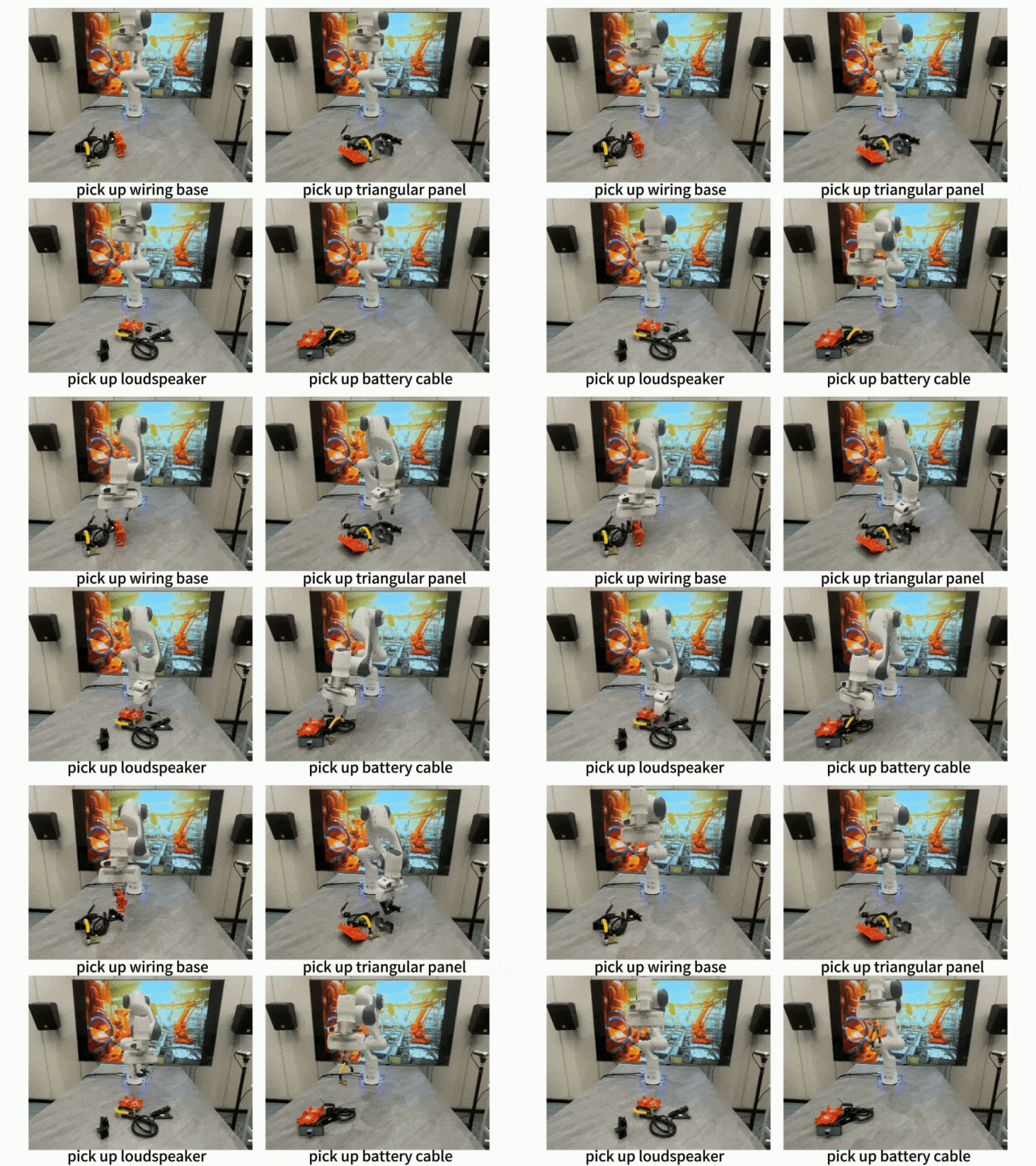 Video played at 3x speed

In home scenarios, people have specific preferences for robot behavior — for instance, not touching the inner walls when grasping a cup. Similarly, by collecting only a small number of preference-aligned grasping trajectories, GraspVLA can learn to grasp according to natural semantic instructions:
Before alignment, video played at 3x speed
After alignment, video played at 3x speed
Thus it is evident that GraspVLA has thoroughly mastered foundational capabilities in item recognition, item grasping, and multi-dimensional generalization during pre-training, enabling low-cost, efficient expansion for specific demands across different scenarios when scaling commercial applications — an essential capability for VLA model commercial deployment.
Grasping is the foundation of manipulation skills. The release of GraspVLA establishes an important milestone, laying the technical groundwork for embodied foundation models centered on large-scale synthetic data pre-training and pioneering an entirely new paradigm for the field's development. The key supporting this paradigm is synthetic big data. Drawing on years of experience in synthetic simulation data, Galaxy Universal has persistently pursued research in this area, pioneering a complete synthetic data production pipeline for end-to-end VLA model pre-training. In just one week, it can generate the world's largest billion-scale robot manipulation dataset (spanning video, language, and action modalities). With the support of the Isaac platform, the team has further enhanced the physical realism of data and the parallelism of physics rendering, ensuring high quality and low cost in training data. Even when hardware is updated, this technical solution can rapidly refresh data without incurring high additional costs, eliminating data sunk costs for enterprises and reducing resistance to hardware iteration. Galaxy Universal's fully synthetic big data pre-training solution offers lower costs in manpower and capital investment, higher time efficiency, and better sustainability. Furthermore, for specialized demands in product deployment, GraspVLA's foundation model nature enables it to understand new tasks and generalize from them with only hundreds of real-world trajectories, realizing the vision of "one person, one day to complete product deployment" for general-purpose robots and opening a highly promising path for large-scale commercial deployment of VLAs. Meanwhile, the joint research team has achieved major breakthroughs in navigation VLA models (the NaVid series) over the past year, and we will gradually showcase and introduce the generalization capabilities and emergent phenomena of this navigation VLA model series. Looking ahead, we will rapidly introduce embodied foundation models covering multiple skills, comprehensively integrating the team's synthetic data for tasks ranging from grasping to placing, from articulated objects to deformable object manipulation, continuing to rely on synthetic big data as the sole pre-training source to unleash unprecedented potential and capabilities, defining the ChatGPT moment for embodied intelligence, and driving humanoid robots to their next peak. Stay tuned for more breakthroughs and achievements.
BlueRun Ventures in conversation with Galaxy Universal, AgiBot, and Lingchu AI:
When Embodied Intelligence Enters Reality | The Road to AGI
Borui Cycle successfully completes nearly 100 million RMB Series B funding round | BlueRun Ventures family
BlueRun Ventures wins multiple awards including Best Early-Stage Investment Institution and Best Early-Stage Investor