NVIDIA GTC On-the-Ground: 6 BlueRun Ventures Portfolio Founders Take the Stage, Breaking Down 6 Technical Challenges in AI Deployment

Welcome to reality.
NVIDIA GTC is underway in San Jose. On Jensen Huang's list of "AI-Native Enterprises," AgiBot appeared in the AI for Robots category, and Moonshot AI appeared among Frontier Model Builders. Both companies are from the BlueRun Ventures family.
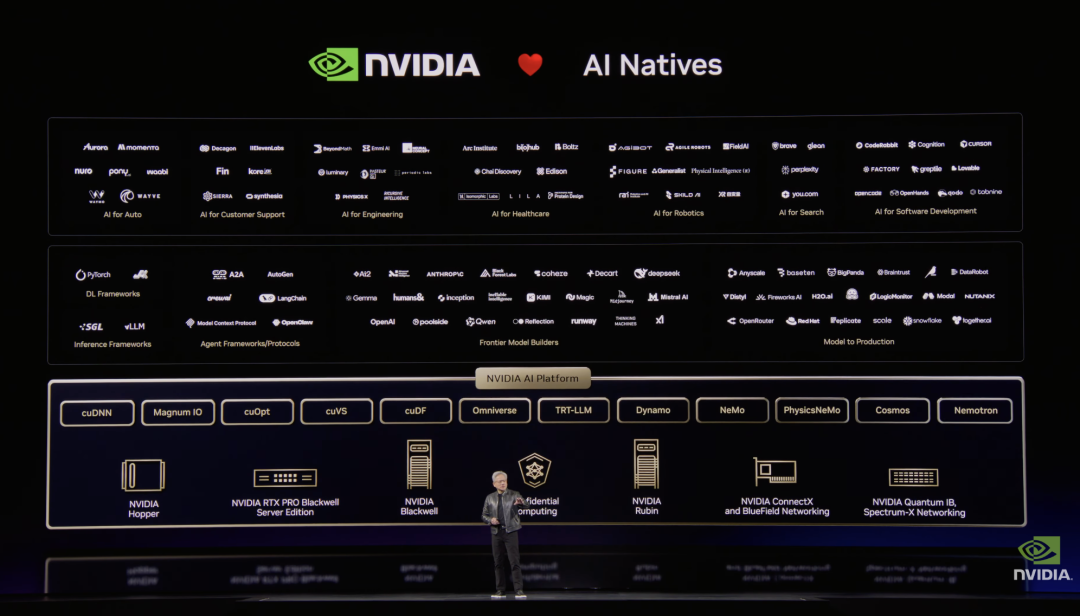
Image source: NVIDIA
And that's not all. At this year's GTC, founders and leaders from BlueRun portfolio companies took the stage: Zhilin Yang, founder of Moonshot AI; Kaihua Zhu, co-founder & CTO of Genspark; He Wang, founder of Galaxy Universal; Mo Wu, simulation lead at AgiBot; Peng Jia, CEO of Zhijian Dynamics; and Kun Zhan, head of foundation models at Li Auto.
These six companies are tackling six real structural problems that emerge as AI moves from technology to application. Their approaches differ, but they all point in the same direction: at the implementation end, what's truly scarce isn't concepts, but the ability to define problems and choose architectures. Here's our dispatch from the front lines of BlueRun at GTC. As an early-stage investment firm, we continue to track these problem-definers and deconstructors. We look forward to more founders joining us on this journey~

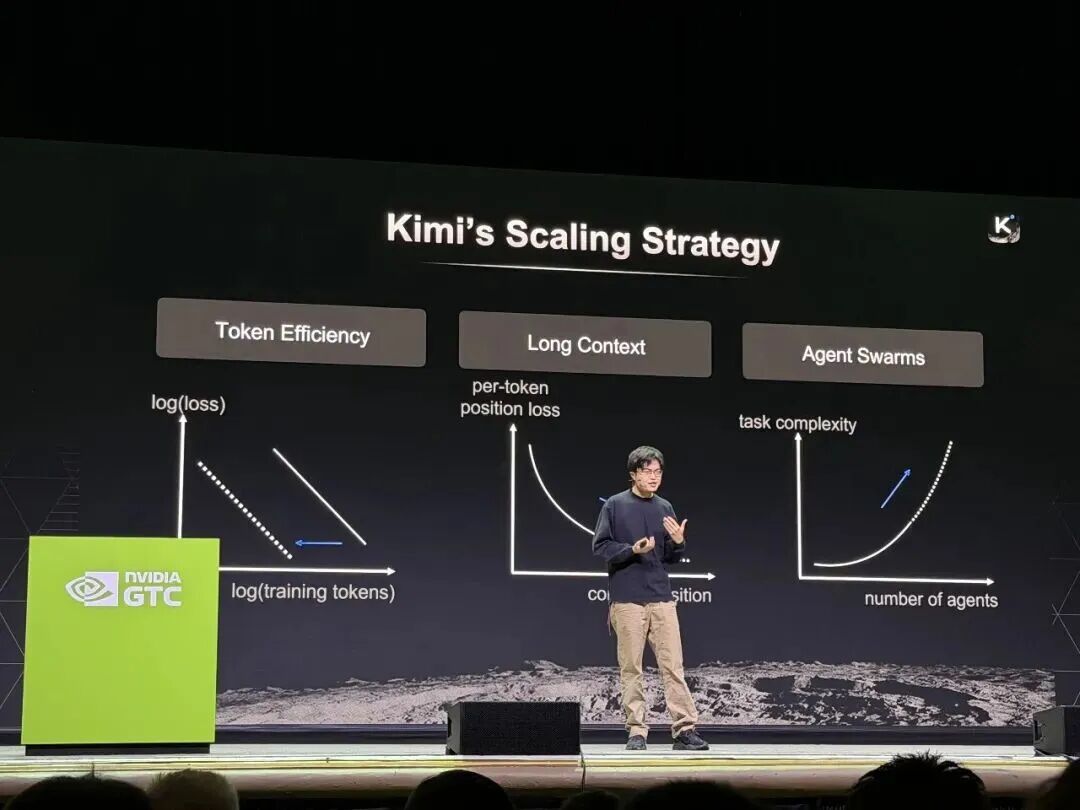
Image source: Jazzyear
🧙 Presenting Company: Moonshot AI
❓ The Problem: Has the Scaling Law hit a wall? As the industry debates whether large models can keep pulling off miracles through brute force, Moonshot AI founder Zhilin Yang offers a hard-nosed assessment: the bottleneck isn't compute, but those legacy technologies we've long taken for granted.
🗺️ The Innovation: The Moonshot AI team did something deeply geeky — they tore apart and rewrote the optimizer, attention mechanism, and residual connections that date back years.
- "Operating" on the optimizer: Replacing the veteran Adam with the more efficient Muon optimizer. When training instability struck, the team developed and open-sourced MuonClip, solving the logits explosion problem while achieving 2x the computational efficiency of traditional AdamW.
- Challenging the "gold standard" of attention: Breaking the convention that "all layers must use full attention," they proposed the mixed linear attention architecture Kimi Linear, boosting decoding speed by 5–6x in ultra-long contexts.
- Retrofitting residual connections: Introducing Attention Residuals to solve the chronic problem of information dilution in deep networks. This work even drew public praise from former OpenAI co-founder Andrej Karpathy and xAI founder Elon Musk.
🔑 Takeaway: As the "brute force miracle" path narrows, going back to optimize those "taken for granted" foundational architectures may be the key to unlocking the next phase of intelligence growth.

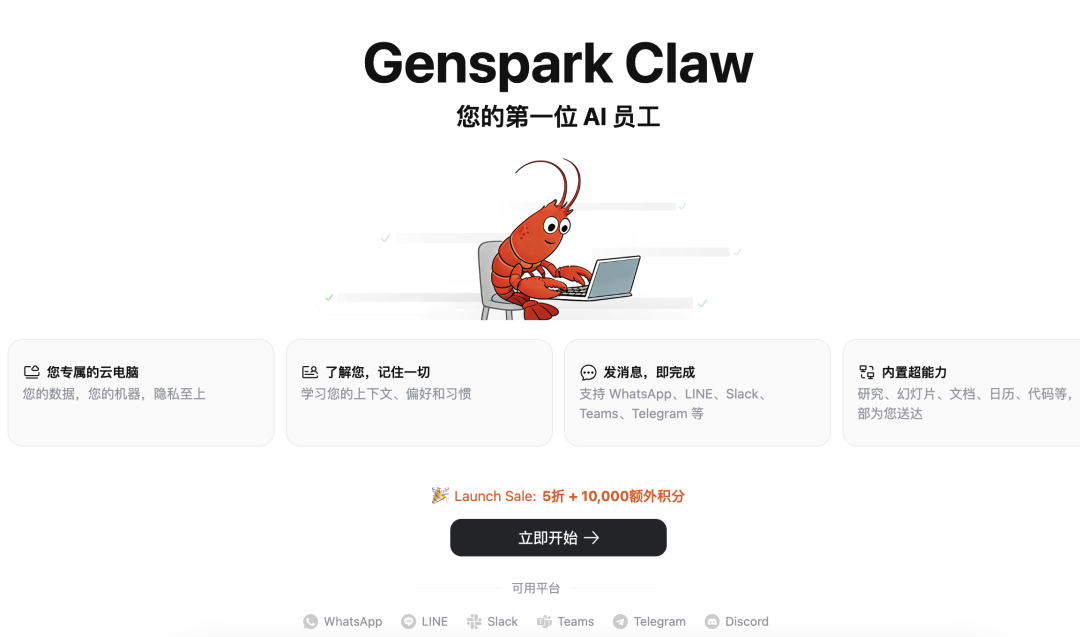
🧙 Presenting Company: Genspark
❓ The Problem: While most users are still having brief conversations with AI, Genspark co-founder & CTO Kaihua Zhu poses a harder question: Can your AI work continuously for days?
🗺️ The Innovation: AI systems progress through stages — AI search, asynchronous workflows, agents, and long-horizon agents — each requiring the right architectural pattern and technical trade-offs:
- Breaking complex tasks down and getting each part right: Mastering model routing and tool execution in multi-step, long-running tasks.
- Identifying failure modes to avoid "doing worse the longer it runs": Recognizing common failure patterns in long-horizon agents, including partial execution (stopping halfway) and compounding errors.
- Preventing AI from "going off track": Adding "checkpoint nodes" and "correction mechanisms" to keep agent trajectories on course at scale.
🔑 Takeaway: When AI starts handling long-horizon tasks, reliability is scarcer than cleverness.
「Preview: Kaihua Zhu's session will take place at 3:00 AM Beijing time on Friday, March 20. Stay tuned.」

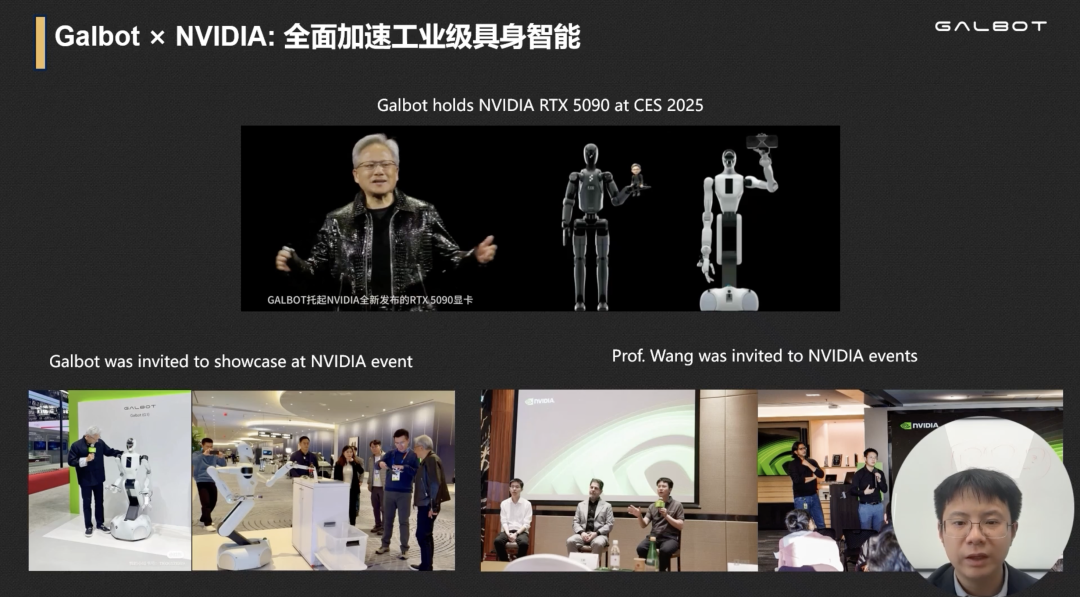
🧙 Presenting Company: Galaxy Universal
❓ The Problem: "One of the biggest challenges in embodied intelligence today is that real-world data collection is expensive." Galaxy Universal founder He Wang gets straight to the point. Whether through teleoperation or motion capture, collection scale is extremely limited. Faced with the trillions of data points needed for general intelligence, relying entirely on real-world collection means never leaving the lab.
🗺️ The Innovation: Wang's solution is a "data pyramid." Its base layer is internet video-text data, the middle layer is human behavioral data, the core layer is multi-embodiment synthetic simulation data, and the feedback loop is real-world data. With this pyramid as support, Galaxy Universal trained the world's first end-to-end embodied foundation model with integrated "big brain and small brain" — Galaxy Brain.
The cleverest part of this approach is how it tackles problems robots historically couldn't solve:
- The Spring Festival Gala stunt had real chops behind it: Robots spinning walnuts and threading skewers with both hands weren't teleoperated — they practiced their "touch" in simulation first.
- Handling all kinds of "difficult customers": Soft clothes, transparent medicine boxes — generating massive random scenarios in simulation to make the model "well-traveled," then achieving zero-shot generalization in the real world.
- Genuine deployment: Smart pharmacies covering 24 cities (nearly a million boxes delivered), over a hundred scenic retail pods (serving 2,000+ people daily), and a heavy-load robot joint-ventured with Bosch that can move hundred-pound loads — simulation-driven, not just talk.
🔑 Takeaway: Rather than getting caught up in grand narratives, better to anchor on one real pain point and use simulation data to execute it thoroughly.

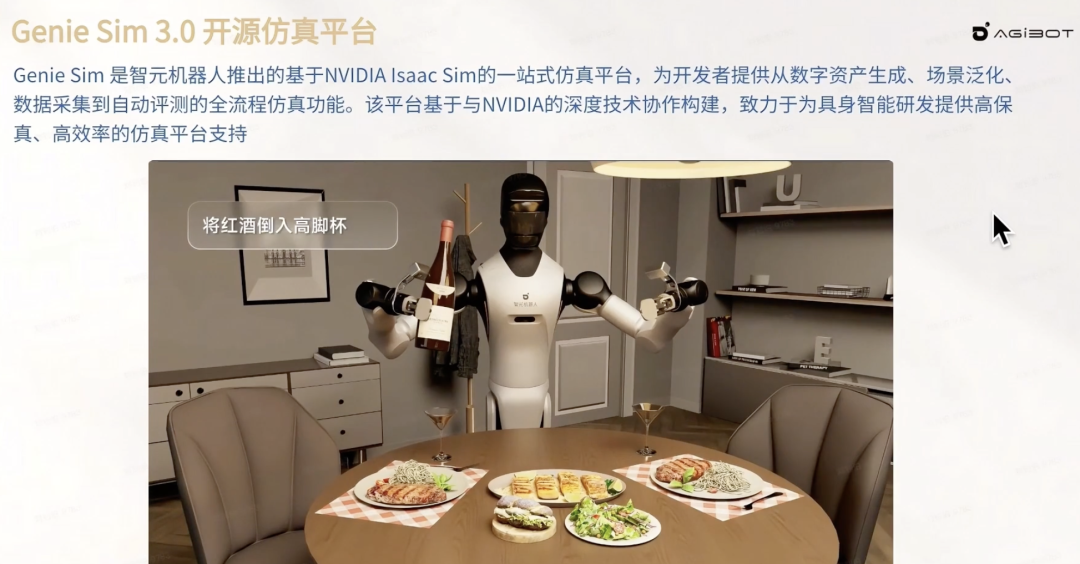
🧙 Presenting Company: AgiBot
❓ The Problem: Getting robots to work in factories — the hard part isn't hardware, it's that they run smoothly in simulation but "can't handle reality" once deployed. This is the industry's "last mile" problem. AgiBot's solution: use digital twins to "rehearse" first, so the real machine passes on the first try. AgiBot simulation lead Mo Wu unveiled the Genie Sim 3.0 simulation platform at GTC, a complete simulation-to-deployment toolkit:
🗺️ The Innovation:
- Building scenes with your voice: Natural language instruction-driven, generating massive diversified scenes in minutes, with support for iterative editing.
- Photorealistic scene reconstruction: 3D Gaussian reconstruction + visual generation + physics engine, achieving dual high-fidelity in vision and physics — 60 seconds of orbiting footage generates simulation assets.
- AI examiner: VLM/LLM automatic evaluation, multi-dimensional model profiling, with <10% divergence between simulation and real-machine evaluation, replacing expensive real-machine testing.
🔑 Takeaway: Simulation doesn't replace reality — it makes that one attempt in the real world count.

🧙 Presenting Company: Zhijian Dynamics
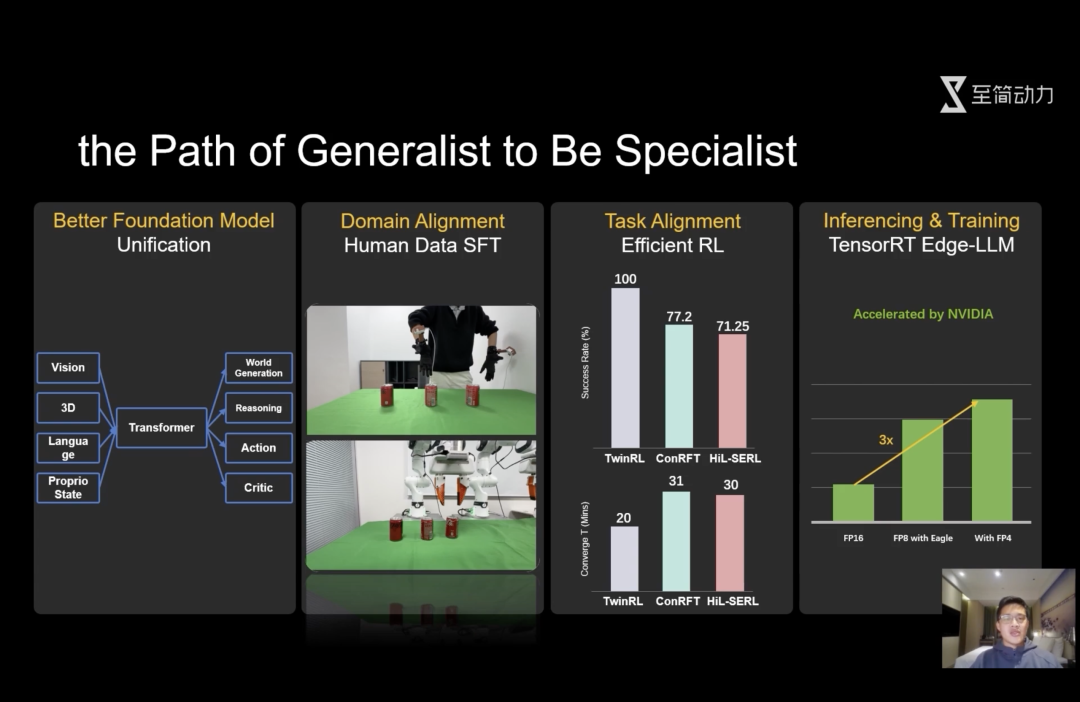
❓ The Problem: Having served as Li Auto's autonomous driving R&D lead and worked at NVIDIA and IBM, Peng Jia felt the industry's route disputes acutely after founding his own company — dual-system, VLA, world models... endless technical debates. But on the factory floor, only one thing matters: 100% success rate. Zhijian Dynamics CEO Peng Jia noted: "The massive gap between insufficient general capabilities and high user demands is the real reason embodied intelligence hasn't achieved large-scale deployment."
🗺️ The Innovation: Jia's solution is "subtraction" — packing all capabilities into one unified, simple architecture:
- Unified model: He believes the future belongs to "unified" models that integrate multimodal understanding and generation, fast and slow thinking, policy and value evaluation. Using MoT architecture to fuse different modalities at low cost, they trained the foundation model LaST₀, combining the strengths of VLA and world models.
- Stunning efficiency: 14x inference speed improvement; in most downstream tasks, reaching 100% success rate with generalization capability within 20 minutes — meaning the robot still succeeds on the first try even with changed positions or angles.
- Data "dieting": The massive tokens generated by multimodal modeling once worried the industry, but Jia discovered a counterintuitive conclusion: each modality actually only needs one token.
🔑 Takeaway: Faced with the complex physical world, rather than vacillating between multiple technical routes, better to return to fundamentals and use a sufficiently simple, unified underlying architecture to carry the truly core capabilities.

🧙 Presenting Company: Li Auto
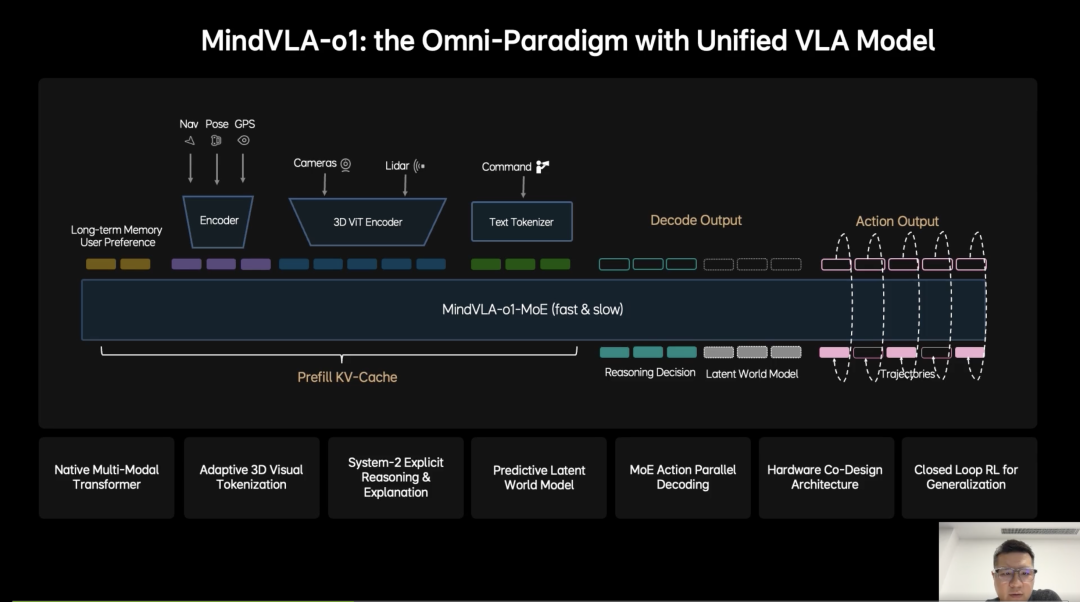
❓ The Problem: If your understanding stops at "Li Auto released a smarter autonomous driving model," you may be underestimating their ambition. Li Auto foundation model lead Kun Zhan unveiled MindVLA-o1 at GTC — not just serving cars, but extensible to robots and various physical systems. For Li Auto, the car is the largest robot, and the essence is building the body and brain of silicon-based life forms.
🗺️ The Innovation: This brain, through five technical innovations, lets autonomous driving see farther, think deeper, drive more steadily, evolve faster, and deploy more efficiently:
- 3D spatial understanding: Using vision + LiDAR point clouds to let the model comprehend the three-dimensional world.
- Multimodal thinking: Introducing a "predictive latent world model" that lets AI not only understand the present but also "imagine" and project scene changes seconds ahead in latent space.
- Unified behavior generation: Through VLA-MoE architecture and parallel decoding, generating driving trajectories that are both precise and vehicle-dynamics-compliant — driving more like a "veteran driver."
- Closed-loop reinforcement learning: Frantically "drilling" and trial-and-erroring in a world simulator, model iteration speed takes off while training costs drop by roughly 75%.
- Hardware-software co-design: Rapidly finding the balance between model accuracy and inference latency among nearly 2,000 architecture candidates, shrinking architecture exploration time from months to days.
🔑 Takeaway: When a leading automaker starts building autonomous driving models with the mindset of creating "digital life," the technological possibilities may far exceed what we currently see.

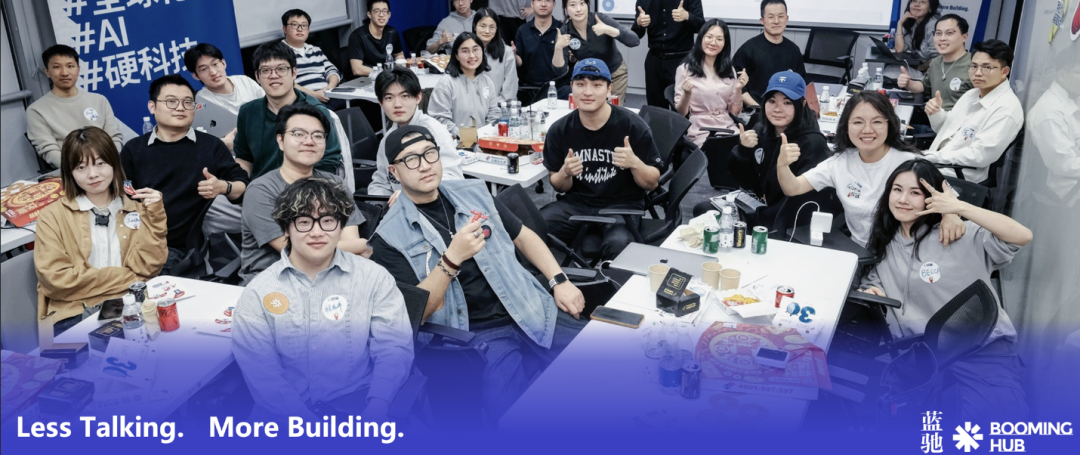 What Can You Build with OpenClaw in One Hour? | BlueRun "Xiake Song" Live Experiment
 AI Disruptions in 2026: How Will OpenClaw Shape AI Entrepreneurship? What's New with Models and Applications? | BlueRun AI Annual Outlook
 BlueRun AI Annual Outlook: Survival, Evolution, and Narrative of China's AI Entrepreneurs | Booming Talk